
The career advice industry has a strong incentive to tell you that product management is a great career. It has an even stronger incentive to sell you a course to get into it. Neither of these incentives points toward honesty, which is what the question actually requires in 2026.
Product management went through a severe correction between 2022 and 2024 - large-scale layoffs at the companies that had been the aspirational PM employers of the previous decade, a shrinking number of entry-level openings, and a growing chorus of senior practitioners questioning whether the role as it was practiced in the 2010s would survive the decade.
At the same time, new PM roles emerged faster than the old ones disappeared in some sectors, and total PM employment continued to grow in aggregate even as the specific companies and role profiles shifted dramatically.
The honest answer to 'is product management still a good career in 2026?' is yes, with conditions.[7] It is a strong career for people with the right skills, meaningful experience, and the flexibility to work in domains where PM demand is growing.
It is an increasingly difficult career for people trying to enter at the junior level, for people with generalist backgrounds in a market that is rewarding specialization, and for people whose competitive advantage was proximity to FAANG employment rather than demonstrated product judgment.
This article examines the data - layoff figures, job posting trends, compensation trajectories, and AI impact projections - and provides an honest assessment organized around the question of who the PM career is good for in 2026, and who might want to consider the alternatives carefully.
"Product management is not dying. But the version of product management that was abundant, easy to enter, and forgiving of mediocrity - that version is over." - Marty Cagan, Silicon Valley Product Group, 2024[1]
Key Definitions
PM layoffs (2022-2024): A significant reduction in PM headcount at large technology companies following the post-pandemic hiring correction. Companies including Meta, Google, Amazon, Microsoft, Salesforce, and Snap all conducted PM-affecting layoffs during this period.
Layoffs.fyi documented more than 280,000 technology worker layoffs in 2023, with PM roles affected at roughly proportional rates.[4]
Market saturation: A condition in which supply of qualified candidates exceeds demand for a role. Entry-level PM saturation is visible in the application-to-interview ratio at APM programs (10,000+ applications for ~50 spots at Google APM) and in the reported experience of candidates applying externally without prior PM titles.
AI PM: A product manager who specializes in building products incorporating artificial intelligence. AI PM is the fastest-growing PM specialization and commands compensation premiums over generalist PM roles.
Growth PM: A product manager who specializes in user acquisition, activation, retention, and monetization metrics. Remains in strong demand at consumer and marketplace companies.
PM headcount ratio: The ratio of product managers to engineers on a product team. This ratio has been declining at some technology companies as AI tools increase engineering productivity and reduce the documentation overhead that justified additional PM headcount.
The Layoff Data and What It Actually Shows
Between 2022 and 2024, the technology industry contracted its workforce significantly after substantial over-hiring during 2020-2021.[11] For product management specifically:
Meta reduced its product and management headcount by approximately 20-25% across 2022-2023 layoff rounds. Google eliminated multiple layers of middle management and consolidated PM roles in its 2023-2024 restructuring. Amazon reduced headcount in AWS and consumer businesses.
Microsoft closed Activision-Blizzard gaming units and reduced PM headcount in several divisions. Salesforce laid off approximately 10% of its workforce in 2023, PM-inclusive.
The narrative framing of these layoffs as evidence that PM roles are 'declining' is misleading without the context of the preceding hiring surge. Many technology companies hired 2-3x their sustainable PM headcount between 2020 and 2022, driven by availability of cheap capital and competitive talent pressure.
The layoffs of 2022-2024 were corrections toward pre-pandemic headcount ratios in many cases, not a structural decline in the function.
What the data does show: the PM employment market is more concentrated and more competitive than at any point in the previous decade. Total PM job openings on LinkedIn peaked in mid-2021, contracted through 2023, and had recovered to approximately 80% of peak levels by mid-2025, according to LinkedIn workforce data.
The number of PM jobs is not catastrophically lower than 2019 - but it is meaningfully lower than 2021, and the candidate supply has grown substantially during the period.
The Hiring Surge in Context
To understand 2022-2024, you have to understand 2020-2022. The pandemic drove an extraordinary acceleration in digital product investment. Every company suddenly needed to be a software company.
The combination of near-zero interest rates, abundant venture capital, and the genuine shift in consumer behavior toward digital services created an unprecedented expansion of PM hiring.
According to data from Glassdoor and LinkedIn, the number of active PM job postings in the United States grew by approximately 70% between January 2020 and June 2021.[9]
Companies were competing for a finite talent pool by offering increasingly elevated compensation packages - total comp at top-tier companies for mid-level PMs reached $250,000-$350,000 during peak hiring frenzy in 2021-2022.
This bidding war for talent expanded the candidate supply: hundreds of thousands of people enrolled in PM courses, bootcamps, and certification programs in pursuit of those salaries.
By mid-2022, the Federal Reserve was raising interest rates, venture capital dried up, and companies that had been valued on growth metrics suddenly needed to demonstrate profitability. The correction was swift and disproportionately targeted the management and product layers that had expanded most aggressively during the boom.
The Bureau of Labor Statistics' category for Computer and Information Systems Managers - which includes PMs - showed net employment growth of approximately 11% from 2020 to 2024, despite the high-profile layoffs.[12]
This is because the layoffs were concentrated at a small number of large, visible technology companies. Smaller companies, startups, and non-technology industries continued hiring PMs throughout the period.
PM Job Market Snapshot: 2024-2026
| PM Segment | Demand Trend | Competition Level | Avg. Total Comp (US) |
|---|---|---|---|
| Entry-level / APM | Declining | Extreme | $130,000-$170,000 |
| Mid-level generalist | Stable | High | $170,000-$270,000 |
| Senior generalist | Stable-growing | Moderate | $230,000-$380,000 |
| AI PM (all levels) | Growing fast | Low-moderate | $250,000-$500,000+ |
| Growth PM | Growing | Moderate | $200,000-$350,000 |
| Platform PM | Stable-growing | Low-moderate | $200,000-$370,000 |
| Domain expert PM (fintech, healthtech) | Growing | Low | $180,000-$320,000 |
| B2B enterprise PM | Stable | Moderate | $160,000-$280,000 |
| International / EMEA PM | Growing | Low-moderate | Varies significantly by market |
The Entry-Level Problem
The most significant structural problem for the PM career in 2026 is entry-level saturation, not overall decline.
The number of people trying to break into product management accelerated dramatically from 2018 to 2023, driven by media coverage of PM compensation, the proliferation of PM certification programs, and the general appeal of the role's combination of strategy and technology work.
This growth in candidate supply happened simultaneously with a contraction in entry-level PM openings.[6]
The impact is most visible in:
APM program competitiveness: Google APM acceptance rates have fallen to estimated 0.1-0.3% as application volumes grew while cohort sizes remained stable.
Entry-level salary compression: Where junior PM salaries were rising through 2021, they stagnated or compressed slightly through 2023-2024 at the entry level as supply exceeded demand.[10]
The experience paradox intensifying: Hiring managers at mid-size companies increasingly demand 3+ years of PM experience for roles labeled 'Associate' or 'Junior.' The cycle of 'needs experience to get experience' has tightened further.
For people trying to enter product management from scratch in 2026, the path is harder than it was in 2019. It is not impossible - it never was easy - but the expectation of a direct path from PM certificate to PM job at a desirable company is less realistic than the marketing materials for those certificates suggest.
What Entry-Level PM Breaking In Actually Looks Like in 2026
The paths that still work for new entrants follow a recognizable pattern. The most reliable is the internal transition: someone working as an engineer, designer, data analyst, or customer success manager at a software company who builds product credibility through adjacent work and transitions into a PM role with their existing employer's support.
Companies are far more willing to give someone without a PM title their first PM role if that person has demonstrated product thinking and built trust internally.
The second path that consistently works is domain expertise as a differentiator.
A clinical nurse applying for a healthtech PM role, a compliance officer applying for a regtech PM role, or a licensed electrician applying to a grid software company - these candidates bring something no amount of product management coursework produces: deep domain credibility that addresses the actual problems the company needs solved.
In 2026, the most competitive entry-level PM positions are not in consumer apps but in regulated industries where domain knowledge has genuine value.
The third path that occasionally works is the technical founder pattern: building something, shipping it, getting real users, and presenting that experience as PM work.
A solo developer who built a SaaS tool with 500 paying customers has more compelling evidence of product instinct than someone with a product management certification and a case study portfolio.
Which PM Roles Are Growing
Despite the overall contraction, several PM specializations are in genuine growth demand as of 2025-2026:
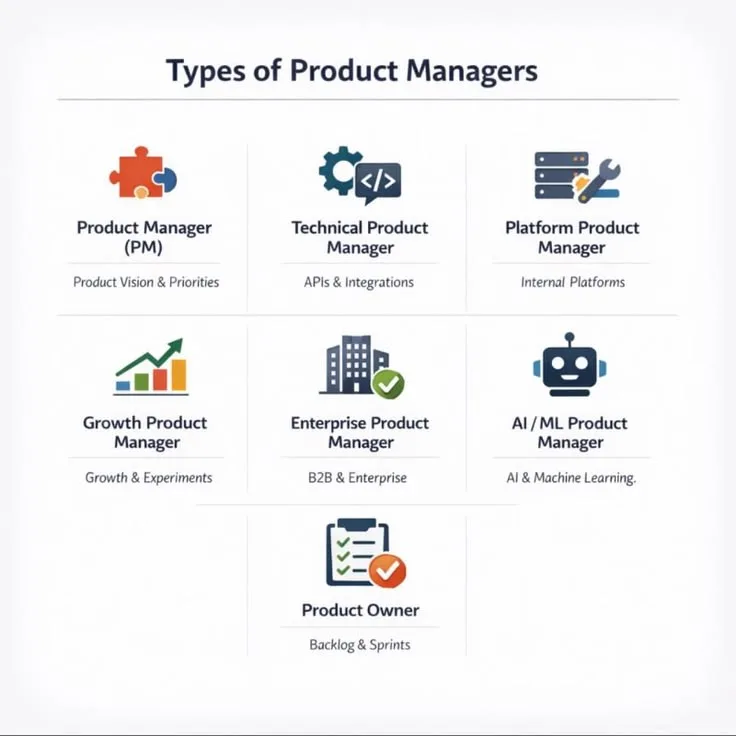
AI Product Management: Demand for PMs who can build AI-powered products is growing faster than supply. LinkedIn's Skills on the Rise report (2024) listed AI product management as the fastest-growing emerging specialization.[3]
Companies like Anthropic, OpenAI, Google DeepMind, Microsoft AI, and thousands of AI-native startups are actively hiring experienced PMs with AI product backgrounds at premium compensation.
Platform and Infrastructure PM: As engineering organizations grow, the need for PMs who own developer-facing APIs, internal platforms, and infrastructure products increases. This specialization is less visible than consumer product roles but has lower competition and strong compensation.
B2B SaaS Domain Expert PM: Companies in healthtech, fintech, legal tech, climate tech, and enterprise automation are hiring PMs with deep domain expertise - clinical operations, financial regulation, legal workflow, carbon accounting - over generalist backgrounds.
Domain knowledge has become a sustainable competitive advantage as the generalist PM supply has grown.
Growth PM at Series A-C Companies: Consumer companies in the $10M-$100M ARR range need growth PMs with strong experimentation skills and data fluency. This market segment was less affected by big-tech layoffs and continues to hire selectively.
The AI PM Opportunity in Detail
The AI PM specialization deserves extended treatment because the opportunity is real, the talent shortage is genuine, and the path to developing AI PM credentials is more accessible than most practitioners realize.
AI PM roles break into two broad categories. The first is building AI-native products - the PM who owns a product whose core value proposition is an AI capability, such as a coding assistant, a document analysis tool, or a customer service automation platform.
These roles require comfort with model evaluation, a working understanding of LLM capabilities and limitations, familiarity with AI safety and reliability considerations, and the ability to design feedback mechanisms that improve model performance over time.
The second category is AI feature integration - the PM at an existing company who is responsible for integrating AI capabilities into a product that existed before the AI era. This is a larger category in terms of total headcount and is accessible to experienced generalist PMs who invest in building AI literacy.
The skills required are less about deep ML knowledge and more about evaluating vendor AI products, designing AI-powered user experiences, managing the AI development lifecycle within an existing engineering organization, and understanding responsible AI practices.
Both categories command compensation premiums. According to levels.fyi 2024 data, PMs with explicit AI product experience command 15-25% higher total compensation than equivalent generalist PMs at the same level and company size.
At senior levels, the premium can be larger: senior AI PMs at frontier AI companies regularly post total compensation above $500,000 in current job listings.
The AI Threat to PM Roles: What the Evidence Actually Shows
The most common question PM practitioners ask in 2025 is whether AI will eliminate PM roles. The evidence is more nuanced than either the 'PMs are safe' or 'PMs will be automated' narratives suggest.
What AI is already automating: First-draft PRD writing, meeting summaries, customer research synthesis, competitive analysis compilation, roadmap status updates, and sprint ceremony documentation. These are the tasks that previously justified junior PM headcount.
A senior PM with AI tools can now handle documentation work that previously required one or two supporting PMs.
What AI is not automating: Customer relationship management, stakeholder alignment and conflict resolution, organizational influence and trust-building, strategic judgment under high ambiguity, qualitative synthesis that requires contextual understanding, and the interpersonal work of moving a diverse team in a coherent direction.
These are the tasks that primarily characterize senior PM work.
The structural implication: AI is likely to compress the PM career ladder - reducing junior PM headcount while keeping or growing senior PM headcount.
This is analogous to what happened to junior writing and analysis roles in adjacent fields: AI tools reduce the number of entry-level positions but increase the leverage and scope of experienced practitioners.
"AI won't replace PMs. AI will replace the PMs who don't know how to use AI - and also the PMs whose entire value was doing the work that AI can now do." - Lenny Rachitsky, Lenny's Newsletter, 2025[5]
McKinsey's 2024 analysis of AI automation in knowledge work estimated that approximately 20-40% of current PM task volume is susceptible to AI assistance or automation.[2] Most of that susceptible work is concentrated in the first 3 years of a PM career, which explains the entry-level pressure without predicting general PM decline.
The PM-to-Engineer Ratio Shift
One of the most significant structural changes accelerated by AI tools is the declining PM-to-engineer headcount ratio. In 2018-2021, a common ratio at product-led technology companies was one PM per 6-10 engineers. By 2025, this ratio had shifted toward 1:10-1:15 at companies where AI coding tools were meaningfully deployed.
The mechanism: AI coding tools like GitHub Copilot, Cursor, and Claude have increased individual engineer productivity on implementation tasks - writing boilerplate code, scaffolding APIs, generating tests.[13]
This productivity increase means the same engineering team ships more, which in turn means the PM documentation, specification, and coordination overhead per unit of engineering output has decreased.
This does not mean PM jobs are disappearing, but it does mean that companies are looking for PMs who multiply engineering output rather than PMs who absorb the overhead of low-output engineering teams.
The PM value proposition in 2026 increasingly centers on customer insight, prioritization quality, and the ability to define problems precisely enough that AI-augmented engineers can execute on them rapidly.
What Does a Strong PM Look Like in 2026?
The skills that define a strong PM in 2026 are different from the skills that defined a strong PM in 2016.
A decade ago, the job was often described as being the "voice of the customer" inside the engineering organization and as writing detailed product requirement documents that translated business needs into engineering work.
Both of these activities remain relevant but are no longer differentiating.
The skills that differentiate strong PMs in 2026:
Strategic problem selection: The ability to identify which problems are actually worth solving - not just what customers are asking for, but what would create genuine value and defensible business position. As AI tools make it easier to execute on any defined problem, the ROI from excellent problem selection has increased.
Quantitative fluency: Comfortable with data. Able to define the right metrics, run A/B tests, interpret statistical significance, and avoid being misled by vanity metrics or spurious correlations.
The threshold for "data-literate PM" has risen as teams have access to better data tooling and expect PMs to engage substantively with it.
AI tool proficiency: Uses AI tools actively - for customer research synthesis, for drafting and iterating on PRDs, for generating ideas, for analyzing customer feedback at scale. The PM who has not integrated AI tools into their workflow is meaningfully slower than the PM who has.
Organizational influence without authority: The PM's classic challenge - getting engineering, design, marketing, legal, and executive stakeholders to align around a coherent direction without formal authority over any of them - has not changed.
If anything, as teams have become more distributed and companies have reduced PM headcount ratios, the influence skills matter more.
Customer proximity: Regular, direct access to actual customers and the judgment to synthesize what they say into what they need. Not mediated by layers of research, not based entirely on analytics - genuine human contact with the people the product serves.
The Honest Pros and Cons in 2026
Genuine strengths of the PM career in 2026:
- Compensation ceiling remains among the highest in knowledge work for experienced practitioners
- High transferability across industries as every software-building organization needs product thinking
- AI PM specialization represents a genuine growth opportunity with talent shortage
- Senior PM skills (judgment, synthesis, stakeholder navigation) are AI-resistant
- The role is genuinely intellectually interesting and varied in ways that sustain long-term engagement
- International demand is growing - European and Asian technology companies are increasing PM hiring
Genuine weaknesses of the PM career in 2026:
- Entry-level access has contracted significantly and is unlikely to return to 2020-2021 ease
- AI is compressing the junior PM tier, reducing the traditional apprenticeship path
- Competition for senior roles at desirable companies is intense and increasingly credential-heavy
- The meeting load and accountability-without-authority stress pattern causes high burnout rates at established companies
- FAANG PM roles, which dominated PM career aspiration for a decade, are fewer and more internally-sourced than they were
Geographic Dimension: PM Demand Beyond FAANG
One of the most important and underreported dimensions of the 2026 PM market is geographic and industry diversification. The headlines about PM layoffs in 2022-2024 were dominated by large US technology companies. The broader market looks different.
European technology sector: Companies like Spotify, Klarna, Booking.com, Revolut, Wise, and Zalando have continued expanding their PM organizations. Total PM job postings in the UK, Germany, and Netherlands grew year-over-year from 2022 to 2025.
European PM compensation is lower than US counterparts in absolute terms but remains strong relative to local cost of living and continues growing.
Fintech globally: Banks and financial institutions undertaking digital transformation - a multi-decade trend accelerated by competition from fintech startups - have become major PM employers. JPMorgan Chase, Goldman Sachs, and HSBC all have thousands of technology and product employees.
Insurance, wealth management, and lending companies are all expanding digital product capabilities.
Healthtech and biotech: The US healthcare system's slow digital transformation is accelerating. Electronic health record companies, telehealth platforms, medical device software, and healthcare AI companies all need PMs with clinical domain knowledge.
This is a durable demand trend tied to structural healthcare system change rather than a speculative technology cycle.
Government and civic technology: Often overlooked, government digital services agencies (18F, USDS, and state equivalents) and civic technology organizations hire experienced PMs. Compensation is lower than private sector, but mission alignment and work-life balance often compensate.
The practical implication: candidates who define "the PM market" exclusively by FAANG opening counts are missing most of the actual market.
Alternative Paths Worth Considering
For people who want the elements of product management but are deterred by the current market conditions, several alternatives merit honest consideration:
Product operations: Manages the systems, processes, and tooling that enable product teams to work effectively. Often an easier entry point with a direct path toward PM. Growing at mid-size technology companies.
Technical program management: Higher entry competition at large tech but strong compensation ceiling and less saturated than PM at the same companies.
Product marketing: Owns positioning, messaging, and go-to-market for product launches. Works closely with product management, develops strong product intuition, and provides a pathway back into PM for people who want to demonstrate product thinking in an adjacent role.
Venture capital (at the associate level): Many VC firms prize product thinking and hire people with PM backgrounds or PM-adjacent skills. The path is narrow but the work has significant overlap with PM strategy and discovery.
Entrepreneurship: For people with 5-8 years of PM experience, the skills of a senior PM - customer understanding, prioritization, execution coordination - are among the best preparation for building a startup.
The Salary Comparison: PM vs Alternatives
Understanding whether PM compensation justifies the career investment requires comparing it honestly with alternatives. The below figures represent mid-to-senior level in the US market as of 2025:
| Role | Mid-Level Total Comp | Senior Total Comp | Path to Entry |
|---|---|---|---|
| Product Manager | $170,000-$270,000 | $230,000-$380,000 | Hard (entry-level saturated) |
| Software Engineer (Backend) | $160,000-$250,000 | $230,000-$400,000 | Moderate |
| Product Marketing Manager | $120,000-$180,000 | $160,000-$240,000 | Easier |
| Technical Program Manager | $150,000-$240,000 | $200,000-$330,000 | Moderate |
| UX Researcher | $110,000-$160,000 | $150,000-$220,000 | Easier |
| Product Operations | $100,000-$150,000 | $140,000-$200,000 | Easier |
| Data Scientist | $130,000-$190,000 | $180,000-$280,000 | Moderate |
The PM career does have a genuine compensation advantage over most adjacent roles, particularly at senior levels. But the path is significantly harder than most of the alternatives. For people who are not certain that PM work is specifically what they want to do, the adjacent roles offer comparable work quality with lower entry friction.
Practical Takeaways
Product management in 2026 rewards specialization more than generalism, experience more than credentials, and judgment more than process knowledge. The career is strong for people who have meaningful product experience, demonstrable impact, and either domain expertise or AI-adjacent skills.
It is harder than at any point in the past decade for new entrants and for generalists competing with specialists.
The most useful question is not 'is PM a good career?' in the abstract but 'am I developing the specific capabilities that make PM practitioners valuable in 2026?' - which are customer insight, organizational influence, and the judgment to distinguish high-value problems from low-value ones.
If the answer is yes, the career rewards that investment. If the answer is no, the certificate will not compensate.
The Three Questions to Ask Before Pursuing PM
If you are seriously evaluating the PM career in 2026, three questions cut through most of the noise:
First: Do you have a domain or specialization that differentiates you? The generalist PM competing against hundreds of equally credentialed generalists is in a difficult position.[8]
The PM with deep fintech experience, or a clinical background applying to healthtech, or engineering experience applying to platform PM, has a differentiated position that credentials cannot replicate.
Second: Can you demonstrate product thinking through actual work, not just credentials? Every PM candidate has a certification. The candidates who get offers have a portfolio of specific decisions they made, specific outcomes those decisions produced, and specific evidence of how they think about customer problems.
If you cannot articulate your PM work in terms of decisions and outcomes rather than responsibilities and activities, the application will not progress.
Third: Are you willing to start where the market actually has demand? The dream is a PM role at a well-known consumer technology company. The reality in 2026 is that those roles are scarce and heavily competed.
The B2B SaaS company in your domain, the fintech startup with domain-expert PM requirements, the healthcare company trying to build digital products - these are where accessible demand actually lives in 2026.
Sources & Further Reading
- Cagan, M. 'The Decline of the Easy PM Career.' Silicon Valley Product Group, 2024.
- McKinsey Global Institute. 'The State of AI in 2024: Automation and Knowledge Work.' McKinsey & Company, 2024.
- LinkedIn Workforce Report. 'Jobs on the Rise 2024: AI Product Management.' LinkedIn, 2024.
- Layoffs.fyi. 'Technology Industry Layoff Tracker 2022-2024.' Layoffs.fyi, 2024.
- Rachitsky, L. 'The PM Job Market in 2024: Honest Assessment.' Lenny's Newsletter, 2024.
- Reforge. 'State of PM Hiring Report 2024.' Reforge.com, 2024.
- Doshi, S. 'Is Product Management a Good Career in 2025?' Shreyas.com, 2024.
- First Round Review. 'The PM Market Reset.' First Round Capital, 2023.
- Glassdoor. 'Product Manager Job Market Analysis 2024.' Glassdoor.com, 2024.
- Levels.fyi. 'PM Compensation Trends 2022-2024.' Levels.fyi, 2024.
- Andreessen Horowitz. 'The State of the Technology Job Market.' a16z.com, 2024.
- Bureau of Labor Statistics. 'Occupational Outlook: Computer and Information Systems Managers 2024-34.' BLS.gov, 2024.
- GitHub. 'Octoverse 2024: AI and Developer Productivity.' octoverse.github.com, 2024.
Further Reading
- Orosz, G. 'PM vs Engineering Career Paths: 2025 Update.' The Pragmatic Engineer Newsletter, 2025.
- Hired. 'State of Software Engineers and Product Roles 2024.' Hired.com, 2024.