
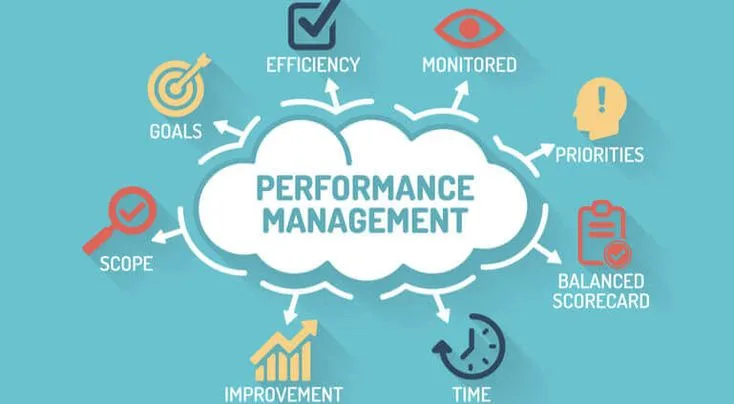
Conducting effective performance reviews requires continuous evidence, psychologically safe feedback, and a clear separation between development and high-stakes administrative decisions where possible. Annual evaluations invite recency bias and defensiveness, while unstructured check-ins can avoid difficult accountability conversations. A stronger system combines regular feedback, documented contributions, explicit expectations, and structured evaluation rather than relying on any one ritual.
A performance review is a structured evaluation of an employee's work over a defined period, typically conducted by their direct manager, combining assessment of past contributions with forward-looking development planning.
When done well, it is one of the most powerful tools an organization has for developing talent, aligning expectations, and building the trust that retains high performers.
When done poorly - which is most of the time - it is an expensive exercise that damages morale, distorts behavior, and teaches employees that the organization does not take their growth seriously.
The gap between how performance reviews are typically conducted and how the research says they should be conducted is enormous.
Understanding that gap - and closing it - is the task this article addresses, drawing on decades of organizational psychology research, real-world corporate experiments, and the practical experience of managers who have learned what works through trial and error.
"The annual performance review is one of the most expensive activities in the corporation that destroys value." - Marcus Buckingham and Ashley Goodall, Nine Lies About Work (2019)
The Scale of the Problem
In 2012, Adobe abolished its annual performance review process. The company's head of HR, Donna Morris, called them "costly, painful, and counter-productive." Adobe estimated that annual reviews consumed 80,000 manager hours per year - the equivalent of 40 full-time employees doing nothing but writing and delivering reviews.
Within a year of replacing annual reviews with a continuous feedback system called "Check-In," voluntary attrition dropped by 30% and involuntary departures rose by 50%, suggesting the new system enabled both retention of valued employees and more timely action on performance issues (Adobe, 2013).
Other major companies followed. Microsoft abandoned stack ranking in 2013 after years of internal criticism that the system pitted employees against each other rather than fostering collaboration.
Accenture dropped annual reviews in 2015, with CEO Pierre Nanterme calling it a process that "doesn't really work" for 330,000 employees.
Deloitte redesigned its system in 2015 after calculating that the company spent 1.8 million hours per year on performance management.
General Electric, which had pioneered the controversial "rank and yank" system under Jack Welch, quietly abandoned forced ranking and moved to a continuous feedback app called PD@GE.
But the lesson was not simply that performance evaluation is broken. Several companies that "abolished" annual reviews quietly reintroduced structured evaluations under different names when they discovered that informal check-ins alone did not provide the accountability structure that high-performing organizations need.
The Washington Post reported in 2016 that some early adopters of review-free systems were experiencing "performance management anarchy" - managers avoided difficult conversations entirely when no structure required them.
The research points to a middle path: not the elimination of structured evaluation, but its transformation from a once-a-year anxiety ritual into a continuous practice integrated with ongoing development.
Why Annual Reviews Often Fail: The Research
The critique of traditional annual performance reviews is not merely anecdotal. Several well-documented cognitive and structural problems make the conventional format less effective than alternatives.
Recency Bias
Recency bias - the tendency to weight recent events more heavily than older ones - is one of the most consistently documented problems in performance evaluation.
When a manager tries to recall an employee's performance over twelve months, events from the last two to three months are far more accessible than events from January and February. A strong Q4 can rescue a mediocre year; a difficult November can overshadow eleven months of solid work.
Research by Scott Highhouse and colleagues (2019), published in the Journal of Applied Psychology, found that recency bias in annual reviews was particularly pronounced when managers had not kept systematic records, when employees were less visible to their managers, and when the review covered longer time periods.
A meta-analysis by Jawahar and Williams (1997) in the Journal of Applied Psychology confirmed that performance ratings are significantly more influenced by recent performance than by early-period performance, even when objective productivity data shows no actual change.
The structural implication is clear: annual reviews invite the bias by design. More frequent evaluation checkpoints with documented evidence reduce it.
High Stakes Activate Defensiveness
When a performance rating directly determines compensation, promotion eligibility, and employment security, the conversation transforms from developmental to adversarial. The employee's primary goal becomes defending their rating, not identifying areas for improvement.
The manager's primary goal becomes justifying a predetermined number, not having an honest dialogue.
Research on feedback-seeking behavior by Susan Ashford, Ruth Blatt, and Don VandeWalle (2003), published in the Annual Review of Organizational Psychology, consistently shows that people are most willing to seek and genuinely process feedback when the information feels psychologically safe - when learning from the feedback does not jeopardize status or rewards.
Combining evaluation and development in a single high-stakes conversation violates this condition by design.
Amy Edmondson of Harvard Business School, whose research on psychological safety has become foundational to organizational psychology, found that teams with high psychological safety learn faster, innovate more, and identify errors sooner.
Performance reviews that feel threatening reduce psychological safety precisely when it is most needed - during conversations about improvement (Edmondson, 1999).
Once-a-Year Feedback Arrives Too Late
Learning requires timely feedback. In any domain where skill development matters - and that encompasses most knowledge work - feedback delivered months after the behavior has severely limited impact.
Corrective feedback about a January presentation, delivered in December, cannot change how the person presents in February through November. The connection between action and evaluation is too distant for learning to occur.
Research on feedback timing by Avraham Kluger and Angelo DeNisi (1996), in one of the most comprehensive meta-analyses ever conducted on feedback effectiveness (Psychological Bulletin), analyzed 607 studies with over 23,000 observations. Their findings were striking: one-third of feedback interventions actually decreased performance.
The most common cause was feedback that was evaluative rather than informational, delayed rather than timely, and focused on the person rather than the task.
Ratings Can Reduce Performance
CEB (now Gartner) conducted a landmark study involving 10,000 senior managers across multiple industries and found that traditional performance appraisals actually reduced employee performance by 10% on average, with one in three employees showing a measurable decline in output following their annual review.
The mechanism was motivational: appraisals activated social comparison with peers rather than focus on individual improvement, and the public nature of ratings increased anxiety that redirected cognitive resources from productive work to status defense.
A separate study by Adler and colleagues (2016), published in Industrial and Organizational Psychology, found that 95% of managers were dissatisfied with their organization's performance management system, and 90% of HR professionals did not believe the process yielded accurate information about employee performance.
When both the evaluators and the architects of the system believe it does not work, the system has a fundamental design problem.
The Case for Continuous Feedback
The research case for more frequent, lower-stakes feedback is strong. But the implementation challenge is real - "informal" often means "inconsistent" and frequently means "absent."
What Continuous Feedback Actually Requires
Regular cadence: Weekly or bi-weekly one-on-ones provide the rhythm for ongoing feedback without the anxiety of formal reviews.
Research by Gallup (2017), based on surveys of over 80,000 managers, found that employees who receive meaningful feedback at least weekly are 3.2 times more likely to be engaged at work than those who receive feedback annually.
The agenda can be flexible - project updates, blockers, development conversations - but the habit of regular dialogue creates the conditions for honest exchange.
Specificity and timeliness: Effective feedback is specific to observable behavior, connected to impact, and delivered close to the event. Compare these two pieces of feedback:
- Vague and late: "Communication is an area for growth" (delivered in December about the whole year)
- Specific and timely: "In the stakeholder presentation last Thursday, slowing down during the technical section made a real difference - the Q&A showed they had followed the argument. Keep doing that." (delivered Friday)
The second produces learning. The first produces confusion and defensiveness.
A documentation habit: Continuous feedback only improves annual evaluations if someone is keeping records.
Managers who maintain a running log of significant events - contributions, difficult situations handled well or poorly, feedback given and received, with dates - can write evidence-based annual reviews. Those who rely on memory are writing fiction.
Separating Development from Evaluation
Multiple researchers, including Edward Lawler (2003) and Samuel Culbert (2010), have recommended formally separating developmental conversations ("what should you learn and improve?") from evaluative conversations ("how did you perform, and what does that mean for compensation?").
The principle has real practical value even though perfect separation is impossible, since every development conversation exists in the context of the evaluative relationship.
One effective implementation: hold regular development-focused one-on-ones throughout the year, and hold a separate, explicitly evaluative conversation at review time.
The former establishes a pattern of open dialogue about growth; the latter handles the legitimate organizational need for accountability and compensation calibration without corrupting every developmental conversation with performance anxiety.
Deloitte's redesigned system, described by Marcus Buckingham and Ashley Goodall in a 2015 Harvard Business Review article, operationalized this principle by asking managers four forward-looking questions rather than backward-looking ratings: (1) Would I want this person on my team?
(2) Would I promote this person today? (3) Is this person at risk of low performance? (4) Given what I know, would I always want this person on my team? These questions captured the manager's genuine assessment without forcing artificial numerical ratings that created false precision.
How to Write a Self-Review That Works
Self-reviews are among the most underutilized elements of the review process. Many employees approach them perfunctorily - a quick paragraph about responsibilities - while others overcorrect into defensive self-promotion that managers discount.
A well-constructed self-review serves three purposes: it advocates for contributions, provides information the manager may lack (particularly for work outside the manager's direct visibility), and signals maturity through honest acknowledgment of growth areas.
Structure for an Effective Self-Review
Lead with significant contributions from the full period - not responsibilities, but actual outcomes. What exists or is better because of your work?
Quantify where possible: "Reduced API response time by 40%," "Closed 12 enterprise accounts totaling $1.2M ARR," "Trained three new hires who are now independent contributors." Avoid vague claims ("contributed to team success") in favor of specific, attributable results.
Acknowledge genuine challenges without over-explaining or deflecting blame. If a project struggled, the self-review that says "Project X fell behind schedule; I underestimated the integration complexity and should have flagged the risk earlier" is more credible and demonstrates more growth than one that catalogs all the external reasons.
Managers know what actually happened. A self-review that aligns with observable reality is taken seriously; one that does not is discounted entirely.
Identify one or two genuine growth areas with specificity. "I want to improve at stakeholder communication" is vague and signals perfunctory compliance.
"I want to get better at translating technical constraints into language that helps non-technical stakeholders make decisions without oversimplifying the trade-offs" is specific, shows self-awareness, and suggests concrete development directions.
Propose how the organization can support your growth. What stretch assignment, learning resource, mentorship, or scope change would help? Managers generally appreciate employees who think about their own development actively rather than waiting for development to happen to them.
This aligns with research on proactive career behavior by John Crant (2000), which found that employees who take initiative in shaping their development trajectories advance faster and report higher career satisfaction.
| Self-Review Pitfall | Why It Fails | Better Approach |
|---|---|---|
| Listing responsibilities, not contributions | Describes the job, not the person's impact | Focus on specific outcomes and measurable impact |
| Claiming group achievements as sole work | Managers know what was collaborative | Say "led X aspect of" or "contributed to Y by doing Z" |
| Ignoring all weaknesses | Signals lack of self-awareness | Name one genuine growth area with specificity |
| Over-explaining failures | Reads as defensive; reduces credibility | Acknowledge, note what you learned, move forward |
| Only recent examples | Compounds recency bias in the system | Deliberately include examples from the full review period |
| Vague claims without evidence | Cannot be evaluated; feels inflated | Every claim should have at least one specific, dated example |
For more on how to think strategically about your career trajectory, see career strategy explained.
How Managers Should Prepare
The quality of a performance review is determined more by the manager's preparation than by any other single factor.
Research by London and Smither (2002), published in Human Resource Management Review, found that the single strongest predictor of employee satisfaction with the review process was the degree to which the employee perceived the manager had invested genuine time and thought in preparation.
Document Throughout the Year
The single most effective practice a manager can adopt is keeping a running record of significant events for each direct report - positive and negative, with dates and context.
This need not be formal; a shared document, a note in a task management system, or even dated entries in a notebook serve the purpose. The record provides three critical functions:
- It makes the annual review an evidence-based document rather than a memory exercise
- It counters recency bias by making early-year events as accessible as recent ones
- It provides the specific examples that make feedback concrete and credible
Kim Scott, author of Radical Candor (2017), recommends spending 2-3 minutes after each one-on-one jotting down key observations. Over a year, this produces 50-100 dated data points per employee - a rich evidence base that transforms review preparation from a stressful memory test into a synthesis exercise.
Read the Self-Review Carefully Before the Meeting
This sounds obvious, but many managers skim the self-review minutes before the conversation or treat it as supplementary to their prior judgment. Reading the self-review carefully, in advance, with genuine openness to information you did not have, serves both the employee and the process.
Where the self-review and your assessment diverge significantly, the divergence itself is the most important information in the review - either you are missing something, or the employee has a blind spot worth discussing.
Focus on Two or Three High-Impact Areas
Annual reviews that attempt comprehensive coverage of every dimension of performance produce evaluations too diffuse to drive behavior change.
The Kluger and DeNisi (1996) meta-analysis found that feedback is most effective when it is specific, focused on a small number of high-priority items, and task-oriented rather than person-oriented.
Identifying two or three genuine strengths and one or two specific growth areas produces more learning than comprehensive ratings across twenty dimensions.
Have the Conversation, Not the Presentation
The most common failure mode in review conversations is the manager talking for most of the time.
Research by Cawley, Keeping, and Levy (1998), published in the Journal of Applied Psychology, found that employee participation in the review discussion was the single strongest predictor of satisfaction with the process, perception of fairness, and intention to improve.
Simply allowing employees to share their perspective - what energized them, what was difficult, what they feel proud of - produces better outcomes than the most carefully crafted manager monologue.
A practical structure: start by asking the employee's perspective ("How would you describe this year?"), listen without formulating your counter-response, then share your assessment with specific examples. Treat disagreement as the beginning of a conversation rather than a problem to resolve in the meeting.
Calibration: Making Ratings More Fair
Individual manager ratings are notoriously variable. What counts as "meets expectations" in one manager's framework is "below expectations" in another's.
This is not merely a statistical annoyance - it has real consequences for employees evaluated by systematically lenient or strict managers, and for the quality of organizational performance data.
Calibration meetings bring managers together to compare and normalize ratings before they are finalized. A common format has each manager present proposed ratings with brief justifications, while the group challenges inconsistencies and outliers.
What Well-Run Calibration Achieves
- Reduces inter-rater variance: An "Exceeds Expectations" rating means the same thing across the organization, making cross-team comparisons meaningful
- Surfaces unconscious bias: Patterns invisible to individual managers become visible at the group level. Research by Castilla (2015), published in Organization Science, found that calibration processes significantly reduced gender and racial disparities in performance ratings at a large professional services firm
- Improves evidence quality: Managers who know their ratings will be publicly defended tend to keep better documentation throughout the year
- Creates consistency for promotion decisions: Calibrated ratings provide a more reliable basis for high-stakes talent decisions
What to Watch Out For
Calibration meetings can reproduce existing power dynamics: the most senior or confident manager's view can anchor the group's assessment, reducing rather than increasing accuracy.
Effective facilitation requires that justifications be evidence-based, that all voices are heard, and that discussion centers on observable behavior and outcomes rather than personal impressions.
There is also a risk that calibration meetings tied to forced ranking or bell-curve distribution requirements produce ratings that reflect distribution targets rather than actual performance. Forced ranking has been largely abandoned by most major corporations.
Microsoft's infamous "stack ranking" abandonment in 2013 is the most cited example - a system that Kurt Eichenwald described in a 2012 Vanity Fair article as "the most destructive process inside of Microsoft," because it incentivized employees to avoid working with talented colleagues who might outrank them.
For more on how organizational incentive structures shape behavior, see principal-agent problem explained.
Getting Useful Feedback as an Employee
The passive recipient model of performance reviews - waiting for the manager to deliver a verdict - is inefficient. Employees who actively shape the feedback they receive get more of it and more useful feedback.
Ask for specific feedback, not general impressions. "What is one thing I could do differently in client meetings?" produces more actionable information than "How am I doing?" Research by Sheila Heen and Douglas Stone (2014), authors of Thanks for the Feedback, found that specific questions reduce the social awkwardness of giving feedback and make it easier for managers to provide concrete, useful observations.
Create feedback opportunities throughout the year. A brief message after completing a significant project - "I would find it useful to hear what worked and what you would approach differently" - normalizes ongoing feedback and reduces the pressure concentrated in the annual conversation.
Respond to feedback in ways that invite more. Defensive responses ("but the situation was...") reduce the likelihood of future candor. Genuine engagement ("that is useful - can you say more about what you noticed?") signals that feedback is welcome and will be acted on.
Over time, this builds a feedback-rich relationship that makes the formal review a formality rather than a revelation.
Seek feedback from multiple sources. A manager has one vantage point. Peers, stakeholders, skip-level leaders, and cross-functional collaborators provide a richer picture.
In formal 360-degree feedback processes or informal conversations, where multiple sources agree, the signal is strong; where they diverge, the divergence itself is informative.
For how to develop the interpersonal skills that make feedback exchanges productive, see emotional intelligence at work.
Common Rating Scales and Their Trade-Offs
Organizations use various rating scales, each with distinct advantages and failure modes:
| Scale Type | Example | Advantage | Risk |
|---|---|---|---|
| 3-point (Below / Meets / Exceeds) | Simple, low overhead | May lack granularity for differentiation | |
| 5-point (1-5 numeric or descriptive) | Most common; balances granularity and simplicity | Central tendency bias - most ratings cluster at 3-4 | |
| No rating (narrative only) | Reduces defensiveness; richer information | Harder to calibrate across managers; compensation decisions become opaque | |
| Forced ranking (top 20% / middle 70% / bottom 10%) | Forces differentiation | Damages collaboration; penalizes strong teams where everyone performs well | |
| Frequency-based ("How often does X demonstrate Y?") | Reduces absolutes; anchors in behavior | More complex to administer |
The trend in organizational practice has moved away from forced ranking and toward either simplified scales (3-point) or narrative-based systems supplemented by a small number of structured questions.
Google's system, described by Laszlo Bock in Work Rules! (2015), uses a 5-point scale with calibration meetings and has been refined over years based on internal data showing which practices actually predict future performance.
The Review as Culmination, Not Surprise
Perhaps the most important principle of effective performance management is that the formal review should contain no surprises. If an employee is significantly underperforming, they should have received specific, documented feedback long before the formal review.
If an employee is genuinely exceeding expectations, they should have heard that throughout the year.
The formal review is the culmination of a year of ongoing dialogue - a structured moment to synthesize, document, and formally acknowledge what has been a continuous conversation.
When this is how it functions, it becomes genuinely useful: a reliable record of contributions, a documented development plan, and a grounded basis for compensation decisions.
When it functions as the primary mechanism for delivering feedback, it comes too late, carries too much weight, and produces too little learning. The choice between these two versions of the performance review is determined by what happens in the other fifty weeks of the year.
For related guidance on building the leadership skills that make performance conversations productive, see adaptive leadership explained. For the broader context of how career development decisions should be approached, see career decision making.
Sources & Further Reading
- Buckingham, M., & Goodall, A. (2019). Nine Lies About Work: A Freethinking Leader's Guide to the Real World. Harvard Business Review Press.
- Buckingham, M., & Goodall, A. (2015). Reinventing Performance Management. Harvard Business Review, April 2015. View source
- Kluger, A. N., & DeNisi, A. (1996). The Effects of Feedback Interventions on Performance: A Historical Review, a Meta-Analysis, and a Preliminary Feedback Intervention Theory. Psychological Bulletin, 119(2), 254-284. DOI: 10.1037/0033-2909.119.2.254
- Ashford, S. J., Blatt, R., & VandeWalle, D. (2003). Reflections on the Looking Glass: A Review of Research on Feedback-Seeking Behavior in Organizations. Journal of Management, 29(6), 773-799. DOI: 10.1016/S0149-2063(03)00079-5
- Edmondson, A. C. (1999). Psychological Safety and Learning Behavior in Work Teams. Administrative Science Quarterly, 44(2), 350-383. DOI: 10.2307/2666999
- Cawley, B. D., Keeping, L. M., & Levy, P. E. (1998). Participation in the Performance Appraisal Process and Employee Reactions. Journal of Applied Psychology, 83(4), 615-633. DOI: 10.1037/0021-9010.83.4.615
- Castilla, E. J. (2015). Accounting for the Gap: A Firm Study Manipulating Organizational Accountability and Transparency in Pay Decisions. Organization Science, 26(2), 311-333. DOI: 10.1287/orsc.2014.0950
- Gallup. (2017). State of the American Workplace. View source
- Bock, L. (2015). Work Rules!: Insights from Inside Google That Will Transform How You Live and Lead. Twelve.
- Scott, K. (2017). Radical Candor: Be a Kick-Ass Boss Without Losing Your Humanity. St. Martin's Press.
- Heen, S., & Stone, D. (2014). Thanks for the Feedback: The Science and Art of Receiving Feedback Well. Viking.
- Culbert, S. A. (2010). Get Rid of the Performance Review!: How Companies Can Stop Intimidating, Start Managing - and Focus on What Really Matters. Business Plus.
- Jawahar, I. M., & Williams, C. R. (1997). Where All the Children Are Above Average: The Performance Appraisal Purpose Effect. Personnel Psychology, 50(4), 905-925. DOI: 10.1111/j.1744-6570.1997.tb01487.x
- Eichenwald, K. (2012). Microsoft's Lost Decade. Vanity Fair, August 2012. View source
- London, M., & Smither, J. W. (2002). Feedback Orientation, Feedback Culture, and the Longitudinal Performance Management Process. Human Resource Management Review, 12(1), 81-100. DOI: 10.1016/S1053-4822(01)00043-2