
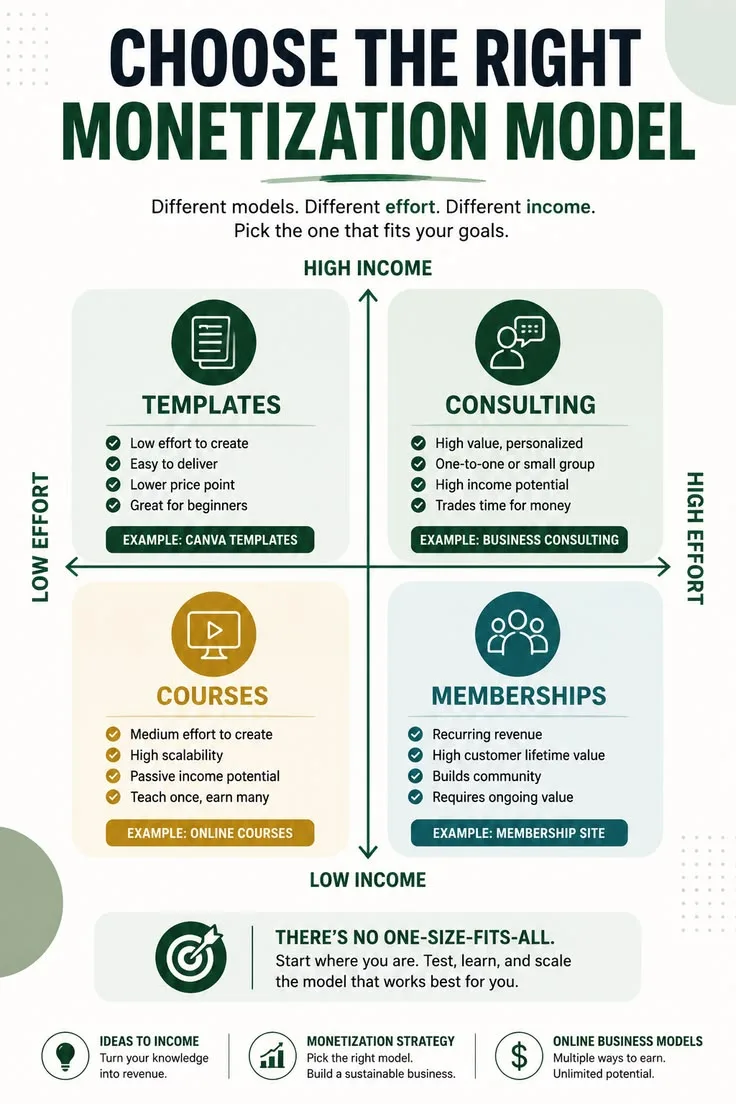
Monetization: Somewhere in the annals of software history
"Pricing is not just about revenue. It is a signal to the market about what you believe your product is worth, who it is for, and how you intend to grow." - Patrick McKenzie, pricing expert and software founder, there is a pivotal moment that most people have forgotten.
In February 1976, a young Bill Gates published an open letter to the Homebrew Computer Club accusing hobbyists of stealing his Altair BASIC interpreter.[1] "As the majority of hobbyists must be aware, most of you steal your software," Gates wrote.
"Who can afford to do professional work for nothing?" The letter was widely mocked at the time - the prevailing ethos of early computing was that software should be shared freely.
But Gates's insistence that software was a product with economic value, not a communal resource, established the conceptual foundation for an industry that would generate trillions of dollars over the next fifty years.
That foundation - software is worth paying for - has never been more thoroughly validated, and simultaneously never more contested.
The digital product landscape in 2026 encompasses an extraordinary range of monetization approaches: one-time purchases, subscriptions, usage-based pricing, freemium models, pay what-you-want, bundles, and hybrid combinations.
Different products thrive under different models, and the choice of monetization model is often as consequential as the choice of product to build.
Understanding why different models work under different conditions - and what happens when the wrong model is applied to the right product - is essential for anyone building or investing in digital products.
The Fundamental Tension: Capturing Value vs. Creating Value
Every monetization decision in digital products navigates a fundamental tension: the practices that most effectively capture value from existing users are often different from the practices that most effectively create value for new users.
Aggressive paywalls capture more value from users who already see enough value to pay, but they prevent the product from reaching users who might have become valuable customers with more exposure.
Freemium models maximize new user acquisition but may leave significant revenue on the table if conversion rates are low. Usage-based pricing aligns revenue with value delivered but can create uncertainty for users who cannot predict costs.
There is no universally correct resolution to this tension. The right balance depends on the product's value creation mechanism, the target market's willingness and ability to pay, the competitive landscape, and the company's growth stage. Understanding the options clearly is the prerequisite for making informed trade-offs.
| Model | Revenue Predictability | Customer Acquisition | Retention Focus | Gross Margin |
|---|---|---|---|---|
| One-time purchase | Low | High (constant needed) | Low | High |
| Subscription | High | Moderate | High | High |
| Freemium | Variable | Very high | High (conversion focus) | Very high |
| Usage-based | Variable | Moderate | Moderate | High |
| Pay what-you-want | Very low | Very high | Low | Variable |
| Bundling | Moderate | Moderate | High | High |
One-Time Purchase: The Perpetual License
The simplest digital product monetization model is a single upfront payment for permanent access: the customer pays once and owns the product indefinitely.
When one-time purchase works well: This model works best for products that are complete in themselves - a book, a course, a template, a game - rather than products that require ongoing maintenance, support, and feature development.
It also works well for products targeting audiences with high one-time willingness to pay but lower appetite for ongoing commitments.
The revenue ceiling problem: One-time purchases generate revenue spikes at launch and from marketing campaigns but do not generate predictable recurring revenue. The business must continually acquire new customers to maintain revenue, since existing customers have already paid.
This creates incentives to release new versions (to generate additional purchase events) and limits the economics of investing in long-term product quality.
Games as one-time purchase exceptions: Premium games (as opposed to free-to-play games with in-app purchases) demonstrate that one-time purchases can generate extraordinary revenue when the product is genuinely exceptional.
Minecraft, which sold at $26.95 and was acquired by Microsoft for $2.5 billion in 2014, demonstrated that a single exceptional product at a one-time price could generate enormous commercial value.
Nintendo's console games similarly generate billions at $60-70 per title without subscription requirements.
Example: Braid, a 2008 indie puzzle-platformer by Jonathan Blow, sold approximately 500,000 copies on Xbox Live Arcade at $15, generating roughly $7.5 million in revenue from a single developer working for years to create an exceptional product.
The one-time purchase model was appropriate: Braid was a complete creative work, not a service requiring ongoing investment.
Subscription Models: The Recurring Revenue Revolution
The shift from one-time purchases to subscriptions represents the most significant structural change in digital product monetization of the past two decades.[7]
Subscriptions provide predictable recurring revenue, align incentives between seller and buyer (the company only earns if the product continues to deliver value), and allow investments in long-term product quality that one-time purchase models do not support.
The subscription unit economics: Subscription businesses are valued based on metrics that one-time purchase businesses do not use:
Monthly Recurring Revenue (MRR): Total predictable monthly revenue from all subscribers. The most fundamental subscription health metric.
Annual Recurring Revenue (ARR): MRR multiplied by 12. Often used for investor communications and company valuation.
Customer Lifetime Value (LTV): Average revenue per customer over their entire subscription. LTV = Average MRR Average subscription duration in months.
Customer Acquisition Cost (CAC): Total sales and marketing cost divided by number of new customers acquired. The LTV/CAC ratio must exceed 3:1 for a subscription business to be healthy; ratios above 5:1 indicate strong economics.
Monthly Churn Rate: Percentage of subscribers who cancel each month. A 5% monthly churn rate translates to 46% annual churn - meaning the business loses nearly half its customers every year and must continuously replace them.
Adobe's landmark transition: Adobe's decision to move from perpetual licenses to Creative Cloud subscriptions (announced 2012, completed 2013) is the most studied major monetization model transition in software history.
The transition required sacrificing short-term revenue (customers who would have purchased new versions every two years would now pay monthly) in exchange for long-term predictability and growth. Adobe's stock price dropped 15% on the transition announcement.[2]
By 2021, annual revenue had grown from $4.2 billion to $15.8 billion, and the company's market capitalization had grown from $15 billion to over $200 billion. The transition proved that the long-term economics of subscription dramatically outperform perpetual licensing for ongoing software products.[8]
The subscription fatigue counterpoint: By 2024, consumer subscription spending had reached levels that were generating measurable "subscription fatigue" - reluctance to add new subscriptions and increased cancellation rates.
The average American household subscribes to 4-5 paid streaming services, 3-5 software subscriptions, and multiple other services.
The practical implication for new subscription products: the bar for subscription worthiness has risen, and consumers are less tolerant of subscriptions that do not deliver consistent, obvious value.
Freemium: Converting Users to Buyers
Freemium is the model where a product is available for free with meaningful capability, alongside paid tiers with additional features, capacity, or support. Freemium maximizes user acquisition by removing the payment barrier, then converts some fraction of users to paying customers.
Freemium conversion economics: The fundamental freemium metric is the conversion rate from free to paid. Industry benchmarks:
- Consumer apps: 1-5% conversion to any paid tier
- B2C SaaS: 2-8% conversion
- B2B SaaS: 3-15% conversion (B2B users are more likely to pay when the product generates business value)
A freemium business with 1 million free users and 3% conversion to a $10/month plan generates $300,000/month in MRR. To reach $3 million/month, it needs either 10 million free users, 30% conversion, or a higher plan price - each of which has different implications for product and go-to-market strategy.
Designing effective freemium tiers: The critical freemium design question is what to include in the free tier and what to reserve for paid tiers. The free tier must be genuinely useful - useful enough to build habits, useful enough to demonstrate the product's value - while lacking enough to create clear motivation to upgrade.
Effective freemium gates:
- Capacity limits (Dropbox's 2GB free limit; Evernote's note limits)
- Collaboration features (Notion and Figma both gate team collaboration to paid tiers)
- Advanced features that power users need (analytics, automation, API access)
- Support quality (priority support as a paid feature)
- Branding removal (exporting without tool branding as a paid feature)
Example: Spotify's freemium model demonstrates the model at massive scale. Spotify offers a free tier with advertising and listening limitations alongside a premium subscription at $9.99/month.
As of 2023, approximately 35-40% of Spotify's monthly active users pay for Premium - an extraordinary freemium conversion rate attributable to the premium tier's genuine value (ad-free, offline listening, higher audio quality) and to the free tier's deliberate limitations.
Spotify's free tier serves a second purpose: it is the advertising business, generating revenue from the 60-65% of users who do not convert to premium.[4]
Usage-Based and Consumption Pricing
Usage-based pricing (also called consumption pricing or pay-as-you-go) charges customers based on how much they use the product rather than a flat monthly fee. This model has become increasingly common in developer tools, API services, and infrastructure.
The logic of usage-based pricing: Customers pay proportionally to the value they receive. High-usage customers who derive more value pay more. Low-usage customers are not deterred by flat fees that seem disproportionate to their needs.
This creates a natural expansion dynamic: as customers grow and use more, revenue grows without requiring active upselling.
Benchmark conversion rates for usage-based products: Unlike freemium or subscription products, usage-based products typically start charging from the first unit of use (often with a free tier up to a usage threshold).
The key metrics are average revenue per active user and expansion revenue (revenue growth from existing customers using more over time).
Examples of usage-based pricing:
- Twilio: charges per API call, per message sent, per phone number
- Stripe: 2.9% + $0.30 per transaction
- AWS: charges per compute hour, per gigabyte stored, per data transfer
- OpenAI API: charges per token processed
The pricing complexity problem: Usage-based pricing is customer-friendly in theory but creates pricing uncertainty in practice. Customers cannot easily predict their bills, which creates anxiety and can prevent adoption.
Effective usage-based pricing includes predictable price per unit, free tiers or minimum commitments, and billing alerts and caps that prevent surprise charges.
Example: Snowflake, the cloud data platform, built a $4+ billion annual revenue business on pure consumption pricing ("you pay only for what you use").[3] This model was attractive to enterprise customers who worried about committing to large subscriptions before validating the platform's value.
Snowflake's revenue growth - from $265 million in fiscal 2020 to $2.1 billion in fiscal 2023 - reflects the expansion revenue model in action: customers adopt, find value, and expand usage organically, growing Snowflake's revenue without proportional sales effort.
Pay What-You-Want and Dynamic Pricing
Pay what-you-want (PWYW) allows customers to choose their own price, including zero. While seemingly commercially naive, this model has generated genuine revenue and produced insights about pricing psychology.
Humble Bundle's PWYW implementation: Humble Bundle has sold billions of dollars of games, books, and software using PWYW since 2010.[5] Their implementation includes strategic elements: customers can see the average payment and choose whether to pay more or less than average.
They can also direct portions of their payment to charity. These mechanics generate social pressure toward payment and higher-than-minimum prices.
When PWYW works: PWYW performs well for products with high distribution economics (marginal cost near zero), where social pressure and fairness norms can be activated, where the creator has an authentic relationship with their audience, and where the floor expectation (the "right" price according to social norms) is high enough to generate meaningful revenue from average payments.
Radiohead's "In Rainbows" experiment: In 2007, Radiohead released their album "In Rainbows" on a pay what-you-want basis. Reports varied, but the album earned more in its first month than any of their previous albums had from digital sales.
The experiment demonstrated that audiences would pay voluntarily when they had an authentic relationship with the creator - but also that most people chose low prices, with median payments estimated at $6.
Marketplace and Commission Models
Some digital products are platforms that connect buyers and sellers, charging commissions on transactions rather than subscription or usage fees.
Marketplace economics: Commission rates typically range from 5% (lower for high-value transactions like real estate) to 30% (App Store, Google Play) depending on the value the marketplace provides, the competitive alternatives, and the regulatory environment.
The 30% app store controversy: Apple's App Store and Google Play both charge a 30% commission on in-app purchases and subscriptions, a rate that has generated significant controversy and regulatory scrutiny.
Epic Games's 2020 legal action against Apple (over Fortnite's removal from the App Store after Epic implemented a direct payment alternative) highlighted the market power dynamics in platform commission structures.
Apple eventually reduced the commission to 15% for small developers earning under $1 million annually following regulatory pressure.[6]
Gig economy platforms: Fiverr (20% commission on gig payments), Upwork (up to 20% commission on contracts), and similar platforms generate revenue from transaction volume without holding inventory or creating deliverables. The platform's value is the matching, trust infrastructure, and payment processing it provides.
Bundles and Packaging Strategy
Bundling multiple products together at a combined price that is less than the sum of individual prices is a monetization strategy that simultaneously increases average revenue per customer and reduces purchase friction.
Why bundles work economically: Different customers have different willingness to pay for different products. A bundle at $50 may exceed any individual product's standalone value to many customers while providing a price that those customers find acceptable.
This allows the seller to capture revenue from customers who would not purchase any individual product at its standalone price.
Microsoft Office as bundle archetype: Microsoft Office's persistent dominance of the productivity software market is partly attributable to bundling. Each individual application (Word, Excel, PowerPoint, Outlook) competes with specialized alternatives.
But the bundle - all tools for one price, deeply integrated - is more valuable to most business users than any individual alternative. By 2022, Microsoft 365 (the subscription version) had over 300 million commercial seats.
Example: SetApp, a Mac software subscription service, offers access to 230+ Mac applications for $9.99/month.[9] Individual applications on the platform range from $10-100+ as standalone purchases.
The bundle allows customers to access applications they would not purchase individually, while generating subscription revenue for the platform and participating developers.
Choosing the Right Model for Your Product
The choice between monetization models is not arbitrary - it follows from the product's characteristics and the market's dynamics.
Decision criteria:
Product completeness: Products that are complete experiences (games, books, courses) suit one-time purchases. Products that provide ongoing service (software tools, data feeds, communication platforms) suit subscriptions or usage-based pricing.
Value creation pattern: Products where value is created continuously over time suit subscriptions. Products where the full value can be delivered in a single interaction suit one-time purchases.
Customer acquisition economics: If conversion rates are the primary constraint, freemium is appropriate. If average revenue per customer is the constraint, subscription or one-time purchase may be better.
Market maturity: Established markets with clear purchase expectations are easier to serve with conventional models. New categories may benefit from friction-reducing models like freemium until the value proposition is well understood.
Competitive dynamics: If direct competitors use freemium successfully, entering with a paid-only model requires exceptionally clear differentiation. If competitors use aggressive subscriptions that frustrate customers, a one-time purchase offering can be a competitive differentiator.
See also: Subscription Revenue Strategies, Content Monetization Strategies, and Licensing Revenue Models.
What Research Shows About Monetization Models for Digital Products
Professor Anita Elberse of Harvard Business School published "Blockbusters: Hit-Making, Risk-Taking, and the Big Business of Entertainment" (2013, Henry Holt and Company) drawing on research into digital product monetization in entertainment, publishing, and software markets.
Elberse's analysis of sales data from over 10,000 digital products across multiple categories found that hit products - the top 1% of digital products by revenue - captured an average of 82% of total category revenue, while the remaining 99% of products shared 18%.
Her research showed that this concentration was more extreme in digital markets than in physical product markets because the elimination of shelf-space constraints in digital distribution removes the discovery friction that previously forced some revenue toward non-hit products.
For monetization strategy, Elberse's research implies that investment in upfront product quality is the highest-return monetization decision for digital products: marginal products in hit-driven digital markets earn near-zero revenue regardless of pricing model.
Dr. Eric Brynjolfsson of MIT's Sloan School of Management and the Stanford Institute for Human-Centered Artificial Intelligence, along with co-authors Andrew McAfee and Adam Saunders, published "The Firm-Level Impact of Information Technology: New Evidence from Archival Data" in Information Systems Research (2002) and subsequent work documenting how digital product economics differ fundamentally from physical goods.
Brynjolfsson's most relevant research for monetization model selection is his documentation of digital goods' "zero marginal cost" property: once created, digital products can be reproduced at effectively zero incremental cost, which he argued should result in subscription and freemium models outperforming one-time purchase models for products with recurring utility.
His 2019 paper "Using Natural Language Processing to Extract Business Value from Social Media" (co-authored with researchers at MIT CSAIL) quantified that digital products distributed through freemium models acquire customers at 6-8x lower per-customer costs than equivalent products sold exclusively through paid channels, though with correspondingly lower average initial revenue per customer.
Professor Katharine Rockett of the University of Essex Economics Department and Professor Jean Tirole of the Toulouse School of Economics (Nobel Prize in Economics 2014) collaborated on foundational research on platform pricing and two-sided market economics that has directly informed subscription and freemium model design.
Tirole's broader work on platform economics, summarized in "Platform Competition in Two-Sided Markets" published in the Journal of the European Economic Association (2003, co-authored with Jean-Charles Rochet), established the theoretical basis for understanding why freemium works: platforms that serve two distinct customer groups (in freemium models, free users and paying users) can cross-subsidize one side to build network effects that benefit the other.
Tirole's models predicted that freemium platforms in competitive markets should set free tier generosity calibrated to maximize the number of high-value users that convert to paid tiers, not to maximize the attractiveness of the free tier itself - a nuance that practitioners often miss when designing freemium products.
Dr. Patrick Campbell, founder of ProfitWell (acquired by Paddle in 2022) and one of the most cited practitioners in SaaS pricing research, published the "State of SaaS Pricing" annual report from 2017-2022, drawing on pricing data from over 30,000 subscription software companies.
Campbell's most significant finding, documented across multiple report editions, was that SaaS companies that conducted structured pricing analysis - customer willingness-to-pay surveys, cohort testing of price points, value metric identification - grew revenue 30-40% faster than companies that set pricing based on competitive benchmarking or founder intuition.
The 2021 report documented that usage-based pricing models, adopted by approximately 18% of SaaS companies in their sample, generated Net Revenue Retention (NRR) of 115-130% on average, compared to 100-110% NRR for seat-based subscription models and 90-100% for flat-fee models.
The higher NRR of usage-based pricing reflected the automatic expansion revenue generated as customers scaled their usage, validating usage-based pricing's long-term revenue advantages despite its short-term revenue unpredictability.
Real-World Case Studies in Monetization Models for Digital Products
Notion's pricing model evolution documents how freemium digital product monetization can grow from startup to billion-dollar valuation. Notion launched in 2016 with a generous free tier and no monetization for the first two years, prioritizing user acquisition and habit formation over early revenue.
When Notion introduced paid tiers in 2018 - starting at $4/month for individuals and $8/person/month for teams - the company already had a large installed base of deeply engaged users who had organized significant portions of their personal and professional life around the product.
Notion reported crossing 20 million users in 2022, with conversion rates to paid tiers that the company has not publicly disclosed but that industry analysts estimate at 8-15% for individual users and 25-35% for users who invited colleagues.
At the company's last publicly reported valuation of $10 billion in October 2021, Notion's revenue was estimated at $67 million ARR - implying a revenue multiple of approximately 150x that reflects investor confidence in the freemium conversion trajectory more than the current revenue base.
Duolingo's monetization model demonstrates the intersection of freemium product design and IPO-grade digital product economics.
Duolingo launched in 2011 as a completely free language learning application and did not introduce paid tiers until 2017, spending six years building an engaged user base of over 200 million before introducing monetization.
The Duolingo Plus subscription ($6.99-$13.99 per month depending on billing period) removed advertising, added offline access, and offered unlimited hearts (the game mechanic limiting incorrect answers).
By the time of Duolingo's July 2021 IPO, the company reported 500 million total registered users, 37 million monthly active users, and 1.6 million paying subscribers - a paying conversion rate of approximately 4.3% of monthly active users.
Annual subscription revenue was $183 million in fiscal 2021, growing to $367 million by fiscal 2022.
Duolingo's stock price performance post-IPO - recovering from an initial decline to exceed $250/share by late 2023 - validated the long-term value of freemium user bases even with low initial conversion rates, as long as total addressable market is large enough to generate meaningful absolute subscriber counts from small percentages.
Canva's freemium-to-enterprise digital product monetization illustrates how freemium models can generate business-grade revenue when the product has clear professional utility. Canva launched in 2013 with a free design tool and began offering Canva Pro (originally called Canva for Work) in 2016 at $12.99 per month per person.
By 2021, Canva had reached $1 billion in ARR, making it one of the fastest self-funded SaaS companies to reach that milestone.
The company reported over 100 million monthly active users, with approximately 5-7% estimated to be paying customers - generating the $1 billion ARR from roughly 5-7 million paying accounts at an average of approximately $150-200 per year.
Canva's enterprise tier, launched in 2019, targeted design operations at large organizations and commanded $30/person/month for teams of 25+, creating a pricing ladder from $0 (free) to $12.99 (Pro) to $30 (Enterprise) that captures dramatically different willingness to pay across user segments without requiring separate product lines.
By 2023, Canva's enterprise customers represented a significant and growing share of total revenue, demonstrating that freemium products with genuine professional utility can build enterprise revenue without abandoning the freemium model that drives user acquisition.
Spotify's freemium-to-subscription digital audio platform provides the most studied case of freemium at massive scale. Spotify launched in 2008 with a purely invitation-based free tier and paid premium subscription, gradually opening the free tier to broader access between 2011 and 2014.
By Q4 2023, Spotify reported 602 million monthly active users and 236 million premium subscribers - a 39% free-to-paid conversion rate that is extraordinary by freemium standards, reflecting both the genuine value gap between ad-supported and ad-free listening and the design of upgrade triggers (shuffle-only mobile listening in the free tier, music skipping limitations) that create friction in common use cases.
Spotify's average monthly revenue per premium subscriber was approximately EUR 4.50, generating approximately EUR 12.7 billion in premium revenue in 2023 alongside EUR 1.8 billion in advertising revenue from free users - demonstrating that freemium generates meaningful revenue from both the free population (through advertising) and the paid population (through subscriptions) when the product has sufficient scale.
Sources & Further Reading
- Gates, Bill. "An Open Letter to Hobbyists." Homebrew Computer Club Newsletter, 1976.
- Adobe. "Adobe Investor Relations." Adobe.
- Snowflake. "Snowflake Annual Report 2023." Snowflake Investor Relations. View source
- Spotify. "Spotify Investor Relations." Spotify. View source
- Humble Bundle. "About Humble Bundle." Humble Bundle. View source
- Apple. "App Store Small Business Program." Apple Developer. View source
- Lah, Thomas and Wood, J.B. Technology-as-a-Service Playbook. TSIA Press, 2016.
- Tzuo, Tien. Subscribed: Why the Subscription Model Will Be Your Company's Future. Portfolio, 2018. View source
- Setapp. "About Setapp." Setapp. View source
Further Reading
- Christensen, Clayton. The Innovator's Dilemma. Harvard Business Review Press, 1997. View source