What Is a SaaS Pricing Model?
A SaaS pricing model is the structure that determines how a software-as-a-service company charges customers for access to its product - whether by the number of users, by how much they consume, by a flat recurring fee, or through some combination of these.
The choice of pricing model shapes not only revenue but also which customers are attracted, how those customers grow over time, and whether the pricing structure creates friction or encourages expansion.
Because pricing is both a revenue mechanism and a signal of positioning, selecting the right model is one of the most consequential decisions a SaaS company makes.[1]
Introduction: The $10 Million Pricing Decision
Year: 2015. Two nearly identical project management SaaS companies launch.
Company A's pricing:
- $9/user/month
- Unlimited projects
- Unlimited storage
- Simple, transparent
Company B's pricing:
- $49/month flat rate (up to 10 users)
- $99/month (up to 25 users)
- $199/month (up to 50 users)
- Same features across all tiers
Same product. Different pricing models.
Five years later:
Company A (per-user pricing):
- 50,000 users
- $4.5M ARR (Annual Recurring Revenue)
- Average account: $90/month (10 users)
- Strong with small teams
- Struggled with enterprise (adding users felt expensive)
Company B (flat-rate pricing):
- 15,000 users
- $7.4M ARR
- Average account: $494/month (24 users on average)
- Strong with growing teams
- Better expansion revenue
Same product. $2.9M revenue difference. Pricing model drove the outcome.
"Pricing is the moment of truth-all of marketing comes to focus in the pricing decision."
Peter Drucker
Why pricing matters more than founders think:
"Price is what you pay. Value is what you get. The goal of SaaS pricing is to make those two numbers feel identical in the customer's mind."
Warren Buffett (adapted)
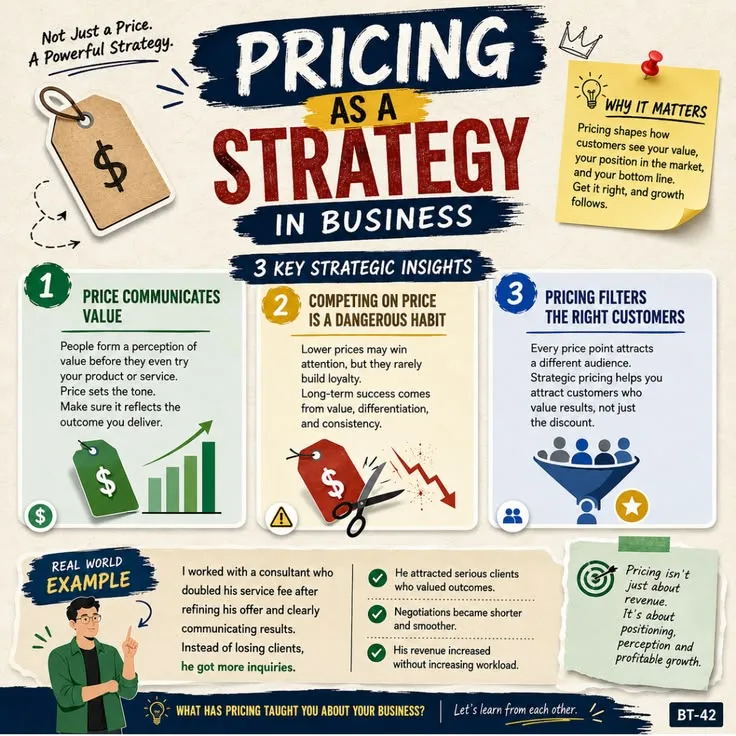
Pricing is NOT just "what do we charge?"
Pricing is:
- Your positioning signal ("Are we premium or budget?")
- Your customer filter (who can afford you shapes who you serve)
- Your growth mechanism (how customers expand determines revenue trajectory)
- Your competitive moat (or vulnerability)
Patrick Campbell (ProfitWell) found:
- Companies spend 6+ months building product
- 10+ hours on pricing
- Yet pricing has 4 impact on profitability vs. acquisition
This article explores:
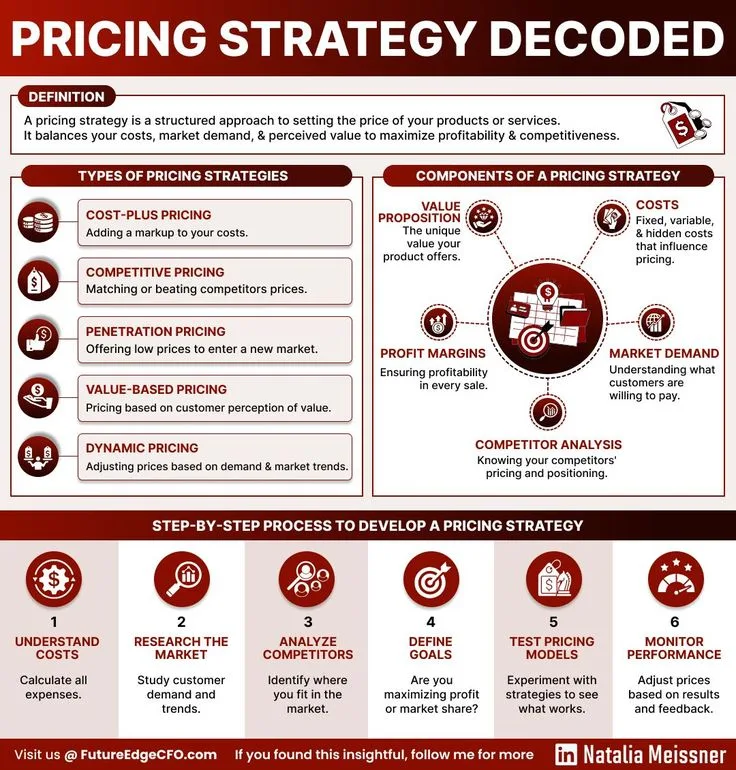
- Common SaaS pricing models and when each works
- Value metrics that align pricing with customer success
- Packaging and tier structure
- Pricing psychology and buyer behavior
- Testing and optimization
- Common pricing mistakes
| Pricing Model | Best Fit | Revenue Predictability | Growth Alignment | Complexity |
|---|---|---|---|---|
| Per-user (seat-based) | Collaboration tools | High | High | Low |
| Tiered features | Multi-segment products | High | Medium | Medium |
| Usage-based | Infrastructure, APIs | Variable | Very high | High |
| Flat rate | Simple, single-use tools | Very high | Low | Very low |
| Freemium | Consumer-facing, viral | Variable | High | Medium |
| Hybrid | Complex products | High | High | High |
Part 1: The Core Pricing Models
1. Per-User (Seat-Based) Pricing
Structure: Price per user per month/year
Examples:
- Slack: $8/user/month
- Asana: $10.99/user/month
- GitHub: $4/user/month
How it works:
- Customer pays for each person with an account
- Usually tiered (more users = volume discount)
- Clear, predictable revenue per seat
When it works best:
Product is user-centric (each person has their own workspace/data) Value scales with team size (more users = more value delivered) Easy to identify who's an "active user" Competitive with established per-user pricing
Advantages:
- Predictable growth: Add users = add revenue
- Aligns with customer expansion: As teams grow, revenue grows
- Simple to understand: "Cost per person"
- Self-service friendly: Easy to calculate cost
Disadvantages:
- Friction to add users: "Do I really need to pay $10/month for this person?"
- Shadow users: Teams share logins to avoid paying
- Penalizes growth: Feels like penalty for team expansion
- Volume discount pressure: Large teams negotiate lower per-seat prices
Real example: Slack's challenge
Early success: Per-user pricing worked brilliantly for growing startups
- Easy to understand
- Scaled naturally with team growth
- Predictable revenue
Enterprise friction:
- Large orgs have thousands of employees
- Not everyone needs Slack actively
- $8 → 5,000 employees = $40,000/month = $480,000/year
- Created resistance ("We'll use Microsoft Teams, it's included with Office 365")
Slack's response:
- Introduced "Active User" billing (only pay for users who used Slack in that month)
- Removed friction, but added complexity
Lesson: Per-user pricing scales until it doesn't. Large accounts often require flexibility.
2. Tiered Feature Pricing
Structure: Multiple tiers with increasing features/limits
Examples:
- Mailchimp: Free → Essentials ($13) Standard ($20) Premium ($350)
- Canva: Free → Pro ($12.99) Teams ($14.99/person)
- HubSpot: Starter → Professional → Enterprise
How it works:
- Different feature sets at different price points
- Often combined with usage limits (e.g., "up to 10,000 contacts")
- Upsell path from free/cheap to expensive
When it works best:
Clear feature differentiation (advanced features for power users) Diverse customer segments (small teams vs. enterprises need different things) Freemium strategy (convert free users to paid) Natural upgrade path (customers grow into higher tiers)
Advantages:
- Captures different willingness to pay: Small startups pay less, enterprises pay more[8]
- Clear upgrade path: "Here's what you get when you upgrade"
- Anchoring effect: Middle tier often looks like "best value"
- Flexibility: Can adjust features without changing price
Disadvantages:
- Feature gating frustration: "Why can't I have this basic feature?"
- Complexity: Hard to communicate clearly
- Support burden: Different customers have different feature sets
- Upgrade friction: Customers resist moving to higher tiers
Best practices:
1. Keep tier differentiation clear
Bad example:
- Tier 1: 5 projects, 10 GB storage, email support
- Tier 2: 15 projects, 25 GB storage, chat support, advanced reporting
- Tier 3: Unlimited projects, 100 GB storage, phone support, advanced reporting, API access, custom fields
Problem: Too many variables. Hard to understand value.
Good example:
- Tier 1: Core features for individuals
- Tier 2: Collaboration features for small teams
- Tier 3: Advanced automation and integrations for scaling teams
Principle: Each tier serves a different persona, not just "more stuff."
2. Avoid reverse trials
Reverse trial: Give everything upfront, then take features away if they don't upgrade.
Problem: Loss aversion. Taking away features feels punishing.
Better: Start with limited features, add more when they upgrade. Gain feels rewarding.
3. Usage-Based (Consumption) Pricing
Structure: Pay for what you use
Examples:
- AWS: Pay per hour of compute, GB of storage, API calls
- Twilio: Pay per SMS sent, per minute of voice calls
- Snowflake: Pay per data processed
How it works:
- Charge based on consumption of some metric
- Can be metered (exact usage) or bucketed (e.g., "0-10K API calls = $49, 10K-50K = $149")
When it works best:
Variable usage patterns (some customers use 10, others use 100) Clear value metric (more usage = more value) Elastic demand (usage can scale up/down) Infrastructure/utility products (developers, data products)
Advantages:
- Perfectly aligned with value: Pay for what you use
- Low barrier to entry: Start small, scale up naturally
- No "leave money on table" problem: High users pay appropriately
- Expansion revenue automatic: As customers succeed, they use more
Disadvantages:
- Unpredictable costs for customers (budgeting is hard)
- Revenue unpredictability for you (harder to forecast)
- Billing complexity (metering, overage handling)
- Optimization incentive (customers reduce usage to save money)
Choosing the right value metric:
Good value metrics:
- Clearly understood: Customer knows what they're buying ("per email sent")
- Aligned with value: More usage = more value received
- Grows with success: As customer succeeds, usage grows naturally
- Measurable: Easy to track accurately
Examples of good metrics:
- Stripe: Per transaction (aligns with customer revenue)
- SendGrid: Per email sent (aligns with customer growth)
- Datadog: Per monitored host (aligns with infrastructure scale)
Examples of bad metrics:
- "Per page view" for analytics (confusing: is that good or bad? incentivizes limiting tracking)
- "Per minute of video" for editing software (doesn't align with value-some videos are more valuable)
- "Per API call" for simple CRUD operations (encourages batching and workarounds)
Hybrid usage-based:
Pattern: Base subscription + usage overage
Example: Mailchimp
- $20/month base (up to 10,000 contacts)
- $0.002/contact beyond 10,000
Advantages:
- Predictable baseline revenue
- Captures high-usage value
- Reduces customer bill shock
4. Flat-Rate Pricing
Structure: Single price, unlimited usage
Examples:
- Basecamp: $99/month for entire company, unlimited users/projects
- Netflix: $15.49/month, unlimited streaming
- Sketch: $9/editor/month, unlimited projects
How it works:
- One price covers everything
- No tiers, no usage limits, no complexity
When it works best:
Simple product (hard to tier meaningfully) Selling simplicity (positioning against complex competitors) Predictable usage (most customers use similar amounts) Premium positioning (flat rate feels generous)
Advantages:
- Ultimate simplicity: No decision fatigue
- Marketing differentiator: "We charge fairly-one price for everyone"
- Reduces friction: No worrying about limits
- Lower support burden: No tier confusion
Disadvantages:
- Leave money on table: Heavy users pay same as light users
- Limited expansion revenue: Can't upsell on usage
- Underpricing risk: Have to get the single price right
- Less segmentation: Can't capture different willingness to pay
Real example: Basecamp's bold move
2020: Basecamp switched from per-user to flat $99/month unlimited.
Reasoning:
- Competitors (Asana, Trello) had per-user friction
- Basecamp wanted to stand out
- Target customers (small businesses) appreciated simplicity
- Positioned as "fair" vs. "nickel-and-dime"
Result:
- Strong differentiation
- Easier sales conversations
- Some large customers (hundreds of users) got incredible value
- Some small customers (2-3 users) overpaid relative to competitors
Tradeoff: They chose brand differentiation and simplicity over maximizing revenue per customer.
When flat-rate works: When your competitive advantage is simplicity and fairness, not maximizing ARPU (Average Revenue Per User).
5. Freemium
Structure: Free tier + paid upgrades
Examples:
- Zoom: Free (40-minute meetings) Paid (unlimited)
- Notion: Free (limited blocks) Paid (unlimited)
- Figma: Free (3 files) Paid (unlimited)
How it works:
- Free version provides real value
- Limitations encourage upgrade (usage caps, feature restrictions, or both)
- Paid tiers remove limitations
When it works best:
Viral/network effects (more free users = more value for everyone) Low marginal cost (serving free users is cheap) Clear upgrade trigger (users hit limit naturally) Strong word-of-mouth (free users evangelize)
Advantages:
- Low barrier to entry: Try before you buy
- Viral distribution: Free users invite others
- Market education: Get users comfortable with product
- Sales funnel: Convert best free users to paid
Disadvantages:
- Support costs: Free users need support but don't pay
- Conversion challenge: Most free users never pay (typically 2-5% convert)
- Value perception: Hard to charge after being free
- "Good enough" problem: Free tier meets many users' needs
Keys to successful freemium:
1. Make free tier valuable but limited
Too generous:
- Slack's old free plan: 10,000 searchable messages
- Problem: Many small teams never exceeded limit
- Never felt pain of limitation
Well-calibrated:
- Zoom's 40-minute meeting limit
- Hit naturally in real meetings
- Clear "aha" moment: "We need to upgrade"
2. Design clear upgrade triggers
Good triggers:
- Usage limits: "You've used 95% of your storage"
- Collaboration needs: "Invite team members? Upgrade to Pro"
- Advanced features: "Want integrations? Upgrade"
Bad triggers:
- Arbitrary limits that don't map to value
- Too many small limitations (death by a thousand cuts)
- Confusing "why can't I do this?" moments
3. Understand unit economics
Calculate:
- Cost to serve free user (infrastructure, support)
- Conversion rate to paid
- Average revenue per paying user
- CAC (Customer Acquisition Cost)
Example math:
- 100 free users
- 3% convert to paid
- 3 paying customers
- $20/month each = $60/month revenue
- Cost to serve 100 free users: $50/month (infrastructure, support)
- Net: $10/month
- Only works if CAC is low (viral growth) and LTV (Lifetime Value) is high
Part 2: Pricing Packaging and Tiers
"Most SaaS founders dramatically underprice their products. They're afraid of losing customers, but the customers they'd lose by charging more are rarely the ones they want to keep."
Patrick Campbell[2]
How Many Tiers Should You Have?
Research (ProfitWell, Price Intelligently): 3-4 tiers is optimal for most SaaS.
Why?
Too few tiers (1-2):
- Miss willingness to pay (leave money on table)
- No upgrade path
- Can't segment customers
Too many tiers (5+):
- Decision paralysis (paradox of choice)
- Hard to differentiate clearly
- Support complexity
The standard structure:
Tier 1: Starter/Basic ($19-49/month)
- Target: Individuals or very small teams
- Purpose: Low barrier to entry
- Features: Core functionality only
Tier 2: Professional/Plus ($99-199/month)
- Target: Small teams
- Purpose: Where most customers land (anchor)
- Features: Collaboration, integrations
Tier 3: Business/Premium ($299-499/month)
- Target: Growing companies
- Purpose: High-value customers
- Features: Advanced automation, analytics
Tier 4: Enterprise (Custom pricing)
- Target: Large organizations
- Purpose: Max revenue capture
- Features: Custom everything, dedicated support, SSO, compliance
This structure:
- Provides clear upgrade path
- Segments by company size/maturity
- Anchors middle tier as "best value"
Naming Your Tiers
Good tier names:
- Starter → Pro → Business → Enterprise (clear progression)
- Basic → Plus → Premium (value scale obvious)
- Free → Personal → Team → Company (audience-based)
Bad tier names:
- Silver → Gold → Platinum (metallic hierarchy feels arbitrary)
- Good → Better → Best (patronizing)
- Tier 1 → Tier 2 → Tier 3 (boring, no story)
Principle: Names should communicate who the tier is FOR, not just a hierarchy.
Feature Gating Strategy
Which features go in which tier?
Common patterns:
1. Collaboration features in higher tiers
- Free/Starter: Individual use
- Pro/Business: Team features (sharing, permissions, comments)
- Enterprise: Advanced admin (SSO, provisioning)
2. Integrations and API in higher tiers
- Lower tiers: Standalone usage
- Higher tiers: Connects to other tools
3. Support level varies by tier
- Lower: Email support (24-48 hours)
- Mid: Chat support (same day)
- Higher: Phone support (immediate)
- Enterprise: Dedicated account manager
4. Usage limits vs. feature limits
- Lower tiers: Strict usage limits (10 projects, 5 GB storage)
- Higher tiers: Higher/unlimited limits with advanced features
Features to AVOID gating:
Core value proposition
- If your product is "task management," don't limit tasks in free tier
- Core function should be available (with limits)
Features that reduce churn
- Mobile apps
- Security features
- Data export
Instead, gate:
- Advanced/power user features
- Team collaboration
- Automation and integrations
- White-labeling
- Priority support
Part 3: Pricing Psychology
"The anchoring effect is one of the most robust findings in behavioral economics. The first number you see distorts every judgment that follows."
Daniel Kahneman[10]
Anchoring and Price Perception
Anchoring effect: First number you see shapes perception of value.[6] This is a well-documented cognitive bias that affects every pricing decision a customer makes.
Example:
Without anchor:
- "Pro plan: $99/month"
- Reaction: "Is that expensive?"
With anchor:
- "Enterprise: $499/month"
- "Pro plan: $99/month"
- Reaction: "That's a good deal!"
Tactics:
1. Highest tier sets the anchor
- Show most expensive tier first (or prominently)
- Makes middle tiers feel affordable
2. Annual vs. monthly
- Show annual price (higher number) next to monthly
- "Save 20%" badge on annual
- Makes monthly feel expensive, annual feel smart
3. Per-unit pricing
- "$299/month" feels expensive
- "$2.99/user/month" feels cheap (even if it's 100 users = $299)
Decoy Pricing
Decoy effect: Adding a strategically bad option makes another option look better. Understanding behavioral economics is essential for designing tier structures that nudge customers toward the right plan.
Classic pattern:
Tier 1: $19/month (10 users)
Tier 2: $49/month (25 users) DECOY
Tier 3: $99/month (Unlimited users) TARGET
Tier 2 is designed to look like bad value:
- Only 15 more users than Tier 1
- But Tier 3 is only $50 more for unlimited
Result: Most customers choose Tier 3 (your target).
Without the decoy:
Tier 1: $19/month (10 users)
Tier 3: $99/month (Unlimited users)
Problem: $99 feels 5 more expensive. Customers hesitate.
The decoy makes $99 feel reasonable by comparison.
Price Ending Psychology
Research (Gumroad, Price Intelligently):
Consumer products:
- $9.99 > $10 (charm pricing works)
- Brain perceives $9 vs. $10
B2B SaaS:
- $99/month = $100/month (no difference)
- $497/month looks arbitrary and cheap
- $500/month looks professional
Rule: For B2B SaaS, use round numbers. For consumer, use charm pricing.
Part 4: Small Team vs. Enterprise Pricing
Why You Can't Serve Both the Same Way
Small teams:
- Self-service (no sales calls)
- Monthly billing (low commitment)
- Credit card signup (instant)
- Transparent pricing (published online)
- Lower price points ($10-200/month)
Enterprise:
- Sales-assisted (demos, negotiation)
- Annual contracts (commitment)
- Invoice billing (procurement process)
- Custom pricing (negotiated)
- Higher price points ($10K-500K+/year)
These are different buying processes. Don't try to serve both with one model.
Strategies for Serving Both
Option 1: Separate tiers
- Tiers 1-3: Self-service, transparent pricing, monthly
- Tier 4 (Enterprise): "Contact sales," custom pricing, annual
Example: Slack
- Free, Pro, Business+ (transparent, self-service)
- Enterprise Grid (custom pricing, sales-assisted)
Option 2: Separate brands
- Brand A: Small business focus
- Brand B: Enterprise focus
Example: Atlassian
- Jira Cloud: Self-service, transparent
- Jira Data Center: Enterprise, custom pricing
Option 3: Usage-based with volume discounts
- Everyone starts self-service
- Large accounts automatically get account manager
- Volume pricing kicks in at scale
Example: AWS
- Same pricing model for everyone
- Volume discounts automatic
- Enterprise support as add-on
Part 5: Pricing Optimization
How to Test Pricing
Methods:
1. Cohort testing
- Show different prices to different cohorts of new customers
- A: $49/month, B: $59/month, C: $69/month
- Measure conversion rate and revenue
Important: Only test on NEW customers. Don't change existing customer pricing (trust erosion).
2. Van Westendorp Price Sensitivity Meter
- Survey asking:
- "At what price is this too cheap to trust?"
- "At what price is this a bargain?"
- "At what price is this getting expensive?"
- "At what price is this too expensive?"
- Find optimal price range
3. Willingness to pay interviews
- Ask customers: "What would you pay for this?"
- Look for patterns by segment
- Reveals what they value most
4. Competitor analysis
- What do similar products charge?
- Where can you position? (cheaper, similar, premium)
- Find white space
5. Grandfather testing
- Introduce new pricing for new customers
- Keep existing customers at old pricing
- Measure impact over time
- If successful, migrate existing customers with notice
What to Optimize
Metrics to track:
1. Conversion rate (trial → paid)
- Lower price → higher conversion always
- Sweet spot exists
2. Average Revenue Per Account (ARPA)
- How much does average customer pay?
- Broken down by tier
3. Customer Lifetime Value (LTV)
- Revenue over entire customer lifetime
- Higher prices can mean longer commitment
4. Upgrade rate
- % customers moving to higher tiers
- Indicates pricing ladder effectiveness
5. Churn rate by tier
- Do higher-priced customers stay longer?
- Often yes (more invested)
Example optimization:
Before:
- $49/month tier
- 10% trial → paid conversion
- Average 12-month retention
- LTV: $588
After: Raised to $69/month
- 8% conversion (slight drop)
- Average 16-month retention (customers more committed)
- LTV: $1,104
Result: Higher price = lower conversion but higher LTV and total revenue.[9]
Part 6: Common Pricing Mistakes
1. Underpricing to "Win on Price"
Mistake: "We'll be the cheapest option!"
Why it fails:
- Race to the bottom - framing effects in pricing psychology show that cheap prices signal low quality to buyers
- Attracts price-sensitive customers (high churn)
- Hard to raise prices later
- Low revenue = slow growth
Reality: Most SaaS companies can 2 their prices and only lose 20-30% of customers, resulting in net revenue increase.
Fix: Price based on value delivered, not competitor prices.
2. Too Many Tiers / Too Complex
Mistake: 6 tiers with different feature combinations
Why it fails:
- Decision paralysis
- Customers confused
- Sales conversations complicated
- Support burden (which tier has what?)
Fix: Simplify to 3-4 tiers with clear differentiation.
3. Hiding Pricing (When You Shouldn't)
Mistake: "Contact sales" for simple products under $500/month
Why it fails:
- Friction (customers don't want to talk to sales for small purchases)
- Slows down buying process
- Competitors with transparent pricing win
When to hide pricing:
- Complex customization required
- Enterprise deals ($50K+/year)
- Negotiated terms
- High-touch sales process
When to show pricing:
- Self-service model
- Under $500/month
- Simple, standardized offering
4. Changing Pricing Too Frequently
Mistake: Adjusting prices every quarter
Why it fails:
- Erodes trust
- Confuses market
- Support burden (customers on different plans)
Fix: Test thoroughly before changing. Change rarely (1-2 years between major changes).
5. Ignoring Expansion Revenue
Mistake: Optimizing only for new customer acquisition
Why it fails:
- Most SaaS revenue comes from expansions (customers upgrading, adding users, using more) - this is one of the most common decision traps in growth strategy: over-indexing on acquisition while ignoring retention
- Acquisition costs are high
- Existing customers are easier to upsell
Fix: Design pricing model that grows with customer usage/success.
Example: Stripe
- Earns more as customer processes more transactions
- Aligned incentive: Stripe succeeds when customers succeed
Conclusion: Pricing as Strategy
Pricing is not a one-time decision-it's an ongoing strategic lever. Treating it as such requires designing useful measurement systems to track how pricing changes affect customer behavior across every segment.
Key principles:
1. Align pricing with value
- Charge based on what customers value most
- Good value metric grows naturally with customer success
2. Simplify ruthlessly
- 3-4 tiers maximum
- Clear differentiation
- Easy to understand in 30 seconds
3. Design for expansion
- Best revenue comes from existing customers growing
- Pricing should encourage expansion, not penalize it
4. Test, but don't overthink
- Test pricing with new customers
- Measure LTV, not just conversion
- But don't change constantly
5. Segment thoughtfully
- Small teams → enterprises
- Different buying processes
- Serve them differently
6. Remember: You can always lower prices, but raising is painful
- Start higher than you think
- Discounts are easier than price increases
- Premium positioning attracts better customers
The pricing decision that defined your business:
Remember Company A and Company B from the introduction?
Same product. Different pricing models. $2.9M difference.
Company A (per-user) optimized for:
- Small team acquisition
- Simple, predictable pricing
- Low friction
Company B (flat-rate) optimized for:
- Revenue per account
- Expansion as teams grew
- Premium positioning
Both strategies work. But they attract different customers and grow differently.
Your pricing model is your strategy.
Choose deliberately. Test rigorously. Optimize continuously.
But most importantly: Don't underprice out of fear. Charge what you're worth.
What Research Shows About SaaS Pricing Models
Thomas Nagle, whose book The Strategy and Tactics of Pricing (first published 1987, with later editions co-authored with various colleagues) is one of the most widely cited references in pricing strategy, argues that the choice of "value metric" - the dimension along which a product's price scales - is one of the most consequential pricing decisions a company makes, because it determines which customer behaviors increase revenue.
[7] Applied to SaaS, this means that a value metric which scales naturally with customer success (more seats as a team grows, more usage as a workload grows) tends to align pricing with the customer's own sense of the product's value, while a poorly chosen metric can create friction or resentment even at the same headline price.[5]
Madhavan Ramanujam and Georg Tacke of Simon-Kucher & Partners, in Monetizing Innovation (2016, Wiley), documented that a striking 72 percent of new product launches across industries fail to meet revenue expectations, and argued that the primary cause is usually pricing strategy rather than product quality.[3]
They identified recurring pricing failure patterns, including what they call "minivation" - underpricing a product relative to the value it actually delivers, often because the company never systematically researched what customers were actually willing to pay before setting a price.
For SaaS companies specifically, the practical implication is that willingness-to-pay research conducted before finalizing a pricing structure is one of the highest-return activities available, since pricing mistakes are difficult and reputationally costly to correct after launch.
Dan Ariely of Duke University's Fuqua School of Business, in Predictably Irrational (2008, HarperCollins), documented the "decoy effect": adding an option that is clearly inferior to one of two existing options can dramatically increase selection of the option it was designed to make look attractive.[4]
His original, most famous demonstration of this used magazine subscription pricing (an intentionally unappealing print-only option that made a combined print-and-web option look like the obvious choice), not a SaaS-specific experiment - but the same underlying mechanism is why many SaaS companies structure pricing around three tiers rather than two, with a middle tier designed partly to make the top tier look like the more sensible choice by comparison.
Real-World Case Studies in SaaS Pricing Models
HubSpot's pricing architecture has evolved substantially since its 2006 founding, moving from a single-tier product to tiered pricing (introduced around 2011) to a freemium model after launching a free CRM in 2014, and eventually to multiple independently-tiered product lines (Marketing, Sales, Service, CMS, Operations).
HubSpot reported approximately 167,000 customers and $1.73 billion in annual revenue for fiscal year 2022, reflecting years of expansion through tier upgrades and additional product lines sold to the same customer base.
Snowflake's consumption-based pricing model - charging based on data queried and stored, with no fixed monthly minimum - made adoption comparatively frictionless for enterprises evaluating the platform, since customers could start at effectively no committed cost and scale usage only as the platform proved its value.
Snowflake reported fiscal year 2023 revenue of $2.07 billion and a Net Revenue Retention rate of 158 percent, meaning existing customers substantially increased their spending year-over-year purely through organic usage growth - one of the clearest illustrations of how consumption pricing can drive expansion revenue without requiring active upselling.
Atlassian's pricing strategy for Jira maintains transparent, self-service pricing for small teams (with a free tier for very small teams) while allowing custom enterprise pricing negotiated directly for large organizations requiring dedicated infrastructure - resolving the tension many SaaS companies face between simple self-service pricing and the customization large enterprise buyers expect.
Atlassian reported fiscal year 2023 revenue of over $3.5 billion and more than 260,000 customers, reflecting the scale a self-service-friendly pricing model can reach when it is also capable of accommodating enterprise-scale deals at the upper end.
Slack's Fair Billing policy - charging only for users who are actually active in a given billing period, rather than every provisioned seat - addresses a common source of enterprise resistance to per-seat SaaS pricing: large organizations often cannot justify paying for thousands of provisioned seats when only a fraction of employees use a tool daily.
By making the billed number track actual usage rather than headcount, this kind of policy removes a real barrier to enterprise adoption, illustrating a broader pricing principle: pricing that aligns closely with a customer's actual realized value tends to support easier adoption and long-term revenue growth, even when it means charging less per account than a stricter per-seat model would in the short term.
Sources & Further Reading
- Kenton, W. "SaaS Pricing Models: A Guide." Investopedia, 2023.
- Campbell, P. "The SaaS Pricing Strategy Guide." ProfitWell, 2020.
- Ramanujam, M., & Tacke, G. "Monetizing Innovation: How Smart Companies Design the Product Around the Price." Wiley, 2016.
- Ariely, D. "Predictably Irrational: The Hidden Forces That Shape Our Decisions." HarperCollins, 2008.
- Simon, H., & Fassnacht, M. "Price Management: Strategy, Analysis, Decision, Implementation." Springer, 2019.
- Dholakia, U. M., & Simonson, I. "The Effect of Explicit Reference Points on Consumer Choice and Online Bidding Behavior." Marketing Science, 2005.
- Nagle, T. T., Hogan, J., & Zale, J. "The Strategy and Tactics of Pricing: A Guide to Growing More Profitably." Routledge, 2016.
- Bodea, T., & Ferguson, M. "Segmentation, Revenue Management and Pricing Analytics." Routledge, 2014.
- Phillips, R. L. "Pricing and Revenue Optimization." Stanford University Press, 2005.
- Kahneman, D. "Thinking, Fast and Slow." Farrar, Straus and Giroux, 2011.