
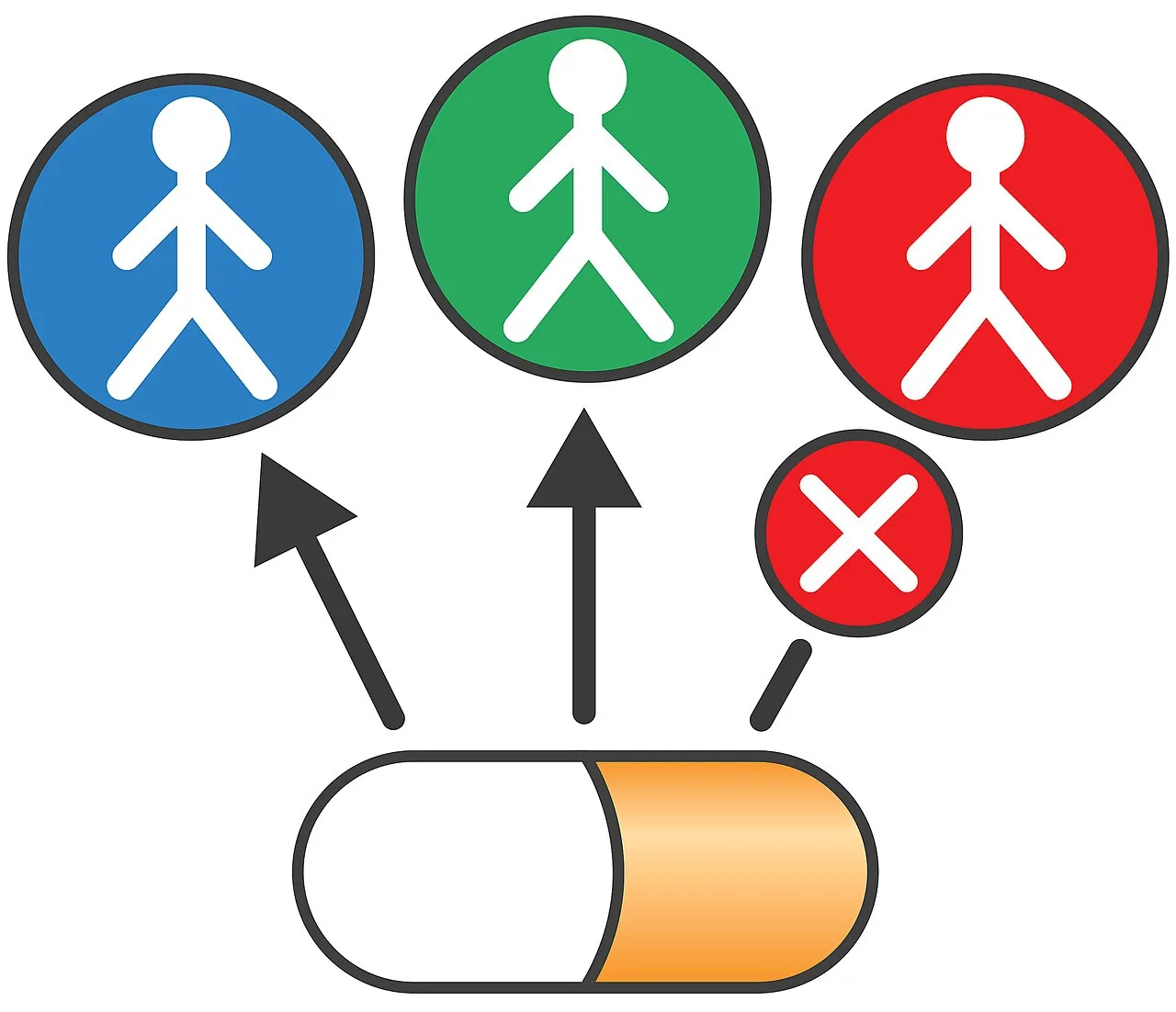
Personalized medicine tailors prevention, diagnosis, and treatment using genetic, biological, and environmental differences rather than population averages. Its established applications include pharmacogenomics, companion diagnostics, and targeted cancer therapies, where biomarkers can predict response or serious adverse effects. The approach promises more precise care but depends on research that represents diverse populations, since genomic evidence drawn narrowly may not benefit everyone equitably.
For most of the twentieth century, a physician prescribing a blood thinner, an antidepressant, or a chemotherapy drug was essentially operating on population averages. The drug that worked in sixty percent of clinical trial participants became the standard of care for everyone.
The remaining forty percent either failed to respond, suffered serious adverse effects, or both.
This was not a failure of medicine so much as an epistemic constraint: without the tools to distinguish patients at a molecular level, the best a clinician could do was apply the best available evidence to the individual in front of them and observe what happened.
Personalized medicine - also called precision medicine - is the systematic effort to dissolve that constraint.
It uses information about a person's genetic makeup, protein expression, metabolic profile, microbiome, and environmental exposures to tailor prevention, diagnosis, and treatment to the individual rather than the statistical average.
The vision is not exotic: it is simply the recognition that human biology is heterogeneous in ways that matter enormously for how diseases develop and how drugs work.
What has changed in the past two decades is the technology to read that heterogeneity at scale, and the computational power to make sense of it.
The scale of institutional investment reflects the ambition. President Barack Obama launched the Precision Medicine Initiative in 2015 with $215 million in initial funding, directing the National Institutes of Health to build a cohort of more than one million participants whose genomic, biological, and lifestyle data would be linked to health outcomes over decades.
That program, now called the All of Us Research Program, had enrolled over 750,000 participants as of 2023 and represents the most ambitious effort in history to map the genomic and phenotypic diversity of the American population.
But it also inherits a structural flaw: genomic research has historically been dominated by participants of European ancestry, a problem with profound consequences for whether the insights it generates will apply equitably across populations.
"The promise of precision medicine will remain unfulfilled if its benefits accrue only to those populations whose genomes have been most thoroughly studied."
Key Definitions
Personalized medicine / Precision medicine: An approach to medical care that uses individual biological, genetic, and environmental data to tailor prevention and treatment.
The two terms are largely synonymous in contemporary usage, though "precision medicine" is preferred in formal research contexts to avoid implying each patient receives a wholly unique treatment.
Pharmacogenomics: The study of how an individual's genetic variation affects their response to drugs, including both efficacy and the risk of adverse effects. Pharmacogenomics is the most clinically mature application of personalized medicine currently in routine practice.
Companion diagnostic: A medical device or laboratory test required or recommended before prescribing a particular drug, because the drug's safety or efficacy depends on a specific biomarker. Companion diagnostics are increasingly mandated by the U.S. Food and Drug Administration for targeted cancer therapies.
Somatic mutation: A genetic mutation that arises in a non-reproductive cell during a person's lifetime. Somatic mutations are not inherited and are not passed to offspring, but they are the primary mechanism by which cancers develop. These are distinct from germline mutations, which are inherited and present in every cell of the body.
Polygenic risk score (PRS): A numerical estimate of an individual's genetic predisposition to a complex trait or disease, calculated by aggregating the small effects of thousands or millions of genetic variants identified in genome-wide association studies (GWAS).
Key Personalized Medicine Applications in Clinical Practice
| Application | Gene / biomarker | Drug affected | Clinical implication | FDA / regulatory status |
|---|---|---|---|---|
| Warfarin dosing | CYP2C9, VKORC1 | Warfarin (anticoagulant) | Variants require 5-10 dose reduction to avoid bleeding | FDA label updated with pharmacogenomic information |
| Codeine safety | CYP2D6 | Codeine (opioid prodrug) | Ultra-rapid metabolizers: morphine toxicity risk; poor metabolizers: no efficacy | FDA black-box warning; codeine contraindicated in children |
| Abacavir hypersensitivity | HLA-B*5701 | Abacavir (HIV treatment) | Allele carriers: severe, potentially fatal hypersensitivity reaction | FDA requires pre-treatment HLA-B*5701 screening |
| CML targeted therapy | BCR-ABL fusion (Philadelphia chromosome) | Imatinib (Gleevec) | >95% cytogenetic remission in BCR-ABL+ CML vs. ~30% with chemo | Companion diagnostic required; approved 2001 |
| HER2+ breast / gastric cancer | HER2 amplification | Trastuzumab (Herceptin); pertuzumab | Benefit in HER2-amplified only; negligible benefit in HER2-negative | FDA requires HER2 testing as companion diagnostic |
| Lung cancer (NSCLC) | EGFR mutation; ALK/ROS1 rearrangements | Gefitinib, erlotinib (EGFR); crizotinib (ALK) | Dramatic response vs. chemotherapy in mutation-positive tumors | Companion diagnostics required for prescribing |
| BRAF-mutated melanoma | BRAF V600E mutation | Vemurafenib; dabrafenib + trametinib | ~50% response rate vs. very low response with chemotherapy | FDA approved companion diagnostic (cobas 4800 BRAF test) |
| Lynch syndrome / MSI-H tumors | Mismatch repair deficiency (dMMR/MSI-H) | Pembrolizumab (anti-PD-1 immunotherapy) | First tumor-agnostic FDA approval based on biomarker, not tissue site | FDA approved pembrolizumab for any MSI-H solid tumor (2017) |
The Pharmacogenomics Revolution
Warfarin and the Narrow Therapeutic Window
The anticoagulant warfarin is one of the most prescribed drugs in the world and one of the most dangerous. Its therapeutic window - the range between an ineffective dose and a toxic one - is narrow, and the right dose varies enormously between patients.
Too little leaves a patient at risk of stroke or thromboembolism; too much causes serious bleeding. Historically, clinicians managed this by starting at low doses, monitoring INR values weekly, and adjusting incrementally over months.
The process was laborious, the risk during titration was real, and the reasons for interpatient variation were poorly understood.
Genome-wide association studies identified the source of much of that variation. Two genes - CYP2C9 and VKORC1 - explain between thirty and sixty percent of the variance in stable warfarin dose requirements.
CYP2C9 encodes the principal liver enzyme that metabolizes warfarin; variants that reduce enzyme activity lead to warfarin accumulation and bleeding risk.
VKORC1 encodes the vitamin K epoxide reductase that warfarin inhibits; variants that affect its expression determine how sensitive a patient is to the drug's mechanism.
Patients carrying certain combinations of these variants may require doses five to ten times lower than the population average to achieve therapeutic anticoagulation.
Genotype-guided dosing algorithms incorporating CYP2C9 and VKORC1 status alongside clinical variables like age, weight, and indication have been developed and validated in prospective clinical trials, though uptake in routine practice has remained uneven across health systems.
CYP2D6, Codeine, and Preventable Death
The opioid analgesic codeine depends entirely on metabolic activation. It is a prodrug: codeine itself has minimal analgesic effect and must be converted to morphine by the liver enzyme CYP2D6 to become pharmacologically active.
Genetic variation in CYP2D6 creates a spectrum of metabolizer phenotypes with radically different clinical implications.
Poor metabolizers - carrying loss-of-function variants in both copies of the gene - produce little or no morphine from codeine and receive essentially no pain relief, while still being exposed to the drug's side effects.
Ultra-rapid metabolizers, by contrast, convert codeine to morphine so rapidly and completely that standard doses can produce morphine toxicity, including respiratory depression.
The frequency of ultra-rapid metabolism varies strikingly across populations: approximately one to three percent of people of European ancestry carry CYP2D6 gene duplications associated with this phenotype, compared to up to twenty-nine percent of individuals of North African ancestry.
The lethal potential of this variation became undeniable after case reports documented deaths from standard codeine doses in nursing infants whose mothers were ultra-rapid metabolizers and in pediatric patients following tonsillectomy.
The FDA issued a black-box warning restricting codeine use in children in 2013 and subsequently extended the warning to nursing mothers and adolescents. The episode demonstrated that pharmacogenomic variation is not a theoretical concern but a documented cause of preventable death.
Abacavir and the Screening Model
Not all pharmacogenomic applications involve dosing optimization. Some involve categorical decisions about whether a drug should be used at all.
Abacavir, a nucleoside reverse transcriptase inhibitor used in HIV treatment, causes a severe and potentially fatal hypersensitivity reaction in five to eight percent of patients carrying the HLA-B*5701 allele.
The reaction - fever, rash, and gastrointestinal symptoms, progressing to respiratory failure if the drug is continued - typically occurs within the first six weeks of treatment. Before systematic screening, re-challenge after a suspected hypersensitivity reaction was documented to be fatal.
The PREDICT-1 trial, published in the New England Journal of Medicine in 2008 by Simon and colleagues, demonstrated that prospective HLA-B*5701 screening before abacavir initiation eliminated immunologically confirmed hypersensitivity reactions.[2]
The trial enrolled 1,956 patients and showed that the number needed to screen to prevent one serious reaction was approximately seventeen - a highly favorable ratio for a simple genetic test.
The FDA updated abacavir labeling to recommend pre-treatment screening, and the test became a widely cited model for how companion diagnostics should function: a well-characterized genetic variant, a strong and specific association with a serious adverse event, a reliable and affordable test, and a clear clinical decision rule requiring no probabilistic reasoning at the bedside.
Cancer as a Disease of the Genome
From Chemotherapy to Targeted Therapy
Cancer's transformation from a disease defined by its organ of origin to a disease defined by its molecular profile is the central story of oncology in the past quarter century. The turning point was the recognition that cancer is, at its core, a disease of somatic mutation.
Accumulated DNA damage in dividing cells produces mutations in genes that regulate growth, cell death, and DNA repair. Most of these are passenger mutations - present in cancer cells by virtue of genomic instability but not responsible for driving malignant behavior.
A smaller subset are driver mutations: genetic alterations that confer a growth advantage, accelerate proliferation, or enable invasion and metastasis.
Targeted therapies are designed to exploit the specific vulnerabilities that driver mutations create in a given patient's tumor, while leaving normal cells that lack the mutation relatively unaffected.
Imatinib (marketed as Gleevec) was the proof of concept. Chronic myelogenous leukemia (CML) is caused in over ninety-five percent of cases by the Philadelphia chromosome, a translocation between chromosomes 9 and 22 that produces a constitutively active tyrosine kinase called BCR-ABL.
Imatinib, developed by Brian Druker at Oregon Health and Science University in collaboration with Nicholas Lydon and colleagues at Novartis, was designed to inhibit BCR-ABL specifically.[1]
When the pivotal trial results were published in the New England Journal of Medicine in 2001 and the drug received FDA approval that same year, the results were startling: cytogenetic remission rates exceeded ninety-five percent, compared to approximately thirty percent with the best available chemotherapy.
Patients who had faced a median survival of three to five years were achieving durable remissions lasting years to decades. Imatinib did not work without the BCR-ABL fusion; the mutation was simultaneously the cause of the disease and the target of the therapy.
Trastuzumab, EGFR Inhibitors, and BRAF Inhibitors
The trastuzumab (Herceptin) story extended the logic to solid tumors. Approximately fifteen to twenty percent of breast cancers are driven by amplification of the HER2 gene, encoding a growth factor receptor.
Dennis Slamon at UCLA and colleagues demonstrated through research in the 1980s and 1990s that HER2 amplification was a driver event associated with aggressive disease.
Trastuzumab, a monoclonal antibody targeting the HER2 protein, significantly improved survival in HER2-amplified breast cancer when added to chemotherapy, while providing essentially no benefit in HER2-negative tumors.
The companion diagnostic - HER2 testing by immunohistochemistry or fluorescence in situ hybridization - became a prerequisite for prescribing the drug and established the now-standard regulatory model of drug plus companion diagnostic as a paired approval.
Non-small cell lung cancer (NSCLC) followed a similar pattern. Activating mutations in the EGFR gene are present in approximately ten to fifteen percent of NSCLC cases in Western populations and thirty to forty percent in East Asian populations, and they predict dramatic sensitivity to EGFR inhibitors including erlotinib, gefitinib, and the third-generation agent osimertinib.
Patients without EGFR mutations derive little benefit from these drugs.
In EGFR-mutant NSCLC, osimertinib demonstrated a significant progression-free survival benefit over earlier-generation EGFR inhibitors in the FLAURA trial (Soria et al., New England Journal of Medicine, 2018), substantially changing first-line treatment guidelines globally.[8]
In melanoma, the BRAF V600E mutation - present in approximately fifty percent of cutaneous melanomas - is targeted by vemurafenib and dabrafenib, which produce rapid and dramatic tumor responses, though acquired resistance typically develops within six to twelve months, a challenge that combination BRAF/MEK inhibitor regimens have partially addressed.
PARP Inhibitors and Synthetic Lethality
The olaparib story introduced a conceptually distinct logic: synthetic lethality. BRCA1 and BRCA2 are tumor suppressor genes involved in high-fidelity homologous recombination DNA repair. Germline mutations in these genes substantially increase lifetime risk of breast and ovarian cancer.
Tumors arising in BRCA1/2 mutation carriers have a specific vulnerability: because they have already lost one DNA repair pathway, they become dependent on an alternative pathway involving the enzyme poly(ADP-ribose) polymerase, or PARP.
PARP inhibitors exploit this dependency. In tumors with BRCA1/2 mutations, PARP inhibition creates a repair catastrophe that leads to cell death; in tumors with intact BRCA function, the effect is far more limited.
Olaparib received FDA approval for BRCA1/2-mutated ovarian cancer in 2014 and has since been approved across breast, prostate, and pancreatic cancers with relevant mutations.
The synthetic lethality concept has expanded to encompass other DNA repair deficiencies beyond BRCA mutations, a property termed homologous recombination deficiency, broadening the potentially eligible population and illustrating how mechanistic understanding of molecular vulnerabilities can generate new therapeutic strategies.
Immunotherapy and the Limits of Biomarkers
Checkpoint Inhibitors and Durable Remission
The development of checkpoint inhibitors produced some of the most striking clinical outcomes in modern oncology. Ipilimumab, targeting CTLA-4, was followed by pembrolizumab (Keytruda) and nivolumab (Opdivo), targeting the PD-1/PD-L1 pathway.
In melanoma, where median overall survival with chemotherapy was measured in months, pembrolizumab and nivolumab produced durable remissions lasting years in a meaningful subset of patients.
The durability - what oncologists call the "tail of the survival curve" in Kaplan-Meier analyses - was qualitatively different from anything seen with conventional cytotoxic chemotherapy in metastatic solid tumors.
Subsequent approvals extended checkpoint inhibitor use to non-small cell lung cancer, kidney cancer, head and neck cancer, urothelial cancer, and other tumor types.
Identifying which patients would benefit proved considerably harder than it had been for molecularly targeted therapies like imatinib or osimertinib. PD-L1 expression on tumor cells, measured by immunohistochemistry, was the initial predictive biomarker.
The relationship is real: higher PD-L1 expression is associated with higher response rates to PD-1/PD-L1 inhibitors across multiple tumor types. But it is an imperfect biomarker. Some patients with high PD-L1 expression do not respond; some with low or absent PD-L1 expression respond durably.
The assays themselves are not fully standardized across manufacturers and scoring systems, complicating cross-trial comparisons and clinical interpretation.
Tumor Mutational Burden and Tissue-Agnostic Approval
Tumor mutational burden (TMB) emerged as a complementary biomarker for immunotherapy benefit. The rationale is mechanistic: tumors with large numbers of somatic mutations generate more neoantigens - mutant peptides that the immune system can recognize as foreign targets.
High TMB should therefore be associated with greater immunogenicity and better responsiveness to checkpoint inhibitors that release immune surveillance.
In 2020, the FDA granted tumor-agnostic accelerated approval to pembrolizumab for solid tumors with high TMB, defined as ten or more mutations per megabase, based on data from the KEYNOTE-158 basket trial reported by Marabelle and colleagues in the Journal of Clinical Oncology in 2020.[7]
The tissue-agnostic approval - applying to any solid tumor regardless of anatomical origin, based solely on a molecular feature - represented a regulatory paradigm shift reflecting the core logic of personalized medicine: molecular characteristics, not organ location, as the primary organizing principle of treatment decisions.
CAR-T Cells: The Most Individualized Treatment
Chimeric antigen receptor T-cell therapy represents the furthest extension of the personalization principle currently in clinical practice. The manufacturing process begins with the patient's own T cells, extracted by leukapheresis.
Those cells are genetically engineered ex vivo to express a synthetic receptor that recognizes a tumor antigen - typically CD19, present on B-cell malignancies - and then expanded in culture and reinfused.
The drug is manufactured from the patient's own immune cells, for that patient specifically, in a manufacturing run unique to the individual. There is no batch, no stock, no population average.
The FDA approved the first two CAR-T therapies - tisagenlecleucel (Kymriah, Novartis) for pediatric B-cell acute lymphoblastic leukemia and axicabtagene ciloleucel (Yescarta, Kite Pharma/Gilead) for large B-cell lymphoma - in 2017.
Complete remission rates in patients who had failed multiple prior therapies were striking in early trials: thirty to forty percent or higher in populations where median survival with standard salvage approaches was measured in months.
CAR-T is also the most expensive individualized treatment yet deployed at any scale in routine care, with list prices of $373,000 to $475,000 per treatment course, raising questions about value, access, and health system sustainability that the field has not resolved.
Polygenic Risk Scores and the Equity Problem
Aggregating Variants Across the Genome
For complex diseases - coronary artery disease, type 2 diabetes, breast cancer, atrial fibrillation - risk is not determined by a single high-impact mutation but by thousands or millions of common genetic variants, each contributing a small effect.
Genome-wide association studies (GWAS) identify these variants by comparing allele frequencies in large case-control cohorts across millions of genetic positions simultaneously.
A polygenic risk score aggregates the individual effects of these variants, weighted by effect size estimates from the discovery GWAS, into a single number estimating genetic predisposition.
The potential clinical utility is substantial. Amit V. Khera and colleagues at the Broad Institute, publishing in Nature Genetics in 2018, developed a polygenic risk score for coronary artery disease using genome-wide data and demonstrated that the top eight percent of the population by PRS had a three-fold elevated risk compared to the population average - a risk comparable in magnitude to that conferred by monogenic familial hypercholesterolemia.[3]
The ability to identify high-risk individuals in their twenties or thirties, decades before clinical disease manifests, opens the possibility of earlier and more intensive preventive intervention: aggressive lipid-lowering, more frequent imaging surveillance, or lifestyle modification programs targeted at those with the highest predicted risk.
The Ancestry Problem in Polygenic Risk
There is, however, a critical limitation that applies to essentially all currently deployed polygenic risk scores. GWAS have been conducted overwhelmingly in populations of European ancestry.
A landmark 2016 analysis of GWAS participants published by Popejoy and Fullerton in Nature found that approximately eighty-one percent were of European descent, despite Europeans representing roughly sixteen percent of the global population.[9]
Because polygenic risk scores are derived from GWAS-identified variants, their performance depends on the genetic architecture of the discovery population.
Linkage disequilibrium patterns - the statistical correlations between nearby genetic variants that GWAS rely on - differ substantially across ancestral populations, so a variant that tags a causal mutation in European-ancestry cohorts may not tag the same mutation with the same fidelity in African-ancestry or East Asian-ancestry populations.
The magnitude of this performance gap has been formally quantified. A 2019 analysis by Martin and colleagues in Nature Genetics found that polygenic scores trained on European GWAS data had approximately 4.5-fold lower predictive accuracy in individuals of African ancestry compared to European ancestry.[4]
Deploying current polygenic risk scores at population scale would therefore systematically underestimate risk in individuals of African, South Asian, and other non-European ancestries - concentrating the benefits of genomic risk stratification in populations that are already, on average, better served by existing healthcare infrastructure.
Addressing this will require deliberate, large-scale investment in GWAS cohorts of diverse ancestry, an effort underway through initiatives like the NIH All of Us program but still far from complete.
Liquid Biopsy and Treatment Monitoring
Circulating Tumor DNA
A tissue biopsy provides a snapshot of a tumor at one location and one moment in time.
For monitoring treatment response, detecting the emergence of resistance mutations, or identifying minimal residual disease after apparently curative surgery, traditional tissue biopsy is impractical: it is invasive, cannot be repeated frequently, and cannot sample the full spatial and temporal heterogeneity of a patient's tumor burden.
Liquid biopsy - the detection and characterization of circulating tumor DNA (ctDNA) or cell-free DNA (cfDNA) in peripheral blood - offers a practical alternative.
Tumor cells shed DNA fragments into the bloodstream, where they can be detected by next-generation sequencing or digital PCR. The technical challenge is sensitivity: in early-stage disease or low-burden settings, ctDNA may constitute as little as 0.01 to 0.1 percent of total cell-free DNA in circulation.
Advances in error-corrected sequencing chemistry and bioinformatics have pushed sensitivity into this range for a growing number of clinical applications, though early-stage detection in screening contexts remains technically demanding and expensive.
The clinical utility of ctDNA for detecting minimal residual disease after surgery was demonstrated compellingly by Reinert and colleagues in a 2019 New England Journal of Medicine study of colorectal cancer patients.[5]
Among patients with detectable ctDNA after curative-intent surgery, the assay achieved eighty-eight percent sensitivity and ninety-eight percent specificity for subsequent clinical relapse - identifying patients destined to recur months before conventional imaging could detect disease return.
The ability to stratify patients by residual disease status shortly after surgery could potentially guide decisions about adjuvant chemotherapy, sparing low-risk patients from toxicity while targeting intensive treatment at those most likely to relapse.
Multi-Cancer Early Detection
The most ambitious application of liquid biopsy is multi-cancer early detection: a single blood test capable of detecting multiple cancer types at early, more curable stages before symptoms develop.
Cohen and colleagues, publishing in Science in 2018, reported results from the CancerSEEK test, which combined ctDNA mutation detection with protein biomarker measurement across eight tumor types.[6]
The assay achieved approximately seventy percent overall sensitivity and ninety-nine percent specificity, with sensitivity varying substantially by cancer stage - substantially higher for later-stage cancers than for stage I disease, which is precisely the stage where early detection would offer the greatest benefit.
The Galleri test, developed by GRAIL Inc. and based on methylation patterns in cfDNA, is under evaluation in prospective studies including the NHS-GRAIL pilot trial in the United Kingdom.
The population-level evidence base for multi-cancer screening is still developing, and the consequences of false positive results - investigations, procedural complications, anxiety, and healthcare resource consumption - have not been fully characterized in real-world deployment.
Equity, Access, and Systemic Risk
The Cost of Targeted Therapy
Personalized medicine has produced some of the most effective treatments in the history of oncology. It has also produced some of the most expensive. Targeted therapies for solid tumors routinely carry annual treatment costs of $100,000 to $300,000.
CAR-T therapy is priced at $373,000 to $475,000 per treatment course, excluding the costs of hospitalization for cytokine release syndrome management.
A 2019 analysis published in JAMA Oncology found that patients in the top income quartile had sixty percent higher odds of receiving targeted therapy compared to patients in the bottom income quartile, controlling for stage, tumor type, and other clinical variables.[11]
The molecular revolution in oncology has not been neutral with respect to wealth; its most transformative treatments are most accessible to those who can most afford them.
The genetic information on which personalized medicine depends also raises questions about insurance discrimination. The Genetic Information Nondiscrimination Act (GINA), enacted in 2008, prohibits discrimination based on genetic information in employment and health insurance underwriting.
But GINA explicitly does not cover life insurance, disability insurance, or long-term care insurance - three products of considerable importance to individuals and families.
Individuals who undergo genomic testing and discover high-risk variants face a risk of adverse consequences in these markets that federal law does not address, a gap that legal scholars including Mark Rothstein have identified as a fundamental inconsistency in the regulatory framework governing genetic privacy.[12]
Variants of Uncertain Significance and the Burden of Ambiguity
Clinical genome sequencing routinely identifies variants - changes in DNA sequence - for which the clinical significance is unknown.
These "variants of uncertain significance" (VUS) are a common output of clinical sequencing panels, and they create a disproportionate burden for patients from ancestral populations underrepresented in genomic reference databases.
Because the databases used to classify variants as benign or pathogenic have been built primarily from European-ancestry individuals, a variant that is common in an African-ancestry population may be classified as a VUS simply because it has not been observed with sufficient frequency in the reference database to assess its significance.
Manrai and colleagues, publishing in the New England Journal of Medicine in 2016, demonstrated that this phenomenon had led to systematic misclassification of variants in hypertrophic cardiomyopathy, with Black patients significantly more likely to receive an incorrect VUS or pathogenic classification for variants that were actually benign in their ancestral context.[10]
The problem is structural rather than intentional, and it will not resolve without deliberate investment in diverse ancestral reference databases.
The Road Ahead
Personalized medicine is not a destination but a direction. The current clinical reality - targeted cancer therapies, pharmacogenomic dosing, companion diagnostics, liquid biopsy - is a partial and uneven realization of a larger vision.
That vision - integrating genomics, proteomics, metabolomics, microbiome data, and environmental exposures into a dynamic, continuously updated portrait of individual health - remains aspirational, constrained by computational, regulatory, and institutional challenges.
The scientific tools now exist to generate vastly more information about individual biology than clinical practice currently knows how to use.
The equity challenge is not peripheral to this program but central to it. A system of personalized medicine that delivers precision only to populations of European ancestry, that prices its most effective treatments at levels accessible only to the wealthiest patients and health systems, and that generates genetic risk information that can be deployed against patients in insurance markets is not a system that lives up to its foundational premise.
The scientific achievements of the past two decades are genuine and substantial. Whether they translate into broad human benefit will depend on choices that are as much political, economic, and ethical as they are scientific.
See also: What Is Gene Therapy? and The History of Medicine.
Sources & Further Reading
Druker, B.J. et al. "Efficacy and Safety of a Specific Inhibitor of the BCR-ABL Tyrosine Kinase in Chronic Myeloid Leukemia." New England Journal of Medicine 344 (2001): 1031-1037.
Simon, A.R. et al. "Prospective Genotyping of HLA-B*5701 to Prevent Abacavir Hypersensitivity: PREDICT-1." New England Journal of Medicine 358 (2008): 568-579.
Khera, A.V. et al. "Genome-wide Polygenic Scores for Common Diseases Identify Individuals with Risk Equivalent to Monogenic Mutations." Nature Genetics 50 (2018): 1219-1224.
Martin, A.R. et al. "Clinical Use of Current Polygenic Risk Scores May Exacerbate Health Disparities." Nature Genetics 51 (2019): 584-591.
Reinert, T. et al. "Analysis of Circulating Tumour DNA to Monitor Disease Burden Following Colorectal Cancer Surgery." New England Journal of Medicine 381 (2019): 1031-1042.
Cohen, J.D. et al. "Detection and Localization of Surgically Resectable Cancers with a Multi-Analyte Blood Test." Science 359 (2018): 926-930.
Marabelle, A. et al. "Efficacy of Pembrolizumab in Patients with Noncolorectal High Microsatellite Instability/Mismatch Repair-Deficient Cancer: Results from the Phase II KEYNOTE-158 Study." Journal of Clinical Oncology 38 (2020): 1-10.
Soria, J.C. et al. "Osimertinib in Untreated EGFR-Mutated Advanced Non-Small-Cell Lung Cancer (FLAURA)." New England Journal of Medicine 378 (2018): 113-125.
Popejoy, A.B. and Fullerton, S.M. "Genomics Is Failing on Diversity." Nature 538 (2016): 161-164.
Manrai, A.K. et al. "Genetic Misdiagnoses and the Potential for Health Disparities." New England Journal of Medicine 375 (2016): 655-665.
Zafar, S.Y. et al. "Association of Socioeconomic Status and Receipt of Targeted Therapy Among Adults with Advanced Cancer." JAMA Oncology 5 (2019): 1605-1612.
Rothstein, M.A. "GINA, the ADA, and Genetic Discrimination in Employment." Journal of Law, Medicine and Ethics 36 (2008): 837-840.