
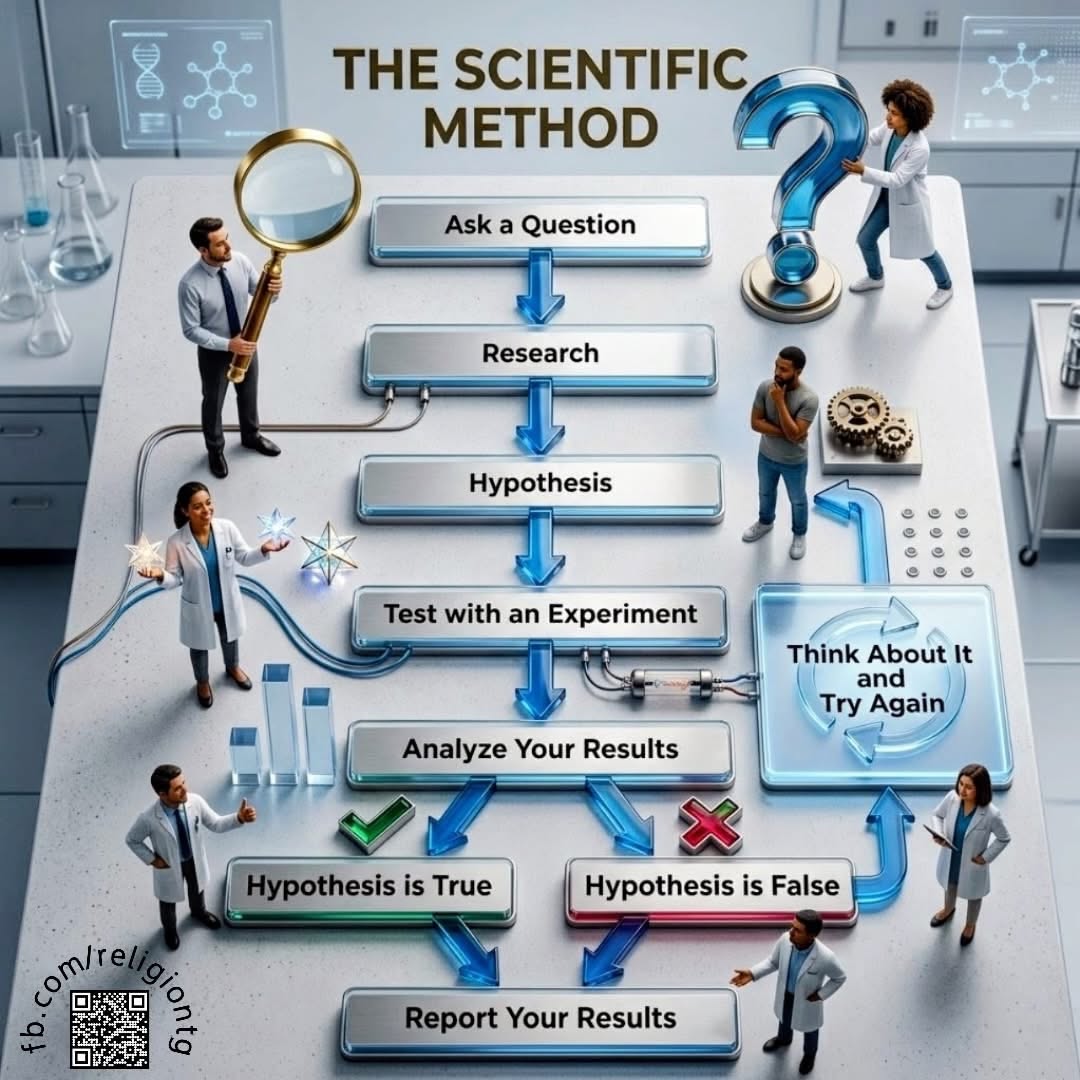
Scientific: In 1847, the Hungarian physician Ignaz Semmelweis noticed something disturbing about the hospital where he worked in Vienna. The First Maternity Division, staffed by medical students, had a death rate from childbed fever (puerperal fever) of 10-35% in the years between 1841 and 1846.
The Second Division, staffed by midwives, had a rate of 1-2%. Women in labor begged to be admitted to the midwives' ward. Some delivered in the street rather than be taken to the doctors.
Semmelweis investigated and found that the medical students went directly from performing autopsies on cadavers to examining laboring women without washing their hands. He hypothesized that "cadaverous particles" from the corpses were being transmitted to patients.
When he introduced mandatory handwashing with chlorinated lime solution in May 1847, the death rate in his ward dropped within months to 1-2%.
His colleagues rejected his findings. The mechanism he proposed - invisible particles transmitted from the dead to the living - was implausible to the dominant medical theory of the day, which attributed childbed fever to miasma (bad air) and constitutional factors.
His superior was dismissive. The leading obstetricians of Europe ignored or openly mocked him. He grew increasingly desperate and erratic, writing increasingly angry open letters to prominent physicians denouncing them as murderers.
In 1865, he was committed to a mental institution. He died there within two weeks, at 47, possibly from the same infection he had spent his career trying to prevent. He was vindicated posthumously when Louis Pasteur's germ theory, developed in the 1860s, provided the mechanistic explanation that Semmelweis had lacked.
The Semmelweis story is sometimes told as an illustration of medical conservatism - of how entrenched interests and wounded pride can suppress life-saving discoveries. But it also illustrates something more fundamental about how scientific knowledge is produced and accepted: the relationship between observation, mechanism, and theory.
Semmelweis had the right intervention and the wrong explanation. His evidence was compelling but his mechanism was wrong.
The scientific community that rejected him was not simply being obstinate; it was applying, imperfectly, the demand that explanations fit within a coherent theoretical framework. Understanding why that process works - and why it so often fails - is what the philosophy of science is about.
"Science is not a collection of facts. It is a method for separating the things that seem to be true from the things that are true." - Richard Feynman, The Meaning of It All (1998)
Key Definitions
Falsificationism (Popper): The philosophical position that a hypothesis is scientific only if it makes predictions that could, in principle, be shown to be wrong. Science advances not by confirming theories but by testing and surviving attempts to falsify them.
Paradigm shift (Kuhn): Thomas Kuhn's term for the revolutionary replacement of one scientific framework (paradigm) by another - not a gradual accumulation of evidence but a relatively rapid reconceptualization of an entire field.
Research program (Lakatos): Imre Lakatos's concept of a series of theories sharing a "hard core" of basic assumptions, protected by a "protective belt" of auxiliary hypotheses.[4] A research program is progressive if it generates novel predictions; degenerative if it merely explains anomalies after the fact.
Scientific realism: The philosophical position that successful scientific theories are approximately true descriptions of a mind-independent reality, including unobservable entities like electrons and quarks.
Induction problem (Hume): David Hume's argument that no number of confirming observations can logically justify a universal generalization - the observation of 1,000 white swans does not prove all swans are white.
Hypothesis: A specific, testable prediction derived from a theory, framed in a way that allows empirical investigation.
Null hypothesis: In null hypothesis significance testing, the hypothesis of no effect or no relationship - the baseline assumption against which evidence is weighed.
P-value: The probability of observing data at least as extreme as the actual data, given that the null hypothesis is true. Widely misunderstood as the probability that the null hypothesis is false.
Statistical significance: The conventional threshold (p less than 0.05) below which a result is deemed unlikely to have occurred by chance under the null hypothesis. Not equivalent to practical significance or effect size.
Effect size: The magnitude of an effect, independent of sample size. A statistically significant effect can be practically trivial; a practically important effect may not reach statistical significance in a small sample.
Pre-registration: Publicly committing to hypotheses, methods, and analysis plans before data collection begins, as a safeguard against p-hacking and HARKing (Hypothesizing After Results are Known).
Replication: The independent repetition of a study, ideally by different researchers using different samples, as the gold-standard test of whether a finding is real.
Peer review: The evaluation of a manuscript by independent experts in the relevant field before publication in a scientific journal.
Theory vs law: In science, a theory is an explanatory framework supported by substantial evidence (e.g., germ theory, evolutionary theory); a law is a description of a pattern (e.g., Newton's laws of motion).
"Just a theory" is a common misunderstanding - scientific theories are the best available explanations, not mere speculation.
Demarcation problem: The philosophical problem of drawing a principled line between science and non-science or pseudoscience.
Major Philosophies of Science Compared
| Philosopher | Core Framework | How Science Progresses | Key Strength | Key Limitation |
|---|---|---|---|---|
| Francis Bacon (1620) | Empiricism / induction | Accumulate observations, then generalize | Grounded in observable reality | Hume's problem: induction is not logically valid |
| Karl Popper (1934) | Falsificationism | Theories survive by resisting falsification attempts | Explains asymmetry between confirmation and refutation | Few real theories are ever truly falsified; scientists protect core theories |
| Thomas Kuhn (1962) | Paradigm shifts | Normal science accumulates anomalies; revolution replaces paradigm | Matches the actual history of science | Underplays the rationality of theory choice; relativism concern |
| Imre Lakatos (1970) | Research programs | Progressive programs generate novel predictions; degenerative ones only explain anomalies | Handles theory change better than Popper's naive falsificationism | Difficult to judge in real time whether a program is progressive |
| Paul Feyerabend (1975) | "Anything goes" | No universal scientific method; rule-breaking drives progress | Historically insightful; challenges methodological dogma | Can be used to justify pseudoscience |
| Bas van Fraassen (1980) | Constructive empiricism | Accept theories as empirically adequate, not literally true | Avoids metaphysical commitments about unobservables | Difficulties distinguishing "observable" from "unobservable" |
The Problem of Induction
David Hume, writing in A Treatise of Human Nature in 1739, identified a logical problem that has haunted the philosophy of science ever since.[5] All empirical knowledge claims are based on induction - reasoning from observed instances to general conclusions.
We have observed the sun rising every morning for all of recorded history; we conclude it will rise tomorrow. We have observed thousands of white swans; we conclude all swans are white.
But this inference is not logically valid. No finite number of confirming observations can logically entail a universal generalization.
The observation of a single black swan (as European naturalists discovered when they reached Australia) immediately falsifies "all swans are white." The problem is not merely theoretical: it means that science cannot, in principle, prove any general claim through accumulation of evidence alone.
This is not a fatal problem for science - it does not mean science cannot produce reliable knowledge. It means that the nature of scientific knowledge is probabilistic rather than certain, and that the appropriate attitude toward scientific claims is one of provisional confidence rather than absolute certainty.
The induction problem shapes what science can and cannot do: it can produce well-supported theories that have survived extensive testing; it cannot produce proofs.
The practical consequence for science consumers is significant: when scientists say a claim is "well established," they mean it has survived many attempts to falsify it, not that it has been proven true in the way a mathematical theorem is proven. The possibility of revision always remains - which is a feature, not a bug.
Popper's Falsificationism
Karl Popper, an Austrian-British philosopher who had been disturbed in the 1920s by the apparent unfalsifiability of psychoanalysis and Adlerian psychology, proposed falsificationism as his solution to both the induction problem and the demarcation problem.[1]
Published in German in 1934 as Logik der Forschung and in English in 1959 as The Logic of Scientific Discovery, the argument was elegantly simple.
Since science cannot prove theories through induction, it should not try. Instead, science should attempt to falsify theories. A hypothesis is scientific if and only if it makes specific predictions that could, in principle, be shown to be wrong.
If no possible observation could contradict a theory, the theory has no empirical content - it tells us nothing about the world.
The Asymmetry of Falsification
Popper identified a logical asymmetry between confirmation and falsification. No finite set of confirming observations proves a universal claim, but a single disconfirming observation logically refutes it.
Observing a million white swans does not prove "all swans are white," but observing one black swan proves it false. This asymmetry makes falsification logically powerful in a way that confirmation is not.
Applied to scientific practice, this means: scientists should not seek confirmation of their theories (this proves nothing) but should design the most demanding tests they can think of, tests that the theory must pass to survive.
A theory that survives many severe attempts at falsification - that has been genuinely put at risk and not refuted - earns our confidence not because it has been proven true but because it has proven robust.
Popper used Freudian psychoanalysis and Alfred Adler's individual psychology as examples of unfalsifiable theories in their 1930s forms.
Any human behavior could be explained by either framework after the fact: if a man jumps into a river to save a drowning child, Freud can explain it one way; if he pushes the child in, Freud can explain that too.
A theory that explains everything predicts nothing and tells us nothing. By contrast, Einstein's general theory of relativity predicted that light from distant stars would be deflected by the sun's gravity by a specific, calculable amount - a prediction that could have been falsified by Eddington's 1919 eclipse observations and was instead confirmed (to within measurement error).
Popper's falsificationism has been criticized on several grounds. Willard Quine argued that any hypothesis is tested only in conjunction with a web of background assumptions, so a failed prediction can always be attributed to a background assumption rather than the hypothesis itself - making falsification less clean than Popper claimed.
Thomas Kuhn argued that practicing scientists do not actually behave as Popperian falsificationists and that science works better because they don't.
Imre Lakatos developed a more nuanced account intended to accommodate how science actually works without abandoning rational assessment.
Kuhn's Paradigm Shifts
Thomas Kuhn's 1962 The Structure of Scientific Revolutions is one of the most widely read and most widely misread books in the philosophy of science.[2] Its central argument is that science does not progress through the steady accumulation of facts and the gradual refinement of theories.
It progresses through revolutions - relatively rapid episodes in which one entire way of understanding a domain is replaced by another.
Normal Science and Anomalies
Kuhn's key concept is the paradigm: not just a theory but an entire framework of assumptions, methods, exemplary problems and solutions, and perceptual habits. Paradigms include Newton's mechanics, Lavoisier's chemistry, Darwin's evolution, the germ theory of disease.
Scientists trained within a paradigm take its basic assumptions for granted and work within its framework - Kuhn calls this "normal science," and characterizes it as puzzle-solving: extending the paradigm, filling in details, resolving inconsistencies, applying it to new domains.
Anomalies - observations that don't fit the paradigm - are routinely encountered in normal science. Scientists don't treat every anomaly as a refutation; they assume the paradigm is correct and the anomaly reflects measurement error, incomplete analysis, or a solvable complication.
This is rational: paradigms are supported by so much successful prediction that individual anomalies rarely justify abandoning them.
But when anomalies accumulate and multiply, when the devices invented to accommodate them become increasingly ad hoc, when the paradigm seems unable to generate successful novel predictions, a crisis develops.
Revolutions and Their Social Dynamics
Scientific revolutions involve the replacement of one paradigm by another: Ptolemaic geocentrism by Copernican heliocentrism, Newtonian mechanics by relativity and quantum mechanics, the phlogiston theory of combustion by Lavoisier's oxygen chemistry, the fixed-continent geology of the early 20th century by plate tectonics.
Kuhn's controversial sociological claim was that paradigm shifts are not purely rational events driven by evidence. Scientists are trained within a paradigm and have psychological, professional, and social investments in it.
They resist paradigm changes for extended periods, often until the older generation dies and is replaced by scientists who trained in the new framework. The philosopher Max Planck had observed something similar: "Science advances one funeral at a time."
Kuhn's work was widely misread as implying that scientific progress is purely social, that paradigms are incommensurable (cannot be rationally compared), and that the choice between competing paradigms is arbitrary. These readings prompted fierce responses from philosophers who argued that Kuhn had made science irrational.
Kuhn spent much of his later career clarifying that he had not intended this conclusion: paradigm shifts, though not purely rational, are not arbitrary, and science does make genuine progress.
Lakatos's Research Programs
Imre Lakatos, a Hungarian philosopher who had studied under Popper and engaged deeply with Kuhn, proposed the methodology of scientific research programs as a more adequate account of how science works than either Popper's falsificationism or Kuhn's paradigm shifts.
A research program consists of a "hard core" - the fundamental theoretical commitments that are not questioned within the program - surrounded by a "protective belt" of auxiliary hypotheses that can be modified to accommodate anomalies.
When a prediction fails, scientists do not immediately abandon the hard core; they adjust the protective belt.
The critical distinction Lakatos introduced was between progressive and degenerative research programs. A progressive program is one that generates novel predictions - surprising results that turn out to be true - in addition to accommodating existing data.
A degenerative program merely explains anomalies after the fact, revising auxiliary hypotheses to accommodate each new problem without predicting anything new.
On Lakatos's account, rational scientists should abandon degenerative programs and pursue progressive ones - not immediately on each anomaly (pace Popper) but over time as the program's productivity becomes clear.
This framework accommodates the historical observation that scientists sometimes rationally stick with a theory despite apparent refutations (it might be the auxiliary hypotheses, not the core theory, that are wrong) while maintaining that the choice between research programs is not arbitrary (progressive programs earn their place; degenerative ones deserve abandonment).
How Science Actually Works
The Messy Reality
The formal epistemology of Popper, Kuhn, and Lakatos describes how science should work or how it works at the level of major conceptual change. The day-to-day reality of scientific practice is messier, more social, and more contingent.
Theory-laden observation means that what scientists observe is shaped by the theoretical framework they bring to observations. Two scientists with different theoretical commitments looking at the same data may genuinely see different things - not because one is dishonest but because perception is not a passive recording of reality.
This does not make observation subjective, but it does mean that separating observation from theory is harder than the naive view of the scientific method suggests.
Background assumptions - about instrumentation, calibration, statistical methods, and the relevance of particular measurements - are pervasive and usually unquestioned.
Any experiment tests not just the hypothesis of interest but the entire web of assumptions that have gone into its design and execution. Failed predictions must be attributed to something; attribution is a judgment call.
The replication standard - the requirement that a finding should be reproducible by independent researchers - is the gold standard precisely because it is independent of the original team's assumptions, methods, and biases.
A finding that multiple independent teams with different methods converge on is far more reliable than a finding from a single study, however well-designed.
Statistics and Its Proper Use
The Replication Crisis
The replication crisis that became visible around 2011 revealed that a substantial proportion of published findings in psychology, medicine, economics, and nutrition science could not be reproduced when independent researchers attempted exact replications.
The Open Science Collaboration's 2015 project, reported in Science, successfully replicated only 36 of 100 published psychology experiments.[6]
The statistical roots of the crisis were identified most influentially by John Ioannidis of Stanford in his 2005 PLOS Medicine paper "Why Most Published Research Findings Are False" (doi: 10.1371/journal.pmed.0020124).
Using mathematical modeling of the conditions common in biomedical research - small sample sizes, multiple comparisons, selective reporting, low prior probability of the hypotheses tested - Ioannidis showed that under realistic conditions the majority of published positive findings were likely false positives.[3]
The mechanisms are multiple. P-hacking - running many analyses on a dataset and reporting only those that reach p less than 0.05 - is widespread and produces findings that are artifacts of statistical chance.
HARKing - Hypothesizing After Results are Known - transforms post-hoc explanations of unexpected findings into apparent a priori predictions.
Publication bias - the tendency of journals to publish significant results and reject null results - means the published literature is systematically non-representative of the research conducted.
Pre-registration - publicly committing to hypotheses, methods, and analysis plans before data collection begins - addresses these problems by separating confirmatory from exploratory analysis. Pre-registered studies show substantially lower rates of positive findings and higher rates of replication.
Major journals now require pre-registration for clinical trials and increasingly encourage it for observational studies.
Demarcation and Pseudoscience
The demarcation problem - distinguishing science from non-science - matters practically for public policy, medical regulation, and legal evidence standards.
Popper's falsifiability criterion remains the most widely used in public discourse: is the claim testable? Homeopathy is testable (it predicts specific therapeutic effects beyond placebo) and has been tested extensively, consistently failing randomized controlled trials.
The claim is falsifiable; it has been falsified; it remains in practice not because the evidence supports it but because practitioners find ways to explain away the failures.
Intelligent design is less cleanly testable: its central claim that biological complexity requires an intelligent designer is compatible with virtually any possible observation about biological organisms.
When evidence for evolution is presented (fossil record, comparative genomics, directly observed speciation), intelligent design accommodates it by attributing complexity to design rather than predicting what designers would or would not produce.
Paul Thagard's criteria, developed in 1978, go beyond falsifiability to ask about community practice: pseudoscientific communities fail to show progressive problem-solving over time, do not seriously engage with anomalies, do not critically evaluate their own theories, and promote claims to non-specialists without subjecting them to peer scrutiny.[7]
By these criteria, astrology qualifies as pseudoscience not just because its predictions fail but because its practitioner community does not respond to failures by revising the theory.
Science and Values
The is-ought distinction, articulated by Hume in 1739, establishes that statements about what is the case cannot, without additional normative premises, entail statements about what ought to be the case. Science describes and explains; it cannot by itself prescribe.
Climate science tells us that burning fossil fuels causes warming with specific predicted consequences; it cannot tell us, without value premises, how to weigh present costs against future harms, or how to distribute burdens across countries and generations.
This does not mean science and values are entirely separate. Values influence which research questions receive funding, how results are communicated, which applications are developed, and whose problems are treated as worth solving.
Feminist philosophers of science, including Helen Longino in her social epistemology framework, have argued that scientific objectivity is not a property of individual scientists but of scientific communities with appropriate critical norms - diverse perspectives, public evidence standards, and genuine responsiveness to criticism.[8]
The appropriate relationship between science and values is one of mutual constraint rather than either dominance: values should not determine what scientific evidence shows, and scientific evidence should inform but cannot determine what we should do.
Semmelweis's colleagues were wrong not because they applied values to his evidence, but because they allowed institutional pride and theoretical commitment to override a straightforward empirical signal.
Science's self-correcting mechanism - replication, peer criticism, openness to revision - is designed precisely to catch and correct such failures. When it works, it is the most reliable method for producing knowledge about the natural and social world that humanity has developed.
Sources & Further Reading
- Popper, K.R. (1959). The Logic of Scientific Discovery. Hutchinson. (Original German: Logik der Forschung, 1934.)
- Kuhn, T.S. (1962). The Structure of Scientific Revolutions. University of Chicago Press.
- Ioannidis, J.P.A. (2005). Why Most Published Research Findings Are False. PLOS Medicine, 2(8), e124. doi:10.1371/journal.pmed.0020124
- Lakatos, I., & Musgrave, A. (Eds.). (1970). Criticism and the Growth of Knowledge. Cambridge University Press.
- Hume, D. (1739). A Treatise of Human Nature. London.
- Open Science Collaboration (2015). Estimating the reproducibility of psychological science. Science, 349(6251), aac4716.
- Thagard, P. (1978). Why Astrology Is a Pseudoscience. PSA: Proceedings of the Biennial Meeting of the Philosophy of Science Association, 1978, 223-234.
- Longino, H. (1990). Science as Social Knowledge. Princeton University Press.
See also: Why most published research is wrong, Why experts disagree, How evolution works