
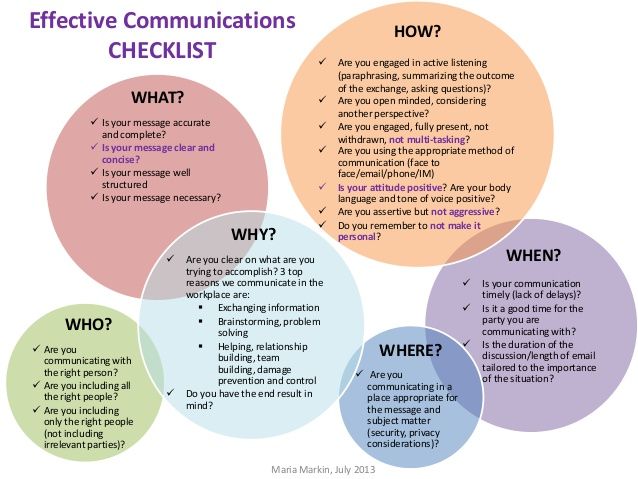
Clear communication depends on shared terms, explicit assumptions, and a check that the receiver understood what was meant. A communication clarity checklist helps catch the small mismatches behind engineering failures, clinical errors, and poor handoffs before they become expensive or dangerous.
In 1999, NASA's Mars Climate Orbiter was destroyed because one engineering team used metric units and another used imperial units, and nobody verified that both teams were operating with the same measurement system.
The spacecraft, which cost $125 million, was lost because of a communication failure that could have been caught with a single verification question.
In healthcare, the Joint Commission has found that communication failures are the root cause of approximately 80 percent of serious medical errors.
Wrong-site surgeries, medication dosage errors, and handoff failures between care teams kill thousands of patients annually-not because clinicians lack medical knowledge but because critical information is lost, distorted, or misunderstood as it moves between people.
In business, a study by the Economist Intelligence Unit found that communication barriers were responsible for delays or failures in completing projects in 44 percent of cases, low employee morale in 31 percent of cases, and missed performance goals in 25 percent of cases among the organizations surveyed.
These failures share a common characteristic: they are not failures of intent. The people involved were trying to communicate effectively. They are failures of communication clarity-the gap between what the communicator intended to convey and what the recipient actually understood.
This gap is the most common source of organizational dysfunction, interpersonal conflict, and professional error, and it is largely preventable through systematic attention to how communication is structured, delivered, and verified.
This checklist provides a comprehensive framework for achieving communication clarity across all professional contexts: written communication (emails, documents, reports), verbal communication (meetings, presentations, conversations), and team communication (cross-functional collaboration, remote work, stakeholder management).
Part 1: Before You Communicate
The Pre-Communication Checklist
The most effective communication improvements happen before a word is spoken or written. Clarity begins with preparation.
Check 1: What Is the Purpose of This Communication?
Every communication should have a clear, specific purpose that can be stated in one sentence. If you cannot articulate the purpose, the communication will lack focus, and the recipient will not know what to do with the information.
"The single biggest problem in communication is the illusion that it has taken place." - George Bernard Shaw
The four primary communication purposes:
- To inform: You want the recipient to know something they do not currently know. The desired outcome is understanding.
- To decide: You want the recipient to make a decision. The desired outcome is a specific choice.
- To act: You want the recipient to do something specific. The desired outcome is an action taken.
- To align: You want to establish shared understanding of a situation, plan, or perspective. The desired outcome is agreement or at least mutual comprehension.
How to apply it: Before drafting an email, preparing a presentation, or scheduling a meeting, complete this sentence: "The purpose of this communication is to [inform/decide/act/align] about [specific topic] so that [specific outcome]."
Examples:
- "The purpose of this email is to inform the team about the revised timeline so that everyone can adjust their schedules accordingly."
- "The purpose of this meeting is to decidewhich vendor to select so that the contract can be signed by Friday."
- "The purpose of this presentation is to get executive approval for the Q3 marketing budget so that campaigns can launch on schedule."
If your communication has multiple purposes, separate them. An email that both informs and requests action should make both purposes explicit. A meeting that needs to both discuss and decide should have those objectives on the agenda.
Check 2: Who Is the Audience?
Communication that is clear to the sender may be incomprehensible to the recipient if the sender does not account for the audience's knowledge, vocabulary, concerns, and context. Understanding why miscommunication happens starts with recognizing this asymmetry.
What you need to know about your audience:
What do they already know? Communication that repeats what the audience already knows wastes their time. Communication that assumes knowledge the audience does not have will be confusing. The right level of detail depends on the gap between what the audience knows and what they need to know.
What vocabulary do they use? Technical jargon that is perfectly clear to a specialized audience is opaque to a general audience. The same concept may be described with different terms in different departments, disciplines, or industries. Using the audience's vocabulary, not your own, increases comprehension.
What do they care about? People process information through the filter of their own concerns, priorities, and incentives. A CFO cares about financial impact. An engineer cares about technical feasibility. A customer cares about their own experience.
Framing your message in terms of what the audience cares about increases engagement and retention.
What is their decision-making context? If you are asking for a decision, understanding the criteria, constraints, and pressures the decision-maker faces allows you to present information in a way that facilitates their decision rather than adding to their cognitive load.
Check 3: What Is the One Key Message?
If the recipient remembers only one thing from your communication, what should it be? This is your key message, and everything else in the communication should support, explain, or contextualize it.
The curse of knowledge is the cognitive bias named by economists Colin Camerer, George Loewenstein, and Martin Weber (and popularized by Chip and Dan Heath) that makes it difficult to imagine not knowing something you already know.
When you are deeply familiar with a topic, you may fail to recognize what the audience needs to hear because you cannot reconstruct the state of not knowing.
The key message discipline forces you to step outside your expertise and identify the single most important takeaway from the audience's perspective.
How to apply it: State your key message in one sentence of fifteen words or fewer. If you need more than fifteen words, the message is not yet distilled to its essence. This sentence should be understandable without specialized knowledge and should convey why the information matters to the recipient.
"If I had more time, I would have written a shorter letter." - Blaise Pascal
Part 2: Structuring the Communication
Check 4: Is the Main Point Upfront?
Put the main point first, not last. Academic writing builds to a conclusion. Professional communication leads with the conclusion and then provides supporting detail. This is sometimes called the "bottom line up front" (BLUF) approach, borrowed from military communication standards.
Why this matters: Professional audiences are busy, distracted, and often scanning rather than reading carefully. If the main point is buried in the third paragraph of an email, many recipients will never reach it.
If the recommendation comes at the end of a 30-minute presentation, the audience has spent 25 minutes without context for evaluating the information you are presenting.
How to apply it:
For emails: State the purpose and key message in the first two sentences. Example: "We need to delay the product launch by two weeks. The integration testing revealed three critical bugs that require fixes before we can ship safely."
For presentations: State your recommendation or key finding on the first slide after the title. Example: "Recommendation: Approve the $2M budget for Q3 marketing campaigns. Expected ROI: 3.5x based on Q1-Q2 performance data."
For meetings: State the objective and desired outcome in the first minute. Example: "We're here to decide on the vendor for our new CRM system. I'd like to leave this meeting with a final selection or, at minimum, a shortlist of two."
Check 5: Is the Structure Clear and Logical?
A clear structure helps the audience follow your reasoning, locate specific information, and remember key points. Without structure, even accurate and important information feels disorganized and overwhelming.
The ladder of abstraction is a useful mental model here: effective communication moves deliberately between concrete specifics and abstract principles, rather than drifting at one level.
Common structural frameworks:
Situation-Complication-Resolution (SCR): Describe the current situation, explain the complication or problem, present your recommended resolution. This framework is effective for proposals, recommendations, and problem-solving communications.
What-So What Now What: State the facts (what), explain why they matter (so what), recommend what should be done (now what). This framework is effective for status updates and briefings.
Problem-Cause-Solution: Define the problem, identify the root cause, propose a solution that addresses the cause. This framework is effective for diagnostic and analytical communications.
Chronological: Present information in time sequence what happened first, then next, then after that. This framework is effective for project updates, incident reports, and narratives.
Priority order: Present the most important information first, then the second most important, and so on. This framework is effective for executive communications where the audience may not read beyond the first few items.
Check 6: Are Supporting Details Concrete and Specific?
Abstract claims without concrete support are unconvincing and hard to act on. "Customer satisfaction has decreased" is vague.
"Customer satisfaction scores dropped from 4.2 to 3.6 on a 5-point scale over the last quarter, driven primarily by a 40 percent increase in shipping-related complaints" is specific, actionable, and credible.
"The most valuable of all talents is that of never using two words when one will do." - Thomas Jefferson
How to apply it: For every claim, assertion, or recommendation, provide at least one concrete supporting detail:
- Numbers over adjectives: "Revenue increased by 23 percent" not "Revenue increased significantly"
- Examples over generalizations: "Three customers reported login failures this week, including Acme Corp, which processes $2M in annual orders" not "Some customers have had problems"
- Specifics over vagueness: "The API response time increased from 200ms to 1,400ms after the deployment on Tuesday" not "The system has been slow lately"
This principle extends to technical documentation, where specificity is the difference between a document someone can act on and one they must interpret before using.
Part 3: Language and Tone
Check 7: Is Jargon Eliminated or Defined?
Jargon is specialized vocabulary that facilitates communication within a group and obstructs communication outside that group. Within a software engineering team, "we need to refactor the API to reduce latency" is efficient and precise. To a business stakeholder, the same sentence is incomprehensible.
The jargon trap is that experts lose awareness of which terms are jargon and which are common language. Terms that feel natural and obvious to the specialist are opaque to the non-specialist. This asymmetry creates the illusion of communication-words are exchanged, heads nod-without genuine understanding.
This is one of the core mechanisms explored in what is the communication framework: the model of transmission is seductive but false.
How to apply it: Before communicating to anyone outside your immediate team, review your message for terms that would require specialized knowledge to understand. For each jargon term, either:
- Replace it with a common-language equivalent
- Define it briefly in parentheses or a footnote
- Provide a concrete example that illustrates the concept
Examples of jargon translation:
| Jargon | Plain Language |
|---|---|
| "We need to optimize our go-to-market strategy" | "We need a better plan for reaching customers" |
| "The sprint velocity has declined" | "The team is completing less work per two-week cycle" |
| "We should leverage our core competencies" | "We should focus on what we do best" |
| "The API has high latency" | "The system takes too long to respond" |
| "We need to align on the deliverables" | "We need to agree on what exactly we're producing" |
Check 8: Is the Tone Appropriate?
Tone is the emotional dimension of communication-how the message feels to the recipient, independent of its factual content. The same information delivered in different tones produces very different responses:
- Accusatory: "You failed to submit the report on time." (creates defensiveness)
- Neutral: "The report was not submitted by the deadline." (states the fact)
- Collaborative: "I noticed the report deadline passed. What can I help with to get it completed?" (opens dialogue)
All three sentences communicate the same factual information. The tone determines whether the recipient feels attacked, informed, or supported.
How to apply it: After drafting a communication, re-read it from the recipient's perspective. Does the tone match your intent? Could any sentence be interpreted as dismissive, passive-aggressive, condescending, or accusatory when you intended it to be neutral or helpful? If so, revise.
Part 4: Verification and Feedback
Check 9: Have You Verified Understanding?
The single most important communication practice is verification: confirming that the recipient understood what you intended to communicate. Communication is not what you said; it is what the other person understood. These are frequently not the same thing.
"The meaning of your communication is the response you get." - Gregory Bateson
How to apply it:
For verbal communication: Ask the recipient to summarize their understanding in their own words. "Can you walk me back through what we agreed on?" reveals misunderstandings that "Do you understand?" (which almost always receives a "yes" regardless of actual understanding) does not.
For written communication: Ask for confirmation of key points. "Please confirm that you're aligned on the three action items above" creates explicit verification opportunities.
For critical communication: Use closed-loop communication (also called "read-back"), a practice standard in aviation and healthcare. The sender delivers the message, the receiver repeats it back, and the sender confirms or corrects.
"Administer 10 milligrams of morphine." "Confirming: 10 milligrams of morphine, intravenous." "Correct, 10 milligrams, intravenous."
Check 10: Are Action Items Explicit?
If your communication requires the recipient to do something, the action must be explicit, specific, and unambiguous:
- Who is responsible for the action?
- What specifically do they need to do?
- When is it due?
- What does "done" look like?
Vague action item: "Follow up on the customer issue." (Who? Which customer? Which issue? What action? By when?)
Explicit action item: "Sarah: Contact Acme Corp (John Smith, john@acme.com) by Friday to resolve the billing discrepancy on invoice #4521. Report resolution status to the team in Monday's standup."
Check 11: Has the Communication Been Edited?
First drafts are thinking drafts-they help the writer organize their thoughts. They are almost never ready for the audience. Editing transforms a thinking draft into a communication draft by:
- Removing unnecessary information (everything that does not serve the purpose)
- Tightening language (saying the same thing in fewer words)
- Improving structure (moving key information to the front)
- Fixing errors (typos, factual errors, logical gaps)
- Adjusting tone (ensuring the message feels how you intend)
How to apply it: For important communications, follow the rule of three passes: first pass for content (is everything important included?), second pass for structure (is it organized logically?), third pass for language (is it clear, concise, and professional?).
Part 5: Medium Selection
Check 12: Is the Communication Medium Appropriate?
Different communication media have different strengths and limitations. Choosing the wrong medium for the message reduces clarity and effectiveness.
| Medium | Best For | Not Good For |
|---|---|---|
| Documented decisions, non-urgent information, complex details that need reference | Urgent matters, emotional conversations, brainstorming | |
| Chat/Slack | Quick questions, status updates, informal coordination | Complex discussions, formal decisions, sensitive topics |
| Video call | Discussion, brainstorming, relationship building, sensitive conversations | Detailed data review, document editing |
| In-person meeting | Difficult conversations, team building, complex negotiations | Simple information sharing, status updates |
| Document | Detailed analysis, formal proposals, reference material | Urgent communication, casual coordination |
| Presentation | Executive briefings, stakeholder updates, persuasion | Detailed data analysis, working sessions |
Common medium mismatches:
- Using email for a conversation that needs real-time dialogue (back-and-forth emails that could be resolved in a five-minute call)
- Using meetings for information that could be communicated in writing (the "meeting that should have been an email")
- Using chat for complex, nuanced discussions that require structured thinking and documentation
- Using formal presentations for audiences that need working-session collaboration
Part 6: Team and Organizational Communication
Check 13: Are Communication Standards Shared Across the Team?
Individual communication clarity is valuable. Team communication clarity is transformational. When an entire team shares communication standards-common definitions, consistent formats, shared expectations about response times and escalation procedures-the quality of team communication improves dramatically.
How to apply it: Establish team communication norms for:
- Response time expectations by channel (email: within 24 hours; chat: within 2 hours; emergency: immediately)
- Meeting communication (agendas sent in advance, notes distributed after, action items captured and tracked)
- Decision documentation (decisions recorded with rationale, alternatives considered, and dissenting views)
- Escalation procedures (when and how to escalate issues that cannot be resolved at the working level)
Check 14: Is Communication Adapted for Remote and Asynchronous Contexts?
Remote and distributed teams face unique communication challenges. Without the ambient awareness of a shared physical space (overhearing conversations, seeing body language, bumping into colleagues informally), communication must be more deliberate, more documented, and more explicit.
How to apply it:
- Write more, assume less. In remote contexts, context that would be conveyed through body language, tone of voice, and informal conversation must be explicitly communicated in writing.
- Document decisions. In-person teams can rely on shared memory of hallway conversations. Remote teams cannot. Every significant decision should be documented and accessible.
- Default to asynchronous. Not every communication needs a meeting. Written communication that can be consumed at the recipient's convenience is often more efficient and more inclusive (allowing time zone flexibility and thoughtful response).
"The art of communication is the language of leadership." - James Humes
The Complete Communication Clarity Checklist
Before communicating:
- Purpose is defined (inform, decide, act, or align)
- Audience is identified and understood (knowledge, vocabulary, concerns)
- Key message is distilled to one sentence
Structuring the communication:
- Main point is upfront (BLUF)
- Structure is clear and logical
- Supporting details are concrete and specific (numbers, examples, evidence)
Language and tone:
- Jargon is eliminated or defined
- Tone is appropriate for the audience and situation
- Language is concise (every word earns its place)
Verification:
- Understanding is verified (ask for summary, not just "do you understand?")
- Action items are explicit (who, what, when, what "done" looks like)
- Communication has been edited (content, structure, language passes)
Medium:
- Communication medium matches the message type and urgency
- Channel norms are followed
Why Do Clear Communicators Still Use Checklists?
The question is natural: if you are already a skilled communicator, why do you need a checklist?
The answer is the same as for surgeons using surgical checklists, pilots using pre-flight checklists, and engineers using quality checklists: expertise does not eliminate the possibility of error under conditions of complexity, time pressure, and cognitive load.
Skilled communicators skip steps not because they lack knowledge but because they are human. Under time pressure, they may forget to consider the audience's perspective. Under cognitive load, they may bury the main point instead of leading with it.
Under stress, they may adopt a tone that undermines their message. The checklist is not a substitute for skill; it is a safety net that catches the errors that skill alone does not prevent.
Research on checklists in high-stakes environments consistently demonstrates that even experts benefit from systematic verification of basic practices.
Atul Gawande's surgical checklist reduced complications by 36 percent and deaths by 47 percent-not by teaching surgeons new techniques but by ensuring that the techniques they already knew were consistently applied.
Communication checklists operate on the same principle: they do not make you a better communicator by teaching you new skills; they make you a more reliable communicator by ensuring that the skills you have are consistently applied.
The cost of unclear communication is high: wasted time, missed deadlines, damaged relationships, incorrect decisions, and in safety-critical domains, injury and death. The cost of using a communication checklist is low: a few minutes of additional preparation and review.
The asymmetry between these costs makes the checklist one of the highest-return investments available in professional practice. For a deeper treatment of how information gets distorted as it travels between people, see signal vs. noise in communication.
What Research Shows About Communication Clarity
Kristin Byron at Syracuse University's Whitman School of Management published a theoretical model of email miscommunication, "Carrying Too Heavy a Load? The Communication and Miscommunication of Emotion by Email," in the Academy of Management Review in 2008.
Her model explains why email recipients are prone to misreading the emotional tone of messages - interpreting neutral messages as negative and perceiving sarcasm or criticism where none was intended - more often than in face-to-face or phone communication.
Byron attributed this to the absence of nonverbal cues and the tendency for readers to project their current emotional state onto ambiguous text.
Her work established that written clarity is not purely a grammatical issue but a structural and emotional calibration problem, and that senders routinely overestimate how clearly their intended tone is conveyed.
Robin Dunbar, an evolutionary psychologist at the University of Oxford, published research in Human Nature (1997) and subsequent follow-up studies documenting that human communication evolved primarily for social bonding rather than information transfer.
Dunbar's Social Brain Hypothesis, based on observational studies of conversations in public spaces, found that approximately 65 percent of human conversation is devoted to social topics rather than task-relevant information.
This has practical implications for workplace communication clarity: listeners filter incoming information through social relationship models first and informational content second, which means technically precise messages can still fail if they do not account for relationship context and social framing.
Justin Kruger and Nicholas Epley, along with co-authors Jean Parker and Zhi-Wen Ng, published a landmark study in the Journal of Personality and Social Psychology (2005) titled "Egocentrism Over E-Mail: Can We Communicate as Well as We Think?" Their experiments demonstrated that email senders were confident their messages conveyed the correct tone roughly 78 percent of the time, while receivers actually identified the intended tone barely better than chance-far below senders' confidence.
The research isolated overconfidence as the mechanism: senders heard their internal voice while composing, which made the meaning seem obvious, while receivers had only the words.
Epley and Kruger concluded that the primary solution is not better writing but more verification, specifically asking recipients to confirm their interpretation before acting.
Alan Mulally's transformation of Ford Motor Company between 2006 and 2014 is frequently cited as a case study in how explicit communication clarity practices can change organizational culture.
Upon arriving as CEO, Mulally instituted a structured Business Plan Review process requiring that every project and issue be rated with a simple color code: green (on plan), yellow (at risk), red (off plan).
In his first week, all 320 reports came back green despite the company posting a $17 billion loss.
Only when a senior executive broke from social pressure and reported a red did others follow. The system's clarity structure-eliminating ambiguity about what signals meant-shifted the organization's communication culture within months.
Ford returned to profitability in 2009, making it the only major American automaker that did not require a government bailout.
Real-World Case Studies in Communication Clarity
The World Health Organization's implementation of structured communication protocols in healthcare settings provides measurable evidence of clarity's operational value.
Following analysis of sentinel events across member hospitals between 2005 and 2009, WHO introduced mandatory Situation-Background-Assessment-Recommendation (SBAR) communication for clinical handoffs.
A 2006 paper by Haig, Sutton, and Whittington in the Joint Commission Journal on Quality and Patient Safety, "SBAR: A Shared Mental Model for Improving Communication Between Clinicians," described SBAR as an effective structure for reducing the ambiguity that causes handoff-related adverse events in clinical settings.
SBAR itself was developed and first implemented within Kaiser Permanente's Colorado region in the early 2000s by patient safety leaders Michael Leonard, Doug Bonacum, and Suzanne Graham, before spreading to hospitals and health systems worldwide as a standard clinical handoff format.
Amazon's communication culture, documented extensively by former employees and in Jeff Bezos's shareholder letters, institutionalized a practice known as the six-page narrative memo that replaced PowerPoint presentations in all major meetings.
The format requires complete sentences, explicit logic chains, and defined terms-all characteristics of the communication clarity framework. Brad Stone's reporting in The Everything Store (2013) and subsequent interviews with Amazon executives revealed that meeting facilitators began sessions with 20-30 minutes of silent reading.
The practice forced clarity because presenters could not rely on charisma or verbal embellishment to compensate for imprecise writing.
The practice is widely credited within Amazon's own culture and by outside observers with forcing a level of precision and completeness that slide-based presentations, with their bullet points and unstated assumptions, tend to obscure.
Sources & Further Reading
Heath, C. & Heath, D. (2007). Made to Stick: Why Some Ideas Survive and Others Die. Random House. View source
Gawande, A. (2009). The Checklist Manifesto: How to Get Things Right. Metropolitan Books. View source
Edmondson, A.C. (2018). The Fearless Organization. Wiley. View source
The Joint Commission. (2017). "Sentinel Event Data: Root Causes by Event Type." View source
Economist Intelligence Unit. (2018). "Communication Barriers in the Modern Workplace." View source
Duarte, N. (2010). Resonate: Present Visual Stories that Transform Audiences. Wiley. View source
Minto, B. (2009). The Pyramid Principle: Logic in Writing and Thinking. 3rd ed. Pearson Education. View source
Pinker, S. (2014). The Sense of Style: The Thinking Person's Guide to Writing in the 21st Century. Viking. View source
Stone, D., Patton, B. & Heen, S. (2010). Difficult Conversations: How to Discuss What Matters Most. Penguin. View source
Helmreich, R.L. (2000). "On Error Management: Lessons from Aviation." BMJ, 320(7237), 781-785. DOI: 10.1136/bmj.320.7237.781
Williams, J.M. & Bizup, J. (2017). Style: Lessons in Clarity and Grace. 12th ed. Pearson. View source
Zinsser, W. (2006). On Writing Well: The Classic Guide to Writing Nonfiction. 30th Anniversary ed. Harper Perennial. View source
Salas, E., Wilson, K.A., Burke, C.S. & Wightman, D.C. (2006). "Does Crew Resource Management Training Work?" Human Factors, 48(2), 392-412. DOI: 10.1518/001872006777724444