
Startup: In April 2020, Quibi launched with $1.75 billion in funding, a roster of Hollywood celebrities, and the backing of Jeffrey Katzenberg, one of the most successful entertainment executives in American history. Six months later, Quibi shut down completely. Nearly two billion dollars had been spent on a product that almost nobody wanted.[2]
The speed and completeness of Quibi's failure was remarkable, but the pattern behind it was not. Startup failures follow recognizable trajectories-predictable sequences of decisions, assumptions, and market interactions that lead from ambitious vision to expensive collapse.
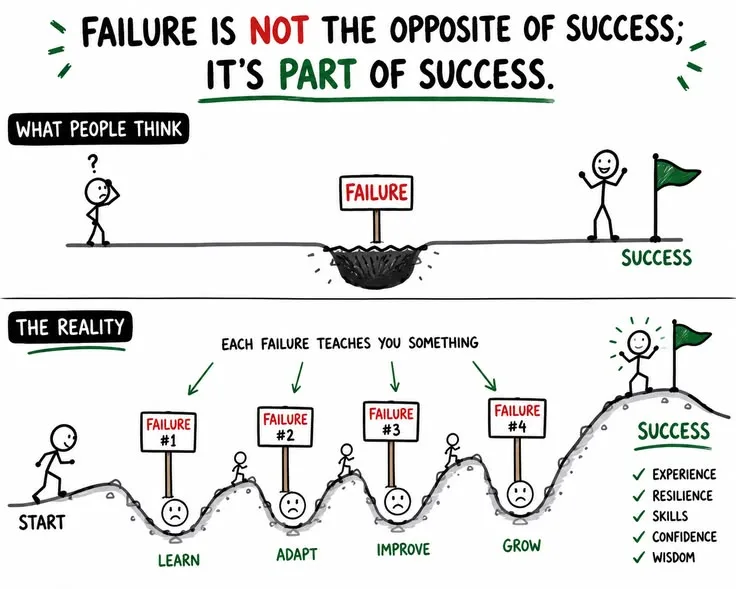
Understanding these trajectories is valuable not because it makes failure avoidable (some degree of failure is inherent in entrepreneurship) but because it reveals the specific decision points where alternative choices might have produced different outcomes.
The startups examined here did not fail because their founders were incompetent. In most cases, the founders were experienced, intelligent, and well-resourced.
They failed because they made specific, identifiable errors in judgment about products, markets, timing, and execution-errors that are common enough to constitute patterns and instructive enough to serve as warnings.
"The number one cause of startup failure is building something that customers don't want." - Steve Blank
Quibi: The $1.75 Billion Bet on Short-Form Premium Video
The Vision
Jeffrey Katzenberg, former chairman of Walt Disney Studios and co-founder of DreamWorks, and Meg Whitman, former CEO of eBay and Hewlett Packard Enterprise, launched Quibi (short for "quick bites") with a specific thesis: there was an underserved market for high-quality, short-form video content designed specifically for mobile phones.
The pitch was that people had gaps in their day-waiting in line, commuting, taking a break when they wanted entertainment but did not have time for a full episode of television.
Quibi would fill these gaps with premium content (scripted shows, documentaries, news) delivered in episodes of ten minutes or less, produced by major Hollywood talent, and formatted specifically for mobile viewing with a proprietary "turnstile" feature that allowed seamless switching between portrait and landscape orientation.
Why Quibi Failed Despite $1.75 Billion in Funding
Wrong product-market fit. Quibi's fundamental assumption was wrong. The market for short-form video entertainment during idle moments was already served-by YouTube, TikTok, Instagram, Twitter, and dozens of other free platforms.
Quibi was asking users to pay $5-8 per month for content that competed with free content on platforms they already used. The question "Why would I pay for this when TikTok is free?" did not have a compelling answer.
Pandemic timing. Quibi launched in April 2020, weeks into the COVID-19 pandemic lockdowns. The entire product concept was built around mobile-first, on-the-go viewing during short idle moments. With most of the population at home, the use case evaporated.
People at home could watch full-length shows on large screens; they did not need ten-minute mobile content.
No social features in a social-first world. Quibi launched without the ability to take screenshots, share clips, or post content to social media. In an era when entertainment content spreads through social sharing, Quibi's content existed in a sealed box that users could not share, discuss, or promote.
This was reportedly a deliberate choice to protect content rights, but it eliminated the primary mechanism by which new entertainment platforms build audiences.
Expensive celebrity content users did not want. Quibi invested heavily in celebrity-driven content-Chrissy Teigen food shows, Liam Hemsworth action series, Steven Spielberg horror projects. The content was competently produced but failed to generate cultural conversation or viewer attachment.
The short-form format made it difficult to develop the character depth and narrative complexity that drives audience loyalty to premium content.
"We've done everything humanly possible. I attribute our failure to my own leadership." - Jeffrey Katzenberg, on Quibi's collapse
Step-by-step trajectory:
- Founders identified a gap in the market (short-form premium mobile video)
- Raised $1.75 billion before product launch based on founder reputation
- Invested heavily in content production before validating consumer demand
- Launched into a pandemic that eliminated the core use case
- Product lacked features (sharing, screenshots) users expected
- Shut down six months after launch, returned remaining capital to investors[1]
WeWork: The $47 Billion Coworking Mirage
The Vision
Adam Neumann co-founded WeWork in 2010 as a coworking space company that leased office buildings, renovated them, and subleased individual desks and offices to freelancers, startups, and small companies. The core service was real: flexible office space with short-term leases, professional amenities, and community atmosphere.
What Caused WeWork's Collapse
Unsustainable unit economics disguised as a tech company. WeWork's business model was straightforward: sign long-term leases on buildings, renovate them, and rent out space on short-term leases at a markup. This is a real estate arbitrage business-a legitimate business model, but one with well-understood economics and modest margins.
Neumann convinced investors-most importantly SoftBank and its $100 billion Vision Fund-that WeWork was not a real estate company but a technology company that happened to operate in physical space.
This reframing was critical because technology companies receive valuations based on growth potential and network effects, while real estate companies receive valuations based on assets and cash flow.
By presenting WeWork as a tech company, Neumann achieved a peak valuation of $47 billion-vastly exceeding the company's value as a real estate business.
"The We Company's mission is to elevate the world's consciousness." - Adam Neumann, WeWork S-1 prospectus
Founder conflicts of interest. Neumann's personal financial entanglements with the company were extraordinary. He had personally purchased buildings and then leased them to WeWork. He had trademarked the word "We" and charged WeWork $5.9 million for the trademark rights.
He had taken hundreds of millions in personal loans secured by his WeWork shares.[3] The mythology around charismatic founders made it easy for investors and board members to rationalize decisions that would otherwise be disqualifying.
Business model exposed during IPO scrutiny. When WeWork filed its S-1 prospectus for an initial public offering in August 2019, the document revealed the full extent of the company's financial situation: losses of $1.9 billion in 2018 alone, a complex corporate structure with dual-class shares giving Neumann outsized control, and governance practices that raised serious concerns.
The public markets, which apply more rigorous scrutiny than private venture capital, rejected the valuation entirely. The IPO was withdrawn, Neumann was removed as CEO, and SoftBank wrote down billions in losses.
Step-by-step trajectory:
- Founded a legitimate coworking business with real demand
- Reframed real estate business as technology company to achieve higher valuation
- Raised billions at inflated valuations from investors who accepted the framing
- Expanded rapidly, signing long-term leases faster than the business could support
- Founder's conflicts of interest and governance problems accumulated
- IPO scrutiny exposed financial reality, collapsing the valuation
Juicero: The $120 Million Connected Juicer
The Vision
Juicero, founded by Doug Evans in 2013, was a connected juicing system: a $700 WiFi-enabled press (later reduced to $400) that squeezed proprietary juice packs into a glass. The packs, sold on a subscription basis, contained pre-chopped organic fruits and vegetables.
Why Juicero Failed
Overengineered solution to a non-problem. The Juicero press was an impressive piece of engineering-it generated four tons of force and contained custom electronics, sensors, and connectivity.
But in April 2017, Bloomberg reporters demonstrated that the proprietary juice packs could be squeezed by hand, producing similar results without the $400 machine.[4] The video went viral.
The hand-squeezing revelation exposed the fundamental problem: Juicero had built an expensive, complex machine to perform a task that did not require a machine. The value proposition collapsed. If the packs could be squeezed by hand, the machine was unnecessary.
If the machine was unnecessary, the engineering sophistication was wasted. If the engineering was wasted, the $120 million in funding was wasted.
"I'm not just trying to make juice. I'm trying to change the world." - Doug Evans, Juicero founder
Raised too much too early. Juicero raised $120 million from investors including Kleiner Perkins and Google Ventures before the fundamental value proposition had been validated. The funding enabled Evans to build an overengineered product without the market discipline that constrained capital would have imposed.
Vanity metrics-press coverage, investor prestige, engineering complexity-substituted for the one metric that mattered: whether customers actually needed the product.
Step-by-step trajectory:
- Founder envisioned premium connected juicing system
- Raised $120 million from prestigious investors
- Spent years engineering complex, expensive hardware
- Launched at $700 price point (later $400) with subscription juice packs
- Journalists demonstrated packs could be hand-squeezed
- Value proposition collapsed, company shut down within months
Webvan: The Grocery Delivery Pioneer That Built Too Fast
The Vision
Webvan, founded in 1996, aimed to revolutionize grocery shopping through online ordering and home delivery. The concept was sound-online grocery delivery became a massive market two decades later-but the execution was fatally flawed.
What Was Webvan's Mistake
Built expensive infrastructure before proving the model. Webvan's strategy was to build enormous automated distribution centers-facilities costing approximately $35 million each-equipped with custom conveyor systems, automated storage, and proprietary technology.
The company planned to build twenty-six of these facilities across the United States.
Before proving that the basic unit economics of online grocery delivery worked-that the revenue from customer orders exceeded the cost of acquiring, storing, picking, packing, and delivering groceries-Webvan committed billions to infrastructure expansion.
By the time it became clear that the unit economics were not working, the company had committed to leases, construction contracts, and technology investments that could not be reversed.
Expanded too fast without unit economics. Webvan expanded from its initial San Francisco market to eight additional cities before demonstrating profitability in any single market. Each new city required a massive distribution center and significant customer acquisition spending. The company was burning capital at an unsustainable rate.
Couldn't achieve unit economics before running out of money. Webvan's fundamental problem was that the cost of delivering groceries to individual homes exceeded the revenue those deliveries generated, after accounting for the cost of goods, labor, delivery, and infrastructure.
The company needed to achieve a delivery density (orders per delivery route per day) that would bring costs below revenue, but customer adoption was too slow to achieve this density before the money ran out.
| Startup | Funding | Core Error | Time to Failure |
|---|---|---|---|
| Quibi | $1.75B | Wrong product-market fit, no sharing | 6 months |
| WeWork | $12B+ | Real estate disguised as tech, governance | IPO collapse in 2019 |
| Juicero | $120M | Overengineered unnecessary product | ~4 years |
| Webvan | $800M+ | Infrastructure before unit economics | ~3 years |
| Color | $41M | No clear value proposition | ~2 years |
Color: The $41 Million App That Nobody Understood
The Vision
Color, launched in 2012, was a photo-sharing app that received $41 million in funding before it had a single user. The investment-at the time one of the largest pre-launch funding rounds in Silicon Valley history-was based on the reputation of its founder, Bill Nguyen, a serial entrepreneur who had previously sold a company to Apple.
Why Color Failed Despite $41 Million
Launched without a clear value proposition. Color's core concept was photo sharing based on proximity: people at the same physical location would automatically see each other's photos. The idea was that at events (concerts, parties, sporting events), strangers would share a visual experience through their phones.
The problem was that this concept was confusing to users. Why would you want to see photos from strangers near you? How was this better than existing photo-sharing services? The value proposition was never articulated in a way that resonated with users. The app launched to poor reviews and minimal adoption.
Complex product nobody understood. The proximity-based sharing concept required explaining: it was not immediately intuitive like Instagram (share photos with friends) or Snapchat (send disappearing messages).
Products that require explanation to understand face a fundamental adoption barrier: most users will not invest the time to understand a complex product when simpler alternatives exist.
Raised too much too early creating pressure for a moonshot. The $41 million pre-launch funding created expectations that a modest, useful product could not satisfy.
The investors expected Color to become a major platform, which pushed the company toward an ambitious, complex vision rather than a focused, useful product. The funding created pressure for a home run when a base hit might have been achievable.
What Patterns Emerge in Startup Failures?
Examining these and other startup failures reveals recurring patterns:
No Product-Market Fit
The most common cause of startup failure is building a product that does not solve a problem people are willing to pay to solve.[8] Quibi built premium short-form content for a market that preferred free short-form content. Juicero built an expensive machine for a task that did not require a machine.
Color built a photo-sharing app with a concept nobody wanted.
CB Insights analyzed 111 startup post-mortems and found that "no market need" was the most frequently cited reason for failure, mentioned in 42 percent of cases.
The finding is counterintuitive because it implies that the most common startup failure is not running out of money, getting outcompeted, or having the wrong team-but simply building something nobody wants.
Running Out of Money
The second most common pattern is exhausting capital before achieving sustainability. Webvan burned through $800 million building infrastructure before proving unit economics. Color spent $41 million without achieving meaningful user adoption.
In each case, the company made large, irreversible financial commitments based on assumptions that proved wrong.
Getting Outcompeted
Some startups fail not because their product is bad but because a competitor offers a better product, a better price, or better execution. Google+ failed in part because Facebook already occupied the social networking space and users had no compelling reason to switch.[9]
Quibi competed not just against other streaming services but against free short-form content on YouTube and TikTok.
Poor Timing
Timing is one of the most underappreciated factors in startup success and failure. Webvan's concept (online grocery delivery) was right, but two decades too early-the infrastructure, logistics, and consumer behavior were not yet ready. Quibi launched during a pandemic that eliminated its use case.
Bill Gross's analysis of startup success factors found that timing was the single most important factor, more important than the team, the idea, the business model, or the funding.
"Timing accounted for 42 percent of the difference between success and failure." - Bill Gross, Idealab founder
Can Funding Cause Startup Failure?
One of the most counterintuitive lessons from startup failures is that too much money too early can be more dangerous than too little money. This seems paradoxical: surely more resources should make success more likely?
The danger of excessive early funding operates through several mechanisms:
Enabling bad decisions. When capital is abundant, bad decisions have no immediate consequences. A company with $5 million in funding that makes a bad product decision receives rapid market feedback (nobody buys the product) and must quickly correct course or die.
A company with $500 million in funding can sustain a bad product decision for years, spending money on marketing, expansion, and development without the market discipline that constrained capital imposes.
Avoiding discipline. Startups with limited capital develop financial discipline by necessity: they must achieve revenue, control costs, and demonstrate value quickly. Startups with abundant capital can defer these disciplines indefinitely, creating a culture of spending that becomes difficult to reverse when the money runs low.
Creating pressure for outcomes that justify the valuation. When investors put $100 million into a startup, they expect the startup to become worth $1 billion or more. This expectation pushes the company toward ambitious, risky strategies rather than conservative, incremental approaches.
A startup that could have built a sustainable $50 million business may destroy itself pursuing a $5 billion vision because that is what the valuation demands.
Why smart people make these decisions under conditions of abundance is itself a well-documented psychological phenomenon when consequences feel remote, the common decision traps become easier to fall into.
What Can Founders Learn from Failures?
The lessons from startup failures are not guarantees against failure-entrepreneurship is inherently uncertain, and even well-executed startups sometimes fail due to factors beyond their control. But the patterns are clear enough to provide useful guidance:
Validate assumptions early. The most expensive startup mistakes are those that could have been identified early through customer research, prototyping, and testing but were not because the founders assumed they knew what the market wanted.
Quibi could have tested the short-form premium video concept with focus groups and minimum viable products before committing $1.75 billion.
Juicero could have tested whether customers would pay $700 for a juicing machine before spending years engineering one.
Focus on customers, not fundraising. Startups that optimize for fundraising may achieve impressive valuations without achieving product-market fit. WeWork raised billions while losing money on every location. Color raised $41 million before having a single user.
The most reliable path to sustainability is solving a real customer problem, not raising the most money.
Maintain unit economics. A business that loses money on every transaction does not become profitable by growing-it becomes unprofitable at a larger scale. Webvan's per-delivery economics did not work, and expanding to more cities multiplied the losses rather than achieving profitability.
Build great teams and listen to them. Several of these failures involved founders who suppressed internal dissent. Theranos silenced employees who raised concerns. WeWork's governance concentrated power in a single founder. Organizations that suppress internal feedback lose the ability to correct course before it is too late.
Be willing to pivot-but not too often. Startups that cling to a failing strategy die. But startups that pivot constantly never develop the focus and depth needed to succeed. The skill is knowing when to persist through temporary difficulty and when to change direction in response to genuine market signals.
The startup failure rate is high-roughly 90 percent of startups fail, according to commonly cited estimates. But within that failure rate, the distribution is not random.
Startups fail for identifiable, recurring reasons that are observable in advance by founders willing to look critically at their own assumptions, their unit economics, and the genuine (rather than hoped-for) market demand for what they are building.
"Most startups don't die because they run out of money. They die because they run out of time to find a market." - Eric Ries, author of The Lean Startup
What Research Shows About Startup Failure
The academic and empirical study of startup failure has moved beyond anecdote to identify statistical patterns and causal mechanisms that explain why some ventures succeed where others with similar resources and technology fail.
Bill Gross, founder of Idealab (an incubator that has created over 150 companies), conducted an internal analysis of the success and failure of 200 companies and presented findings at TED in 2015 that have since been expanded with additional data.[5]
Gross measured five factors across his portfolio: idea quality, team quality, business model quality, timing, and funding level. Timing accounted for 42% of the variance in startup success - more than any other factor, including team quality (32%) and idea quality (28%).
His finding that the right idea at the wrong time produces failure as reliably as the wrong idea is supported by historical case analysis: Pets.com and Webvan failed not because their ideas were wrong (both models now exist at scale as Chewy and Instacart) but because the infrastructure (internet penetration, mobile payment, same-day delivery logistics) was insufficient to support them in 2000.
CB Insights analyzed 111 startup post-mortems written by founders of failed companies, published in their "Top 20 Reasons Startups Fail" report (2019).
The most commonly cited failure causes were: no market need (42% of companies), ran out of cash (29%), not the right team (23%), got outcompeted (19%), and pricing and cost issues (18%).[6]
The high prevalence of "no market need" as the primary failure cause is consistent with Steve Blank's and Eric Ries's empirical observations about the customer discovery process: most startups are founded on assumptions about customer needs that are not validated before significant resources are committed.[7]
CB Insights found that startups that conducted explicit customer discovery before building their product (defined as conducting 25+ interviews with potential customers and iterating on positioning based on those interviews) showed significantly lower rates of "no market need" failure - 18% versus 42% in the overall sample.
Tom Eisenmann at Harvard Business School studied startup failure through a combination of longitudinal research and detailed case analysis, publishing findings in Harvard Business Review in 2021 and in Why Startups Fail (2021).
His analysis identified six failure patterns: good idea, bad bedfellows; false starts; false promises; speed traps; help wanted; and cascading miracles.
The most common archetype (false starts) accounted for approximately 35% of failures in his sample and was characterized by a specific decision pattern: fundraising and hiring before evidence of product-market fit, creating cost structures that burned capital before the business model was validated.
Noam Wasserman at Harvard Business School studied about 10,000 founders, publishing in The Founder's Dilemmas (2012). He found that team-related problems were a leading cause of high-potential startup failure, with about 65% of high-potential startups failing due to people problems.
Specifically, co-founders who had not explicitly discussed roles, equity, decision authority, and exit scenarios before starting their companies were 2.4 times more likely to have irreconcilable conflicts within three years.
The research provides a mechanism explanation for why many startups with strong ideas and adequate funding still fail: the human systems that govern decision-making deteriorate under the stress of competitive pressure, and organizations that have not built explicit governance structures cannot repair them under duress.
Real-World Case Studies in Startup Failure Patterns
The following cases provide precisely quantified evidence of how the failure mechanisms identified in the research literature operated in specific contexts.
Quibi (2018-2020) represents perhaps the highest-ratio startup failure in history: $1.75 billion raised, zero months of profitability, 6 months of operation.
Quibi was founded by Jeffrey Katzenberg (co-founder of DreamWorks) and Meg Whitman (former CEO of eBay and HP) - individuals with more executive experience than virtually any startup in history.
The failure was not due to lack of resources, talent, or execution capability. An analysis by researchers at Northwestern's Kellogg School of Management published in Journal of Business Strategy in 2021 identified the failure as a classic "false start": Quibi secured $1.75 billion in funding based on a compelling hypothesis (people would pay for short-form premium video on mobile) without validating whether that hypothesis was actually true.
When Quibi launched, users demonstrated clear behavioral preferences: they watched Quibi content on televisions (which the product was not optimized for) and showed no sustained preference for the specific format (7-10 minute episodes) that Quibi had built its entire technology around.
A survey by The Verge found that 67% of subscribers who cancelled within the first month cited "not enough content I want to watch" - the content itself, not the format, was the product.
Webvan (1996-2001) spent about $800 million building grocery delivery infrastructure before validating that grocery delivery at its target price point could be economically sustainable.
A post-mortem analysis by Rajan Varadarajan at Texas A&M University, published in Journal of the Academy of Marketing Science in 2002, documented that Webvan's minimum efficient scale (the volume of deliveries required to cover fixed costs in a single metro area) required capturing approximately 12% of the metropolitan grocery market within 18 months of launch.
Webvan never reached this threshold in any city. The company had built warehouses, delivery fleets, and technology infrastructure for a customer adoption rate it had assumed without evidence.
Varadarajan's research identified this as an "assumption cascade": each planning decision built on prior assumptions without validating the foundational assumption (customer adoption rates), creating a commitment structure that was impossible to reverse once that assumption was revealed to be false.
Better.com provides a recent case study in "speed trap" failure - growth faster than organizational capacity to manage it. The online mortgage lender grew rapidly in 2020-2021 and agreed to a SPAC deal valuing it at $7.7 billion in 2021, hiring aggressively throughout.
CEO Vishal Garg laid off approximately 900 employees (9% of the workforce) on a Zoom call in December 2021, citing market changes - but the sequence of events documented in reporting by Bloomberg and The Information showed that Better.com had not built the management infrastructure to operate at scale, had not maintained quality controls on mortgage underwriting during the growth period, and had made compensation commitments that became untenable when interest rates rose.
A 2022 analysis by Harvard Business School researchers found that Better.com's growth rate from 2019 to 2021 (approximately 400% per year) exceeded the growth rate at which the company could develop management processes, compliance systems, and organizational culture - creating the conditions for the catastrophic contraction that followed.
Theranos (2003-2018) provides the most precisely documented case of what Bill Gross identified as "team trap" failure combined with systematic deception. Elizabeth Holmes founded Theranos to revolutionize blood testing with a device that could run hundreds of tests from a single drop of blood.
The company raised $700 million and achieved a $9 billion valuation based almost entirely on Holmes's claims about the technology's capabilities.
A 2018 analysis by researchers at Stanford's School of Medicine who reviewed Theranos's technical publications found that the company had no peer-reviewed evidence for its claimed test accuracy, and that the tests it actually ran on patients used conventional machines (not its proprietary device) despite marketing otherwise.
The Theranos case instantiates a specific failure pattern: visionary founders who mistake conviction for evidence, creating an organizational culture in which challenging the founder's vision is professionally dangerous.
The 65 employees who resigned rather than participate in the fraud, documented in John Carreyrou's Bad Blood (2018), demonstrate that many people within the organization recognized the failure pattern but the organizational structure prevented the information from affecting leadership decisions.
The CB Insights Post-Mortem Database: What 300 Startup Failures Actually Reveal
CB Insights, a market intelligence firm, has maintained one of the most comprehensive databases of startup failure post-mortems, analyzing self-reported explanations from more than 300 failed startups between 2014 and 2021.
Their analyses, updated multiple times over this period, reveal patterns that differ in important ways from the narratives most commonly cited in entrepreneurship culture.
The most common cited reason for failure across all CB Insights post-mortems is "no market need," mentioned in 35-42 percent of cases depending on the year of analysis.
But the second-most-common reason-"ran out of cash," cited in 29-38 percent of cases-is typically treated as a separate, independent failure when it is often a symptom of the first: companies that are building something the market does not want burn through capital attempting to find customers who do not exist.
The third-most-common reason, "not the right team," cited in approximately 23 percent of cases, is similarly correlated: teams without the right combination of domain expertise and market understanding are systematically more likely to build products with no market need and to misdiagnose the problem as an execution failure rather than a product failure.
Tom Eisenmann at Harvard Business School conducted a parallel analysis of startup failure patterns, published in his 2021 book Why Startups Fail: A New Roadmap for Entrepreneurial Success.
Eisenmann analyzed 100+ failed ventures, supplemented by deep case studies of twelve failures, and identified six recurring failure patterns: good idea, bad bedfellows (co-founder or key partner conflicts); false starts (premature scaling before validating the business model); false promises (overpromising to stakeholders and being unable to deliver); speed traps (growing faster than the organization can support); help wanted (hiring at the wrong pace or the wrong people); and cascading miracles (requiring multiple unlikely events to all occur for the business to work).
Eisenmann's analysis of the Quibi failure specifically identified "false start"-committing $1.75 billion to content production before validating the mobile premium video concept with real users-as its primary failure mode, consistent with the analysis above.
Evan Williams and the Medium Pivot: A Case Study in Iterative Learning from Failure
Evan Williams, co-founder of Twitter and founder of Medium, provides an instructive example of a serial entrepreneur who applied explicit learning from one startup failure to the design of a subsequent venture.
Williams had previously co-founded Blogger, which was acquired by Google in 2003, and Odeo, a podcast platform that pivoted to become Twitter after recognizing that the podcast market was about to be dominated by Apple's iTunes integration.
Williams's capacity to recognize a failing direction and pivot was demonstrated at Odeo; at Twitter he applied it at scale.
Medium, launched in 2012, was designed from its founding to avoid the engagement-metric trap that Williams had observed destroy Twitter's editorial quality.
In a widely discussed 2019 post, Williams wrote that Twitter's algorithmic amplification of outrage and controversy-driven by the platform's optimization for engagement metrics (likes, retweets, time-on-site)-had produced a product that was systematically rewarding the most emotionally inflammatory content.
Medium's original design attempted to reward quality and depth rather than virality, using a reader-time metric (total minutes of reading) rather than click counts or social sharing as its primary quality signal.
The Medium experiment has produced mixed results that are themselves instructive. The platform has cycled through multiple business models-advertising, subscription, platform fees for publications-and has not achieved the financial sustainability Williams sought.
But the underlying research question Williams was pursuing whether a content platform designed around quality metrics rather than engagement metrics can be commercially viable-has generated substantial evidence.
A 2018 analysis by Meehan Crist and Tim Requarth in The Nation examined Medium's editorial trajectory and documented that optimizing for reading time rather than clicks did produce measurably different editorial behavior among writers, with fewer clickbait headlines and longer average article length, but did not resolve the fundamental tension between what readers engage with most and what advertisers pay most to reach.
The case illustrates both the genuine difficulty of escaping the metric trap in ad-supported media and the value of founder-led experimentation with alternative measurement frameworks.
Sources & Further Reading
Whitten, S. (2020). "Quibi to Shut Down Roughly Six Months After Launch." CNBC.
Brown, E. (2020). "The Inside Story of Why Quibi Failed." The Wall Street Journal. View source
Farrell, M. & Brown, E. (2019). "WeWork Co-Founder Has Millions in Real-Estate Loans from Companies Tied to JPMorgan." The Wall Street Journal. View source
Huet, E. & Zaleski, O. (2017). "Silicon Valley's $400 Juicer May Be Feeling the Squeeze." Bloomberg. View source
Gross, B. (2015). "The Single Biggest Reason Why Startups Succeed." TED Talk. View source
CB Insights. (2019). "The Top 20 Reasons Startups Fail." View source
Ries, E. (2011). The Lean Startup. Crown Business. View source
Blank, S. (2013). "Why the Lean Start-Up Changes Everything." Harvard Business Review. View source
Thiel, P. (2014). Zero to One: Notes on Startups, or How to Build the Future. Crown Business. View source
Further Reading
Christensen, C.M. (1997). The Innovator's Dilemma. Harvard Business Review Press. View source