
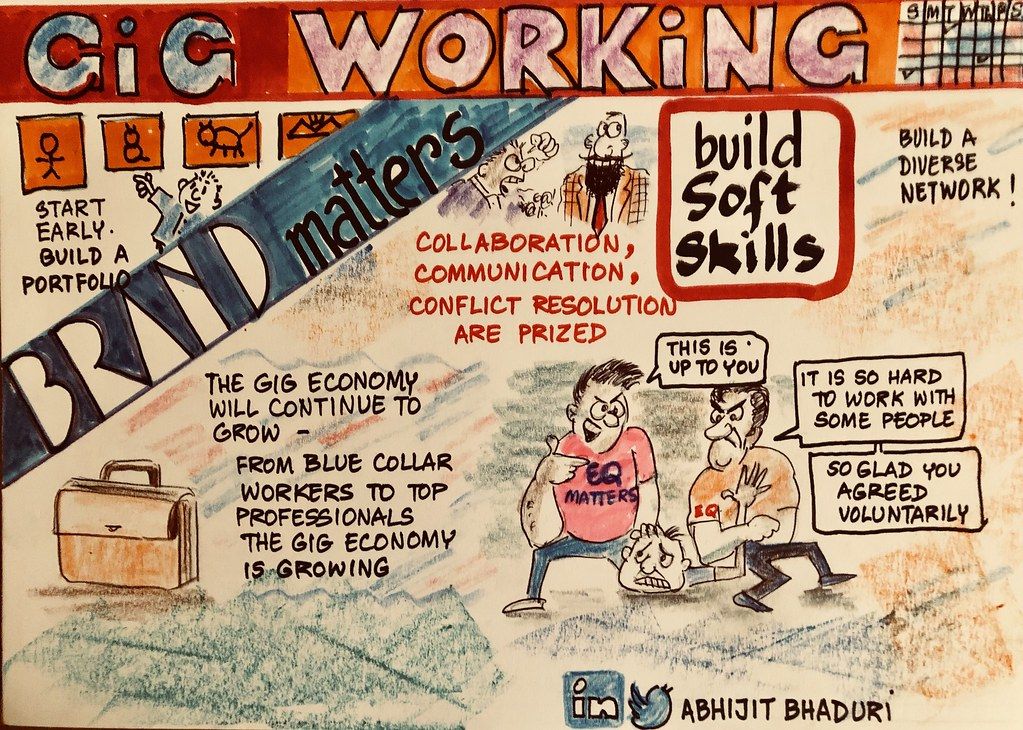
The gig economy is a labor market organized around short-term contracts, per-task or per-project work, and often platform-mediated matching between workers and clients, as opposed to traditional employment, which provides ongoing work relationships with regular pay, tax withholding, and employer-funded benefits.
The fundamental question separating these two models is not flexibility versus stability - it is who bears the risk when things go wrong, and whether the premium for bearing that risk is adequate.
In January 2020, Uber and Lyft were facing an existential threat in California. Proposition 22 - a ballot measure that would determine whether app-based drivers were employees or independent contractors - was heading to voters.
The companies spent over $200 million campaigning for contractor status, the largest amount ever spent on a California ballot measure at the time.
They argued that drivers wanted flexibility. Labor advocates argued that drivers needed protections. Both were partly right. Neither was telling the whole story.
The gig economy debate is not fundamentally about apps or platforms. It is about a deeper question that societies have been grappling with since the industrial revolution: what is the employment relationship, who benefits from each form of it, and who absorbs the downside when income disappears, health deteriorates, or retirement arrives without savings?
This article examines both models with clarity about the real tradeoffs - the income question, the benefits gap, the legal classification battle, the tax reality, and what research actually shows about how these models play out for workers at different skill levels.
Defining the Terms Precisely
Understanding the gig economy versus traditional employment requires precise definitions, because the terms are frequently used loosely in ways that obscure the actual stakes.
The gig economy refers to labor organized around discrete tasks, projects, or engagements rather than ongoing employment relationships. The term "gig" is borrowed from musician slang for a single performance booking.
The modern gig economy includes rideshare drivers, food delivery couriers, TaskRabbit handypeople, Upwork freelancers, management consultants, and independent professionals across virtually every industry.
What unites them is not the type of work but the structure of the relationship: no single employer, no guaranteed hours, no employer-funded benefits.
Traditional employment refers to an ongoing relationship between an employer and an employee, typically formalized with a contract specifying hours, compensation, and terms.
Employees receive regular paychecks, have taxes withheld by the employer, and typically receive a package of benefits - health insurance, retirement contributions, paid leave, disability coverage, unemployment insurance eligibility - that supplements their wages.
The Bureau of Labor Statistics estimated that benefits accounted for approximately 29.4% of total compensation costs for civilian workers in 2023.
The key legal distinction is between an employee and an independent contractor. This classification is not merely administrative - it determines legal rights, tax obligations, access to safety net programs, and exposure to risk.
The classification is supposed to reflect the actual nature of the work relationship, not just what the contract says.
But in practice, misclassification of workers as contractors when they should legally be employees is widespread and economically motivated.
"The question is not just who gets the flexibility - it's who gets the fragility." - Diane Mulcahy, The Gig Economy (2016)
The Scale of the Gig Economy
Before examining the tradeoffs, it helps to understand how large the gig economy actually is - and how the data has been consistently muddled.
Estimates of gig economy participation vary dramatically depending on definition. The Bureau of Labor Statistics (BLS) Contingent Worker Supplement, last conducted in 2017, found that only about 3.8% of workers had a primary job that was contingent or alternative.
But this narrow definition excluded many people who do gig work as a supplement to traditional employment.
McKinsey's 2022 American Opportunity Survey found that approximately 36% of employed respondents identified as independent workers - a much higher figure that includes anyone doing any freelance, contract, or gig work, even as a side activity.
MBO Partners' 2023 State of Independence report estimated 72.1 million Americans engaged in some form of independent work, up from 64.6 million in 2022.
The discrepancy matters because it shapes how we think about policy. If the gig economy is 4% of the workforce, it is a niche phenomenon requiring targeted regulation. If it is 36%, it is a structural transformation of the labor market requiring fundamental rethinking of how worker protections are delivered.
The most defensible estimate: approximately 15-20% of American workers rely on independent or gig work as their primary income source, while a larger percentage (30-40%) engage in some form of independent work at least occasionally.
The trend is clearly upward, accelerated by the pandemic, remote work infrastructure, and platform economics.
| Metric | Source | Year | Finding |
|---|---|---|---|
| Workers with contingent primary jobs | BLS | 2017 | 3.8% |
| Workers identifying as independent | McKinsey | 2022 | 36% |
| Total independent workers (any level) | MBO Partners | 2023 | 72.1 million |
| Freelancers (any work in past 12 months) | Upwork/Freelancers Union | 2023 | 64 million |
| Gig work as primary income | Various estimates | 2023 | 15-20% |
Income: Flexibility and Its Real Costs
The central promise of gig work is flexibility - the ability to work when you want, decline work when you do not, and set your own pace. This is real and genuinely valued by many workers.
But flexibility and income stability exist in fundamental tension, and how that tension resolves depends heavily on what type of gig work you are doing and what skills you bring to it.
High-Skill Gig Workers
For knowledge workers with in-demand skills - software developers, designers, management consultants, lawyers, accountants, financial analysts, data scientists - independent contracting can produce significantly higher income than equivalent employment. The premium exists for several structural reasons:
- Employers pay for certainty and convenience; contractors capture some of this premium as higher rates
- Benefits costs that would otherwise go to an employee (employer payroll taxes, health insurance contributions, retirement matching) are instead available as higher hourly or project rates
- Specialization means high-skill contractors can serve multiple clients without each needing to hire a full-time specialist, creating value through efficiency
- Market rates for specific skills can be negotiated project by project rather than being constrained by internal employer pay bands
- Contractors can deduct legitimate business expenses, reducing effective tax burden
An independent software developer charging $150/hour and working 1,200 billable hours annually earns $180,000 - potentially 20-40% more than many salaried developer positions at the same skill level. A management consultant who bills at $250/hour for 1,000 hours earns $250,000, well above most employed equivalents.
The tradeoffs are real but manageable for those with strong financial literacy: unpaid time (business development, administration, gaps between projects) reduces effective hourly rates by 20-30%; income volatility requires more aggressive saving; and benefits must be self-funded.
But for workers with strong skills and a functional client pipeline, the math often favors independence.
Low-Skill Platform Workers
For workers in lower-wage platform gig work, the calculus is fundamentally different. Multiple studies have found that after accounting for unpaid waiting time, vehicle depreciation, fuel, insurance, and maintenance, rideshare drivers earn below minimum wage in many markets.
A widely cited 2018 MIT study by Stephen Zoepf and colleagues found median hourly profit for Uber and Lyft drivers, after expenses, was $3.37 per hour - dramatically below minimum wage. The researchers noted significant variation, with some drivers earning more, but the bottom half of the distribution was earning very little.
The study methodology was subsequently debated, and a revised estimate placed median earnings somewhat higher, but still often below prevailing minimum wages.
The Massachusetts Attorney General's 2020 analysis estimated average Uber driver earnings of $9.56 per hour after expenses, below the state minimum wage of $12 at the time.
A 2020 study by the UC Berkeley Labor Center found that the median Uber/Lyft driver in California earned approximately $5.64 per hour after expenses - less than half the state minimum wage.
The Economic Policy Institute (2018) estimated that after accounting for vehicle costs, Uber drivers earn approximately $9.21 per hour in net compensation, compared to $11.80 for equivalent private-sector workers - a 22% penalty for the supposed benefit of flexibility.
These figures matter because the flexibility narrative obscures a structural reality: low-wage gig work often produces lower effective income than traditional employment at equivalent tasks, while also providing no benefits and full exposure to income volatility.
The flexibility is real - but for many workers, it is the flexibility to choose which hours to earn below minimum wage.
Income Volatility: The Hidden Tax
Even gig workers who earn well face a cost that employment figures rarely capture: income volatility.
Research on financial fragility by the JPMorgan Chase Institute (2019) found that families with volatile income spend 5-10% more on financial management costs (overdraft fees, short-term borrowing, late payment penalties) than families with stable income at the same annual level.
The psychology of money is not purely rational - irregular income causes disproportionate stress and financial harm even when the total annual amount is adequate.
Managing irregular income requires:
- Larger cash buffers (typically 3-6 months of expenses rather than 1-2)
- More conservative spending during high-earning periods
- Systems for managing quarterly tax payments
- Greater sophistication in financial planning than most workers receive
- Psychological resilience to handle the stress of uncertain future income
| Income Characteristic | Traditional Employment | Gig Work (High-Skill) | Gig Work (Platform/Low-Skill) |
|---|---|---|---|
| Predictability | High | Medium | Low |
| Earnings ceiling | Limited by employer pay bands | Higher with strong market | Limited by platform pricing |
| Floor / minimum | Guaranteed (contracted hours) | Variable (depends on clients) | Often below minimum wage effectively |
| Income volatility | Low | Medium-High | High |
| Financial planning complexity | Low | High | High |
| Benefits included | Yes (health, retirement, leave) | No (must self-fund) | No (must self-fund) |
The Benefits Gap: What Traditional Employment Actually Provides
In the United States, traditional employment provides a bundle of benefits whose full value is rarely appreciated until it is absent. In most other developed countries, many of these benefits are provided by the state rather than employers, making the US comparison uniquely stark.
Health insurance: The US employer-sponsored health insurance system means that traditional employees typically access group health insurance at lower cost than individuals purchasing independently.
The Kaiser Family Foundation's 2023 Employer Health Benefits Survey found that the average annual premium for employer-sponsored family coverage was $23,968, of which employers paid an average of $16,357.
Gig workers purchasing individual market insurance pay the full premium themselves, often for inferior plans with higher deductibles and narrower networks. For a family, the benefits gap on health insurance alone can exceed $15,000 per year.
Retirement: Traditional employers frequently contribute to employee 401(k) plans, typically matching employee contributions up to 3-6% of salary. On a $80,000 salary with a 4% match, that is $3,200 per year of free money that compounds over decades.
Gig workers can establish solo 401(k) or SEP-IRA plans, but must make all contributions themselves.
The practical difference is not legal access to retirement accounts - it is that employer matching provides automatic, painless retirement saving, while self-funding requires active decision-making and cash flow management that many workers do not execute consistently.
The behavioral economics research on default effects shows that automatic enrollment dramatically increases retirement saving participation.
Unemployment insurance: Employees who are laid off can typically collect unemployment benefits, providing income replacement of 40-60% of prior wages for several months while they find new work.
Independent contractors are not eligible under normal circumstances (the COVID-19 Pandemic Unemployment Assistance program was a temporary exception). If a major client drops a contractor, there is no income replacement and no bridge to the next engagement.
Workers' compensation: Employees injured on the job are covered by mandatory workers' compensation insurance, providing medical care and wage replacement.
Contractors injured while working are not covered - they must rely on personal health insurance and disability insurance, which they must purchase themselves and which many do not.
Paid leave: FMLA provides eligible employees with protected unpaid leave for family and medical reasons; many employers also provide paid sick leave, parental leave, and vacation. Gig workers have no equivalent protection - time not working is income not earned, with no floor and no safety net.
Legal protections: Employees are protected by minimum wage laws, overtime requirements, anti-discrimination statutes, workplace safety regulations (OSHA), and wrongful termination protections. Independent contractors generally are not covered by these protections, or have significantly reduced coverage.
The total value of the benefits package in traditional employment varies but is typically estimated at 25-40% of base salary. For a worker earning $60,000, benefits worth $15,000-$24,000 per year are part of the compensation that disappears in the transition to gig work.
Gig workers who do not account for this gap when comparing income are comparing their gross revenue to an employee's gross salary - a fundamentally misleading comparison.
Legal Classification: The Employee vs. Contractor Battle
The distinction between employee and independent contractor is determined by law, not by what the contract says. Multiple overlapping legal frameworks apply, and the classification battle is one of the most consequential labor law questions of the 21st century.
The IRS test (also called the common-law test) focuses on three categories: behavioral control (does the company control how work is performed?), financial control (does the company control business aspects like rate-setting, expense reimbursement, and provision of tools?), and relationship type (are there written contracts, employee benefits, permanency, and integral integration into the business?).
The ABC test, used in several states including California under AB5 (2019), presumes workers are employees unless the hiring entity can demonstrate all three conditions: (A) the worker is free from control and direction in performing the work, (B) the work is outside the usual course of the hiring entity's business, and (C) the worker is customarily engaged in an independently established trade, occupation, or business.
The ABC test makes it significantly harder to classify app-based workers as contractors because condition (B) is very difficult for platform companies to meet - a driver performing rides is clearly within the usual course of a rideshare company's business.
The economic reality test, used in federal wage-and-hour law under the FLSA, asks whether the worker is economically dependent on the hiring entity or genuinely in business for themselves.
Factors include the degree of control, the worker's opportunity for profit or loss, the worker's investment in equipment, the permanence of the relationship, and the degree of skill required.
These tests exist because employers have strong financial incentives to classify workers as contractors: doing so saves payroll taxes (approximately 7.65% of wages), eliminates benefit costs (25-40% of compensation), reduces liability, and avoids compliance with employment law.
The National Employment Law Project estimated in 2020 that worker misclassification costs state unemployment insurance trust funds alone over $3 billion annually and costs the federal government billions more in lost tax revenue.
Tax Implications: The Numbers Most People Miss
The tax treatment of employment income and self-employment income differs substantially, and understanding the real numbers is essential for anyone considering the transition.
Self-employment tax: Employees pay 7.65% of wages in Social Security and Medicare taxes; employers match this amount. Self-employed workers pay the full 15.3% as self-employment tax (12.4% Social Security on earnings up to $168,600 in 2024, plus 2.9% Medicare on all earnings).
On $80,000 of net self-employment income, this is approximately $12,240 in self-employment tax versus $6,120 for an employee - a real and significant additional cost of $6,120. The self-employed can deduct half of the self-employment tax as an income tax adjustment, but this only partially offsets the difference.
Quarterly estimated taxes: Employees have taxes withheld from each paycheck automatically. Self-employed workers must make quarterly estimated tax payments (due in April, June, September, and January) or face underpayment penalties.
This requires financial discipline, cash flow management, and often the assistance of an accountant - a genuine operational burden, especially for those with variable income.
Business deductions: The significant upside is that legitimate business expenses are deductible. Home office deductions, vehicle expenses for work use, equipment and software, professional development, health insurance premiums (often fully deductible for the self-employed), and retirement contributions all reduce taxable income.
For disciplined record-keepers with genuine business expenses, deductions can substantially offset the self-employment tax premium.
But claiming deductions requires documentation, organization, and often professional tax preparation - costs and complexities that salaried employees do not face.
Retirement contributions: Self-employed workers can contribute more to tax-advantaged retirement accounts than W-2 employees. A SEP-IRA allows contributions up to 25% of net self-employment income (up to $69,000 in 2024).
A solo 401(k) allows even higher contributions by combining employee and employer contribution limits. For high-earning contractors, this is a significant advantage in tax-advantaged wealth accumulation.
| Tax Factor | Employee (W-2) | Independent Contractor (1099) |
|---|---|---|
| Payroll/SE tax rate | 7.65% (employer pays matching 7.65%) | 15.3% (full amount, half deductible) |
| Tax withholding | Automatic per paycheck | Self-managed quarterly estimated payments |
| Business deductions | Very limited (since 2017 TCJA) | Extensive (home office, vehicle, equipment, etc.) |
| Health insurance deduction | Pre-tax through employer plan | Deductible as self-employment adjustment |
| Retirement contribution limits | $23,000 employee + employer match (401k, 2024) | Up to $69,000 (SEP-IRA) or more (solo 401k) |
| Tax preparation complexity | Low (standard W-2 filing) | High (Schedule C, estimated payments, deductions) |
Who Wins and Who Loses: The Honest Assessment
The gig economy's benefits and costs are not evenly distributed. They correlate strongly with skill level, bargaining power, and access to healthcare outside of employment.
Winners in the gig economy:
- High-skill professionals who can command premium rates and maintain full client schedules
- Workers who genuinely want flexibility for caregiving, creative projects, or other businesses and can tolerate income variability
- Workers whose spouses or partners provide employer-sponsored health insurance, eliminating the largest benefits gap
- Workers in countries with universal healthcare and robust social insurance, where the benefits gap largely disappears
- Entrepreneurial personalities who thrive on autonomy and can manage the operational complexity of self-employment
- Workers in high-demand fields where market rates significantly exceed employer pay bands
Losers in the gig economy:
- Low-wage platform workers who earn below effective minimum wage after expenses
- Workers without the financial literacy or cash flow to manage self-employment taxes and benefits
- Workers without family access to health insurance, facing the full cost of individual market coverage
- Older workers who lack decades of retirement accumulation and lose access to employer matches
- Workers who are economically dependent on a single platform that sets prices unilaterally and can deactivate them without recourse or appeal
- Workers in industries where "independent contractor" status is misclassification that strips legal protections without providing genuine independence
The systemic question is whether the gig economy creates genuinely new economic value or primarily redistributes it - shifting labor costs and risks from employers onto workers and the public. The evidence suggests both.
For high-skill workers, independent contracting often creates real value through flexibility, specialization, and market-rate access.
For lower-wage platform workers, the structural reality more closely resembles risk transfer than genuine flexibility, with workers bearing costs that employers previously bore and that social insurance systems were designed to cover.
This connects to broader questions about ethical tradeoffs in organizations and whether the framework of individual choice is adequate when the structural conditions limit the real choices available.
The Future of Work Question
The gig economy is not a temporary phenomenon. Several structural forces - digital platform economics, the declining cost of remote work infrastructure, increased demand for specialized project-based skills, employer desires for workforce flexibility, and workers' own preferences for autonomy - point toward continued growth in non-traditional work arrangements.
The relevant policy question is whether legal and social insurance frameworks will adapt. Most existing labor protections were designed for the 20th-century employment model: a single employer, a fixed workplace, long-term tenure.
That model is eroding, but the protections it provides - health coverage, retirement saving, income replacement during unemployment, protection from workplace injury - remain essential.
Several policy innovations are being explored or piloted:
Portable benefits: Benefits accounts that follow workers from engagement to engagement, funded by contributions from each hiring entity proportional to hours worked. The Washington State portable benefits proposal and similar initiatives in New York and New Jersey represent early experiments with this model.
Third-category classification: Some legal scholars and policymakers propose a worker classification between employee and independent contractor - sometimes called "dependent contractor" or "independent worker" - that would provide some protections (minimum earnings guarantees, accident insurance, contribution to portable benefits) without full employment status.
The UK's "worker" status, distinct from both employee and self-employed, is one existing model.
Platform accountability: Regulations requiring gig platforms to provide minimum transparency about earnings, to fund benefits contributions, or to meet minimum per-hour earning guarantees.
The EU's Platform Workers Directive, adopted in 2024, creates a presumption of employment for platform workers and requires platforms to demonstrate that workers are genuinely independent.
Universal basic services: Rather than tying protections to employment, providing healthcare, retirement saving, and income support through universal public systems - decoupling the safety net from the employment relationship entirely.
This approach is more common in European social democracies and represents the most fundamental structural response to the erosion of traditional employment.
For individuals navigating this landscape now, the most important principle is visibility: understanding what benefits traditional employment provides, what it would cost to replicate them independently, and whether the income premium of gig work actually covers those costs plus adequate compensation for the risks borne.
In many cases it does. In many cases it does not - and the difference is not always visible until a health crisis, a job drought, or a retirement shortfall makes it painfully clear.
Sources & Further Reading
- Mulcahy, Diane. The Gig Economy: The Complete Guide to Getting Better Work, Taking More Time Off, and Financing the Life You Want. AMACOM, 2016.
- Zoepf, Stephen, et al. "The Economics of Ride-Hailing: Driver Revenue, Expenses and Taxes." MIT Center for Energy and Environmental Policy Research, 2018.
- MBO Partners. "State of Independence in America Report." 2023. View source
- Kaiser Family Foundation. "2023 Employer Health Benefits Survey." View source
- McKinsey Global Institute. "Independent Work: Choice, Necessity, and the Gig Economy." 2016.
- Mishel, Lawrence. "Uber and the Labor Market." Economic Policy Institute, 2018.
- Bureau of Labor Statistics. "Contingent and Alternative Employment Arrangements Summary." 2018.
- Dubal, Veena. "The Drive to Precarity: A Political History of Work, Regulation, and Labor Advocacy in San Francisco's Taxi and Uber Economies." Berkeley Journal of Employment and Labor Law 38, no. 1 (2017).
- Schor, Juliet. After the Gig: How the Sharing Economy Got Hijacked and How to Win It Back. University of California Press, 2021.
- European Commission. "Platform Workers Directive." Adopted 2024.
- JPMorgan Chase Institute. "Weathering Volatility 2.0: A Monthly Stress Test to Guide Savings." 2019.