
On February 3, 2006, a British professor of education named Ken Robinson walked onto the TED stage in Monterey, California, and gave a talk that would become the most-watched TED talk in the organization's history - over 70 million views and counting, a figure that itself says something about how many people recognized the argument as true.
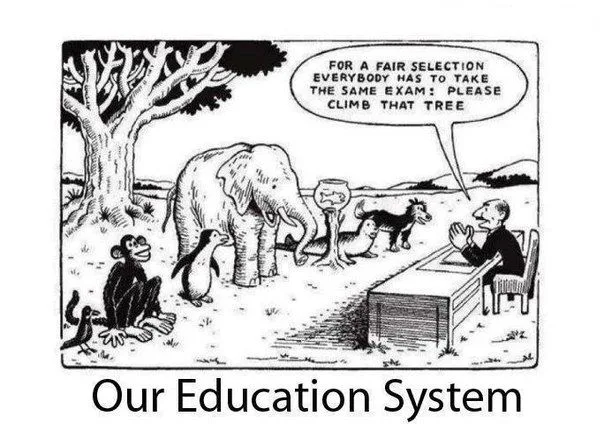
Robinson's thesis was simple and devastating: schools, as currently designed, systematically destroy the creative capacity that children arrive with.[1]
They reward a narrow band of linguistic and mathematical intelligence, treat the arts and physical education as peripheral, and produce, at great expense of time and human potential, graduates who are proficient at complying with instructions for which there are correct answers.
Robinson was a polemicist, not a clinical researcher, and critics rightly noted that his argument was more evocative than rigorous. But the appetite for his talk revealed something real: a widespread intuition, shared across cultures and income levels, that something fundamental about the design of schooling was not working.
Parents who had themselves hated school were watching their children hate it in turn. Teachers trained to inspire found themselves administering tests.
Students who excelled at things that mattered - building, creating, collaborating, questioning - were systematically graded as mediocre.
The research literature on education reform is vast, contested, and frequently misused by partisans on all sides. What follows is an attempt to read it carefully - including the evidence that complicates simple narratives - and to identify what genuine reform might actually look like.
The answer is less about any single technique than about a fundamental reconsideration of what schools are for.
"What we are doing in our education system is educating people out of their creative capacities. Picasso once said that all children are born artists; the problem is to remain an artist as we grow up. I believe this passionately: we don't grow into creativity, we grow out of it.
Or rather, we get educated out of it." - Ken Robinson, Do Schools Kill Creativity?, TED 2006
The numbers behind Robinson's rhetorical challenge are significant. A 2019 Gallup survey of 5.4 million U.S. students found that student engagement - the combination of intellectual curiosity, emotional connection to school, and intrinsic motivation - peaked in fifth grade and declined steadily thereafter.
By the time students reached high school, only 34% reported being engaged. Among adults looking back, a 2023 survey by the American Psychological Association found that 56% of adults described at least some of their school years as predominantly unpleasant or stressful.
These are not marginal findings. They describe the dominant experience of schooling for a majority of students.
Key Definitions
Factory model of schooling: The organizational structure of mass education inherited from 19th-century Prussian compulsory schooling and adopted across industrializing nations: age-graded classrooms, standardized curricula, bells dividing time into uniform units, and outcomes measured by standardized examination.
Historians of education trace this model to the explicit goal of producing disciplined, literate, and compliant industrial workers and military recruits.
PISA (Programme for International Student Assessment): The OECD's triennial survey of 15-year-old students across approximately 80 countries, measuring reading, mathematics, and science literacy as well as collaborative problem-solving and financial literacy.
Designed by German educational researcher Andreas Schleicher, it is now the dominant international benchmark for educational system comparison, though its limitations - it measures what is measurable, not necessarily what is important - are increasingly debated.
Growth mindset: Carol Dweck's finding (Stanford) that students who believe their abilities are malleable through effort (growth mindset) systematically outperform those who believe their abilities are fixed traits (fixed mindset) - and that teacher feedback can reliably shift students between these orientations.[9]
The initial effect sizes were striking, though replication attempts have produced more modest results, and large-scale school-based interventions have shown inconsistent outcomes.
Social efficiency vs. democratic equality: Educational historian David Labaree's framework for understanding the competing purposes of American schooling.[6]
Social efficiency views schools as producers of human capital for the economy; democratic equality views schools as agents of civic formation and equal opportunity; social mobility views schools as mechanisms for individual advancement.
These goals often conflict, and much of the apparent dysfunction of schooling is the result of institutions trying to serve all three simultaneously.
Unschooling: A radical extension of progressive education theory, associated with John Holt, that holds that children learn best when freed from compulsory curricula and allowed to pursue self-directed learning through life experience.
Distinguished from homeschooling by its rejection of structured curriculum rather than school attendance.
Research on outcomes is limited by sample selection, but studies of unschooled children into adulthood generally find high rates of self-reported wellbeing and professional satisfaction, though cognitive skill outcomes are mixed.
Hidden curriculum: The implicit set of values, norms, and behaviors that schooling transmits alongside its formal content - punctuality, compliance, deference to authority, the management of boredom, and the performance of diligence regardless of actual learning.
Sociologist Philip Jackson identified the concept in his 1968 book Life in Classrooms, arguing that learning to navigate the hidden curriculum is the central educational experience of most students.
| Country/System | Key Differentiator | Student Outcomes | Lesson for Reform |
|---|---|---|---|
| Finland | Teacher autonomy, no standardized testing until age 18, play-based early years | Consistently top PISA scores | Trust teachers as professionals; reduce compliance demands |
| South Korea | Intense exam culture, private tutoring (hagwons) | High scores, low wellbeing | High performance possible via pressure, but at significant human cost |
| USA | Accountability movement, standardized testing, school choice | Mixed results; inequality persists | Measurement-focused reform has not closed achievement gaps |
| Denmark | Student-centered, project-based, democratic school governance | Strong outcomes, high wellbeing | Democracy in schools correlates with democracy in society |
| Singapore | Structured rigor, strong teacher training, early tracking | Top math scores | Teacher quality and systematic curriculum matter; but tracking raises equity concerns |
| Japan | Collaborative learning, whole-child curriculum, juku tutoring culture | Strong PISA; some wellbeing concerns | Collective norms can sustain strong academic culture |
| Estonia | Digital integration, high teacher status, small class sizes | Rising PISA scores, high equity | Digital literacy and equity are compatible goals |
The Prussian Origins: Why Schools Are Designed the Way They Are
To understand what is wrong with modern schooling, it helps to understand what it was designed to do. Compulsory mass education did not arise from a theory of learning. It arose from state-building.
The Prussian model of compulsory schooling, established in the early 19th century under Wilhelm von Humboldt and others, was explicitly designed to create loyal, obedient, literate citizens who could follow instructions, serve in armies, and operate in industrial workplaces.
When Horace Mann visited Prussia in the 1840s and returned to advocate for this model in Massachusetts, he was importing a system whose primary virtues were scalability and control, not educational effectiveness.
The organizational features of this model - the age-graded classroom, the standard curriculum, the examination system, the division of knowledge into discrete subjects delivered by specialists in 50-minute segments - were not derived from any theory of how children learn.
They were derived from logistical convenience and the goal of producing standardized outputs from a standardized process.
As historian David Tyack noted in his 1974 study The One Best System, the reformers who built American public education were explicitly modeled on the principles of factory management that Frederick Winslow Taylor was simultaneously applying to industrial production.[11]
This matters because many of the features of schooling that students and teachers find most frustrating are not accidental. They are design features serving a purpose that is no longer stated aloud but still shapes the institution.
The bell that ends a period does not ring because learning has been completed. It rings because the organizational unit of the factory day required it.
The age-graded classroom is perhaps the most entrenched feature. Grouping children by birth year made logistical sense when the alternative was multi-age rural schoolrooms with a single teacher. But it has no developmental justification.
Children of the same chronological age can vary by three or more developmental years in reading readiness, mathematical reasoning, and social maturity.
The age-graded system requires that all of them move at the same pace through the same curriculum, creating simultaneous boredom for advanced learners and failure for those not yet ready.
The consequences are tracked in research: a 2006 study by Bedard and Dhuey in the Quarterly Journal of Economics found that children who are the youngest in their class year (born just before the enrollment cutoff) are 9% more likely to be diagnosed with ADHD than the oldest children in their class, and are significantly more likely to be held back a grade.[15]
The implication is striking: what looks like a developmental disorder in many children is partly an artifact of the arbitrary age cutoff.
The Industrial Legacy in Teacher-Student Relationships
The factory model shapes not only the structure of schooling but the relationships within it.
In an industrial production framework, the teacher's role is analogous to a machine operator: delivering standardized inputs (curriculum content) to raw materials (students) to produce standardized outputs (test scores). The student's role is passive reception.
This contrasts sharply with what cognitive science tells us about learning. Active processing, elaboration, questioning, and the construction of meaning from new information in relation to existing knowledge are the mechanisms of learning. Passive reception is among the least effective.
John Sweller's cognitive load theory, developed through the 1980s and 1990s, provides a neurological explanation: working memory has severe capacity limits, and instruction that asks students to process too much information simultaneously (typical of lecture-heavy formats) overloads working memory without enabling the deep processing needed for long-term memory consolidation.
Yet the lecture remains the dominant delivery format in secondary and higher education. A 2014 meta-analysis by Freeman and colleagues in the Proceedings of the National Academy of Sciences examined 225 studies of active versus passive instruction in undergraduate STEM courses.[12]
Students in active learning classrooms scored 6% higher on exams and were 1.5 times less likely to fail than students in traditional lectures. The effect size was large enough that the authors argued it would be unethical to run a randomized controlled trial that assigned students to the lecture condition.
The Evidence from High Performers: Finland and the Professional Model
The most powerful empirical challenge to Anglo-American educational orthodoxy comes not from radical reformers but from countries that simply do things differently and get better results.
Finland is the most studied case, analyzed exhaustively by former Finnish Ministry of Education official Pasi Sahlberg in Finnish Lessons (2011, updated 2015, 2021).
Finnish students consistently rank among the top five in the world on PISA assessments, with particularly strong performance in reading and science.
They do this while starting formal academic instruction at age 7 (two years later than England, three later than the United States), having more daily recess (75 minutes in primary school), receiving less homework, taking fewer standardized tests (Finland has no standardized testing between ages 7 and 16 other than the national matriculation exam at the end of secondary school), and spending less total time in school than their counterparts in higher-pressure East Asian systems.
The single variable that Sahlberg identifies as most explanatory is teacher quality and professional status.[2] Finnish teachers are drawn from the top third of university graduates (in some years, teaching programs accept fewer than one in ten applicants).
They receive master's-level training that includes substantial clinical practice in university-affiliated schools. Once employed, they exercise significant professional autonomy - choosing their own teaching methods, materials, and assessments within broad curriculum frameworks.
They are paid comparably to other professions requiring equivalent qualifications.
Sahlberg is careful to note that Finland's system cannot be simply transplanted. Finland is ethnically homogeneous (though less so than in the 1990s when its PISA rise began), has low childhood poverty, a strong social safety net, and a cultural tradition of respecting teachers.
But the lesson is not that Finland should be copied wholesale. It is that the specific conditions that produce high educational outcomes are well understood - teacher quality, professional autonomy, low stakes testing, strong social support - and that many education systems spend enormous resources doing precisely the opposite.
OECD's Andreas Schleicher, analyzing decades of PISA data in World Class: How to Build a 21st-Century School System (2018), reaches a similar conclusion: the most important lever is the quality and professional standing of teachers.[3]
Countries that attract high-ability graduates into teaching, provide excellent training, and trust teachers to exercise professional judgment consistently outperform those that rely on scripted curricula, high-stakes testing, and managerial accountability systems.
"The quality of an education system cannot exceed the quality of its teachers. And the quality of teaching can never exceed the preparation, support, and trust that teachers receive." - Andreas Schleicher, World Class, 2018
The Teacher Pipeline Crisis
The professional model Sahlberg and Schleicher describe requires attracting high-quality candidates into teaching. In the United States, the United Kingdom, and Australia, the trend is moving in the opposite direction.
A 2023 report by the Learning Policy Institute found that enrollment in U.S. teacher preparation programs had dropped by 35% over the previous decade - from 691,000 in 2008 to approximately 451,000 in 2022.
Teacher turnover rates, already high in urban and rural schools serving disadvantaged students, accelerated during and after the pandemic.
A RAND Corporation survey of U.S. teachers in 2022 found that 29% were considering leaving the profession within the next two years, compared to 22% before the pandemic.
The causes are multiple: relatively low pay compared to other graduate-level professions, high administrative burden, loss of professional autonomy, public scrutiny and political pressure, and the emotional demands of post-pandemic classrooms.
The schools that lose teachers most readily are the schools that most need to retain them - those serving students in poverty, where the relationship between teacher quality and student outcomes is strongest.
The Testing Trap: What Measurement Does to Learning
One of the most consequential decisions in modern education policy was the move toward high-stakes standardized testing as the primary mechanism for measuring educational quality and allocating resources.
In the United States, this was institutionalized by the No Child Left Behind Act (2001) and its successors. In England, the system of national assessments and league tables serves a similar function.
The research on the effects of high-stakes testing is not kind to the practice. A 2002 meta-analysis by Amrein and Berliner examined 28 states that had implemented high-stakes graduation exams and found that in most cases, the tests were associated with increases in dropout rates, increases in grade retention, and decreases in academic achievement on independent measures such as the National Assessment of Educational Progress (NAEP) and college entrance exams.
A more measured analysis of No Child Left Behind effects by Dee and Jacob (2011, American Economic Journal) found positive effects on mathematics achievement in elementary grades but essentially no effects on reading and no effects at the secondary level.[10]
The mechanism by which high-stakes testing undermines learning is well understood from motivation research. When tests are used to evaluate teachers and schools rather than to provide feedback to students, the incentive structure shifts toward teaching the test content rather than developing transferable understanding.
Daniel Koretz, in The Testing Charade (2017), documents how this leads to score inflation - gains on the tested measure that do not generalize to untested measures of the same knowledge - in essentially every high-stakes testing system that has been studied over time.[7]
"When a measure becomes a target, it ceases to be a good measure." - Charles Goodhart, British economist (Goodhart's Law, 1975, here applied to education assessment)
This principle - now formalized as Goodhart's Law - describes the fundamental problem with high-stakes standardized testing. When schools are evaluated and funded based on test scores, they optimize for test scores, not for learning. The scores improve while the underlying capability they were designed to measure does not.
Alfie Kohn's critique, most developed in The Schools Our Children Deserve (1999), goes further: grades and tests not only measure learning imperfectly but actively damage the conditions that produce learning.[5]
His synthesis of motivation research argues that extrinsic rewards - including grades, gold stars, and competitive rankings - reliably reduce intrinsic motivation for the rewarded activity, shift attention from understanding to performance, and produce aversion to challenging tasks.
This is not a marginal finding; it has been replicated in hundreds of studies across cultures and age groups.
The countervailing evidence deserves acknowledgment. Formative assessment - frequent, low-stakes feedback designed to inform both student and teacher about what has been learned and what needs attention - has one of the strongest effect sizes in all of educational research.
John Hattie's 2009 synthesis of over 800 meta-analyses (Visible Learning) found feedback to have an effect size of 0.73 standard deviations, among the highest of any educational intervention.[4] The problem is not assessment per se but the specific way high-stakes summative grading is typically implemented.
Paul Black and Dylan Wiliam's landmark 1998 review "Inside the Black Box" analyzed over 250 studies and concluded that improvements in formative assessment consistently produce significant learning gains - particularly for lower-achieving students, for whom feedback on what they have and have not understood is most important.[13]
Their key finding: schools that invested in formative assessment achieved effect sizes of 0.4 to 0.7 standard deviations - large effects by educational research standards, comparable to reducing class size from 30 to 15 students.
The Narrowing Curriculum
High-stakes testing does not just change how teachers teach. It changes what they teach.
A 2007 study by the Center on Education Policy found that 62% of U.S. school districts had reduced instructional time in social studies, science, art, music, and physical education to allocate more time to tested subjects (reading and mathematics) after No Child Left Behind.
A 2015 Gallup survey found that the arts were among the subjects that students reported receiving least time on - yet arts education, research by Catterall and colleagues (2009) found, is associated with significant gains in motivation, persistence, and academic engagement, particularly among students from disadvantaged backgrounds.
The consequences extend beyond subject matter. Schools in high-poverty areas - those under the greatest pressure to raise test scores - have disproportionately eliminated recess and physical education to create more instructional time.
Yet the evidence on physical activity and cognitive performance is unambiguous: a 2012 review by the Institute of Medicine found strong evidence that physically active children perform better academically, have better attention and working memory, and have higher school attendance.
Eliminating the activities that support cognitive development in order to improve test scores is a strategy that eats its own foundations.
What Actually Works: The Evidence on Learning
Despite the controversy that surrounds education policy, cognitive science has produced a remarkably robust set of findings about how learning actually occurs. The problem is that most of these findings are violated by standard classroom practice.
The spacing effect (Ebbinghaus, 1885; extensively replicated) demonstrates that distributed practice over time produces much stronger long-term retention than massed practice (cramming). The typical school unit - teach for three weeks, test, move on - is close to the worst possible design for long-term retention.
Cepeda and colleagues' 2006 review of 254 studies confirmed that the optimal spacing interval scales with the desired retention interval: for year-long retention, study sessions should be separated by weeks, not days.[19]
The testing effect, or retrieval practice effect (Roediger & Karpicke, 2006), shows that attempting to retrieve information from memory - even unsuccessfully - produces much stronger learning than an equivalent time spent rereading.[8]
Quizzing students is one of the highest-leverage teaching strategies available, but the quizzes need to be low-stakes (formative) to avoid the motivation-destroying effects of high-stakes evaluation.
Interleaved practice (mixing different problem types rather than practicing one type at a time) produces better long-term learning than blocked practice (Kornell & Bjork, 2008), though students and teachers typically prefer blocked practice because it feels more productive in the moment.
This gap between the subjective experience of learning and its actual effectiveness is one of the most important and underappreciated findings in the field.
John Hattie's synthesis identified several additional high-effect-size interventions: teacher clarity (explicit, well-organized instruction), classroom discussion, collaborative learning, and metacognitive strategies (teaching students to monitor their own understanding).
Notably, several popular and expensive reforms - class size reduction, ability grouping, summer school, and retention in grade - showed small or negative effect sizes.
The class size finding deserves elaboration because it contradicts strong popular intuition. Reducing class sizes from 25 to 15 costs roughly 40% more in teacher salaries and is politically very popular.
But Hattie's analysis found an effect size of only 0.21 for class size reduction - meaningful but far below the effect sizes achievable by improving teacher feedback, teaching metacognitive strategies, or implementing spaced and retrieval-based practice.
The implication is that money spent on smaller classes could produce larger learning gains if spent differently, but smaller classes are politically easier to deliver than harder-to-measure pedagogical improvements.
The Role of Early Childhood
If there is one intervention that the research supports more consistently than any other, it is high-quality early childhood education. The work of Nobel Prize-winning economist James Heckman is particularly important here.
Heckman's analysis of the Perry Preschool Project, a high-quality preschool program for disadvantaged children in Michigan in the 1960s, found extraordinary long-term returns: participants were more likely to graduate from high school, more likely to hold stable employment, less likely to be arrested, and earned more as adults.[14]
The estimated social return on investment was $7-12 for every dollar spent.
Heckman's broader argument is that the return on educational investment is highest at the earliest ages and declines as children grow older. The brain is most plastic, social and emotional skills are most malleable, and the costs of remediation are lowest in the early years.
Most education spending in wealthy countries, however, is concentrated in secondary and tertiary education - the opposite of the investment profile the evidence recommends.
The National Institute for Early Education Research reported in 2022 that only 34% of U.S. four-year-olds were enrolled in state-funded preschool programs, and quality varied enormously.
Countries with universal, high-quality preschool - Sweden, Norway, and France among them - consistently show better long-term educational equity outcomes than countries where early childhood education is left to market provision.
The Mental Health Crisis in Schools
Any serious accounting of what is wrong with education must grapple with the youth mental health crisis that has accelerated since approximately 2012 and worsened dramatically during the pandemic.
The U.S. Surgeon General's 2021 advisory on youth mental health reported that rates of anxiety and depression among adolescents had doubled between 2007 and 2019, before the pandemic.[16] Emergency department visits for self-harm among adolescent girls increased by 188% between 2011 and 2021.
Among U.S. high school students surveyed in 2021, 44% reported feeling persistently sad or hopeless, and 20% had seriously considered suicide.
These are not primarily school-caused problems - social media, family instability, economic anxiety, and the broader disruptions of the early 21st century all play roles. But the school environment is where adolescents spend most of their waking hours, and the structure of that environment is not neutral with respect to mental health.
The academic pressure system - high-stakes testing, competitive grading, college admissions pressure that begins in middle school in many communities - creates chronic stress conditions that are neurologically incompatible with learning.[17]
The stress response activates the amygdala and suppresses prefrontal cortex function - precisely the neural architecture needed for analytical thinking, working memory, and long-term retention.
Schools that create chronically stressed students are not merely making students unhappy. They are physiologically impairing the very capacities they are attempting to develop.
"Toxic stress in childhood disrupts the development of brain architecture and other organ systems in ways that can have lifelong consequences for learning, behavior, and health." - Center on the Developing Child, Harvard University, 2022
This does not mean that schools should be stress-free. Appropriate challenge, effortful practice, and the productive discomfort of encountering genuinely difficult material are all associated with learning.
The distinction - between the productive stress of challenge and the toxic stress of chronic threat - is critical, and it is a distinction that examination-centered, high-stakes accountability systems routinely obliterate.
The Purpose Question: Schools Are Not Broken, They Are Optimized for the Wrong Goal
The most penetrating critique of educational reform movements is not that they identify the wrong problems but that they misunderstand what schools are actually trying to do.
Sociologist David Labaree, in The Trouble with Ed Schools (2004) and related work, argues that American education is best understood as serving three competing purposes simultaneously: democratic equality (preparing citizens for self-governance), social efficiency (producing workers for the economy), and social mobility (providing individuals with credentials that confer competitive advantage).
These goals are genuinely in conflict. Social mobility, as Labaree notes, requires that credentials be scarce - if everyone has a degree, no one gains advantage from having one. This means that the sorting function of schools (which students get which credentials) is often more important to families than the learning function.
Schools respond rationally to this pressure by emphasizing the behaviors and signals that facilitate credential acquisition - compliance, performance, grade optimization - rather than the behaviors that facilitate learning.
This analysis suggests that many educational problems cannot be solved by better pedagogy alone. As long as educational credentials serve as the primary sorting mechanism for labor market access, schools will be under pressure to prioritize sorting over learning.
Reform that ignores this institutional context tends to produce temporary improvement in specific measured outcomes followed by reversion to the sorting-optimized equilibrium.
The Equity Dimension
No analysis of education's failings is complete without confronting the deep structural inequalities that schooling both reflects and reproduces.
In the United States, school funding is substantially tied to local property taxes.
This means that schools in wealthy communities receive, on average, significantly more funding per student than schools in poor communities - a funding structure that is both inequitable and the inverse of what would be needed to compensate for the out-of-school disadvantages that low-income students bring to school.
The Education Trust reported in 2022 that the funding gap between the highest- and lowest-income school districts in the United States averaged approximately $5,000 per student per year.
The consequences cascade. Low-income schools have higher teacher turnover, larger class sizes, fewer extracurricular activities, older facilities, and less access to technology. Students in these schools receive lower-quality instruction at precisely the ages when high-quality instruction would have the highest return on investment.
The school-to-prison pipeline - the pattern by which school discipline practices disproportionately funnel students of color and students with disabilities out of education and into the criminal justice system - represents the most extreme form of this structural failure.
Richard Rothstein's research at the Economic Policy Institute has consistently found that roughly half of the racial achievement gap in education can be explained by socioeconomic factors that operate outside schools - income, wealth, neighborhood quality, family stability, access to healthcare.
This finding is sometimes misread as a counsel of despair about school-based interventions. It is not. It means that school-based reforms operating in isolation from social and economic policy will have inherent limits, and that the most effective education policies are those that address out-of-school conditions simultaneously.
For context on how these dynamics interact with labor market change - particularly as AI and automation alter which credentials actually signal valuable skills - see our article on the future of work.
Practical Takeaways
Several evidence-based recommendations emerge from the research, applicable at different levels of the system.
For individual teachers and schools, the highest-leverage changes are those most supported by cognitive science: more retrieval practice, more spaced repetition, more formative feedback and less summative grading, more metacognitive instruction that helps students understand how they learn.
These require no external permission and no new technology. They require only a willingness to prioritize long-term understanding over short-term performance.
For school systems, the Finland lesson is hard to avoid: investing in teacher quality and professional autonomy is more effective than investing in testing infrastructure and accountability systems.
Reducing the number of high-stakes tests, expanding teacher preparation time, and treating curriculum as a professional document to be adapted rather than a script to be followed are all consistent with the evidence.
Systems that have made this shift - including several high-performing Canadian provinces and the top-tier East Asian systems - have done so deliberately, with sustained political commitment.
For families, the research on out-of-school learning is clear: reading volume outside school is one of the strongest predictors of reading achievement and vocabulary growth (Cunningham & Stanovich, 1998), and activities that develop executive function and self-regulation - sports, music, structured play - have spillover effects on academic performance that exceed those of many formal interventions.[18]
The family environment, particularly the quality and quantity of language exposure in early childhood, is the strongest single predictor of reading readiness - which means that education reform cannot be confined to schools if it is to address root causes.
For the structural question of what education is for in an era of AI and rapid technological change, UNESCO's 2021 Reimagining Our Futures Together offers the most thoughtful answer: schools need to shift from transmitting known content to developing the capacities - curiosity, critical analysis, collaborative problem-solving, ethical reasoning - that cannot be replicated by systems that, however sophisticated, currently lack genuine understanding.
The related questions of how early childhood development shapes educational trajectories, and how parenting practices interact with school experience, are explored in how parenting style affects child development.
Sources & Further Reading
- Robinson, K. (2006). Do Schools Kill Creativity? TED Talk. TED.com.
- Sahlberg, P. (2021). Finnish Lessons 3.0: What Can the World Learn from Educational Change in Finland? Teachers College Press.
- Schleicher, A. (2018). World Class: How to Build a 21st-Century School System. OECD Publishing.
- Hattie, J. (2009). "Visible Learning: A Synthesis of Over 800 Meta-Analyses Relating to Achievement". Routledge.
- Kohn, A. (1999). The Schools Our Children Deserve: Moving Beyond Traditional Classrooms and "Tougher Standards". Houghton Mifflin.
- Labaree, D. F. (2004). The Trouble with Ed Schools. Yale University Press.
- Koretz, D. (2017). The Testing Charade: Pretending to Make Schools Better. University of Chicago Press.
- Roediger, H. L., & Karpicke, J. D. (2006). Test-enhanced learning: Taking memory tests improves long-term retention. Psychological Science, 17(3), 249-255.
- Dweck, C. S. (2006). "Mindset: The New Psychology of Success". Random House.
- Dee, T. S., & Jacob, B. (2011). The impact of No Child Left Behind on student achievement. Journal of Policy Analysis and Management, 30(3), 418-446.
- Tyack, D. (1974). The One Best System: A History of American Urban Education. Harvard University Press.
- Freeman, S., Eddy, S. L., McDonough, M., Smith, M. K., Okoroafor, N., Jordt, H., & Wenderoth, M. P. (2014). Active learning increases student performance in science, engineering, and mathematics. Proceedings of the National Academy of Sciences, 111(23), 8410-8415.
- Black, P., & Wiliam, D. (1998). Inside the black box: Raising standards through classroom assessment. Phi Delta Kappan, 80(2), 139-148.
- Heckman, J. J., Moon, S. H., Pinto, R., Savelyev, P. A., & Yavitz, A. (2010). The rate of return to the HighScope Perry Preschool Program. Journal of Public Economics, 94(1-2), 114-128.
- Bedard, K., & Dhuey, E. (2006). The persistence of early childhood maturity: International evidence of long-run age effects. Quarterly Journal of Economics, 121(4), 1437-1472.
- U.S. Surgeon General. (2021). Protecting Youth Mental Health: The U.S. Surgeon General's Advisory. U.S. Department of Health and Human Services.
- Center on the Developing Child. (2022). The Science of Early Childhood Development. Harvard University.
- Cunningham, A. E., & Stanovich, K. E. (1998). What reading does for the mind. American Educator, 22(1-2), 8-15.
- Cepeda, N. J., Pashler, H., Vul, E., Wixted, J. T., & Rohrer, D. (2006). Distributed practice in verbal recall tasks: A review and quantitative synthesis. Psychological Bulletin, 132(3), 354-380.
Further Reading
- Cooper, H., Robinson, J. C., & Patall, E. A. (2006). Does homework improve academic achievement? A synthesis of research. Review of Educational Research, 76(1), 1-62.
- UNESCO. (2021). Reimagining Our Futures Together: A New Social Contract for Education. UNESCO.