
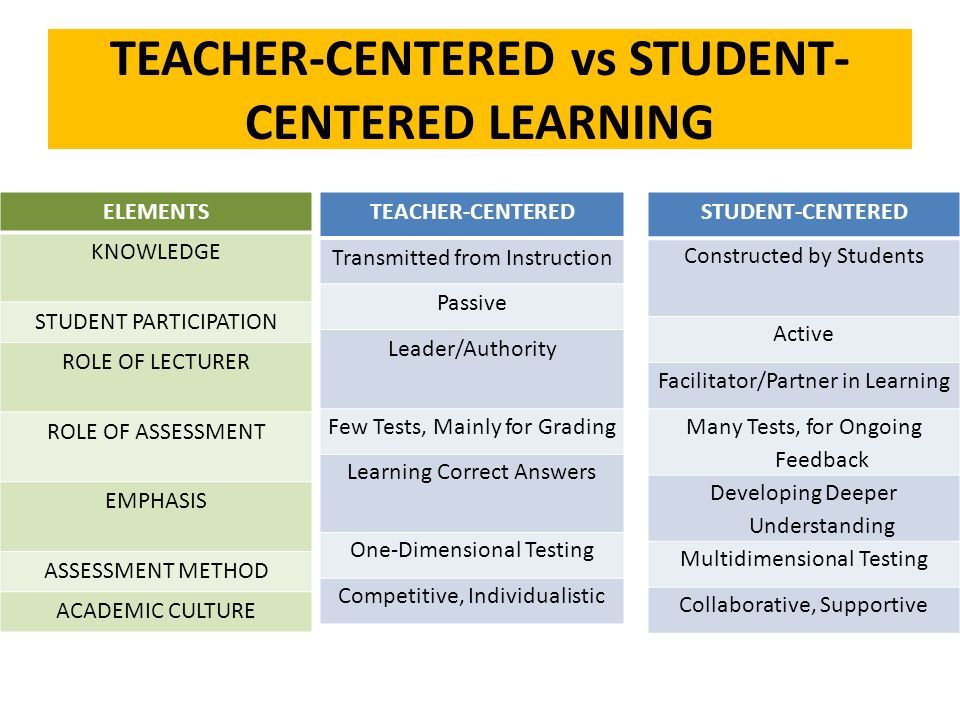
Clear presentation can create an illusion of learning without giving someone a usable grasp of a subject. Teaching vs understanding turns on whether learners construct a mental model that lets them explain ideas, apply them in new situations, spot errors, and make predictions. Information is only raw material: learners must actively connect and process it, while experts must account for the novice's missing knowledge.
A physics professor delivers a flawless lecture on Newton's Third Law. The explanation is clear, the diagrams are precise, the examples are vivid. Students nod along, take notes, and leave feeling they understand.
Three weeks later, on the exam, forty percent of the class incorrectly answers a conceptual question about Newton's Third Law-not a trick question, not an obscure application, but a straightforward test of whether they understand the basic principle. The professor is baffled.
She taught it perfectly. They seemed to understand. What happened?
What happened is the single most important and most consistently misunderstood phenomenon in education: the gap between teaching and understanding. Teaching is the act of transmitting information. Understanding is the mental construction of meaning from that information.
These are fundamentally different processes, and the first does not automatically produce the second.
A lecture can be brilliant, a textbook can be lucid, a demonstration can be vivid-and the student can still walk away without genuine understanding, carrying instead a convincing but fragile illusion of comprehension that collapses under the slightest pressure.
This gap is not a minor pedagogical inconvenience. It is the central problem of education.
Every failed exam, every student who cannot apply what they "learned," every professional who cannot use the knowledge they spent years acquiring, every curriculum that produces graduates who cannot think critically about the subject they supposedly mastered-all of these are manifestations of the teaching-understanding gap.
Understanding why this gap exists, how it operates, and what can be done about it is essential for anyone who teaches, learns, or designs educational systems.
What Is the Difference Between Teaching and Understanding?
Teaching is the act of presenting information to learners: a teacher explaining, a textbook describing, a mentor modeling. Understanding is different: it is a mental construction the learner builds through active cognitive work, an internal model that lets them explain a concept in their own words, apply it to new situations, and predict outcomes rather than just recite it.
Teaching as Information Transmission
Teaching, in its most basic form, is the act of presenting information to learners. A teacher explains a concept. A textbook describes a process. A video demonstrates a technique. A mentor models a practice. In all these cases, information flows from a source (who possesses the knowledge) to a recipient (who does not).
This transmission model of teaching has dominated education for centuries because it is efficient, scalable, and intuitively appealing. A single teacher can transmit information to hundreds of students simultaneously. The same textbook can serve millions of readers.
The same lecture can be recorded and distributed worldwide. The transmission model treats knowledge as a substance that can be poured from one container (the teacher) into another (the student), and it measures success by how much substance was transferred.
"Education is not the filling of a pail, but the lighting of a fire." - William Butler Yeats
The problem is that knowledge is not a substance. It is a mental construction-a network of interconnected concepts, relationships, and procedures built by the learner's mind through active cognitive processing. Information transmitted by a teacher is raw material, not finished product.
The learner must do substantial mental work to transform that raw material into understanding. This is why most conventional learning fails to produce lasting results.
Understanding as Mental Construction
Understanding means the learner has built an internal mental model of the subject matter that enables them to:
- Explain the concept in their own words, not merely repeat the teacher's phrasing
- Apply the concept to new situations they have not previously encountered
- Identify errors in reasoning or application, including their own
- Connect the concept to other knowledge, seeing how it relates to broader frameworks
- Make predictions based on the concept, anticipating outcomes in novel circumstances
- Teach the concept to someone else in a way that makes sense to the other person
A student who has memorized Newton's Third Law ("for every action there is an equal and opposite reaction") can recite it on command.
A student who understands Newton's Third Law can explain why a person standing on a scale in an accelerating elevator sees the reading change, why a rocket works in the vacuum of space where there is nothing to push against, and why the claim "the Earth pulls you down but you don't pull the Earth up" is physically wrong.
The difference between memorization and understanding is not a matter of degree-knowing the concept "more" or "less." It is a difference in kind: the memorizer possesses words; the understander possesses a functional mental model that generates accurate predictions and enables novel applications.
"I learned very early the difference between knowing the name of something and knowing something." - Richard Feynman
Why Teaching Does Not Guarantee Understanding
The teaching-understanding gap exists because of several well-documented cognitive phenomena that operate between the moment information is presented and the moment (if it arrives) when genuine understanding is constructed.
The Curse of Knowledge
The curse of knowledge is a cognitive bias identified by economists Colin Camerer, George Loewenstein, and Martin Weber: once you know something, you find it nearly impossible to imagine not knowing it.
The expert teacher who has spent decades understanding a concept cannot easily reconstruct the mental state of a novice encountering it for the first time.
This curse manifests in specific teaching failures:
- Skipping steps: The expert's understanding is so integrated that intermediate steps feel obvious and unnecessary to mention. The novice, lacking this integration, cannot bridge the gaps.
- Using technical language: The expert speaks in the vocabulary of the domain because those terms are the most precise and efficient. The novice hears unfamiliar words that add confusion rather than clarity.
- Assuming connections: The expert sees how the current topic connects to prior knowledge because those connections are established in their mental model. The novice, lacking the prior knowledge or the connections, receives the information as isolated fragments.
- Misjudging difficulty: The expert finds the concept simple (because they understand it) and therefore presents it quickly, allocating insufficient time for the extensive processing the novice requires.
The curse of knowledge is not a character flaw of individual teachers. It is a structural feature of expertise that affects everyone who tries to teach something they know well.
The more deeply you understand a subject, the harder it is to teach it to someone who does not understand it, because your own understanding makes the novice's confusion invisible to you.
Passive Learning and the Illusion of Understanding
One of the most pernicious features of the teaching-understanding gap is that passive reception of information feels like understanding even when it is not. This is the illusion of understanding-sometimes called the fluency illusion or illusion of explanatory depth.
When a teacher explains a concept clearly, the student experiences a feeling of comprehension. The explanation makes sense as it unfolds. The student can follow the logic. The key terms are familiar after hearing them. The conclusion feels obvious in retrospect.
This experience of fluency-the subjective feeling that the information is making sense-is extremely compelling. The student genuinely believes they understand.
But following someone else's reasoning is not the same as being able to produce that reasoning independently. Understanding is not a spectator sport.
"You can't learn physics by watching someone else solve problems." - Eric Mazur
The student who follows a mathematical proof line by line may be unable to construct a proof of similar complexity. The student who follows a historical argument may be unable to construct a historical argument of their own. The student who nods along to an explanation of natural selection may be unable to apply the concept to a novel biological scenario.
Research by cognitive scientist Leonid Rozenblit and psychologist Frank Keil demonstrated this illusion dramatically: they asked people to rate their understanding of how everyday devices work (toilets, zippers, bicycle gears), then asked them to explain how those devices actually work in detail.
Ratings dropped precipitously once people attempted to produce explanations. They thought they understood because they recognized the device and its function. They discovered they did not understand when they tried to explain the mechanism.
The Missing Prerequisite Problem
Understanding is built on prior understanding. New knowledge must be connected to existing mental structures to be meaningful. When a student lacks the prerequisite knowledge that a lesson assumes, the new information has nothing to connect to-it arrives as a string of words rather than a meaningful extension of existing understanding.
This problem is especially severe in hierarchical domains like mathematics and science, where each concept builds on previous ones. A student who does not genuinely understand fractions cannot genuinely understand ratios. A student who does not understand ratios cannot genuinely understand proportional reasoning.
A student who does not understand proportional reasoning cannot genuinely understand probability, chemistry stoichiometry, or economic analysis.
The teaching-understanding gap compounds across the curriculum: each gap in understanding creates a missing prerequisite for future understanding, and the problem grows exponentially over time.
Students who seem to "fall behind" in mathematics or science are often not falling behind in effort or intelligence-they are missing prerequisite understandings that make subsequent instruction incomprehensible regardless of how well it is taught.
Memorization Masquerading as Understanding
In many educational contexts, students can achieve passing grades through memorization without understanding.
They memorize definitions, formulas, procedures, and facts; they reproduce these on assessments; they receive grades that certify their "knowledge." But the knowledge they possess is inert-it sits in memory as isolated facts that cannot be activated, applied, or connected to solve real problems.
The distinction between active and inert knowledge is one of the most important concepts in learning science:
| Feature | Active Understanding | Inert Knowledge (Memorization) |
|---|---|---|
| Can be applied to new problems | Yes | No-only works when the problem matches memorized format |
| Can be explained in own words | Yes | No-can only repeat original phrasing |
| Survives time and decay | Well-deeply processed information is retained | Poorly-surface-level memorization fades rapidly |
| Transfers to new domains | Yes-principles can be abstracted and applied | No-information is context-bound |
| Enables error detection | Yes-understanding allows recognition of mistakes | No-errors go undetected because there is no model to check against |
| Generates new insights | Yes-connected knowledge enables inference | No-isolated facts do not combine productively |
Education systems that primarily test recall inadvertently incentivize memorization over understanding, because memorization is sufficient to pass the test even though it is insufficient for real-world application. This is one of the core knowledge transfer problems in modern education.
"Education with inert ideas is not only useless: it is, above all things, harmful." - Alfred North Whitehead
What Causes the Teaching-Understanding Gap?
Beyond the cognitive phenomena described above, several systemic factors widen the teaching-understanding gap.
Insufficient Processing Time
Understanding requires time for active mental processing-time to think about new information, connect it to prior knowledge, generate questions, test emerging understanding against examples, and revise mental models when they fail.
Traditional lecture-based instruction allocates almost all available time to information delivery and almost none to processing.
A typical 50-minute lecture might contain 30-40 minutes of new content delivery. The cognitive processing required to genuinely understand that content might take two to three times as long as the delivery itself. The student receives 40 minutes of input and has zero minutes of supported processing time during the class session.
Processing is left to the student's independent study-a strategy that assumes students know how to process effectively, have the discipline to do so, and can manage the processing load without support. Many students lack one or more of these capacities.
Lack of Feedback
Understanding cannot develop without feedback-information about whether one's emerging mental model is accurate. Without feedback, students have no way to distinguish correct understanding from misunderstanding.
They may construct mental models that feel coherent but are fundamentally wrong, and without feedback, these incorrect models persist and become resistant to correction.
Effective feedback is:
- Timely: Delivered close to the moment of learning, not weeks later on a graded exam
- Specific: Identifying precisely what is correct and what is incorrect in the student's thinking
- Actionable: Providing information that the student can use to correct their understanding
- Iterative: Repeated across multiple instances of practice and application
Traditional teaching structures provide feedback primarily through graded assessments that are returned days or weeks after the learning occurred. By the time the feedback arrives, the student's attention has moved on, the specific confusion has been forgotten, and the feedback addresses a mental state that no longer exists.
This is not feedback that can drive understanding-it is after-the-fact judgment that tells students how well they performed without helping them improve their comprehension.
The Coverage Pressure
Teachers in most educational systems face pressure to "cover" a specified amount of content within a specified timeframe. This coverage pressure is the enemy of understanding:
- Covering more content means spending less time on each topic
- Spending less time on each topic means less time for the processing, practice, and feedback that understanding requires
- Less processing time means more content is memorized rather than understood
- More memorization means worse retention and less ability to apply knowledge
The perverse outcome is that covering more content often produces less learning. A teacher who covers thirty topics superficially may produce less genuine understanding than a teacher who covers fifteen topics deeply.
But the teacher who covers thirty topics can demonstrate compliance with curriculum standards, while the teacher who covers fifteen topics faces administrative pressure for falling behind the pacing guide.
The Curse of Clarity
Paradoxically, exceptionally clear teaching can actually impede understanding. Research by cognitive scientist Manu Kapur and others has demonstrated that students who receive clear, well-organized instruction often learn less deeply than students who initially struggle with the material before receiving instruction.
This finding-called productive failure or desirable difficulties-contradicts the intuition that teaching should be as clear and smooth as possible. The mechanism is straightforward: when instruction is perfectly clear, the student does not need to actively process the information because it already makes sense as presented.
The fluency illusion is maximized, and the student's own mental model construction is minimized. When instruction is initially confusing or when students must struggle with problems before being taught the solution, they are forced to engage in the active processing that understanding requires.
This does not mean that deliberately confusing instruction is good teaching. It means that the struggle, confusion, and effort that students experience when grappling with difficult material are not symptoms of bad teaching-they are often symptoms of real learning occurring.
The smoothest, most effortless learning experience may produce the least durable understanding.
How to Teach for Understanding
The research on the teaching-understanding gap is extensive, and it converges on several evidence-based strategies for designing instruction that produces genuine understanding rather than superficial familiarity.
Active Learning
Active learning requires students to do something with the information they receive rather than passively absorbing it.
Decades of research, most notably a comprehensive meta-analysis by Scott Freeman and colleagues (2014) published in the Proceedings of the National Academy of Sciences, demonstrates that active learning produces significantly better outcomes than passive lecture across virtually every scientific discipline studied.
Active learning strategies include:
- Think-pair-share: Students think about a question individually, discuss with a partner, then share with the class-forcing articulation of understanding
- Peer instruction: Students answer conceptual questions individually, discuss disagreements with neighbors, and re-answer-a method developed by physicist Eric Mazur at Harvard that dramatically improved conceptual understanding in introductory physics
- Problem-based learning: Students encounter a real-world problem before receiving instruction, motivating the learning and providing context for new information
- Case-based reasoning: Students analyze complex, ambiguous cases that require application of concepts to realistic situations
- Collaborative knowledge building: Students work together to construct explanations, identify gaps, and refine understanding through social interaction
Retrieval Practice
Retrieval practice-the act of pulling information from memory rather than reviewing it-is one of the most powerful learning strategies identified by cognitive science.
When students attempt to recall what they have learned (through self-testing, flashcards, practice questions, or free recall), the act of retrieval strengthens the memory and deepens the understanding far more effectively than re-reading or re-studying the same material.
The testing effect, as this phenomenon is called, has been replicated hundreds of times across diverse populations and subject matters. Students who test themselves on material they are learning retain significantly more, and understand more deeply, than students who spend equivalent time re-studying the material.
This is true even when the testing is low-stakes or ungraded-the cognitive act of retrieval, not the motivational pressure of a grade, produces the benefit.
Elaborative Interrogation
Elaborative interrogation involves asking "why" and "how" questions about the material being learned. Rather than accepting a fact at face value, the student asks: Why is this true? How does this work? Why does this make sense? How does this connect to what I already know?
This strategy forces the kind of deep processing that passive reading or listening does not: the student must generate explanations, which requires connecting new information to existing knowledge, identifying causal mechanisms, and constructing mental models that go beyond the surface content.
Interleaving and Spacing
Two scheduling strategies significantly improve understanding:
- Spacing: Distributing practice and study across multiple sessions separated by time, rather than massing all study in a single session ("cramming"). Spaced practice forces repeated retrieval from long-term memory, strengthening both retention and understanding.
- Interleaving: Mixing different topics or problem types within a single study session, rather than practicing one type exhaustively before moving to the next. Interleaving forces students to discriminate between problem types and select appropriate strategies, deepening understanding of when and why each approach applies.
Both strategies feel less effective than massing and blocking in the moment-students perceive that they are learning less because the process feels more difficult. But the difficulty is precisely what produces deeper processing and more durable understanding.
The subjective feeling of fluent, easy learning is a poor indicator of actual learning.
Teaching Others
One of the most effective strategies for deepening understanding is teaching the material to someone else. The act of teaching requires the teacher to:
- Organize information into a coherent structure
- Identify and fill gaps in their own understanding
- Translate abstract concepts into concrete explanations
- Anticipate and address potential confusions
- Respond to questions that probe the depth of their understanding
The "learning by teaching" effect (sometimes called the protege effect) has been demonstrated in numerous studies: students who study material with the expectation of teaching it learn more deeply than students who study the same material with the expectation of being tested on it.
The teaching mindset triggers deeper processing even before the actual teaching occurs.
"While we teach, we learn." - Seneca
Can Understanding Happen Without Teaching?
A crucial insight in learning science is that understanding does not require teaching. Some of the deepest understanding humans achieve occurs through self-directed exploration, experimentation, and discovery:
- Scientific discovery: The most important scientific insights in history were achieved by individuals who were exploring phenomena without being taught the answer, precisely because no one knew the answer yet
- Skill acquisition: Expert practitioners in domains from cooking to carpentry to coding develop deep understanding through thousands of hours of practice, experimentation, and reflection, often with minimal formal instruction
- Childhood learning: Children learn their first language, develop theories of physics (objects fall), biology (living things grow), and psychology (people have desires and beliefs) without formal instruction, through observation, experimentation, and social interaction
- Autodidactic learning: Self-taught individuals throughout history have achieved deep expertise in domains where they received no formal instruction, driven by curiosity, necessity, or passion
Teaching can accelerate understanding by providing organized information, guiding attention to important features, correcting misconceptions early, and saving the learner from reinventing knowledge that already exists.
But teaching is not a prerequisite for understanding-it is a tool that can facilitate understanding when used well and impede it when used poorly.
The recognition that understanding can occur without teaching has important implications: it means that the value of teaching lies not in the information it transmits (information is freely available in books, online, and through experience) but in the facilitation of understanding it provides.
A teacher who transmits information without facilitating understanding adds little value. A teacher who facilitates understanding-through questioning, feedback, challenge, support, and design of learning experiences-adds enormous value, even if the information itself could have been acquired elsewhere.
The Role of Struggle in Understanding
The relationship between struggle and understanding is one of the most counterintuitive findings in learning science. Both students and teachers tend to equate smooth, effortless learning with effective learning.
In fact, the opposite is often true: productive struggle-the experience of working hard on something difficult and not immediately succeeding-is one of the most powerful drivers of deep understanding.
Why Struggle Works
When learners struggle with a problem, several cognitive processes activate that do not activate during smooth, effortless instruction:
- Prior knowledge activation: Struggling with a problem forces the learner to search their existing knowledge for relevant concepts, connections, and strategies
- Gap identification: Struggle reveals what the learner does not know, creating a specific, motivated need for new information
- Multiple strategy generation: When the first approach fails, the learner generates alternative approaches, building a richer repertoire of strategies
- Deep encoding: Information that is encountered in the context of a genuine struggle is encoded more deeply than information received passively
- Metacognitive awareness: Struggle makes the learner aware of their own thinking processes what works, what does not, where confusion lies
Productive vs. Unproductive Struggle
Not all struggle produces understanding. The key distinction is between productive struggle (struggle that leads to learning) and unproductive struggle (struggle that leads to frustration and giving up):
- Productive struggle occurs when the challenge is within the learner's reach (Vygotsky's zone of proximal development), when the learner has enough foundational knowledge to engage meaningfully with the problem, and when support is available if the struggle becomes overwhelming
- Unproductive struggle occurs when the challenge is far beyond the learner's current capacity, when foundational knowledge is missing, or when no support is available-leading to helplessness rather than learning
The teacher's role in facilitating understanding is less about eliminating struggle and more about calibrating it: ensuring that students encounter challenges that are difficult enough to require genuine cognitive effort but not so difficult that effort is futile.
Checking for Understanding: Beyond "Any Questions?"
The question "Any questions?" is the most commonly used and least effective method for checking understanding in education. Students who do not understand often do not know what they do not understand-they cannot formulate questions about confusions they are not aware of having.
The illusion of understanding prevents them from recognizing their own miscomprehension. And even students who are aware of their confusion may be reluctant to reveal it publicly.
Effective understanding checks require students to demonstrate their understanding actively rather than passively report it:
- Concept questions: Multiple-choice questions designed to reveal specific misconceptions (Eric Mazur's ConcepTests are a model)
- One-minute papers: Students write the most important thing they learned and the muddiest point in their understanding
- Explanation tasks: "Explain this concept to a classmate who missed class today"
- Prediction tasks: "What would happen if...?" requiring application of understanding to novel scenarios
- Error detection: Presenting a flawed explanation or solution and asking students to identify and correct the errors
- Drawing and diagramming: Asking students to create visual representations of concepts, which reveals the structure of their mental models
These methods work because they require the student to produce understanding rather than merely recognize it. The production requirement activates deep processing, exposes misconceptions, and provides feedback to both student and teacher about the actual state of comprehension.
The Institutional Teaching-Understanding Gap
The teaching-understanding gap is not only a cognitive phenomenon between individual teachers and students. It is also an institutional phenomenon embedded in the structure of educational systems:
- University hiring and promotion reward research productivity, not teaching effectiveness, creating incentives for faculty to minimize teaching investment
- Class sizes that make active learning, individualized feedback, and comprehension checking logistically difficult
- Curriculum structures that prioritize content coverage over depth of understanding
- Assessment systems that test recall rather than application, rewarding memorization rather than understanding
- Time structures that fragment learning into short periods with no processing time
- Teacher training that focuses on content knowledge and classroom management rather than learning science
- Cultural assumptions that locate responsibility for understanding with the student ("I taught it; if they didn't learn it, that's their problem") rather than with the teaching system
These structural features are not the product of malice or ignorance. They are the product of institutional incentives that prioritize efficiency, accountability, and scalability-all of which favor information transmission over understanding facilitation.
Changing these structures requires not just better teaching techniques but fundamental rethinking of how educational institutions are designed, incentivized, and evaluated.
The teaching-understanding gap will never be eliminated entirely-genuine understanding is always harder to produce than information transmission, and some gap between what is taught and what is understood is inevitable. But the current gap, in most educational systems worldwide, is far wider than it needs to be.
The knowledge of how to narrow it exists. The question is whether educational institutions have the will, the resources, and the structural flexibility to apply that knowledge at scale.
The Science of Active Learning: Research Evidence and Real-World Results
The shift from passive instruction to active learning represents one of the most rigorously supported transitions in educational research.
The evidence base is unusually strong for education research - including randomized controlled trials, large-scale meta-analyses, and longitudinal studies - and its findings are consistent across disciplines, age groups, and national contexts.
Scott Freeman's 2014 meta-analysis, published in the Proceedings of the National Academy of Sciences, is the most cited study on active learning effectiveness. Freeman and colleagues at the University of Washington analyzed 225 studies comparing active learning to traditional lecture in undergraduate STEM courses.
The results were unambiguous: active learning reduced examination failure rates by 1.5 times relative to lecture (21.8% failure rate in active learning courses versus 33.8% in traditional lecture), and active learning students scored 6% higher on examinations.
The effect size of 0.47 standard deviations is considered large in educational research.
Freeman and colleagues concluded that if the comparison were a clinical trial testing a drug, the trial would have been stopped for ethical reasons - it would have been considered unethical to continue assigning students to the control condition (passive lecture) once the evidence of benefit from active learning was this clear.
The Freeman meta-analysis was followed by a 2019 study by Louis Deslauriers and colleagues at Harvard, published in PNAS, that addressed an important complication.
Deslauriers found that students in active learning classrooms reported feeling they learned less than students in passive lecture sections - even when active learning students actually performed significantly better on assessments.
The students' subjective feeling of learning (fluency) was anticorrelated with their actual learning (assessment performance).
This "illusion of learning" in passive instruction is a direct empirical confirmation of the fluency illusion described in this article: the very smoothness and clarity of a good lecture creates a feeling of understanding that is not matched by actual understanding.
Deslauriers's finding has significant practical implications: students and faculty who use subjective experience as a proxy for learning quality will systematically prefer and reward passive instruction over active learning, even when active learning produces better outcomes.
Eric Mazur's peer instruction research at Harvard provides one of the most detailed longitudinal case studies of the teaching-understanding gap and its remediation.
Mazur, a physicist, began his teaching career at Harvard in the 1980s using traditional lecture methods and was considered an excellent teacher by his students - he had high teaching evaluations and good exam scores.
A 1985 paper describing a conceptual physics test (the Mechanics Diagnostic Test, developed by Halloun and David Hestenes at Arizona State University) prompted Mazur to test whether his students genuinely understood Newtonian mechanics or merely knew the mathematical procedures.
He found that his Harvard students, despite strong mathematical problem-solving skills, failed basic conceptual questions about force and motion at rates that would have been shocking had the questions required any calculation. His students could execute the algorithms but had not understood the underlying physical concepts.
Mazur redesigned his introductory physics courses around peer instruction - a method in which students respond to conceptual multiple-choice questions individually, discuss their reasoning with neighbors who chose different answers, and re-vote after discussion.
The results, documented in his 1997 book Peer Instruction and subsequent papers, were dramatic: student performance on the Force Concept Inventory improved by approximately three times the national average gain in peer instruction sections compared to traditional lecture sections.
More significantly, students' ability to apply physics concepts to novel problems improved substantially, while their ability to execute standard algorithms (what Mazur called "plug and chug") remained high.
Peer instruction had closed the gap between performance and understanding in a domain where lecture teaching had produced decades of student confusion disguised as competence.
Carl Wieman's Science Education Initiative at the University of British Columbia and later the University of Colorado tested active learning methods at scale across multiple science departments.
Wieman, a Nobel laureate in physics, invested approximately $12 million in faculty development and course redesign between 2007 and 2013, working with over 200 faculty members across biology, chemistry, physics, and mathematics.
Published outcomes from the initiative, including a landmark paper co-authored with Wieman in Science in 2014, found that students in courses using evidence-based active learning methods scored approximately 2.5 times higher on assessments of conceptual understanding than students in traditional lecture sections - with the largest gains among students from disadvantaged backgrounds.
Wieman concluded that the evidence for active learning's superiority over passive lecture was as strong as the evidence for any instructional intervention in educational history, and that continuing to teach through lecture in science courses was analogous to "practicing medicine in ways that are known to be ineffective."
How Medical Education Transformed: A Case Study in Closing the Teaching-Understanding Gap
Medical education represents the most extensively studied and most consequential domain in which the teaching-understanding gap has been systematically studied and addressed.
The stakes are unusually clear - gaps between what physicians are taught and what they genuinely understand contribute to diagnostic errors that the BMJ estimated in 2016 affect 12 million Americans annually, with serious adverse outcomes in approximately 80,000 cases per year.
The Flexner Report of 1910 established the modern medical education model in North America, requiring that medical schools combine two years of basic science instruction with two years of clinical training. The model reflected the information-transmission view of medical learning: learn the science, then apply it.
By the 1970s and 1980s, research was accumulating that the model was producing physicians with extensive factual knowledge but significant gaps in clinical reasoning - the tacit pattern recognition that distinguishes experienced diagnosticians from recent graduates.
Problem-based learning at McMaster University, initiated in the late 1960s by Howard Barrows and colleagues, represented the first major systematic attempt to redesign medical education around understanding rather than information transmission.
McMaster's curriculum replaced traditional lectures with small-group problem-based learning (PBL) sessions in which students encountered clinical cases before receiving formal instruction in the relevant science.
The cases created a genuine need for the knowledge before it was provided, addressing the "missing prerequisite" problem (students who lack motivation to understand why knowledge matters) while embedding factual learning in clinical contexts that activated and maintained it.
Rigorous comparison of PBL-trained physicians with conventionally trained physicians, conducted by researchers including Henk Schmidt at Erasmus University and published across multiple journals in the 1990s and 2000s, found complex results.
PBL graduates showed superior clinical reasoning in ambiguous cases and better long-term retention of applied clinical knowledge.
They showed initially weaker performance on standardized knowledge examinations - a gap that largely disappeared by five years after graduation, when the contextually embedded knowledge of PBL had been reinforced through practice.
Schmidt's research suggested that the trade-off was not between knowledge and reasoning but between short-term recall and long-term applied understanding - a trade-off that clearly favored PBL when the goal was producing effective physicians rather than high test scorers.
Simulation-based medical education developed rapidly from the 1990s onward as a response to reductions in clinical training hours and the ethical constraints on learning procedural skills on patients.
Research by David Murray and colleagues at Washington University School of Medicine (2011) found that residents who received systematic simulation-based training in airway management made significantly fewer errors in real intubations than residents who received conventional clinical training alone - a finding with direct patient safety implications.
The simulation research effectively demonstrated that practice with feedback in a consequence-reduced environment could build the tacit procedural knowledge that traditional instruction could not efficiently produce.
Cognitive forcing strategies, developed by Pat Croskerry at Dalhousie University, represent an attempt to address the metacognitive dimension of the teaching-understanding gap in clinical reasoning.
Croskerry's research, published extensively in journals including Academic Medicine and BMJ Quality and Safety from 2002 onward, documented the role of cognitive biases - anchoring, premature closure, availability bias - in diagnostic error.
Croskerry developed educational interventions that taught clinicians to recognize when they were relying on fast pattern-recognition thinking (System 1) in situations that warranted slower, deliberative analysis (System 2).
A 2012 randomized trial of cognitive forcing strategy training at emergency medicine residency programs found that residents trained in these metacognitive strategies made significantly fewer anchoring errors in simulated diagnostic scenarios than control residents.
The research provided evidence that genuine understanding in clinical medicine required not just knowing facts and patterns but understanding the limitations of one's own pattern-recognition processes - a metacognitive layer that conventional medical education rarely addressed.
Sources & Further Reading
Wieman, C. (2017). Improving How Universities Teach Science: Lessons from the Science Education Initiative. Harvard University Press. View source
Mazur, E. (1997). Peer Instruction: A User's Manual. Prentice Hall. View source
Freeman, S., et al. (2014). "Active Learning Increases Student Performance in Science, Engineering, and Mathematics." Proceedings of the National Academy of Sciences, 111(23), 8410-8415. DOI: 10.1073/pnas.1319030111
Roediger, H.L. & Butler, A.C. (2011). "The Critical Role of Retrieval Practice in Long-Term Retention." Trends in Cognitive Sciences, 15(1), 20-27. DOI: 10.1016/j.tics.2010.09.003
Kapur, M. (2016). "Examining Productive Failure, Productive Success, and Unproductive Failure in Learning." Educational Psychologist, 51(2), 289-299. DOI: 10.1080/00461520.2016.1155457
Bjork, R.A. & Bjork, E.L. (2011). "Making Things Hard on Yourself, But in a Good Way: Creating Desirable Difficulties to Enhance Learning." In Psychology and the Real World. Worth Publishers. View source
Rozenblit, L. & Keil, F. (2002). "The Misunderstood Limits of Folk Science: An Illusion of Explanatory Depth." Cognitive Science, 26(5), 521-562. DOI: 10.1207/s15516709cog2605_1
Bransford, J., Brown, A. & Cocking, R. (2000). How People Learn: Brain, Mind, Experience, and School. National Academy Press. View source
Ambrose, S., et al. (2010). How Learning Works: Seven Research-Based Principles for Smart Teaching. Jossey-Bass.
Vygotsky, L. (1978). Mind in Society: The Development of Higher Psychological Processes. Harvard University Press. View source
Willingham, D.T. (2009). Why Don't Students Like School? A Cognitive Scientist Answers Questions About How the Mind Works and What It Means for the Classroom. Jossey-Bass. View source
Brown, P.C., Roediger, H.L. & McDaniel, M.A. (2014). Make It Stick: The Science of Successful Learning. Harvard University Press.
Chi, M.T.H. (2009). "Active-Constructive-Interactive: A Conceptual Framework for Differentiating Learning Activities." Topics in Cognitive Science, 1(1), 73-105. DOI: 10.1111/j.1756-8765.2008.01005.x
Dunlosky, J., et al. (2013). "Improving Students' Learning with Effective Learning Techniques." Psychological Science in the Public Interest, 14(1), 4-58. DOI: 10.1177/1529100612453266