
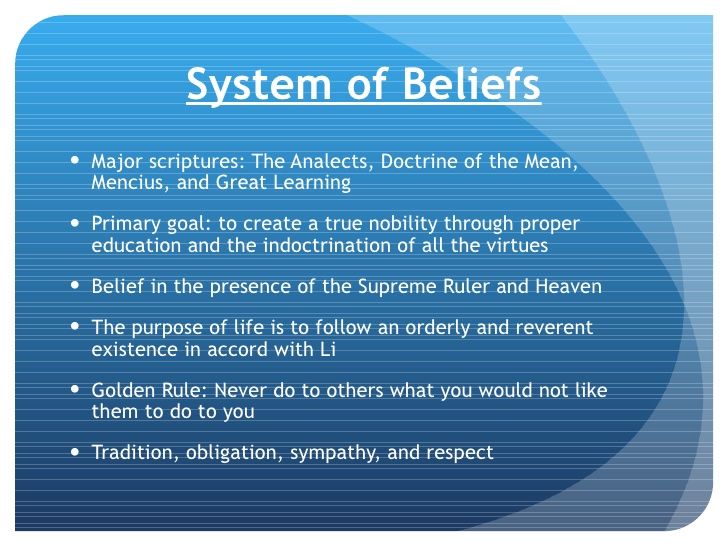
Confucian thought treats moral cultivation and right relationships as the foundation of a well-ordered social and political life. The essentials of confucianism include humaneness, ritual propriety, righteousness, wisdom, filial care, and harmony. Across East Asia, its teachings shaped institutions and ethical language, while later traditions repeatedly reinterpreted them for different historical and political settings.
In the spring of 479 BCE, a teacher named Kong Qiu died in the state of Lu, in what is now the Shandong Province of eastern China, convinced that his life had been a failure.
He had spent decades traveling from state to state seeking a ruler who would give him the opportunity to demonstrate his ideas about governance, and none had done so.
He had taught hundreds of students, but the transformation of society he envisioned had not occurred. His political program - the restoration of a moral order grounded in ritual propriety, benevolence, and the conscientious fulfillment of social roles - had found no powerful patron.
He was wrong about failure. In the two and a half millennia since his death, the teachings of Kong Qiu - known to the West by the Latinized name Confucius, derived from the honorific Kong Fuzi (Master Kong) - have shaped the moral, political, and social life of China, Japan, Korea, Vietnam, and the broader East Asian cultural sphere more thoroughly than the teachings of any other single figure in the region's history.
The civil service examination system he inspired selected Chinese government officials for thirteen centuries.
His vocabulary of virtue - ren (benevolence), li (ritual propriety), yi (righteousness), zhi (wisdom) - structured the moral imagination of billions of people across dozens of generations. His five key relationships organized how East Asian societies understood the basic structure of human social life.
Yet Confucianism is not a fixed system. It has been interpreted, contested, institutionalized, subverted, abolished, and revived across radically different historical circumstances.
The Confucianism of Han dynasty bureaucracy differs from the Confucianism of Song Neo-Confucian metaphysics, which differs from the Confucianism Lee Kuan Yew deployed to justify authoritarian governance in late 20th-century Singapore, which differs from the Confucianism of contemporary Chinese nationalist ideology.
Understanding what Confucianism is requires understanding both the original teaching and the long, complex, contentious history of its interpretation.
"At fifteen, I had my mind bent on learning. At thirty, I stood firm. At forty, I had no doubts. At fifty, I knew the decrees of Heaven. At sixty, my ear was an obedient organ for the reception of truth. At seventy, I could follow what my heart desired without transgressing what was right." - Confucius, Analects 2.4[1]
| Core Concept | Chinese Term | Meaning and Role |
|---|---|---|
| Humaneness / Benevolence | Ren () | The supreme virtue; love for others; moral cultivation |
| Ritual propriety | Li () | Proper conduct; social norms; ceremonial observance |
| Righteousness | Yi () | Moral rightness; duty; justice in action |
| Wisdom | Zhi () | Moral discernment; knowing right from wrong |
| Loyalty | Zhong () | Faithfulness to ruler, employer, and relationships |
| Filial piety | Xiao () | Reverence and care for parents and ancestors |
| Trustworthiness | Xin () | Honesty and integrity in speech and action |
| Harmony | He () | Social and cosmic concord; the goal of right ordering |
Key Definitions
Ren: Often translated as benevolence, humaneness, or goodness. The central virtue of Confucian ethics, encompassing the full realization of human moral potential in relationship with others. The character combines the signs for "person" and "two," suggesting that ren is fundamentally relational.
Li: Ritual propriety, ritual observance, or the rites. The system of traditional ceremonial and behavioral norms governing interactions between people in all social contexts, from court ceremony to family life.
For Confucius, li was both the external form through which ren was expressed and the means through which moral character was cultivated.[4]
Junzi: Literally "son of a lord," transformed by Confucius into a moral ideal rather than an aristocratic title. The exemplary person: one who cultivates virtue, masters ritual propriety, and fills every social role with genuine moral seriousness.
Analects: (Lunyu, "Selected Sayings") The primary text of the Confucian tradition, compiled by Confucius's disciples after his death. A fragmentary collection of conversations, sayings, and anecdotes that became the first of the Four Books of the Confucian canon.[6]
Mandate of Heaven: (Tianming) The concept that Heaven grants political authority to just rulers and withdraws it from unjust ones. Used in the Confucian tradition to legitimize both dynastic rule and legitimate rebellion against tyranny.
Sagehood: (Sheng) The highest level of moral attainment in the Confucian tradition - the complete realization of human moral potential, exemplified by the founding kings Yao, Shun, and Yu, who governed with perfect virtue. For most Neo-Confucians, sagehood became an aspirational ideal for cultivation, not merely a historical description.
The Historical Confucius
A Failed Official in a Disordered Age
Confucius was born in 551 BCE in the state of Lu, into a family of minor aristocracy that had fallen on hard times. His father died when he was three, and he was raised in modest circumstances by his mother.
He worked in various minor official capacities in Lu - managing granaries, supervising livestock - and devoted himself to the study of the ancient rites and classical texts that he believed held the key to moral and political order.
The world he inhabited was the Spring and Autumn period (722-481 BCE), an era of fragmentation and escalating violence as the Zhou dynasty's authority collapsed in practice into a system of competing states run by rulers who violated ritual norms with impunity in the pursuit of power.
The deeper Confucius looked, the clearer the diagnosis became: political disorder was a moral problem. Rulers who violated ritual propriety, who prioritized personal advantage over their obligations, who treated the forms of legitimate governance as empty conventions to be discarded when inconvenient - such rulers produced corrupt states.
The remedy was not more sophisticated political machinery but the moral renewal of the people who operated within it, beginning with the ruler himself.
Confucius held a brief but significant government position in Lu around 501-497 BCE, allegedly as minister of justice, before leaving when it became clear that the ruler would not seriously implement his reforms.
He then spent approximately thirteen years wandering from state to state with a group of disciples, seeking a ruler who would give him the opportunity to demonstrate his governance principles.
None did. He returned to Lu in his late sixties and spent his final years teaching, perhaps compiling and editing the classical texts he venerated, and - if the Analects reflects his late mood with any accuracy - in a state of disappointed but unbroken commitment to his project.
The Analects and Its Interpretation
The Analects is not a systematic philosophical treatise but a collection of fragments: brief exchanges between Confucius and his disciples, pithy sayings, short narratives, and lists of virtuous practices.
It was compiled by Confucius's disciples and their disciples, probably over a period of generations, and reflects not a single unified perspective but a complex of sometimes inconsistent voices.
Different chapters likely represent different stages of compilation and different schools within the broader Confucian tradition.
This fragmentary character has made the Analects both endlessly generative and endlessly contested. Confucius defines ren differently in different contexts, responding to the specific needs and limitations of the student asking.
He refuses to give simple definitions: to one student, ren is "not imposing on others what you yourself do not want"; to another, it is "loving others"; to a third, it involves specific behavioral practices.
This context-sensitivity was not evasion but the expression of a fundamentally pedagogical ethics: virtue could not be reduced to a formula, and genuine moral teaching required attending to the particular person and situation.
Benjamin Schwartz, in The World of Thought in Ancient China (1985), identifies this contextual flexibility as one of the Analects's defining intellectual features - what he calls Confucius's "situational ethics," not in the sense of abandoning principles but of recognizing that their application required wisdom, judgment, and attention to circumstance rather than mechanical rule-following.[5]
The Five Relationships and the Structure of Social Ethics
Hierarchy and Reciprocity
The Confucian social order was organized around five fundamental relationships: ruler and minister, father and son, husband and wife, elder brother and younger brother, and friend and friend. Four are hierarchical; one (friendship) is between equals.
The hierarchical relationships were not, in the Confucian understanding, licenses for domination. Each hierarchy entailed specific reciprocal obligations: the ruler owed benevolent governance; the father owed nurture and moral guidance; the husband owed provision and respect; the elder brother owed care and good example.
If the superior consistently failed in his obligations, he forfeited his claim to the subordinate's loyalty and deference.
The institution of remonstrance (jian) was central to Confucian political ethics: a minister had not merely the right but the duty to speak honestly to a ruler who was acting wrongly, even at personal risk.
The History of Remonstrance is full of officials who were demoted, exiled, or executed for telling their rulers unwelcome truths, and who were celebrated by subsequent tradition precisely for this courage.
Loyalty, in the Confucian sense, was not blind obedience but the service of the ruler's genuine moral and political interests, which might require opposition to his expressed preferences.
Herbert Fingarette's influential reinterpretation in Confucius: The Secular as Sacred (1972) argued that the ritual dimension of the five relationships was not a constraint on authentic human interaction but its highest expression.
Ritual, for Fingarette's Confucius, was the form through which human beings acknowledged and honored what was genuinely valuable in their relationships - making the ordinary sacred through conscious, meaningful enactment.[10]
Family as the Foundation of Social Order
The Confucian emphasis on the father-son relationship - filial piety (xiao) - has been both celebrated as the foundation of social solidarity and criticized as the ideological basis of patriarchal authority.
For Confucius and especially for Mencius, filial piety was not primarily a duty of submission but an expression of the natural love that characterizes the parent-child relationship and that, cultivated and extended, becomes the basis for the broader virtue of ren.
The person who genuinely loves and honors parents learns to extend this care outward to others - to the community, the state, and ultimately all under heaven.
The Xiaojing (Classic of Filial Piety), though probably not written by Confucius himself, became one of the most widely read texts in the Confucian tradition and made filial piety the foundation of all other virtues.
Its political extension was significant: the relationship between ruler and people was modeled on the family, making political authority paternal and political loyalty filial.
This analogy was both a powerful source of cohesion and a potential justification for authoritarian governance that feminist and liberal critics have rightly challenged.
Mencius, Xunzi, and the Debate on Human Nature
Human Nature as Originally Good: Mencius
Mencius (Meng Ke, c. 372-289 BCE) is the most important thinker in the classical Confucian tradition after Confucius himself.
His philosophical contribution centered on the claim that human nature (xing) is originally good - that the moral virtues are not external impositions on an amoral or immoral natural substrate but the expression and development of innate moral tendencies that all human beings share.
His evidence was the thought experiment of the child about to fall into a well: any person who witnesses this will feel immediate alarm and compassion, not because they have calculated benefits or feared social censure, but because this is the spontaneous response of an uncorrupted human heart.
Mencius called this spontaneous compassion the "sprout" of benevolence - one of four such sprouts (the others being the germs of shame, modesty, and moral discrimination) that are present in all human beings and that, cultivated through proper moral education, develop into the full moral virtues.[2]
The political implications of Mencius's view were significant. If human nature is originally good and people become wicked only through bad circumstances - poverty, social instability, the failure of moral leadership - then rulers have an obligation to provide the material and social conditions in which moral development is possible.
A government that failed to ensure sufficient food, stable families, and basic security was a government that violated its fundamental obligation to the people it ruled.
Mencius was accordingly the most radical theorist of the Confucian tradition on the question of legitimate resistance: a ruler who persistently failed in his duties to the people had forfeited the Mandate of Heaven and could be removed, even by violence.
Human Nature as Originally Bad: Xunzi
Xunzi (Xun Kuang, c. 310-235 BCE) held the opposite view with equal force. Human nature as given is bad: dominated by desire, competitiveness, and the tendency to pursue personal advantage at others' expense. Left unconstrained, human beings produce conflict and disorder, not harmony.
The function of ritual (li) and moral education is precisely to reshape this raw material through rigorous external discipline and habituation, transforming what is naturally base into something genuinely civilized.
This requires sustained effort against resistant material. The sages who created the rites were not recovering innate goodness but constructing the social architecture through which human beings could be made morally functional.
Both Mencius and Xunzi are, paradoxically, committed to the same practical project - moral education through the cultivation of virtue and the observance of ritual.
Their disagreement about the starting point generates different emphases: Mencius stresses the recovery and nurturing of innate moral capacities; Xunzi stresses rigorous discipline and the indispensable role of social institutions and external norms.
The tension between these approaches maps onto enduring debates in moral psychology and political philosophy about whether good behavior requires the suppression of natural selfishness or the cultivation of natural sociality.
Philip J. Ivanhoe, in Confucian Moral Self Cultivation (2000), traces how this tension persisted through the entire history of the tradition, generating different models of moral self-cultivation that drew on different assumptions about what cultivation was working with and against.[7]
Institutionalization: Han Dynasty and the Civil Service Examinations
The transformation of Confucianism from a teaching tradition to the official ideology of the Chinese imperial state was gradual, contested, and never complete.[14] The Han dynasty (206 BCE-220 CE) took decisive steps in this direction: Emperor Wu (r.
141-87 BCE) established a Grand Academy (Taixue) devoted to the study of the Confucian classics, designated five canonical texts as the core curriculum for official education, and gave preference to men who could demonstrate mastery of these texts in government selection.
The civil service examination system that developed from these beginnings reached its mature form during the Tang and Song dynasties.
In its classic configuration, it offered any male subject - in principle, regardless of family background - the opportunity to compete for government office through examination in Confucian classics, history, and literary composition.
The system was not perfectly meritocratic in practice: wealthy families could afford years of study that poor families could not.
But it was formally open, selected officials from a much broader social base than hereditary aristocracy, and produced a scholar-official class (the literati) that was both the primary vehicle of Chinese high culture and the administrative backbone of the imperial state.
Daniel K. Gardner, in Confucianism: A Very Short Introduction (2014), estimates that at the system's height during the Song dynasty, the examination might attract hundreds of thousands of candidates for a few thousand positions - a selection ratio that made success an extraordinary achievement.[3]
The examinations persisted, with modifications, from the Sui dynasty (605 CE) until 1905, when the Qing government abolished them as part of a modernization program driven by military defeats by Western powers and Japan.
For thirteen centuries, the examination system ensured that the path to power and prestige in China ran through deep familiarity with the Confucian classics - a structural alignment of intellectual cultivation and political ambition without parallel in world history.
Neo-Confucianism: The Song Synthesis
The Neo-Confucian movement that emerged during the Song dynasty (960-1279 CE) represented the most ambitious intellectual project in the history of the tradition: a systematic integration of Confucian ethics and politics with a metaphysical framework capable of responding to the philosophical challenge of Buddhism and Daoism, which had developed sophisticated accounts of cosmology, mind, and liberation that classical Confucianism had not directly addressed.
The greatest synthesizer was Zhu Xi (1130-1200 CE), whose commentaries on the Four Books - the Analects, the Mencius, the Great Learning, and the Doctrine of the Mean - became the orthodox interpretation adopted as the standard for all subsequent examination candidates.
Zhu Xi's metaphysical system distinguished between li (principle - the normative pattern inherent in all things) and qi (vital energy or material force - the material through which principle is realized) and argued that the investigation of things (gewu) - careful, systematic study of the principles in texts, natural phenomena, and human affairs - was the path to moral self-cultivation and ultimately to sagehood.
Wang Yangming (1472-1529 CE), the most significant Neo-Confucian thinker of the Ming dynasty, challenged Zhu Xi's emphasis on external investigation and argued instead that the moral mind already contained all principle within itself.
The path to sagehood was not accumulation of external knowledge but rectification of the mind through introspection and action.
His doctrine of the unity of knowledge and action insisted that genuine moral knowledge was already a form of action: you did not truly know that harming someone was wrong if you continued to harm them.
This more inward, dynamic model of moral cultivation had enormous influence in Japan, where it inspired both samurai ethics and later reformers of the Meiji era.
The spread of Neo-Confucianism to Japan, Korea, and Vietnam produced distinctive national adaptations.
In Korea, the Joseon dynasty (1392-1897) adopted Neo-Confucianism as its official state ideology with exceptional thoroughness, restructuring family law, gender relations, and social hierarchy along Confucian lines to a degree that exceeded even Ming China.
In Japan, the Tokugawa shogunate (1603-1868) sponsored Confucian scholarship as an intellectual basis for its hierarchical social order, though Japanese thinkers frequently blended Confucian ideas with Shinto and Buddhist frameworks.
Confucianism and Women: A Critical Examination
The relationship between Confucianism and gender deserves direct treatment rather than passing reference. The Confucian tradition's record on women is a central ethical and political concern that contemporary scholars have engaged extensively.
Classical Confucian texts encode a hierarchical conception of the husband-wife relationship in which the wife owes deference to the husband and the domestic sphere is understood as fundamentally secondary to the public sphere of male governance.
The later Three Obediences (san cong) - a woman obeys her father before marriage, her husband after marriage, and her son after the husband's death - formalized a doctrine of female subordination that is not traceable to Confucius himself but became a standard feature of Confucian social teaching in the Han period and after.
The consequences were material as well as ideological. The examination system was formally closed to women.
The practice of foot-binding, which became widespread from the Song dynasty onward, severely limited women's physical mobility and independence, though its relationship to Confucian ideology (as opposed to Tang-era court fashion) is debated by historians.
Women were excluded from the public roles of scholar-official that represented Confucianism's highest social ideal.
Feminist scholars including Lisa Raphals (Sharing the Light, 1998) and Robin Wang have argued that the exclusion was not logically entailed by the core Confucian ethical framework - that a tradition built on relational virtue, moral cultivation, and care for others does not in principle require that women be excluded from its highest aspirations.[13]
Contemporary Confucian philosophers including Chenyang Li (The Confucian Philosophy of Harmony, 2014) have argued that a reformed Confucianism, distinguishing between its historically contingent patriarchal forms and its core relational ethics, is compatible with and even supportive of feminist values. This debate remains genuinely open.
Confucianism and East Asian Modernity
The May Fourth Attack and the "Asian Values" Defense
The encounter between Confucianism and modernity produced two waves of critique separated by several decades.
During China's May Fourth Movement (1919), liberal and radical intellectuals blamed Confucianism - "Confucius and Sons" in their polemical shorthand - for the hierarchical authoritarianism, subordination of women, and cultural conformism that they believed had prevented China from developing the individual autonomy and democratic institutions that modernity required.
The Maoist era extended this critique: Confucianism was class ideology, the philosophical superstructure of feudal exploitation. The Cultural Revolution (1966-1976) attacked Confucian temples, texts, and traditions as relics of the class enemy.
The spectacular economic successes of Japan, South Korea, Taiwan, Hong Kong, and Singapore in the latter 20th century generated a counter-narrative.
Lee Kuan Yew and other East Asian leaders argued that specifically Confucian values - deference to authority, emphasis on education, family solidarity, collective discipline - had contributed to rather than impeded East Asian development.
This "Asian values" thesis provoked fierce debate: critics argued it was ideological cover for authoritarian governance and the suppression of political opposition; scholars noted the selective character of the Confucian tradition invoked; feminist critics pointed out that Confucian family ethics had historically constrained women's educational and economic opportunities.
Daniel Bell's The China Model: Political Meritocracy and the Limits of Democracy (2015) offers a sophisticated contemporary version of this argument, distinguishing between the selection of political leaders through competitive meritocracy - which Bell sees as compatible with and perhaps superior to electoral democracy for some governance purposes - and the suppression of civil liberties and political opposition, which he does not endorse.
Bell's work has itself been sharply criticized, but it demonstrates that the engagement between Confucian political thought and contemporary democratic theory remains a serious scholarly conversation rather than a mere political talking point.[8]
The Korean Case: Confucianism's Deepest Adoption
South Korea offers perhaps the most instructive case for understanding Confucianism's impact on a modernizing society.
The Joseon dynasty's thorough Confucianization of Korean society - restructuring clan organization, ancestor veneration, gender roles, and educational ideals along Neo-Confucian lines - created a cultural framework that persisted through the Japanese colonial period (1910-1945) and the subsequent Korean economic transformation.
Contemporary South Korean society shows striking Confucian traces: an intense emphasis on educational achievement, with students spending exceptional hours in study; strong respect for hierarchical seniority in workplaces and families; elaborate ritual practices around death and ancestor commemoration; and political rhetoric that deploys concepts of social harmony and collective responsibility.[9]
At the same time, South Korea has developed a vigorous democracy, strong women's rights movements, and an independent judiciary - suggesting that Confucian cultural inheritance is compatible with multiple political and social arrangements.
Contemporary Revival and Feminist Critique
In contemporary China, the Xi Jinping government has pursued a deliberate Confucian revival as part of its "Chinese Dream" nationalism.
Confucius Institutes established in universities worldwide project Chinese cultural soft power; the concept of "harmonious society" deploys Confucian vocabulary; Confucius's birthplace has become a major site of state-sponsored cultural tourism.
Whether this represents genuine engagement with Confucian thought or strategic appropriation of cultural prestige to legitimate contemporary political authority is a matter of intense scholarly and political debate.
Feminist scholars have argued that Confucian ethics, with its hierarchical conception of the husband-wife relationship, its prioritization of the father-son dyad, and its construction of the exemplary moral person as male, carried structural assumptions of gender inequality that cannot be corrected by mere addition or adjustment.
Contemporary Confucian philosophers have responded by distinguishing between the historically contingent patriarchal features of Confucian practice and the core ethical content - relational virtue, moral cultivation, the cultivation of care - which they argue is compatible with or even conducive to feminist values.
Confucianism as Philosophy: Contemporary Relevance
Beyond its historical and political dimensions, Confucianism has attracted serious philosophical attention as a distinctive ethical framework with resources for contemporary moral philosophy.
Bryan Van Norden's Introduction to Classical Chinese Philosophy (2011) and the broader movement of comparative philosophy have argued that Confucian ethics offers alternatives or supplements to the dominant traditions of Western ethics - Kantian deontology, utilitarian consequentialism, Aristotelian virtue ethics - that merit serious engagement.[11]
The relational character of Confucian ethics is particularly significant. Where much Western ethical theory takes the autonomous individual as its basic unit and asks what duties or rights such individuals have toward each other, Confucian ethics begins from relationships - from the parent-child bond, the teacher-student relationship, the friendship - and asks what kinds of persons these relationships call for and constitute.[12]
This relational starting point resonates with feminist care ethics (as developed by Carol Gilligan and Nel Noddings) and with communitarian critiques of liberal individualism.
It also raises genuine challenges for political philosophy: a morality centered on particular relationships and their obligations has difficulty grounding universal claims about the treatment of strangers or the basis of human rights.
"The superior man is satisfied and composed; the mean man is always full of distress." - Confucius, Analects 7.37, translated by James Legge.
The distinction between the junzi (exemplary person) who has cultivated equanimity through virtue and the xiaoren (petty person) governed by anxiety and self-interest runs through the entire Confucian ethical project.
See also: Introduction to Buddhism and Its Teachings for the Buddhist tradition with which Neo-Confucianism was in dialogue, and /culture/global-cross-cultural/what was-ancient-china for the historical context in which Confucianism developed.
Sources & Further Reading
- Confucius. "The Analects of Confucius". Translated by Simon Leys. W.W. Norton, 1997.
- Mencius. Mencius. Translated by D.C. Lau. Penguin Classics, 1970.
- Gardner, Daniel K. Confucianism: A Very Short Introduction. Oxford University Press, 2014.
- Eno, Robert. The Confucian Creation of Heaven: Philosophy and the Defense of Ritual Mastery. SUNY Press, 1990.
- Schwartz, Benjamin. The World of Thought in Ancient China. Harvard University Press, 1985.
- de Bary, William Theodore, and Irene Bloom, eds. Sources of Chinese Tradition, vol. 1. 2nd ed. Columbia University Press, 1999.
- Ivanhoe, Philip J. Confucian Moral Self Cultivation. 2nd ed. Hackett, 2000.
- Bell, Daniel A. The China Model: Political Meritocracy and the Limits of Democracy. Princeton University Press, 2015.
- Li, Chenyang. The Confucian Philosophy of Harmony. Routledge, 2014.
- Fingarette, Herbert. Confucius: The Secular as Sacred. Harper Torchbooks, 1972.
- Van Norden, Bryan W. Introduction to Classical Chinese Philosophy. Hackett, 2011.
- Hall, David L., and Roger T. Ames. Thinking Through Confucius. SUNY Press, 1987.
- Raphals, Lisa. Sharing the Light: Representations of Women and Virtue in Early China. SUNY Press, 1998.
- Pines, Yuri. The Everlasting Empire: The Political Culture of Ancient China and Its Imperial Legacy. Princeton University Press, 2012.
Further Reading
- Wang, Robin R. Yinyang: The Way of Heaven and Earth in Chinese Thought and Culture. Cambridge University Press, 2012.