
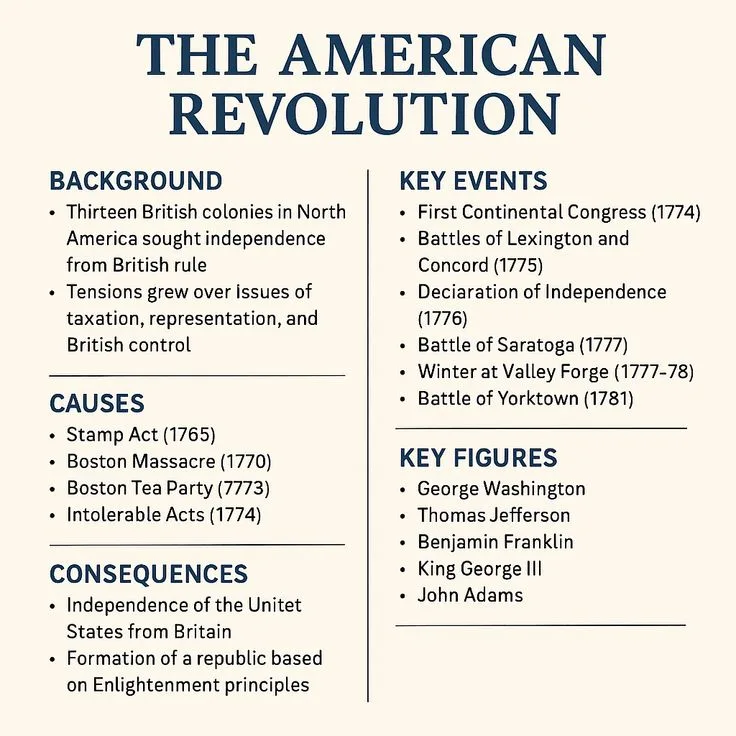
On the morning of November 1, 1765, the Stamp Act came into force in the American colonies. The Act, passed by the British Parliament in March, imposed a direct tax on all printed materials - newspapers, legal documents, pamphlets, playing cards, almanacs.
Every piece of paper in the colonies that bore official or commercial significance now required a stamped revenue mark from British-appointed distributors. The revenue was to help defray the costs of maintaining British troops in North America following the Seven Years War.
It was, in the eyes of Parliament, a modest and logical arrangement: the colonies had been defended at great British expense, and they should help pay for their own defense.
The colonial response was neither modest nor logical, from Parliament's perspective. Within weeks, stamp distributors were being forced to resign under mob pressure from organizations calling themselves Sons of Liberty.[3]
The Virginia House of Burgesses passed resolutions, drafted by Patrick Henry, asserting that Virginians could only be taxed by their own elected representatives.
In Boston, a crowd destroyed the home of Lieutenant Governor Thomas Hutchinson - ransacking his cellar, burning his furniture, and scattering his manuscript history of Massachusetts.
Nine colonies sent delegates to the Stamp Act Congress in New York, which produced a declaration asserting that Parliament had no authority to tax the colonies without their consent.
The slogan "no taxation without representation" condensed a constitutional argument that would, over the next decade, become the justification for independence. It was not simply a complaint about money.
It was an assertion that the British Parliament - a body in which no American sat - had no legitimate authority to bind Americans in matters of taxation, or, as the logic extended, in anything else.
That constitutional premise, combined with Enlightenment theories of natural rights and the growing experience of self-governance, was the intellectual engine of the American Revolution.
"We hold these truths to be self-evident, that all men are created equal, that they are endowed by their Creator with certain unalienable Rights, that among these are Life, Liberty and the pursuit of Happiness.
That to secure these rights, Governments are instituted among Men, deriving their just powers from the consent of the governed." - Thomas Jefferson, Declaration of Independence (1776)
| Key Act / Event | Year | Colonial Response |
|---|---|---|
| Stamp Act | 1765 | Boycotts, Stamp Act Congress, riots |
| Townshend Acts | 1767 | Renewed boycotts, non-importation agreements |
| Boston Massacre | 1770 | Propaganda campaign by colonial press |
| Tea Act / Boston Tea Party | 1773 | Dumping of tea, colonial outrage |
| Intolerable Acts | 1774 | First Continental Congress convened |
| Lexington and Concord | 1775 | Open armed conflict begins |
| Declaration of Independence | 1776 | Formal break with Britain |
Key Definitions
Salutary neglect - The informal British colonial policy of the early eighteenth century in which Parliament and the Crown largely refrained from enforcing trade and navigation laws in the colonies, allowing colonial assemblies to develop habits of self-governance with minimal interference.
The policy is attributed to Robert Walpole and lasted roughly from the 1720s to the 1760s.
Colonial assembly - The elected legislative body in each American colony, responsible for local legislation and taxation.
By the mid-eighteenth century, colonial assemblies had been exercising legislative authority for over a century and had developed the conviction that they stood in the same relationship to the Crown that Parliament did.
Social contract theory - The Enlightenment political theory, associated with John Locke, Jean-Jacques Rousseau, and others, that governments derive their authority from the consent of the governed, that individuals possess natural rights that governments are instituted to protect, and that people have the right to resist or overthrow governments that systematically violate these rights.
Natural rights - Rights that belong to all human beings by virtue of their humanity, not by grant of government or custom. Locke identified natural rights as life, liberty, and property; Jefferson modified this as life, liberty, and the pursuit of happiness.
The premise that rights are natural and pre-political is the foundation of the revolutionary argument.
Mercantilism - The dominant economic theory of the seventeenth and eighteenth centuries, holding that national wealth consists primarily of precious metals and that colonies exist to supply raw materials to and consume manufactured goods from the mother country.
British trade regulations (Navigation Acts) restricting colonial trade expressed mercantile principles and generated colonial resentment.
Intolerable Acts - A series of four acts passed by Parliament in 1774 in response to the Boston Tea Party: the Massachusetts Government Act (curtailing self-government in Massachusetts), the Administration of Justice Act (allowing British officials accused of crimes to be tried in Britain), the Boston Port Act (closing Boston Harbor until the tea was paid for), and the Quartering Act (requiring colonists to house British troops).
They galvanized colonial opposition and led directly to the First Continental Congress.
Long-Term Structural Causes
Salutary Neglect and the Habit of Self-Governance
The British colonies in North America had been developing institutions of self-governance for more than a century before the revolutionary crisis. Virginia's House of Burgesses, established in 1619, was among the first representative assemblies in the Western Hemisphere.
Massachusetts, Connecticut, and Rhode Island operated under charters that gave them substantial self-governing authority. By the mid-eighteenth century, colonial assemblies controlled their own budgets, levied their own taxes, and managed most domestic affairs with minimal interference from London.
This was largely the result of salutary neglect - the British policy of loose oversight that allowed colonial commerce to develop, even when it violated the letter of the Navigation Acts, because enforcement was costly and the colonies were far away.
Salutary neglect was not an official policy but a practical accommodation to the realities of governing a far-flung empire in an era of slow communication.
The consequence was that Americans developed, over generations, a practical and normative commitment to representative self-government that they experienced not as a privilege granted by the Crown but as a right they had always possessed.
When Parliament began asserting authority over colonial affairs after 1763, it was not merely imposing new burdens but attempting to roll back institutional arrangements that colonists considered fundamental to their liberty.
Enlightenment Ideas and the Framework for Revolution
Enlightenment political theory provided the conceptual framework that gave colonial grievances their revolutionary character.
Without the intellectual resources to articulate a principled argument for resistance, the colonial response to British taxation might have remained at the level of commercial complaint rather than constitutional principle.
John Locke's 'Second Treatise on Government' (1689) was the most directly influential text. Locke argued that political authority derives from the consent of the governed, expressed through representative institutions.
Individuals possess natural rights to life, liberty, and property that precede and constrain political authority.
When a government systematically violates these rights - particularly through repeated acts of tyranny rather than isolated mistakes - the social contract is broken and the governed are released from their obligation of obedience. The right of revolution is not merely permitted; it is, in extreme cases, obligatory.
These ideas were widely read in the colonies. Jefferson, Adams, Hamilton, and Madison were deeply familiar with Locke, with the classical republican tradition of Rome, and with English Whig writers like John Trenchard and Thomas Gordon, whose "Cato's Letters" (1720-1723) warned against executive tyranny and championed the liberty of press and speech.
Bernard Bailyn's scholarship on the ideological origins of the Revolution, particularly his 1967 book of that title, showed how these ideas were not merely decorative rhetoric but the operative framework through which colonists interpreted British actions.[1]
Historian Gordon Wood extended Bailyn's analysis to show how republicanism - the political theory emphasizing civic virtue, popular sovereignty, and the rejection of hereditary monarchy - shaped not just the revolution but the subsequent constitutional design.[2]
The founding generation was attempting to instantiate a form of government that had failed in ancient Rome and in the English Commonwealth of the 1650s. Their awareness of this historical burden shaped every decision about constitutional structure.
The Road to Revolution: Proximate Causes
The Seven Years War and Its Aftermath
The Seven Years War (1756-1763) - fought in North America as the French and Indian War - transformed the political economy of the British Empire in ways that made subsequent conflict almost inevitable. Britain emerged victorious but deeply indebted: the war cost roughly twice the annual revenue of the British government.
The national debt had nearly doubled. Parliament and the ministry of George Grenville concluded that the American colonies, which had been defended at great cost, should contribute to their own defense.
The war also removed the French threat that had given British protection genuine value to colonists. Before 1763, colonists needed British military backing against French Canada and its Indian allies.[10] After 1763, French Canada was British territory. The strategic rationale for accepting British authority was correspondingly reduced.
Colonial troops who had served alongside British regulars during the war had also come away with a complicated view of British military superiority. British officers treated colonial officers with contempt, viewing American militias as undisciplined rabble rather than partners.
George Washington, who served in Virginia's colonial forces during the war, experienced this condescension directly and developed a lifelong resentment of it. The war created colonial military experience and a colonial officer class - both of which would prove crucial in the eventual conflict.
From the Stamp Act to the Tea Party
The Stamp Act crisis of 1765 established the constitutional framework of the dispute.
Parliament backed down and repealed the Act in 1766 - partly from colonial pressure, partly from British merchants suffering from colonial boycotts - but simultaneously passed the Declaratory Act, asserting Parliament's authority to legislate for the colonies "in all cases whatsoever." The constitutional disagreement had not been resolved; it had only been deferred.
The Townshend Acts of 1767 imposed duties on imported goods - glass, paper, paint, and tea - and established a Board of Customs Commissioners in Boston to enforce them.
Colonial response was again vigorous: renewed boycotts, denunciations of British tyranny, and John Dickinson's widely read "Letters from a Farmer in Pennsylvania" arguing that while Parliament could regulate trade, it could not tax the colonies for revenue without their consent.
The Townshend duties were mostly repealed in 1770, but the tax on tea was retained as a symbol of parliamentary sovereignty.
The Boston Massacre of March 5, 1770 - in which British soldiers fired on a crowd, killing five - was amplified into a symbol of British tyranny by Paul Revere's widely circulated engraving and Samuel Adams's skillful propaganda. It inflamed colonial opinion far beyond its actual military significance.
The Tea Act of 1773 was, paradoxically, an attempt to help colonists: it allowed the struggling East India Company to sell tea directly to America, undercutting even the smuggled Dutch tea that many colonists preferred. The result would have been cheaper tea.
But colonists refused the cheap tea because accepting it meant accepting the principle of Parliament's taxing authority, and because it threatened the merchants who had built businesses around the smuggling trade.[6]
On the night of December 16, 1773, the Sons of Liberty boarded three ships in Boston Harbor and dumped 342 chests of tea into the water.
Parliament's response - the Coercive Acts of 1774 (called the Intolerable Acts in the colonies) - was punitive and backfired catastrophically. Instead of isolating Massachusetts, the Acts united the other colonies in its defense.
The First Continental Congress met in September 1774, agreed to a continental boycott of British goods, and began organizing militia forces.
Lexington and Concord in April 1775, where British troops marched to seize colonial arms and were met with armed resistance, moved the conflict from constitutional dispute to armed rebellion. The Second Continental Congress, meeting in May 1775, found itself managing a war while still not officially declaring independence.
Thomas Paine and the Emotional Case for Independence
The final intellectual move - from defense of colonial rights within the empire to argument for complete independence - was provided by an English immigrant who had been in America for barely a year. Thomas Paine published 'Common Sense' on January 9, 1776, in a pamphlet that was unprecedented in its reach and in its radicalism.[5]
Paine's genius was to recognize that the constitutional arguments being made by colonial leaders - sophisticated, learned, grounded in English legal precedent - were unlikely to move people who had no legal training and no particular attachment to parliamentary precedent.
He discarded the technical arguments and attacked monarchy itself as an institution. There was nothing rational or defensible about hereditary rule: it made the accident of birth, not merit or consent, the criterion for authority. Monarchy was not just inconvenient; it was absurd and wicked.
Paine also attacked the claim that colonists owed a special loyalty to Britain as a mother country. Britain had never acted as a mother - it had used the colonies for commercial exploitation and involved them in European wars that were none of their concern.
In any case, more than a third of colonists were not of English descent at all. America was the asylum of all Europe's persecuted; its identity was not British but new and universal.
Most powerfully, Paine argued that independence was not a disaster to be avoided but a world-historical opportunity to be seized. America could be the model of free republican government for the world. Every hesitation brought the enemy more time to consolidate.
"The sun never shined on a cause of greater worth." The pamphlet sold perhaps 100,000 copies in its first three months in a population of 2.5 million.[9] Washington ordered it read to his troops. By the summer of 1776, the question was not whether independence would be declared but when.
The Declaration of Independence and Its Contradictions
The Declaration of Independence, adopted on July 4, 1776, was primarily the work of Thomas Jefferson, revised by Benjamin Franklin, John Adams, and the full Congress.[7] It is simultaneously one of the most influential political documents in history and one of the most contradicted by the circumstances of its composition.
The opening paragraphs state a theory of government: all men are created equal, all are endowed with unalienable rights, governments derive their just powers from the consent of the governed, and it is the right and duty of the people to alter or abolish governments that fail to protect these rights.
The list of grievances that follows is an indictment of George III designed to demonstrate that the pattern of his conduct constitutes tyranny sufficient to justify revolution.
Jefferson's original draft included a clause condemning the king for the slave trade - for "waging cruel war against human nature itself" by introducing slavery into the colonies.
The clause was struck out by the Congress at the insistence of delegates from Georgia and South Carolina, who were unwilling to accept any implicit criticism of their institutions, and from some northern delegates whose merchants had profited from the trade.
The deletion was more than political calculation; it embodied the Revolution's fundamental contradiction. Approximately one-fifth of the colonial population was enslaved at the time of independence. Many of the most eloquent champions of liberty - Jefferson himself, George Washington, James Madison, Patrick Henry - were slaveholders.
Edmund Morgan's 'American Slavery, American Freedom' (1975) argued that this was not incidental: the liberty of Virginia's white gentry rested materially on enslaved labor and depended on racial solidarity that slavery created.[4]
The Declaration's universalism was articulated by men who did not intend it to apply universally.
For enslaved people, the Revolution presented a genuine choice between competing opportunities. Lord Dunmore, the royal governor of Virginia, issued a proclamation in November 1775 offering freedom to enslaved men who escaped rebel masters and joined British forces.[11]
Thousands took the offer - voting with their feet on which side offered greater freedom. Others fought on the American side, in some cases earning freedom through military service.
The Revolution neither resolved nor seriously addressed slavery; it left it embedded in the Constitution, explicitly protected in multiple provisions, to be contested for the next eighty-nine years until the Civil War.
The War and the French Alliance
Military victory was not inevitable. The Continental Army was perpetually short of men, equipment, money, and food.
The winter at Valley Forge (1777-1778), where Washington's forces camped in brutal cold with inadequate supplies and where roughly 2,000 men died of cold, starvation, and disease, was both a military nadir and, retrospectively, a moral crucible that forged a more professional army under the training of Friedrich von Steuben.
The decisive turning point was French intervention. France recognized American independence in February 1778 and entered the war openly. France's motives were not altruistic: France was the major continental rival to Britain and saw American independence as an opportunity to weaken British global power.
The French alliance provided naval forces that could contest British maritime supremacy, supplies and financing that the Continental Congress could not generate domestically, and the military pressure that eventually forced British strategic overextension.
The Yorktown campaign of 1781 - in which Washington and French General Rochambeau trapped British General Cornwallis on the Virginia peninsula while French Admiral de Grasse's fleet blocked British naval relief - ended with Cornwallis's surrender of 8,000 troops, the largest British field army in North America.[8]
The military case for continuing the war was effectively over.
The Treaty of Paris (1783) recognized American independence and granted the new nation territory extending to the Mississippi River - far more than Britain's military position strictly required, reflecting diplomatic maneuvering in which Benjamin Franklin and John Jay skillfully exploited French, Spanish, and British interests against each other.
For the French Revolution that followed partly in America's wake, see The French Revolution: Key Events and Lasting Effects. For the liberal political tradition that the Revolution helped define, see Liberalism: Understanding Its Philosophical Roots.
For the colonial context in which the Revolution operated, see Defining Colonialism and Its Impact.
Sources & Further Reading
- Bailyn, Bernard. The Ideological Origins of the American Revolution. Harvard University Press, 1967.
- Wood, Gordon S. The Radicalism of the American Revolution. Alfred A. Knopf, 1992.
- Nash, Gary B. The Unknown American Revolution: The Unruly Birth of Democracy and the Struggle to Create America. Viking, 2005.
- Morgan, Edmund S. American Slavery, American Freedom: The Ordeal of Colonial Virginia. W.W. Norton, 1975.
- Paine, Thomas. Common Sense. R. Bell, January 10, 1776.
- Beard, Charles A. An Economic Interpretation of the Constitution of the United States. Macmillan, 1913.
- Maier, Pauline. American Scripture: Making the Declaration of Independence. Alfred A. Knopf, 1997.
- Middlekauff, Robert. The Glorious Cause: The American Revolution, 1763-1789. Oxford University Press, 1982.
- Foner, Eric. Tom Paine and Revolutionary America. Oxford University Press, 1976.
- Taylor, Alan. American Revolutions: A Continental History, 1750-1804. W.W. Norton, 2016.
- Dunmore, Lord. Proclamation of November 7, 1775. Virginia Gazette (Purdie), November 17, 1775.