
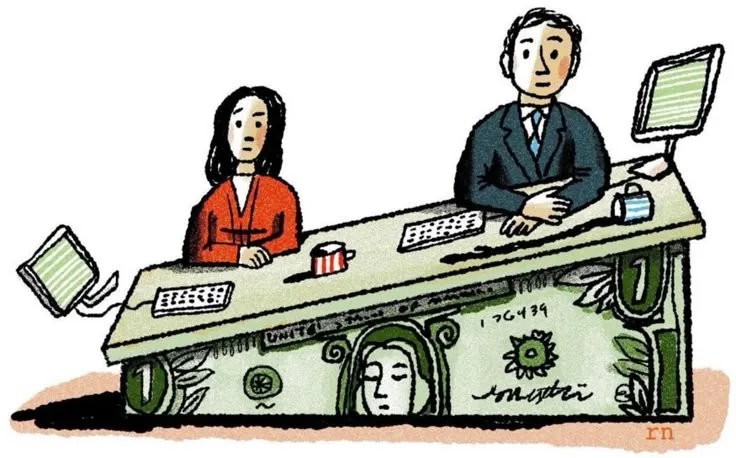
Explaining: In 2023, the Royal Swedish Academy of Sciences awarded the Nobel Prize in Economic Sciences to Claudia Goldin, a Harvard economist who had spent four decades researching why women earn less than men.
The committee noted that her work had "vastly improved our understanding of women's labour market outcomes." What made Goldin's research Nobel-worthy was not that she discovered the gap exists - that has been documented since economists began collecting systematic wage data - but that she explained precisely why it persists even after decades of dramatic gains in women's education, workforce participation, and legal protections.[12]
Her answer was uncomfortable for partisans on every side of the debate: the gap is real, the causes are structural, and the solutions require changing how labor markets reward time rather than simply enforcing anti-discrimination law.
The raw numbers are familiar. In the United States, women who work full time, year round earn approximately 82 cents for every dollar earned by men - a gap of roughly 18 cents. This figure has been cited in political speeches and corporate diversity reports so often it has become almost numbing.
What receives far less attention is what happens when researchers control for occupation, industry, education, experience, and hours worked: the gap narrows to somewhere between 2 and 8 cents, depending on the dataset and methodology.
Both figures are real, and both are contested. The raw gap is economically significant and accumulates over a career into vastly different lifetime wealth.
The controlled gap is smaller but still nonzero, and the controls themselves are disputed - if women end up in lower-paying occupations partly because of social pressure, discrimination, or lack of access, then controlling for occupation may obscure as much as it reveals.
The gender pay gap is a genuinely contested topic in empirical economics - not in the sense that scientists dispute whether gravity is real, but in the sense that researchers examining the same data with different methods reach different conclusions about mechanism, magnitude, and remedy.
What has emerged from several decades of serious research is a more nuanced picture than either "women are paid less because of direct discrimination" or "the gap disappears when you control for relevant factors." The truth is harder to summarize and harder to fix.
"The reason there is a gender earnings gap - and it's fallen a lot but it hasn't gone to zero - is that there are high returns to working really long hours and being on call. What we need to do is change the structure of work." - Claudia Goldin, interview following her 2023 Nobel Prize announcement
| Factor | Estimated Contribution | Notes |
|---|---|---|
| Occupation segregation | 30-50% of gap | Men and women clustered in different industries and roles |
| Hours worked | 10-20% | Men work more paid hours on average |
| Experience and seniority | 10-15% | Women more likely to have career interruptions |
| Negotiation differences | 5-10% | Women less likely to negotiate salaries |
| Explicit discrimination | Difficult to isolate | Audit studies show bias in identical CVs |
| Motherhood penalty | Significant | Wages drop after childbirth; fathers see a wage bonus |
Key Definitions
Raw gender pay gap: The difference in median earnings between all full-time male and female workers, without controlling for occupation, hours, experience, or education. In the US, approximately 18 cents on the dollar.
Reflects both discrimination and the cumulative effects of occupational sorting, hours differences, and career interruptions.
Adjusted gender pay gap: The earnings difference between men and women in comparable jobs with comparable qualifications, experience, and hours. Typically estimated at 2-8 cents. Represents the portion of the gap that cannot be explained by observable differences in job characteristics.
Occupational segregation: The concentration of men and women in different industries and occupations. Male-dominated occupations in technology, finance, and engineering pay substantially more on average than female-dominated occupations in care, education, and clerical work, even when skill requirements are comparable.
Motherhood penalty: The documented reduction in earnings, perceived competence, and hiring prospects experienced by mothers, contrasted with the "fatherhood bonus" experienced by fathers. First rigorously documented by sociologists Shelley Correll, Stephen Benard, and In Paik (2007).[2]
Greedy jobs: Claudia Goldin's term for positions that pay disproportionately more per hour worked as hours increase beyond standard working time.[1] A lawyer working 80 hours per week earns more than twice what a lawyer working 40 hours earns.
These nonlinear earnings profiles disproportionately disadvantage workers who need schedule flexibility.
Statistical discrimination: Hiring or promotion decisions based on average group characteristics rather than individual assessment. Even without animus toward women, an employer who uses gender as a proxy for expected tenure or commitment engages in statistical discrimination that produces group-level wage gaps.
The Raw Gap and What It Contains
When the Bureau of Labor Statistics reports that women earn 82 cents for every dollar earned by men, it is comparing the median annual earnings of all full-time, year-round workers. This is the simplest and most widely reported measure.
It is also, economists generally agree, not the most analytically useful figure for understanding why the gap exists.
The raw gap contains several components. Occupational segregation is the largest: women are concentrated in lower-paying industries.
A nurse earns less than a software engineer not because the nurse's employer discriminates against women, but because nursing (predominantly female) and software engineering (predominantly male) exist in different wage markets.
This segregation has deep historical roots - women entered the labor force in large numbers in occupations where they were welcomed, primarily care and clerical work - and persists today.
Hours differences contribute a second component. Men work more paid hours on average, and in many high-paying professions, earnings scale nonlinearly with hours. This is Goldin's central point about "greedy jobs": the relationship between hours and pay is not linear in high-compensation professional fields.
A management consultant or investment banker working 70 hours per week earns substantially more than twice what a peer working 35 hours earns - not just because of the raw hours, but because availability, responsiveness, and face time are themselves rewarded as signals of commitment.
Experience gaps contribute a third component. Women take more career interruptions for caregiving, especially around childbirth. Each year out of the workforce compounds: missed promotions, interrupted skill accumulation, reduced pension contributions, and lost seniority effects.
Francine Blau and Lawrence Kahn, economists at Cornell and one of the most prolific research teams on this topic, have spent decades decomposing the gender earnings gap.[3]
Their analyses consistently find that occupational segregation and the human capital gap (experience, education, field of study) together explain the majority of the raw gap, leaving a residual that cannot be attributed to measured factors.
The Motherhood Penalty
Perhaps the most striking finding in gender pay gap research is not a gap in pay between men and women generally, but a gap within women - between mothers and childless women - and the parallel observation that fathers experience no equivalent penalty and in fact earn more than childless men on average.
Shelley Correll, a sociologist at Stanford, and colleagues Stephen Benard and In Paik conducted a landmark audit experiment published in the American Journal of Sociology in 2007. They created fictitious resumes for equally qualified candidates who differed in whether they indicated parental status, and measured employer responses.
Mothers received significantly lower competence ratings, lower starting salary recommendations, and were held to higher performance standards than childless women.
Fathers received higher starting salary recommendations than childless men. The motherhood penalty in the experiment was approximately $11,000 in starting salary; the fatherhood bonus was approximately $6,000.
This experiment isolated the role of bias and expectation rather than actual productivity differences. Subsequent observational research has confirmed the basic pattern in labor market data.
The mother's earnings typically drop significantly around childbirth - the "child penalty" - while fathers' earnings show little change or a slight increase.
Henrik Kleven, Camille Landais, and Jakob Egholt Sogaard's research using Danish administrative data (2019) found a "child penalty" in earnings of approximately 20 percent for mothers in Denmark, a country with generous parental leave and childcare policy.[6]
Most of this penalty operated through hours reduction and occupational change rather than wage rates for identical work.
Why does this pattern emerge? Research suggests several mechanisms. Employers may assume mothers will be less committed to work. Mothers who reduce hours or take leave are disadvantaged by the nonlinear hours premium Goldin identifies. Mothers who take on primary caregiving responsibility accumulate less experience.
The penalty compounds: a woman who exits the workforce for two years around childbirth returns to a position below her cohort in experience, skills, and promotion trajectory.
Occupational Segregation: Cause or Effect?
The role of occupational segregation in the gender pay gap is more contested than it might appear. One interpretation is that women freely choose different occupations and those occupations happen to pay less.
Another is that occupational sorting is itself produced by discrimination, socialization, and structural barriers - in which case controlling for occupation in pay gap analyses overcorrects, attributing to "free choice" what is actually a constrained outcome.
The historical evidence favors a mixed account. Some occupational differences reflect genuine preference variation: surveys consistently find somewhat different occupation preferences by gender, though this is contested given that preferences are formed in social contexts.
But the evidence also shows that when women enter a previously male occupation, wages in that occupation tend to fall - a pattern documented for biology, park rangering, and other fields.
Conversely, when men enter previously female occupations, wages rise. This suggests that occupational wages reflect social valuations as well as productivity, and those valuations are influenced by the gender composition of workers.
Paula England, a sociologist at New York University, has documented extensively what she calls the "devaluation" hypothesis: occupations associated with care and femininity are paid less because they are associated with femininity, independent of their skill and productivity requirements.[8]
An empirical test comparing occupational wages before and after the gender composition shifted shows that feminization of an occupation predicts wage decline.
If this mechanism is real, then the portion of the raw gap attributable to occupational segregation is not fully separable from discrimination.
The Discrimination Question: Direct Evidence
Audit studies provide the cleanest evidence of direct discrimination in labor markets. These experiments send identical applications - differing only in the gendered name or other signals of gender - to real employers and measure differential callback rates.
Marianne Bertrand and Sendhil Mullainathan's classic audit study (2004) focused on race rather than gender, but the methodology has been replicated for gender in multiple contexts.[7]
Cecilia Rouse and Claudia Goldin studied symphony orchestra auditions, where introducing blind auditions - performing behind a screen - increased the probability that a woman advanced from preliminary to final rounds by 50 percent and increased the probability of a woman being hired from finals by several percentage points.[4]
This is one of the most compelling natural experiments in labor economics: the same person performing the same music produces different outcomes depending on whether the evaluators can see them.
In hiring contexts for corporate positions, evidence of direct discrimination is more mixed. Some audit studies find callback penalties for female applicants; others find advantages, particularly in fields where diversity is valued.
The most consistent finding is of discrimination against mothers rather than against women per se, and against women in stereotypically male fields.
Gary Becker's seminal 1957 model of taste-based discrimination predicted that discrimination would be competed away in efficient markets - employers who discriminate pay a premium, and non-discriminating competitors can hire better workers cheaply, eventually winning market share.[9]
The persistence of gaps despite decades of competition suggests either that markets are not fully efficient, that discrimination takes forms other than simple employer animus, or that Becker's framework is incomplete.
Kenneth Arrow and other economists developed statistical discrimination models - in which employers use group membership as a signal about individual characteristics - that predict persistent gaps even without animus. The ongoing theoretical and empirical debate reflects the genuine difficulty of measuring discrimination cleanly.
What Nordic Countries Tell Us
The Nordic countries present a striking case study. Sweden, Norway, Denmark, and Finland have among the world's most comprehensive gender equality policies: generous parental leave for both parents, heavily subsidised childcare, strong legal anti-discrimination protections, high female labor force participation rates, and deep cultural commitment to gender equality.
On most composite equality indices they rank at the top. The gender pay gap has shrunk significantly in all four countries.
Yet all maintain a measurable pay gap. Sweden's raw gap runs around 10-12 percent. Denmark's "child penalty" research by Kleven and colleagues finds a persistent earnings penalty for mothers.
And in a pattern that has surprised researchers, Nordic countries show relatively high occupational segregation - women concentrated in the large public health and care sector, men in private-sector technical and commercial fields.
This "Nordic paradox" - high gender equality policies paired with persistent occupational segregation - has several proposed explanations. One is that generous parental leave, when taken predominantly by women (as it still is in Sweden despite formal gender neutrality of leave policy), reinforces specialization in caregiving.
Another is that the large public-sector care workforce in Nordic countries creates an attractive employment option for women that reinforces rather than dissolves segregation.
A third is that the paradox reflects genuine preference differences that are more able to manifest when economic pressure does not force the same trade-offs as in lower-support systems.
Magdalena Svensson and other Nordic labor economists have pushed back on simple preference explanations, noting that preferences themselves form in socially structured environments.
The Nordic experience suggests that generous family policy is necessary but not sufficient to close the gap: structural features of labor market organization - particularly the hours premium Goldin identifies - appear resilient to policy intervention.
Pay Transparency and Other Policy Levers
What policy interventions have evidence of effectiveness?
Pay transparency laws - requiring employers to post salary ranges, prohibit pay secrecy among employees, or publicly report gender pay gaps - have become increasingly common.
Zoe Cullen (Harvard Business School) and Bobak Pakzad-Hurson (Brown University) published a study in 2021 analysing the effects of pay transparency policies on gender pay gaps, finding that transparency reduces employers' ability to pay different workers differently for the same work and that women particularly benefit from knowing male colleagues' salaries.[5]
UK law since 2017 requires companies with 250 or more employees to publish gender pay gap data. The initial effect has been to generate public attention and employer commitments; whether it translates into sustained pay convergence remains under study.
Salary history bans - prohibiting employers from asking about previous earnings - have been adopted in several US states and cities. The rationale is that historical pay gaps perpetuate forward when employers use prior salary as a reference point. Early research found modest effects on closing the gap.
Paternity leave mandates, particularly when they include "use it or lose it" provisions that create an incentive for fathers to actually take leave, redistribute caregiving responsibilities and reduce the signalling asymmetry in which taking parental leave marks women but not men as less committed.
Countries that have introduced dedicated paternity leave with strong financial incentives - notably Sweden, with its "daddy months" - have seen increases in paternal leave-taking, though the majority of total parental leave days still fall to mothers.
Flexible working arrangements benefit all workers but particularly help workers with caregiving responsibilities.
Goldin's research suggests the most impactful change would be reducing the earnings premium for extreme inflexibility - restructuring high-compensation work to make temporal substitution possible, so that two part-time workers can effectively substitute for one overworked employee without a salary penalty.
This restructuring has occurred in some fields (pharmacy is Goldin's most-studied example, where technology enabled greater substitutability between pharmacists) but has been resisted in finance, law, and consulting, where the premium on client relationships and constant availability drives nonlinear compensation.
Intersectionality and Compounding Gaps
The gender pay gap differs significantly by race and ethnicity, a pattern the sociological concept of intersectionality - developed by Kimberle Crenshaw - captures.[11] White women earn approximately 79 cents for every dollar earned by white men.
Black women earn approximately 63 cents; Hispanic women approximately 54 cents. These compounding gaps reflect not only gender discrimination but racial discrimination and occupational patterns that concentrate women of colour in lower-wage sectors.
The intersectional data complicates narratives that treat gender as a single variable. A policy intervention that effectively closes the gap for highly educated white women may do little for Black or Hispanic women facing different structural barriers.
Research by William Darity Jr. and others on reparations and racial wealth gaps treats the racial component of the gender pay gap as requiring distinct policy attention beyond gender-neutral interventions.
Oxfam's data on unpaid care work adds a further dimension: globally, women perform approximately three times as much unpaid care and domestic work as men.[10] This labor - childcare, elder care, cooking, cleaning - is economically productive but excluded from GDP and wage statistics.
When total work (paid and unpaid) is considered, women work more hours than men in most countries. The gap in paid earnings therefore partly reflects a gap in who performs work that the market does not compensate.
The Outlook
Fifty years of progress has substantially narrowed the raw gender pay gap in the United States and most rich countries - from approximately 40 cents in the early 1970s to 18 cents today. Progress has accelerated in periods of legislative change and slowed in others.
The remaining gap appears to be driven substantially by structural features of labor markets - the hours premium, occupational sorting, and the motherhood penalty - rather than simple pay discrimination for identical work.
Claudia Goldin's Nobel Prize research suggests the next frontier is restructuring how work is organized and compensated, rather than primarily fighting individual-level discrimination.
This is a harder political and organizational challenge than anti-discrimination enforcement, because it requires changing the fundamental economics of high-compensation professions where extreme commitment has been institutionalized as a signal of quality.
For individuals navigating these dynamics, the research supports several practical insights: salary negotiation matters and women who negotiate achieve better outcomes, though negotiation itself carries social penalties that research suggests are real; choosing employers and industries with more transparent pay structures reduces the scope for discrimination; and the distribution of caregiving within households has documented effects on both partners' career trajectories.
But the research also cautions against framing the problem as primarily an individual responsibility when the mechanisms are structural.
Practical Implications
For workers: Audit your own pay relative to colleagues using available transparency tools. Research salary ranges before negotiating. Document performance systematically. Seek employers with formal pay bands and equity review processes.
For employers: Conduct pay equity audits comparing workers with similar roles and qualifications. Implement salary transparency. Provide genuinely flexible working options for both men and women. Scrutinize performance evaluations for motherhood penalty patterns.
For policymakers: Pay transparency requirements, salary history bans, and paternity leave mandates have the strongest evidentiary support. Affordable, quality childcare expands women's labor force choices. Restructuring leave policy to incentivize equal parental leave-taking addresses the mother/father asymmetry.
See also: How Poverty Traps Work | Why Is Housing So Expensive | Why Social Comparison Makes Us Miserable
Sources & Further Reading
- Goldin, C. (2014). "A Grand Gender Convergence: Its Last Chapter." American Economic Review, 104(4), 1091-1119.
- Correll, S., Benard, S., & Paik, I. (2007). "Getting a Job: Is There a Motherhood Penalty?" American Journal of Sociology, 112(5), 1297-1338.
- Blau, F., & Kahn, L. (2017). "The Gender Wage Gap: Extent, Trends, and Explanations." Journal of Economic Literature, 55(3), 789-865.
- Goldin, C., & Rouse, C. (2000). "Orchestrating Impartiality: The Impact of 'Blind' Auditions on Female Musicians." American Economic Review, 90(4), 715-741.
- Cullen, Z., & Pakzad-Hurson, B. (2021). "Equilibrium Effects of Pay Transparency." NBER Working Paper 28903.
- Kleven, H., Landais, C., & Sogaard, J.E. (2019). "Children and Gender Inequality: Evidence from Denmark." American Economic Journal: Applied Economics, 11(4), 181-209.
- Bertrand, M., & Mullainathan, S. (2004). "Are Emily and Greg More Employable Than Lakisha and Jamal?" American Economic Review, 94(4), 991-1013.
- England, P. (1992). Comparable Worth: Theories and Evidence. Aldine de Gruyter.
- Becker, G. (1957). The Economics of Discrimination. University of Chicago Press.
- Oxfam International. (2020). Time to Care: Unpaid and Underpaid Care Work and the Global Inequality Crisis. Oxfam Briefing Paper.
- Crenshaw, K. (1989). "Demarginalizing the Intersection of Race and Sex." University of Chicago Legal Forum, 139-167.
- Goldin, C. (2021). Career and Family: Women's Century-Long Journey Toward Equity. Princeton University Press.