
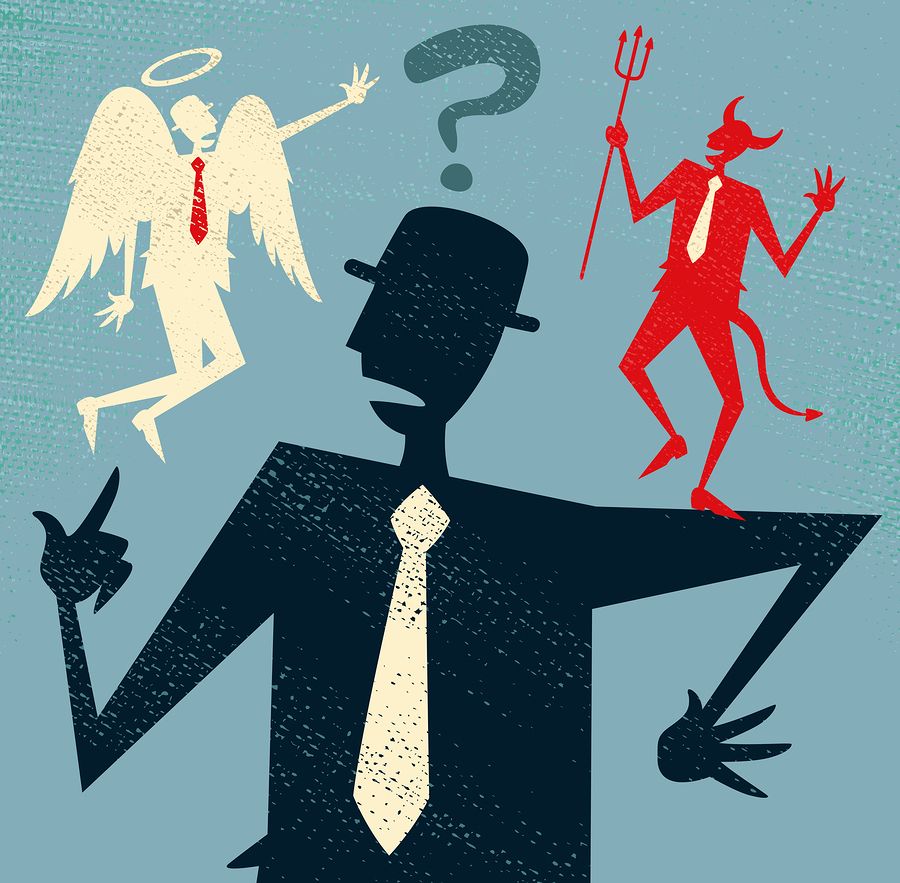
Some actions are judged wrong because of what they are, not because of the outcomes they produce. Deontological ethics is this rules-first approach to moral reasoning, which treats duties and prohibitions as constraints even when breaking them might appear to improve overall results.
A doctor could save five patients by killing one healthy person and distributing their organs. The consequences would be better, five lives versus one, but virtually everyone judges this action obviously wrong. Why?
Because killing innocent people violates a fundamental moral rule, regardless of whether doing so produces better overall outcomes.
This intuition reflects deontological thinking: some actions are inherently right or wrong based on the nature of the act itself, not merely its consequences.
Deontological ethics, from the Greek deon (duty), judges actions by whether they conform to moral rules, duties, or principles. Unlike consequentialism, which evaluates actions solely by outcomes, deontology emphasizes the intrinsic rightness or wrongness of actions themselves.
Lying is wrong not primarily because it usually produces bad consequences, but because lying itself violates a moral duty to truth. Keeping promises matters not mainly because promise-keeping generally leads to good outcomes, but because we have a duty to honor commitments.
This rule-based approach to ethics appears across philosophical traditions and religious moral systems. The Ten Commandments represent deontological ethics: "Thou shalt not kill," "Thou shalt not steal", absolute rules independent of consequentialist calculation.
Buddhist precepts against killing, lying, and stealing similarly function as deontological duties. Common morality's emphasis on rights, prohibitions, and obligations reflects deeply deontological structure.
The most sophisticated development of deontological ethics comes from Immanuel Kant's moral philosophy in the 18th century. Kant argued that morality must be based on reason, not consequences or desires. His categorical imperative provides a systematic procedure for determining moral duties through rational analysis.
While Kant represents deontology's philosophical peak, the underlying intuitions, that some acts are simply wrong regardless of circumstances, appear throughout human moral thinking.
Understanding deontology matters because it captures important moral intuitions consequentialism struggles to accommodate: that rights matter independently of utility, that some acts are wrong even if they produce net benefits, that we have specific duties to particular people that can't be reduced to maximizing aggregate welfare.
Whether deontology provides a complete ethical system remains controversial, but its insights about rules, rights, and duties seem essential to any adequate moral framework.
The Kantian Foundation: Duty, Reason, and the Categorical Imperative
Immanuel Kant's moral philosophy, developed primarily in his Groundwork of the Metaphysics of Morals (1785) and Critique of Practical Reason (1788), establishes the most rigorous deontological system in Western philosophy.
Kant sought to ground morality in reason alone, independent of consequences, desires, religious authority, or cultural norms.
The good will as the only unqualified good forms Kant's starting point.
"Nothing in the world - indeed nothing even beyond the world - can possibly be conceived which could be called good without qualification except a good will." - Immanuel Kant
Intelligence, courage, wealth: these goods can be used for evil purposes. Only a good will, the intention to do what's right because it's right, is good without qualification. This establishes that morality centers on motivation and intention, not outcomes.
An action has moral worth when done from duty (because it's right) rather than from inclination (because you want to) or for consequences (to achieve good outcomes).
This might seem counterintuitive. If you help someone because you care about them, isn't that morally better than helping from cold duty? Kant argues no: helping from affection lacks moral worth because it's not truly free. You help because your emotions compel you.
True moral action requires acting from duty even when inclination pulls otherwise. The person who helps despite not feeling like it demonstrates genuine moral commitment.
The categorical imperative provides Kant's procedure for determining moral duties.
Unlike hypothetical imperatives ("If you want X, do Y"), which depend on contingent desires, the categorical imperative commands unconditionally: "Do Y, period." Morality consists of categorical imperatives, duties that apply regardless of what you happen to want.
Kant formulated the categorical imperative in several ways, each revealing different aspects of moral duty:
First formulation: Universalizability: "Act only according to that maxim whereby you can at the same time will that it should become a universal law." Before acting, formulate the principle (maxim) underlying your action, then ask: Could this maxim be universally followed?
If universal adoption of the maxim would be impossible or self-defeating, the action is morally wrong.
Consider lying. The maxim might be "lie when convenient." Could you will this as universal law? No, if everyone lied when convenient, language and communication would collapse, making lying itself impossible. The maxim is self-defeating when universalized, therefore lying is wrong.
This isn't consequentialist reasoning ("lying produces bad outcomes") but logical analysis: the maxim contradicts itself when universalized.
Similarly for promise-breaking. The maxim "break promises when inconvenient" cannot be universalized, if everyone broke promises, the institution of promising would cease to exist, making promise-breaking meaningless. The maxim undermines itself, so breaking promises is wrong.
Second formulation: Humanity as end: "Act in such a way that you treat humanity, whether in your own person or in the person of any other, never merely as a means to an end, but always at the same time as an end." People have inherent dignity and worth, not merely instrumental value for achieving other goals.
Using people merely as tools violates this dignity.
This formulation directly opposes consequentialist thinking. Killing one person to harvest organs for five treats that person merely as means to saving others. Even if consequences are better, using someone as mere means is categorically wrong.
Respecting persons requires recognizing their autonomous agency and treating them as ends in themselves.
The "merely" qualifier matters, we often treat people as means (employers use employees' labor, customers use cashiers' service), but this is permissible when we simultaneously respect their humanity. Coercing someone or deceiving them treats them merely as means, denying their rational agency.
Third formulation: Autonomy and kingdom of ends: Act as though you were legislating universal laws for a kingdom of ends, where rational beings simultaneously create and follow moral laws. This emphasizes moral autonomy: you're not following external commands but legislating for yourself as a rational being.
This captures Kant's vision of moral freedom. Truly free action follows self-given rational laws rather than external forces or internal desires. When you act morally, you act according to laws your rational nature endorses, making you free and autonomous rather than controlled by circumstances or impulses.
Perfect versus imperfect duties distinguishes kinds of moral obligation. Perfect duties are strict prohibitions allowing no exceptions: don't lie, don't kill innocents, don't break promises.
These create perfect rights in others: everyone has a right not to be lied to, killed, or defrauded. Violating perfect duties is always wrong.
Imperfect duties allow more discretion about how and when to fulfill them. You have a duty to develop your talents and help others, but you choose which talents to develop and which people to help when. These duties bind you but allow judgment about application.
This distinction addresses the question of whether all duties are absolute. Perfect duties are indeed absolute, no circumstances justify violating them. Imperfect duties bind you but give latitude in fulfillment. This provides some flexibility while maintaining deontology's core commitment to inviolable moral rules.
Rights-Based Deontology: Constraints on Consequentialist Maximization
While Kant focused on duties, another deontological tradition emphasizes moral rights that constrain pursuit of good consequences. Rights-based ethics shares deontology's structure (some things are wrong regardless of consequences) but frames it through rights rather than duties.
Negative rights protect individuals from interference. You have rights to life, liberty, bodily integrity, property, and free expression. These rights create duties in others not to violate them, duties not to kill you, enslave you, assault you, steal from you, or censor you.
Respecting rights means refraining from certain actions, not actively providing goods.
From rights perspective, the organ transplant case is clearly wrong: the healthy person has a right to life and bodily integrity. Killing them violates this right, even if harvesting organs would save five others.
Rights function as "side constraints" on maximizing welfare, certain actions are impermissible regardless of how much good they would do.
Philosopher Robert Nozick developed this view extensively.
"Individuals have rights, and there are things no person or group may do to them without violating their rights." - Robert Nozick
He argued that individuals have rights that may not be violated merely to achieve better outcomes. Using coercion or force against innocent people is wrong even for good causes. This grounds political philosophy protecting individual liberty against collective demands or utilitarian calculations.
Positive rights require not just non-interference but active provision of goods. If people have a right to education or healthcare, society must provide these, not merely refrain from preventing access. Positive rights are more controversial than negative rights because they create stronger demands on others.
Libertarians argue only negative rights exist, you have rights to non-interference but not to goods or services others must provide. Egalitarians argue positive rights to basic welfare, education, and healthcare are genuine.
This debate significantly affects political philosophy and policy, with important consequences for social welfare programs.
The rights framework connects naturally to deontology's structure. If people have rights, violating those rights is wrong regardless of consequences. You can't violate one person's rights merely to benefit others or produce better overall outcomes.
Rights constrain consequentialist maximization, preserving individual inviolability.
The absoluteness question challenges rule-based ethics: Are rights truly absolute, or can they be overridden in extreme circumstances? Most people believe lying is generally wrong but permissible when hiding refugees from murderers.
This suggests rights aren't absolute but can be overridden by sufficiently weighty competing considerations.
However, admitting this threatens the rights framework. If rights can be overridden whenever consequences are bad enough, rights-based deontology collapses into consequentialism with extra steps. The whole point of rights is constraining consequentialist reasoning, if rights give way to good enough consequences, what work are they doing?
Some philosophers respond by distinguishing prima facie rights (generally binding but potentially overridable) from absolute rights (never overridable).
Others argue that rights conflicts explain apparent exceptions, when hiding refugees, the murderers' right to truth conflicts with refugees' right to life, and life outweighs truth in this case, but both rights remain absolute within their domains.
Still others accept that rights aren't absolute but argue they're strong presumptions requiring extraordinarily weighty reasons to override. Saving five lives by killing one doesn't suffice, but perhaps preventing nuclear holocaust would.
This "threshold deontology" maintains deontological structure while allowing extreme cases to override rules.
W.D. Ross and Prima Facie Duties
British philosopher William David Ross developed deontological ethics recognizing real-world complexity while avoiding both consequentialism and absolute rule-based thinking. His theory of prima facie duties provides a more flexible deontological framework than strict Kantianism.
Prima facie duties are genuine moral duties that bind us unless overridden by stronger competing duties. Ross identified seven prima facie duties:
- Fidelity: Keep promises and commitments
- Reparation: Make amends for harm you've caused
- Gratitude: Repay kindness and benefits received
- Justice: Distribute goods and burdens fairly
- Beneficence: Help others when you can
- Self-improvement: Develop your own capacities
- Non-maleficence: Avoid harming others
These duties are self-evident, you recognize them through moral intuition, not by deriving them from more basic principles. They're plural, multiple independent duties, not reducible to a single master principle. And they're prima facie, binding unless overridden by weightier competing duties.
The priority problem arises when prima facie duties conflict. You promised to meet a friend (fidelity) but encounter someone needing urgent help (beneficence). Which duty takes priority? Ross argued we must use moral judgment to determine which duty is weightier in the specific situation.
There's no algorithm or formula, we exercise judgment based on the circumstances.
This makes Ross's deontology more flexible than Kant's. Kant struggled with conflicts, if lying is absolutely wrong, you must truth-tell even to murderers seeking their victims. Ross can say that normally fidelity to truth matters, but non-maleficence (protecting life) outweighs truth-telling when murderers ask about refugees.
Critics argue this flexibility abandons deontology's structure. If duties can be overridden by judgment about circumstances, isn't this just consequentialism with rules as heuristics? Ross responds no, the duties are genuine, not merely instrumental.
We're not calculating consequences but judging which duty carries more weight in this situation.
Moral particularism and judgment receive emphasis in Ross's framework. While he provides general duties, applying them requires attention to particular circumstances. The rightness of an action depends partly on the specific situation, not just the general type of act.
This makes Ross's deontology more contextual and less rigidly rule-based than Kant's.
This connects to broader debates about moral theory. Should ethics provide algorithms or decision procedures that generate right answers mechanically? Or does morality require practical wisdom and judgment that can't be reduced to rules?
Ross leans toward the latter, we have genuine duties, but wisdom is needed to navigate their conflicts.
"The right act in any situation is that whose prima facie rightness in those respects in which it is prima facie right most outweighs its prima facie wrongness in those respects in which it is prima facie wrong." - W.D. Ross
The Problem of Conflicting Duties
One of deontology's most serious challenges is explaining what to do when moral duties conflict. If multiple absolute duties pull in different directions, which should you follow?
The classic cases illustrate the problem vividly, producing moral dilemmas where every available action seems to violate some duty:
The murderer at the door: A murderer asks where your friend is hiding. You know where they are. Kantian deontology seems to demand truth-telling (perfect duty not to lie). But this would help the murderer find and kill your friend. What should you do?
Kant's own answer, you must tell the truth, strikes most people as absurd. Surely protecting innocent life outweighs the prohibition on lying in this case. But if you allow this exception, you're using consequentialist reasoning (lying produces better outcome), undermining Kantian deontology's structure.
Conflicting promises: You promise to meet friend A at noon and promise to help friend B move at noon. Both promises are genuine duties. You cannot fulfill both. Which do you break? Strict deontology provides no clear answer, both promise-keeping and promise-breaking seem wrong simultaneously.
Rights conflicts: Someone's right to free expression conflicts with others' right to be free from threatening harassment. Whose rights take priority? If rights are absolute, both must be respected, but that's impossible when they conflict.
If rights can be balanced and overridden, what makes them rights rather than important interests?
Attempted solutions include:
Duty hierarchy: Perhaps duties have inherent rankings, don't kill innocent people outranks don't lie, so lying to murderers is permissible. But Kant denied such rankings exist among perfect duties, and it's unclear how we'd determine the hierarchy without appealing to consequences.
More specific duty descriptions: Perhaps "don't lie" isn't quite right, the real duty is "don't lie except when necessary to protect innocent life." Making duties specific enough to avoid conflicts threatens to make them useless for guidance (every situation gets its own tailored duty) or collapses into consequentialism (duties have built-in consequence-based exceptions).
Accept tragic dilemmas: Perhaps some situations involve genuine moral tragedy where every action violates a duty. You face irresolvable conflict, must choose, and bear moral residue whatever you choose. This captures the phenomenology of hard cases but provides no guidance about what to choose.
Deny conflicts occur: Some argue duties, properly understood, never genuinely conflict. What seem like conflicts result from misunderstanding duties' scope or from imperfect duties (allowing discretion) rather than perfect duties. This seems implausibly optimistic about how cleanly duties separate.
The consequentialist response argues these problems reveal deontology's fundamental inadequacy. If duties conflict with no clear resolution principle, the framework provides insufficient guidance. Consequentialism avoids this, when actions conflict, calculate outcomes and choose the better one. Messy, but at least decisive.
Deontologists counter that consequentialism's decisiveness comes at cost of counterintuitive results and rights violations. Better to acknowledge hard cases requiring judgment than to adopt consequentialism's troubling implications. The conflict problem is serious but not fatal, all ethical frameworks face difficult cases.
Deontology in Practice: Professional Ethics and Applied Contexts
Deontological thinking pervades professional ethics codes and practical moral reasoning across domains, even for people who've never heard of Kant or Ross.
Medical ethics incorporates strong deontological elements. The principle of autonomy requires respecting patients' decisions about their own care, even when those decisions seem medically suboptimal.
A competent patient refusing life-saving treatment must be respected, their autonomy creates a duty not to treat them against their will, regardless of consequences.
The principle of non-maleficence ("first, do no harm") functions deontologically. Physicians must not intentionally harm patients, even if doing so might produce net benefits.
This explains why active euthanasia remains controversial even when passive withdrawal of treatment is accepted, actively killing involves violating non-maleficence in ways allowing death doesn't.
Medical confidentiality represents another deontological duty. Doctors must protect patient privacy even when disclosure might benefit others. A patient with contagious disease creates tension between confidentiality and public health, but the duty of confidentiality binds physicians nonetheless, only overridden in extreme circumstances.
Legal ethics emphasizes duties that conflict with consequentialist thinking. Defense attorneys must zealously represent clients even when they know the client is guilty and conviction would benefit society.
The duty to the client, grounded in rights to legal representation and fair trial, outweighs consequentialist concerns about letting the guilty go free.
Attorney-client privilege protects communications even when disclosure would serve justice. A client confesses a crime to their lawyer; the lawyer cannot reveal this to help solve the crime or prevent harm to victims. The duty of confidentiality, grounded in the right to effective legal counsel, constrains consequentialist calculation.
These legal duties sometimes strike non-lawyers as absurd, why protect confidentiality when disclosure would clearly produce better outcomes? The answer is deontological: clients have rights to representation and confidential counsel that cannot be violated merely for better consequences.
The legal system couldn't function without these protections, but the argument is ultimately about rights and duties, not utility.
Business ethics increasingly incorporates deontological thinking alongside consequentialist cost-benefit analysis. Stakeholder theory argues businesses have duties to various stakeholders, employees, customers, communities, not just shareholders. These duties constrain profit maximization.
An employer cannot lie to employees about layoffs merely because honesty might cause panic and reduced productivity before the layoffs. The duty of honesty (and employees' right to truth about their employment) constrains consequentialist manipulation even for good business outcomes.
Similarly, companies face duties not to exploit workers, deceive customers, or destroy communities even when doing so would maximize profits. Corporate social responsibility often reflects deontological intuitions about duties and rights, not just long-term reputation management or stakeholder goodwill.
Everyday morality employs deontological reasoning constantly. When you say "I promised, so I have to do it" despite inconvenience, you're invoking duty. When you say "that would be using them," you're recognizing the prohibition on treating people merely as means.
When you say "they have a right to," you're acknowledging rights-based constraints on action.
Common phrases like "it's the principle of the matter" or "it's just wrong" reflect deontological structure, some actions matter independently of consequences. People who've never studied ethics naturally think in terms of duties, rights, and rules that constrain consequentialist calculation.
"Two things fill the mind with ever new and increasing admiration and reverence - the starry heavens above me and the moral law within me." - Immanuel Kant
This practical prevalence suggests deontological thinking captures something deep about human morality. Whether this prevalence validates deontology or simply reflects common moral confusion remains debated.
But the framework's intuitive appeal and practical applicability - rooted in widely shared values - explain its endurance across cultures and contexts.
Criticisms and Limits of Deontological Ethics
Despite its strengths and intuitive appeal, deontological ethics faces serious philosophical objections that have led many thinkers to reject pure rule-based approaches.
The consequences objection argues that outcomes must matter morally. An ethic that ignores consequences completely seems inadequate. If following a rule produces catastrophic results, millions dead, for instance, how can following the rule be right? Surely preventing disaster matters morally, even if it requires rule-breaking.
Deontologists respond that consequences matter, just not decisively. Kant's categorical imperative considers consequences of universal rule-adoption. Rights-based deontology protects important goods (life, liberty) precisely because violating these rights produces bad consequences.
But consequences don't determine rightness, rules and duties do.
The deeper question is whether any ethical system can coherently ignore consequences completely. Even deontologists care about outcomes in some sense, they think following rules produces good outcomes in the long run, or that rights protection produces valuable social stability.
The debate becomes: do consequences matter intrinsically (consequentialism) or only instrumentally (deontology)?
The foundation question asks: where do deontological duties come from? Kant grounded them in reason, but his arguments that lying or promise-breaking involve contradictions strike many as unconvincing. Ross appeals to self-evident intuition, but people's intuitions differ.
Religious deontology appeals to divine command, but secular ethics can't rely on this.
Without clear foundation, deontological duties seem arbitrary. Why these duties and not others? Different cultures and religions specify different duties, how do we determine who's right? This challenge connects to the broader debate over moral relativism versus universalism.
Consequentialism has a clear foundation (welfare matters) even if applying it is difficult. Deontology's foundations seem less secure.
The demandingness problem affects deontology differently than consequentialism but remains serious. Perfect duties allow no exceptions, you must never lie, never kill innocents, never break promises. In complex modern life, perfectly honoring all duties may be impossible. You might face situations where any action violates some duty.
Moreover, deontology provides no guidance about supererogatory actions (going beyond duty). It tells you what you must not do but less about what you should strive for. This makes it feel incomplete as a moral framework, morality involves not just avoiding wrongdoing but actively pursuing good.
The integrity and personal projects objection argues deontology, like consequentialism, can override personal commitments and projects. If duty demands it, you must sacrifice your deepest values and relationships. Your life's work might be demanded as duty.
This fails to respect that people are separate individuals with their own values, not just duty-following machines.
Deontologists might respond that duties leave significant space for personal projects, imperfect duties allow discretion, and you're not obligated to help everyone or develop every talent. But perfect duties bind absolutely, potentially requiring sacrifices of projects and relationships when they conflict with duty.
The rule-following vs. wisdom question raises whether ethics should be rule-based at all. Situation ethics and moral particularism argue that rules can't capture moral reality's complexity, pointing to the limits of rules as a general concern.
What's right depends on specific circumstances in ways rules can't anticipate. Moral wisdom requires judgment, not rule-following.
Deontologists respond that without rules, morality becomes arbitrary and subjective. Rules provide stability, predictability, and protection against rationalization. But this response needs to explain why rules should be absolute rather than important guidelines requiring wise application.
Integration Attempts and Hybrid Theories
Recognizing both deontology's insights and its limitations, many philosophers attempt to integrate deontological and consequentialist elements into hybrid theories.
Threshold deontology maintains that deontological constraints bind normally but can be overridden when consequences become catastrophically bad. You shouldn't lie, kill innocents, or violate rights to produce modestly better outcomes.
But when disaster looms, nuclear war, pandemics, civilizational collapse, consequentialist reasoning can override deontological constraints.
This allows deontology's normal operation while preventing catastrophic adherence to rules when outcomes are genuinely terrible. However, it faces the question: where's the threshold? How bad must consequences be before deontological constraints release?
Different threshold specifications yield different practical guidance, and the principle for determining thresholds isn't obvious.
Rule consequentialism approaches from the opposite direction, consequentialist in foundation but deontological in practice. The morally best rules are those that, if generally followed, produce best consequences. Follow those rules even when breaking them in particular cases would produce better outcomes.
This yields many deontological prohibitions, general rules against lying, killing, stealing produce better outcomes than allowing case-by-case calculation. It captures deontology's practical guidance while maintaining consequentialist foundations.
Critics argue it's either unstable (why follow rules when you know breaking them would be better?) or collapses into pure deontology (if rules bind even when consequences favor breaking them).
Rights-constrained consequentialism holds that we should maximize welfare subject to respecting rights. Among actions respecting everyone's rights, choose the one producing best consequences. But rights violations are prohibited regardless of consequential benefits.
This integrates both frameworks, rights provide side-constraints (deontology), while consequentialism operates within those constraints. The challenge is determining which rights exist and how absolute they are. If rights can be overridden by extreme consequences, this becomes threshold deontology with rights language.
Virtue ethics offers a third alternative, focusing on character rather than rules or consequences. Some virtue ethicists argue their framework integrates deontology's insights (virtuous people honor commitments, respect rights) and consequentialism's insights (virtuous people care about outcomes) without the problems of either.
However, virtue ethics faces its own challenges and may not successfully integrate the frameworks so much as sidestep the debate. When virtues conflict, justice versus mercy, virtue ethics faces problems similar to conflicting duties. The question of which framework is fundamental remains.
Religious Deontology and Divine Command Theory
While Kant sought to ground deontology in reason alone, many deontological systems derive from religious frameworks where duties come from divine command. Understanding these traditions reveals both universal deontological themes and culturally specific applications.
Divine command theory holds that moral duties exist because God commands them. An action is right because God commands it, wrong because God forbids it.
The Ten Commandments exemplify this structure: "Thou shalt not kill," "Thou shalt not steal," "Thou shalt not bear false witness", absolute prohibitions grounded in divine authority.
This provides clear foundation for deontological duties. Why should you not lie? Because God commands truth-telling. Why are these particular duties binding? Because God, being perfectly good and possessing absolute authority, determines what morality requires.
The foundation problem plaguing secular deontology finds resolution in divine command.
However, divine command theory faces the Euthyphro dilemma, posed in Plato's dialogue: Is an action right because God commands it, or does God command it because it's right? If the former, morality seems arbitrary, God could command cruelty and it would be right.
If the latter, rightness exists independently of God's commands, undermining divine command theory's claim that God creates morality.
Modern versions attempt to navigate between horns. Perhaps God's nature determines what God commands, God commands kindness because kindness aligns with divine nature. Or perhaps rightness consists in conformity to God's perfectly good will. These responses aim to ground morality in God while avoiding the arbitrariness problem.
Christian ethics emphasizes particular duties while also incorporating love as supreme principle. Jesus's teaching to "love your neighbor as yourself" might seem consequentialist (maximize welfare) or virtue-based (cultivate loving character), but Christian tradition interprets it through specific duties.
The parable of the Good Samaritan establishes duties to help those in need. Jesus's statements about truth-telling, promise-keeping, and treating others as you'd wish to be treated create deontological obligations. Catholic natural law theory, developed by Thomas Aquinas, specifies duties derived from human nature and divine law.
Christian ethics' complexity creates tensions. Love might seem to require consequentialist flexibility (do what helps most), but specific commandments seem absolute.
The question of whether lying to save lives is permissible divides Christian ethicists, with some following strict Kantian lines (never lie) and others allowing loving deception.
Islamic ethics similarly combines general principles (mercy, justice, compassion) with specific Sharia duties. The Five Pillars, declaration of faith, prayer, charity, fasting, pilgrimage, constitute clear obligations Muslims must fulfill.
Islamic law specifies numerous other duties covering personal conduct, family relations, business dealings, and social interaction.
Islamic jurisprudence recognizes different categories of actions: obligatory (fard), recommended (mustahabb), neutral (mubah), discouraged (makruh), and forbidden (haram). This creates nuanced deontology where some duties are absolute requirements while others are strong recommendations or prohibitions with flexibility.
Sharia's detailed specification of duties addresses the criticism that deontology provides insufficient guidance. Islamic law tells Muslims specifically what they must do, may do, and must not do across life domains. This comprehensiveness makes Islamic ethics distinctly deontological compared to more principle-based approaches.
Buddhist ethics includes deontological elements through the Five Precepts: abstaining from killing, stealing, sexual misconduct, false speech, and intoxicants. These function as duties binding all Buddhists, though their interpretation and strictness vary across Buddhist traditions.
However, Buddhist ethics isn't purely deontological. The precepts serve the ultimate goal of reducing suffering and achieving enlightenment, introducing consequentialist elements. Breaking precepts is wrong partly because it causes harm and karmic consequences, not solely because rule-following is intrinsically required.
This illustrates how religious ethics often blend deontological and other elements. While commandments and precepts provide deontological structure, their justification may involve consequences, character development, or divine relationship rather than pure duty.
Jewish ethics operates through the 613 commandments (mitzvot) of Jewish law, creating comprehensive deontological system governing all life aspects. Some commandments are prohibitions ("Thou shalt not"), others positive requirements ("Honor your father and mother"), creating complex web of duties.
Talmudic interpretation recognizes the need to navigate commandment conflicts. When Sabbath observance conflicts with saving life, saving life takes precedence: "pikuach nefesh docheh shabbat" (saving life overrides Sabbath). This provides systematic approach to duty conflicts that secular deontology struggles to match.
The common pattern across religious deontologies is specific, divinely-grounded duties creating obligations independent of outcomes. Whether through Christian commandments, Islamic Sharia, Buddhist precepts, or Jewish mitzvot, religious ethics tend toward deontological structure with duties as central moral category.
Deontology and Justice: Political Applications
Deontological thinking profoundly shapes political philosophy and debates about justice, rights, and legitimate state authority.
Libertarianism builds on deontological foundations, particularly rights-based deontology. Robert Nozick's Anarchy, State, and Utopia argues that individuals have rights that may not be violated, even for social utility.
Taxation to redistribute wealth violates property rights, even if redistribution reduces poverty. Forced labor is wrong even if it produces social benefits.
This creates minimal state philosophy: government may protect rights (police, courts, defense) but cannot redistribute, regulate beyond preventing rights violations, or paternally restrict individual choices. Any more extensive state action violates rights that constrain consequentialist maximization.
Critics argue this produces unjust outcomes, massive inequality, preventable suffering, concentrated power. Libertarians respond that justice consists in respecting rights, not producing equal outcomes.
As long as people acquired property without violating others' rights, however unequal the distribution, forcing redistribution violates rights.
Liberal egalitarianism incorporates deontological constraints while allowing more extensive state action. John Rawls' theory combines consequentialist and deontological elements.
His principles of justice include equal basic liberties (deontological) and arrangements benefiting the least advantaged (consequentialist with distributional constraint).
Rawls argues that rights protection takes absolute priority, liberty can only be limited to protect others' liberty, never for greater social welfare. This deontological element prevents trading freedom for economic benefit. However, beyond liberty protection, Rawls allows consequentialist reasoning about distributive justice.
This hybrid approach attempts to integrate deontology's insights (rights matter independently, can't be violated for utility) with concern for outcomes (distribution matters, social cooperation should benefit all). Whether the integration succeeds or creates unstable compromise remains debated.
Human rights discourse operates fundamentally through deontological framework. The Universal Declaration of Human Rights proclaims rights to life, liberty, equality, and dignity that constrain state action regardless of consequences.
Torture is prohibited even if it might extract information preventing attacks. Summary execution is wrong even if it might deter crime.
International human rights law creates absolute prohibitions (no torture, no slavery, no genocide) and strong protections (due process, free expression, religious freedom) that governments must respect regardless of majority preference or social utility.
This deontological structure protects individuals and minorities from consequentialist sacrifice for collective benefit.
However, rights discourse faces questions about foundations and priorities. Where do human rights come from if not divine command?
Different cultures emphasize different rights, Western emphasis on individual liberty, Asian emphasis on social harmony and collective welfare, Islamic emphasis on religious duties. How do we determine which rights are truly universal?
Debates about justice often pit deontological and consequentialist intuitions. Should we prioritize equal treatment (deontological) or equal outcomes (consequentialist)?
Should wealth distribution depend on whether it was acquired justly (deontological, Nozick) or whether it maximizes welfare or equality (consequentialist, Rawls partially)?
Should punishment be purely retributive (give criminals what they deserve, deontological) or consequentialist (deter crime, rehabilitate offenders, protect society)? Pure retributivism might punish beyond what prevents crime; pure consequentialism might punish innocents if that deters effectively.
These political applications reveal deontological thinking's practical importance. Much contemporary political philosophy and human rights advocacy operates through deontological framework, even when theorists haven't explicitly endorsed Kant or Ross.
The language of rights, duties, and constraints on consequentialist maximization pervades political discourse.
Contemporary Challenges: Technology, Globalization, and New Dilemmas
Modern technological and social developments create new challenges for deontological ethics, testing whether rule-based frameworks can address novel problems.
Artificial intelligence and automated decisions raise questions about duties to non-human entities and duties in automated contexts. Do AI systems have rights or moral status that creates duties in us? Most philosophers say no, current AI lacks consciousness, autonomy, or other features grounding moral status.
But what duties govern creating and deploying AI? If an autonomous vehicle must choose between harming its passenger or pedestrians, what deontological rules apply?
Programming the vehicle involves making decisions that determine life and death, yet unlike individual moral choices, these decisions are made in advance for general application.
Traditional deontology struggles here because duties typically govern individual actions in specific circumstances. Programming AI involves creating general rules that will apply across countless future situations.
This resembles rule-based ethics but at different level, we're not choosing whether to follow rules but which rules to encode.
Genetic engineering and enhancement creates questions about duties to future people. If we can edit embryos to prevent genetic diseases, do we have duty to do so? Deontological analysis might emphasize parents' rights to make reproductive choices versus children's rights to open future versus societal duty to prevent suffering.
Enhancement beyond disease prevention raises further issues. Do we violate duty to future persons by not enhancing them to highest possible capability? Or do we violate their autonomy by choosing traits they didn't consent to?
These questions involve duties to people who don't yet exist, straining traditional deontological framework.
Global poverty and distant strangers tests deontological duties' limits. Do we have positive duties to help distant strangers, or only negative duties not to harm them? Kantian humanity formulation emphasizes treating people as ends, but does this require actively helping or just not using them?
Consequentialists argue we clearly should help when we can prevent severe suffering at modest cost. Deontologists might agree but frame it differently, as imperfect duty of beneficence allowing discretion about whom to help and how much. This preserves deontological structure while acknowledging obligations beyond non-interference.
Environmental ethics challenges anthropocentric deontology. Do we have duties to non-human animals, ecosystems, or future generations? Rights-based deontology typically grounds rights in rational autonomy or conscious interests, potentially excluding animals and ecosystems.
Some extend deontological framework to animals with conscious interests, they have rights not to be tortured or killed unnecessarily. Others argue for duties to preserve environments for future humans. But neither easily accommodates duties to ecosystems themselves independent of effects on conscious beings.
Internet ethics and digital contexts raise new duty questions. What duties govern online interaction? Do we have duties of truth-telling online equivalent to face-to-face? Are privacy duties different in digital contexts? How do duties to maintain commitments apply in anonymous or pseudonymous digital spaces?
Traditional deontological frameworks assumed identifiable individuals in stable communities. Digital anonymity, global interaction, and lack of enforcement mechanisms create environments where duty-based ethics may struggle.
Some argue this reveals deontology's cultural specificity, it worked in communities with stable relationships and accountability but founders in anonymized global contexts.
These contemporary challenges don't necessarily invalidate deontological ethics, but they reveal limitations in applying traditional frameworks to novel situations. Modern deontologists must either extend frameworks to new contexts or accept that deontology provides incomplete guidance for contemporary ethical decision making.
"Morality is not properly the doctrine of how we may make ourselves happy, but how we may make ourselves worthy of happiness." - Immanuel Kant
What Philosophers and Researchers Found
Deontological ethics received sustained philosophical development and empirical investigation throughout the twentieth century, with researchers from philosophy, psychology, and neuroscience contributing to understanding of both its theoretical structure and its psychological foundations.
John Rawls produced the most influential twentieth-century defense of deontological constraints in A Theory of Justice (1971).
Rawls argued against utilitarian maximization using what he called the "separateness of persons" objection: utilitarianism treats society as a single entity whose welfare can be maximized, but individuals are genuinely separate, and justice cannot permit sacrificing some individuals for aggregate benefit.
His "veil of ignorance" thought experiment-asking what principles people would choose for society if they did not know their place in it-was designed to generate deontological constraints on distribution.
The two principles that emerged (equal basic liberties, and inequalities benefiting the least advantaged) function as deontological side-constraints on consequentialist maximization: liberty cannot be traded for greater welfare even if the aggregate result would be better.
Rawls later extended his thinking to international justice in The Law of Peoples (1999), where he argued that the duty of assistance to "burdened societies" and the prohibition on aggressive war reflect deontological constraints that cannot be overridden by global welfare calculations.
T.M. Scanlon at Harvard University developed what has become one of the most influential contemporary alternatives to both Kantian deontology and utilitarianism. In What We Owe to Each Other (1998), Scanlon argued that an action is wrong if any principle permitting it could be reasonably rejected by someone whose interests it violates.
This "contractualist" approach captures the deontological intuition that individuals cannot be sacrificed for aggregate benefit while grounding that intuition in the idea of justifiability to each person rather than Kantian rational universalizability.
Scanlon's framework generates deontological constraints without requiring the categorical imperative's controversial claim that lying is wrong because the maxim of lying cannot be universalized.
Frances Kamm at Harvard University has developed extraordinarily detailed deontological analysis of cases involving harm, death, and rescue in her multi-volume Morality, Mortality (1993, 1996) and Intricate Ethics (2007).
Kamm's work examines trolley problem variants with surgical precision, attempting to identify the exact features that make some killings permissible (redirecting a threat) and others impermissible (using someone as a means).
Her Principle of Permissible Harm specifies conditions under which causing harm is deontologically permissible, attempting to capture the moral intuitions that resist utilitarian override while providing principled criteria rather than mere assertion.
Peter Strawson's Reactive Attitudes. Oxford philosopher Peter Strawson offered an important empirical grounding for deontological thinking in his 1962 essay "Freedom and Resentment." Strawson argued that deontological concepts like responsibility, blame, and desert are not metaphysical discoveries but expressions of what he called "reactive attitudes"-resentment, indignation, gratitude, love, and moral anger-that are constitutive of personal relationships.
On Strawson's account, we cannot simply decide to adopt a purely consequentialist perspective on persons, because the reactive attitudes that generate deontological responses are woven into the fabric of human relationships.
This grounds deontological thinking in psychology rather than requiring a prior commitment to Kantian metaphysics.
Joshua Greene's Challenge. Neuroscientist-philosopher Joshua Greene at Harvard has offered perhaps the most sustained empirical challenge to deontological intuitions.
His fMRI studies showed that deontological judgments (refusing to push someone off a bridge even to save five) are associated with emotional activation in the amygdala and medial prefrontal cortex, while utilitarian judgments are associated with deliberative processing in the dorsolateral prefrontal cortex.
Greene interprets this as evidence that deontological intuitions reflect evolved emotional responses calibrated to small-scale face-to-face social interaction, not principled reasoning about moral truth.
Critics including Judith Thomson, Frances Kamm, and philosopher Selim Berker have argued that showing an intuition involves emotion does not show it is incorrect-emotion may be tracking genuine moral distinctions rather than producing mere irrational squeamishness.
| Formulation | Statement | Core Idea |
|---|---|---|
| Universalizability | Act only by maxims you could will as universal law | Rules must be consistent when applied to everyone |
| Humanity as end | Never treat persons merely as means | People have intrinsic dignity, not just instrumental value |
| Autonomy / Kingdom of ends | Act as if legislating for all rational beings | Moral laws are self-given by rational agents |
| Perfect duties | Strict prohibitions with no exceptions | Do not lie, do not kill innocents, keep promises |
| Imperfect duties | Obligations with discretion in fulfillment | Develop talents; help others (how and when is flexible) |
Real-World Applications and Case Studies
Deontological thinking shapes real-world institutional ethics in ways that frequently conflict with purely consequentialist reasoning, with concrete results that illuminate the genuine tensions between these frameworks.
The Torture Debate After 9/11. The post-September 11 debate over "enhanced interrogation techniques" by the U.S. government is perhaps the most consequential recent test of deontological constraints against consequentialist arguments.
Defenders of coercive interrogation techniques including waterboarding argued that if such methods could extract information preventing mass-casualty terrorist attacks, the consequentialist calculus clearly supported using them.
The classic "ticking bomb" scenario where torture of a known terrorist might save thousands of lives-was repeatedly invoked.
Deontological responses argued that the prohibition on torture is an absolute constraint that cannot be overridden by consequentialist calculation, for several reasons: the absolute prohibition is instrumentally valuable because it prevents rationalization and slippery slopes; human dignity cannot be reduced to a utility calculation; and the empirical evidence for torture's effectiveness is weak.
The U.S. Senate Intelligence Committee's 2014 report on the CIA's detention and interrogation program concluded that the program had not produced unique or actionable intelligence justifying its use-a consequentialist argument against torture that deontologists found irrelevant to the fundamental question of whether torture is inherently wrong.
Informed Consent in Medical Ethics. The development of informed consent doctrine in medical ethics is a clear victory for deontological thinking over paternalistic consequentialism.
Before the Nuremberg trials and the subsequent Nuremberg Code (1947), medical research and practice often proceeded without patient consent on the grounds that the physician knew better than the patient what was medically optimal-a consequentialist justification.
The discovery that German physicians had conducted horrific experiments on concentration camp inmates, justified by appeals to medical and scientific benefit, catalyzed the development of informed consent as an absolute requirement.
The Tuskegee Syphilis Study (1932-1972), in which the U.S. Public Health Service allowed Black men with syphilis to go untreated even after penicillin became available in order to observe the natural course of the disease, represents a consequentialist justification for a clear deontological violation.
The study's participants were used as means to scientific ends without genuine consent.
The public exposure of the study in 1972 led directly to the National Research Act and the Belmont Report (1979), which codified respect for persons (deontological), beneficence (consequentialist), and justice (egalitarian) as the three foundational principles of research ethics.
Attorney-Client Privilege in Criminal Defense. The legal duty of criminal defense attorneys to maintain client confidentiality even when disclosure might serve justice represents a deontological constraint embedded in professional ethics.
The duty exists because defendants have rights to effective legal representation that cannot be overridden by consequentialist appeals to better outcomes.
Even when a client has confessed guilt to their attorney, confidentiality must be maintained-a rule that can produce outcomes where the guilty go free and victims are denied justice.
The 1975 case of People v. Belge illustrated this starkly. Two defense attorneys learned from their client, a serial killer named Robert Garrow, the location of bodies of his victims whose families were still searching for them. The attorneys said nothing for months.
When their silence became public, they faced criminal charges and widespread public condemnation. The charges were ultimately dismissed because of the sanctity of attorney-client privilege.
The case is taught in law schools as an example of the genuine cost of deontological professional duties: real suffering by real families weighed against the systemic benefits of maintaining inviolable confidentiality.
Most legal ethicists conclude that the rules were correct even in this case, because eroding confidentiality would do more harm in aggregate to the system of justice-though this consequentialist justification sits uneasily with the deontological structure of the duty itself.
The Research Evidence: Psychological Studies of Rule-Based Moral Reasoning
Empirical psychology has produced extensive evidence about how humans actually use rule-based moral reasoning and when they depart from it.
Haidt and the Limits of Rule-Following. Jonathan Haidt's social intuitionist model predicts that people invoke moral rules primarily as post-hoc rationalizations of intuitive judgments rather than genuine guides to reasoning.
His moral dumbfounding research provides evidence for this: when people's stated reasons for a moral judgment are systematically dismantled, they typically maintain the judgment anyway. This suggests that the "rules" people cite are not actually driving their moral conclusions.
However, research by psychologist Kurt Gray at the University of North Carolina has complicated this picture. Gray's "dyadic morality" framework argues that moral judgment is organized around the template of intentional harm-an agent causing suffering to a patient.
This template functions something like a deontological rule (harm is wrong) and structures moral cognition in ways that cannot be reduced to mere rationalization.
Gray's research shows that people systematically reinterpret ambiguous situations to fit this template, suggesting that rule-like structures in moral cognition are more fundamental than Haidt's pure intuitionism suggests.
The Role of Emotional Distance. Research by Piercarlo Valdesolo and David DeSteno at Boston College showed that inducing positive emotions (by watching comedy clips) increased willingness to endorse utilitarian judgments in trolley problem scenarios-evidence that emotional state affects which system dominates.
Conversely, research by Molly Crockett at Oxford (now Yale) showed that the serotonin reuptake inhibitor citalopram (which affects emotional processing) made participants more averse to harming others in moral dilemmas, shifting responses in a deontological direction.
These findings suggest that the balance between emotional (deontological) and deliberative (consequentialist) processes is neurochemically modulated, not fixed.
Cross-Cultural Deontological Intuitions. Research by social psychologist Ara Norenzayan at the University of British Columbia and colleagues has examined whether deontological intuitions are universal or culturally variable.
Cross-cultural research has found that the distinction between personal and impersonal moral dilemmas (the trolley footbridge versus switch distinction) held across cultures, suggesting some universality in the emotional responses that generate deontological judgments.
However, the strength of the effect varied substantially: participants from small-scale societies with close-knit communities showed stronger deontological responses in personal dilemmas than participants from more urbanized, anonymous environments, suggesting that the cultural context of close personal relationships strengthens the emotional responses underlying deontological judgment.
Landmark Studies on Deontological Constraints in Human Moral Psychology
Empirical research across philosophy, psychology, and neuroscience has examined when and why humans invoke rule-based constraints in moral reasoning, producing findings that both support and challenge deontological theory.
John Rawls and the Separateness of Persons Argument (1971). Harvard philosopher John Rawls developed the most influential twentieth-century case for deontological constraints in A Theory of Justice.
His central argument against utilitarian maximization - the "separateness of persons" - held that utilitarianism treats society as a single entity whose aggregate welfare can be maximized, ignoring that individuals are genuinely separate beings who cannot be sacrificed for collective benefit.
Rawls's "original position" thought experiment asked what principles rational agents would choose for society if they did not know their own place in it, generating two deontological principles: equal basic liberties for all, and inequalities permissible only if they benefit the least advantaged.
T.M. Scanlon's Contractualism and Reasonable Rejection (1998). Harvard philosopher T.M. Scanlon developed what has become the major alternative to both Kantian deontology and utilitarianism in What We Owe to Each Other (1998).
Scanlon argued that an action is wrong if any principle permitting it could be reasonably rejected by someone whose interests it violates.
This "contractualist" approach captures the deontological intuition that individuals cannot be sacrificed for aggregate benefit without requiring Kant's controversial categorical imperative.
Scanlon's framework generates clear deontological constraints: principles permitting organ harvesting from healthy patients to save five others could be reasonably rejected by any healthy person, making such actions wrong even when they produce better aggregate outcomes.
Experimental work has tested Scanlon's reasonable rejection criterion by presenting participants with moral dilemmas and asking both whether actions were permissible and whether individuals affected by them could reasonably object.
The study found that "reasonable rejection" judgments predicted actual moral verdicts better than utilitarian welfare calculations in personal moral dilemmas, providing experimental support for Scanlon's framework.
Peter Strawson's Reactive Attitudes and the Psychology of Moral Rules (1962). Oxford philosopher Peter Strawson's influential essay "Freedom and Resentment" (1962) offered an empirical grounding for deontological thinking by arguing that concepts like responsibility, blame, and desert are not metaphysical discoveries but expressions of reactive attitudes - resentment, indignation, gratitude, and moral anger - constitutive of personal relationships.
Strawson's insight was that deontological moral responses are not optional additions to human psychology but intrinsic features of participating in personal relationships.
Subsequent empirical support came from neuroscientist Molly Crockett at Oxford (later Yale), whose 2010 study in Neuron showed that citalopram - a selective serotonin reuptake inhibitor affecting emotional processing - made participants more averse to harming others in moral dilemmas without affecting their stated consequentialist reasoning, suggesting that the emotional substrate of deontological judgment is pharmacologically modifiable in ways consistent with Strawson's claim that it is embedded in basic interpersonal responsiveness.
Frances Kamm's Principle of Permissible Harm (1993-2007). Harvard philosopher Frances Kamm developed the most detailed deontological analysis of harm and rescue in her multi-volume Morality, Mortality (1993, 1996) and Intricate Ethics (2007).
Kamm's Principle of Permissible Harm specifies conditions under which causing harm is deontologically permissible: harm must be a side effect of a greater good, not the means to it; the good must be greater than the harm; and the agent must not be using the victim as a means.
Kamm's detailed case distinctions - why it is permissible to redirect a runaway trolley toward one person to save five, but not permissible to push a large person off a bridge to stop the same trolley - generated extensive experimental testing.
A 2006 study by Fiery Cushman, Liane Young, and Marc Hauser published in Psychological Science found that the Doctrine of Double Effect - a distinction Kamm also analyzes between intended and foreseen harm - predicted human moral judgments better than utilitarian welfare calculations across a battery of 24 moral dilemma variants, with participants consistently distinguishing cases where harm was a means versus a side effect.
Real-World Case Studies: Deontological Constraints in Institutional Ethics
Deontological thinking has shaped real-world institutional ethics in domains ranging from medical research to criminal law, with consequences that illuminate both its protective power and its practical tensions with consequentialist reasoning.
The Nuremberg Code and the Development of Informed Consent (1947). The discovery that German physicians had conducted lethal medical experiments on concentration camp inmates - justified by appeals to medical and scientific benefit - produced the Nuremberg Code (1947), a landmark deontological framework for research ethics.
The Code's first principle stated that the voluntary consent of the human subject is "absolutely essential," establishing an absolute constraint that cannot be overridden by expected medical benefits.
The subsequent Belmont Report (1979), developed by the National Commission for the Protection of Human Subjects of Biomedical and Behavioral Research, codified respect for persons as a foundational deontological principle: individuals must be treated as autonomous agents capable of giving informed consent, and those with diminished autonomy must be protected.
Scholarship on informed consent has reviewed the subsequent decades of practice, finding that meaningful consent had increased patient safety, reduced coercive recruitment practices, and improved trust in medical research, while also documenting cases where overly rigid consent requirements prevented beneficial research on populations unable to provide standard consent - illustrating the ongoing tension between deontological constraints and consequentialist welfare optimization.
The Tuskegee Syphilis Study and Institutional Deontological Failure (1932-1972). The U.S. Public Health Service study in which Black men with syphilis were left untreated even after penicillin became available - to observe the natural course of the disease - represents one of the clearest cases of consequentialist reasoning used to override deontological constraints with catastrophic results.
The study enrolled 399 Black men with syphilis and 201 controls from Macon County, Alabama in 1932, continuing for 40 years.
Even after penicillin became the standard of care in 1947, researchers withheld treatment to preserve the study's scientific value.
When journalist Jean Heller exposed the study in 1972, 28 participants had died directly from syphilis, 100 had died from related complications, 40 wives had been infected, and 19 children had been born with congenital syphilis.
The study's exposure led directly to the National Research Act (1974) and the institutional review board system, representing a regulatory institutionalization of deontological constraints: prospective review of research protocols to ensure that individuals cannot be treated as means to scientific ends regardless of aggregate benefit.
Attorney-Client Privilege and the Belge Case (1975). The legal duty of criminal defense attorneys to maintain client confidentiality even when disclosure might serve justice represents a deontological constraint embedded in professional ethics with documented real-world consequences.
In People v. Belge (1975), two defense attorneys learned from their client Robert Garrow - a serial killer - the locations of two murder victims whose families were still searching for them.
The attorneys remained silent for months. When their silence became public, they faced criminal charges for violating a public health law requiring reporting of unburied bodies. The charges were dismissed on attorney-client privilege grounds, and a New York court of appeals upheld the dismissal.
The case is taught in law schools as an illustration of how deontological professional duties impose real costs - concrete suffering by real families - in exchange for systemic benefits: defendants can confide fully in counsel, enabling effective legal representation.
Most legal ethicists conclude the rules were correct even in this extreme case, because eroding confidentiality would undermine the adversarial system more than the individual injustice.
Kant's Categorical Imperative Applied to Global Supply Chains. Contemporary business ethicists have applied Kantian deontological analysis to global supply chain labor practices.
Philosophers including Denis Arnold at University of North Carolina and Norman Bowie at University of Minnesota argued in Kantian Business Ethics (2011) that outsourcing labor to facilities where workers are paid below subsistence wages treats workers purely as means to profit maximization, violating the categorical imperative's second formulation.
Their analysis of Nike's supplier network in Vietnam and Indonesia in the 1990s showed that wages averaging $1.84 per day in 1998 were insufficient for workers to meet basic nutritional needs without secondary employment - a structural condition Arnold and Bowie argued constituted treatment of workers as mere means.
Nike's subsequent adoption of the Fair Labor Association code in 1998, covering 800 supplier factories employing 500,000 workers, and its 2005 decision to publicly disclose its full supplier list (the first major apparel company to do so) represented, in part, a corporate acknowledgment that deontological constraints apply to production relationships regardless of legal compliance or welfare optimization arguments.
Sources & Further Reading
"Deontological ethics," Stanford Encyclopedia of Philosophy, View source
Kant, Immanuel. Groundwork of the Metaphysics of Morals (1785), translated by Mary Gregor, Cambridge University Press, View source
Kant, Immanuel. Critique of Practical Reason (1788), Stanford Encyclopedia of Philosophy, View source
"Categorical imperative," Stanford Encyclopedia of Philosophy, View source
Ross, W.D. The Right and the Good (1930), Oxford University Press, View source
Nozick, Robert. Anarchy, State, and Utopia, Basic Books, 1974,
Rawls, John. A Theory of Justice, Harvard University Press, 1971, View source
"Moral dilemmas," Stanford Encyclopedia of Philosophy, View source
"Divine command theory," Stanford Encyclopedia of Philosophy,
Alexander, Larry and Moore, Michael. "Deontological Ethics," Stanford Encyclopedia of Philosophy, 2020, View source