
Schizophrenia is one of the most severe and studied mental health conditions in all of psychiatry - a disorder characterized by profound disruptions in perception, thought, emotion, and behavior that can fundamentally alter a person's relationship to reality.
It affects approximately 1 percent of the global population, occurring across all cultures, socioeconomic backgrounds, and historical periods documented by medicine.
Understanding schizophrenia requires navigating decades of changing diagnostic criteria, competing neurobiological models, complex genetic architecture, powerful but limited treatments, and a recovery movement that has challenged the fundamental assumptions of the biomedical framework.
The global burden is substantial: according to the World Health Organization, schizophrenia affects approximately 24 million people worldwide.
The condition accounts for a disproportionate share of global disease burden - the WHO's Global Burden of Disease studies consistently rank schizophrenia among the most disabling conditions affecting people of working age.
Life expectancy for people with schizophrenia is reduced by approximately 15-20 years compared to the general population, primarily due to elevated cardiovascular risk, metabolic complications of medication, and high rates of smoking and other risk behaviors, rather than suicide alone (Laursen et al., 2012).[14]
Diagnostic History and DSM-5 Criteria
The modern concept of schizophrenia emerged from two competing nineteenth-century frameworks. Emil Kraepelin introduced dementia praecox in 1896 to describe a syndrome of early-onset psychosis characterized by a deteriorating course, distinguished from manic-depressive illness by its prognosis rather than its symptoms.[1]
Eugen Bleuler coined the term schizophrenia in 1911 - from the Greek for "split mind," referring to splits between mental functions, not the "split personality" of popular misconception - and expanded the defining features to include what he called the four As: autism (withdrawal from external reality), ambivalence, affect disturbance, and associations disorder.[2]
The DSM-II era, heavily influenced by Bleulerian thinking, allowed very broad diagnosis of schizophrenia, particularly in the United States.
Cross-national studies in the 1970s revealed dramatic transatlantic diagnostic differences: cases that British psychiatrists diagnosed as affective disorders were frequently diagnosed as schizophrenia in the US.
DSM-III in 1980 dramatically narrowed the criteria, emphasizing specific behavioral symptoms, minimum duration requirements, and course criteria.
DSM-5 made further changes, most notably eliminating the subtypes (paranoid, disorganized, catatonic, undifferentiated, residual) due to poor diagnostic reliability and limited clinical utility.
The DSM-5 diagnostic criteria require the presence of at least two of five core symptom domains, with at least one being delusions, hallucinations, or disorganized speech:
| Symptom Domain | Description |
|---|---|
| Delusions | Fixed false beliefs resistant to contrary evidence (persecutory, referential, grandiose, nihilistic) |
| Hallucinations | Perception-like experiences without external stimulus; most commonly auditory |
| Disorganized speech | Derailment, loose associations, or incoherence reflecting thought disorder |
| Disorganized/catatonic behavior | Grossly abnormal motor behavior, ranging from agitation to complete immobility |
| Negative symptoms | Diminished emotional expression, avolition, alogia, anhedonia, asociality |
Additionally, functioning must be markedly below prior levels in work, relationships, or self-care; continuous signs must persist for at least six months; and schizoaffective disorder and mood disorders with psychotic features must be ruled out.
The Problem With Categorical Diagnosis
The categorical diagnostic model - you either have schizophrenia or you do not - has faced increasing scientific challenge.
Research on the psychosis continuum has found that psychotic-like experiences (unusual beliefs, perceptual disturbances, ideas of reference) occur in approximately 7-8 percent of the general population (van Os et al., 2009), with most people who have such experiences never developing a clinical psychotic disorder.
This finding has contributed to growing interest in a spectrum approach to psychosis, recognizing gradations from subclinical experiences through attenuated psychosis syndrome to full schizophrenia.
The clinical staging model proposed by Patrick McGorry and colleagues at the University of Melbourne frames psychotic disorders as a continuum from high-risk states through first episode through chronicity, with different interventions appropriate at different stages.
This model has driven the growth of Early Intervention in Psychosis (EIP) services worldwide - specialized teams targeting the earliest identifiable stages of psychosis.
Positive, Negative, and Cognitive Symptom Domains
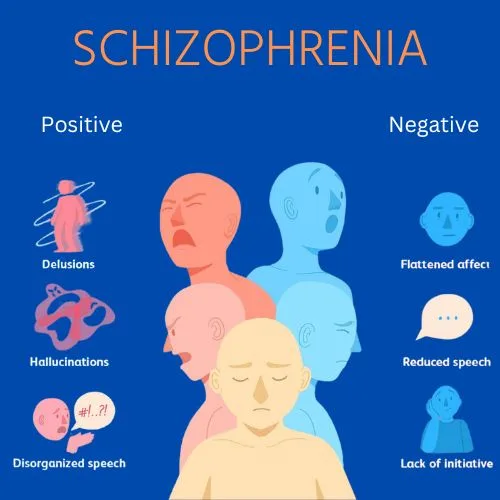
The distinction between positive symptoms (experiences that are added to normal consciousness), negative symptoms (features that represent a reduction from normal function), and cognitive symptoms is clinically essential because each domain has different neurobiological substrates, responds differently to treatment, and has different implications for functioning.
Positive symptoms include hallucinations - most commonly auditory voices that may comment on the person's behavior, issue commands, or converse with each other - and delusions, which can be persecutory, grandiose, referential (ordinary events are believed to carry special personal significance), or bizarre.
These symptoms tend to be the most dramatic and are the primary target of antipsychotic medication.
Auditory hallucinations, the most common form, are now understood not as simple random neural noise but as complex experiences with meaning, emotional valence, and interpersonal character.
Research by Marius Romme and Sandra Escher in the Netherlands in the late 1980s, which seeded the Hearing Voices Movement, found that many voice-hearers could engage meaningfully with the content and apparent purpose of their voices - and that doing so was often more helpful than attempts to suppress or ignore them.
Marius Romme and Sandra Escher (1989) published their landmark work in Schizophrenia Bulletin, and their findings initiated a substantial research program into the phenomenology of voice-hearing beyond the biomedical frame.
Negative symptoms represent deficits: avolition (difficulty initiating and sustaining goal-directed behavior), alogia (poverty of speech), anhedonia (diminished capacity to experience pleasure), asociality (reduced interest in social interaction), and affective flattening (reduced emotional expressiveness).
Negative symptoms are often more disabling than positive symptoms in the long term and respond poorly to available treatments.
Cognitive symptoms - impairments in processing speed, working memory, verbal memory, attention, and social cognition - are present in approximately 80 percent of people with schizophrenia and are the strongest predictors of long-term functional outcome, including employment, independent living, and social relationships (Green, 1996).[5]
Cognitive deficits predate the onset of psychosis in many cases, are present in attenuated form in unaffected relatives, and are not adequately addressed by any currently available medication.
"Schizophrenia is the most devastating mental illness simply because it takes young people at the prime of their lives and blunts and distorts them, often permanently." - E. Fuller Torrey
The Prodromal and Ultra-High-Risk Period
The weeks, months, and sometimes years before a first psychotic episode are now recognized as a clinically important period.
The prodrome of schizophrenia typically includes a gradual deterioration in functioning, social withdrawal, attenuated positive symptoms (mild ideas of reference, perceptual disturbances), and non-specific symptoms like depression and anxiety.
Patrick McGorry and colleagues at the Early Psychosis Prevention and Intervention Centre (EPPIC) in Melbourne, along with Alison Yung and the PACE clinic team, developed the first operational criteria for ultra-high-risk (UHR) states in the 1990s.
The UHR criteria identify individuals at highest risk of converting to psychosis, enabling early intervention before full-threshold illness develops. Approximately 20-35 percent of UHR individuals convert to psychosis within 2-3 years without intervention (Fusar-Poli et al., 2012).
Critically, this means 65-80 percent do not convert - underscoring the importance of avoiding over-medicalization of the prodromal period.
The Dopamine Hypothesis
The dopamine hypothesis of schizophrenia is the oldest and most influential neurobiological model of the disorder.
In its original formulation, arising from observations that all effective antipsychotic drugs block dopamine D2 receptors and that dopamine-releasing drugs like amphetamine can produce psychotic symptoms in healthy people, the hypothesis proposed that schizophrenia involves excess dopaminergic activity.
The current version, associated with work by Kapur, Howes, and Murray, distinguishes between different dopamine pathways. Mesolimbic pathway hyperactivity - in projections from the ventral tegmental area to the striatum and limbic system - is proposed to underlie positive symptoms.
Shitij Kapur's aberrant salience hypothesis proposes that excessive dopamine release causes patients to attribute abnormal motivational significance to irrelevant stimuli and internal mental events, generating the sense that ordinary events carry special personal meaning - a precursor to delusional elaboration.
Simultaneously, mesocortical pathway hypodopaminergia - insufficient dopamine signaling to the prefrontal cortex - is proposed to underlie negative symptoms and cognitive deficits. This dual-pathway model explains why dopamine antagonists effectively treat positive symptoms but have limited impact on negative and cognitive symptoms.
PET imaging studies have provided substantial support for striatal hyperdopaminergia in schizophrenia and in individuals at ultra-high risk for psychosis (Howes et al., 2009).
However, approximately 30 percent of patients do not respond adequately to D2-blocking antipsychotics, and the dopamine model does not adequately explain the negative and cognitive symptom burden.
Oliver Howes at King's College London and the Institute of Psychiatry has led some of the most important imaging work on dopamine in schizophrenia, using 18F-DOPA PET to measure presynaptic dopamine synthesis capacity.
His studies have consistently demonstrated elevated striatal dopamine synthesis capacity in schizophrenia and in clinical high-risk individuals - and importantly, have shown that this elevation is associated with the degree of psychotic symptoms and predicts antipsychotic response.
Howes and Kapur's 2009 review in Schizophrenia Bulletin proposed the updated dopamine hypothesis (version III) that distinguished between elevated dopamine synthesis/release and its psychological consequence of aberrant salience.[3]
The Glutamate Hypothesis
The glutamate hypothesis proposes that dysfunction of NMDA-type glutamate receptors plays a central role in schizophrenia pathophysiology.
The hypothesis gained major traction from the observation that NMDA receptor antagonists - ketamine and phencyclidine (PCP) - produce a broader schizophrenia-like syndrome in healthy adults that includes not only positive symptoms but also negative symptoms and cognitive deficits, closely mimicking the full clinical picture in ways that the dopamine model alone could not explain.
NMDA receptor hypofunction in individuals with schizophrenia is supported by several lines of evidence: sub-anesthetic doses of ketamine exacerbate existing psychotic symptoms; postmortem studies have found abnormalities in glutamate receptor expression; and genetic studies have implicated genes involved in glutamatergic synaptic function.
The glutamate and dopamine hypotheses are not competing but increasingly integrated.
One influential model proposes that NMDA receptor hypofunction on GABAergic interneurons, particularly parvalbumin-positive fast-spiking interneurons, disinhibits pyramidal neurons, leading to excess glutamate release that ultimately produces aberrant dopamine signaling in subcortical regions.
This cortico-subcortical disinhibition model provides a mechanistic bridge between the two neurotransmitter systems.
Drug development efforts targeting glutamatergic mechanisms - NMDA receptor co-agonist sites (glycine, D-serine, sarcosine), mGluR2/3 receptors, and AMPA receptors - have produced mixed clinical trial results.
The LY2140023 mGluR2/3 agonist initially showed promising Phase II results but failed in Phase III trials, illustrating the persistent gap between neurobiological mechanism and clinical efficacy.
Neuroinflammation: An Emerging Third Hypothesis
A growing body of research implicates neuroinflammation and immune dysregulation in schizophrenia pathophysiology. Multiple lines of evidence support this:
- Meta-analyses of cytokine studies have found elevated inflammatory markers - particularly interleukin-6 (IL-6) and tumor necrosis factor alpha (TNF-alpha) - in schizophrenia, especially during acute psychotic episodes (Miller et al., 2011)
- Epidemiological studies have found elevated schizophrenia risk following maternal infection during pregnancy (Mednick et al., 1988; Brown and Derkits, 2010)
- The C4 genetic findings (Sekar et al., 2016) linking complement-mediated synaptic pruning to schizophrenia risk connect the genetics directly to an immune mechanism
- Postmortem studies have found evidence of microglial activation (the brain's resident immune cells) in schizophrenia
This emerging framework does not replace the dopamine and glutamate hypotheses but potentially provides an upstream explanation for how genetic risk and environmental exposures converge to produce the neurochemical abnormalities those models describe.
Genetic Architecture and Environmental Risk Factors
Schizophrenia has one of the highest heritability estimates of any psychiatric disorder, with twin studies consistently finding heritability of approximately 80 percent.
However, heritability does not mean genetic destiny: it tells us that genetic differences account for 80 percent of the variance in liability within a given population, but it does not constrain the contribution of environmental exposures at the individual level.
The genetic architecture is highly polygenic. Thousands of common single nucleotide polymorphisms each contribute tiny amounts to risk, plus a smaller number of rare copy number variants (CNVs) with larger individual effects.
Genome-wide association studies have identified hundreds of loci reaching genome-wide significance, with particularly strong hits in the major histocompatibility complex (MHC) region on chromosome 6, involving complement component 4 (C4) genes implicated in synaptic pruning.
Sekar and colleagues (2016) demonstrated that variants in C4A that increase C4A expression in brain increase risk for schizophrenia, linking genetics to a specific neurobiological mechanism: excessive complement-mediated synaptic pruning in adolescence.[4]
Rare CNVs carry substantial individual risk. The 22q11.2 deletion syndrome (DiGeorge syndrome), present in roughly 1 in 4,000 live births, confers a 25-30 percent lifetime risk of schizophrenia or schizoaffective disorder, making it the largest single known genetic risk factor.
Approximately 2 percent of people with schizophrenia carry this deletion.
Environmental risk factors interact with genetic vulnerability:
| Risk Factor | Estimated Effect | Key Evidence |
|---|---|---|
| Urban birth and upbringing | 2-3 fold elevated risk | van Os and colleagues; multiple replication studies |
| Migration (especially low to high income) | Up to 5-6 fold elevated risk | Second-generation migrants; Cantor-Graae and Selten, 2005 |
| Cannabis use (heavy) | ~3.4 fold elevated risk | Zammit et al., 2002; dose-response relationship |
| High-potency cannabis (high THC) | Higher risk than low-potency | Di Forti et al., 2019 |
| Obstetric complications | 2-fold elevated risk | Multiple meta-analyses |
| Childhood adversity and trauma | Significant risk increase | Varese et al., 2012 meta-analysis |
| Maternal infection during pregnancy | 2-3 fold elevated risk | Mednick et al., 1988; Brown and Derkits, 2010 |
| Winter/spring birth | Modest increased risk | Multiple studies; possibly viral exposure |
Zammit and colleagues' (2002) landmark paper using the Swedish conscript cohort provided strong prospective evidence for the cannabis-psychosis relationship, demonstrating a dose-response pattern while controlling for baseline mental state.[6]
Di Forti and colleagues (2019) found that the use of high-potency cannabis (greater than 10% THC) was associated with a 5-fold increased risk of psychosis compared to non-users.[7]
The childhood adversity finding has become increasingly robust. A meta-analysis by Varese et al. (2012) in Schizophrenia Bulletin synthesized data from 36 studies including over 79,000 participants and found a pooled odds ratio of 2.78 for psychosis following childhood adversity, with effects found across multiple types of adversity including abuse, bullying, and parental separation.[8]
The relationship between trauma and psychosis challenges purely neurobiological accounts and has given renewed impetus to psychological and social models.
Gene-Environment Interaction
Critically, genetic and environmental risk factors do not simply add together; they interact. People with high polygenic risk scores for schizophrenia appear to be disproportionately sensitive to environmental risk factors like cannabis and urban environment.
This gene-environment interaction has been documented by van Os and colleagues and suggests that genetic risk amplifies the response to environmental insults rather than directly causing illness in a simple deterministic way.
This model has important implications for prevention: it suggests that even in genetically high-risk individuals, reduction of environmental risk factors - including cannabis, adversity, and social isolation - may meaningfully reduce the probability of developing psychosis.
Antipsychotic Medications
Antipsychotic medications are the pharmacological cornerstone of schizophrenia treatment and fall into two broad generations.
First-generation (typical) antipsychotics, developed from the accidental discovery of chlorpromazine's antipsychotic properties in 1952, achieve their primary effect through D2 receptor blockade in the mesolimbic pathway.
They are effective at reducing positive symptoms in approximately 70 percent of patients but carry a significant burden of extrapyramidal side effects (parkinsonism, akathisia, acute dystonia, tardive dyskinesia) arising from D2 blockade in the nigrostriatal pathway.
Second-generation (atypical) antipsychotics - beginning with clozapine in the 1970s, followed by risperidone, olanzapine, quetiapine, aripiprazole, and others - act on multiple receptor systems in addition to D2, including serotonin 5-HT2A receptors, histamine, muscarinic, and noradrenergic receptors.
The reduced extrapyramidal burden of most second-generation antipsychotics (SGAs) was initially considered a major advantage, though SGAs bring their own side effect profile including metabolic effects (weight gain, glucose dysregulation, dyslipidemia).
Clozapine remains uniquely effective and is the evidence-based treatment for treatment-resistant schizophrenia, defined as inadequate response to two different antipsychotics. Approximately 30-60 percent of treatment-resistant patients respond to clozapine when they did not respond to other antipsychotics.
Despite this, clozapine is significantly underutilized in clinical practice because of its risk of potentially fatal agranulocytosis, which requires mandatory blood monitoring (Kane et al., 1988).[12]
All available antipsychotics have limited efficacy for negative symptoms and cognitive deficits - precisely the symptoms that most predict long-term functional outcome.
Cognitive remediation therapy, targeting the processing speed, working memory, and social cognition deficits of schizophrenia, has modest but meaningful effects on functional outcomes when combined with rehabilitation (Wykes et al., 2011 meta-analysis) and is increasingly part of comprehensive treatment programs.[11]
Adherence and Long-Acting Injectables
Medication non-adherence is one of the most significant drivers of relapse in schizophrenia.
Studies consistently find that 40-75 percent of outpatients with schizophrenia are partially or fully non-adherent with oral antipsychotic medication, and non-adherence is the strongest predictor of psychiatric hospitalization (Leucht et al., 2011 meta-analysis in Lancet).
Long-acting injectable (LAI) antipsychotics - preparations that deliver medication by injection every 2-4 weeks or monthly - offer a solution to adherence problems by replacing the daily decision to take medication with a scheduled clinical encounter.
Despite strong theoretical rationale and evidence from naturalistic studies, LAIs remain underutilized, partly due to clinician concerns about patient acceptability and partly due to healthcare system barriers. Patient attitudes toward LAIs are more positive than clinicians typically assume (Iyer et al., 2013).
Psychosocial Treatments
Psychosocial treatments have an important evidence base alongside pharmacotherapy:
Cognitive Behavioral Therapy for Psychosis (CBTp) has been shown in multiple randomized controlled trials to reduce positive symptom severity and distress.
A meta-analysis by Wykes et al. (2008) found that CBTp produced significant reductions in positive symptoms with a moderate effect size (d = 0.40). UK NICE guidelines recommend CBTp as a component of standard care for schizophrenia.
Family therapy - specifically structured approaches targeting expressed emotion (criticism, hostility, and emotional over-involvement in family members) - has strong evidence for reducing relapse rates.
A meta-analysis by Pharoah et al. (2010) found that family interventions reduced relapse rates by approximately 20 percentage points compared to standard care over 12-24 months.
Supported employment using the Individual Placement and Support (IPS) model has produced consistently strong evidence for helping people with schizophrenia gain and maintain competitive employment.
A large randomized trial by Burns et al. (2007) across six European countries found that IPS participants were more than twice as likely to achieve competitive employment as controls receiving standard vocational rehabilitation.
Long-Term Outcomes and the Recovery Movement
The recovery movement in schizophrenia has fundamentally challenged the Kraepelinian pessimism that historically dominated clinical and public understanding of the disorder. Kraepelin's original formulation explicitly predicted progressive deterioration.
This pessimistic prognosis shaped clinical expectations and, critics argue, reduced investment in rehabilitation.
Long-term follow-up studies beginning in the 1970s challenged this consensus. Manfred Bleuler's 23-year Swiss follow-up and Luc Ciompi's similar study found that approximately 20-25 percent of patients had complete remission and another 40-50 percent showed significant functional improvement over the long term.
The Vermont Longitudinal Study (Harding et al., 1987) followed back-ward patients over decades and found that the majority had achieved significant improvement or recovery.[9]
Cross-national WHO studies confirmed substantial heterogeneity of long-term outcome and, controversially, found consistently better long-term outcomes in developing countries than in industrialized nations.
The personal recovery movement, associated with first-person accounts from survivors like Patricia Deegan, emphasizes recovery as living a meaningful, self-directed life beyond the constraints of illness - regardless of whether symptoms are fully eliminated.
This personal recovery is explicitly distinguished from clinical recovery defined as symptom remission. The movement has influenced mental health services toward peer support models, shared decision-making, and strengths-based approaches.
"Recovery is a process, not an end point or a destination. Recovery is an attitude, a way of approaching the day and the challenges I face." - Patricia Deegan
The CHIME Framework
A systematic review and synthesis by Leamy, Bird, Le Boutillier, Williams, and Slade (2011) in the British Journal of Psychiatry identified five overarching recovery processes, captured in the acronym CHIME:[10]
- Connectedness - peer support, relationships, community
- Hope and optimism - belief that recovery is possible
- Identity - rebuilding a positive sense of self beyond illness
- Meaning in life - valued roles, meaningful activity
- Empowerment - personal responsibility, taking control
The CHIME framework has been widely adopted in mental health services as a structure for organizing recovery-oriented practice and represents an important conceptual contribution to moving beyond symptom-focused outcome measurement.
The Hearing Voices Movement, while more focused on voice-hearing as an experience than on schizophrenia as a category, challenges the biomedical framing of auditory hallucinations as pathological symptoms requiring pharmacological suppression.
Voice hearers organize in networks, sharing experiences and strategies for relating to voices, with many finding that engagement and dialogue with voices is more helpful than attempting elimination. This perspective has influenced the development of acceptance-based and dialogical approaches to psychosis.
Open Dialogue, developed in western Lapland, Finland, by Jaakko Seikkula and colleagues, represents one of the most radical departures from standard psychiatric practice.
The approach organizes immediate, flexible, network-based response to psychiatric crises, involving the person, their social network, and all involved professionals in open conversations.
Long-term outcomes data from the western Lapland region have reported dramatically lower rates of hospitalization and medication use compared to standard care, with outcomes comparable on symptom measures (Seikkula et al., 2011). Replication studies are ongoing in multiple countries; results so far are encouraging but not yet definitive.
Cultural Dimensions of Schizophrenia
The way schizophrenia-spectrum experiences are understood, explained, and responded to varies enormously across cultural contexts, with profound implications for the experience of illness, help-seeking behavior, family responses, and outcomes.
In many African, South Asian, Latin American, and Indigenous contexts, experiences that Western psychiatry categorizes as psychotic symptoms may be interpreted through spiritual or supernatural frameworks - as spirit possession, communication with ancestors, or supernatural selection - rather than as symptoms of a brain disease.
These alternative explanatory models are not simply incorrect versions of the biomedical framework. They are coherent meaning-making systems that carry significant consequences for how the person and their social network respond.
Spiritual explanatory models often preserve the agency and social identity of the affected person, whose experiences are interpreted as meaningful communications rather than as meaningless neurological noise.
A particularly striking finding from research by Tanya Luhrmann at Stanford and colleagues, published in the British Journal of Psychiatry (2015), compared the experience of voice-hearing across voice-hearers in the US, India, and Ghana.[13]
American voice-hearers tended to experience their voices as intrusive, unwanted, and evidence of illness; Indian and Ghanaian voice-hearers were more likely to experience their voices as meaningful, often positive, and related to deceased relatives or divine beings.
The researchers argued that cultural framework shapes the experience itself - not merely the interpretation of it - with potentially important implications for treatment and outcome.
The WHO cross-national studies' finding of better long-term outcomes in developing countries prompted debate about whether extended family support structures, lower stigma, and less reliance on long-term antipsychotic maintenance contributed to these outcomes.
The finding has been critiqued on methodological grounds - including sampling differences between sites - but it remains a powerful prompt to examine whether Western psychiatric models can learn from social and cultural approaches to psychosis.
Stigma and Its Consequences
Schizophrenia carries one of the heaviest stigma burdens of any health condition. Population surveys consistently find that the public holds more negative attitudes toward people with schizophrenia than toward people with any other mental health diagnosis - more negative even than toward other serious mental illnesses.
This stigma has concrete costs: people with schizophrenia face discrimination in employment, housing, and relationships; they are more likely to avoid seeking treatment because of anticipated stigma; and self-stigma - the internalization of negative social attitudes - independently predicts worse treatment outcomes and reduced quality of life (Livingston and Boyd, 2010 meta-analysis).
Media portrayals of schizophrenia consistently overemphasize dangerousness and unpredictability.
While the statistical association between schizophrenia and violence is real - people with psychotic disorders have approximately a 4- to 6-fold elevated risk of violent behavior compared to the general population - the absolute risk remains low, the association is substantially explained by substance use comorbidity, and people with schizophrenia are far more likely to be victims of violence than perpetrators.
The disproportionate media attention to the rare cases of violence by people with schizophrenia profoundly distorts public risk perception.
Research on anti-stigma interventions has found that social contact - direct, positive, personal interaction with people who have schizophrenia - is substantially more effective than education-only approaches in reducing stigma (Corrigan et al., 2012).
This finding supports investment in peer programs, public speaking initiatives by people with lived experience, and co-production of mental health services.
The Diagnostic Label Debate
The term "schizophrenia" itself has been criticized as a barrier to recovery - carrying such a weight of stereotyped associations that the diagnosis can itself be stigmatizing and demoralizing. Japan replaced the term with "Togo Shitcho Sho" (integration disorder) in 2002, and South Korea has made a similar change.
Preliminary research suggests these relabeling efforts have improved willingness to disclose the diagnosis, reduced patient distress, and increased treatment engagement. The debate about whether to rename schizophrenia globally continues in psychiatric literature.
Current Research Frontiers
Several active research areas are expanding the understanding of schizophrenia beyond the established frameworks:
Precision psychiatry - the application of genomics, neuroimaging, and machine learning to identify biologically homogeneous subtypes within the broad diagnostic category - aims to identify which patients will respond to which treatments.
Current evidence suggests that schizophrenia as a diagnostic category likely encompasses multiple biological subtypes with different etiologies, pathophysiologies, and optimal treatments.
Early intervention in psychosis services have accumulated substantial evidence showing that reducing the duration of untreated psychosis (DUP) improves both short and long-term outcomes.
A meta-analysis by Marshall et al. (2005) found that shorter DUP predicted better symptom outcomes, better functioning, and lower relapse rates. Building detection and intervention systems that reduce DUP is a major public health priority.
New pharmacological targets beyond dopamine D2 are in active development. These include muscarinic receptor agonists (xanomeline-trospium, recently approved by the FDA as Cobenfy in 2024 - the first truly new mechanism for schizophrenia in decades), trace amine-associated receptor 1 (TAAR1) agonists, and serotonin 5-HT2A antagonists.
Schizophrenia remains one of the greatest challenges in all of medicine: a condition that disrupts the very faculties that human beings use to understand themselves and the world, whose biological basis is increasingly understood at the molecular and genetic level, but whose available treatments address only part of the symptom burden and leave many people with substantially compromised function and quality of life.
The recovery movement's insistence that people can live meaningful lives beyond - not despite - serious mental illness represents one of the field's most important developments.
Sources & Further Reading
- Kraepelin, E. (1896). Psychiatrie (5th ed.). Johann Ambrosius Barth.
- Bleuler, E. (1911). Dementia Praecox or the Group of Schizophrenias. (Translated 1950). International Universities Press.
- Kapur, S., & Howes, O. D. (2009). The dopamine hypothesis of schizophrenia: Version III - The final common pathway. Schizophrenia Bulletin, 35(3), 549-562.
- Sekar, A., Bialas, A. R., de Rivera, H., Davis, A., Hammond, T. R., Bhatt, D., ... & McCarroll, S. A. (2016). Schizophrenia risk from complex variation of complement component 4. Nature, 530(7589), 177-183.
- Green, M. F. (1996). What are the functional consequences of neurocognitive deficits in schizophrenia? American Journal of Psychiatry, 153(3), 321-330.
- Zammit, S., Allebeck, P., Andreasson, S., Lundberg, I., & Lewis, G. (2002). Self reported cannabis use as a risk factor for schizophrenia in Swedish conscripts of 1969. BMJ, 325(7374), 1199.
- Di Forti, M., Quattrone, D., Freeman, T. P., Tripoli, G., Gayer-Anderson, C., & Murray, R. M. (2019). The contribution of cannabis use to variation in the incidence of psychotic disorder across Europe. Lancet Psychiatry, 6(5), 427-436.
- Varese, F., Smeets, F., Drukker, M., Lieverse, R., Lataster, T., Viechtbauer, W., ... & Bentall, R. P. (2012). Childhood adversities increase the risk of psychosis: A meta-analysis. Schizophrenia Bulletin, 38(4), 661-671.
- Harding, C. M., Brooks, G. W., Ashikaga, T., Strauss, J. S., & Breier, A. (1987). The Vermont longitudinal study of persons with severe mental illness. American Journal of Psychiatry, 144(6), 727-735.
- Leamy, M., Bird, V., Le Boutillier, C., Williams, J., & Slade, M. (2011). Conceptual framework for personal recovery in mental health. British Journal of Psychiatry, 199(6), 445-452.
- Wykes, T., Steel, C., Everitt, B., & Tarrier, N. (2008). Cognitive behavior therapy for schizophrenia: Effect sizes, clinical models, and methodological rigor. Schizophrenia Bulletin, 34(3), 523-537.
- Kane, J. M., Honigfeld, G., Singer, J., & Meltzer, H. (1988). Clozapine for the treatment-resistant schizophrenic. Archives of General Psychiatry, 45(9), 789-796.
- Luhrmann, T. M., Padmavati, R., Tharoor, H., & Osei, A. (2015). Differences in voice-hearing experiences of people with psychosis in the USA, India, and Ghana. British Journal of Psychiatry, 206(1), 41-44.
- Laursen, T. M., Munk-Olsen, T., & Vestergaard, M. (2012). Life expectancy and cardiovascular mortality in persons with schizophrenia. Current Opinion in Psychiatry, 25(2), 83-88.
Further Reading
- Damasio, A. R. (1994). Descartes' Error. Putnam.