
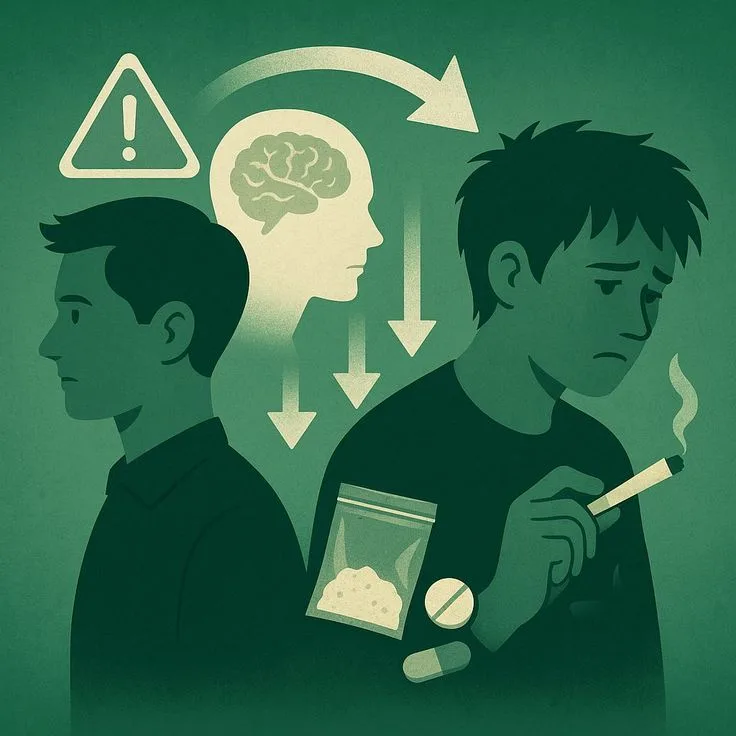
Addiction is among the most costly, misunderstood, and contested phenomena in contemporary medicine and public life. In the United States alone, substance use disorders affect over 46 million people according to the 2022 National Survey on Drug Use and Health, and the opioid crisis has claimed more than 500,000 lives since 1999.[14]
Globally, alcohol misuse is responsible for approximately 3 million deaths per year, according to the World Health Organization's 2018 report.[13]
Yet despite this enormous burden, the basic question of what addiction is - whether it is a brain disease, a moral failing, a learned behavior, a social problem, or some combination - remains genuinely contested among researchers, clinicians, and policymakers.
The stakes of this definitional debate are not academic. They shape treatment availability, insurance coverage, criminal justice responses, family dynamics, and whether people with severe addiction feel shame or seek help. How a society defines addiction determines, in large measure, how it responds to it.
From Moral Model to Brain Disease: Evolving Frameworks
For most of history, compulsive substance use was framed as moral weakness, lack of willpower, or sinful behavior. The temperance movement of the nineteenth century treated alcoholism as a moral failing requiring religious remedy.
This framing placed the locus of causation entirely in the individual's character and assigned responsibility to the person for both the condition and its cure. It carried enormous stigma and provided little therapeutic guidance beyond exhortation.
The disease model emerged in the twentieth century, most influentially through E.M. Jellinek's 1960 book The Disease Concept of Alcoholism and was institutionalized by the World Health Organization and American Medical Association recognizing alcoholism as a disease.[6]
The disease framing reduced moral condemnation by locating the problem in physiology rather than character, made medical treatment legitimate, and justified insurance coverage.
Twelve-step programs operationalized the disease model: the first step acknowledges powerlessness over the substance, treating addiction as a chronic condition requiring ongoing management.
The brain disease model of addiction, most prominently associated with Alan Leshner at the National Institute on Drug Abuse and later Nora Volkow, emerged in the 1990s and 2000s as neuroimaging technology made it possible to visualize differences between the brains of addicted and non-addicted individuals.
Proponents argue that imaging studies showing reduced dopamine receptor availability, blunted prefrontal cortex activity, and hyperreactive reward circuits in people with substance use disorders demonstrate that addiction involves specific, observable neurobiological changes that compromise decision-making and voluntary control.
Critics - including Gene Heyman (Addiction: A Disorder of Choice, 2009), Nick Heather, and Marc Lewis (The Biology of Desire, 2015) - argue that the brain disease model overstates the degree to which addiction is involuntary, cherry-picks neuroimaging findings, ignores high rates of natural recovery without treatment, and may actually increase stigma by suggesting permanent, deterministic brain changes.
"The brain disease model of addiction has been wrong in important ways - not in identifying neurobiological changes, but in presenting those changes as immutable, deterministic, and as the core explanation of addiction rather than as one dimension of a complex human phenomenon." - Marc Lewis, The Biology of Desire (2015)[7]
Most addiction researchers now favor a biopsychosocial model that acknowledges neurobiological contributions while recognizing the crucial roles of social environment, developmental history, mental health comorbidities, and economic context.
The Neurobiology: Dopamine, Prediction Error, and Reward Hijacking
The mesolimbic dopamine system - originating in the ventral tegmental area (VTA) in the midbrain and projecting to the nucleus accumbens, prefrontal cortex, hippocampus, and amygdala - is the neural substrate most consistently implicated in addiction.
Wolfram Schultz's recording studies in monkeys during the 1990s transformed understanding of what this system actually does. Schultz trained monkeys to expect a food reward after a cue, then recorded from dopamine neurons in the VTA. The findings have become foundational to neuroscience.
Initially, dopamine neurons fired when the reward arrived. As the monkey learned the cue-reward association, the dopamine response shifted: neurons fired at the cue, not the reward. If the reward was omitted after a learned cue, dopamine activity dipped below baseline at the expected time.
This is the prediction error signal: dopamine neurons fire when outcomes are better than predicted, remain at baseline when outcomes match predictions, and are suppressed when outcomes are worse than predicted.
The signal functions as a teaching signal for the reward learning system, updating behavioral predictions to optimize future reward acquisition.
It provides the computational basis for reinforcement learning - a framework that has proved productive across neuroscience, psychology, and artificial intelligence.
Addictive substances hijack this system. Drugs of abuse typically increase dopamine in the nucleus accumbens either by directly stimulating dopamine release (amphetamines, cocaine, nicotine) or by removing inhibition from dopamine neurons (opioids, alcohol, cannabis).
Critically, the drug-induced dopamine surge is not prediction-error-coded - it occurs regardless of expectations, producing an artificial signal of enormous magnitude.
Repeated drug use causes the system to recalibrate around the inflated signal, reducing the relative value of natural rewards and orienting motivational systems preferentially toward drug acquisition.
Terry Robinson and Kent Berridge's influential incentive salience theory (1993) made a crucial distinction that the simple "dopamine = pleasure" account had obscured: the difference between wanting and liking.[9]
Dopamine mediates wanting - the motivational drive toward a reward - while the hedonic experience of pleasure (liking) is mediated by different systems, including opioid and endocannabinoid signaling.
In addiction, wanting is escalated while liking is diminished: people with severe addiction compulsively seek drugs that no longer produce the pleasure they once did.
This dissociation explains the clinical experience of craving - intense motivational urgency - in the absence of genuine enjoyment.
| Neural System | Role in Addiction |
|---|---|
| Mesolimbic dopamine (VTA to nucleus accumbens) | Incentive salience (wanting), prediction error learning |
| Prefrontal cortex | Executive control, decision-making; impaired in addiction |
| Amygdala (central nucleus) | Stress-related negative reinforcement, craving triggered by cues |
| Hippocampus | Drug-associated memory formation |
| Anterior cingulate cortex | Conflict monitoring; reduced function in addiction |
| Insula | Interoceptive awareness of craving and withdrawal urges |
The insula's role deserves particular attention. Naqvi and colleagues (2007) reported in Science that damage to the insula dramatically disrupted tobacco addiction: patients with strokes affecting the insula quit smoking abruptly, easily, and without relapse - describing that the urge to smoke had simply disappeared.[8]
The insula integrates bodily signals with conscious experience, and its disruption apparently interrupted the conscious experience of craving that drives continued use.
This finding suggests that addiction is not merely about dopamine and reward learning but also involves the integration of somatic signals of craving into conscious motivation.
Tolerance, Dependence, and Addiction: Critical Distinctions
Three phenomena are frequently conflated in public discourse, with significant clinical and policy consequences.
Tolerance is the pharmacological phenomenon whereby repeated exposure to a drug produces diminishing effects at the same dose. Tolerance develops through receptor downregulation, desensitization, and pharmacokinetic tolerance (induction of metabolic enzymes).
Tolerance is a predictable, universal response to chronic drug exposure - it occurs in virtually all patients prescribed opioids for chronic pain, regardless of subsequent addiction risk.
Physical dependence is the physiological adaptation to chronic drug presence, manifesting as withdrawal symptoms upon abrupt discontinuation.
In the opioid system, chronic receptor activation leads to compensatory upregulation of adenylyl cyclase; when opioids are removed, this over-activated enzyme produces a noradrenergic storm - sweating, tachycardia, anxiety, severe pain.
Like tolerance, dependence is a predictable consequence of chronic opioid use and not a sign of addiction. A cancer patient on long-term opioid therapy will become dependent but this does not make them an addict.
Addiction - more precisely, substance use disorder in modern diagnostic terminology - involves compulsive drug seeking and use despite significant negative consequences, loss of control over use, and a pathological prioritization of drug-related activities.
The key feature is compulsive use in the face of harm - not merely physiological adaptation.
The distinction matters enormously. Conflating dependence with addiction is a primary driver of undertreated pain: physicians afraid of "addicting" patients may withhold opioids from patients with legitimate pain who will become dependent but not addicted.
Conversely, treating withdrawal management (detoxification) as equivalent to addiction treatment misunderstands the chronic, relapsing nature of the condition.
DSM-5 diagnostic criteria for substance use disorder reflect eleven dimensions across three broad categories: impaired control (taking more than intended, unsuccessful efforts to cut back, excessive time spent, craving); social impairment (failure to fulfill role obligations, continued use despite interpersonal problems, giving up activities); and risky use (hazardous use, continued use despite physical or psychological harm).
Two to three criteria constitute mild disorder; four to five moderate; six or more severe.
The Rat Park Experiment: Environment and Addiction
The Rat Park experiment, conducted by Bruce Alexander and colleagues at Simon Fraser University and published in 1978, challenged the prevailing neurobiological account of addiction by demonstrating that social and environmental context dramatically modulate voluntary drug consumption.[1]
The standard method for demonstrating drug self-administration involves housing isolated animals in small cages with two levers - one delivering intravenous drug, one delivering a neutral substance. Rats reliably self-administer heroin, cocaine, and amphetamines in this paradigm.
This model was taken as compelling evidence that certain drugs have inherent addictive properties that override normal motivational systems.
Alexander's critical observation was that these rats were housed in impoverished, isolated conditions stressful in themselves. He constructed Rat Park: a large enclosure approximately 200 times the size of standard cages, housing 16-20 rats of both sexes, with toys, nesting materials, and opportunities for normal social behavior.
Both isolated rats and Rat Park residents had access to morphine-laced water and plain water. Isolated rats consumed far more morphine than Rat Park rats. When morphine-dependent isolated rats were moved to Rat Park, many significantly reduced their consumption despite experiencing physical withdrawal.
"The rat studies suggest that addiction is an adaptation to the human condition, not just a pharmacological phenomenon." - Bruce Alexander, The Globalization of Addiction (2008)
The study generated little attention for decades, in part because it challenged a lucrative research paradigm and in part because subsequent replications produced mixed results.
But the broad finding - that social connection, enriched environment, and meaningful activity protect against compulsive drug use - has accumulated substantial supporting evidence.
Johann Hari popularized Alexander's work in Chasing the Scream (2015), arguing that the isolation of addiction is the core problem, and that Portugal's 2001 decision to decriminalize personal drug possession and invest heavily in social reintegration - which produced substantial reductions in problematic drug use and HIV transmission - represents an application of Rat Park principles at national scale.
Portugal's Decriminalization Experiment
Portugal's 2001 policy shift represents one of the most closely analyzed natural experiments in addiction policy. Following decriminalization of personal possession (not trafficking) of all drugs, Portugal redirected resources from criminal prosecution to treatment and social reintegration.
By 2017, drug-related HIV infections had fallen by 95% from their 2000 peak, drug-related incarceration had fallen dramatically, and problematic drug use rates remained among the lowest in Europe.
Hughes and Stevens (2010) analyzed the Portuguese data and concluded that decriminalization combined with treatment investment, not decriminalization alone, drove the improvements.[5]
The lesson was not that consequences should be eliminated but that treatment and social reconnection are more effective responses to addiction than criminal punishment - consistent with the Rat Park framework.
The Opioid Crisis: Corporate Strategy and Regulatory Failure
The American opioid crisis is a public health catastrophe with multiple causes, but the role of corporate strategy and regulatory failure in its initiation is unusually well-documented. Purdue Pharma's aggressive marketing of OxyContin serves as a central case study.
OxyContin, a controlled-release formulation of oxycodone, was approved by the FDA in 1995. Purdue Pharma, controlled by the Sackler family, promoted the drug aggressively to primary care physicians.
The marketing emphasized OxyContin's controlled-release formulation as reducing addiction risk - a claim specifically noted by the FDA as not supported by clinical evidence.
Purdue funded continuing medical education programs, pain advocacy organizations, and patient education materials that expanded the definition of appropriate opioid prescribing beyond cancer pain and terminal illness to include chronic non-cancer pain.
A frequently cited statistic - that less than 1% of patients prescribed opioids become addicted - was drawn from a 1980 letter to the New England Journal of Medicine by Jick and Porter that addressed hospitalized patients with no prior addiction history.
The extrapolation of this figure to outpatient prescribing was scientifically unjustified but widely repeated.
Purdue pleaded guilty to federal criminal charges related to misbranding in 2007 and paid 600 million dollars in penalties. The settlement did not halt OxyContin prescribing.
A second wave of opioid deaths, beginning around 2010 when prescription monitoring programs and reformulation of OxyContin shifted users toward cheaper heroin, was followed by a third wave driven by illicit fentanyl and its analogs, which now account for the large majority of opioid overdose deaths.
The Sackler family members ultimately agreed to a 2021 bankruptcy settlement worth approximately 4.5 billion dollars.
Van Zee (2009) documented the specific marketing strategies deployed by Purdue in a American Journal of Public Health analysis, including the training of sales representatives to minimize discussions of addiction risk, the targeting of high-prescribing physicians with financial incentives, and the funding of pain advocacy organizations whose public messaging aligned with expanded opioid prescribing.[11]
The opioid crisis illustrates the degree to which addiction patterns in populations can be shaped by institutional decisions that have nothing to do with individual vulnerability.
Genetic Heritability and Environmental Risk Factors
The genetic contribution to addiction vulnerability is substantial. Twin studies estimate heritability of alcohol use disorder at approximately 50-60%, and for other substances in similar ranges.
However, genetic risk is not destiny: the same gene variants that increase addiction risk under adverse environmental conditions may confer resilience under favorable ones.
No single gene determines addiction vulnerability. Rather, hundreds of variants each contribute small amounts to overall risk, with the greatest effects in genes related to drug metabolism (the ADH1B and ALDH2 variants affecting alcohol metabolism), neurotransmitter systems (dopamine receptor genes DRD2 and DRD4; serotonin transporter SLC6A4), and stress response systems.
Environmental risk factors are equally important. Childhood adversity - including abuse, neglect, and household dysfunction - dramatically elevates addiction risk, partly through lasting effects on HPA axis calibration and stress response systems.
The ACE (Adverse Childhood Experiences) study, conducted by Felitti and colleagues (1998), found a dose-response relationship between childhood adversity and later drug use disorders.[2]
Individuals with four or more ACE categories had dramatically elevated rates of substance use disorders, depression, and suicide attempts compared to those with zero.
Early initiation of substance use is one of the strongest behavioral predictors of later disorder: the brain is still developing through the mid-twenties, and early drug exposure during sensitive periods of prefrontal cortex development may have lasting effects on executive control systems.
The stress-sensitization model proposes that early adversity calibrates the HPA axis toward hyper-reactivity, producing a stress response system that responds more intensely to subsequent stressors and that takes longer to return to baseline.
This hyper-reactive stress system increases the negative reinforcement value of substances: drugs that reduce stress responses provide particularly powerful relief for individuals with over-activated stress systems, increasing both the incentive for use and the difficulty of abstaining.
Treatment: What Actually Works
The evidence base for addiction treatment is uneven, and the gap between what the evidence supports and what is actually deployed in U.S. treatment settings reflects persistent cultural biases.
For opioid use disorder, medication-assisted treatment (MAT) - more recently termed medications for opioid use disorder (MOUD) - has the strongest evidence base:
| Medication | Mechanism | Evidence Summary |
|---|---|---|
| Methadone | Full mu-opioid agonist | Reduces illicit opioid use; reduces overdose mortality ~50%; five decades of research |
| Buprenorphine | Partial mu-opioid agonist | Similar benefits to methadone; office-based prescribing possible |
| Extended-release naltrexone | Full opioid antagonist | Effective for motivated patients; requires prior detoxification |
| Naloxone (Narcan) | Opioid antagonist | Reverses overdose; life-saving harm reduction tool |
Despite this evidence, MOUD remains dramatically underutilized in the United States. Many residential treatment programs explicitly prohibit or discharge patients using buprenorphine or methadone, reflecting a 12-step ideology that any mind-altering substance constitutes continued addiction.
A 2019 study by Wakeman and colleagues in JAMA Network Open examined outcomes for over 40,000 patients with opioid use disorder and found that patients receiving buprenorphine or methadone had dramatically lower rates of opioid overdose, emergency department visits, and treatment discontinuation compared to those in abstinence-based programs or receiving no treatment.[12]
The survival benefit of MOUD is not marginal - it is large, consistent, and replicated across multiple countries and study designs.
The 12-step model, originating with Alcoholics Anonymous in 1935, underpins the majority of community-based and residential addiction treatment in the United States.
A 2020 Cochrane review by Kelly, Humphreys and Ferri found that 12-step programs were at least as effective as other evidence-based treatments for alcohol use disorder at maintaining abstinence.[3]
For opioids, where pharmacological treatment dramatically reduces mortality, abstinence-based approaches without medication are associated with high overdose risk during relapse.
Cognitive behavioral therapy has solid evidence across multiple substance use disorders for reducing use and preventing relapse.
Contingency management - providing tangible incentives (vouchers, prizes) for verified drug-free urine samples - shows large effect sizes across multiple substance use disorders and is among the most effective non-pharmacological interventions available.
It remains underutilized partly because offering tangible rewards for sobriety seems to some like "bribing" people to do what they should want to do anyway.
Harm Reduction: A Public Health Approach
Harm reduction - a set of policies and practices that aim to reduce the harms associated with drug use without necessarily requiring abstinence - has substantial evidence support but remains controversial in the United States.
Needle exchange programs reduce HIV and hepatitis C transmission without increasing overall drug use - a finding replicated in multiple studies across multiple countries. Naloxone distribution programs, which provide the opioid reversal drug to people who use opioids and their families, directly prevent overdose deaths.
Safe injection sites (supervised consumption facilities), operating in Canada, Europe, and Australia, allow people to use pre-obtained drugs in a medically supervised environment, providing overdose reversal on-site and connections to treatment - multiple studies have found these facilities reduce overdose deaths in surrounding areas without increasing drug use or neighborhood crime.
The evidence base for harm reduction is strong; the resistance to it is largely ideological rather than empirical - rooted in the concern that making drug use safer enables or endorses it.
The public health consensus is that in a world where significant numbers of people will use drugs regardless of legal status, reducing the harms of that use saves lives and opens pathways to eventual recovery.
Behavioral Addictions: Expanding the Concept
The DSM-5 included gambling disorder as the first officially recognized non-substance behavioral addiction, based on substantial evidence that compulsive gambling shows the same patterns of tolerance, withdrawal-like symptoms, craving, and loss of control as substance use disorders, with similar neurobiological correlates including blunted dopaminergic reward responses.
Internet gaming disorder was included in DSM-5 as a condition requiring further study. The International Classification of Diseases (ICD-11), released by the WHO in 2018, formally recognized gaming disorder.
The concept of behavioral addiction has been extended to proposed categories including compulsive sexual behavior, compulsive buying, and problematic smartphone use, though the evidence base is less developed and the boundary between excessive but voluntary behavior and genuinely disordered compulsion remains contested.
The extension of addiction frameworks to behavioral problems raises important conceptual questions. When does strong habit become addiction? How much distress and impairment is required?
Is the dopaminergic reward system hijacking that characterizes substance addiction the same mechanism operating in behavioral addictions, or are these superficially similar patterns driven by different processes?
These questions are not yet resolved, but the clinical reality of patients who lose jobs, relationships, and health to compulsive gambling, gaming, or pornography viewing is real regardless of whether the addiction label is ultimately the most useful one.
Natasha Dow Schull's (2012) ethnographic work on machine gambling in Las Vegas, Addiction by Design, provides a detailed account of how gambling machine design deliberately exploits the same variable ratio reinforcement schedules that make dopaminergic learning systems most susceptible to compulsive engagement.[10]
The machines are not accidentally addictive - they are engineered to produce the particular pattern of reward uncertainty that maximally drives the prediction-error learning system.
This parallels critiques of social media platform design, which similarly uses variable ratio reinforcement (unpredictable notification timing) to maximize engagement.
Natural Recovery: Addiction Without Treatment
A finding that substantially complicates the chronic, progressive disease model is the high rate of natural recovery - resolution of substance use disorders without formal treatment.
Gene Heyman (2009) analyzed epidemiological data from the National Comorbidity Survey and found that the majority of people who met criteria for lifetime substance use disorders no longer met those criteria at the time of assessment - without having received formal treatment.[4]
Natural recovery rates varied by substance and by socioeconomic context, but across the population, spontaneous desistance was more common than persistent, treatment-requiring disorder.
William Miller and William Rollnick, developers of Motivational Interviewing, have written extensively on the conditions that support natural recovery: stable employment, meaningful relationships, alternative sources of reward, housing security, and future orientation.
These are largely the conditions that Rat Park provided to rats and that Portugal's social reintegration programs provided to humans.
Natural recovery does not invalidate treatment - people with more severe disorders and fewer resources clearly benefit from clinical support - but it challenges the view of addiction as inevitably chronic and treatment-dependent.
The existence of natural recovery also raises questions about the population of people who appear in clinical studies of addiction, who by definition sought treatment and likely represent the more severe end of the spectrum.
Generalizing from treatment-seeking samples to the broader population of people who develop addiction problems may overestimate both severity and chronicity.
Conclusion
Addiction is a genuine phenomenon that causes immense suffering and remains incompletely understood.
The tension between neurobiological models that emphasize the involuntary features of addiction and models that emphasize its responsiveness to incentives, environment, and social context reflects a genuine tension in the phenomenon itself, not a simple error on one side.
Effective response to addiction requires acknowledging both dimensions: the neurobiological changes that make recovery difficult and the social, environmental, and economic factors that shape whether those neurobiological vulnerabilities lead to disorder or to resilience.
The opioid crisis has taught, at enormous cost, that treating addiction as a moral failing is catastrophically inadequate. The next lesson - that effective treatment requires deploying the evidence-based medications and social supports that actually work - is still being learned.
Sources & Further Reading
- Alexander, B. K. (2008). The Globalization of Addiction: A Study in Poverty of the Spirit. Oxford University Press.
- Felitti, V. J., et al. (1998). Relationship of Childhood Abuse and Household Dysfunction to Many of the Leading Causes of Death in Adults. American Journal of Preventive Medicine, 14(4), 245-258.
- Ferri, M., Amato, L., & Davoli, M. (2006). Alcoholics Anonymous and Other 12-Step Programmes for Alcohol Dependence. Cochrane Database of Systematic Reviews, 3, CD005032.
- Heyman, G. M. (2009). Addiction: A Disorder of Choice. Harvard University Press.
- Hughes, C. E., & Stevens, A. (2010). What Can We Learn From the Portuguese Decriminalization of Illicit Drugs? British Journal of Criminology, 50(6), 999-1022.
- Jellinek, E. M. (1960). The Disease Concept of Alcoholism. Hillhouse Press.
- Lewis, M. (2015). The Biology of Desire: Why Addiction Is Not a Disease. PublicAffairs.
- Naqvi, N. H., Rudrauf, D., Damasio, H., & Bechara, A. (2007). Damage to the Insula Disrupts Addiction to Cigarette Smoking. Science, 315(5811), 531-534.
- Robinson, T. E., & Berridge, K. C. (1993). The Neural Basis of Drug Craving: An Incentive-Salience Theory of Addiction. Brain Research Reviews, 18(3), 247-291.
- Schull, N. D. (2012). Addiction by Design: Machine Gambling in Las Vegas. Princeton University Press.
- Van Zee, A. (2009). The Promotion and Marketing of OxyContin: Commercial Triumph, Public Health Tragedy. American Journal of Public Health, 99(2), 221-227.
- Wakeman, S. E., et al. (2020). Comparative Effectiveness of Different Treatment Pathways for Opioid Use Disorder. JAMA Network Open, 3(2), e1920622.
- WHO. (2018). Global Status Report on Alcohol and Health. World Health Organization.
- SAMHSA. (2022). 2022 National Survey on Drug Use and Health. Substance Abuse and Mental Health Services Administration.
Further Reading
- Garrett, N., et al. (2016). The Brain Adapts to Dishonesty. Nature Neuroscience, 19(12), 1727-1732.
Health note: This article is general educational information about how a topic works, not medical, psychological, or mental-health advice, diagnosis, or treatment. Everyone's situation is different, and research findings describe groups, not individuals.
If you are struggling or have concerns about your health, please talk to a qualified professional such as a doctor or licensed therapist.
If you are in crisis or thinking about harming yourself, contact your local emergency services or a crisis line right away, in the US you can call or text 988 (Suicide & Crisis Lifeline); elsewhere, find local lines at findahelpline.com.