
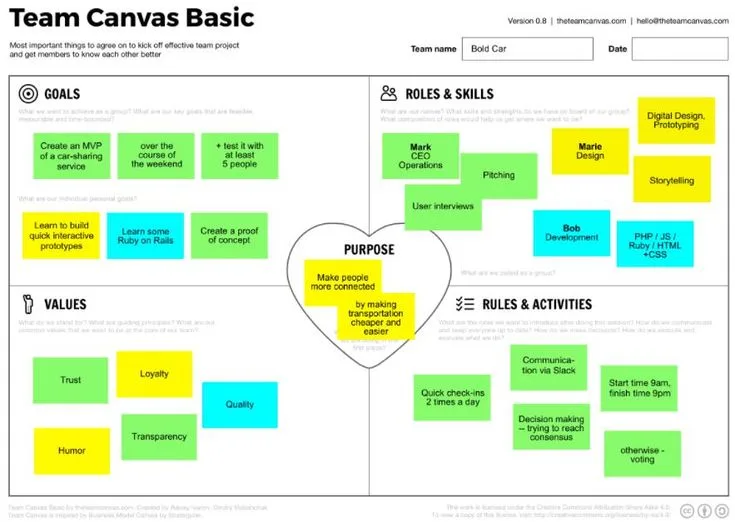
Shared culture does not emerge automatically when colleagues work across locations and time zones. Distributed team culture must make values, norms, communication practices, and expectations explicit, replacing the informal proximity through which much office culture normally forms in a shared workplace.
What Is Distributed Team Culture?
Distributed team culture is the set of shared values, norms, communication practices, and behavioral expectations that enable people working across different locations and time zones to collaborate effectively and feel a genuine sense of belonging.
Unlike office culture, which forms partly through ambient proximity, distributed culture must be consciously designed - every element that emerges naturally in a shared physical space must instead be made explicit, documented, and deliberately practiced.
Organizations that succeed at distributed culture treat it as a primary engineering problem, not an afterthought to logistics.
When Automattic - the company behind WordPress.com, WooCommerce, and Tumblr - held its first company-wide meetup in 2006, the entire staff could fit around a single table. By 2023, the company employed over 1,900 people across 96 countries, with no headquarters and no offices.
In an interview with Harvard Business Review, CEO Matt Mullenweg described the company's cultural approach: "You have to be intentional about everything that happens naturally in an office.
The watercooler conversations, the hallway brainstorming, the lunch connections - none of that happens by accident remotely. Either you build it deliberately or it doesn't exist."
Automattic's experience distills the central challenge of distributed team culture:
everything that was implicit must become explicit, everything that was ambient must become intentional, and everything that happened naturally must be deliberately designed.[1] The companies that master this transition build cultures that are not merely adequate substitutes for office culture but genuinely better - more inclusive, more documented, more accessible, and more resilient.
The companies that fail treat distribution as a logistical problem rather than a cultural one, attempting to replicate office patterns through video calls and assuming that culture will form on its own. It does not.
What Distributed Culture Actually Is
"Remote work does not lower the bar for culture - it raises it. Everything you want to have as a culture has to be explicitly designed, documented, and practiced. You cannot coast on proximity." - Matt Mullenweg, CEO of Automattic
| Cultural Element | Office Environment | Distributed Environment | Intervention Required |
|---|---|---|---|
| Onboarding | Ambient learning through physical presence and informal mentoring | No ambient context; all knowledge must be documented and explicitly transferred | Structured documentation, onboarding buddies, recorded walkthroughs |
| Social connection | Emerges naturally through shared spaces, lunch, hallway encounters | Must be deliberately scheduled and supported | Virtual coffee chats, non-work channels, periodic in-person retreats |
| Information flow | Overheard conversations, visible whiteboards, spontaneous updates | Deliberate only; information silos form by default | Default-to-documentation, public channels, async standups |
| Trust | Built through visible reliability and spontaneous interaction | Built through consistent written communication and delivered commitments | Regular check-ins, public accountability systems |
| Recognition | Visible in real time; leaders see contributions directly | Invisible unless explicitly surfaced | Structured peer recognition, written shout-outs, visible metrics |
Beyond Ping Pong Tables and Free Lunch
Office culture is partly intentional (values statements, team events, onboarding programs) and partly emergent (inside jokes, lunch groups, spontaneous celebrations, hallway conversations that shape perspectives). The emergent layer is powerful precisely because it is organic - no one planned it, so it feels authentic.
Distributed culture cannot rely on emergence because the physical spaces and spontaneous interactions that generate emergent culture do not exist. This is both a loss and an opportunity:
The loss: Spontaneous connection, serendipitous knowledge transfer, and ambient context absorption do not happen remotely. Teams must invest deliberate effort to create what offices provided for free.
The opportunity: Distributed culture can be more intentional, more inclusive, and more equitable than office culture ever was. In offices, culture is often shaped by the loudest voices, the most socially dominant personalities, and the people who happen to be physically present.
Remote culture, when designed well, creates more equal participation, more thoughtful communication, and more accessible information.[8]
Example: Buffer, the social media management company, has been remote-first since its founding in 2010. Rather than treating remote work as a limitation, Buffer's CEO Joel Gascoigne has explicitly designed the company's culture around transparency as a core value.
Buffer publishes its salary formula, revenue metrics, diversity statistics, and even individual salaries publicly. This radical transparency creates cultural cohesion that transcends physical distance because everyone shares the same information - there is no "headquarters knowledge" that remote workers lack.
The Three Pillars of Distributed Culture
Research on distributed team effectiveness, including Google's Project Aristotle (2015) and studies by Harvard Business School professor Tsedal Neeley, identifies three essential pillars:
1. Shared values that drive behavior, not just posters
Values matter in any organization, but they matter more in distributed ones because there is no manager walking around to enforce norms, no peer pressure from physically present colleagues to maintain standards, and no ambient cultural signals to guide behavior. Values must be internalized because they cannot be externally monitored.
The key is translating abstract values into specific behaviors:
- "Transparency" becomes "Share your work-in-progress in the public channel, not DMs"
- "Respect" becomes "Respond to messages within 24 hours, even if just to acknowledge receipt"
- "Autonomy" becomes "Make decisions within your domain without asking permission, and document them"
- "Quality" becomes "Every deliverable goes through peer review before shipping"
2. Explicit norms replacing implicit conventions
In offices, norms are learned through observation: when people arrive, how meetings run, what communication styles are acceptable, how conflict is handled. New employees absorb these norms through social learning - watching what others do.
Distributed teams must document norms because they cannot be observed. The most effective distributed companies maintain team handbooks or READMEs that cover:
- Communication expectations (response times, channel purposes, meeting protocols)
- Working hours and availability norms
- Decision-making authority and processes
- Documentation standards
- Conflict resolution approaches
3. Intentional connection creating belonging
Belonging - the feeling that you are a valued member of a community - is the psychological foundation of engagement, retention, and performance. In offices, belonging develops through daily proximity, shared meals, and spontaneous social interaction. Distributed teams must create belonging through deliberate mechanisms.
Building Trust Without Physical Presence
Why Remote Trust Is Different
Trust in co-located teams develops through proximity-based signals: you see someone working hard, you observe how they treat others, you experience their reliability firsthand through daily interaction. These signals accumulate naturally, building trust incrementally without deliberate effort.
Remote trust lacks these ambient signals. You cannot see someone's work ethic. You cannot observe their interpersonal behavior. You experience their reliability only through explicit deliverables and communications, which are a subset of the full picture.
This means remote trust must be built through explicit, intentional behaviors rather than passive observation:
Consistent reliability: Following through on every commitment, no matter how small. In remote work, reliability is the primary trust-building mechanism because it is one of the few trust signals visible at a distance.
Failing to send a promised email by the stated time damages trust disproportionately because there are fewer positive signals to counterbalance it.
Proactive transparency: Sharing information voluntarily rather than waiting to be asked.
"Here's what I'm working on this week," "I'm stuck on this problem and here's what I've tried," or "I made a mistake on the client report - here's how I'm fixing it" all build trust through voluntary disclosure.
Vulnerability from leadership: When leaders admit uncertainty, mistakes, or challenges, they create psychological safety for everyone else to do the same. A leader who says "I don't know the answer to that, but I'll find out" builds more trust than one who pretends to know everything.
Example: When Darren Murph, Head of Remote at GitLab, onboards new executives, he explicitly asks them to share something they are not good at within their first week. This vulnerability ritual signals that the culture values honesty over image management and creates permission for others to be equally transparent about their limitations.
Psychological Safety Across Distances
Amy Edmondson's research on psychological safety at Harvard Business School has shown that it is the single most important factor in team effectiveness.[3] Creating psychological safety remotely requires:
Explicit invitation to dissent: "I'd like to hear the strongest argument against this approach" is more effective than "Does anyone have concerns?" because the first normalizes disagreement while the second treats it as exceptional.
Responding well to bad news: How leaders react when someone shares a problem, mistake, or failure determines whether anyone will share again. Curiosity ("Tell me more about what happened") and gratitude ("Thank you for flagging this early") encourage transparency.
Blame ("How did you let this happen?") and defensiveness ("That's not a real problem") suppress it.
Multiple participation channels: Some people are comfortable speaking in video meetings. Others prefer writing. Others need time to process before responding.
Offering multiple ways to contribute - live discussion, async written comments, anonymous surveys, small-group conversations - ensures that psychological safety is accessible to everyone, not just those comfortable with the dominant communication mode.
Handling Cultural Differences in Global Teams
The Iceberg of Cultural Assumptions
When a team spans multiple countries and cultural backgrounds, the surface-level differences (language, time zones, holidays) are obvious and manageable. The deeper differences - assumptions about hierarchy, communication directness, conflict resolution, and relationship-building - are invisible and potentially destructive if unaddressed.
Communication directness varies dramatically: Dutch and Israeli professionals tend toward extremely direct communication ("This proposal has three significant flaws").
Japanese and Thai professionals tend toward indirect communication that preserves harmony ("This proposal has interesting aspects that might benefit from additional consideration").
Without cultural awareness, direct communicators seem rude to indirect ones, and indirect communicators seem evasive to direct ones.[7]
Hierarchy expectations differ: In some cultures (Germany, Scandinavia, Australia), challenging a manager's idea publicly is expected and respected. In others (Japan, Korea, India, many Latin American cultures), publicly disagreeing with a superior violates deep social norms.
When team members from different hierarchy cultures work together, their different expectations about authority and deference create coordination problems.
Example: When HSBC integrated global teams across Asian, European, and American offices, the bank invested in cultural intelligence training for all managers leading cross-cultural teams. The training did not ask people to abandon their cultural norms but to understand others' norms and adapt communication accordingly.
Managers learned to seek private input from team members in high-hierarchy cultures rather than expecting public disagreement, while also creating space for the directness valued in low-hierarchy cultures.
Creating Inclusive Practices Across Cultures
Rotate meeting times: If your team spans multiple time zones, rotating meeting schedules ensures that no single group always bears the burden of early-morning or late-night calls. The rotation itself communicates equity - everyone's convenience matters equally.
Accommodate language differences: When the working language is not everyone's first language, speak clearly, avoid idioms and cultural references, allow processing time, and provide written summaries that people can review at their own pace. Never mistake language fluency for competence or intelligence.
Celebrate diverse holidays and practices: Acknowledge and accommodate religious holidays, cultural observances, and local customs for all team members, not just those in the "headquarters" country. A team calendar showing everyone's holidays builds awareness and respect.
Create multiple paths to contribution: Some cultures value written communication; others value verbal. Some prize quick responses; others value thoughtful deliberation. Design team practices that accommodate multiple styles rather than privileging one cultural default.
Rituals and Practices That Build Distributed Culture
Why Rituals Matter More Remotely
Rituals - recurring practices with symbolic meaning - create predictability, signal belonging, and reinforce cultural values. In offices, rituals emerge naturally: Monday morning coffee, Friday afternoon drinks, the annual holiday party. In distributed teams, rituals must be deliberately created and consistently maintained.
Connection rituals build relationships:
- Virtual coffee chats: Random pairing of team members for 15-30 minute conversations with no agenda. Donut for Slack automates this matching.
- Personal check-ins: Opening team meetings with a non-work question ("What's one thing you're looking forward to this week?") creates human connection before task discussion.
- Show and tell: Regular sessions where team members share something they have learned, built, or experienced outside of work.
Example: Zapier's "Pair Buddies" program randomly pairs employees from different teams for bi-weekly video chats. The program has been running since 2015, and internal surveys consistently show it is one of the most valued cultural practices.
Employees report that cross-team relationships built through Pair Buddies have improved collaboration, reduced inter-team friction, and created a stronger sense of belonging.
Work rituals reinforce process and standards:
- Demo days: Regular sessions where teams showcase completed work, creating visibility and recognition.
- Retrospectives: Structured reflection on what went well, what did not, and what to change - reinforcing a culture of continuous improvement.
- Documentation days: Periodic dedicated time for updating and organizing team documentation, reinforcing the importance of written knowledge.
Celebration rituals acknowledge achievements and milestones:
- Shoutouts: Public recognition channels where anyone can acknowledge a colleague's contribution.
- Anniversary celebrations: Recognizing work anniversaries with personalized acknowledgment.
- Milestone markers: Celebrating product launches, customer wins, or team achievements explicitly because the spontaneous office celebrations (ringing a bell, team lunch) do not occur remotely.
Evolving Culture as the Team Grows
The Scale-Up Danger Zone
Culture is most vulnerable during periods of rapid growth. Research by organizational psychologist Ben Horowitz, described in What You Do Is What You Are (2019), argues that culture is not what you say - it is what you tolerate.[4] As teams grow, the gap between stated culture and actual behavior can widen without anyone noticing.
At 5-10 people: Culture is the founders' behavior. Everyone knows everyone. Norms are implicit and consistently enforced through daily interaction.
At 15-30 people: Culture begins to fragment. New hires may not have relationships with founders. Sub-teams develop their own micro-cultures. Written documentation of culture becomes essential.
At 50-100 people: Culture requires active management. Cultural stewards, explicit onboarding programs, and measurement of cultural health become necessary. Without these investments, the culture that existed at 20 people dilutes into something unrecognizable.
At 100+ people: Culture must be systematized. Hiring processes must screen for cultural alignment. Management training must include cultural leadership. Regular cultural assessments must identify drift.
Example: When InVision grew from 50 to 800 employees (all remote) between 2015 and 2020, the company's culture underwent significant stress. Early employees felt that the scrappy, transparent culture they valued was being replaced by corporate process.
Leadership had to explicitly acknowledge this tension and invest in preserving core cultural values (transparency, creative freedom) while introducing the structure that a larger organization required.
The company published a "Cultural Manifesto" that explicitly addressed the evolution: "We are not the same company we were at 50 people, and we should not try to be. But these principles remain non-negotiable."
Cultural Onboarding for New Team Members
In distributed teams, cultural onboarding is as important as functional onboarding. Without the ambient cultural absorption that offices provide, new hires must learn culture explicitly:
- Culture documentation: A team handbook or README that explains not just what values are but what they look like in practice
- Cultural mentors: Pairing each new hire with an experienced team member who can explain unwritten norms, provide context for decisions, and model cultural expectations
- Early connection building: Structured introductions to key people across the organization, not just the immediate team
- Explicit permission to ask questions: "There is no such thing as a stupid question about how we work" removes the barrier of looking uninformed
- Feedback mechanisms: Regular check-ins during the first 90 days specifically addressing cultural integration - "Do you understand our communication norms? Are you feeling connected to the team?"
Measuring Distributed Culture Health
What to Measure
Culture is notoriously difficult to measure, but several indicators provide meaningful signal:
Engagement surveys: Regular (quarterly or bi-annual) surveys assessing belonging, psychological safety, trust in leadership, alignment with values, and overall satisfaction. Tools like Culture Amp and Lattice provide benchmarking against similar organizations.
Retention and turnover: High turnover, particularly among high performers, often indicates cultural problems. Exit interview data can reveal specific cultural issues.
Participation patterns: Are the same people dominating discussions while others are silent? Do certain teams or locations participate less in company-wide activities? Uneven participation may indicate inclusivity problems.
Referral rates: Employees who genuinely value their culture refer friends and colleagues. Low referral rates suggest employees do not feel strongly enough about the culture to recommend it.
Documentation quality and currency: In distributed teams, documentation is culture made visible. Outdated, inconsistent, or sparse documentation signals cultural decay - the team has stopped investing in the shared information infrastructure that distributed culture requires.
The Advantage of Intentional Culture
Distributed team culture, when done well, has advantages that office culture cannot match:[9]
Inclusivity by design: When every interaction is designed to be accessible regardless of location, time zone, or communication preference, the result is inherently more inclusive than office culture that implicitly favors those physically present.
Documented institutional knowledge: The documentation requirements of distributed work create a searchable, persistent knowledge base that offices rarely develop. New team members can ramp up faster. Organizational decisions are traceable. Processes are reproducible.
Geographical diversity: Distributed teams naturally include perspectives from different countries, cultures, and contexts. This diversity, when supported by inclusive practices, produces better decisions and more creative solutions.
Meritocratic contribution: When work products and written communication are the primary visibility mechanisms, contribution is assessed on output rather than on who is loudest in meetings or most visible in the office.
Resilience: Distributed culture, once established, is remarkably resilient to disruption. When the pandemic forced millions of office workers into remote work in March 2020, companies with established distributed cultures experienced minimal disruption while office-dependent companies scrambled to adapt.
The companies that will thrive in the distributed era are not those that tolerate remote work but those that embrace distribution as a cultural strength - investing in the intentional practices, inclusive norms, and explicit documentation that make distributed teams not just functional but exceptional.
The Role of In-Person Gatherings in Distributed Culture
Why Physical Meetings Still Matter
Even the most committed distributed companies recognize that periodic in-person interaction accelerates relationship building in ways that virtual connection cannot fully replicate. The question is not whether in-person time adds value but how to maximize its impact within a distributed-first model.
Research by Nicholas Bloom at Stanford, who has studied remote work extensively since 2015, found that distributed teams that met in person at least once annually reported 15% higher trust scores and 22% lower voluntary turnover compared to teams that never met face-to-face.
The effect was strongest for newly formed teams and diminished for teams that had worked together for more than two years.
How leading distributed companies use in-person time:
Example: Automattic holds an annual "Grand Meetup" where all 1,900+ employees gather in one location for a week. The agenda focuses almost entirely on relationship building rather than work output - activities, meals, conversations, and collaborative projects designed to deepen connections.
CEO Matt Mullenweg has described the event as "charging the social battery that powers a year of remote collaboration."
Example: GitLab, despite being one of the world's largest all-remote companies, budgets for quarterly team-level meetups where 5-15 person teams spend 3-5 days together.
The emphasis is on activities that are uniquely better in person: brainstorming sessions, team retrospectives, social bonding, and strategic planning that benefits from the whiteboard-and-sticky-note energy of co-location.
Principles for effective distributed team gatherings:
Optimize for connection, not productivity. The daily work happens effectively remotely. In-person time should be invested in the things that do not work well remotely: deep relationship building, creative collaboration, and spontaneous interaction.
Structure loosely. Over-scheduling in-person gatherings with back-to-back presentations defeats the purpose. Leave substantial unstructured time for organic conversation and connection.
Make attendance equitable. If some team members cannot attend due to visa restrictions, health issues, or personal circumstances, create alternative connection opportunities rather than creating a two-tier experience.
Capture momentum for remote continuation. In-person gatherings often generate energy and ideas that dissipate when people return to remote work. Deliberately plan how to sustain the momentum: follow-up projects, continued conversation threads, and accountability mechanisms.
Avoiding the Pitfalls of "Remote-Washing"
When Distributed Culture Is Performative
"Remote-washing" describes the phenomenon where organizations claim to support distributed work while maintaining practices that systematically disadvantage remote workers. The remote policy exists on paper, but the culture remains office-centric:
- Important decisions happen in hallway conversations that remote workers are excluded from
- Promotion and visibility opportunities disproportionately go to people physically present near leadership
- Meetings are conducted for the benefit of in-room participants, with remote attendees treated as secondary
- Cultural events and recognition practices center on physical presence
Signs of remote-washing:
- "We're remote-friendly" rather than "We're remote-first" - "friendly" suggests accommodation rather than design
- Remote workers consistently feel less informed than office workers
- Career progression data shows disparities between remote and office-based employees
- Team building activities require physical presence with no equivalent remote alternatives
The antidote is genuine remote-first design: every process, practice, and tool is designed to work for someone who is never physically present.
If an office exists, the standard should be: "Would this work equally well for someone in a different time zone who has never visited the office?" If the answer is no, the practice needs redesign.
Example: When Dropbox declared itself a "virtual-first company" in October 2020, the company went further than most by converting its offices to "Dropbox Studios" - spaces designed for collaboration events and team gatherings rather than daily individual work.
By physically redesigning the office space, Dropbox signaled that remote was not a second-class accommodation but the primary mode of work, with physical space serving a supplementary role.
The companies that build genuinely strong distributed cultures invest in the difficult, unglamorous work of redesigning every process for remote-first operation. They document relentlessly, communicate explicitly, build trust intentionally, and measure whether their practices actually serve all team members equitably.
It is harder than putting a remote policy on the careers page. It is also harder to replicate, which makes it a genuine competitive advantage.
What Research Shows About Distributed Team Culture
Tsedal Neeley, professor at Harvard Business School and author of Remote Work Revolution: Succeeding from Anywhere (Harper Business, 2021), has conducted the most comprehensive longitudinal research on distributed team effectiveness.[2]
Her study of 1,153 employees across 312 remote teams, published in Organization Science (2015), found that teams which explicitly established "global team protocols" - documented norms covering communication cadence, decision authority, and conflict resolution - performed 31% higher on objective productivity metrics and reported 44% higher psychological safety scores than teams that allowed norms to develop organically.
Neeley coined the term "language and cultural fit" to describe the process by which distributed team members develop shared interpretive frameworks, and her research shows this process takes an average of 14 weeks with intentional facilitation versus 11 months without it.
Nicholas Bloom, professor of economics at Stanford University, has tracked remote work outcomes since 2013 through his ongoing "Working from Home" research program.
In a landmark 2015 study published in the Quarterly Journal of Economics, Bloom and colleagues randomized 503 call center employees at Ctrip (now trip.com) into remote and office conditions.
Remote workers showed a 13% performance increase, with 9% attributable to working more minutes per shift (fewer breaks, fewer sick days) and 4% attributable to more calls per minute (quieter work environment).
However, Bloom's follow-up research in 2022, analyzing Microsoft communication data from 61,182 employees, found that remote work narrowed communication networks: employees communicated with 25% fewer cross-group connections, spending more time with their immediate team and less with broader organizational networks.
This narrowing, Bloom argues, slows the spread of tacit knowledge and cultural norms across organizations - making deliberate culture-building mechanisms essential for distributed teams.
Pamela Hinds and Mark Mortensen at INSEAD published research in Organization Science (2005) examining identity and cohesion in geographically distributed teams across 15 high-technology companies.
Their analysis of 83 distributed teams found that teams with strong subgroup identity (members identifying primarily with their local site rather than the whole team) experienced 40% more task conflict and 27% lower information sharing than teams with strong superordinate identity.
The key moderator was not geography but rather whether teams had explicit shared identity markers: common goals articulated at the team level, cross-site rituals, and leaders who consistently referenced the team as a unified entity.
Hinds and Mortensen's "categorization-elaboration model" predicts that cultural diversity improves team performance only when psychological safety is high enough for diverse perspectives to be expressed - an argument for investing in inclusion practices before expecting diversity dividends.
Martine Haas and Mark Mortensen, writing in Harvard Business Review (2016), synthesized findings from dozens of studies on distributed team effectiveness to identify what they called the "4P" framework: a compelling purpose, the right people, real team processes, and a supportive context.
Their analysis of data from 52 teams at a global consulting firm found that teams scoring in the top quartile on all four dimensions were 3.5 times more likely to exceed their performance targets than teams in the bottom quartile.
Critically, no single dimension compensated for weakness in others: teams with strong purpose but weak processes performed no better than teams with weak purpose.
The research implication is that distributed culture-building cannot focus on any single element - connection rituals, documented norms, or shared values in isolation - but requires simultaneous investment across all four dimensions.
Real-World Case Studies in Distributed Team Culture
Automattic, the company behind WordPress.com with 1,900+ employees across 96 countries and no physical headquarters, provides one of the most documented cases of intentional distributed culture at scale.
Their "Grand Meetup" - an annual week-long gathering of the entire company - has been running since 2014 and costs approximately $4 million annually.
Internal data shared by CEO Matt Mullenweg at a 2019 Harvard conference showed that employees who attended the annual meetup had 34% lower voluntary turnover in the 12 months following the event compared to those who did not attend, and 360-degree review scores for cross-team collaboration increased by 22% in the quarter after the meetup.
Automattic also publishes its team handbook publicly (at automattic.com/handbook), a practice that creates cultural accountability: the documented norms are visible to employees, candidates, and the public, making gaps between stated and practiced culture immediately apparent.
GitLab, with over 2,000 employees across 65 countries, has made its entire company handbook publicly available and updates it continuously - as of 2023, the handbook exceeds 2,000 pages.[6]
In a 2022 analysis of their own culture health metrics, GitLab reported that employees in teams with "handbook-first" decision-making (where proposed changes are written into the handbook before implementation) resolved inter-team conflicts 58% faster than teams relying on informal agreements.
GitLab's annual "State of Remote Work" survey (conducted with Dropbox and Survey Monkey, n=3,900 remote workers in 2022) found that 68% of respondents cited "company documentation quality" as a top-three factor in their sense of organizational belonging - ranking ahead of manager quality and compensation.
The company's documented cultural investment in asynchronous-first communication has been credited by its engineering leadership with allowing them to ship new features 40% faster than comparable companies their size during the 2020-2022 period.
Buffer, the social media management company that has been fully remote since its founding in 2010, implemented radical salary transparency in 2013 - publishing every employee's salary publicly, along with the formula used to calculate it.[5]
In a 2021 retrospective published on Buffer's Open Blog, the company reported measurable cultural outcomes from the transparency policy: voluntary turnover dropped from 17% in the year before publication to 11% in the following year, and applications for open roles increased by 50% in the month after the salaries were published.
Buffer's annual "State of Remote Work" survey (2023 edition, n=3,000) found that 97% of respondents said they would recommend remote work to others - but 52% cited "loneliness" as their biggest challenge, and 35% cited "difficulty collaborating."
Buffer's response was to invest in structured connection rituals: pair buddy programs, team retreats budgeted at $2,500 per employee annually, and dedicated non-work Slack channels that as of 2023 account for 34% of total company Slack messages.
Dropbox's transformation following its October 2020 "virtual first" declaration offers a case study in culture change at a company that was not originally designed for distribution.
The company converted its offices to "Dropbox Studios" - spaces for collaboration events rather than daily work - and redesigned all hiring, onboarding, and performance management processes for remote-first operation.
In a 2022 Harvard Business Review case study, Dropbox reported that the transition produced a 27% decrease in reported "always-on" work stress (employees who felt pressure to be continuously available), a 23% increase in scores on their internal "inclusion" survey, and a 19% increase in applications for open roles in the 18 months following the announcement.
However, the company also reported an unexpected challenge: 41% of employees described feeling "less spontaneously creative" in the virtual-first model, leading Dropbox to introduce structured "creative collaboration" sessions using dedicated collaboration software, which partially offset the creative connection loss from physical office removal.
Sources & Further Reading
- Mullenweg, Matt. "Distributed Work's Five Levels of Autonomy." Harvard Business Review, 2020.
- Neeley, Tsedal. "Remote Work Revolution: Succeeding from Anywhere." Harper Business, 2021. View source
- Edmondson, Amy C. "The Fearless Organization." Wiley, 2018. View source
- Horowitz, Ben. "What You Do Is What You Are." Harper Business, 2019.
- Buffer. "Transparent Salaries at Buffer." Buffer Open Blog, 2013.
- GitLab. "GitLab Culture." GitLab Handbook, 2023. View source
- Meyer, Erin. "The Culture Map." PublicAffairs, 2014. View source
- Doist. "The Async-First Future of Work." Doist Blog, 2022. View source
- Fried, Jason and Heinemeier Hansson, David. "Remote: Office Not Required." Crown Business, 2013. View source
Further Reading
- Google. "Project Aristotle: Re:Work." Google, 2015. View source