Mental: You're deciding whether to take a new job. One part of your mind fixates on the higher salary. Another considers what you'll give up-time with family, a comfortable routine, colleagues you trust.
Without naming it, you're using opportunity cost, a mental model that forces you to consider not just what you gain, but what you lose by choosing one option over another.
Or consider this: A friend insists their startup will succeed because "we just need to get users first, then we'll figure out monetization." You feel skeptical but can't articulate why.
If you knew the mental model incentives matter, you'd recognize the flaw: without a plan for how users benefit the business, there's no mechanism to sustain it. The model reveals the missing link.
These moments demonstrate what mental models do: they're thinking tools that help you understand how the world works. They're frameworks for recognizing patterns, making predictions, and solving problems.
Without them, you're navigating complexity with nothing but instinct and trial-and-error. With them, you have systematic ways to analyze situations, anticipate consequences, and make better decisions.
This guide introduces mental models for people encountering the concept for the first time. We'll explore what mental models are, why they matter, how they work, common examples, how to learn them, and how to apply them practically.
The goal isn't to memorize dozens of models-it's to understand the concept and start building a toolkit of versatile thinking frameworks you can actually use.
What Mental Models Actually Are
A mental model is a framework or representation of how something works. It's an abstraction-a simplified version of reality that captures essential patterns while ignoring irrelevant details.
The ladder of abstraction is a useful tool for understanding this: mental models operate at a high level of abstraction (general principles), but they become useful only when you can move down the ladder to concrete examples that test and ground them. Mental models help you:
- Understand complex systems by breaking them into comprehensible parts
- Make predictions about what will happen in familiar situations
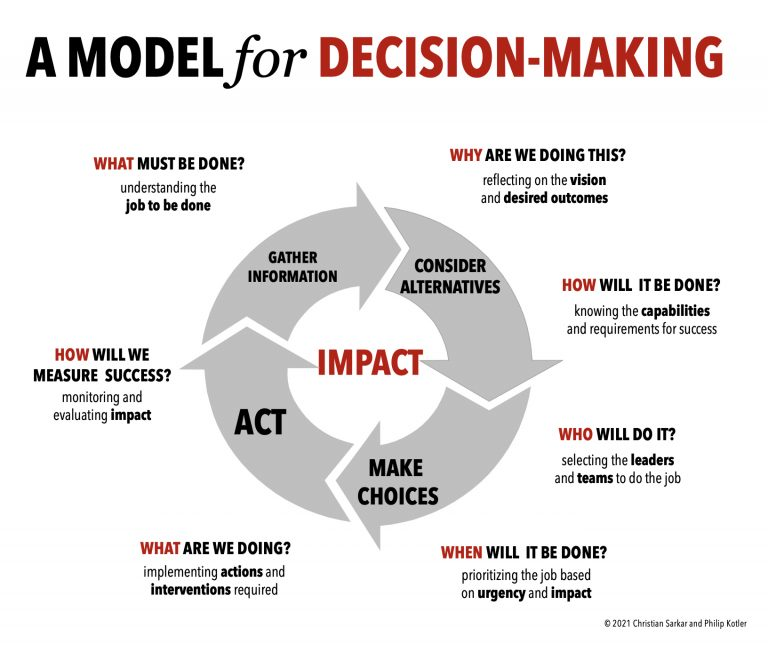
- Make decisions by evaluating options systematically
- Solve problems by applying proven frameworks to new situations
- Communicate ideas using shared conceptual frameworks
Mental Models as Maps
The best analogy for mental models is maps. A map isn't the territory-it's a simplified representation that captures useful features (roads, landmarks, distances) while ignoring irrelevant ones (individual trees, exact colors, minor variations in terrain).
Different maps serve different purposes:
- Road maps show routes and distances
- Topographic maps show elevation and terrain
- Political maps show borders and jurisdictions
- Transit maps (like subway maps) distort geography to clarify connections
Similarly, different mental models represent different aspects of reality. You choose models based on what you're trying to understand or accomplish.
Key insight: Like maps, mental models are useful because they're simplified, not in spite of it. A perfectly accurate map would be as complex as the territory itself-and therefore useless. The art is simplifying in ways that preserve what matters for your purpose.
"All models are wrong, but some are useful."
George Box
Mental Models vs. Other Thinking Tools
| Tool | What It Is | Example | When to Use |
|---|---|---|---|
| Mental model | Framework for understanding how something works | Opportunity cost, second-order effects | Analyzing complex situations |
| Heuristic | Rule-of-thumb decision shortcut | "Don't put all eggs in one basket" | Quick, low-stakes decisions |
| Framework | Structured approach to a specific task | SWOT analysis, 5 Whys | Defined analytical problems |
| Cognitive bias | Systematic thinking error to be aware of | Confirmation bias, sunk cost fallacy | To recognize and correct errors |
Mental models are often confused with related concepts. Here's how they differ:
Mental models vs. heuristics:
- Heuristics are decision shortcuts (rules of thumb) that work most of the time
- Mental models are frameworks for understanding how things work
- Example: "Don't put all eggs in one basket" (heuristic) vs. "diversification reduces uncorrelated risks" (mental model)
Mental models vs. frameworks:
- Frameworks are structured approaches to specific tasks or analyses
- Mental models are broader conceptual tools applicable across domains
- Example: "SWOT analysis" (framework for strategy) vs. "competitive advantage" (mental model explaining sustained outperformance)
Mental models vs. biases:
- Cognitive biases are systematic errors in thinking
- Mental models are tools to think more accurately
- Many mental models help you recognize and compensate for biases
Why We Need Mental Models
Your brain automatically creates mental models. When you learn to ride a bike, you develop an intuitive model of balance, momentum, and steering. When you interact with people, you develop models of social dynamics, reciprocity, and status.
But implicit models (ones you use unconsciously) have limitations:
- They're domain-specific and don't transfer well
- They're often incomplete or incorrect
- You can't examine or improve them deliberately
- You can't communicate them clearly to others
Explicit mental models-frameworks you consciously learn, name, and apply-overcome these limitations. When you explicitly understand "opportunity cost," you can:
- Apply it across contexts (career, relationships, time management, investments)
- Refine your understanding through study and practice
- Teach it to others using shared language
- Deliberately invoke it when making decisions
The goal of learning mental models is to make implicit thinking explicit, turning unconscious pattern recognition into conscious analytical tools.
Why Mental Models Matter
Mental models matter because they help you see patterns others miss, make higher-quality decisions, learn new domains faster, and reduce the cognitive load of complex problems. They also give you a shared vocabulary for communicating ideas efficiently. Together, these five benefits turn scattered intuition into a repeatable way of thinking clearly under complexity.
1. They Help You See What Others Miss
Most people navigate the world using intuition, copying what others do, or following authority. These approaches work for routine situations but fail when facing novel problems, complex systems, or non-obvious patterns.
Mental models reveal hidden structures.
"The most powerful tool of the modern person is the ability to change their own mind-and to think clearly about what they actually believe."
Shane Parrish
Example: Second-Order Thinking
Most people consider only immediate consequences of actions (first-order effects). The mental model second-order thinking forces you to ask: "And then what? What happens after that?" - a discipline explored in full in second-order thinking explained and first-order vs second-order effects.
- First-order: "We'll cut prices to increase sales." (Obvious)
- Second-order: "If we cut prices, competitors will match, profit margins shrink, we can't invest in quality, customers eventually leave for better products." (Non-obvious)
Second-order thinking reveals why obvious solutions often backfire. Without this model, you see only the immediate appeal of price cuts. With it, you anticipate the chain of consequences.
2. They Improve Decision Quality
Good decision-making requires:
- Understanding the situation
- Identifying relevant factors
- Predicting likely outcomes
- Evaluating trade-offs
- Choosing despite uncertainty
Mental models provide systematic approaches to each step. For a practical introduction to the decision-making process itself - including common mistakes and frameworks - see how decision making works for beginners.
Example: Expected Value
Without the mental model expected value, people evaluate options based on best-case outcomes or gut feelings. Expected value (probability x outcome) provides a rational framework:
- Option A: 100% chance of $100 = expected value $100
- Option B: 10% chance of $2,000 = expected value $200
Expected value reveals that Option B, despite higher risk, has higher expected return. The model doesn't make the decision for you-you might still prefer the certainty of Option A-but it clarifies the trade-off.
3. They Help You Learn Faster
Learning without mental models means accumulating disconnected facts. Learning with mental models means building coherent understanding where new information connects to existing frameworks.
Example: Feedback Loops
Once you understand feedback loops (where A influences B, which influences A):
- You recognize them everywhere: ecosystems, economies, social dynamics, habits, businesses
- New examples deepen your understanding rather than requiring separate learning
- You can predict behavior even in unfamiliar systems
- You can design better systems by manipulating feedback mechanisms
One well-understood mental model unlocks understanding across dozens of domains.
4. They Reduce Cognitive Load
Your brain has limited working memory. Mental models act as compression algorithms-they package complex patterns into single concepts you can reason about without tracking all the details.
Without mental models:
- "Product A has feature X that users like, but it's expensive to build, and customers might not pay more, and competitors might copy it, and it delays other features..."
With mental models (opportunity cost + competitive advantage):
- "Does feature X create sustainable competitive advantage that justifies its opportunity cost?"
The mental models compress the analysis into a clear question, freeing cognitive resources to actually think about the answer.
5. They Provide Language for Communication
Mental models create shared vocabulary. Instead of explaining from scratch, you can invoke named concepts that others understand.
Example:
- Without mental models: "Sometimes when you make something better it actually makes the whole system worse because other parts depend on how it used to work..."
- With mental models: "Changing that component could create a Cobra Effect." (Unintended consequences where solutions worsen the problem)
Shared mental models enable precise, efficient communication about complex ideas.
Core Mental Models for Beginners
You don't need to learn 100 mental models. A small set of versatile, broadly applicable models provides enormous value. Here are foundational ones:
1. Opportunity Cost
Definition: The true cost of something is what you give up to get it.
Every choice involves trade-offs. When you spend time, money, or attention on one thing, you can't spend it on alternatives. Opportunity cost forces you to consider not just what you gain, but what you lose.
How to use it:
- Before committing resources, ask: "What am I not doing if I do this?"
- Compare options by their opportunity costs, not just their benefits
- Recognize that "free" time or money still has opportunity cost
Example:
- You're offered a consulting gig paying $5,000 for 40 hours of work. Is it worth it?
- Simple calculation: $125/hour sounds good
- Opportunity cost: What else could you do with 40 hours? Build your own product? Spend time with family? Learn a new skill? Rest?
- The real question isn't "Is $5,000 good?" but "Is this the best use of 40 hours?"
Common mistakes:
- Ignoring opportunity cost of time (treating it as free)
- Sunk cost fallacy (considering past costs when only future opportunity costs matter)
- Comparing to nothing instead of to alternatives
2. First Principles Thinking
Definition: Breaking problems down to fundamental truths and reasoning up from there, rather than reasoning by analogy or convention.
First principles thinking questions assumptions and rebuilds understanding from scratch. Most thinking is by analogy: "We'll do it the way others do it" or "That's how it's always been done."
"I think it's important to reason from first principles rather than by analogy. The normal way we conduct our lives is we reason by analogy. [With first principles] you boil things down to the most fundamental truths... and then reason up from there."
Elon Musk
How to use it:
- Identify and question every assumption
- Ask "Why?" repeatedly until you reach fundamental truths
- Rebuild the solution from these foundations
- Don't accept "because that's how it's done" as reasoning
Example (Elon Musk on rocket costs):
- Conventional thinking: "Rockets cost $65 million because that's what they cost. That's the market price."
- First principles: "What are rockets made of? Aluminum, titanium, copper, carbon fiber. What do those materials cost? About 2% of the typical rocket price."
- Insight: The current cost isn't fundamental-it's a result of how the industry operates. If you manufacture differently, you can reduce costs by 50x.
Common mistakes:
- Stopping too early (accepting proximate rather than fundamental causes)
- Ignoring real constraints (some "assumptions" are actually facts)
- Reinventing wheels (sometimes analogies are valid and efficient)
3. Feedback Loops
Definition: Systems where outputs influence inputs, creating self-reinforcing or self-correcting cycles.
Positive feedback loops (amplifying):
- A influences B, B amplifies A
- Example: Network effects-more users make a platform more valuable, attracting more users
Negative feedback loops (stabilizing):
- A influences B, B dampens A
- Example: Body temperature when you're hot, you sweat, which cools you down
How to use it:
- Identify what influences what in a system
- Trace whether effects amplify or dampen
- Predict system behavior based on feedback structure
- Design better systems by changing feedback mechanisms
Example (social media addiction):
- You check social media → See engaging content → Get dopamine hit → Feel urge to check again → Check more frequently
- This is a positive feedback loop creating escalating behavior
- Breaking it requires interrupting the cycle (notifications off, app limits, environmental design)
Common mistakes:
- Confusing correlation with feedback (not all related variables have feedback relationships)
- Ignoring delays (feedback loops often have time lags that disguise causation)
- Missing which direction the loop runs (amplifying vs. stabilizing)
4. Margin of Safety
Definition: Building buffers to account for error, uncertainty, and worst-case scenarios.
Things rarely go exactly as planned. Margin of safety means designing systems, plans, and decisions that work even when assumptions are wrong or conditions are worse than expected.
"The three most important words in investing are margin of safety."
Benjamin Graham
How to use it:
- Estimate what's needed, then add buffer
- Ask "What if I'm wrong? What if things are worse than expected?"
- Design systems that fail gracefully rather than catastrophically
- Accept suboptimal performance in good scenarios to ensure survival in bad ones
Example (bridge engineering):
- Calculate maximum expected load
- Design bridge to support 5-10x that load
- The bridge is "inefficient" (uses more material than needed for typical use) but won't collapse if load estimates are wrong or unexpected conditions occur
Example (financial planning):
- Don't spend every dollar you earn
- Don't borrow the maximum you can afford
- Keep emergency funds for unexpected expenses
- The "wasted" capacity protects against unpredictable events
Common mistakes:
- Optimizing for best-case rather than typical or worst-case scenarios
- Confusing margin of safety with excessive caution (the goal is appropriate buffers, not paranoia)
- Ignoring compounding effects of thin margins (small errors cascade into failures)
5. Compound Interest
Definition: When growth itself generates additional growth, creating exponential rather than linear expansion.
Originally from finance (interest earns interest), compound growth applies to any domain where outputs reinvest to generate more outputs.
How to use it:
- Recognize exponential vs. linear growth patterns
- Start early (time is the most powerful factor in compounding)
- Focus on growth rates (small differences compound to enormous gaps)
- Be patient (compounding is slow initially, explosive later)
Example (financial):
- $10,000 invested at 10% annual return:
- Year 1: $11,000
- Year 10: $25,937
- Year 30: $174,494
- The same 10% rate produces dramatically different outcomes over time because returns generate returns
Example (learning):
- Skills compound: Each new skill makes learning related skills faster
- Knowledge compounds: Each concept understood makes understanding new concepts easier
- Network compounds: Each relationship can lead to more relationships
"Compound interest is the eighth wonder of the world. He who understands it, earns it; he who doesn't, pays it."
attributed to Albert Einstein (apocryphal)
Common mistakes:
- Underestimating long-term effects (exponential growth is counterintuitive)
- Interrupting compounding (stopping and restarting prevents acceleration)
- Ignoring negative compounding (bad habits, debt, and declining systems also compound)
6. Inversion
Definition: Thinking backward-instead of asking "How do I succeed?" ask "How would I fail?" Then avoid those things.
Inversion reveals non-obvious risks and constraints. It's often easier to identify what causes failure than what guarantees success.
How to use it:
- Flip the question: Instead of "How do I X?" ask "How would I fail at X?"
- List failure modes, then design to avoid them
- Consider the opposite of conventional wisdom
- Ask "What must not happen for this to work?"
Example (building a successful company):
- Forward thinking: "What makes companies succeed?" (Unclear-many factors, hard to isolate)
- Inversion: "What kills companies?" (Clearer-running out of money, losing key customers, toxic culture, ignoring competition)
- Strategy: Design to avoid these failure modes first, then pursue success
Example (making good decisions):
- Forward: "How do I make good decisions?" (Vague)
- Inversion: "What causes bad decisions?" (Emotional reasoning, incomplete information, biased sources, social pressure, ignoring incentives)
- Strategy: Build systems that counter these failure modes
Common mistakes:
- Stopping at identifying failures without using insights to design better approaches
- Assuming avoiding failure guarantees success (necessary but not sufficient)
- Over-optimizing for avoiding rare worst-case scenarios at expense of likely good outcomes
7. Incentives
Definition: People respond to incentives-behavior follows from what people are rewarded or punished for.
Understanding incentives explains why individuals and organizations behave as they do, even when that behavior seems irrational or contrary to stated goals.
How to use it:
- When behavior seems puzzling, ask "What are they incentivized to do?"
- Examine formal incentives (compensation, rules, metrics)
- Examine informal incentives (status, belonging, identity)
- Design systems by aligning incentives with desired outcomes
Example (sales incentives):
- Company wants steady, sustainable sales growth
- Sales team is paid commission on deals closed each quarter
- Result: Salespeople push aggressive discounts at quarter-end, harming long-term margins
- Cause: Incentives (quarterly commission) don't align with goals (sustainable growth)
Example (social media):
- Platforms claim to want healthy discourse
- But ad revenue depends on engagement (time on site, clicks, shares)
- Result: Algorithms promote outrage and controversy (highest engagement)
- Cause: Incentives (maximize engagement) conflict with goals (healthy discourse)
"Show me the incentive and I'll show you the outcome."
Charlie Munger
Common mistakes:
- Judging intentions rather than examining incentives
- Assuming stated goals reveal actual incentives
- Ignoring non-monetary incentives (status, identity, belonging, avoiding effort)
How to Learn Mental Models
You learn mental models through deliberate practice, not passive reading: start with 5 to 10 foundational models such as opportunity cost and feedback loops instead of trying to memorize dozens at once, then study each one through multiple concrete examples. From there, apply each model to real decisions you are facing, connect related models together, and review your mistakes to see which model would have predicted the outcome.
Start with Core Models
Don't try to learn 50 models at once. Start with 5-10 foundational ones:
- Opportunity cost
- First principles thinking
- Feedback loops
- Margin of safety
- Compound interest
- Inversion
- Incentives
- Second-order thinking
- Expected value
- Comparative advantage
These are versatile, broadly applicable, and foundational to understanding more specialized models later. For guidance on how to choose the right mental model for a given situation, understanding this prioritized list is a good starting point.
Learn Through Examples
Mental models are abstractions-they only make sense when grounded in concrete examples. For each model:
- Study the definition (understand the concept)
- Examine multiple examples across different domains
- Generate your own examples from your experience
- Explain the model to someone else (teaching forces clarity)
Exercise: Pick one mental model. Find five examples from different domains (business, personal life, nature, history, technology). Write a paragraph explaining each example using the model.
Apply Deliberately
Mental models remain abstract until you use them. Active application transforms understanding:
Daily practice:
- Each morning, choose one mental model to focus on
- Throughout the day, actively look for situations where it applies
- Journal about what you noticed
Decision-making:
- Before important decisions, explicitly ask: "Which mental models are relevant here?"
- Work through the decision using 2-3 applicable models
- Notice how each model reveals different aspects
Retrospection:
- After decisions or events, analyze what happened using mental models
- Ask: "Which model would have predicted this outcome?"
- Build associations between real experiences and abstract frameworks
Build Connections
Mental models become more powerful when you understand how they relate:
Complementary models (use together):
- Opportunity cost + Expected value = Better resource allocation
- Feedback loops + Second-order thinking = Predicting system behavior
- Incentives + First principles = Understanding organizational dysfunction
Contrasting models (tension between them):
- Margin of safety vs. Efficiency (safety requires "waste")
- First principles vs. Analogical thinking (when to reinvent vs. copy)
Hierarchical models (one builds on another):
- Compound interest → Network effects (specific type of compounding)
- Feedback loops → Virtuous/vicious cycles (specific feedback patterns)
Learn From Mistakes
You'll misapply models. This is valuable:
Common learning errors:
- Overapplying: Using one model for everything (when you have a hammer...)
- Surface-level: Knowing definitions without deep understanding
- Rigid application: Following models mechanically without judgment
- Wrong model: Applying models to situations where they don't fit
How to learn from mistakes:
- When predictions are wrong, ask which model failed and why
- Collect examples of when models don't apply (understand boundaries)
- Refine understanding by examining edge cases
Curate Your Mental Model Library
As you learn more models, actively curate which ones you invest in:
Prioritize models that are:
- Broadly applicable: Work across many domains
- Non-obvious: Reveal insights you wouldn't see otherwise
- Actionable: Lead to better decisions, not just understanding
- Foundational: Many other models build on them
De-prioritize models that are:
- Narrow: Only apply to specific situations
- Obvious: Common sense dressed up as framework
- Descriptive without predictive power: Explain past but don't help anticipate future
- Overly complex: More complicated than the problems they solve
Common Mental Model Mistakes
Mistake 1: Collecting Without Applying
The error: Learning dozens of mental models but never actually using them to make decisions or solve problems.
Mental models aren't trivia. The goal isn't to know their names-it's to think differently because you understand them. Five models you actually use beat fifty you merely recognize.
How to avoid it: For each model you learn, commit to applying it to three real decisions or situations before learning the next model.
Mistake 2: Forcing Fit
The error: Trying to apply your favorite mental model to every situation, even when it doesn't fit.
This is the "when you have a hammer, everything looks like a nail" problem. Not every situation involves feedback loops, not every decision involves opportunity cost (some choices aren't mutually exclusive), not everything compounds.
How to avoid it: Learn to recognize when models don't apply. For each model, study boundary conditions: "When does this model break down? What situations does it misrepresent?"
Mistake 3: Treating Models as Truth
The error: Forgetting that mental models are simplified representations, not reality itself.
"The map is not the territory." Mental models abstract away details-sometimes those details matter. Models are useful fictions that help you think, but they're not laws of nature.
How to avoid it: Hold models lightly. Use them as thinking tools while staying grounded in specific contexts. Ask "What is this model missing? What details did it simplify away?"
Mistake 4: Ignoring Context
The error: Applying mental models mechanically without considering context, constraints, and relevant specifics.
Expected value calculations assume you can play repeated games-but some decisions are one-time with no do-overs. First principles thinking is powerful but time-consuming-sometimes copying what works is more efficient. Context determines which models apply and how to use them.
How to avoid it: Before applying a model, ask: "What makes this situation unique? What constraints or context might this model not capture?"
Mistake 5: Substituting Models for Judgment
The error: Letting frameworks make decisions for you rather than using them to inform judgment.
Mental models are tools for thinking, not replacements for thinking. They help you analyze situations, but judgment still requires weighing multiple considerations, accounting for uncertainty, and making decisions despite incomplete information.
How to avoid it: Use models to generate insights and frame questions, but remember you still have to exercise judgment. Multiple models might suggest different actions-you still must decide.
Practical Exercises
Exercise 1: Model Recognition
Goal: Train your brain to recognize mental models in everyday situations.
Practice:
- Choose 3 mental models to focus on this week
- Throughout each day, notice situations where these models apply
- Write brief notes: situation + which model + what it reveals
- By week's end, you should have 10-15 examples per model
Example:
- Model: Opportunity cost
- Situation: Spent 2 hours scrolling social media
- Insight: The opportunity cost wasn't just wasted time-it was whatever I could have done instead (reading, exercise, work on project, connecting with friends)
Exercise 2: Explain in Multiple Ways
Goal: Deepen understanding by explaining the same model through different examples.
Practice:
- Pick one mental model
- Write five different explanations, each using examples from different domains:
- Personal life
- Business/work
- Nature/science
- History
- Current events
Why it works: Surface understanding breaks down when contexts change. Deep understanding explains the same concept across contexts.
Exercise 3: Predict and Validate
Goal: Use models to make predictions, then validate them.
Practice:
- Identify a current situation (team project, business strategy, personal goal)
- Use 2-3 relevant mental models to predict what will happen
- Write down predictions with reasoning
- Wait for outcomes
- Analyze: What did models reveal correctly? What did they miss? Why?
Why it works: Prediction forces precision-you can't be vague. Validation reveals when models work and when they don't.
Exercise 4: Decision Journal
Goal: Build a habit of explicitly using mental models for important decisions.
Practice:
- Before significant decisions, write:
- The decision you're making
- Which mental models seem relevant
- What each model suggests
- Your final decision and reasoning
- Months later, review outcomes
- Notice which models proved most useful
Why it works: Deliberate application builds fluency. Retrospection reveals which models are genuinely useful vs. which just sound smart.
Exercise 5: Teach to Learn
Goal: Solidify understanding by explaining models to others.
Practice:
- Pick a mental model you want to master
- Write a short explanation (300-500 words) as if teaching someone unfamiliar with it
- Include: definition, why it matters, 2-3 examples, common mistakes
- Share with someone and get feedback
- Revise based on what was unclear
Why it works: Teaching reveals gaps in understanding. If you can't explain it clearly, you don't understand it deeply.
When to Use Mental Models
High-Leverage Decisions
Mental models are most valuable for important, non-routine decisions:
- Career changes
- Major investments
- Strategic business decisions
- Relationship commitments
- Life direction choices
For these, the investment of time in systematic analysis pays off.
Pattern Recognition
When facing situations that feel familiar but complex:
- "This reminds me of something, but I can't articulate what..."
- Mental models provide vocabulary for recognizing and naming patterns
Explaining Puzzling Behavior
When individuals or organizations act in seemingly irrational ways:
- Incentives often explains the puzzle
- Second-order thinking reveals hidden consequences
Designing Systems
When creating processes, organizations, or strategies:
- Feedback loops help predict system behavior
- Incentives ensure alignment between goals and behavior
- Margin of safety builds resilience
Learning and Sense-Making
When trying to understand new domains or complex topics:
- Mental models provide frameworks for organizing information
- They reveal connections between seemingly unrelated ideas
- They help you build coherent understanding rather than disconnected facts
Communication
When trying to explain complex ideas concisely:
- Named mental models provide shared vocabulary
- They compress complex patterns into referenceable concepts
Building Mental Model Fluency
Mental models become most powerful when they're internalized when you recognize patterns automatically and invoke relevant models without conscious effort. This fluency develops through:
1. Repeated Application
Use models so frequently they become habitual:
- Daily journaling using mental models
- Analyzing news and events through model frameworks
- Discussing decisions with others using shared model vocabulary
2. Cross-Domain Practice
Apply the same models across wildly different contexts:
- Use "feedback loops" to understand relationships, ecosystems, and business dynamics
- Apply "opportunity cost" to time, money, attention, and career choices
This reinforces that models are abstractions transcending specific situations.
3. Multi-Model Thinking
Train yourself to examine situations through multiple models simultaneously:
- Pick a current event
- Analyze it using 3-5 different mental models
- Notice what each reveals and what each misses
This builds flexibility-you learn which models work when and how to combine insights.
4. Error Analysis
When predictions fail or decisions turn out poorly:
- Which mental models did you use? Were they appropriate?
- Which models did you miss that would have revealed the issue?
- How can you improve model selection and application?
Learning from mistakes accelerates development of judgment.
5. Building Intuition
Eventually, mental models should shape your intuition-how things "feel" to you. When you see a startup pitch and intuitively sense "there's no defensible competitive advantage here," that's mental model intuition.
This comes from extensive practice where conscious analysis becomes automatic pattern recognition.
Key Takeaways
What mental models are:
- Thinking tools that represent how things work
- Simplified frameworks capturing essential patterns
- Maps (useful because simplified, not despite it)
- Explicit versions of implicit thinking everyone does
Why they matter:
- Help you see patterns others miss
- Improve decision quality through systematic analysis
- Accelerate learning by providing frameworks for organizing knowledge
- Reduce cognitive load through compression of complex patterns
- Enable precise communication through shared vocabulary
Core beginner models:
- Opportunity cost - True cost is what you give up
- First principles thinking - Reason from fundamental truths
- Feedback loops - Outputs influence inputs (amplifying or dampening)
- Margin of safety - Build buffers for uncertainty
- Compound interest - Growth generates growth exponentially
- Inversion - Think backward to identify failure modes
- Incentives - Behavior follows rewards and punishments
How to learn them:
- Start with 5-10 core models, not 50
- Learn through multiple concrete examples
- Apply deliberately to real decisions
- Build connections between models
- Learn from misapplications and mistakes
- Curate ruthlessly (depth over breadth)
Common mistakes:
- Collecting models without applying them
- Forcing models to fit inappropriate situations
- Treating models as truth rather than tools
- Ignoring context and constraints
- Substituting models for judgment
When to use them:
- High-leverage decisions with significant consequences
- Pattern recognition in complex situations
- Explaining puzzling behavior
- Designing systems and processes
- Learning and sense-making in new domains
- Communication of complex ideas
Building fluency:
- Repeated application until habitual
- Cross-domain practice
- Multi-model thinking (using several simultaneously)
- Error analysis when predictions fail
- Developing intuition through extensive practice
Where Mental Models Come From: The Cognitive Science
The concept of mental models has roots in cognitive science that predate the popular usage, and understanding those roots clarifies what mental models actually are and why they work.
Philip Johnson-Laird's Foundational Research
Cognitive scientist Philip Johnson-Laird developed the formal theory of mental models in his 1983 book Mental Models: Towards a Cognitive Science of Language, Inference, and Consciousness.
Johnson-Laird proposed that human reasoning relies not on formal logic but on running simulations in the mind - constructing internal representations of situations and then "running" them to see what follows.
When you reason about whether a table will fit through a doorway, you don't apply geometric theorems; you construct a mental simulation of moving the table and observe what happens. When you reason about how a colleague might react to news, you don't apply social theory; you simulate the interaction.
Johnson-Laird found that people are systematically good at reasoning about things they can simulate and systematically poor at reasoning about things they cannot.
This explains why abstract logical reasoning is so difficult for most people (hard to simulate) while narrative reasoning comes naturally (easy to simulate).
It also explains why the best mental models are the ones that provide simulable frameworks - not just labels for patterns but internal representations that let you "run" the model and observe what it predicts.
How Expert Mental Models Differ from Novice Mental Models
Research by cognitive scientists studying chess masters, experienced physicians, and expert engineers reveals a consistent pattern: experts don't just know more facts than novices; they organize their knowledge differently.
Experts have richer, more interconnected mental models that allow them to perceive patterns and generate responses that novices cannot see even when they are looking at the same information.
A famous study by William Chase and Herbert Simon analyzed how chess masters perceive board positions. When shown a board position from a real game for five seconds, chess masters could recall the positions of about 16 pieces with high accuracy; novices could recall 5-6.
When shown a board with randomly placed pieces (which no real game would produce), chess masters' advantage disappeared - they recalled the same 5-6 pieces as novices.
The difference wasn't memory capacity; it was that masters had developed mental models that chunked meaningful board patterns into single recognizable units. Their mental models compressed and organized information in ways that novice models could not.
This research has direct implications for learning mental models explicitly. The goal is not to memorize frameworks but to internalize them deeply enough that you begin perceiving the world through them - recognizing feedback loops the way an experienced systems thinker does, perceiving opportunity costs the way an economist does, noticing incentive misalignments the way Charlie Munger does.
That level of fluency requires not just understanding definitions but accumulating enough practice that the model becomes part of your perceptual system rather than a framework you laboriously apply.
The Cognitive Load Connection
George Miller's 1956 paper "The Magical Number Seven, Plus or Minus Two" established that human working memory holds approximately seven chunks of information simultaneously.
Mental models work partly because they serve as compression mechanisms that let you reason about complex situations without exceeding working memory limits.
When you have internalized the concept of "network effects," you can reason about platform businesses, professional networks, communication technologies, and social norms using a single cognitive unit.
Without the mental model, reasoning about each of these requires tracking many separate variables; with it, a pattern that took many variables to describe collapses into a single recognized concept you can hold alongside other relevant considerations.
This is why people with larger and richer mental model libraries can reason about more complex situations than people with fewer models - they can compress more of a situation's relevant features into retrievable chunks, freeing working memory for the actual reasoning about what to do.
Building mental models is, at a cognitive level, an investment in expanding your effective reasoning capacity.
Final Thoughts
Mental models are not magic. They won't make you a genius or guarantee correct decisions. They're simply tools-systematic ways of thinking that, when applied skillfully, improve your odds of understanding situations correctly and making good choices.
The real power of mental models comes not from collecting them, but from thinking with them. A small number of models deeply understood and habitually applied will serve you better than dozens superficially known.
Start simple:
- Pick 3-5 models from this guide
- Spend a month actively looking for them in daily life
- Apply them to real decisions you're facing
- Reflect on what they revealed that you would have missed otherwise
Over time, these frameworks will reshape how you see the world. You'll start recognizing patterns automatically, anticipating consequences others miss, and making connections that weren't obvious before.
That's the goal: not to become a mental model collector, but to become a better thinker. The models are just the means.
Mental Models in Practice: Research on How Frameworks Shape Expert Judgment
The claim that mental models improve thinking is not merely intuitive-it is grounded in cognitive science research and documented in studies of how experts in high-stakes fields actually think and make decisions. Several research programs illuminate when and how mental models provide genuine advantage.
Charlie Munger and the Latticework Framework
Charlie Munger, vice chairman of Berkshire Hathaway and longtime collaborator of Warren Buffett, is probably the most prominent practitioner-advocate of multi-disciplinary mental model use.
His 1994 speech at USC Business School, "A Lesson on Elementary, Worldly Wisdom," describes what he calls a "latticework of mental models"-the idea that useful models from multiple disciplines (physics, biology, psychology, economics, mathematics) should be integrated into a single cognitive framework that can be applied across domains.
Munger's investment track record provides one form of empirical evidence that this approach works. Berkshire Hathaway delivered compound annual returns of approximately 20% from 1965 to 2022, compared to approximately 10% for the S&P 500 over the same period.
Munger attributes this outperformance explicitly to the latticework approach: seeing patterns that specialists miss because specialists typically apply the mental models of their single discipline and cannot recognize when a different discipline's framework would provide better insight.
More specifically, Munger has described the psychology of human misjudgment as a model cluster synthesizing research from behavioral economics, social psychology, and evolutionary biology into a practical checklist for investors.
Munger himself has been candid that this framework builds directly on the work of psychologists Daniel Kahneman and Amos Tversky, whose research on cognitive biases and heuristics he has repeatedly credited as foundational, while adding his own business and legal experience in applying these concepts to real-world decision-making.
The practical lesson from Munger is not that any particular mental model is the key to success, but that breadth of model application-deliberately using frameworks from multiple disciplines when analyzing a situation-consistently reveals factors that single-discipline analysis misses.
Gary Klein's Recognition-Primed Decision Model and Expert Intuition
Research by Gary Klein, a cognitive psychologist who studied decision making in naturalistic settings (firefighters, military commanders, critical care nurses), documented that expert decision makers do not primarily use the analytical frameworks described in most decision-making curricula.
His Recognition-Primed Decision (RPD) model, published in Sources of Power (1998), describes how experienced professionals actually decide.
In the RPD model, experts recognize situations as belonging to familiar categories (pattern recognition), which immediately suggests a plausible course of action. Rather than generating and comparing multiple options analytically, they mentally simulate the first option to check whether it would work.
If the simulation reveals problems, they modify the option or generate a different one. They rarely compare multiple options head-to-head.
Klein's research on fire commanders is particularly illustrative. When asked how they decided where to attack a fire or when to evacuate a building, commanders described not weighing options but recognizing the situation as a type they had seen before and knowing intuitively what to do.
When Klein pressed them to describe how they knew their intuitive reading was correct, they consistently described a process of mental simulation: picturing how a situation would unfold, testing that mental picture against what they were actually observing, and abandoning a plan the moment it stopped feeling right.
This is mental model use in practice. The commanders' mental models of fire behavior-developed through years of experience and encoded as patterns in long-term memory-allowed them to categorize situations rapidly and simulate outcomes in real time.
The mental models were not explicit rules they consciously applied; they were internalized frameworks that shaped perception itself.
Implication: Mental model fluency, as described in this guide, is not just about having frameworks available for conscious analysis. At advanced levels, internalized mental models shape what you notice, what you consider, and what options come to mind automatically.
This is why expert intuition is reliable in domains with good feedback and regular patterns (firefighting, chess, medicine) but unreliable in domains without these features (long-term predictions, complex social interventions, financial markets).
Shane Parrish and the Farnam Street Research Program
Shane Parrish, founder of the Farnam Street blog and podcast, has spent over a decade systematically applying the Munger latticework approach and documenting what works.
His applied research program-working with executives, investors, and military leaders on decision quality improvement-has produced several findings about how mental model training actually transfers to practice.
In his 2019 book The Great Mental Models Volume 1 (co-authored with Rhiannon Beaubien), Parrish describes the core challenge he has observed in working with high performers: the mental model knowledge-application gap.
People can learn to describe first-principles thinking, opportunity cost, and inversion in abstract terms without developing the ability to apply them fluidly in real-time decision situations.
The gap between knowing a model and thinking with it is substantial and closes only through extended deliberate application.
Parrish's observations align with the research on expert mental models described above. Klein's firefighters did not consciously consult a mental model of fire behavior; they perceived situations through those models because the models had been internalized through thousands of hours of experience.
Similarly, experienced investors who think naturally in expected value terms are not consciously calculating; expected value has become a perceptual framework that shapes what they notice and how situations feel to them.
The practical prescription Parrish derives from this research is consistent with this guide's recommendations: focus on a small number of high-value models, apply them deliberately to real decisions over extended periods, and prioritize depth of application over breadth of collection.
A model truly internalized-meaning it shapes how you perceive situations, not just how you analyze them after the fact-is worth dozens of models superficially understood.
Mental Model Failures: Case Studies of Model Misapplication
Mental models are powerful precisely because they simplify complex reality into manageable frameworks-but this power creates specific failure modes when models are applied to situations they do not fit.
The following cases document consequential model misapplication, illustrating the boundaries of mental model use described in the common mistakes section above.
Long-Term Capital Management and the Limits of Financial Models (1998)
Long-Term Capital Management (LTCM) was a hedge fund founded in 1994 by John Meriwether and staffed with extraordinary quantitative talent, including two Nobel Prize winners in economics-Myron Scholes and Robert Merton, the developers of the Black-Scholes option pricing model.
LTCM generated annual returns of 40%+ in its early years through arbitrage strategies based on sophisticated mathematical models of how asset prices should relate to each other.
In 1998, LTCM lost $4.6 billion in less than four months and required a $3.6 billion bailout organized by the Federal Reserve to prevent its collapse from triggering a broader financial crisis.
The failure was not computational-the models were correctly implemented. The failure was that the models assumed normal distributions of asset price movements and correlations between markets that remained approximately stable.
In the August 1998 Russian debt crisis, market correlations spiked and price movements entered the "tail" of the distribution that the models treated as essentially impossible.
When the models were built on the assumption of normal distributions, extreme events were assigned near-zero probabilities and therefore received near-zero weight in risk calculations.
This is the mistake of treating models as truth rather than as useful simplifications. The mathematical models LTCM used were sophisticated representations of how markets typically behave. They were not reliable representations of how markets behave in extreme stress events-precisely the events where capital preservation matters most.
The margin of safety mental model, applied to the models themselves, would have prescribed explicit acknowledgment of tail risk and capital buffers sized for the scenarios that the models said were impossible.
Nassim Taleb's work on fat-tailed distributions, particularly The Black Swan (2007) and Antifragile (2012), developed directly from observations about failures like LTCM.
Taleb's core argument is that many domains-financial markets, geopolitics, technological development-have distributions of outcomes with "fat tails" (extreme events that occur far more often than normal distributions predict).
Models built on normal distribution assumptions will systematically underestimate tail risk and produce catastrophically overconfident recommendations.
The Cobra Effect and Second-Order Thinking Failures
The Cobra Effect-described briefly in the complexity article in this series-is the recurring historical pattern in which interventions designed to solve a problem create incentives that worsen the problem or create new ones.
The original case is a widely repeated but only weakly documented colonial-era anecdote from British India involving bounties for dead cobras allegedly leading to cobra farming, and a population increase when the bounty program ended and farmed cobras were released; historians have found little solid contemporary evidence for the specific breeding-and-release chain of events, though the term has stuck as shorthand for the broader pattern.
The broader pattern - incentives producing behavior that undermines the policy's own goal - reappears with notable consistency across domains that are far better documented. The US Forest Service's long-running policy of aggressively suppressing wildfires, formalized in the 1930s and continued for decades afterward, led to the accumulation of dry fuel in western forests, making subsequent fires more severe once suppression could no longer keep pace.
Well-intentioned zoning laws designed to reduce urban sprawl in high-demand cities produced housing shortages and price spikes by restricting construction. Mandatory minimum sentences intended to deter drug dealing created incentives for defendants to withhold cooperation from prosecutors.
In each case, decision-makers were applying a logical first-order model: stop cobras by reducing their population; stop fires; reduce sprawl; deter dealing. The first-order model was correct at the level of immediate mechanism.
What it missed was the second-order effects generated by how affected parties would adapt their behavior in response to the intervention.
Donella Meadows's taxonomy of systems interventions in Thinking in Systems (2008) provides the mental model that Cobra Effect failures lack: understanding that intervening in a system changes the system's behavior in ways that alter subsequent responses.
Any intervention that changes incentives will change behavior; any behavior change will produce second-order effects. The discipline of tracing these effects before implementing an intervention-not after discovering they have produced unintended consequences-is second-order thinking applied to system design.
The frequency of Cobra Effect failures in policy, management, and organizational design suggests that second-order thinking remains underutilized even among intelligent and experienced decision-makers.
It is not enough to understand the concept abstractly; second-order thinking must become habitual enough to be applied before commitment rather than as post-hoc explanation.
Sources & Further Reading
Munger, C. (1994). "A Lesson on Elementary, Worldly Wisdom As It Relates To Investment Management & Business." USC Business School. The source of Munger's oft-cited principle that incentives drive all observable behavior.
Parrish, S., & Beaubien, R. (2019). The Great Mental Models Volume 1: General Thinking Concepts. Latticework Publishing. The most practical modern compendium of mental models drawn from multiple disciplines.
Senge, P. M. (2006). The Fifth Discipline: The Art & Practice of The Learning Organization (Revised edition). Currency. Foundational text on systems thinking and feedback loop dynamics in organizational contexts.
Johnson-Laird, P. N. (1983). Mental Models: Towards a Cognitive Science of Language, Inference, and Consciousness. Harvard University Press. The academic origin of mental model theory in cognitive science.
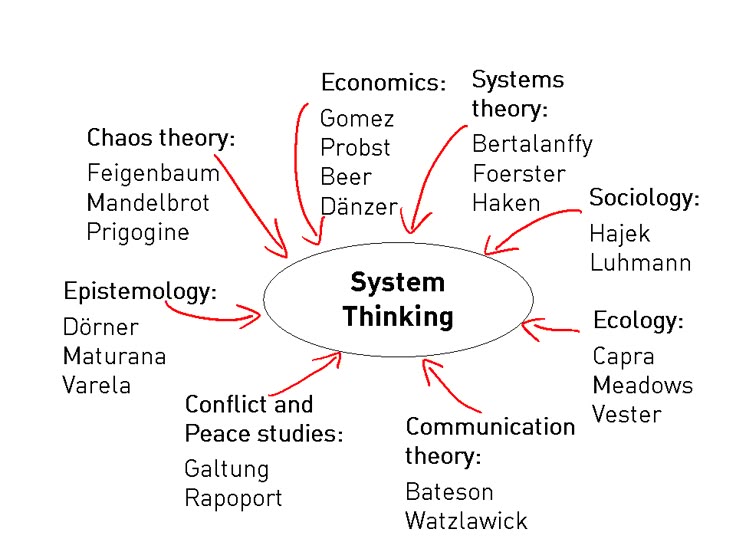
Weinberg, G. M. (2001). An Introduction to General Systems Thinking (Silver Anniversary Edition). Dorset House. Explains how systems-level models apply across engineering, social science, and everyday reasoning.
Taleb, N. N. (2012). Antifragile: Things That Gain from Disorder. Random House. Extends the concept of margin of safety into a general theory of robustness and benefit from volatility.
Kahneman, D. (2011). Thinking, Fast and Slow. Farrar, Straus and Giroux. The definitive account of cognitive biases and the dual-system model of thinking-essential context for understanding why mental models are necessary.
Farnam Street Blog. "Mental Models: The Best Way to Make Intelligent Decisions." View source The leading online resource for applied mental model learning, with hundreds of annotated examples.
Meadows, D. H. (2008). Thinking in Systems: A Primer. Chelsea Green Publishing. The clearest introduction to feedback loops, leverage points, and system dynamics for non-specialists.
Clear, J. (2018). Atomic Habits: An Easy & Proven Way to Build Good Habits & Break Bad Ones. Avery. Demonstrates how compound interest and feedback loop mental models apply directly to behavior change and habit formation.