
Epistemology: Every time you read a news headline and wonder whether to believe it, every time a doctor tells you a diagnosis and you ask how certain they are, every time a court weighs eyewitness testimony against forensic evidence, a philosophical question is operating beneath the surface: what does it actually mean to know something?
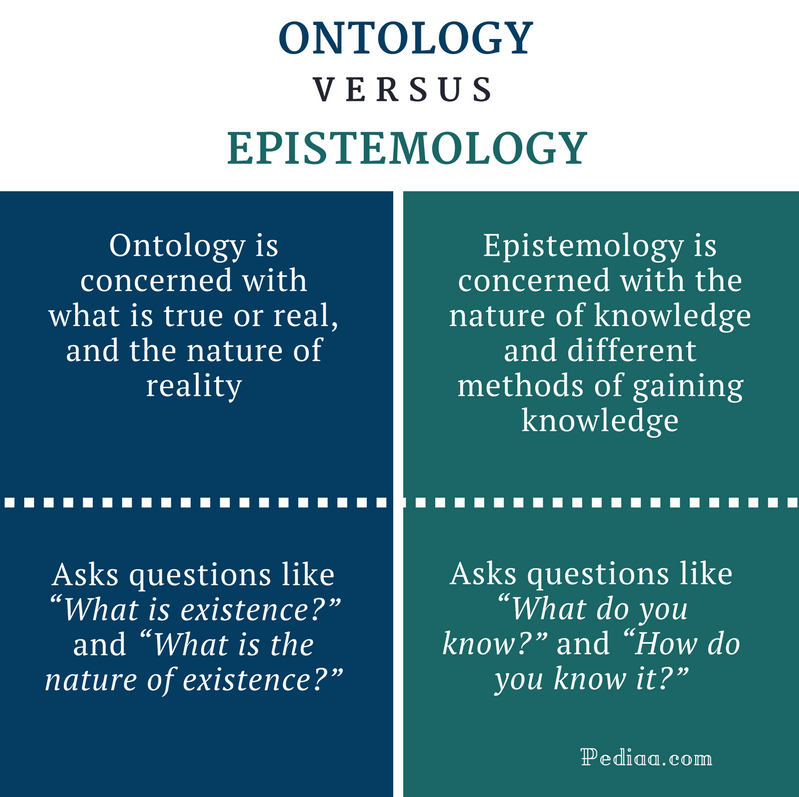
This question is older than universities, older than the printing press, older even than formal logic. It is the central question of epistemology - the branch of philosophy dedicated to the study of knowledge itself.
Epistemology does not simply ask what we happen to believe, or what scientists currently accept, or what most people think. It asks what distinguishes genuine knowledge from lucky guessing, rational belief from blind faith, and trustworthy testimony from noise.
These distinctions matter urgently. The standards we use to assess claims determine which experts we trust, which policies we support, and ultimately how we navigate a world that constantly presents us with competing assertions about what is true.
The history of epistemology is a story of brilliant answers repeatedly unraveling under pressure. Each proposed account of knowledge has, sooner or later, been shown to fail in cases no one anticipated.
Understanding why those failures occurred, and what philosophers have proposed in their wake, is one of the most rigorous and rewarding exercises the intellectual tradition has to offer.
"The only true wisdom is in knowing you know nothing." - attributed to Socrates, as reported by Plato in the Apology
| Epistemological Position | Core Claim | Key Thinkers |
|---|---|---|
| Rationalism | Knowledge derives primarily from reason | Descartes, Leibniz, Spinoza |
| Empiricism | Knowledge derives primarily from experience | Locke, Berkeley, Hume |
| Kant's synthesis | Knowledge requires both reason and experience | Kant |
| Pragmatism | Truth is what works; knowledge is tool-like | Peirce, James, Dewey |
| Reliabilism | Justified beliefs produced by reliable cognitive processes | Goldman |
| Contextualism | Standards for knowledge vary by context | Cohen, DeRose |
Key Definitions
Epistemology: The branch of philosophy concerned with the nature, sources, scope, and limits of knowledge. Derived from the Greek episteme (knowledge) and logos (reason or study).
Justified True Belief (JTB): The classical tripartite analysis of knowledge: a person S knows that P if and only if (1) P is true, (2) S believes that P, and (3) S is justified in believing that P.
A priori knowledge: Knowledge that can be obtained independently of sensory experience, through reason alone (e.g., mathematical truths).
A posteriori knowledge: Knowledge that depends on sensory experience for its justification (e.g., empirical scientific findings).
Epistemic justification: The property that distinguishes a rationally held belief from a mere guess or lucky conviction; what makes a belief reasonable to hold given one's evidence.
The Classical Account: Justified True Belief
Plato and the Problem of Knowledge
The first sustained philosophical examination of knowledge in the Western tradition appears in Plato's dialogues.
In the Meno, Socrates distinguishes knowledge from true opinion: a man who merely has a true belief about the road to Larissa is no better a guide than a man who actually knows it - unless the belief is "tied down" by reasoning.
In the Theaetetus, Plato offers and then systematically dismantles three definitions of knowledge: knowledge as perception, as true belief, and as true belief with an account (logos).[1]
The dialogue ends without a definitive answer - a Socratic irony that signaled the difficulty of the problem rather than a failure of argument.
The synthesis that endured was the tripartite analysis: knowledge is justified true belief. Each condition does necessary work. Truth is required because false beliefs, however well-supported, do not count as knowledge - the alchemist who believed confidently in the philosopher's stone did not know it existed.
Belief is required because knowledge is a cognitive state; facts one has never considered cannot be said to be known. Justification is required to exclude lucky guesses: someone who correctly guesses the result of a coin flip has a true belief but not knowledge.
For over two thousand years, this analysis appeared not just plausible but obviously correct. It was only in the twentieth century that its inadequacy was demonstrated with decisive clarity.
The Gettier Problem
A Three-Page Revolution
In 1963, Edmund Gettier published "Is Justified True Belief Knowledge?" in the journal Analysis.[2] The paper is three pages long and contains two counterexamples. Its impact on analytic philosophy was immediate and lasting.
Gettier's first case: Smith and Jones have applied for a job. Smith has strong evidence that Jones will be hired, and that Jones has exactly ten coins in his pocket (he counted them). Smith infers the justified belief: "The man who will get the job has ten coins in his pocket." As it turns out, Smith gets the job.
And Smith, by coincidence he was unaware of, also has ten coins in his pocket. Smith's belief is true and justified, but intuitively it is not knowledge: his justification attached to the wrong individual, and the truth was reached only by a lucky accident.
The structure of Gettier cases is consistent: justified belief, accidental truth, no genuine knowledge. The agent's cognitive process leads them to a true conclusion but via a false intermediate step or a coincidence that disconnects the justification from what makes the belief true.
Post-Gettier Epistemology
The philosophical community responded with an extended research program lasting decades. Proposed solutions included:
The No False Lemmas condition: Knowledge requires that no false propositions figure as essential steps in the justification chain. This handles some Gettier cases but fails for others where the false intermediate is not explicitly recognized.
The Defeasibility approach (Lehrer and Paxson, 1969): A belief is knowledge only if no true proposition would defeat the justification. But specifying which defeaters are relevant has proved intractable.
Causal theories (Alvin Goldman, 1967): S knows that P if P's being true is causally connected in the right way to S's believing P. This explains perception and memory well but struggles with mathematical and historical knowledge.
Reliabilism (Goldman, 1979): A belief is justified - and thus a candidate for knowledge - if it is produced by a cognitive process that reliably yields true beliefs. A stopped clock happens to show the right time, but clocks are unreliable processes; perceiving something directly in good lighting, by contrast, is reliable.
Reliabilism is externalist: the believer need not have introspective access to what makes their belief-forming process reliable.
No solution has achieved consensus. The Gettier problem remains a generative open question, illustrating how a short, precise paper can permanently alter the landscape of a discipline.
Rationalism and Empiricism
The Rationalist Tradition
The great rationalist philosophers of the seventeenth century - Rene Descartes, Baruch Spinoza, and Gottfried Wilhelm Leibniz - shared the conviction that the intellect, operating independently of the senses, can yield certain and substantive knowledge about reality.
Descartes, in the Meditations on First Philosophy (1641), employed methodological skepticism as an instrument: he resolved to doubt everything that could be doubted in order to identify what, if anything, was immune to doubt.[3] The senses deceive (he might be dreaming), even mathematics could be the product of an evil demon's deception.
But one thing survived: the act of thinking itself. Cogito ergo sum - "I think, therefore I am" - is indubitable precisely because the act of doubting it confirms that a thinker exists.
From this foundation, Descartes attempted to reconstruct knowledge using the criterion of "clear and distinct ideas" grasped by the intellect alone.
Spinoza constructed an entire metaphysical system from definitions and axioms in the style of Euclidean geometry, confident that careful reasoning could reveal the structure of substance, God, and human emotion.
Leibniz distinguished necessary truths of reason (truths of logic and mathematics, which hold in all possible worlds) from contingent truths of fact (which depend on how the actual world happens to be).
This distinction anticipates the analytic/synthetic distinction that would preoccupy philosophy into the twentieth century.
The Empiricist Tradition
John Locke, George Berkeley, and David Hume mounted a sustained challenge to rationalism's confidence in pure reason. Locke, in An Essay Concerning Human Understanding (1689), argued that the mind begins as a tabula rasa - a blank slate - with no innate content.
All ideas, simple or complex, derive ultimately from experience: either sensation (external observation) or reflection (observation of one's own mental operations).
Berkeley drew a startling conclusion from empiricist premises: matter, as an entity existing independently of all minds, is a fiction. We have access only to ideas - sense impressions - and there is no coherent content to the claim that there exists something beyond ideas which ideas represent.
Esse est percipi: to be is to be perceived. Unperceived objects continue to exist because they are always perceived by God.
Hume pushed empiricism to its most radical conclusions. In A Treatise of Human Nature (1739) and the Enquiries, he argued that our idea of causation cannot be found among our sensory impressions. We observe constant conjunction - one event regularly followed by another - but never necessity itself.
Causation is a habit of mind, a psychological expectation formed by repeated experience, not a feature of objective reality. Similarly, the concept of a persisting self cannot be located in experience; introspection reveals only a "bundle" of perceptions with no discoverable unifying subject.
Hume's skeptical conclusions did not lead him to paralysis but to a naturalistic acceptance of belief grounded in custom rather than reason.
Kant's Synthesis
Immanuel Kant described himself as roused from "dogmatic slumber" by Hume. In the Critique of Pure Reason (1781), he argued that both rationalism and empiricism had failed by assuming a false dichotomy.
Kant introduced the crucial distinction between analytic judgments (where the predicate is contained in the concept of the subject, as in "all bachelors are unmarried") and synthetic judgments (where the predicate adds something not contained in the subject).[5]
He further distinguished a priori from a posteriori. The interesting question was whether synthetic a priori knowledge is possible - that is, whether there is substantive knowledge that holds independently of experience.
Kant's answer was yes. Mathematical truths, for instance, are synthetic (the predicate "12" is not contained in the concepts "7" and "5") and yet known a priori.
Similarly, the categories of causation, substance, and quantity are not derived from experience but are forms that the mind imposes on experience to make it intelligible.
The price of this solution is transcendental idealism: we can only know the world as it appears to us (phenomena), not the world as it is in itself (noumena). The thing-in-itself remains permanently beyond knowledge.
The Problem of Induction
Hume's Challenge
Hume observed that all of our confident empirical beliefs about unobserved cases rest on inductive inference: the inference from "every observed instance of X has been followed by Y" to "the next instance of X will be followed by Y." But this inference is not logically valid - its negation is not a contradiction.
And it cannot be justified by appeal to experience, since that would be to justify induction by induction: a circular argument.
This is not a merely technical puzzle. It undermines the epistemic credentials of all empirical science. The claim that the sun will rise tomorrow, that aspirin relieves headaches, that electrons exist - all of these rest on inductive reasoning from past observations.
Hume's response was not to solve the problem but to relocate it: inductive inference is a natural human habit, grounded in custom and instinct, not logic.[4] We cannot help but reason this way, and for practical purposes it works. But the philosophical justification remains unavailable.
Popper's Falsificationism
Karl Popper, in The Logic of Scientific Discovery (1934, German; 1959, English), proposed an influential response.[6] Science, he argued, does not actually proceed by induction. Scientists do not accumulate confirming instances and generalize from them.
Instead, they formulate bold, general hypotheses and attempt to falsify them - to find observations that contradict them. A hypothesis that survives genuine attempts at falsification is "corroborated" but not confirmed. The method of conjecture and refutation replaces the logic of induction.
Popper's demarcation criterion - what separates science from non-science - is falsifiability. Freudian theory, he argued, was unfalsifiable because any behavior could be explained post hoc; Einsteinian physics was scientific because it made predictions that could in principle be disconfirmed.
Critics noted the Duhem-Quine problem: no single hypothesis is ever tested in isolation; any apparent falsification can always be resisted by modifying auxiliary hypotheses. Falsificationism does not eliminate the problem of induction but offers a pragmatic reconstruction of scientific rationality.
Goodman's New Riddle
Nelson Goodman deepened the problem in Fact, Fiction, and Forecast (1955).[7] He invented a predicate he called "grue": an object is grue if it is observed before a future time T and is green, or if not observed before T and is blue.
Every past observation of a green emerald is equally an observation of a grue emerald. So why should we project "all emeralds are green" rather than "all emeralds are grue"? Our evidence does not distinguish between the two.
Goodman argued that projectibility is a matter of entrenchment - which predicates have been used in past inductive inferences. "Green" is entrenched; "grue" is not. But this observation describes our practice without justifying it, and the underlying puzzle remains.
Theories of Justification
Foundationalism
Foundationalism, the dominant view from Descartes through much of the twentieth century, holds that the structure of justified belief is hierarchical. At the base are "basic beliefs" - beliefs that are not justified by other beliefs but are directly justified through sensory experience or by being self-evident.
All other beliefs gain their justification by derivation or inference from basic beliefs. Descartes sought incorrigible foundations (beliefs impossible to be wrong about).
Moderate foundationalists accept fallible but non-inferentially justified basic beliefs, such as simple perceptual beliefs formed in favorable conditions.
The perennial challenge for foundationalism is identifying genuine basic beliefs and explaining the downward support relation - how do inferred beliefs inherit justification from foundations?
Coherentism
Coherentism denies foundations. Beliefs are justified by their mutual coherence within a comprehensive web. Otto Neurath's metaphor of the boat - which must be repaired at sea, one plank at a time, while remaining afloat - captures the coherentist picture: we cannot step outside our belief system to check it against the world.
We can only assess whether the system hangs together. W.V.O. Quine's naturalized epistemology has coherentist elements: he argued that the unit of empirical significance is the whole of science, and individual beliefs face experience only as a corporate body.
Critics object that coherentism severs the link between justification and truth: a richly coherent fantasy would qualify as justified. It also faces the isolation objection - a coherent system detached from experience seems epistemically irresponsible.
Reliabilism and Virtue Epistemology
Alvin Goldman's reliabilism, developed across a series of papers in the 1970s and 1980s, identifies justified belief with belief produced by reliable cognitive processes.[8] Perception, memory, and inference under normal conditions are reliable; wishful thinking and hasty generalization are not.
Reliabilism is externalist: justification does not require that the agent be aware of the reliability of their processes - just that the processes in fact tend to produce true beliefs.
Linda Zagzebski's virtue epistemology, articulated in Virtues of the Mind (1996), locates epistemic excellence in the character of the inquirer.[9] Intellectual virtues - open-mindedness, thoroughness, intellectual courage, epistemic humility - are stable dispositions that reliably lead toward truth.
Knowledge, on this view, is an achievement that manifests the knower's intellectual character. Virtue epistemology connects epistemology to ethics by treating inquiry as a domain of excellence and failure analogous to moral life.
Social Epistemology and Epistemic Injustice
Knowledge as Collective and Political
Traditional epistemology focused on individual knowers and abstract conditions for justified belief. Social epistemology, developed from the 1980s onward, redirected attention to how social structures, testimony, power relations, and collective practices shape what people know and who counts as a knower.
Miranda Fricker's Epistemic Injustice: Power and the Ethics of Knowing (2007) identified two distinctive forms of harm inflicted on persons specifically in their capacity as knowing subjects.[10]
Testimonial injustice occurs when a hearer assigns a speaker deflated credibility because of a prejudice tracking the speaker's social identity - race, gender, class, disability.
Fricker's example is Harper Lee's Tom Robinson, a Black man whose credible testimony is disbelieved before an all-white jury. The wrong is not merely moral but epistemic: the person is wronged as a source of knowledge.
Hermeneutical injustice occurs upstream, at the level of conceptual resources. If a social group lacks the concepts needed to articulate its own experiences - because those experiences are not legible to the dominant group - members of that group suffer a disadvantage in making sense of their own lives.
Fricker's example is sexual harassment before the concept was named and widely shared: women experienced something harmful and damaging but could not render it intelligible in shared discourse.
Standpoint Epistemology
Standpoint epistemology, developed by Sandra Harding, Donna Haraway, and Patricia Hill Collins among others, argues that social position is not epistemically neutral.
The "view from nowhere" - the pretense of a God's-eye perspective uninflected by social location - is itself a particular perspective, one that tends to represent the standpoints of those with institutional power.
People occupying marginalized positions may have cognitive access to features of social reality that are invisible from positions of dominance: those who experience structural inequality understand the mechanisms of that inequality in ways those who benefit from it typically do not.
This is a contested set of claims, and critics from both conservative and progressive directions have raised concerns about the risks of simple identity-to-authority inferences.
But standpoint epistemology has significantly influenced research methodology in social science and the humanities, and its core challenge - that inquiry is never conducted from nowhere - is difficult to dismiss.
Skepticism and Its Discontents
The Skeptical Challenge
Philosophical skepticism poses the question of whether knowledge is possible at all, or whether our cognitive capacities are so susceptible to systematic error that nothing qualifies as genuine knowledge.
Descartes' evil demon scenario - an omnipotent being dedicated to deceiving him - called into question even mathematical certainties.
The contemporary version, popularized by Hilary Putnam in Reason, Truth and History (1981), is the brain-in-a-vat scenario: suppose your brain has been removed from your body and connected to a supercomputer that simulates your entire experience.
Every experience you have had, every piece of evidence for every belief you hold, is fabricated. How could you rule this out?
Putnam actually argued that the brain-in-a-vat hypothesis is self-refuting: if you are a brain in a vat, then your words do not refer to the things you take them to refer to, and so the sentence "I am a brain in a vat" cannot express a true thought if it is thought by a brain in a vat.[11]
But this response is itself contested, and radical skepticism's intuitive force remains.
Responses to Skepticism
G.E. Moore, in "Proof of an External World" (1939), offered a response that has been read as either naive or brilliantly diagnostic.
Holding up his hands and saying "here is a hand, and here is another," he insisted that he knew with certainty that external objects exist, and that any argument concluding otherwise must have a false premise.
Moore was not arguing that skeptical arguments are wrong at a specific step; he was insisting that the certainty of ordinary beliefs is greater than any philosophical argument's premises.
Ludwig Wittgenstein, in On Certainty (1949-1951), pushed this insight further.[12] Doubt, he argued, requires a framework: to doubt whether there is a hand in front of me, I must already be committed to a great deal - that I have eyes, that I am awake, that there is a physical world in which hands can exist.
These framework commitments are not themselves justified by evidence; they are what make evidence-gathering and doubt possible in the first place. The foundational certainties of our form of life are not items of knowledge but the background conditions within which knowledge-claims arise.
Contextualism, defended by Keith DeRose and Stewart Cohen in the 1990s, offers a different kind of response. The semantic standards for "knowledge" vary with conversational context.
In ordinary contexts, I know that I have hands; in a philosophy seminar where skeptical scenarios are explicitly raised, the standards are higher, and I may not count as knowing.
This view preserves the truth of ordinary knowledge-attributions without requiring that we refute radical skepticism by its own demanding standards.
Why Epistemology Remains Urgent
The debates surveyed here are not relics of a bygone philosophical tradition. They bear directly on contemporary debates about testimony and trust: when to defer to experts, how to weigh peer disagreement, and who has standing to challenge prevailing consensus.
The epistemology of testimony - analyzed by C.A.J. Coady in Testimony (1992) - asks whether testimonial belief requires independent verification or whether it can be non-inferentially justified. This question bears on children's learning, legal evidence, and public health communication.
The Gettier problem and post-Gettier epistemology have generated formal frameworks in epistemology that now interact with computer science and artificial intelligence: what should a rational agent believe on the basis of available evidence, and how should it update its beliefs as new evidence arrives?
Bayesian epistemology applies probability theory to the logic of belief revision. The question of when an artificial system can be said to "know" something in any substantive sense is both a technical and a philosophical question that epistemology is uniquely positioned to inform.
Miranda Fricker's work on epistemic injustice has been taken up not only in academic philosophy but in fields including psychology, law, medicine, and education - wherever the question of whose testimony counts and who gets to set the standards for knowledge is alive and consequential.
Sources & Further Reading
- Plato. Theaetetus. Trans. M.J. Levett, rev. Myles Burnyeat. Hackett, 1990.
- Gettier, Edmund L. "Is Justified True Belief Knowledge?" Analysis, vol. 23, no. 6, 1963, pp. 121-123.
- Descartes, Rene. Meditations on First Philosophy. Trans. John Cottingham. Cambridge University Press, 1986. (Original 1641.)
- Hume, David. A Treatise of Human Nature. Ed. L.A. Selby-Bigge, rev. P.H. Nidditch. Oxford University Press, 1978. (Original 1739.)
- Kant, Immanuel. Critique of Pure Reason. Trans. Paul Guyer and Allen Wood. Cambridge University Press, 1998. (Original 1781.)
- Popper, Karl. The Logic of Scientific Discovery. Routledge, 2002. (Original 1934, German.)
- Goodman, Nelson. Fact, Fiction, and Forecast. 4th ed. Harvard University Press, 1983. (Original 1955.)
- Goldman, Alvin I. "What Is Justified Belief?" In George Pappas, ed., Justification and Knowledge. D. Reidel, 1979.
- Zagzebski, Linda Trinkaus. Virtues of the Mind: An Inquiry into the Nature of Virtue and the Ethical Foundations of Knowledge. Cambridge University Press, 1996.
- Fricker, Miranda. Epistemic Injustice: Power and the Ethics of Knowing. Oxford University Press, 2007.
- Putnam, Hilary. Reason, Truth and History. Cambridge University Press, 1981.
- Wittgenstein, Ludwig. On Certainty. Trans. G.E.M. Anscombe and G.H. von Wright. Blackwell, 1969. (Written 1949-1951.)