
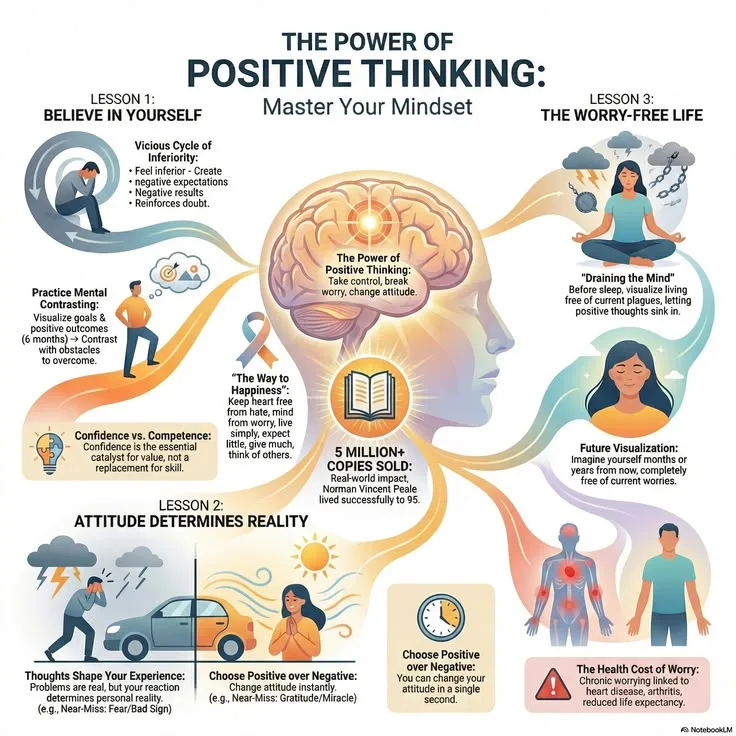
Positive psychology is a scientific approach to studying what makes life go well (the conditions, experiences, and character traits associated with human flourishing) rather than focusing exclusively on the reduction of mental illness and the correction of dysfunction.
It asks not only what is wrong with people and how to fix it, but what is right with them and how to build on it.
Since its formal founding in 1998, positive psychology has generated thousands of peer-reviewed studies, influenced clinical practice, corporate consulting, education policy, and military training programs, and sparked a productive debate about the values embedded in the science of human welfare.
Origins: Seligman's Challenge to Psychology
The formal founding of positive psychology is typically dated to 1998, when Martin Seligman delivered his presidential address to the American Psychological Association and argued that psychology had become too narrowly focused on pathology, suffering, and mental disorder at the expense of studying positive human qualities and the conditions that allow people to thrive.
Seligman's critique was institutional as much as scientific. He observed that after World War II, the Veterans Administration and the National Institute of Mental Health made large-scale funding available for research on mental illness, because treating damaged veterans and civilians was the urgent priority.
This funding shaped what psychologists studied and which academic careers flourished. By the century's end, there was a vast scientific literature on depression, anxiety, schizophrenia, and trauma, but comparatively little rigorous research on courage, wisdom, gratitude, hope, or love.
Seligman identified three pillars for a renewed psychology: the study of positive subjective experience (happiness, well-being, flow, hope); the study of positive individual traits (character strengths and virtues); and the study of positive institutions (families, schools, workplaces, communities) that enable individuals to flourish.
He collaborated with Mihaly Csikszentmihalyi, the Hungarian-American psychologist best known for his theory of flow, on the founding of the field.
Their 2000 paper "Positive Psychology: An Introduction" in the American Psychologist is regarded as the field's founding manifesto.
"The good life is using your signature strengths every day to produce authentic happiness and abundant gratification." (Martin Seligman)
The field was not without precursors. Abraham Maslow's hierarchy of needs and concept of self-actualization, Carl Rogers's person-centered therapy, and the humanistic psychology movement of the 1950s and 1960s had anticipated many of positive psychology's themes.
Seligman's contribution was to insist on the same rigorous empirical standards (randomized controlled trials, validated measurement instruments, replication) that characterized the best clinical psychology research, rather than the qualitative, phenomenological approach of the humanists.
The Statistical Asymmetry That Motivated the Field
The scale of the imbalance Seligman identified was considerable. A 1998 review by Seligman and Csikszentmihalyi found that searches of the psychological literature for that year yielded approximately 45,000 articles on depression, but fewer than 300 on well-being.
This was not simply an intellectual gap: it represented a systematic bias in how psychology had defined its mission and allocated research resources.
By contrast, an analysis of the field today shows that positive psychology has generated more than 88,000 peer-reviewed publications since 2000, spanning well-being, resilience, strengths, positive emotions, meaning, and flourishing.
The number of university courses, degree programs, and research centers dedicated to positive psychology has expanded from essentially zero in 1998 to hundreds worldwide.
Whether this growth has produced proportionate gains in understanding is itself a subject of ongoing evaluation, but the expansion of the scientific agenda toward the positive end of human experience represents a genuine disciplinary shift.
The PERMA Model
PERMA is Seligman's model of well-being, introduced in his 2011 book Flourish. It represents a significant revision of his earlier work, in which he had argued that well-being was essentially equivalent to happiness. In Flourish, he argued that this earlier hedonic framework was too narrow and replaced it with five elements:
| Element | Description | Key Theorist/Research |
|---|---|---|
| Positive Emotion | Pleasurable feelings: joy, gratitude, serenity, hope, awe | Barbara Fredrickson: broaden-and-build theory |
| Engagement | Deep absorption in activity; flow state | Mihaly Csikszentmihalyi |
| Relationships | Positive connections with others | Julianne Holt-Lunstad: social connection and longevity |
| Meaning | Belonging to and serving something larger than the self | Viktor Frankl, Robert Emmons |
| Accomplishment | Achievement pursued for its own sake | Various |
P: Positive Emotion encompasses pleasurable emotions including joy, gratitude, serenity, interest, hope, pride, awe, amusement, and love.
Barbara Fredrickson's broaden-and-build theory holds that positive emotions are not merely pleasant but functionally important: they broaden momentary thought-action repertoires (making thinking more flexible and creative), and they build lasting personal resources (cognitive, physical, social, and psychological) that outlast the emotion itself.
Fredrickson's (2001) meta-analysis across experiments found consistent support for the broadening effect.
E: Engagement corresponds closely to Csikszentmihalyi's concept of flow: complete absorption in an intrinsically rewarding activity, with loss of self-consciousness and distortion of time perception. Unlike positive emotion, which is accessible in retrospect and during experience, engagement is typically noticed only afterward.
R: Relationships reflects Seligman's claim that other people are not merely contributors to positive emotion but intrinsically valuable components of a flourishing life.
The Harvard Study of Adult Development, which tracked men from the 1930s onward in one of the longest longitudinal studies in psychology, found that the warmth of relationships was the single strongest predictor of late-life flourishing (Waldinger and Schulz, 2010).
M: Meaning involves belonging to and serving something beyond the self, whether religious, political, organizational, or familial.
Viktor Frankl's Man's Search for Meaning (1946), drawing on his experiences as a Holocaust survivor and psychiatrist, argued that the human drive for meaning is as fundamental as any other motivation, and that meaning-making is possible even under conditions of extreme suffering.
A: Accomplishment is the pursuit of achievement for its own sake, independent of whether it generates positive emotion, engagement, or meaning. Some people pursue goals not because they feel happy doing so but because achieving matters to them intrinsically.
This is a significant departure from hedonic well-being research (the study of subjective happiness associated with Ed Diener's Satisfaction with Life Scale) and from earlier positive psychology frameworks. PERMA explicitly rejects the reduction of well-being to any single dimension.
PERMA-V and Extensions
Since PERMA's introduction, several researchers have proposed extending the model to capture elements they regard as equally fundamental. Scott Barry Kaufman and others have proposed adding Vitality (physical health and energy) as a sixth element, creating PERMA-V.
The argument is that embodied health is not simply a background condition for flourishing but an active contributor to it, and that a psychology of flourishing that ignores physical well-being is incomplete.
Margaret Kern and colleagues have developed the PERMA-Profiler, a 23-item validated questionnaire for assessing all five PERMA dimensions.
Studies using the PERMA-Profiler across multiple countries (including the UK, Australia, and the US) have found that all five elements contribute uniquely to overall well-being, and that the model shows acceptable cross-cultural validity, though with some variation in the relative contribution of each element across cultural contexts.
Flow Theory
Flow is the state of optimal experience studied by Mihaly Csikszentmihalyi (pronounced approximately "Cheeks-sent-me-high"), a Hungarian-American psychologist who developed the concept through decades of research beginning in the 1960s. He described it most fully in his 1990 book Flow: The Psychology of Optimal Experience.
Flow is the state in which a person is so absorbed in an intrinsically rewarding activity that they lose track of time, forget themselves, and experience the activity as effortless despite full engagement.
Csikszentmihalyi initially studied artists, chess players, rock climbers, surgeons, and factory workers: people from very different walks of life who described the same loss of self in their work. The phenomenology of the experience recurred across different activities and cultures.
The key condition for flow is the challenge-skill balance: there must be a match between the difficulty of the activity and the skill level of the person. If challenge significantly exceeds skill, anxiety results; if skill significantly exceeds challenge, boredom results.
Flow occurs in the channel between these states, when challenge and skill are well-matched at a level demanding full attention.
"The best moments in our lives are not the passive, receptive, relaxing times... The best moments usually occur if a person's body or mind is stretched to its limits." (Mihaly Csikszentmihalyi)
Csikszentmihalyi developed the experience sampling methodology (ESM): beeping participants at random intervals with a pager (later smartphone) and asking them to report their current activity, thoughts, and emotional state, in order to study flow and other psychological states in daily life rather than in laboratory settings.
This methodology has been widely adopted in psychological research.
Studies using ESM have found that people report higher levels of concentration, engagement, and satisfaction during activities that produce flow states. Paradoxically, people in flow during work activities sometimes report higher well-being than during passive leisure, even though they rate leisure as preferable in the abstract.
The Neuroscience of Flow
Neuroimaging research on flow states has produced intriguing findings that illuminate why the state feels as it does. Johannes Keller and colleagues have found that flow is associated with reduced activity in the prefrontal cortex, the brain region responsible for self-monitoring, self-criticism, and metacognitive evaluation.
This phenomenon has been called transient hypofrontality by Arne Dietrich (2004): the temporary reduction in prefrontal activity that is associated with highly automatized performance appears to underlie the characteristic "effortless" quality of flow and the loss of self-consciousness.
The default mode network (DMN), the brain's resting state network associated with self-referential thought, mind-wandering, and rumination, shows reduced activity during flow states, consistent with the subjective experience of flow as an absence of the usual background noise of self-monitoring.
Reduced DMN activity during task engagement is associated with better performance and greater subjective engagement across multiple studies.
Character Strengths and the VIA Classification
The Values in Action (VIA) classification of character strengths, developed by Martin Seligman and Christopher Peterson and published in Character Strengths and Virtues: A Handbook and Classification (2004), is a systematic taxonomy of positive personality traits conceived explicitly as a "positive DSM," a counterpart to the Diagnostic and Statistical Manual that catalogued human weaknesses.
Seligman and Peterson reviewed virtue traditions across world cultures, including Greek philosophy, Confucian thought, the Bhagavad Gita, the Bushido code, the Torah, the New Testament, and Quaker traditions, looking for traits that appeared consistently across time and culture.
From this review, they identified 24 character strengths organized under six broad virtues:
| Virtue | Character Strengths |
|---|---|
| Wisdom | Creativity, curiosity, judgment, love of learning, perspective |
| Courage | Bravery, perseverance, honesty, zest |
| Humanity | Love, kindness, social intelligence |
| Justice | Teamwork, fairness, leadership |
| Temperance | Forgiveness, humility, prudence, self-regulation |
| Transcendence | Appreciation of beauty, gratitude, hope, humor, spirituality |
The VIA Survey, a freely available self-report questionnaire, has been completed by more than 20 million people worldwide and provides a profile of an individual's "signature strengths," the strengths that feel most authentically one's own.
Research by Park and Peterson (2009) found that signature strength use predicts life satisfaction and work engagement above and beyond other predictors.
Cross-cultural validation studies have found that the 24 strengths are recognizable across many cultures, though their relative prevalence and cultural valuation varies. Gratitude, hope, love, curiosity, and zest consistently emerge as the most commonly endorsed strengths globally.
Strengths Use and Well-Being
Ryan Niemiec at the VIA Institute on Character has reviewed the growing body of research on strengths use. A 2012 meta-analysis by Martina Heintz and colleagues found that deliberate application of signature strengths produced significant increases in well-being and decreases in depression across diverse samples.
Linley and colleagues (2010) found that people who used their strengths in new and different ways every day for one week showed lasting increases in happiness and reductions in depression symptoms that persisted at one-month follow-up.
The mechanism appears to involve both intrinsic motivation (using strengths feels authentically rewarding rather than effortful) and identity congruence (using strengths is experienced as "being oneself," which satisfies the psychological need for authenticity).
When a person's daily work substantially expresses their signature strengths, research suggests they are more engaged, more productive, and more satisfied, which is why strengths-based approaches to employee development have attracted considerable corporate interest, though the organizational research is methodologically variable.
Hedonic Adaptation and the Set Point Theory
Hedonic adaptation is the well-documented process by which people return to a relatively stable level of subjective well-being following major positive or negative life events.
Philip Brickman and Donald Campbell's 1971 paper introduced the concept of the hedonic treadmill: because we adapt to improvements in our circumstances, we must continually achieve more to maintain the same level of satisfaction, implying that objective improvements in life conditions produce diminishing marginal returns on subjective happiness.
Brickman, Coates, and Janoff-Bulman's landmark 1978 study compared lottery winners, paraplegics, and a control group.
The findings were striking: lottery winners were not significantly happier than controls, and paraplegics, while less happy than controls, reported levels of happiness far higher than controls predicted. Both groups had adapted substantially to their changed circumstances.
David Lykken and Auke Tellegen's set point theory (1996), drawing on twin studies, argued that approximately 80 percent of the variance in subjective well-being is attributable to genetic factors, and that people have a genetically determined baseline to which they reliably return after perturbation.
Circumstances accounted for only about 10 percent of variance in their analyses.
Daniel Gilbert's Stumbling on Happiness (2006) popularized research on affective forecasting, predictions of how future events will make us feel, showing that people systematically overestimate the emotional impact of both good and bad future events because they underestimate hedonic adaptation.
We predict that winning the lottery or becoming paralyzed will permanently transform our happiness level; the evidence suggests adaptation is far more powerful than we expect.
However, Bruce Headey's 2010 long-term panel study challenged the strict set point model, showing that a substantial minority of people demonstrate lasting changes in well-being over decades.
Particular life choices, including stable partnerships, volunteering, and prioritizing altruistic rather than hedonistic goals, appeared associated with lasting upward shifts in well-being, suggesting that the set point is a tendency rather than an immutable destiny.
Sustainable Happiness: What Resists Adaptation?
Sonja Lyubomirsky, Kennon Sheldon, and David Schkade's (2005) influential architecture of sustainable happiness model proposed that well-being is determined by three factors: a genetically determined set point (approximately 50% of variance), circumstances (approximately 10%), and intentional activity (approximately 40%).
Their central thesis was that intentional activities (behaviors and practices deliberately chosen and requiring ongoing effort) are less subject to hedonic adaptation than circumstantial changes because they are variable, effortful, and personally authored.
Lyubomirsky (2008) synthesized the research on sustainable happiness practices in The How of Happiness, identifying a set of activities that show evidence of resisting adaptation: expressing gratitude, practicing optimism, cultivating social relationships, doing acts of kindness, pursuing meaningful goals, savoring positive experiences, and practicing forgiveness.
The common thread is that these activities require active engagement rather than passive reception: the happiness they produce is earned through ongoing effort rather than delivered by circumstance, which appears to make it more durable.
Gratitude Research
Gratitude research has been one of the most active areas in positive psychology, generating both enthusiasm and methodological scrutiny.
Robert Emmons and Michael McCullough's (2003) randomized controlled trial, one of the field's most-cited studies, found that participants assigned to write weekly about things they were grateful for reported higher well-being and fewer physical symptoms compared to those who wrote about daily hassles or neutral events after ten weeks.
This finding spawned a large industry of gratitude interventions in positive psychology and clinical practice. However, subsequent attempts to replicate and extend the original findings have yielded mixed results.
A 2016 meta-analysis by Wood and colleagues found that gratitude interventions did produce significant effects on well-being, but with modest effect sizes (d = 0.31 on average) that tended to be smaller in more rigorously controlled studies.
Pre-registered replications have been more conservative in their findings than the original research, consistent with the broader replication challenges in social psychology.
Dispositional gratitude (measured as a stable trait rather than assessed after an intervention) shows more robust associations with well-being.
McCullough, Emmons, and Tsang (2002) found that grateful people report higher positive affect, more satisfaction with life, more vitality and optimism, and lower levels of envy and depression, though the cross-sectional design limits causal inference.
Gratitude Letters: A Specific Technique
One gratitude intervention with unusually strong evidence is the gratitude letter: writing a detailed, specific letter expressing gratitude to someone who has been important in one's life and then, ideally, delivering it in person.
Martin Seligman and colleagues' (2005) randomized controlled trial found that the gratitude visit produced the largest positive effect on happiness and the largest negative effect on depression of any intervention tested, with effects lasting up to one month, unusually durable for a brief psychological intervention.
Research by Amit Kumar and Nicholas Epley (2023) adds an important dimension: people significantly underestimate how positive gratitude expression makes the recipient feel. Participants in their studies consistently predicted that expressing gratitude would feel awkward for the recipient and that the impact would be modest.
Recipients reported feeling much more positive than senders expected, and much less awkward. The systematic undervaluation of gratitude expression suggests that one reason people express less gratitude than would be mutually beneficial is a miscalibrated model of how it will be received.
Criticisms of Positive Psychology
Positive psychology has attracted sustained criticism from multiple directions, representing some of the field's most productive intellectual debates.
The replication problem: The field attracted early attention through studies suggesting that simple interventions, such as gratitude letters, counting blessings, and performing acts of kindness, produced significant and lasting improvements in well-being.
Some of these findings have not replicated reliably in pre-registered, adequately powered studies. Effect sizes in positive psychology interventions have generally been smaller in more rigorous subsequent studies.
The positive psychology replication crisis is part of the broader reproducibility crisis in social psychology identified by the Open Science Collaboration (2015), which found that only about 25% of social psychology studies successfully replicated.
Toxic positivity: Barbara Ehrenreich's Bright-Sided: How Positive Thinking is Undermining America (2009) argued that the cultural emphasis on positive thinking and happiness can function as a form of victim-blaming: implying that people who are unhappy lack the right mental attitude rather than facing genuinely difficult material circumstances.
Ehrenreich documented how positive thinking ideology in American corporate culture can discourage legitimate criticism of working conditions, and how cancer patients are sometimes pressured to maintain positive attitudes in ways that deny the reality of their situation.
Cultural specificity: Sociological and cultural critics have questioned whether positive psychology's constructs are genuinely universal or culturally specific ideals reflecting Western, individualist, affluent values.
The PERMA model's emphasis on individual achievement, personal meaning, and self-determined engagement may not map onto collectivist cultures where self-enhancement is less valued, or onto communities facing structural inequality, poverty, or systemic discrimination.
The negativity bias problem: Critics including Paul Rozin and Ed Royzman have pointed out that the asymmetry between negative and positive experience, the well-documented fact that bad events have stronger and more lasting effects than equivalently good ones, means that a psychology that ignores the negative is necessarily incomplete, regardless of its practical motivation.
"Not everything that can be counted counts, and not everything that counts can be counted." (William Bruce Cameron, often misattributed to Einstein)
The 3:1 Positivity Ratio and Its Retraction
One of the most widely cited claims in positive psychology was Barbara Fredrickson and Marcial Losada's "positivity ratio": the idea that human flourishing requires a ratio of positive to negative emotions of at least 2.9:1. The claim appeared in a 2005 paper in American Psychologist and was cited thousands of times.
It was retracted in 2013 after Nick Brown, a graduate student at the University of East London, demonstrated that the mathematical modeling on which the precise ratio was based was fundamentally flawed.
The broader claim that more positive emotion is generally associated with better outcomes survives scrutiny; the specific ratio does not.
This episode illustrates both the replication challenges in the field and the importance of scientific criticism as a corrective mechanism.
The retraction was not catastrophic for positive psychology's core claims, which rest on much broader evidence than any single paper, but it demonstrated that enthusiasm for positive findings can outrun methodological rigor.
Practical Applications
Despite methodological debates, positive psychology has influenced several domains:
Clinical practice: Positive psychotherapy (Seligman, Rashid, and Parks, 2006) incorporates building positive emotion, engagement, and meaning alongside traditional symptom reduction. In randomized trials, it has shown effects on depression comparable to traditional therapies.
Well-being therapy developed by Fava and Ruini (2003) specifically targets the six dimensions of psychological well-being identified by Carol Ryff as a complement to symptom-focused treatment.
Education: The Penn Resiliency Program and related social-emotional learning curricula based on positive psychology principles have been implemented in thousands of schools.
Meta-analyses by Durlak and colleagues (2011) found that social-emotional learning programs produced an average 11-percentile-point improvement in academic achievement alongside reductions in problem behavior.
Organizational settings: The PERMA-Lead model and related frameworks have been applied to workplace well-being programs. Meta-analyses of workplace well-being interventions report moderate effect sizes, though effect sizes are generally larger in less rigorously controlled studies.
Military psychology: The US Army's Comprehensive Soldier and Family Fitness program, developed in collaboration with Seligman's team at the University of Pennsylvania, was implemented across the entire US Army between 2009 and 2011 in what remains one of the largest applications of positive psychology anywhere.
Evaluations found modest benefits for resilience outcomes, though the program's mandatory nature and the scale of implementation complicated evaluation.
Positive Psychology and Aging
One domain where positive psychology findings show particular robustness is aging. Laura Carstensen's socioemotional selectivity theory proposes that as people age and perceive their remaining time as limited, they prioritize emotionally meaningful goals and close relationships over information-seeking and goal-acquisition.
This shift is associated with what Carstensen calls the positivity effect: older adults show reduced attention to and memory for negative stimuli relative to positive stimuli, compared with younger adults.
Research using the same experience sampling methodology developed by Csikszentmihalyi finds that emotional well-being peaks in older age in most studies, the hedonic opposite of what most younger people predict when asked how they expect to feel as they age.
This "paradox of aging" has been replicated across numerous countries and cultures, suggesting that the psychological gains of aging are not merely an artifact of Western or affluent contexts.
Understanding what cognitive and social strategies underlie older adults' emotional resilience may be among the most practically valuable questions in the field.
Summary: What Positive Psychology Has Established
Reviewing the evidence available in 2025, several claims in positive psychology rest on particularly strong foundations:
| Claim | Evidence Quality | Key Studies |
|---|---|---|
| Relationships are the strongest predictor of late-life well-being | Strong longitudinal evidence | Harvard Study of Adult Development |
| Positive emotions broaden thinking and build resources | Multiple replications | Fredrickson (2001, 2004) |
| Flow states are associated with engagement and performance | ESM studies across cultures | Csikszentmihalyi (1990, 2014) |
| Signature strength use predicts engagement and satisfaction | Multiple cross-cultural studies | Park & Peterson (2009) |
| Gratitude interventions produce modest but real effects | Meta-analytic support | Wood et al. (2016) |
| Hedonic adaptation limits the happiness gains from circumstances | Robust replication | Brickman et al. (1978); Gilbert (2006) |
| Intentional activities resist adaptation better than circumstances | Theoretical and empirical support | Lyubomirsky et al. (2005) |
Positive psychology's most enduring contribution may not be any specific intervention but the insistence that the full range of human experience, not only suffering and disorder but also flourishing, meaning, strength, and joy, belongs within the scientific agenda of psychology.
Whether or not every specific finding survives replication, the reorientation of scientific attention toward the positive conditions of human life has expanded the discipline in ways that appear likely to prove lasting.
Further Reading
- Seligman, M. E. P., & Csikszentmihalyi, M. (2000). Positive psychology: An introduction. American Psychologist, 55(1), 5-14.
- Seligman, M. E. P. (2011). Flourish: A Visionary New Understanding of Happiness and Well-Being. Free Press.
- Csikszentmihalyi, M. (1990). Flow: The Psychology of Optimal Experience. Harper and Row.
- Fredrickson, B. L. (2001). The role of positive emotions in positive psychology: The broaden-and-build theory of positive emotions. American Psychologist, 56(3), 218-226.
- Lyubomirsky, S. (2008). The How of Happiness: A New Approach to Getting the Life You Want. Penguin Press.
- Ehrenreich, B. (2009). Bright-Sided: How Positive Thinking Is Undermining America. Metropolitan Books.
- Park, N., & Peterson, C. (2009). Character strengths: Research and practice. Journal of College and Character, 10(4).
- Waldinger, R. J., & Schulz, M. S. (2010). What's love got to do with it? Social functioning, perceived health, and daily happiness in married octogenarians. Psychology and Aging, 25(2), 422-431.