
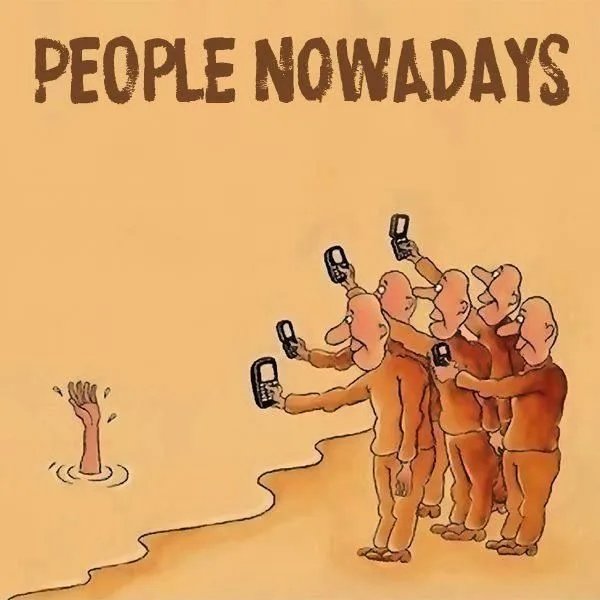
People can fail to act during an emergency when they take other observers' inaction as evidence that nothing serious is happening. The bystander effect describes this social process, challenging the assumption that the presence of more witnesses automatically makes help more likely.
In the early hours of March 13, 1964, a twenty-eight-year-old woman named Kitty Genovese was returning to her apartment in Kew Gardens, Queens, after closing the bar where she worked. She parked her car and was walking toward the building entrance when a man named Winston Moseley stepped from the shadows and stabbed her twice in the back.
She screamed. Lights came on in the apartment building across the street. Moseley retreated to his car. Then, over the course of roughly thirty minutes, he returned twice more to continue the attack, stabbing her again in a doorway vestibule and sexually assaulting her as she lay dying.
Kitty Genovese died before the ambulance arrived. She was stabbed thirteen times in total.
Weeks later, the New York Times published a story under the headline "37 Who Saw Murder Didn't Call the Police." The reporter, Martin Gansberg, described a neighborhood that had sat at its windows and watched a young woman die without lifting a finger to help.
The story became one of the most consequential pieces of journalism ever published in the social sciences - not because it was entirely accurate, but because it posed a question that neither the culture nor psychology could satisfactorily answer: why would nearly forty people watch someone be murdered without intervening?
The standard explanations on offer - urban alienation, moral decay, the indifference bred by city life - struck two young social psychologists as deeply insufficient. What John Darley and Bibb Latane suspected, and then demonstrated, was that the failure to help was not a moral failure of New York City residents in 1964.
It was a structural feature of human social cognition that operates whenever people witness an emergency in the presence of others.
The research program those two men launched in 1968 produced what is now among the most replicated sets of findings in all of social psychology: that the presence of other potential helpers reliably decreases the probability that any one of them will act.
The larger the group, the less likely any individual is to intervene. This counterintuitive finding - that crowds are not protective but inhibitory - has been demonstrated in over a hundred studies across different cultures, populations, and emergency types, and it is known as the bystander effect.
"The more bystanders there are, the less likely any one of them is to help. Responsibility diffuses through a crowd." - John Darley & Bibb Latane, 1968
The Five-Step Decision Model
Darley and Latane's theoretical synthesis, published in their 1970 book The Unresponsive Bystander: Why Doesn't He Help?, proposed that intervention in an emergency is not a single act but the product of five sequential decisions, each of which can block the path to helping.[3] A bystander must:
Notice the event. A person absorbed in their own thoughts or conversation may not perceive the emergency at all. Attentional focus, distraction, and the routine visual noise of public spaces all reduce the probability of noticing.
Interpret the event as an emergency. This is the step at which pluralistic ignorance most powerfully operates. Most situations that could be emergencies can also be explained away: the person collapsed on the pavement is drunk, the screaming from the apartment is a domestic argument, the smoke is someone burning food.
In ambiguous situations, bystanders look to others for interpretive cues - and the social dynamics of that mutual observation typically resolve ambiguity in the direction of non-emergency.
Assume personal responsibility. Even if a bystander concludes an emergency is occurring, they must feel that the responsibility to act falls on them specifically. This is where diffusion of responsibility operates: the felt obligation is shared across everyone present and experienced by each individual as proportionally smaller.
Know how to help. A bystander who lacks the specific knowledge or skills required - CPR technique, the number for emergency services, how to handle a particular medical situation - faces a competence barrier that may prevent intervention even when the preceding steps have been cleared.
Decide to implement the help. Even a bystander who notices, correctly interprets, feels personally responsible, and knows what to do may still fail to act if the perceived costs of helping - embarrassment, physical danger, time, the risk of misreading the situation - are experienced as too high.
Each step represents a potential point of failure, and the presence of other bystanders worsens the odds at steps two and three in particular.
This sequential model is both theoretically elegant and empirically grounded: interventions designed to increase helping that target only one step - awareness campaigns that help people recognize emergencies, for instance, without addressing diffusion of responsibility - are predictably less effective than those that address the full decision chain.
Factors That Increase vs. Decrease Bystander Intervention
| Factor | Increases Intervention | Decreases Intervention |
|---|---|---|
| Group size | Alone or in very small groups (1-2 people) | Larger groups; effect strengthens as numbers increase |
| Ambiguity | Unambiguous emergency - clear injury, explicit distress calls | Ambiguous situation - person may be drunk, sleeping, ill |
| Victim proximity | Victim is physically close; direct eye contact established | Victim is distant, partially visible, or behind a barrier |
| Relationship to victim | Known to bystander; friend, colleague, family member | Complete stranger; anonymous victim |
| Shared group identity | Bystander perceives shared social identity with victim | Victim perceived as out-group or unaffiliated |
| Cost of helping | Low cost - verbal intervention, calling emergency services | High cost - physical danger, legal liability, reputational risk |
| Expertise | Bystander has relevant training (CPR, first aid, crisis response) | Bystander lacks relevant knowledge or skills |
| Danger level | High, unambiguous physical danger (Fischer et al., 2011) | Low-stakes or non-violent ambiguous situations |
| Personal responsibility cue | Directly addressed or named by victim | One of many unnamed witnesses |
Cognitive Science: Mechanisms, Researchers, and Findings
Diffusion of Responsibility
The primary mechanism Darley and Latane identified was diffusion of responsibility. In their foundational 1968 paper in the Journal of Personality and Social Psychology, they described an experiment that remains among the most cited in the entire social psychology literature.
Participants sat alone in cubicles and communicated via intercom, believing they were in a group discussion about the stresses of college life. The other "participants" were pre-recorded confederates.
At some point, one voice began describing symptoms consistent with an epileptic seizure - stuttering, reporting dizziness, increasingly distressed calls for help before going silent.
When participants believed they were the only other person on the intercom, 85 percent intervened, and they did so quickly, with a mean response time under sixty seconds.
When participants believed four other people were also listening, only 31 percent intervened, and many who did not had still not moved when the experimenter entered after six minutes. The elegance of the design was that no group actually existed - each participant sat alone in a cubicle.
The mere belief that others were present was sufficient to reduce helping by more than half. The social context, not the physical presence of other people, was the active variable.
Darley and Latane formalized the mechanism mathematically in their social impact theory, later elaborated by Latane (1981) in American Psychologist. Social impact - including the felt pressure to act - is a function of the strength, immediacy, and number of people in a social situation.
As the number of potential helpers increases, the experienced impact on each individual decreases as a power function, not a simple fraction. This mathematical formalization predicted the empirical results with considerable precision.
Pluralistic Ignorance
In a companion experiment published the same year (Latane and Darley, 1968, Journal of Personality and Social Psychology), participants completed a questionnaire in a room that began, after a few minutes, to fill with smoke through a vent in the wall.[2]
When participants were alone, 75 percent left to report the smoke within two minutes.
When three participants were in the room together, only 38 percent of groups ever reported the smoke, and in groups where no one reported, participants remained seated while smoke continued to pour in - periodically glancing at each other and then back at their questionnaires, with increasing opacity around them.
The participants in group conditions were not less intelligent or less concerned about fire.
They were caught in the mechanics of pluralistic ignorance: each person privately uncertain whether the smoke was dangerous, each checking the faces of the others for information, each finding others who appeared calm, and each interpreting that apparent calm as evidence that the situation was not serious.
The group converged on a collective assessment that no individual actually held.
This is pluralistic ignorance in its definitional form: a state in which every member of a group privately doubts the shared public behavior, but each concludes that the others' behavior reflects genuine belief rather than social conformity.
The concept predates Darley and Latane's work - it was introduced by sociologists Floyd Allport and Daniel Katz in 1931 - but the smoke-filled room experiment gave it experimental grounding and embedded it in the bystander literature permanently.
Later work by Prentice and Miller (1993), published in the Journal of Personality and Social Psychology, showed that pluralistic ignorance drives conformity to norms that no individual in a group privately endorses, and that it can persist for remarkably long periods before being corrected.[11]
Evaluation Apprehension
A third mechanism, less emphasized in the original Darley-Latane framework but identified by subsequent researchers, is evaluation apprehension: the fear of being judged by others for acting inappropriately.
Robert Zajonc's work on social facilitation (1965, Science) had established that the mere presence of others creates arousal that affects performance, but the specific application to emergency intervention was developed by Latane and Darley in their full theoretical model.
Potential helpers worry about intervening in a situation that turns out not to be an emergency - misreading a domestic scene, interrupting a medical professional who already has the situation in hand, overreacting to something ordinary.
The embarrassment of being wrong functions as a brake on action, particularly in situations where the emergency is ambiguous and where social consequences of the error feel salient.
Evaluation apprehension interacts with pluralistic ignorance in a reinforcing loop: the fear of appearing to overreact causes people to mask their concern publicly, which causes others to read their calm as evidence of certainty, which deepens the collective misinterpretation of the situation.
Four Named Case Studies
Case Study 1: Kitty Genovese (1964) and the Manning Reassessment
The Genovese case launched the research program, but its facts require careful handling.
Rachel Manning, Mark Levine, and Alan Collins, in a paper published in American Psychologist in 2007 ("The Kitty Genovese Murder and the Social Psychology of Helping: The Parable of the 38 Witnesses"), conducted a systematic historical reassessment using trial records, police reports, and contemporary witness statements.
Their findings complicated the Gansberg narrative substantially.
The attack unfolded in segments across different locations, at night, with limited sightlines from apartment windows. The building entrance where the final attack occurred was out of view from most apartments.
Some witnesses reported hearing screaming without knowing what was happening; others did contact police, apparently without being taken seriously.
The famous number - thirty-seven, later revised to thirty-eight in popular accounts - was an estimate by a police commissioner, not a verified count of people with direct visual witness to the full attack. Manning and colleagues concluded that the public narrative of passive watchers was substantially mythologized.[5]
This historical correction matters enormously as a methodological lesson: foundational anecdotes in social psychology are not exempt from the same evidentiary standards as experimental data. But the Manning reassessment explicitly does not argue that bystander psychology failed to operate in Kew Gardens in 1964.
The conditions present - fragmented information, multiple potential helpers, ambiguity about the nature of the events, anonymous urban geography - are precisely those in which the bystander effect's mechanisms are most active. The myth overstated the case; the psychology remained.
Case Study 2: Darley and Latane's Epileptic Seizure Experiment (1968)
The second case study is the founding experiment itself, described above, but worth examining here in fuller detail as a controlled demonstration. Darley, J. M. and Latane, B.
published "Bystander Intervention in Emergencies: Diffusion of Responsibility" in the Journal of Personality and Social Psychology, volume 8, number 4, in 1968.[1]
The experimental protocol used a two-by-three design varying whether participants believed they were the only listener, one of three, or one of six.
The dose-response relationship between group size and latency to intervene, and between group size and overall probability of intervention, was clean and consistent.
Critically, participants who did not intervene showed behavioral signs of distress - physiological arousal indicators, postural agitation - when the experimenter entered at the end of the session.
Non-intervention was not indifference. It was the product of a psychological situation that had paralyzed the normal translation of concern into action.
This dissociation - feeling distress but failing to act - is one of the most important and underappreciated findings in the bystander literature. The bystander effect is not about not caring. It is about the gap between caring and acting, and the way social context widens that gap.
Case Study 3: Fischer et al. Meta-Analysis (2011) - 105 Studies
Peter Fischer, Joachim Krueger, Tobias Greitemeyer, and colleagues published a comprehensive meta-analysis in Psychological Bulletin in 2011 (volume 137, number 4) covering 105 independent studies of bystander intervention involving a combined sample of over 7,700 participants.[6]
The analysis confirmed the core bystander effect with substantial effect sizes across diverse experimental paradigms, populations, and emergency types.
The key novel finding concerned the moderating role of danger. In non-dangerous situations - ambiguous, low-stakes scenarios - the bystander effect was robust and large: groups consistently helped less than individuals.
In clearly dangerous situations - scenarios involving explicit physical harm or violence - the bystander effect was significantly weakened and in some conditions reversed. Fischer and colleagues attributed this moderation to two converging mechanisms.
First, clear danger resolves ambiguity, eliminating the interpretive uncertainty through which pluralistic ignorance operates.
Second, in dangerous situations, the social norms against inaction may become salient enough to override the diffusion of responsibility: the cost of not acting when someone is visibly under violent attack is experienced as higher than the social cost of intervening imperfectly.
The Fischer et al. analysis also found that the size of the bystander effect depended on whether the victim was physically present (effect larger) versus described abstractly (effect smaller), and whether the study used real emergencies in natural settings versus clearly staged laboratory scenarios (no significant difference, which constitutes important evidence for external validity).
Case Study 4: Levine et al. CCTV Study (2011) - Real-World Intervention in Public Spaces
Mark Levine, Simon Nassauer, and colleagues at Lancaster University and the Max Planck Institute published a study in Psychology, Crime and Law in 2011 using an unusual dataset: closed-circuit television footage from real public violence in Lancaster and London.
They coded 219 incidents of interpersonal aggression captured on camera in city centers, pubs, and public spaces, examining whether bystanders intervened and whether group size predicted intervention.
Their findings appeared, on first reading, to contradict the standard bystander effect: in the majority of aggressive incidents captured on camera, at least one bystander intervened, and the probability of intervention was positively rather than negatively associated with the number of bystanders present.
More people present meant more intervention, not less.
Levine and colleagues reconciled this with the existing laboratory literature in several ways. The incidents in the CCTV footage were, by definition, unambiguous - they were violent enough to be classified as interpersonal aggression by the coders.
This is precisely the high-danger condition under which Fischer et al. (2011) found the bystander effect to be weaker.
Additionally, Levine and colleagues noted that real-world intervention takes incremental forms - verbal de-escalation, physical positioning, social pressure - that differ substantially from the binary help/don't-help coding of laboratory studies.
Their study does not refute the bystander effect; it documents the conditions under which the effect's inhibitory mechanisms are insufficient to overcome the motivation to help.[9]
Intellectual Lineage
Darley and Latane's work did not emerge from a vacuum. It was the product of a specific tradition in American social psychology that had spent the preceding two decades demonstrating that situational variables, not dispositional character, are the primary determinants of human behavior in social contexts.
Floyd Allport's work on social facilitation in the 1920s established that the mere presence of others alters individual performance - sometimes improving it, sometimes degrading it - and laid the conceptual groundwork for understanding the group as an environmental variable acting on the individual.
Kurt Lewin's field theory, developed through the 1930s and 1940s, formalized the principle that behavior is always a function of the person in their environment (B = f(P, E)), providing the theoretical frame within which situational variables could be systematically studied without reducing psychology to behaviorism.
Solomon Asch's conformity experiments (1951, Journal of Abnormal and Social Psychology) demonstrated that individuals would publicly contradict their own perceptual judgments when surrounded by confederates giving wrong answers - establishing that social pressure to align with group consensus could override even direct sensory experience.[12]
Stanley Milgram's obedience studies (1963, Journal of Abnormal and Social Psychology; 1974, Obedience to Authority) showed that ordinary people would administer apparently lethal electric shocks to strangers when an authority figure instructed them to, establishing that situational authority could override moral inhibition in ways that personality-based accounts could not predict.
Darley and Latane extended this tradition by identifying a specific situational variable - the number of co-present others - and the specific cognitive mechanisms through which it operated. Where Milgram had demonstrated the power of authority, they demonstrated the power of anonymity and diffused responsibility.
Where Asch had demonstrated the distorting effect of group consensus on perception, they demonstrated the distorting effect of group consensus on the interpretation of emergency.
Their work subsequently influenced a generation of researchers. John Dovidio and Samuel Gaertner extended the bystander model to incorporate race and group membership, finding in a series of studies through the 1980s and 1990s that racial in-group and out-group dynamics significantly moderated helping behavior, and that discrimination in helping was often covert and situation-dependent in ways that overt prejudice measures failed to capture.
Mark Levine's program of research at Lancaster University from the early 2000s onward extended the intellectual lineage further, incorporating social identity theory (developed by Henri Tajfel and John Turner) into the bystander framework and demonstrating that group identity with the victim could reverse the standard bystander effect.[7]
Empirical Research: What the Evidence Shows
The empirical foundation of the bystander effect rests on four decades of converging evidence from multiple methodologies.
The original Latane and Nida meta-analysis, published in Psychological Bulletin in 1981, reviewed over fifty studies involving more than 6,000 participants and found consistent support for the effect across paradigms, populations, and emergency types.[4]
The probability of helping was inversely related to group size, and the effect size was large by the conventions of social psychology.
The Fischer et al. (2011) meta-analysis, as described above, extended this review to 105 studies and added the important qualification regarding danger level, while confirming the core effect.
Field studies - a methodologically important counterpoint to the laboratory tradition - have largely confirmed the laboratory findings with appropriate qualifications.
Darley and Batson's 1973 study in the Journal of Personality and Social Psychology ("From Jerusalem to Jericho") showed that seminary students preparing a talk on the Good Samaritan parable were significantly less likely to stop and help a man slumped in a doorway when they were in a hurry.[10]
Time pressure - a situational variable - reliably reduced helping regardless of the religious content that was occupying the student's mind.
Piliavin, Rodin, and Piliavin's subway studies in the late 1960s and 1970s, conducted on the New York City subway using confederates who collapsed in train cars, provided naturalistic evidence with more complex results: helping was common in the subway environment, and victim characteristics (race, apparent cause of collapse) significantly moderated rates of helping.
The most important recent empirical development is the growing literature on real-world intervention from CCTV studies (Levine et al., 2011) and from systematic field observation.
This literature consistently finds higher rates of bystander intervention in natural settings than laboratory studies predict, suggesting that laboratory paradigms - which typically involve strangers in unfamiliar settings with no established social relationships - may produce somewhat inflated estimates of the inhibitory effect.
The bystander effect is real and robust; its magnitude in naturalistic conditions may be somewhat smaller than the laboratory literature implies.
Neuroimaging research has begun to provide a biological substrate for the social-cognitive mechanisms.
Decety, Bartal, Uzefovsky, and Knafo-Noam (2016), reviewing evidence in Philosophical Transactions of the Royal Society B, described how empathy-related neural circuits are modulated by group membership and perceived similarity to the victim - a biological correlate of the social-identity moderating effects that Levine and colleagues had documented behaviorally.
The amygdala, anterior insula, and anterior cingulate cortex, all implicated in the experience of empathy and distress at others' suffering, show differential activation depending on in-group versus out-group status of the person suffering.
This suggests that the social-identity moderation of bystander behavior has roots in the neural architecture of empathy itself.
Limits, Critiques, and Nuances
The bystander effect is one of the most robust findings in social psychology, but a careful reading of the literature reveals that its popular presentation often overstates both its universality and its magnitude.
The Genovese mythology problem. Manning, Levine, and Collins (2007) demonstrated that the foundational anecdote driving public understanding of the bystander effect was substantially inaccurate.
This matters not only as historical correction but as a methodological warning: when a scientific finding becomes culturally embedded, its popular representation tends toward oversimplification and exaggeration.
The finding that people in groups help less than individuals alone is well-supported. The implication that crowds universally watch passively as people die is not.
The danger moderation. Fischer et al. (2011) showed that the effect is substantially weaker in dangerous situations.
Given that the bystander effect is most often cited in contexts of violent crime or serious injury - precisely the high-danger situations in which the effect is weakest - the popular application of the concept to the most serious cases is, ironically, the least well-supported by the evidence.
Real-world versus laboratory discrepancy. Levine and colleagues' CCTV research suggests that bystanders in natural public settings intervene at higher rates than laboratory studies predict.
The laboratory setting maximizes several conditions that promote the bystander effect - anonymity, unfamiliarity, absence of social norms specific to the setting - and may therefore produce results that are ecologically valid in some contexts but not others.
The group identity reversal. Perhaps the most theoretically significant critique of the standard bystander effect model is that it treats group size as the key variable while neglecting the social composition of the group.
Levine et al.'s repeated demonstration that shared group identity with the victim can reverse the standard prediction means that "group size" is an incomplete specification of the relevant social variable.
The relevant variable is not simply how many people are present, but who those people are in relation to the victim and to each other.[8]
Dovidio on race and helping. John Dovidio and Samuel Gaertner's program of research (see Advances in Experimental Social Psychology, 1986, and subsequent publications) showed that the race of the victim and the bystander interact with group size in complex ways, and that discrimination in helping is often expressed through subtle, ambiguous non-intervention rather than overt refusal.
In ambiguous situations - precisely those in which the bystander effect's mechanisms are most active - racial out-group members are less likely to receive help than in-group members, but this differential disappears when the emergency is unambiguous.
The bystander effect's reliance on ambiguity as a mechanism makes it particularly susceptible to operating along lines of social identity in ways that produce systematically unequal helping behavior across demographic groups.
Publication bias and replication. As with much of social psychology, the bystander effect literature reflects some degree of publication bias toward positive findings.
The meta-analyses reviewed here (Latane and Nida, 1981; Fischer et al., 2011) found consistent effects, but the field has not been immune to the broader replication challenges that have characterized social psychology in the past decade.
Core findings - particularly the basic group size effect - have replicated well.
Some second-order findings and proposed moderators have been less consistently replicated and should be treated with more caution.
Sources & Further Reading
Darley, J. M., & Latane, B. (1968). Bystander intervention in emergencies: Diffusion of responsibility. Journal of Personality and Social Psychology, 8(4), 377-383. DOI: 10.1037/h0025589
Latane, B., & Darley, J. M. (1968). Group inhibition of bystander intervention in emergencies. Journal of Personality and Social Psychology, 10(3), 215-221. DOI: 10.1037/h0026570
Latane, B., & Darley, J. M. (1970). The Unresponsive Bystander: Why Doesn't He Help? Appleton-Century-Crofts.
Latane, B., & Nida, S. (1981). Ten years of research on group size and helping. Psychological Bulletin, 89(2), 308-324. DOI: 10.1037/0033-2909.89.2.308
Manning, R., Levine, M., & Collins, A. (2007). The Kitty Genovese murder and the social psychology of helping: The parable of the 38 witnesses. American Psychologist, 62(6), 555-562. DOI: 10.1037/0003-066X.62.6.555
Fischer, P., Krueger, J. I., Greitemeyer, T., Vogrincic, C., Kastenmüller, A., Frey, D., Heene, M., Wicher, M., & Kainbacher, M. (2011). The bystander-effect: A meta-analytic review on bystander intervention in dangerous and non-dangerous emergencies. Psychological Bulletin, 137(4), 517-537. DOI: 10.1037/a0023304
Levine, M., Prosser, A., Evans, D., & Reicher, S. (2005). Identity and emergency intervention: How social group membership and inclusiveness of group boundaries shapes helping behavior. Personality and Social Psychology Bulletin, 31(4), 443-453. DOI: 10.1177/0146167204271651
Levine, M., Cassidy, C., & Brazier, G. (2002). Self-categorization and bystander non-intervention: Two experimental studies. Journal of Applied Social Psychology, 32(7), 1452-1463. DOI: 10.1111/j.1559-1816.2002.tb01446.x
Levine, M., & Crowther, S. (2008). The responsive bystander: How social group membership and group size can encourage as well as inhibit bystander intervention. Journal of Personality and Social Psychology, 95(6), 1429-1439. DOI: 10.1037/a0012634
Darley, J. M., & Batson, C. D. (1973). From Jerusalem to Jericho: A study of situational and dispositional variables in helping behavior. Journal of Personality and Social Psychology, 27(1), 100-108. DOI: 10.1037/h0034449
Prentice, D. A., & Miller, D. T. (1993). Pluralistic ignorance and alcohol use on campus: Some consequences of misperceiving the social norm. Journal of Personality and Social Psychology, 64(2), 243-256. DOI: 10.1037/0022-3514.64.2.243
Asch, S. E. (1951). Effects of group pressure upon the modification and distortion of judgments. In H. Guetzkow (Ed.), Groups, Leadership and Men. Carnegie Press.