
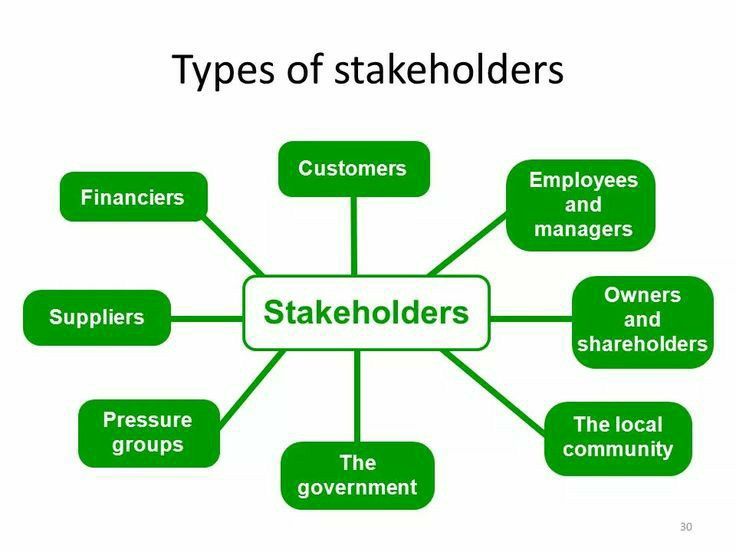
What is stakeholder theory? It is the view that corporations have ethical and strategic responsibilities to all groups affected by their actions, not shareholders alone. Employees, customers, suppliers, communities, governments, and the environment are part of the value-creating system. The theory challenges shareholder primacy and the assumption that business choices can be separated cleanly from their ethical consequences.
Stakeholder theory argues that companies owe something to everyone their operations touch, employees, customers, suppliers, communities, the environment, not just to shareholders. It's a framework for corporate management and business ethics built on that one idea.
R. Edward Freeman developed it in his landmark 1984 book Strategic Management: A Stakeholder Approach. The theory went up against decades of orthodox thinking that treated shareholder profit maximization as the sole purpose of a corporation. And it stuck.
Today, stakeholder theory shapes debates about ESG investing, corporate social responsibility, executive compensation, and the bigger question underneath all of it: what are businesses actually for?
Whether you're a business leader weighing strategic decisions, an investor sizing up long-term risk, or just a citizen thinking about what corporations owe society, this is worth understanding. It shapes how the modern economy actually runs.
The World Before Freeman: Shareholder Primacy and Milton Friedman
You need to know what stakeholder theory replaced before you can understand why it matters. For most of the twentieth century, the dominant doctrine of corporate governance in the English-speaking world said a corporation exists for one reason: to maximize returns to its shareholders.
Nobody wrote that rule down on a wall anywhere. It didn't need to be. It just structured everything anyway, boardroom decisions, business school curricula, capital allocation, executive incentives, acquisition strategy, employment policy, all of it ran through the lens of shareholder value creation.
The philosophical cornerstone of this worldview was an essay Milton Friedman published in the New York Times Magazine on September 13, 1970, titled "A Friedman Doctrine: The Social Responsibility of Business Is to Increase Its Profits." Friedman's argument was elegant. And forceful.
Corporate executives, he said, work for the shareholders. Full stop. When an executive spends corporate money on social purposes beyond what the business actually needs to function, that executive is quietly taxing shareholders, employees, or customers to fund social goals nobody asked them to fund.
Social responsibility belongs to individuals acting on their own, Friedman argued. Not to corporations acting on behalf of owners who never signed up for it.
The essay became arguably the single most influential statement of the shareholder primacy position. It gave a generation of corporate leaders intellectual cover. Now they could say, with a Nobel laureate standing behind them, that their only job was to make money for owners.
For fourteen years, that doctrine went basically unchallenged in mainstream management thought.
But Friedman's argument rested on assumptions that were already starting to crack. It assumed shareholder interests could be cleanly pulled apart from everyone else's interests. It assumed markets were efficient enough that maximizing shareholder returns would automatically produce good social outcomes on its own.
And it assumed the power corporations held over communities, environments, and political systems was modest enough that nobody needed broader accountability. Every one of those assumptions would come under sustained attack. Eventually, they all cracked.
R. Edward Freeman and the Birth of Stakeholder Theory
R. Edward Freeman was teaching at the Darden School of Business at the University of Virginia in 1984 when he published Strategic Management: A Stakeholder Approach. He wasn't a business school lifer. He was trained as a philosopher. That background shows up in how he picked the whole argument apart.
Freeman's move was deceptively simple. He just asked: who actually counts, when you're deciding what a corporation's strategy is for? The conventional view had one answer. Shareholders. The owners. Freeman thought that answer was too small.
A stakeholder, in his words, is "any group or individual who can affect or is affected by the achievement of the organization's objectives."
Say that out loud once and you realize how much it opens up. Suddenly the list of people a corporation has to actually think about gets a lot longer:
- Shareholders and investors (retained from the older view)
- Employees at all levels of the organization
- Customers and end users
- Suppliers and supply chain partners
- Communities in which the company operates
- Governments and regulatory bodies
- The natural environment (in contemporary extensions of the framework)
Freeman was arguing two things at once, and he never let go of either one. Ethically: corporations owe real moral obligations to everyone they affect. Treating people as mere instruments for shareholder returns is not good enough. Strategically: a corporation cannot last by serving shareholders alone. Its whole operation leans on the goodwill of employees, customers, suppliers, communities, every single day.
Treat those people like tools, and you quietly wear away the relationships your long-term performance actually depends on.
"The basic idea that businesses and the people who manage them are responsible for all those groups and individuals that are affected by or can affect the business... was not just a statement about ethics, but a more accurate description of how businesses actually create and sustain value." - R. Edward Freeman
That double nature, moral claim and strategic claim at once, is what gave the theory its staying power. You could sign on because you thought it was right. Or because you thought it was profitable. Or both. That flexibility is exactly why it caught on across fields that otherwise agreed on almost nothing.
The Separation Thesis
One of Freeman's sharpest moves was going after what he called the separation thesis. It's the assumption, baked deep into business school pedagogy, that business decisions and ethical decisions live in two different boxes.
In practice, that separation let managers treat ethics as somebody else's problem, even while making decisions with real moral weight behind them. Freeman called the whole separation an illusion.
Think about it for a second. Whom to hire. Whom to lay off. What to source, and from where. What to build, and for whom. Every one of those is an ethical decision, whether anyone labels it that way or not, because it lands on real people in real ways.
This insight beat the field to a recognition that would take decades to catch up: corporate governance can't be pulled apart from questions of justice, equity, and environmental stewardship. It also explains why Friedman's clean line between "business" and "social responsibility" never actually held up once you tried to use it.
The Shareholder vs. Stakeholder Debate
Philosophers, economists, legal scholars, practitioners, all of them have spent forty years arguing about shareholder primacy versus stakeholder theory. It's still genuinely unresolved. But the center of gravity has moved, and it's not subtle.
The Case for Shareholder Primacy
Defenders of shareholder primacy lean on a few interconnected arguments.
The contractual argument: shareholders get paid last. After wages, after debt, after every supplier invoice is settled, whatever's left is theirs. That's what residual claimant means in practice. Because they're carrying the most risk, the thinking goes, they're entitled to the surplus and to the governance rights protecting it.
The efficiency argument: give a manager one clear objective, maximize shareholder value, and you get sharper incentives and better decisions than you'd get from telling them to vaguely "balance multiple stakeholder interests." That second instruction, critics say, can justify almost anything and holds nobody accountable for much.
Michael Jensen put it plainly in his influential 2001 paper "Value Maximization, Stakeholder Theory, and the Corporate Objective Function": a firm cannot maximize in more than one dimension at once. Pick a direction or go nowhere.
The legal argument: directors in most jurisdictions carry a fiduciary duty to the corporation and its shareholders. Spend shareholder money on stakeholder benefits that aren't legally or commercially required, and strictly speaking, you've breached that duty.
The institutional argument: governments, not corporations, should chase social goals, through taxation and regulation. A corporation spending private resources on social purposes has wandered outside its mandate. It's undermining democratic legitimacy while it's at it.
Let businesses create wealth. Let democracies decide how to split it up.
Stakeholder Theory's Counterarguments
Stakeholder theorists have an answer for each of these.
On contracts: employees, suppliers, communities, they carry real risk from corporate decisions too, and they're usually far less diversified than shareholders are. A factory worker in a one-industry town has a lot more riding on a plant closure than some diversified institutional investor sitting in New York.
So the claim that shareholders alone deserve fiduciary protection isn't nearly as obvious as it sounds. Margaret Blair and Lynn Stout built this case out in detail in their 1999 paper "A Team Production Theory of Corporate Law."
On efficiency: single-minded shareholder value maximization has, demonstrably, produced behavior that destroys long-term value. Short-term earnings manipulation. Under-investment in employee development. Environmental degradation that comes back as regulatory and reputational liability. Hollowed-out communities that eventually undercut the very consumer base a company depends on.
The 2008 financial crisis is the clearest picture of this. Banks chased short-term shareholder returns straight into catastrophic risk-taking.
On law: Lynn Stout, most notably in her 2012 book The Shareholder Value Myth, argued at length that the law never actually required short-term shareholder primacy in the first place. Delaware corporate law, which governs most major American corporations, lets boards consider stakeholder interests.
The business judgment rule gives directors a lot of room to maneuver. Shareholder primacy, in Stout's view, was an ideology dressed up as a legal requirement. Nothing more.
On democracy: corporations wield enormous power over communities, environments, political systems, through lobbying, through employment decisions, through supply chain practices.
Claiming they should be exempt from social responsibility while holding that much power is a hard sell in a world where corporate decisions often touch more people than government policy does.
| Dimension | Shareholder Primacy | Stakeholder Theory |
|---|---|---|
| Purpose of the firm | Maximize shareholder returns | Create value for all affected parties |
| Key obligation | Fiduciary duty to owners | Moral and strategic duty to all stakeholders |
| Decision metric | Share price, EPS, ROE | Multi-dimensional value creation |
| Time horizon | Often short-term (quarterly earnings) | Explicitly long-term |
| View of employees | Cost to be minimized | Asset to be invested in |
| View of community impact | Externality (not the firm's problem) | Material concern requiring management |
| Primary intellectual champion | Milton Friedman (1970) | R. Edward Freeman (1984) |
| Legal basis claimed | Fiduciary duty to shareholders | Business judgment rule; broad director discretion |
The Business Roundtable's 2019 Statement: A Turning Point
August 2019. That's when the clearest institutional signal of the shift finally landed. The Business Roundtable, an association of the chief executives running America's largest corporations, issued a revised "Statement on the Purpose of a Corporation."
Go back to their 1997 statement and the language was blunt: "The paramount duty of management and of boards of directors is to the corporation's stockholders." The 2019 version, signed by 181 CEOs including the heads of Amazon, Apple, JPMorgan Chase, and Goldman Sachs, didn't mention shareholder primacy as the governing purpose at all.
Instead, it listed five commitments:
- Delivering value to customers
- Investing in employees through fair compensation, benefits, and training
- Dealing fairly and ethically with suppliers
- Supporting communities and protecting the environment
- Generating long-term value for shareholders
Notice where shareholders landed. Last. Not first. That ordering wasn't an accident.
The statement grabbed enormous attention, and just as much skepticism right alongside it. Critics on both ends of the political spectrum pointed out the obvious: it was aspirational, non-binding, carried no legal force, and committed signatories to nothing specific whatsoever.
Harvard Law School professors Lucian Bebchuk and Roberto Tallarita dug into this. Their 2020 research found that companies who'd signed the statement behaved no differently from companies that hadn't, not in any actual governance action.
Most signing companies hadn't even brought the statement to their own boards for approval before the CEO put a signature on it.
Still, the rhetorical shift mattered. The single most powerful association of corporate CEOs in America had explicitly walked away from shareholder primacy as a stated purpose. Words and actions might not match up yet. But the Overton window on corporate purpose had already moved. Decisively.
Stakeholder Theory and ESG Investing
ESG investing, evaluating companies on Environmental, Social, and Governance criteria, is stakeholder theory's most practical expression in capital markets today. It takes the stakeholder theory premise, that corporate value creation and destruction go well beyond the financial statements, and actually puts it to work.
| ESG Dimension | Stakeholders Addressed | Example Metrics | Why It Matters Financially |
|---|---|---|---|
| Environmental | Communities, future generations, ecosystems | Carbon emissions, water use, waste management | Regulatory risk, resource costs, stranded assets |
| Social | Employees, suppliers, customers, communities | Pay equity, safety records, supply chain labor practices | Talent retention, litigation risk, brand value |
| Governance | All stakeholders | Board diversity, executive compensation alignment, audit quality | Decision quality, fraud prevention, long-term orientation |
Sustainable investment assets following ESG criteria passed $35 trillion globally by 2022, according to the Global Sustainable Investment Alliance. That's roughly one-third of all professionally managed assets on the planet. Bloomberg Intelligence projects ESG assets could surpass $50 trillion by 2024.
Some of that growth comes from genuine stakeholder-theory conviction. Some of it comes from mounting evidence that ESG factors predict long-term financial risks traditional financial analysis simply misses.
Take climate-related physical risks. Central banks and insurance companies now treat those as material financial risks. That alone would have sounded absurd under pure shareholder primacy thinking a generation ago.
Still, ESG has drawn real criticism too. Greenwashing, marketing a product or practice as environmentally responsible without any substantive change behind it, has become common.
ESG rating agencies often disagree wildly on the exact same company's score. That alone calls the reliability of the whole measurement framework into question.
A 2022 study by Berg, Koelbel, and Rigobon at MIT found correlations between major ESG rating agencies as low as 0.38. Compare that to credit rating correlations, which run above 0.90.
None of this invalidates stakeholder theory. But it does show how far the field still has to go in turning the theory into something you can reliably measure.
The Empirical Evidence: Does Stakeholder Management Pay?
Does stakeholder-oriented management actually pay off financially? That question sits among the most studied, and most argued over, in all of strategic management.
Evidence Supporting the Stakeholder Approach
Start with the numbers. A widely cited meta-analysis by Orlitzky, Schmidt, and Rynes (2003), published in Organization Studies, pulled together 52 studies covering 33,878 observations. It found a positive, statistically significant correlation between corporate social performance, used here as a stand-in for stakeholder management quality, and corporate financial performance.
The correlation ran stronger for accounting-based performance measures than for market-based ones. That suggests stakeholder management may improve operational efficiency more reliably than it moves the stock price.
George Serafeim and colleagues at Harvard Business School found something similar, published in The Accounting Review (2016). Companies that adopted material sustainability practices, the ones genuinely relevant to their specific industry, outperformed industry peers on long-term stock returns.
Here's the catch, though. Companies that poured sustainability investment into immaterial issues showed no advantage at all. The benefit came from real, value-relevant stakeholder management. Not from sustainability signaling dressed up to look like the real thing.
Robert Eccles and colleagues studied 180 companies over 18 years for "The Impact of Corporate Sustainability on Organizational Processes and Performance," published in Management Science (2014). High-sustainability companies significantly outperformed low-sustainability companies, on both stock market and accounting performance, and with lower volatility to boot.
A 2015 meta-analysis by Friede, Busch, and Bassen, covering over 2,200 individual studies, found roughly 90% showed a non-negative relationship between ESG performance and financial performance. Most of those showed a positive relationship outright.
The Caveats
Here's the hard part: causal direction is notoriously difficult to pin down. Profitable companies might simply have more resources to spend on stakeholder relationships. The correlation could run from profitability toward stakeholder investment, not the other way around.
Companies that attract strong management teams may just excel at both things at once, financial performance and stakeholder management, for reasons that have nothing to do with either one causing the other.
Plenty of stakeholder-oriented companies have performed poorly. Plenty of shareholder-primacy companies have performed well. The relationship is probabilistic. Not deterministic. And corporate social performance is genuinely hard to measure reliably, which undercuts the whole empirical literature to some degree.
Even so, the weight of evidence points one direction. Stakeholder management, focused on genuinely material issues, is at minimum not a drag on financial performance. It's probably a real contributor to long-term value creation. The old "doing good" versus "doing well" framing looks more and more like a false choice.
How Stakeholder Theory Works in Practice
Stakeholder theory isn't just a philosophical position sitting on a shelf somewhere. It plays out in specific managerial practices that actually separate stakeholder-oriented organizations from everyone else.
Stakeholder Mapping
Step one is stakeholder mapping: figuring out every party who can affect, or gets affected by, the organization's decisions, and understanding their interests, power, and potential for coalition or conflict.
Ronald Mitchell, Bradley Agle, and Donna Wood built the most influential version of this in their 1997 paper "Toward a Theory of Stakeholder Identification and Salience." Three dimensions, in their framework: power (can they impose their will), legitimacy (do they have a moral or legal claim), and urgency (how time-sensitive is their claim).
A stakeholder with all three demands immediate attention. Full stop. One with only a single attribute gets monitored instead. Not actively engaged.
Materiality Assessment
Not every stakeholder interest matters equally to every organization. Materiality assessment is how you figure out which stakeholder issues actually matter most to the organization's strategy and risk profile.
The Global Reporting Initiative (GRI) and the Sustainability Accounting Standards Board (SASB) both built frameworks for running these assessments.
Double materiality, now written into European Union reporting standards, pushes this further. Companies have to look both ways at once: how sustainability issues hit their own financial performance, and how their operations hit society and the environment.
Stakeholder Engagement
Build the channels, formal and informal, for understanding stakeholder interests before they turn into crises. That's the heart of stakeholder management.
Employee voice mechanisms that go beyond a survey into genuine influence. Customer advisory boards. Supplier development programs. Community consultation. The effective version of this is ongoing and relational. It's not a box you check once a quarter.
Trade-off Governance
Here's the hardest part in practice: building explicit frameworks for deciding what to do when stakeholder interests actually conflict. A supply chain decision that cuts costs might hurt supplier workers. A cost reduction that boosts financial performance might mean layoffs.
A new product that serves customers might generate environmental waste. Stakeholder theory doesn't make these trade-offs disappear. It just insists they get made out in the open, with real accountability. Not buried behind a single shareholder-returns number.
Organizations that build transparent trade-off frameworks, ones they can actually explain to the people affected, end up building trust. Even when a specific decision goes against a particular stakeholder's interests.
Long-term Incentive Alignment
Restructuring executive incentives to reward long-term value creation for multiple stakeholders, instead of short-term earnings per share, remains the most contested piece of all this to actually implement. Research keeps showing the same thing: the gap between stated stakeholder commitments and actual governance structures is widest right here.
Companies that tie executive pay to employee engagement scores, environmental targets, and customer satisfaction, alongside the usual financial metrics, are still the exception. Not the norm. Not yet.
Real-World Examples: Stakeholder Theory in Action
Costco: The Stakeholder Capitalism Poster Child
Costco gets cited constantly as proof that stakeholder-oriented management produces superior long-term results.
Co-founder Jim Sinegal and his successors kept wages and benefits well above industry averages. They capped executive compensation relative to median worker pay. They focused on long-term customer value. Not quarterly earnings.
Wall Street analysts pushed back on this for years, repeatedly urging the company to cut labor costs. Costco ignored them. Its total shareholder return has consistently beaten competitor Walmart over multi-decade periods anyway.
Lower turnover. Higher productivity. Fierce customer loyalty. All of it traces back to stakeholder investment, and all of it more than makes up for the higher labor costs.
Boeing: The Costs of Abandoning Stakeholders
The Boeing 737 MAX disasters of 2018 and 2019 killed 346 people. Analysts have picked this case apart extensively as a study in what happens when shareholder primacy overrides stakeholder obligations.
After the 1997 merger with McDonnell Douglas, Boeing's culture shifted. Engineering-driven became finance-driven. Relentless cost-cutting set in, along with pressure to speed up certification timelines and executive incentives tied straight to stock performance.
The MCAS system at the center of both crashes got built under intense schedule and budget pressure.
Engineers inside the company raised concerns. Those concerns got subordinated to delivery timelines anyway. The result was catastrophic, and not just for the passengers and families who were the primary stakeholders. Shareholders eventually paid too: Boeing faced over $20 billion in losses, criminal charges, and reputational damage that still hasn't fully faded years later.
Criticisms and Limitations of Stakeholder Theory
No serious treatment of stakeholder theory gets to skip its real weaknesses.
The accountability problem: if managers answer to everyone, they might effectively answer to no one. Jensen's critique, that you can't maximize in more than one dimension, carries real operational force here.
A manager who can justify any decision by pointing to some stakeholder benefit has enormous discretion. And almost nothing to check it.
The measurement problem: we've got well-developed tools for measuring shareholder returns. Measuring stakeholder value creation across multiple dimensions, though, stays imprecise, inconsistent, and vulnerable to manipulation. That's not a reason to ignore stakeholder interests. It's a real practical barrier all the same.
The power imbalance: not every stakeholder gets an equal voice in practice. Shareholders hold voting rights and legal standing. Employees can organize collectively.
But communities living with pollution, future generations footing the bill for climate change, supply chain workers in developing countries, they often have no effective way to make their interests heard at all. Stakeholder theory names the obligation. It doesn't guarantee the means.
The greenwashing risk: the language of stakeholder theory can get co-opted to cover for business-as-usual practices. Bebchuk and Tallarita's research on the Business Roundtable statement suggests this risk is real. And significant.
The Future of the Debate
Shareholder primacy versus stakeholder theory isn't ending anytime soon. But the terms of that argument have shifted a lot since Friedman's 1970 essay. A few trends point at where this is headed.
Regulatory convergence: the European Union's Corporate Sustainability Reporting Directive (CSRD), effective from 2024, requires large companies to report on stakeholder impacts using the double materiality standard.
The International Sustainability Standards Board (ISSB) is building global baseline standards right now. Stakeholder accountability is turning into a matter of law. Not just philosophy anymore.
Generational change: surveys keep showing the same thing. Younger workers and investors place higher value on corporate social and environmental performance. A 2022 Deloitte survey found 49% of Gen Z and 44% of Millennials had made career choices based on personal ethics, with climate change topping the concern list for both generations.
AI and automation: as artificial intelligence reshapes employment, the question of what a corporation owes its displaced workers, a stakeholder question if there ever was one, is only going to get more urgent.
Companies and economies that navigate this transition well will likely be the ones taking stakeholder obligations seriously. The ones that treat displaced workers as line items on a spreadsheet probably won't fare as well.
The shift, toward recognizing that corporations answer to more than just owners, looks unlikely to reverse at this point. Nobody's really arguing anymore about whether stakeholder interests matter. The real question now is how to make that accountability concrete. Measurable. Enforceable.
Sources & Further Reading
- Freeman, R. E. Strategic Management: A Stakeholder Approach. Pitman, 1984.
- Friedman, M. "A Friedman Doctrine: The Social Responsibility of Business Is to Increase Its Profits." New York Times Magazine, September 13, 1970.
- Jensen, M. C. "Value Maximization, Stakeholder Theory, and the Corporate Objective Function." Journal of Applied Corporate Finance, 14(3), 2001.
- Stout, L. The Shareholder Value Myth: How Putting Shareholders First Harms Investors, Corporations, and the Public. Berrett-Koehler, 2012.
- Orlitzky, M., Schmidt, F. L., & Rynes, S. L. "Corporate Social and Financial Performance: A Meta-Analysis." Organization Studies, 24(3), 403-441, 2003.
- Serafeim, G., Khan, M., & Yoon, A. "Corporate Sustainability: First Evidence on Materiality." The Accounting Review, 91(6), 2016.
- Eccles, R. G., Ioannou, I., & Serafeim, G. "The Impact of Corporate Sustainability on Organizational Processes and Performance." Management Science, 60(11), 2014.
- Bebchuk, L. & Tallarita, R. "The Illusory Promise of Stakeholder Governance." Cornell Law Review, 106, 2020.
- Mitchell, R. K., Agle, B. R., & Wood, D. J. "Toward a Theory of Stakeholder Identification and Salience." Academy of Management Review, 22(4), 1997.
- Blair, M. M. & Stout, L. "A Team Production Theory of Corporate Law." Virginia Law Review, 85(2), 1999.
- Friede, G., Busch, T., & Bassen, A. "ESG and Financial Performance: Aggregated Evidence from More than 2,000 Empirical Studies." Journal of Sustainable Finance & Investment, 5(4), 2015.
- Berg, F., Koelbel, J. F., & Rigobon, R. "Aggregate Confusion: The Divergence of ESG Ratings." Review of Finance, 26(6), 2022.
- Business Roundtable. "Statement on the Purpose of a Corporation." businessroundtable.org, August 2019.
- Global Sustainable Investment Alliance. Global Sustainable Investment Review 2022. gsi-alliance.org, 2022.