
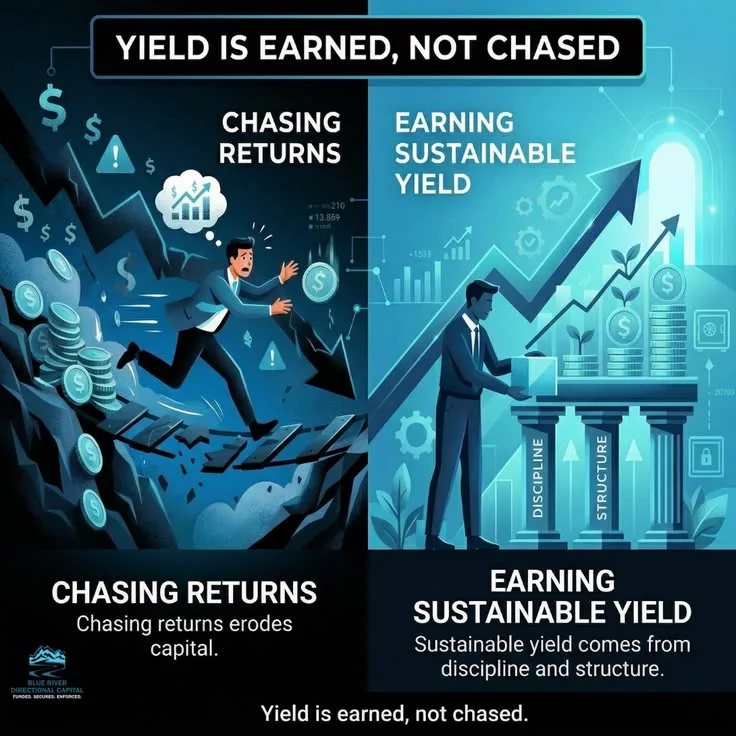
Understanding: In early 2009, the S&P 500 was trading near a 12-year low. Unemployment was rising, banks had failed, and the financial news was almost uniformly catastrophic. A rational analysis of long-term equity returns would have identified this as an extraordinary buying opportunity.
Instead, retail investors pulled hundreds of billions of dollars out of stock funds.
They were not irrational in some abstract philosophical sense. They were making perfectly human decisions: decisions driven by a cognitive process that evolved to help our ancestors survive but systematically distorts financial judgment. That process is called the availability bias.
What Is the Availability Bias?
The availability bias (also called the availability heuristic) is the tendency to estimate the likelihood of events based on how easily examples come to mind rather than on actual statistical frequencies or objective analysis.
It was identified and named by psychologists Amos Tversky and Daniel Kahneman in their landmark 1973 paper, "Availability: A Heuristic for Judging Frequency and Probability." Their insight was simple but profound: people do not actually calculate probabilities when making quick judgments.
They instead ask, "How easily can I think of an example?" and use that mental ease as a proxy for probability.
This works surprisingly well in many everyday situations. If you have known many people who smoked and developed lung cancer, smoking feels dangerous, and it is. But the heuristic breaks down whenever the ease of recall is driven by factors other than actual frequency: media coverage, emotional intensity, personal salience, or recency.
In financial markets, this failure mode is systematic and measurable.
Why Dramatic Events Are Highly Available
The brain does not store memories as neutral records of events. Emotionally intense experiences are encoded more deeply and recalled more readily than routine ones. Several factors make a market event highly "available" in memory:
- Emotional intensity: Fear and loss activate the amygdala more strongly than equivalent gains
- Vividness: Concrete images (empty storefronts, television news graphics) are more available than abstract statistics
- Recency: More recent events are more easily recalled
- Media saturation: Repeated coverage cements memories regardless of actual probability
- Personal experience: Events affecting you directly are far more available than equivalent events experienced by others
A market crash combines all of these factors simultaneously. It is emotionally intense, visually vivid, recent (by definition), saturated with media coverage, and personally financial.
It is therefore extraordinarily available in memory, far more available than the statistical frequency of crashes, or the statistical reliability of long-term equity returns, would justify.
The Availability Bias in Action: Historical Case Studies
The 2008 Financial Crisis
The global financial crisis of 2008-2009 was the most severe market decline since the Great Depression. The S&P 500 fell approximately 57% from its October 2007 peak to its March 2009 trough. The collapse of major financial institutions, the government bailouts, and the real-economy consequences made it an extraordinarily vivid event.
The availability bias consequences were measurable in fund flows:
| Year | U.S. Equity Fund Flows |
|---|---|
| 2009 | -$58 billion (net outflow) |
| 2010 | -$98 billion (net outflow) |
| 2011 | -$134 billion (net outflow) |
| 2012 | -$153 billion (net outflow) |
| 2013 | +$165 billion (net inflow) |
From 2009 through 2012, while the S&P 500 was recovering and ultimately tripling from its March 2009 low, retail investors were net sellers of equity funds every single year. The crisis was so mentally available, so vivid and emotionally intense, that the probability of repeat catastrophe felt much higher than it was.
By 2013, when the recovery was well-established and the market had already made much of its move, money finally started flowing back in.
This pattern of selling near the bottom and buying near the top is the defining behavioral finance failure, and the availability bias is one of its primary drivers.
The March 2020 COVID Crash
The COVID-19 market crash of February-March 2020 was faster and deeper than 2008: the S&P 500 fell 34% in approximately five weeks, the fastest bear market in history. The availability of pandemic imagery (empty streets, hospitals overwhelmed, businesses closed) made catastrophic economic scenarios feel extremely probable.
Investors pulled roughly $326 billion from mutual funds and ETFs overall in March 2020, according to Morningstar data; long-term U.S. equity funds specifically saw about $10.5 billion in net inflows that month, so the outflows were concentrated in bond and money-market categories rather than equities. The S&P 500 hit its low on March 23, 2020. By the end of 2020, the index had recovered all its losses and closed the year up approximately 16%.
Investors who sold in March and waited for clarity before re-entering missed the entirety of the recovery.
"The availability of catastrophe makes catastrophe feel inevitable. The problem is that the market does not care what feels inevitable. It responds to actual future cash flows, not to the vividness of recent fear."
The Late 1990s Tech Bubble
Availability bias operates in the opposite direction during bull markets. During the late 1990s technology bubble, vivid stories of overnight millionaires, exponential stock gains, and the "new economy" made extraordinary returns feel not only possible but likely.
The availability of success stories, friends who had bought Cisco, neighbors who had invested in dot-com IPOs, made the bubble feel like normal conditions.
Investors poured money into technology stocks at peak valuations, driven by the high availability of recent gains and the low availability (by 1999) of the 1987 crash or the previous decade's market history. The NASDAQ Composite fell 78% from its March 2000 peak to its October 2002 trough.
Japan's Lost Decade and Survivorship Blind Spots
A less-discussed illustration of availability bias involves international investing. After Japan's Nikkei 225 peaked at 38,916 in December 1989 and collapsed to roughly 15,000 by 1992, and continued drifting lower for years, Japanese investors fled equities for government bonds and cash.
The Nikkei did not return to its 1989 peak until 2024, over three decades later. The availability of that generational loss made Japanese investors deeply underweight equities for most of that period, even during global bull markets.
Conversely, U.S. investors in the 2010s systematically underallocated to international equities because U.S. equity performance was so vivid and consistently positive. International diversification, statistically justified by the historical record, felt unnecessary because recent American outperformance was so cognitively available.
This illustrates that survivorship bias and availability bias often work in tandem: investors overweight what has been salient and dismiss what has been absent from their recent experience.
The Relationship Between Availability and Recency Bias
The availability bias and recency bias overlap but are not identical. Recency bias is the tendency to overweight recent data relative to older data. Availability bias is broader: it refers to overweighting whatever is most easily recalled, regardless of when it occurred.
In practice, recency is one of the strongest drivers of availability. Recent market events are more easily recalled because they are recent. But extreme events from years ago can also be highly available if they were sufficiently vivid.
Many investors who experienced the Great Depression in the 1930s remained permanently risk-averse for decades afterward: the availability of that experience did not decay with time in the way typical events would.
The practical distinction matters for investing:
- Recency bias is most relevant for performance chasing: recent strong performance of an asset class drives over-allocation to it
- Availability bias is most relevant for risk perception: vivid memories of past crashes drive overestimation of crash probability, even when recency fades
Both distortions move in the same direction: they cause investors to extrapolate recent conditions into the indefinite future rather than regressing to long-run base rates.
Cognitive Mechanisms Behind the Bias
System 1 vs System 2 Thinking
Daniel Kahneman's framework in "Thinking, Fast and Slow" distinguishes between System 1 (fast, automatic, associative, emotionally driven) and System 2 (slow, deliberate, analytical, effortful) thinking. The availability heuristic is a System 1 process: it produces fast probability estimates without effortful analysis.
System 1 is not a malfunction. It evolved because fast, automatic judgments were often adaptive in ancestral environments where deliberate analysis would have been too slow. But financial markets require the kind of long-run statistical thinking that System 1 consistently underperforms at.
The emotional intensity of a market crash hijacks System 1 so completely that System 2 correction requires deliberate effort.
Loss Aversion Amplification
Loss aversion (Kahneman and Tversky's finding that losses feel approximately twice as painful as equivalent gains feel good) amplifies the availability bias in market downturns. A 30% portfolio loss is not only a vivid memory that becomes highly available; it is also an asymmetrically painful one.
When loss-averse brains revisit the memory of a crash, they are revisiting a memory that has been encoded as more threatening than equivalent gains were encoded as rewarding.
The combined effect of availability and loss aversion means that investors systematically overestimate crash probabilities (availability) and then respond to that overestimation with disproportionate risk reduction (loss aversion). Both effects point in the same direction.
Base Rate Neglect
The availability bias is often described as a form of base rate neglect: the tendency to ignore statistical baseline frequencies in favor of vivid case-specific information. The base rate for a major equity market crash (defined as -40% or worse) in any given year is roughly 5-10% over long historical periods.
But after experiencing a crash, the subjective probability assigned to a crash in the near future is typically far higher.
Research by economists Ulrike Malmendier and Stefan Nagel found that investors who lived through high inflation consistently assigned higher probability to future inflation throughout their lives, and investors who experienced poor stock market returns early in their investment careers held lower equity allocations for decades, which is clear evidence that personal experience overrides statistical base rates in probability estimation.
The Affect Heuristic and Emotional Contamination
Beyond Kahneman and Tversky's original framework, psychologist Paul Slovic identified what he termed the affect heuristic: the tendency for people to make judgments and decisions based on their emotional state at the time of the decision.
When an investor checks their portfolio during a crash and experiences visceral fear, that emotional state colors not just their assessment of current risk but their probability estimates for the future.
This emotional contamination means that availability bias is not purely a memory phenomenon. Even investors who intellectually understand that crashes are temporary can be subject to emotionally inflated risk estimates that persist as long as the emotional state itself persists.
This is why many investors who sold during the COVID crash in March 2020 did not re-enter markets even as prices recovered through April and May: the fear had not yet dissipated.
The Cost of Availability Bias in Portfolios
The gap between what markets return and what the average investor actually earns is called the behavior gap, a concept popularized by financial planner Carl Richards.
Research by Morningstar measures this as the difference between time-weighted fund returns and dollar-weighted investor returns (which capture the timing of inflows and outflows).
Their findings are consistent: the average equity fund investor earns meaningfully less than the average equity fund because of poor timing decisions. In U.S. equity funds over the decade ending 2022, the dollar-weighted return lagged the time-weighted return by approximately 1.7 percentage points per year.
Over a 30-year retirement savings period, 1.7 percentage points per year compounded is the difference between a portfolio worth roughly $1 million and one worth roughly $1.5 million, assuming identical starting conditions and contributions. The availability bias, operating through market-timing decisions, has real and substantial costs.
| Investment Horizon | Market Return | Behavioral Return | Difference |
|---|---|---|---|
| 10 years | 7.7% | 6.0% | -1.7% |
| 20 years | Compounds to ~4.3x | Compounds to ~3.2x | -25% of ending wealth |
| 30 years | Compounds to ~8.1x | Compounds to ~5.7x | -30% of ending wealth |
Illustrative based on Morningstar behavior gap research.
The Compounding of Missed Recoveries
A detail often overlooked in behavior gap calculations is that the worst timing decisions, selling at or near market lows, do not just cost the investor the loss they lock in. They cost the investor the entire subsequent recovery, which typically contains the best single-day and single-week returns of any market cycle.
A 2019 study by J.P. Morgan Asset Management found that from 1999 to 2018, the S&P 500 returned 5.62% annually. But an investor who missed the 10 best trading days over that 20-year period earned only 2.01%. Missing the 20 best days produced a return of negative 0.33%.
The best market days tend to cluster with or immediately after the worst: they are the rebounds that follow the panic selling availability bias triggers.
| Days Missed (1999-2018) | Annualized Return |
|---|---|
| Fully invested | 5.62% |
| Missed 10 best days | 2.01% |
| Missed 20 best days | -0.33% |
| Missed 30 best days | -2.35% |
Source: J.P. Morgan Asset Management, 2019.
Strategies to Counteract Availability Bias in Investing
The goal is not to eliminate emotional responses to market events, since that is neither possible nor desirable. The goal is to make important investment decisions using System 2 analysis rather than System 1 reactions, and to pre-commit to rules that prevent availability-driven errors.
1. Write an Investment Policy Statement
An Investment Policy Statement (IPS) is a written document that specifies your investment objectives, risk tolerance, asset allocation targets, rebalancing rules, and conditions under which you will and will not make changes to your portfolio. It is written in calm conditions when availability bias is not active.
The IPS serves as a commitment device. When markets crash and the availability of disaster is high, having a written document that says "I will not change my asset allocation in response to market moves of less than [X]%" provides a System 2 counterweight to System 1 reactions.
2. Systematic Rebalancing
Systematic rebalancing (returning your portfolio to target allocations on a schedule, quarterly or annually, or when allocations drift beyond a threshold) removes timing discretion from portfolio management.
Rather than asking "should I be buying equities right now given what's happening?", you ask "has my equity allocation fallen below my target?" The first question invites availability bias; the second does not.
Ironically, systematic rebalancing produces the exact counter-cyclical behavior that availability bias prevents: buying more equities after they have fallen and selling some after they have risen.
3. Dollar-Cost Averaging
Dollar-cost averaging (investing a fixed amount on a fixed schedule, regardless of market conditions) removes timing decisions entirely. It prevents the "I'll wait until things calm down" reasoning that availability bias produces.
Automatic contributions to a 401(k) or index fund on each paycheck are the simplest form of dollar-cost averaging.
4. Deliberate Historical Calibration
When a market event makes certain scenarios feel highly probable, deliberately expose yourself to long-run historical data. What percentage of all years since 1926 have ended with positive equity returns?
(Approximately 73%.) How many times did the S&P 500 fail to recover to a new high following a major crash? (In U.S. market history, it has always recovered, though recovery periods varied widely.)
This is not to make any specific prediction. It is to counterbalance the asymmetric availability of recent dramatic events with the systematic base rates that represent the actual long-term distribution of outcomes.
5. Pre-Mortem Analysis Before Major Decisions
Before making a large portfolio change driven by market fear or excitement, conduct a pre-mortem: assume the decision turns out to be badly wrong two years from now, and write down the most plausible reasons why.
This forces deliberate System 2 thinking and surfaces the specific ways that current emotional salience might be distorting the decision.
Pre-mortems do not prevent all availability-driven errors, but they introduce a procedural friction that slows down reactive decisions and forces articulation of the reasoning, which often reveals how much the reasoning depends on the vividness of recent events rather than on analysis.
6. Work with a Pre-Committed Advisor
Having a financial advisor whose explicit role is to enforce your pre-committed investment policy can provide an external System 2 check.
The key is that the advisor's role must be defined as plan enforcement rather than active management: an advisor who also makes discretionary timing calls is subject to the same availability bias you are.
The most effective arrangement is one where the investor has articulated their objectives and constraints in writing during calm conditions, and where the advisor is explicitly empowered to decline requests to deviate from the plan during periods of market stress.
The Availability Bias in Asset Selection
Availability bias affects not only market timing but also asset selection. Investors consistently overweight:
- Domestic stocks over international, because domestic companies are more available in their media and experience
- Companies with recent IPOs or high media coverage
- Sectors dominating recent news (energy during an oil crisis, technology during a tech boom)
- Individual stocks of well-known brands over equivalent smaller companies
Each of these overweights reflects the availability of vivid, familiar examples rather than comparative expected return analysis. The result is often underdiversification and concentration in whatever is currently salient.
Home Bias as Persistent Availability Distortion
Home bias (the tendency for investors to overweight their domestic equity market relative to the global market capitalization share) is one of the most robustly documented phenomena in international finance. U.S. investors as of 2023 held approximately 75-80% of their equity portfolios in U.S.
stocks, despite the U.S. representing roughly 60% of global market capitalization. In countries like India, Japan, and Australia, the home bias is even more extreme.
The availability-based explanation is intuitive: domestic companies appear in local news, their products are familiar, their stories are vivid.
A Japanese investor thinking about equity investments will easily retrieve stories about Toyota, Sony, and SoftBank, domestic companies they interact with every day. A Swiss pharmaceutical company or a Brazilian consumer goods firm requires deliberate, effortful information-seeking.
The cost of home bias is well-documented. International diversification has historically reduced portfolio volatility without proportionately reducing returns, because international markets are not perfectly correlated. Investors who avoid international exposure on the basis of familiarity leave this risk-reduction benefit on the table.
Availability Bias and Financial Media
A rarely discussed but important amplifier of availability bias is the structure of financial media itself. News organizations operate under strong incentives to cover dramatic events, and financial media is no exception.
Crashes, crises, and controversies generate far more coverage, and far more engagement, than steady long-run equity compounding.
This creates a systematic information environment that reinforces availability bias:
- Market declines receive disproportionate coverage relative to gradual recoveries
- Expert predictions of disaster are more newsworthy than expert assessments of baseline probability
- Individual stock stories (the high-flying company, the catastrophic failure) are far more available than index fund returns
- Short-term volatility is covered as though it were a permanent condition
A 2016 study by researchers at the University of California found that investors who consumed more financial news demonstrated lower portfolio returns over subsequent periods, primarily through higher turnover and worse market timing.
The news was not providing an informational edge: it was increasing the availability of recent dramatic events and prompting reactive decisions.
"Financial media is an availability bias machine. It selects for vividness and drama by definition. That is not a conspiracy: it is a business model. But understanding it means treating financial news as an emotional signal to be managed, not a decision input to be acted upon."
Conclusion
The availability bias is not a character flaw. It is a feature of normal human cognition that evolved in environments very different from financial markets. It produces systematic distortions in probability estimation, particularly around rare but vivid events like market crashes and manias.
In investing, these distortions have well-documented, measurable costs: selling near bottoms, buying near peaks, underallocating to equities during recoveries, and overallocating during bubbles.
The behavior gap (the difference between market returns and investor returns) is one of the most reliably observed phenomena in finance, and availability-driven timing is a central contributor.
The additional cost of missed recovery days, the best-performing sessions that cluster with and immediately after the worst, means the availability-driven decision to "wait for clarity" is not merely locking in the loss at the bottom. It is also missing the subsequent rebound that historically makes up for it.
The solution is not superior emotional control, which few people can reliably apply under financial stress.
The solution is structural: written investment policies, systematic rebalancing rules, automatic investment schedules, and deliberate exposure to long-run statistical data that counterbalances the high availability of recent extremes.
Pre-mortems, investment policy statements, and committed advisors are not just paperwork: they are System 2 infrastructure built in calm conditions to resist System 1 reactions in turbulent ones.
The market's long-run performance belongs to investors who can commit to staying invested through periods when availability bias makes that commitment feel most difficult. That is the central challenge of long-term investing, and understanding availability bias is the first step toward meeting it.