
Understanding: Every organization has two versions of itself. There is the formal organization: the org chart, the documented processes, the written policies.
And there is the real organization, the network of people who know who to call, which workarounds actually work, why that system was built the way it was, and what the client really wants even when they say something different.
The gap between these two versions is where most organizational knowledge lives. And when the people who carry that knowledge leave, retire, or move on, they take it with them.
Knowledge management is the discipline of closing that gap: building systems and practices that help organizations capture, share, and apply what they know, including the parts that have never been written down. It is, at bottom, the discipline of organizational memory.
What Knowledge Management Actually Covers
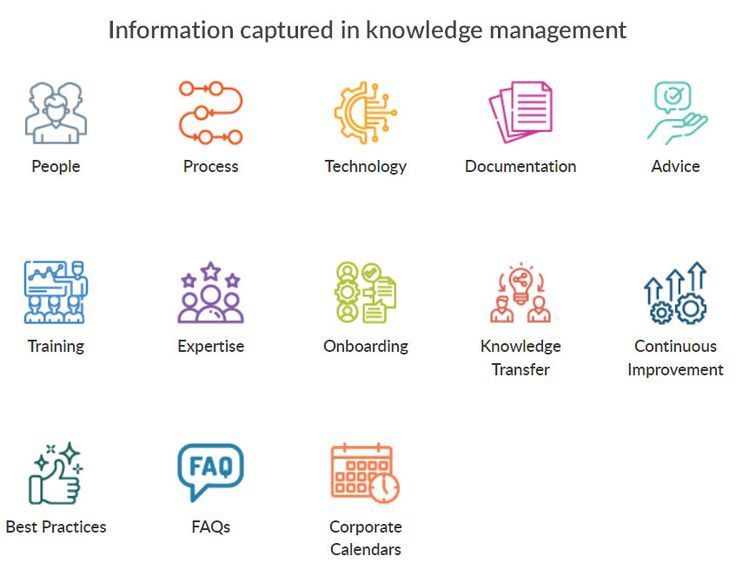
The term "knowledge management" is used to describe a broad and sometimes contradictory set of activities. At its most expansive, it includes:
- Documentation systems: Internal wikis, intranets, knowledge bases, and databases that store written knowledge
- Expertise directories: Systems that tell employees who knows what, enabling knowledge-seeking
- Communities of practice: Groups of practitioners who share expertise across organizational boundaries
- After-action reviews: Structured reflection processes that convert experience into organizational learning
- Onboarding programs: Systematic transfer of contextual knowledge to new employees
- Mentorship and apprenticeship: Person-to-person transfer of tacit knowledge
- Lessons-learned databases: Repositories of what worked and what did not on past projects
What unites these is a common purpose: ensuring that the organization's knowledge, whether held in systems, processes, or people's heads, is available to those who need it, at the time they need it, and is not permanently lost when circumstances change.
A Brief History of the Discipline
Knowledge management as a formal discipline emerged in the early 1990s, though its intellectual roots run deeper.
The immediate catalyst was the recognition, by consulting firms and large technology companies, that the same problem was being solved repeatedly in different parts of their organizations: valuable knowledge accumulated by one team was invisible to another team that needed it.
The phrase "if only we knew what we know" became something of a rallying cry in the early KM literature.
The consulting firm McKinsey & Company is credited with early influential work on the topic, as are the Big Four accounting and consulting firms that developed knowledge management practices as competitive advantages in the 1990s.
Thomas Davenport and Laurence Prusak's 1998 book Working Knowledge: How Organizations Manage What They Know was among the first to synthesize the emerging field for a practitioner audience and remains one of the most cited texts in KM.
The field grew rapidly in the late 1990s alongside the development of intranet technology, which seemed to offer a technical solution to the knowledge sharing problem. The enthusiasm was largely premature: intranets proliferated, but their actual use for knowledge sharing was inconsistent and often disappointing.
The lesson learned was one that recurs throughout KM history: technology is a necessary but not sufficient condition for knowledge sharing. Culture, incentive, and leadership are equally important.
The Tacit/Explicit Distinction: Why Documentation Is Not Enough
The foundation of knowledge management theory is the distinction between tacit and explicit knowledge, most influentially developed by philosopher Michael Polanyi in his 1966 book The Tacit Dimension.
Explicit knowledge can be articulated, written down, and communicated through symbols, language, and numbers. A recipe is explicit knowledge. A technical specification is explicit knowledge. A process flowchart is explicit knowledge.
Once articulated, explicit knowledge can be stored in a document, transmitted digitally, and accessed by anyone with the appropriate access.
Tacit knowledge is knowledge embedded in experience, skill, intuition, and bodily practice that is difficult or impossible to fully articulate. Knowing how to ride a bicycle is tacit: you cannot teach someone to balance on a bicycle by giving them a manual, no matter how detailed.
Knowing how to read a client's hesitation and adjust your pitch in real time is tacit. Knowing which supplier to trust based on years of experience with them is tacit.
Polanyi's famous aphorism captures the asymmetry: "We can know more than we can tell."
Most of what makes experienced professionals valuable is tacit knowledge: the judgment built through years of practice, the contextual understanding that cannot be fully documented, the pattern recognition that guides decisions before any formal analysis is complete.
This is precisely what is hardest to capture in knowledge management systems and most vulnerable to loss when employees leave.
The implication is consequential: documentation systems alone are insufficient for knowledge management because most of what organizations need to preserve and transfer is not capturable in documents.
The Third Category: Embedded Knowledge
Subsequent researchers expanded on Polanyi's dichotomy to identify a third category: embedded knowledge, knowledge that resides in organizational routines, processes, structures, and technologies rather than in individuals.
Embedded knowledge is the knowledge "baked into" a workflow, a database schema, a production process, or an organizational policy.
Embedded knowledge is important because it is partially immune to personnel turnover (it persists in systems even when people leave) but vulnerable to a different failure mode: organizations often cannot explain why their systems work the way they do, which makes it nearly impossible to adapt them intelligently.
When embedded knowledge loses its documentation, and the people who designed a system are gone, the system becomes a black box that cannot be modified without risk.
Organizational theorist Dorothy Leonard-Barton's research in the early 1990s identified core rigidities: capabilities that were once sources of competitive advantage but became obstacles to change because the knowledge behind them was so deeply embedded and so poorly understood that it could not be redirected.
This is embedded knowledge gone wrong: the organization knows how to do something very efficiently but cannot understand why it works that way well enough to change it.
Nonaka's SECI Model: How Knowledge Is Created
The most influential theoretical framework in knowledge management is the SECI model, developed by Japanese organizational theorist Ikujiro Nonaka and Hirotaka Takeuchi in their 1995 book The Knowledge-Creating Company.
Nonaka and Takeuchi argued that organizational knowledge creation happens through a four-mode conversion process between tacit and explicit knowledge:
Socialization (Tacit to Tacit): Knowledge is transferred through shared experience, observation, and imitation. An apprentice working alongside a master learns skills that the master may not be able to articulate but can demonstrate.
Informal conversations at the office, field work alongside experienced colleagues, and mentorship all represent socialization. The limitation is that this knowledge remains tacit and does not scale beyond the relationship.
Externalization (Tacit to Explicit): Knowledge is articulated and codified into documents, models, concepts, or metaphors. A software engineer writes a decision log explaining why an architecture was chosen. A salesperson documents their qualification framework.
A nurse writes a protocol from years of clinical judgment. This conversion is cognitively demanding and inevitably incomplete, since articulation always sacrifices some of what was known tacitly, but it creates scalable, transmittable knowledge.
Combination (Explicit to Explicit): Existing explicit knowledge is combined, organized, and systematized to create new explicit knowledge.
Compiling a manual from multiple source documents, building a training curriculum from documented procedures, or creating a data dashboard from existing reports are all examples. This mode is the most technically straightforward.
Internalization (Explicit to Tacit): Explicit knowledge is absorbed through practice until it becomes tacit. A new employee reads the process documentation and then, through doing the work, develops judgment that transcends the documentation.
Training exercises, simulations, and on-the-job learning all represent internalization. The cycle completes: what began as someone's tacit knowledge, externalized into a document, has been internalized by a new person as tacit knowledge.
Nonaka conceived these modes as a knowledge spiral: knowledge is created and amplified as it moves through the SECI cycle, from individual tacit knowledge through externalization and combination to shared explicit knowledge, which is then internalized by new individuals who bring their own tacit experience to the cycle.
| SECI Mode | From | To | Example |
|---|---|---|---|
| Socialization | Tacit | Tacit | Apprenticeship, mentorship, job shadowing |
| Externalization | Tacit | Explicit | Writing best practices, documenting lessons learned |
| Combination | Explicit | Explicit | Compiling manuals, building databases |
| Internalization | Explicit | Tacit | Training, practice, learning by doing |
Critiques and Refinements of the SECI Model
The SECI model has been enormously influential but has also attracted substantial critique.
Tsoukas (2003), writing in the British Journal of Management, argued that Nonaka's model misunderstands the nature of tacit knowledge: if tacit knowledge is truly tacit (as Polanyi defined it), it cannot be "converted" into explicit knowledge. At best, explicit knowledge can gesture toward or approximate what was previously tacit, always losing something in the process.
The conversion is better understood as a translation with inherent loss.
A practical implication of Tsoukas's critique: organizations that treat externalization as a complete capture of tacit knowledge will systematically overestimate the quality and completeness of their documentation. The document describes what the expert does; it does not capture what the expert knows that enables them to do it well.
More recent work by Georg von Krogh and colleagues at ETH Zurich extended the SECI model to account for digital platforms and social media, arguing that new tools have transformed the Combination mode (the assembly of existing explicit knowledge) while leaving the Socialization mode largely unchanged.
The deepest form of knowledge transfer, the tacit-to-tacit transfer that happens through observation and shared work, still requires human proximity.
Communities of Practice
One of the most practical and well-validated concepts in knowledge management is the community of practice, developed by cognitive anthropologist Jean Lave and educational theorist Etienne Wenger in their 1991 book Situated Learning.
A community of practice is a group of people who share a concern or passion for something they do, and who learn how to do it better through regular interaction. The defining features are:
- A shared domain of knowledge or practice
- A community of practitioners who interact regularly
- A shared practice: common approaches, tools, stories, and artifacts
Communities of practice exist in every organization, most of them informally: the group of engineers who lunch together and share technical problems, the nurses on a ward who pass knowledge through shift-change conversations, the salespeople who email each other the questions that stumped them.
Wenger and colleagues later developed a framework for cultivating communities of practice deliberately, rather than simply hoping they emerge.
This involves identifying domains where distributed expertise creates value, connecting practitioners who would otherwise not interact, providing time and tools for exchange, and giving the community enough autonomy to define its own practice.
Evidence for the effectiveness of communities of practice is primarily qualitative and case-study-based. Documented examples include:
- World Bank: Identified thematic communities of practice connecting development experts across regions, credited with significant knowledge sharing on technical problems
- Schlumberger: Technical communities connecting oilfield engineers globally, credited with improving problem-solving time for technical challenges
- U.S. Army: After-action review culture combined with formal lessons-learned communities that transferred knowledge between units and deployments
Conditions for Community Success
Research by Wenger, McDermott, and Snyder (2002) in Cultivating Communities of Practice identified the conditions that distinguish thriving communities of practice from those that stagnate. The key factors were:
Domain legitimacy: When the knowledge domain the community addresses is recognized as strategically important by organizational leadership, participation rates are higher and knowledge quality is better. Communities that exist in the organizational periphery struggle to attract and retain active participants.
Facilitation quality: Communities require facilitation: someone whose role includes connecting members, identifying knowledge gaps, surfacing common problems, and keeping conversations generative. Communities without facilitation tend to become either inactive or socially oriented rather than knowledge-oriented.
Rhythm of interaction: Communities that meet with regular cadence, whether weekly or biweekly, develop shared language and norms that communities meeting episodically cannot. Regularity is more important than frequency.
Permeable boundaries: The most valuable communities are those that include people from different teams and sometimes different organizations, because knowledge cross-pollination happens across boundaries, not within them. Homogeneous communities tend to reinforce what members already know rather than generating new knowledge.
A 2004 study by McDermott and Archibald published in the Harvard Business Review found that companies with effective communities of practice reported solving technical problems 10-30% faster than comparable organizations without them, and cited significantly lower rates of "reinventing the wheel," meaning redoing work that had already been done and documented elsewhere.
The Knowledge Loss Problem: When People Leave
The vulnerability of organizational knowledge to personnel turnover is one of the most consequential and underaddressed problems in organizational management.
Several estimates give a sense of the scale:
- A survey by Deloitte found that 42% of institutional knowledge in organizations is held only in the minds of employees, not in any documented form.
- IBM's Institute for Business Value estimated that 50% of critical institutional knowledge could be at risk in organizations facing significant workforce transitions.
- APQC (American Productivity and Quality Center) research found that organizations typically spend 50-200% of an employee's annual salary to recruit, hire, and train a replacement, with the higher end for technical and managerial roles where tacit knowledge is deepest.
The loss of key personnel creates several overlapping problems:
Network loss: Experienced employees know who to call, who is reliable, which relationships are fragile. These informal networks take years to develop and cannot be documented effectively.
Contextual judgment: The "why" behind decisions, meaning why this process exists, what problem it solved, why the standard approach does not apply in certain cases, often exists only in the heads of the people who made those decisions.
Client and relationship knowledge: Deep understanding of a client's preferences, history, and unstated concerns is largely tacit and highly personal.
Workaround knowledge: Experienced workers know which documented processes have gaps, what the actual solutions are to common problems, and where the systems break down. This "shadow IT" and informal process knowledge is rarely documented.
Organizations that rely heavily on specific individuals for institutional memory are fragile in ways they often underestimate until a key person leaves unexpectedly.
The Retirement Wave and Knowledge Cliff
The impending demographic challenge in many Western economies adds urgency to the knowledge loss problem. Baby Boomer retirements have been occurring at a rate of approximately 10,000 per day in the United States since 2011, according to Pew Research Center data.
In industries like aerospace, utilities, nuclear energy, and government, the percentage of the workforce approaching retirement age is disproportionately high: these are sectors that hired heavily during the postwar expansion and have not fully replaced institutional knowledge built over careers of 30-40 years.
The U.S. Government Accountability Office issued a 2018 report documenting what it called a "human capital crisis" in the federal government, where a substantial percentage of the Senior Executive Service, the career leadership tier of the federal workforce, was within five years of retirement eligibility, with inadequate knowledge transfer planning in most agencies.
A 2019 study by the Society for Human Resource Management found that fewer than 30% of organizations had formal knowledge retention programs, despite 84% of HR leaders reporting concern about knowledge loss from retirements.
The gap between concern and action is striking, and likely reflects the difficulty of creating urgency around a slow-moving threat.
Wikis vs. Documentation Culture: What Actually Works
One of the recurring debates in knowledge management practice is between organic, community-maintained knowledge systems (wikis, forums, collaborative documents) and structured, maintained documentation (official process guides, policies, technical specifications).
Wikis and collaborative knowledge systems have several strengths:
- Low barrier to contribution means more knowledge gets captured
- Content updates organically as contributors notice outdated information
- Search and linking allow rich contextual navigation
- Conversation and commentary features capture tacit context alongside explicit content
Their weaknesses are equally real:
- Without curation, they become disorganized and unreliable over time
- Unclear ownership means nobody updates outdated content
- Findability degrades as volume increases without taxonomy
- Authoritative and unofficial content are mixed without clear markers
- Contribution is uneven: most content is created by a small minority
Structured documentation has complementary strengths:
- Clear ownership means someone is responsible for accuracy
- Formal publication processes ensure a baseline quality
- Hierarchical organization is easier to navigate for defined purposes
- Authority is clear: this is the official version
And complementary weaknesses:
- High creation and maintenance effort reduces the volume captured
- Formal processes are too slow for rapidly changing knowledge
- Tacit context and reasoning are often stripped out in the formalization process
Research on organizational knowledge management consistently finds that neither approach alone is sufficient.
The most effective systems use structured documentation for what must be authoritative (safety procedures, compliance policies, formal processes) and community-maintained systems for what needs to be comprehensive and current (how-to guides, FAQs, lessons learned, solutions to common problems).
The Wikipedia Effect and Knowledge Contribution Patterns
Wikipedia's experience offers instructive lessons for organizational knowledge management. Research by Kittur et al.
(2007) published at the CHI Conference on Human Factors in Computing Systems found that Wikipedia's contribution follows a classic power law distribution: the top 10% of contributors account for approximately 90% of content.
As the platform matured, contribution became increasingly concentrated among fewer, more dedicated participants.
The same pattern appears in organizational wikis. A study by Majchrzak et al. (2013) in MIS Quarterly found that most organizational wiki contributors contribute once or twice, after which participation drops off sharply.
The small percentage of persistent contributors who regularly create and maintain content are disproportionately valuable, and their departure creates disproportionate knowledge loss.
The practical implication for knowledge management practitioners is that passive infrastructure (build a wiki and hope people contribute) is insufficient. Active curation requires identified roles, allocated time, and explicit recognition.
Organizations that treat knowledge contribution as a voluntary extra have wikis that decay. Organizations that make it part of someone's actual job description have wikis that live.
Measuring Knowledge Sharing
One of the persistent challenges in knowledge management is demonstrating its value in terms that organizations use to allocate resources. Unlike capital investment or headcount, the return on knowledge management investment is difficult to quantify.
Common metrics include:
| Metric | What It Measures | Limitation |
|---|---|---|
| Documentation coverage | % of key processes documented | Does not measure quality or usage |
| Wiki page views | How often knowledge is accessed | Does not capture whether it was useful |
| Contribution rates | Who creates and updates content | Does not measure knowledge transfer efficacy |
| Time-to-competence for new hires | How quickly new employees reach productivity | Many confounds |
| Number of duplicated problems solved | Reduction in reinventing the wheel | Hard to measure counterfactual |
| Employee survey on finding information | Perception of findability | Subjective |
| Cost per knowledge transaction | Resources spent vs. knowledge queries resolved | Requires sophisticated tracking |
More sophisticated approaches attempt to map knowledge networks, tracking who knows whom and who seeks information from whom, and measure the density and reach of knowledge flows within the organization.
Social network analysis tools can reveal whether critical knowledge is concentrated in a few nodes (creating vulnerability) or distributed (creating resilience).
ROI Research on Knowledge Management
The challenge of measuring KM ROI has attracted significant research attention. Pfeffer and Sutton (2000), in The Knowing-Doing Gap, noted that many organizations could not demonstrate ROI for their KM programs because they had focused on building knowledge repositories rather than on changing knowledge-related behaviors: the systems existed, but they were not being used in ways that changed outcomes.
A more optimistic strand of research has documented specific, measurable returns. A study by Akhavan and Jafari (2006) in The Learning Organization surveyed companies that had implemented formal KM programs and found median reported benefits including:
- 15-35% reduction in time spent finding information
- 10-25% reduction in rework and duplicated effort
- Improved new employee time-to-productivity of 20-40%
These estimates are self-reported and carry the usual caveats about confirmation bias in KM program evaluation. However, they point consistently in the same direction, and the mechanisms they describe (less time searching, less duplicated work, faster onboarding) are plausible and intuitive.
APQC's benchmarking data, drawn from hundreds of organizations, consistently finds that the highest-performing organizations in terms of knowledge management outcomes allocate roughly 3-5 times more resources to KM than the lowest-performing organizations, and achieve demonstrably better performance on innovation metrics, customer satisfaction, and employee retention.
What Good Knowledge Management Looks Like in Practice
"An organization's ability to learn, and translate that learning into action rapidly, is the ultimate competitive advantage." Jack Welch, former CEO of GE, on why knowledge management is not an IT initiative but a strategic priority
Organizations with effective knowledge management share several characteristics that go beyond having the right tools.
Knowledge sharing is valued, not just performed. When leaders model knowledge sharing, whether by contributing to wikis, sharing lessons from failures, or publicly seeking advice, it signals that knowledge sharing is genuinely valued rather than a compliance exercise.
When it is only a policy requirement without cultural reinforcement, participation is minimal.
Failure is treated as learning material. Organizations that punish failure prevent honest after-action reviews. Those that treat failure as valuable data generate richer lessons-learned processes. The U.S.
Army's after-action review culture, which became a widely studied model in the 1990s and 2000s, worked partly because the reviews were explicitly non-evaluative: they were about learning, not blame.
Knowledge systems are maintained, not just built. The most common failure mode in knowledge management is the "build it and they will come" fallacy.
A wiki that is beautifully structured at launch and never curated afterward becomes an archaeological site within two years, full of outdated information that users learn to distrust. Systems require ongoing ownership, curation, and renewal.
Onboarding is taken seriously as a knowledge transfer event. The first 90 days of a new employee's tenure are a critical knowledge transfer window.
Organizations that invest in structured onboarding, pairing new employees with experienced colleagues, providing context not just processes, and building network connections deliberately, dramatically reduce the tacit knowledge that would otherwise be inaccessible to newcomers.
Exit processes capture knowledge, not just paperwork. When an employee announces their departure, a well-designed exit process includes knowledge transfer conversations, documentation of what only they know, and introductions to key relationships.
Most organizations focus exit processes on administrative handoffs and completely neglect this opportunity.
The Learning Organization Concept
Peter Senge's 1990 book The Fifth Discipline introduced the concept of the learning organization: an organization that continually expands its capacity to create its future, rather than simply reacting to current circumstances.
Senge identified five disciplines that characterize learning organizations: personal mastery, mental models, shared vision, team learning, and systems thinking.
The knowledge management literature and the learning organization literature have developed largely in parallel, with considerable overlap in their concerns. Both are fundamentally interested in how organizations can accumulate, apply, and renew knowledge over time.
Senge's contribution was to emphasize the individual and team dimensions, namely the disciplines of personal and collective reflection, rather than focusing primarily on systems and technology.
The empirical evidence for Senge's model is more limited than the richness of the framework might suggest. A meta-analysis by Yang et al. (2004) found positive correlations between learning organization characteristics and performance outcomes, but noted significant methodological challenges in the research base.
What remains valuable about Senge's work is its insistence that organizational learning is not primarily a technical problem but a human and cultural one, a point that knowledge management has periodically needed to rediscover.
Case Study: How Toyota's Knowledge Management System Works
Toyota's production system is one of the most studied knowledge management environments in the world.
The Toyota Production System (TPS), which underpins what became widely known as lean manufacturing, represents a sophisticated approach to embedding tacit knowledge in organizational routines while also preserving the human judgment that makes those routines adaptable.
The sociologist of knowledge Paul Adler, in research published in the Administrative Science Quarterly (1993), described TPS as a "learning bureaucracy," a system that was both highly standardized (making explicit knowledge available to all workers) and highly participatory (drawing on workers' tacit knowledge to continuously improve the standards).
The combination of documented standards and mechanisms for updating those standards based on worker experience is the essence of good knowledge management: not choosing between documentation and experiential learning, but cycling between them.
Toyota's Obeya ("big room") practice brings together representatives from all functions involved in a development project in a single room, with visual management tools on the walls.
This physical co-location is a deliberate Socialization mechanism: a way of enabling tacit knowledge transfer that virtual tools cannot replicate.
Toyota's sustained investment in physical co-location, even as digital collaboration tools improved, reflects the company's understanding that the deepest knowledge transfer requires human proximity.
The Future of Knowledge Management: AI and Large Language Models
The emergence of large language models (LLMs) and generative AI introduces a genuinely new variable into the knowledge management landscape.
For the first time, there are tools that can search, synthesize, and summarize organizational knowledge at scale, and, to a limited degree, engage in the kind of contextual reasoning that previously required human expertise.
The potential applications are significant:
- Intelligent search: Rather than keyword search of documentation systems, AI-enabled search can understand intent and surface relevant content even when the exact terms are not used
- Knowledge synthesis: LLMs can summarize lengthy documentation, extract key points from multiple sources, and generate first drafts of new documents drawing on existing knowledge
- Expert system assistance: AI tools can encode some forms of expert knowledge and make it available in conversational form, reducing dependence on specific individuals
The limitations are equally significant. LLMs are trained on explicit knowledge, meaning text, and cannot capture tacit knowledge any more than traditional documentation can.
They are prone to hallucination, making up plausible-sounding but incorrect information, which creates particular risk in knowledge management contexts where accuracy matters.
And they require ongoing maintenance: an AI system trained on outdated documentation produces confidently stated outdated answers.
Most fundamentally, AI tools address the Combination and Externalization modes of the SECI model but cannot address the Socialization mode.
The deepest form of knowledge transfer, an experienced professional working alongside a less experienced colleague and sharing judgment through observation and feedback, remains beyond the reach of current AI.
Organizations that expect AI to solve their knowledge management problems wholesale will be disappointed; organizations that use AI to handle the parts of knowledge management it does well (search, synthesis, documentation assistance) while investing in human systems for the parts it cannot will be better positioned.
Conclusion
Organizations are, in an important sense, vehicles for accumulated knowledge: technical expertise, institutional history, client understanding, process refinement.
That knowledge is their most valuable and most fragile asset: valuable because it is hard to build, fragile because it exists primarily in people's minds rather than in systems.
Knowledge management is the organizational discipline of taking this seriously. It encompasses the theoretical (Nonaka's SECI model, Polanyi's tacit/explicit distinction, Leonard-Barton's embedded knowledge), the structural (wikis, documentation systems, communities of practice), and the cultural (valuing knowledge sharing, treating failure as learning, building exit processes that capture rather than squander institutional memory).
The organizations that do this best do not necessarily have the most sophisticated tools.
They have cultures where sharing what you know is as natural as doing your primary work, where learning from mistakes is practiced rather than preached, and where the knowledge that makes the organization function is not held hostage to the tenure of any individual employee.
Building that culture is difficult and slow. Losing the knowledge accumulated over decades can happen in a single wave of retirements. The asymmetry between the rate of knowledge accumulation and the rate of knowledge loss is precisely why knowledge management deserves far more deliberate attention than most organizations give it.
The question for any organization is not whether it can afford to invest in knowledge management. Given the cost of replacing lost expertise, in recruitment, training, customer relationships, and repeated mistakes, the real question is whether it can afford not to.