
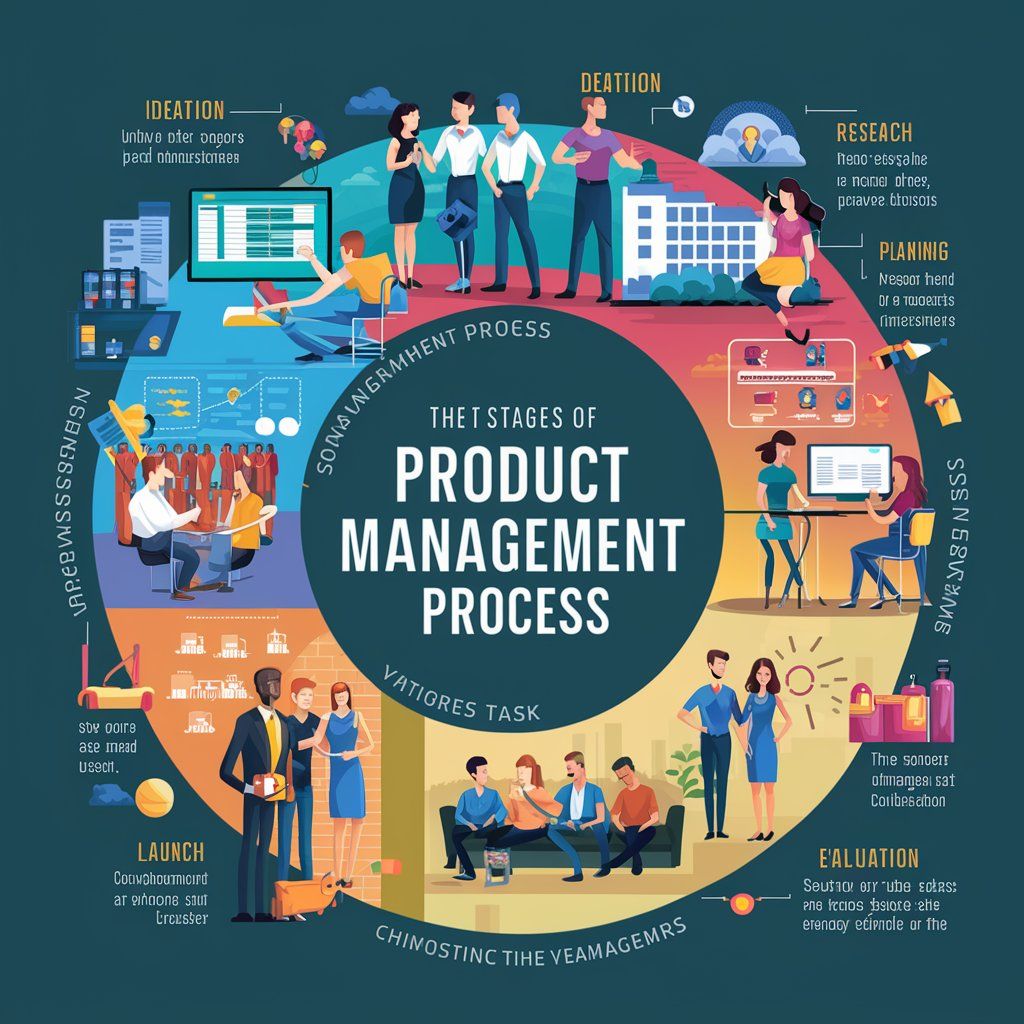
Product: In 2001, a group of software practitioners met in Snowbird, Utah and produced a short document that would reshape how software was built.
The Agile Manifesto valued individuals and interactions over processes and tools, working software over comprehensive documentation, customer collaboration over contract negotiation, and responding to change over following a plan.
Hidden in those principles was a radical redistribution of authority. If teams should respond to change - if collaboration with customers should drive decisions rather than upfront contracts - then someone needed to be responsible for understanding customers deeply enough to make those decisions well.
That role, imprecisely defined but increasingly essential, is the product manager.
Product management is now among the most sought-after roles in technology. It commands high compensation, significant organizational influence, and a shortage of qualified practitioners that shows no sign of abating.
But it is also one of the most misunderstood roles - confused with project management, engineering management, or a catch-all for strategic work that does not fit anywhere else.
This article explains what product management actually is, what product managers do, what the research and practitioner evidence shows about doing it well, and what the path into and through the field looks like.
Defining Product Management
Product management is the discipline of determining what a product should do, why it should exist, and how it creates value for customers and the business.
The product manager's fundamental job is to make prioritization decisions - deciding which problems to solve, in what order, for which users - in an environment of competing demands, incomplete information, and limited resources.
A clean definition from Marty Cagan, founding partner of the Silicon Valley Product Group and author of "Inspired: How to Create Tech Products Customers Love" (2017): a product manager is responsible for discovering a product that is valuable (customers will buy it or use it), usable (customers can figure out how to use it), and feasible (engineers can actually build it).
The PM must balance all three dimensions simultaneously, which requires genuinely understanding all three domains without being the primary expert in any.
The product manager typically does not manage people directly - they are not the designer's manager, not the engineer's manager.
Instead, they influence through credibility and collaboration: the quality of their thinking about users and problems, their ability to communicate priorities clearly, and their skill at building alignment across functions that have different perspectives and different incentives.
This "authority without authority" structure makes product management one of the most cognitively and interpersonally demanding roles in technology organizations.
A 2022 survey by Pragmatic Institute found that 70% of product managers reported feeling "overwhelmed by the breadth of responsibilities" in their role - a finding that reflects the structural ambiguity inherent in the position.
"A product manager is not just a mini-CEO. They are a mini-CEO without any of the formal authority - which means they have to develop the skills to be genuinely influential rather than just nominally in charge." - Ken Norton, Google Ventures
A Brief History of the Role
The product manager role has a surprisingly clear origin story. Neil McElroy, a marketing executive at Procter and Gamble, wrote a memo in 1931 proposing what he called a "brand man" - someone who would take full responsibility for the success of a specific product, coordinating across advertising, sales, and manufacturing, and owning the product's performance in the market.
McElroy's memo circulated to Stanford and found an audience at HP, where it influenced David Packard and Bill Hewlett. The concept spread through Silicon Valley and eventually evolved into the technology product manager role that dominates today.
The modern technology PM role was substantially shaped by Google, which created one of the first formal Associate Product Manager (APM) programs under Marissa Mayer in 2002.
The program provided a template that dozens of major technology companies would later adopt: a structured entry-level path into product management for high-potential candidates from technical or analytical backgrounds.
By the mid-2010s, "product manager" had become one of the most highly compensated and competitive roles in the technology industry.
The Product Management Festival's 2023 State of Product survey (n=2,200) found that product management was listed as the most desired role to move into by survey respondents from engineering, design, and business functions - consistently described as combining high autonomy, high impact, and high compensation.
PM vs. Project Manager: A Critical Distinction
This is the most common source of confusion about the role, and it matters because the confusion produces PMs who do the wrong job and organizations that misdefine what they need.
A project manager is responsible for the execution of a defined scope of work. Given a set of requirements and a deadline, a project manager plans the work, coordinates dependencies, tracks progress against schedule, manages resource allocation, and removes blockers to delivery.
The project manager's success is measured by on-time, on-budget delivery of what was specified.
A product manager is responsible for defining what should be built in the first place - the problem space, not the execution plan. They own the "what and why"; project managers own the "how and when." Product managers deal with questions like: What problems are users experiencing?
Which of those problems are worth solving? What solution would best address them? How will we know if it worked? What should we build next?
| Dimension | Product Manager | Project Manager |
|---|---|---|
| Core question | What should we build and why? | How do we deliver what's specified? |
| Primary skill | Discovery, prioritization, strategy | Planning, coordination, execution |
| Success metric | Outcome (user behavior, business results) | Output (delivered on time, on budget) |
| Relationship to scope | Defines and changes scope | Manages to defined scope |
| Typical background | Varied (engineering, design, business, research) | Often PMI certified or similar |
| Manages people? | Typically no | Typically yes or project team |
Many organizations, particularly smaller ones, have a single person doing both roles. This is workable but creates tension: the mindset for discovery (question everything, change direction based on evidence) conflicts with the mindset for execution (commit, coordinate, deliver).
Recognizing which mode you need to be in at any given time is itself a PM skill.
The confusion is not merely semantic. Organizations that hire product managers but hold them accountable primarily to project management metrics - on-time feature delivery rather than outcome improvement - systematically produce the wrong product behavior.
They build more features faster without ensuring those features actually solve user problems.
The Discovery-Delivery Cycle
Product work operates in two distinct modes that each require different skills, different mindsets, and different activities.
Product Discovery
Discovery is the process of identifying which problems to solve and exploring solution approaches before committing to building. Discovery work includes:
- User research - interviews, usability testing, diary studies, behavioral analytics, and other methods to understand what users actually experience, need, and value
- Problem definition - translating research observations into clear problem statements that engineering and design can work against
- Opportunity sizing - assessing how many users are affected by a problem, how painful it is, and what business value solving it would create
- Hypothesis generation - developing proposed solutions and the testable predictions they imply
- Prototyping and testing - quickly building low-fidelity representations of solutions and testing them with users to learn before committing significant engineering time
Good discovery means the team builds things that actually solve real user problems. Poor discovery means the team builds things that made sense in meetings but fail in the hands of real users.
Research by Nielsen Norman Group (Pernice, 2023) found that over 80% of features built without adequate user research fail to achieve their intended business outcomes - a statistic that reflects the enormous value created by investing in discovery before committing to build.
Teresa Torres, author of "Continuous Discovery Habits" (2021), has argued for what she calls the "continuous discovery" approach: making user research a weekly practice embedded in regular product development cycles, rather than a periodic event at the start of a project.
This approach has been adopted by companies including Duolingo, Intercom, and Atlassian.
Product Delivery
Delivery is the process of executing on a defined solution - designing it in detail, building it, testing it, and releasing it. During delivery, the PM's role shifts from defining problems to:
- Writing detailed requirements or user stories that give engineering enough context to build correctly
- Making scope decisions when the full vision is not feasible in the available time
- Communicating with stakeholders about progress, changes, and decisions
- Managing releases, coordinating with marketing and customer success, and ensuring the launch succeeds
- Defining success metrics and measurement plans so the team can evaluate whether the delivery achieved its intended outcomes
The discovery-delivery distinction is important because organizations often get stuck in pure delivery mode - building features from a requirements backlog without ever questioning whether those features solve the right problems. This produces products with many features that users do not value.
The PM's job is to maintain the discovery discipline even when delivery pressure is high.
Product Roadmaps
A product roadmap is a visual representation of a product's planned direction over time - typically showing what will be built, in what sequence, against a rough timeline. Roadmaps serve multiple purposes:
- Alignment - giving the whole team a shared understanding of direction
- Communication - telling stakeholders, sales, marketing, and customers what to expect
- Planning - allowing other functions to plan work that depends on product milestones
The most common mistake with roadmaps is treating them as commitments rather than plans. A roadmap built on strong user research and validated priorities is a valuable planning tool.
A roadmap built to satisfy stakeholders' desire for certainty - featuring detailed dates and features committed months in advance without adequate discovery - becomes an obstacle to good product development, because it makes it costly to change direction when new information arrives.
Jared Spool, founder of User Interface Engineering and one of the longest-standing voices in UX and product research, has documented what he calls the "frozen roadmap problem": organizations where commitments have been made to specific features months or years in advance, making it practically impossible for PMs to act on new user research even when it clearly indicates the planned direction is wrong.
Leading practitioners, including Marty Cagan and Teresa Torres, advocate for outcome-based roadmaps: instead of specifying features and dates, they specify the user and business outcomes the team is working toward, and the hypotheses they will test to achieve them.
This retains alignment on goals while preserving the flexibility to change approach based on what is learned.
Prioritization Frameworks
Because product teams always have more potential work than capacity, prioritization is a core PM competency. Several frameworks exist to make prioritization more systematic.
RICE Scoring
Developed at Intercom by Sean McBride, RICE scores each initiative on four factors:
- Reach: How many users will this affect per quarter?
- Impact: How much will it move the needle for each user? (0.25 = minimal, 0.5 = low, 1 = medium, 2 = high, 3 = massive)
- Confidence: How confident are you in your estimates? (expressed as %)
- Effort: How many person-months of work is required?
RICE Score = (Reach x Impact x Confidence) / Effort
Higher RICE scores indicate higher expected return per unit of effort. The framework allows diverse initiatives to be compared on a common scale, reducing the dominance of HiPPO decision-making (Highest Paid Person's Opinion).
Intercom published their RICE framework methodology in 2016, and it has since been adopted by product teams at hundreds of companies.
Jobs to Be Done (JTBD)
Popularized by the late Clayton Christensen of Harvard Business School, the jobs to be done framework argues that customers do not buy products - they hire products to accomplish a job. Understanding the job at the right level of abstraction reveals competitors and features that are not visible from a product-centric view.
The classic example: McDonald's discovered through research that their milkshakes were being "hired" in the morning by commuters who needed something to keep them occupied on a long drive and stave off mid-morning hunger. Their competitor was not other fast food milkshakes - it was bananas, granola bars, and bagels.
Optimizing the milkshake for this job (thicker, longer to consume) significantly increased sales. The job was "keep me engaged during my commute and not hungry until lunch."
JTBD shifts the question from "what features should we add?" to "what progress is the customer trying to make, and what obstacles get in the way?" This reframing often reveals opportunities that feature-centric product thinking misses.
Christensen's "The Innovator's Dilemma" (1997) and subsequent work on JTBD influenced a generation of product practitioners and remains one of the most cited frameworks in product management discourse.
Opportunity Solution Trees
Teresa Torres's opportunity solution tree is a visual thinking tool that maps the relationship between desired outcomes, opportunities (customer problems and needs), solutions, and experiments.
It provides a framework for organized discovery, preventing teams from jumping to solutions before clearly defining the opportunity they are trying to address.
The tree structure forces important discipline: you cannot propose a solution without first connecting it to a specific opportunity (user problem), and you cannot claim confidence in a solution without identifying the experiment that would test it.
Torres's research (documented in "Continuous Discovery Habits," 2021) found that teams using opportunity solution trees reduced the frequency of "solution-first" product development - where a solution is proposed before problems are adequately understood - by approximately 60%.
MoSCoW Prioritization
A simpler framework used primarily for scope definition within a defined project: features are classified as Must Have, Should Have, Could Have, or Won't Have (for this release). MoSCoW is less analytically rigorous than RICE but is faster to apply and easier to communicate to non-technical stakeholders.
Metrics and Measurement
One of the most consequential responsibilities of product management is defining what success looks like and ensuring the team is measuring it.
North Star Metrics - a single metric that most directly reflects the core value a product delivers to its users - have become a widely adopted organizing tool. Spotify's North Star is time spent listening. LinkedIn's is monthly active users.
Airbnb's is "nights booked." The North Star concept (popularized by Sean Ellis, who coined the term "growth hacking," around 2012) provides a focal point that prevents teams from optimizing for metrics that diverge from actual user value.
The problem with North Star metrics is that they can be gamed or can diverge from real value. "Time on platform" as a North Star led some social media platforms to optimize for engagement without distinguishing between healthy engagement and harmful compulsive use.
Thoughtful product management requires secondary metrics that catch these failure modes - measures of quality of engagement, not just quantity.
Pirate Metrics (AARRR), developed by Dave McClure of 500 Startups, provide a funnel framework:
- Acquisition: How do users find the product?
- Activation: Do users have a good first experience?
- Retention: Do users return?
- Revenue: How does the product generate economic value?
- Referral: Do users recommend the product to others?
The framework is simple enough to communicate cross-functionally while providing enough structure to identify where the biggest gaps and opportunities are.
Stakeholder Management
Product managers typically have influence over many functions without formal authority over any. Engineering, design, data, marketing, customer success, sales, legal, and finance all have legitimate interests in product decisions and must all be aligned for a product to succeed.
Stakeholder management is not political maneuvering - it is the recognition that different functions have information and perspectives the PM does not have, and that sustainable product decisions require those perspectives to be heard and integrated.
A PM who overrides engineering concerns about technical debt may ship faster in the short term and accumulate a problem that prevents shipping anything reliable in the future. A PM who ignores sales' customer feedback may build a product that does not meet the market as it actually exists.
One of the most common failure modes in product management is the "feature factory" dynamic identified by Jared Spool and others: a PM who processes stakeholder requests into a feature backlog and optimizes for shipping velocity, but who never challenges whether any of those features are the right ones.
This PM is doing project management, not product management - and the product suffers accordingly.
Practical stakeholder management includes:
- Regular communication - keeping stakeholders informed without drowning them in detail
- Alignment checkpoints - verifying that key stakeholders understand and agree to direction before significant work is committed
- Transparent prioritization - explaining the reasoning behind decisions, including what was deprioritized and why
- Managing expectations - giving honest timeline and scope assessments rather than the optimistic projections stakeholders prefer to hear
Product Strategy
Beyond the day-to-day prioritization decisions, product management at senior levels requires product strategy - a coherent view of what the product is trying to achieve, for whom, and how it will create durable competitive advantage.
Roger Martin, Dean Emeritus of the Rotman School of Management and author of "Playing to Win" (2013), argues that strategy requires making explicit choices about where to play (which market segments and use cases) and how to win (what capabilities create sustainable advantage in those segments).
A PM who cannot articulate these choices for their product is operating tactically without strategy.
Product-market fit - the degree to which a product satisfies a strong market demand - is the fundamental strategic question in early-stage product development.
Sean Ellis's operational definition: a product has product-market fit if at least 40% of users say they would be "very disappointed" if the product ceased to exist. Products below this threshold need to change before they invest in growth; products above it are ready to scale.
Competitive positioning requires understanding how the product's value proposition compares to alternatives - not just direct competitors but all the ways users could address the same job, including doing nothing.
Clayton Christensen's concept of disruptive innovation - where new entrants serve underserved market segments with initially inferior but improving products - is one of the most powerful lenses for understanding competitive dynamics in technology markets.
Skills and What PMs Are Paid
Core Skills
Strategic thinking - the ability to connect product decisions to business outcomes, to understand competitive dynamics, and to identify where the largest opportunities lie.
Jeff Bezos's concept of "working backwards" - starting from the desired customer experience and working back to what needs to be built to create it - is an influential example of strategic PM thinking.
User empathy - genuine understanding of users' experiences, mental models, and goals. Developed through consistent, direct user research rather than secondhand summaries.
Teresa Torres's research on continuous discovery has documented that teams whose PMs conduct at least one user interview per week make substantially better product decisions than teams where research is periodic and secondhand.
Analytical thinking - ability to work with quantitative data (funnel metrics, retention curves, experiment results) and qualitative data (interview transcripts, support tickets) to draw defensible conclusions. The ability to design and interpret A/B tests is increasingly considered a baseline PM skill at data-driven companies.
Communication and influence - writing clearly (specifications, PRDs, strategy documents), speaking persuasively (to executives, to engineers, to users), and navigating organizational dynamics to build alignment.
Amazon's "working backwards" document culture, in which product ideas are articulated as press releases and FAQ documents before engineering work begins, reflects the company's conviction that writing quality is product thinking quality.
Prioritization judgment - the ability to make defensible decisions about what to do and what not to do, and to live with uncertainty about whether those decisions were right.
Compensation
According to Levels.fyi data from 2023-2024, US product manager compensation:
| Level | Base Salary Range | Total Comp (with equity) |
|---|---|---|
| Entry-level (APM/PM I) | $90,000-$130,000 | $100,000-$180,000 |
| Senior PM | $140,000-$200,000 | $200,000-$350,000 |
| Staff PM / Group PM | $180,000-$250,000 | $300,000-$600,000 |
| Director of Product | $200,000-$280,000 | $350,000-$800,000+ |
Compensation varies enormously by company stage (big tech pays most), geography (San Francisco and Seattle pay more), and company performance (equity value depends on whether the company grows). A 2023 Product Management Festival survey found that PM compensation in Western Europe averages approximately 60-70% of equivalent US roles.
In India, which has developed a substantial product management community, senior PM compensation ranges from INR 30-70 lakhs annually at leading tech companies - roughly $36,000-$84,000 at current exchange rates, but with lower purchasing power adjustment required.
How to Become a Product Manager
Product management has no single credential or degree path, and the typical PM career trace is varied. Common backgrounds include:
- Engineering: the technical background provides credibility with engineers and natural understanding of feasibility constraints. Technical PMs often have an easier time earning engineer respect and thinking through implementation tradeoffs.
- Design: user research skills and systems thinking translate well; design PMs tend to be strong on the discovery side. The UX-to-PM transition is particularly common because user empathy and problem definition are core to both disciplines.
- Business: analytical skills, strategic frameworks, and stakeholder communication; weaker on technical and user research, but stronger on market analysis and financial modeling.
- Domain expertise: becoming a PM in an industry you have deep expertise in (healthcare, finance, legal) can be more accessible than competing for general tech PM roles.
Associate PM (APM) programs at Google, Facebook/Meta, Microsoft, and other large tech companies are formal entry-level pathways. They are competitive (thousands of applicants for dozens of spots) and provide structured mentorship and rotation experiences.
Google's APM alumni include several prominent tech founders and executives, demonstrating the program's success as a talent pipeline.
For those without APM access, common entry strategies include transitioning into PM from an adjacent role at your current company (where you already have organizational credibility), building PM skills while in other roles, developing a portfolio of case studies, and targeting smaller companies where APM track records are less critical.
PM interview preparation has its own ecosystem: "Cracking the PM Interview" by Gayle Laakmann McDowell and Jackie Bavaro (2013), "Decode and Conquer" by Lewis Lin (2013), and PM communities on Slack and LinkedIn have created a substantial infrastructure for aspiring PMs.
The most consistent advice from experienced PMs is that direct user research is the single most differentiating skill to develop: the ability to conduct interviews, extract insight from qualitative data, and turn user understanding into product decisions distinguishes outstanding PMs from average ones more reliably than any other competency.
The PM who does this well makes better decisions with less information - which is the fundamental requirement of the job.
Product Management and AI
The emergence of generative AI is reshaping both the tools of product management and the problems PMs are being asked to solve.
On the tools side: AI writing assistants accelerate requirements documentation, user research synthesis, and competitive analysis. Tools like Notion AI, Otter.ai for interview transcription, and Dovetail for research synthesis have materially reduced the time cost of core PM activities.
A 2023 survey by Productboard found that 67% of PMs reported using AI tools in their workflow, with the most common use cases being documentation, data summarization, and stakeholder communication drafts.
On the problem side: PMs at AI companies are navigating entirely new product design challenges - how to handle AI uncertainty and errors, how to calibrate user trust in AI outputs, how to design for AI systems whose behavior is probabilistic rather than deterministic.
These challenges do not map neatly onto existing product frameworks, and the PM community is actively developing new approaches.
The underlying PM skills - problem definition, user research, prioritization, stakeholder management - are not automated by AI.
If anything, AI amplifies the value of these skills by reducing the cost of implementation (making it easier to build things) while increasing the cost of building the wrong thing (because more things can be built faster).
The highest-leverage PM skill in an AI-saturated product environment may be the one that has always been most important: the ability to identify the right problem to solve before committing to a solution.