
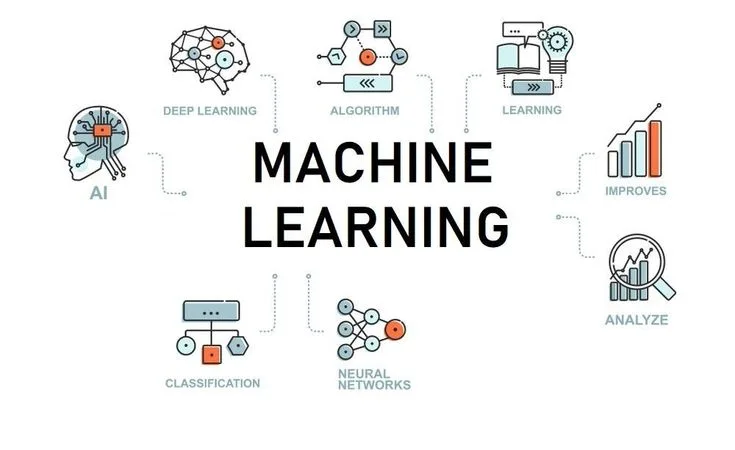
What is machine learning? It is software that learns patterns from examples rather than relying on hand-written rules. A model adjusts parameters to reduce errors on training data, using an architecture, loss function, and optimization method. Machine learning is a subset of AI, while deep learning is one subset of machine learning. Models can fail by underfitting or by overfitting patterns that do not generalize.
Machine learning powers your spam filter, your streaming recommendations, the voice assistant on your phone, and the fraud detection system that flags unusual charges on your credit card.
Yet most explanations of it fall into one of two traps: they are either so technical that only engineers benefit, or so vague that readers learn nothing useful.
This guide takes a different approach. It explains what machine learning actually is, how models actually learn, what the three main paradigms actually do, and where the technology genuinely falls short. No hype, no hand-waving.
What Machine Learning Is (and Is Not)
Machine learning is a method of building software that discovers patterns in data rather than following rules written by hand. The critical distinction is between two models of programming:
In traditional programming, a developer writes explicit logic: "If the email subject contains 'free money' and the sender is not in the contacts list, mark it as spam." The rules are crafted by humans and encoded directly.
In machine learning, the developer provides thousands of examples of spam and non-spam emails with correct labels. The system adjusts its internal parameters until it can reliably reproduce those labels. The rules emerge from the data rather than from human reasoning.
This distinction matters because many real-world problems are too complex for hand-coded rules. The features that distinguish a malignant tumor from a benign one in a medical scan, or the patterns that indicate a fraudulent transaction, involve thousands of interacting variables.
No human could write rules that capture all of them. Machine learning sidesteps this by letting the data do the teaching.
What Machine Learning Is Not
Machine learning is not the same as artificial intelligence, though the terms are often used interchangeably. AI is the broad field concerned with building systems that exhibit intelligent behavior. Machine learning is one technique within that field.
Rule-based expert systems, search algorithms, and symbolic reasoning are also AI, but they are not machine learning.
Machine learning is also not the same as deep learning. Deep learning is a specific subset of machine learning that uses neural networks with many layers. All deep learning is machine learning, but not all machine learning is deep learning.
Many highly effective machine learning systems use simpler algorithms like decision trees, support vector machines, or linear regression.
A Brief History: From Concept to Commercial Dominance
The intellectual roots of machine learning stretch back further than most people assume. Arthur Samuel, an IBM researcher, coined the term "machine learning" in 1959 while developing a program that learned to play checkers by playing thousands of games against itself.
His checkers program eventually became good enough to beat its creator. Samuel defined machine learning as "the field of study that gives computers the ability to learn without being explicitly programmed" - a definition that remains accurate seventy years later.
The field progressed slowly for several decades. Frank Rosenblatt's perceptron (1957) introduced the idea of a learning algorithm that adjusted weights in response to errors.
The enthusiasm was premature: Minsky and Papert's 1969 book Perceptrons demonstrated mathematical limitations of the single-layer perceptron, effectively dampening investment for more than a decade in what became known as the first "AI winter."
The 1980s brought backpropagation, the algorithm that made it possible to train multi-layer neural networks by propagating error signals backward through the network.
Published in accessible form by Rumelhart, Hinton, and Williams in a landmark 1986 paper in Nature, backpropagation provided the computational mechanism that made deep learning theoretically feasible.[1]
But hardware constraints meant that the networks people could actually train were too small to perform impressively on real-world tasks, and a second AI winter followed.
The contemporary era began in 2012. A convolutional neural network called AlexNet, submitted by Alex Krizhevsky, Ilya Sutskever, and Geoffrey Hinton to the ImageNet Large Scale Visual Recognition Challenge, reduced the top-5 image classification error rate from 26 percent to 15 percent - a margin so large that it ended debate about whether deep learning was worth pursuing.
The ingredients: a large labeled dataset (ImageNet's 1.2 million images), powerful graphics processing units repurposed for matrix computation, and the backpropagation algorithm refined over decades. The combination produced a step change in capability that has not stopped since.
By 2023, the global machine learning market was estimated at approximately $21 billion, according to Grand View Research, with projections placing it above $209 billion by 2029. This is no longer a research curiosity - it is infrastructure.
How a Machine Learning Model Actually Learns
A machine learning model is, at its core, a mathematical function with many adjustable parameters. Understanding the learning process requires understanding three components: the model architecture, the loss function, and the optimization algorithm.
The Model Architecture
The architecture defines the shape of the function: how many parameters it has, how they are organized, and what kinds of patterns the model is capable of capturing. A linear regression model has just a handful of parameters and can only capture straight-line relationships.
A deep neural network might have billions of parameters arranged in layers and can capture extraordinarily complex patterns.
Choosing the right architecture for a problem is part science and part art. A model that is too simple will fail to capture the patterns in the data (underfitting). A model that is too complex will memorize the training data without learning generalizable patterns (overfitting).
Both failure modes produce models that do not generalize - that perform well on training data but poorly on new examples.
The bias-variance tradeoff formalizes this tension. A high-bias model makes strong assumptions and misses real patterns. A high-variance model is too sensitive to the specific training data and learns noise. Good model design navigates the space between them.
The Loss Function
The loss function measures how wrong the model's predictions are. For a model predicting house prices, the loss might be the average of the squared differences between predicted prices and actual prices. For a model classifying images as cats or dogs, the loss measures how often the model assigns high confidence to the wrong label.
The specific design of the loss function shapes what the model optimizes for. Different choices produce different behaviors, and selecting an appropriate loss function is often crucial to getting a model that does what you actually want.
Cross-entropy loss is standard for classification tasks; mean squared error is standard for regression.
But real applications often require custom loss functions that capture domain-specific considerations - a medical diagnosis model might penalize false negatives (missed diagnoses) much more heavily than false positives.
Gradient Descent
Gradient descent is the algorithm that adjusts the model's parameters to reduce the loss. The intuition: imagine you are on a hilly landscape in dense fog, trying to reach the lowest valley. You cannot see the whole landscape, but you can feel the slope beneath your feet.
Gradient descent takes a small step in the direction the slope descends most steeply, then recalculates, then steps again. Repeat this millions of times and you converge on a low point.
In practice, the "landscape" is the loss function plotted across all the model's parameters. The "slope" is the gradient: a mathematical measure of how the loss changes as each parameter changes.
The model updates each parameter by a small amount in the direction that reduces the loss. This update is called a training step, and a typical model undergoes millions of them.
Stochastic gradient descent (SGD) - processing small random batches of training examples rather than the entire dataset - makes training computationally tractable and introduces beneficial noise into the optimization process, helping models avoid getting stuck in shallow local minima.
The learning rate controls the step size: too large and training overshoots; too small and training converges too slowly or stops prematurely.
"Deep learning is fundamentally about learning hierarchical representations of data.
The key insight is that useful representations at one level can be computed from representations at a lower level, and that this compositionality allows us to learn extremely complex functions from data." - Yoshua Bengio, Turing Award Lecture, 2019[7]
Training, Validation, and Testing
Data is split into three sets:
| Dataset | Purpose | Typical Size |
|---|---|---|
| Training set | Used to update model parameters | 60-80% of data |
| Validation set | Used to tune hyperparameters and catch overfitting | 10-20% of data |
| Test set | Used once at the end to measure true performance | 10-20% of data |
The test set is held out entirely until training is complete. Evaluating on data the model has already seen produces falsely optimistic accuracy numbers, a mistake called data leakage that has contaminated many published research results.
Cross-validation - dividing training data into multiple folds and training on each in turn - provides a more robust estimate of model performance when data is limited. The k-fold procedure trains k separate models, each on a different subset, and averages their performance.
The Three Main Paradigms
Supervised Learning
Supervised learning is the most widely deployed form of machine learning. The training data consists of input-output pairs: each example has an input (an image, a sentence, a set of measurements) and a correct label (the category, the translation, the predicted value). The model learns to map inputs to outputs.
Classification tasks assign inputs to discrete categories. Email spam detection, medical diagnosis from scans, and sentiment analysis of customer reviews are all classification problems. The model outputs either a class label or a probability distribution across possible classes.
Regression tasks predict continuous numerical values. Predicting house prices, forecasting stock returns, and estimating delivery times are regression problems. The model outputs a number rather than a category.
The limitation of supervised learning is the need for labeled data. Labels require human effort to produce, and some tasks require expert knowledge that is expensive to acquire. A dataset of medical images needs radiologists to annotate each scan.
A dataset of legal documents needs lawyers to classify each outcome. This cost constrains the scale at which supervised learning can be applied.
According to a 2021 survey by Scale AI and MIT, data labeling consumes approximately 80% of the time and cost in typical machine learning projects.
The scarcity and expense of high-quality labels has driven significant investment in methods that reduce the labeling burden: active learning (selecting only the most informative examples for labeling), semi-supervised learning (combining a small labeled dataset with a large unlabeled one), and self-supervised learning (generating labels from the data structure itself, as in masked language modeling).
Unsupervised Learning
Unsupervised learning finds structure in data with no labels. The model is given inputs but not told what the correct output should be. Instead of learning to reproduce human judgments, it discovers patterns in the data itself.
Clustering groups similar data points together. A retailer might cluster customers by purchasing behavior without knowing in advance how many distinct customer types exist or what they look like. The algorithm discovers the groupings from the data.
K-means clustering, hierarchical clustering, and DBSCAN are common algorithms, each suited to different data shapes and cluster geometries.
Dimensionality reduction compresses high-dimensional data into a lower-dimensional representation that preserves the most important structure. This is useful for visualization, for removing noise from data, and for reducing the computational cost of downstream processing.
Principal Component Analysis (PCA) finds the directions of maximum variance; t-SNE and UMAP produce two-dimensional visualizations that reveal cluster structure invisible in the raw data.
Anomaly detection identifies data points that do not fit the normal pattern. This is how credit card fraud detection works: the model learns what normal spending looks like and flags transactions that deviate significantly from the pattern.
Autoencoders - neural networks trained to compress and reconstruct data - are effective for anomaly detection: they reconstruct normal examples well and reconstruct anomalies poorly, so high reconstruction error is a signal of anomaly.
Generative models learn the distribution of training data and can produce new examples from that distribution. Generative adversarial networks (GANs), introduced by Ian Goodfellow and colleagues in 2014, use a generator-discriminator competition to produce remarkably realistic synthetic images, audio, and text.[9]
Variational autoencoders (VAEs) and diffusion models (the technology behind DALL-E and Stable Diffusion) are alternative generative approaches with different mathematical foundations.
Reinforcement Learning
Reinforcement learning trains an agent to take actions in an environment to maximize a cumulative reward. The agent is not told what to do; it learns by trial and error, receiving feedback in the form of rewards and penalties.
The classic example is learning to play a video game. The agent sees the game screen, takes an action (move left, jump, fire), and receives a reward (points scored, health lost). Over millions of games, the agent learns which actions in which situations produce the most reward.
"Reinforcement learning is the only major machine learning paradigm that explicitly models the concept of an agent making decisions over time in pursuit of a goal. This makes it philosophically the closest analog to biological learning and practically the hardest to make work reliably at scale."
Reinforcement learning produced AlphaGo, which defeated the world Go champion Lee Sedol in 2016. (AlphaFold, which largely solved protein structure prediction, relies mainly on supervised deep learning rather than reinforcement learning.)
Its limitation is sample inefficiency: it often requires millions of training episodes that are impractical to collect in the real world, which is why reinforcement learning systems frequently train in simulation rather than reality.
Reinforcement learning from human feedback (RLHF), used to fine-tune large language models like ChatGPT, adapts the paradigm: human raters evaluate model outputs, and these ratings provide the reward signal that shapes model behavior.
The application of RL principles to language model alignment has been one of the most consequential methodological advances of the 2020s.
Real-World Applications
Machine learning is now embedded in products and processes across virtually every industry.
| Industry | Application | Paradigm |
|---|---|---|
| Spam filtering | Supervised (classification) | |
| Streaming | Content recommendations | Unsupervised + supervised |
| Finance | Fraud detection | Unsupervised (anomaly detection) |
| Healthcare | Medical image analysis | Supervised (classification) |
| Manufacturing | Predictive maintenance | Supervised (regression) |
| Logistics | Route optimization | Reinforcement learning |
| Retail | Demand forecasting | Supervised (regression) |
| Search | Query ranking | Supervised + reinforcement |
| Drug discovery | Protein structure prediction | Supervised (AlphaFold) |
| Agriculture | Crop disease detection | Supervised (image classification) |
A Concrete Example: How a Spam Filter Learns
To make the process concrete, trace how an email spam filter is built:
- Data collection: Engineers gather a large dataset of emails, each labeled "spam" or "not spam" by human reviewers.
- Feature engineering: Each email is converted into a numerical representation. Early systems used word counts; modern systems use embeddings that capture semantic meaning.
- Training: A classifier trains on this data, adjusting its parameters to correctly predict the spam label for each email.
- Evaluation: The model is tested on held-out emails it has never seen to measure real-world accuracy.
- Deployment: The model runs on a server and classifies incoming emails in milliseconds.
- Feedback loop: New spam patterns flagged by users generate fresh labeled data that the model retrains on.
The entire cycle - collect, label, train, evaluate, deploy, retrain - repeats continuously as spammers adapt their tactics.
Medical Imaging: A Case Study in Impact
One of the most compelling demonstrations of machine learning's practical potential is in radiology. Deep learning models for detecting pathologies in medical images have shown performance competitive with - and in some cases exceeding - specialist physicians on specific, narrowly defined tasks.
A 2019 study by Ardila et al. in Nature Medicine trained a deep learning model on 42,290 chest CT scans to detect lung cancer. On a held-out test set, the model achieved an AUC of 0.944 - meaning it correctly distinguished cancer from non-cancer 94.4% of the time across the full range of classification thresholds.
When evaluated head-to-head against a panel of six radiologists, the model showed 11% fewer false positives and 5% fewer false negatives than the average radiologist working without prior scans for comparison.
Results of this quality require careful qualification: performance was measured on a specific dataset under specific conditions, and the model's performance on populations underrepresented in its training data is uncertain. But the result illustrates the potential.
What Training Data Actually Does
Training data is the raw material from which a model learns. Its quality and composition directly determine what the model knows and how it behaves.
Bias in Training Data
If a training dataset is not representative of the real world, the model will encode that non-representativeness. A hiring algorithm trained on historical decisions that favored certain demographic groups will learn to replicate those biases.
A facial recognition system trained predominantly on light-skinned faces will perform worse on dark-skinned faces. These are not hypothetical risks; they have been documented repeatedly in deployed systems.
A 2018 MIT Media Lab study by Joy Buolamwini and Timnit Gebru (published at the ACM Conference on Fairness, Accountability, and Transparency) found that commercial facial analysis systems misclassified the gender of dark-skinned women at error rates up to 34.7%, compared to error rates below 1% for light-skinned men.[3]
The disparity traced directly to training datasets that were overwhelmingly composed of light-skinned faces. The study was instrumental in prompting Microsoft, IBM, and Amazon to pause or restrict commercial facial recognition offerings.
In 2018, Reuters reported that Amazon had quietly scrapped a machine learning recruitment tool after discovering it penalized resumes that included the word "women's" (as in "women's chess club") and downgraded graduates of all-women's colleges.
The model had been trained on historical hiring patterns that reflected a decade of male-dominated technical hiring. The algorithm reproduced the past.
Data Quantity vs. Data Quality
More data generally helps, but quality matters more than quantity. A model trained on one million clean, accurately labeled examples will typically outperform a model trained on ten million examples with noisy or incorrect labels.
Data cleaning - identifying and correcting mislabeled examples, removing duplicates, handling missing values - often consumes more engineering time than model development itself.
A 2021 benchmark study by Northcutt, Jiang, and Chuang (published in the proceedings of NeurIPS 2021 (Datasets and Benchmarks Track)) found that popular benchmark datasets used to evaluate machine learning models contained error rates of 3.4% in test labels on average.[6]
Because model performance is measured against these labels, even "state-of-the-art" results may reflect adaptation to label noise rather than genuine capability improvements.
Distribution Shift
A model trained on data from one time period or context may fail when deployed in a different one. Distribution shift occurs when the statistical properties of the deployment data differ from those of the training data.
A model trained on pre-pandemic consumer behavior struggled to make accurate predictions during lockdowns because the patterns it had learned no longer matched reality. This is one of the most common causes of machine learning failures in production.
A 2022 study by Taori et al. at Stanford found that image classification models' performance degraded dramatically when images were shifted in ways that preserved semantic content but changed low-level statistics - such as photographs taken under different lighting conditions or with different camera hardware than was represented in training data.
In some cases, a 95% accurate model on the training distribution dropped below 70% accuracy on a shifted test distribution.
How Model Performance Is Measured
Accuracy - the percentage of predictions that are correct - is the most intuitive metric, but often the wrong one to optimize for.
Consider a medical test for a rare disease that affects 1% of the population. A model that says "no disease" for every patient achieves 99% accuracy while being completely useless.
Better metrics for this case are precision (of all patients flagged as positive, how many actually have the disease) and recall (of all patients who actually have the disease, how many did the model catch).
The right metric depends on the costs of different types of errors. In fraud detection, missing a fraudulent transaction (false negative) is typically more costly than flagging a legitimate one (false positive), which shifts the metric priorities accordingly.
| Metric | Definition | Best Used When |
|---|---|---|
| Accuracy | Correct predictions / total predictions | Classes are balanced |
| Precision | True positives / all positive predictions | False positives are costly |
| Recall | True positives / all actual positives | False negatives are costly |
| F1 Score | Harmonic mean of precision and recall | Balance between precision and recall needed |
| AUC-ROC | Area under the ROC curve | Comparing models across thresholds |
| BLEU | N-gram overlap score | Machine translation quality |
| RMSE | Root mean squared error | Regression with large outlier sensitivity |
Benchmark Gaming and the Limits of Metrics
A persistent problem in machine learning research is that models optimized aggressively for a specific benchmark may not generalize to real-world performance on the same underlying task.
This phenomenon - sometimes called Goodhart's Law applied to machine learning ("when a measure becomes a target, it ceases to be a good measure") - has affected multiple high-profile benchmarks.
The GLUE and SuperGLUE natural language benchmarks, designed to measure general language understanding, saw models "saturate" them (matching or exceeding human performance) within years of introduction, yet real-world language understanding in these models remained clearly imperfect.
Researchers responded by developing harder benchmarks, which were also saturated in short order. The gap between benchmark performance and genuine capability is an active research problem.
The Honest Limitations
Machine learning is a powerful tool with real constraints that are often understated in popular coverage.
Models Cannot Explain Themselves
Most high-performing machine learning models, particularly deep neural networks, are black boxes. They produce outputs without being able to articulate why.
This is acceptable for spam filtering but problematic for loan decisions, medical diagnoses, and parole recommendations, where people have a right to understand the basis for decisions that affect them.
The field of explainable AI (XAI) is working to address this. Methods like LIME (Local Interpretable Model-Agnostic Explanations) and SHAP (SHapley Additive exPlanations) provide local approximations to model behavior - identifying which features most influenced a specific prediction.
But these are post-hoc approximations, not true explanations of what the model is computing, and fully satisfying explanations for complex models remain an open research problem.
The European Union's General Data Protection Regulation (GDPR), enacted in 2018, includes a provision often described as a "right to explanation" for automated decisions that significantly affect individuals.
How this requirement will ultimately be enforced for complex machine learning models remains legally and technically unresolved.
Correlation Is Not Causation
Machine learning models identify statistical correlations in data. They cannot determine whether one variable causes another. Acting on correlations as if they were causal relationships can lead to policies that do not work or that backfire.
A model might learn that ice cream sales correlate with drowning deaths - both driven by summer weather - and a naive application might recommend reducing ice cream sales to reduce drownings.
The field of causal inference and causal machine learning (associated with researchers including Bernhard Scholkopf at the Max Planck Institute and Judea Pearl at UCLA) is developing methods that explicitly model causal relationships rather than mere correlations.
These methods are more demanding in their data requirements but produce models that generalize more reliably across distribution shifts and produce recommendations that are actually actionable.
Adversarial Examples
Because machine learning models learn from statistical patterns rather than reasoning about the world, they can fail in ways that humans find baffling.
A small, carefully crafted perturbation to an image - invisible to human eyes - can cause a highly accurate image classifier to confidently label a stop sign as a speed limit sign. These adversarial examples reveal that models are not learning the concepts humans think they are learning.
Szegedy et al. (2013, published at ICLR 2014) first demonstrated adversarial examples in deep neural networks. Subsequent research found that adversarial perturbations often transfer across different models trained on the same data, suggesting they exploit fundamental properties of the learning process rather than idiosyncratic model features.
This is a significant security concern for machine learning in safety-critical applications like autonomous vehicles and medical devices.
The Compute and Data Cost
Training large modern models requires enormous computational resources. Training GPT-3 was estimated by OpenAI to cost several million dollars in compute alone, excluding human labor for data collection and labeling.
Estimates for training GPT-4 range from tens to hundreds of millions of dollars, though OpenAI has not published official figures.
A 2019 paper by Strubell, Ganesh, and McCallum at the University of Massachusetts estimated that training a single large NLP model with neural architecture search produces carbon dioxide emissions equivalent to roughly five times the lifetime emissions of an average American car, including manufacturing.[4]
This creates a landscape in which only well-funded organizations can train frontier models, raising questions about concentration of power and equitable access to AI capabilities.
How to Think About Machine Learning
Machine learning is not magic, and it is not a replacement for human judgment. It is a powerful pattern-matching technology that excels at specific, well-defined tasks where large amounts of training data are available and where errors are tolerable or correctable.
The most effective applications share certain characteristics: the problem has a clear objective that can be expressed as a loss function, historical data exists in sufficient quantity and quality, the deployment context is similar to the training context, and a human remains in the loop for consequential decisions.
Where these conditions are not met, machine learning is more likely to produce systems that fail silently, encode historical biases, and erode trust. Understanding both the genuine power and the real limitations is the foundation for using this technology wisely.
The Near-Term Frontier
Several research directions are likely to shape machine learning's trajectory in the years ahead:
Foundation models and prompting: Large models pre-trained on broad data and adapted through prompting rather than retraining are reshaping the economics of AI development. The marginal cost of deploying a new application is falling toward zero for organizations that can access these models via API.
Multimodal learning: Models that jointly understand images, text, audio, and structured data are converging toward unified architectures. GPT-4V (vision), Gemini, and similar models represent early instances; more capable multimodal systems are in active development.
Efficient inference: Deploying large models in latency-sensitive or resource-constrained environments requires techniques like quantization, pruning, and knowledge distillation to reduce model size without proportional performance loss.
Alignment and safety: As machine learning systems are deployed in higher-stakes domains, ensuring that they behave reliably, honestly, and in accordance with human values becomes a research priority rather than an afterthought.
Anthropic, OpenAI, DeepMind, and academic groups have substantial research programs focused specifically on this problem.
The field is advancing rapidly, but the fundamentals described here - supervised learning from labeled data, unsupervised discovery of structure, reinforcement learning through reward - have been stable for decades and will remain the conceptual backbone of the field regardless of how the hardware and architectures evolve.
Sources & Further Reading
- Rumelhart, D. E., Hinton, G. E., & Williams, R. J. (1986). Learning representations by back-propagating errors. Nature, 323, 533-536.
- LeCun, Y., Bengio, Y., & Hinton, G. (2015). Deep learning. Nature, 521, 436-444.
- Buolamwini, J. & Gebru, T. (2018). Gender Shades: Intersectional Accuracy Disparities in Commercial Gender Classification. Proceedings of Machine Learning Research, 81, 77-91.
- Strubell, E., Ganesh, A., & McCallum, A. (2019). Energy and Policy Considerations for Deep Learning in NLP. ACL 2019. arXiv:1906.02629.
- Ardila, D. et al. (2019). End-to-end lung cancer detection on medical imaging data using deep learning. Nature Medicine, 25, 954-961.
- Northcutt, C., Jiang, L., & Chuang, I. (2021). Pervasive Label Errors in Test Sets Destabilize Machine Learning Benchmarks. NeurIPS 2021. arXiv:2103.14749.
- Bengio, Y. (2019). From System 1 Deep Learning to System 2 Deep Learning. NeurIPS 2019 Keynote.
- Mitchell, T. (1997). Machine Learning. McGraw-Hill.
- Goodfellow, I., Bengio, Y., & Courville, A. (2016). Deep Learning. MIT Press. View source