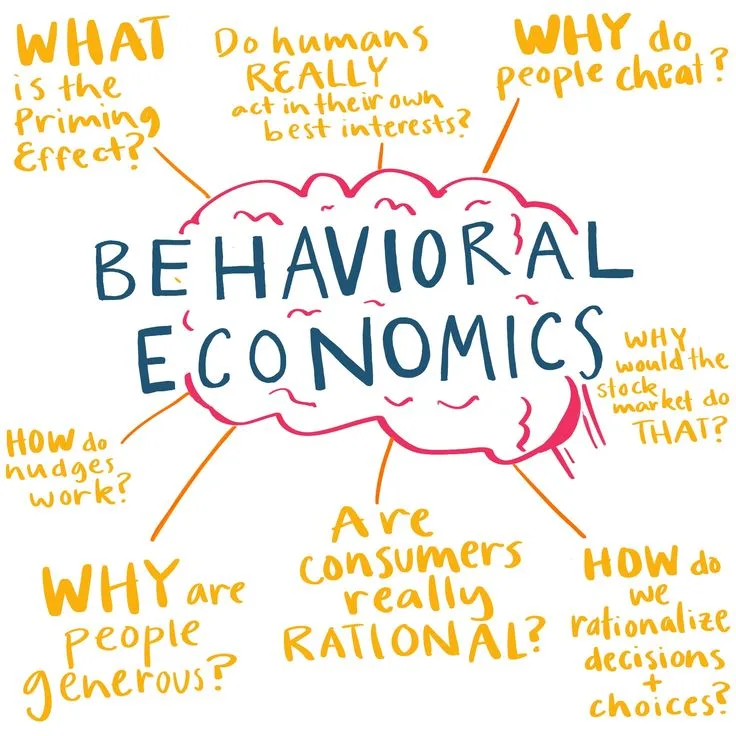
The origins of behavioral economics lie in evidence that departures from rational choice are systematic rather than random. Bounded rationality, heuristics, loss aversion, anchoring, and framing showed that people predictably depart from the utility-maximizing assumptions central to standard economic models. The field grew by bringing these features of cognition into accounts of markets, policy, and everyday decisions.
For most of the twentieth century, economics rested on a foundational assumption that most economists knew was false but treated as close enough to true to be useful: that human beings are rational agents who consistently maximize their utility.
This assumption, embedded in the mathematical models that defined modern economics, held that people have stable, well-ordered preferences; that they process all available information accurately; that they discount future rewards at consistent rates; and that they make choices that reliably advance their own interests as they themselves define them.
The assumption was not naive. Economists understood that real people sometimes make mistakes. The argument was that these mistakes were random, unsystematic, and would cancel out in aggregate, leaving the rational actor model as a useful approximation of collective behavior.
Behavioral economics demolished this defense. Beginning in the 1950s with Herbert Simon's concept of bounded rationality and accelerating through the 1970s with Daniel Kahneman and Amos Tversky's revolutionary work on cognitive biases and heuristics, a growing body of research demonstrated that human departures from rationality are not random at all.
They are systematic, predictable, and persistent. People consistently overweight losses relative to equivalent gains.
They anchor judgments on irrelevant numbers. They evaluate probabilities using mental shortcuts that produce reliable errors. They make different choices depending on how identical options are framed.
These are not occasional lapses by otherwise rational agents; they are fundamental features of human cognition that any realistic model of economic behavior must incorporate.
"The standard economic model of human behavior includes three unrealistic traits: unbounded rationality, unbounded willpower, and unbounded selfishness."
Richard Thaler
The story of how this insight emerged, met fierce resistance from the economics establishment, and eventually transformed both economic theory and public policy is one of the most important intellectual developments of the past century.
It touches questions that matter to everyone who makes decisions, which is to say everyone: Why do we consistently make choices that work against our own interests? Can the environments in which we make choices be designed to help us choose better?
And what does it mean for democratic governance when citizens and policymakers alike are subject to predictable cognitive biases?
The Rational Actor and the World It Built
To understand what behavioral economics challenged, you must first understand the edifice it challenged. The rational actor model (also called Homo economicus) was not merely a simplifying assumption in economic textbooks.
It was the foundation upon which an enormous intellectual and institutional structure was built: welfare economics, cost-benefit analysis, efficient market theory, rational expectations macroeconomics, law and economics, public choice theory, and much of game theory.
Each of these intellectual frameworks assumed, in one form or another, that economic agents are rational utility maximizers.
The Mathematical Formalization of Rationality
The rational actor model achieved its mature mathematical form in the 1940s and 1950s through the work of John von Neumann and Oskar Morgenstern, who published Theory of Games and Economic Behavior in 1944, and Leonard Savage, who published The Foundations of Statistics in 1954.
Von Neumann and Morgenstern showed that if an agent's preferences satisfy certain axioms (completeness, transitivity, continuity, and independence), then the agent behaves as if maximizing a utility function.
Savage extended this framework to decision-making under uncertainty, showing that rational agents should behave as if they assign subjective probabilities to uncertain events and maximize expected utility.
These axioms seemed almost self-evidently reasonable. Transitivity, for example, merely requires that if you prefer A to B and B to C, you should prefer A to C. Independence requires that if you prefer A to B, you should continue to prefer A to B even when both options are combined with the same third option.
Completeness requires that for any two options, you either prefer one, prefer the other, or are indifferent. Violations of these axioms seemed like obvious errors that rational people would correct upon reflection.
The power of this framework was immense. If people behave as utility maximizers, then market outcomes can be analyzed using optimization mathematics. Consumer behavior can be predicted from utility functions and budget constraints. Firms can be modeled as profit maximizers.
Equilibrium prices reflect all available information. Government intervention in markets can be evaluated by comparing the costs of market failure against the costs of regulatory distortion.
An entire architecture of economic reasoning followed from the rational actor assumption, and this architecture produced genuine insights about markets, prices, trade, and policy.
The Chicago School and Market Efficiency
The rational actor model found its strongest institutional home at the University of Chicago, where economists like Milton Friedman, George Stigler, Gary Becker, and Eugene Fama built influential research programs on the foundation of rational choice.
Friedman's famous 1953 essay "The Methodology of Positive Economics" argued that the realism of a model's assumptions is irrelevant; what matters is whether the model generates accurate predictions.
Even if individual people are not perfectly rational, Friedman argued, markets behave as if they are, because competition eliminates irrational actors (who lose money and exit the market) and amplifies rational ones (who make money and gain influence).
Fama's efficient market hypothesis extended this reasoning to financial markets, arguing that market prices fully reflect all available information. If a stock is underpriced, rational investors will buy it, driving the price up. If it is overpriced, they will sell it, driving the price down.
The result is that market prices are always "correct" in the sense that they reflect the best available estimate of an asset's true value.
This hypothesis had enormous practical consequences: it implied that active money management cannot consistently outperform index funds, that financial regulation is largely unnecessary because markets are self-correcting, and that asset price bubbles are theoretically impossible (or at least unidentifiable in real time).
The Chicago School's influence extended far beyond economics. The law and economics movement, pioneered by Richard Posner and Ronald Coase, applied rational actor analysis to legal questions, arguing that legal rules should be evaluated based on their efficiency in facilitating voluntary exchange among rational agents.
Public choice theory, developed by James Buchanan and Gordon Tullock, applied rational actor analysis to politics, modeling politicians, bureaucrats, and voters as self-interested utility maximizers.
These intellectual movements reshaped law, regulation, and public policy across the Western world, particularly in the United States and United Kingdom from the 1970s onward.
Herbert Simon: The First Crack in the Edifice
The first serious challenge to the rational actor model came not from a psychologist but from a political scientist and organizational theorist. Herbert Simon, working at Carnegie Mellon University, proposed in the 1950s that human decision-makers do not optimize; they "satisfice."
"A wealth of information creates a poverty of attention and a need to allocate that attention efficiently among the overabundance of information sources that might consume it."
Herbert Simon
Bounded Rationality
Simon's concept of bounded rationality recognized three fundamental constraints on human decision-making that the rational actor model ignored.
First, cognitive limitations: the human brain has finite processing capacity, limited working memory, and imperfect computational abilities. Calculating the expected utility of every possible option in a complex decision problem may be mathematically possible but is cognitively impossible for real human beings operating in real time.
Second, information limitations: real decision-makers never have access to all relevant information. Information must be sought, and searching for information is costly in time, effort, and money.
Rational agents in the textbook sense have access to complete information or at least know the probability distributions of uncertain variables. Real human beings operate with fragmentary, ambiguous, and often contradictory information.
Third, time limitations: real decisions must be made within time constraints that prevent exhaustive analysis. A manager deciding how to respond to a competitor's move cannot spend months calculating optimal responses.
A consumer choosing between products at a grocery store cannot research every option in the category. A surgeon facing an unexpected complication during an operation cannot pause to run a decision analysis.
Given these constraints, Simon argued, people do not maximize utility. Instead, they use simplified decision rules (which Simon called heuristics) and settle for options that are "good enough" rather than optimal.
Simon coined the term "satisficing" (a combination of "satisfy" and "suffice") to describe this behavior: decision-makers set aspiration levels for each criterion, search through options until they find one that meets all criteria at acceptable levels, and select that option without further search.
This behavior is not irrational; it is an efficient adaptation to the cognitive, informational, and temporal constraints that real decision-makers face.
Simon's Challenge to Economics
Simon's work posed a fundamental challenge to economic theory because it suggested that the rational actor model was not merely a simplification but a distortion. If people satisfice rather than optimize, then many of the conclusions derived from optimization models may be wrong.
Market equilibria derived from utility maximization may not accurately describe market behavior. Policy recommendations based on rational actor assumptions may be misguided.
The economics profession largely deflected Simon's challenge. Friedman's methodological defense (that unrealistic assumptions are acceptable if they generate good predictions) provided a convenient shield.
Many economists acknowledged that Simon had a point about individual decision-making but argued that market competition would still produce aggregate outcomes close to the rational actor prediction.
Simon received the Nobel Prize in Economics in 1978, but his ideas remained marginal to mainstream economics for decades.
It would take a different line of research, coming from psychology rather than organizational theory, to crack the rational actor model decisively.
Kahneman and Tversky: The Heuristics and Biases Revolution
The intellectual partnership between Daniel Kahneman and Amos Tversky, which began at the Hebrew University of Jerusalem in 1969 and continued until Tversky's death in 1996, produced what is arguably the most important body of work in the social sciences of the past fifty years.
"Nothing in life is as important as you think it is while you are thinking about it."
Daniel Kahneman
Their research did not merely identify specific ways in which people deviate from rationality; it identified the systematic cognitive mechanisms that produce those deviations and demonstrated that these mechanisms operate universally across diverse populations and contexts.
The Heuristics Program
Kahneman and Tversky's initial research program focused on heuristics, the mental shortcuts that people use to make judgments under uncertainty. Three heuristics proved particularly important.
The availability heuristic leads people to estimate the frequency or probability of events based on how easily examples come to mind. Events that are vivid, recent, or emotionally striking are easily recalled and therefore judged as more common than they actually are.
This explains why people consistently overestimate the probability of dramatic causes of death (airplane crashes, terrorist attacks, shark attacks) and underestimate the probability of mundane causes (heart disease, diabetes, car accidents).
The availability heuristic is not stupid; in many environments, events that are easily recalled are in fact more common. But when media coverage, personal experience, or emotional salience systematically distort what is easily recalled, the heuristic produces systematic errors.
The representativeness heuristic leads people to judge probabilities based on similarity to a prototype rather than on base rates.
In one of Kahneman and Tversky's most famous experiments, participants were told that a person named "Steve" was described by a neighbor as "very shy and withdrawn, invariably helpful but with little interest in people or in the world of reality.
A meek and tidy soul, he has a need for order and structure." Participants overwhelmingly judged Steve as more likely to be a librarian than a farmer, even though farmers outnumber librarians by a factor of more than twenty in the United States.
The description was "representative" of the librarian stereotype, and participants substituted representativeness for probability, ignoring base rate information entirely.
The anchoring heuristic leads people to make estimates by starting from an initial value (the anchor) and adjusting from it, typically insufficiently.
In a striking demonstration, Kahneman and Tversky had participants spin a rigged wheel of fortune that always landed on either 10 or 65, then asked them to estimate the percentage of African nations in the United Nations.
Participants who saw the wheel land on 10 gave average estimates around 25%, while those who saw it land on 65 gave average estimates around 45%.
An obviously arbitrary and irrelevant number influenced their estimates by a factor of nearly two.
The anchoring effect has been demonstrated in contexts ranging from judicial sentencing (judges are influenced by the prosecutor's sentence recommendation even when it is obviously extreme) to real estate pricing (buyers are influenced by the listing price even when it is obviously inflated) to salary negotiations (the first number mentioned anchors the negotiation range).
Prospect Theory: A New Model of Decision Under Risk
Kahneman and Tversky's most influential theoretical contribution was prospect theory, published in 1979 in Econometrica, the leading economics journal. Prospect theory was not merely a critique of expected utility theory; it was a comprehensive alternative model of how people actually make decisions involving risk and uncertainty.
Prospect theory identified three fundamental features of actual human decision-making that expected utility theory could not accommodate.
Reference dependence: People evaluate outcomes as gains or losses relative to a reference point (usually their current situation) rather than as absolute levels of wealth.
This means that a person who gains $1,000 and a person who loses $1,000 are not simply $2,000 apart in wealth; they are experiencing psychologically different situations. The first is experiencing a gain; the second is experiencing a loss. And these experiences are not symmetric.
Loss aversion: Losses loom larger than equivalent gains. Kahneman and Tversky estimated that, on average, the pain of losing $100 is roughly twice as intense as the pleasure of gaining $100. This asymmetry has enormous consequences for behavior.
It explains why people are reluctant to sell investments at a loss (even when holding the investment is irrational), why negotiations often stall (because each side perceives concessions as losses that loom larger than the gains from agreement), and why people are willing to pay more to avoid a loss than to acquire an equivalent gain.
Probability weighting: People do not weight probabilities linearly. They overweight small probabilities and underweight large probabilities. This explains both insurance purchasing (overweighting the small probability of a catastrophic loss) and lottery ticket purchasing (overweighting the small probability of a windfall gain).
Under expected utility theory, the same person should not both buy insurance (risk aversion) and buy lottery tickets (risk seeking). Under prospect theory, both behaviors follow naturally from the shape of the probability weighting function.
Prospect theory was published in Econometrica partly because Kahneman and Tversky deliberately framed their work in the language of economics, using axioms, mathematical notation, and direct comparison with expected utility theory.
This strategic decision, aimed at the economics audience rather than the psychology audience, proved crucial for the eventual impact of their work on economic theory.
Richard Thaler and the Institutionalization of Behavioral Economics
While Kahneman and Tversky provided the theoretical and empirical foundations, it was Richard Thaler, an economist at the University of Chicago (ironically, the institutional home of rational actor economics), who did more than anyone else to transform behavioral economics from a psychological research program into a recognized branch of economics with institutional standing, policy influence, and a named Nobel Prize.
The Anomalies Program
Thaler's most influential early contribution was his "Anomalies" column in the Journal of Economic Perspectives, which began in 1987 and ran for roughly two decades. Each column documented a well-established empirical finding that violated the predictions of standard economic theory.
Topics included the endowment effect (people value things more highly simply because they own them), mental accounting (people treat money differently depending on arbitrary categorization, such as spending a tax refund frivolously while carefully budgeting earned income), the equity premium puzzle (stocks have historically outperformed bonds by far more than rational risk models can explain), and dozens of other anomalies.
The cumulative effect of the Anomalies columns was devastating to the rational actor model's claim to descriptive accuracy. Each individual anomaly could potentially be explained away as a special case or a measurement artifact.
But the sheer volume of anomalies, each documented through rigorous experiments and field data, made it increasingly difficult to maintain that human behavior is approximately rational.
Thaler's strategy was not to make a single dramatic argument against the rational actor model but to erode its credibility through an accumulation of evidence so vast that maintaining the model required ignoring more and more of the available data.
The Endowment Effect and Mental Accounting
Two of Thaler's contributions deserve special attention for their practical importance.
The endowment effect, demonstrated experimentally by Thaler together with Kahneman and Jack Knetsch in a series of studies in the late 1980s, showed that people demand significantly more to give up something they own than they would pay to acquire the same item.
In one classic experiment, students given a coffee mug demanded a median of about $7.12 to sell it, while students without a mug were willing to pay a median of only about $2.87 to buy one.
The difference cannot be explained by transaction costs, income effects, or strategic behavior; it reflects a genuine psychological asymmetry between the pain of losing something you have and the pleasure of gaining something you don't have.
The endowment effect has profound implications for markets, negotiations, and policy design, because it means that the status quo has a built-in psychological advantage that is not captured by standard economic models.
Mental accounting describes the cognitive processes by which people categorize, evaluate, and keep track of financial activities. Standard economic theory assumes that money is fungible, meaning a dollar is a dollar regardless of its source or intended use.
Mental accounting violates fungibility systematically. People create mental accounts for different categories of spending (groceries, entertainment, savings, vacation) and treat money differently depending on which account it belongs to.
They are more willing to spend a tax refund ($1,000 "found money") than to spend $1,000 from their savings account, even though the money is economically identical. They are more willing to drive across town to save $10 on a $20 item than to save $10 on a $500 item, even though $10 is $10 regardless of the base price.
Mental accounting matters because it means that the framing of financial decisions, how gains and losses are categorized, how options are bundled or unbundled, how payments are timed, affects behavior in ways that are not predicted by standard models.
This insight has been widely applied in marketing (bundling, pricing just below round numbers, "free shipping" with higher item prices), compensation design (the psychological impact of bonuses versus salary increases), and policy (the effect of tax refunds versus equivalent reductions in withholding).
Nudge Theory and the Policy Revolution
The practical culmination of behavioral economics came with the publication of Nudge: Improving Decisions About Health, Wealth, and Happiness by Thaler and legal scholar Cass Sunstein in 2008.
The book proposed that insights from behavioral economics could be used to design "choice architectures," the environments in which people make decisions, in ways that guide them toward better outcomes without restricting their freedom of choice.
The Logic of Nudging
A nudge is any aspect of the choice architecture that predictably alters people's behavior without forbidding any options or significantly changing their economic incentives. Nudges work by leveraging the same cognitive tendencies that cause people to make mistakes, but redirecting those tendencies toward better outcomes.
Default options are the most powerful nudge. Research has consistently shown that people are far more likely to accept the default option than to actively opt out, even when opting out is easy and costless.
This tendency reflects a combination of status quo bias, procrastination, and implicit endorsement (people assume the default is recommended).
The practical implications are enormous. When retirement savings plans use opt-in enrollment (employees must actively sign up), participation rates are typically 40-60%.
When the same plans use opt-out enrollment (employees are automatically enrolled unless they actively choose to opt out), participation rates rise to 90% or higher. The only difference is the default; the options, costs, and benefits are identical.
Framing effects can be used to present information in ways that promote better decisions. Telling patients that a surgical procedure has a "90% survival rate" produces different decisions than telling them it has a "10% mortality rate," even though the information is identical.
Labeling food with calorie counts, presenting energy use relative to neighbors, and displaying retirement savings as monthly income rather than lump sums all leverage framing to guide decisions.
Social norms can be leveraged by informing people about what others do. In a famous field experiment conducted by Robert Cialdini's team, hotel towel reuse increased significantly when signs said "Most guests in this room reuse their towels" compared to standard environmental appeals.
Telling taxpayers that "most people in your area have already paid their taxes" increases timely payment rates. These interventions work because people are strongly influenced by perceived social norms, a tendency that can be redirected toward socially beneficial behavior.
Behavioral Insights in Government
Thaler and Sunstein's framework was adopted by governments worldwide. The United Kingdom established the Behavioural Insights Team (BIT, popularly known as the "Nudge Unit") in 2010, originally housed within the Cabinet Office.
BIT conducted randomized controlled trials testing behavioral interventions across a range of policy domains.
Its early successes included increasing tax collection by sending letters that informed late payers what percentage of their neighbors had already paid (increasing payment rates by 5 percentage points), increasing organ donor registration by changing the registration website's design, and increasing employment among job seekers by restructuring the job center experience around commitment and planning.
The Obama administration created the Social and Behavioral Sciences Team (SBST) in 2014 (formalized by executive order in 2015), applying behavioral insights to federal programs. Australia, Canada, Singapore, the Netherlands, and many other countries established similar units.
The World Bank created a "Mind, Behavior, and Development Unit" to apply behavioral insights to development policy.
The proliferation of these units represented a remarkable transformation: insights from laboratory psychology experiments were being implemented at the scale of national governments, affecting millions of people's decisions about savings, health, education, and compliance with the law.
How Has Behavioral Economics Influenced Policy?
The policy influence extends far beyond nudge units.
Behavioral economics has reshaped thinking about retirement policy (automatic enrollment in savings plans, escalation programs that automatically increase contribution rates), healthcare (simplifying insurance enrollment, using default prescriptions for generic drugs, redesigning medical consent forms), consumer protection (mandatory cooling-off periods for major purchases, standardized disclosure formats for financial products), energy policy (home energy reports comparing usage to neighbors, default enrollment in green energy programs), and education (simplifying financial aid applications, sending reminder texts about enrollment deadlines).
The scale of these interventions is worth emphasizing. Automatic enrollment in 401(k) retirement plans, the single most impactful nudge, has been estimated to increase total retirement savings in the United States by hundreds of billions of dollars over the next few decades.
The U.K. Behavioural Insights Team's tax letter interventions have accelerated billions of pounds in tax payments. These are not marginal effects; they represent significant shifts in economic behavior achieved through relatively inexpensive changes to choice architecture.
The Resistance: How Mainstream Economics Fought Back
Behavioral economics did not triumph without fierce opposition. The economics establishment, particularly the Chicago School, mounted a sustained defense of the rational actor model that lasted decades and, in some quarters, continues today.
Friedman's Methodological Defense
Milton Friedman's argument that unrealistic assumptions are acceptable if they generate good predictions remained the primary defense of the rational actor model throughout the debates.
Chicago economists argued that even if laboratory experiments revealed cognitive biases in individual decision-making, market behavior could still be approximately rational because markets provide feedback that corrects errors, competition eliminates irrational actors, and arbitrage opportunities eliminate mispricings.
This defense had some merit. Markets do provide feedback, and competition does punish some forms of irrationality. But the defense also had serious weaknesses that behavioral economists systematically exploited.
Many important economic decisions (choosing a career, buying a house, saving for retirement, selecting a health insurance plan) are made too infrequently for market feedback to correct errors.
Arbitrage has limits: correcting mispricings requires capital, and in extreme cases (like the 2008 financial crisis), rational arbitrageurs can be overwhelmed by irrational trends before prices revert.
And the claim that aggregate behavior is rational even when individuals are not requires that individual errors cancel out, which the heuristics and biases research showed is precisely not the case, because cognitive biases push errors in predictable directions rather than random ones.
The Replication Crisis
Behavioral economics also faced challenges from within. The broader replication crisis in psychology, which erupted around 2010 when attempts to reproduce classic psychology experiments produced alarmingly high failure rates, raised questions about the reliability of some behavioral economics findings.
Several prominent findings, including ego depletion (the idea that self-control is a depletable resource) and social priming (the idea that subtle environmental cues unconsciously influence behavior), failed to replicate in larger, more rigorous studies.
These replication failures were not catastrophic for behavioral economics as a whole. The core findings, including loss aversion, anchoring, the availability heuristic, the endowment effect, framing effects, and the power of defaults, have replicated consistently across dozens of studies in multiple countries.
But the replication crisis did lead to greater methodological rigor, including pre-registration of studies, larger sample sizes, and more emphasis on replication.
It also tempered some of the more extravagant claims made by behavioral economics popularizers and encouraged more careful distinction between well-established findings and preliminary results.
Paternalism Concerns
A separate line of criticism attacked nudge theory on philosophical rather than empirical grounds. Critics argued that nudging is paternalistic, because choice architects are making judgments about what constitutes a "better" decision for other people.
Libertarian critics argued that even "libertarian paternalism" (Thaler and Sunstein's term for nudging that preserves choice) involves a presumption that experts know better than individuals what is good for them.
Progressive critics argued that nudging can be used to serve corporate or government interests rather than citizen welfare, and that focusing on individual choice architecture distracts from structural reforms that would address the root causes of poor outcomes.
These criticisms have merit. The design of defaults, frames, and choice architectures inevitably involves value judgments about what outcomes are desirable, and these judgments are made by technocrats rather than by the people affected.
The line between nudging (which preserves choice) and manipulation (which undermines it) is not always clear.
And the focus on individual decision-making can distract from structural factors like poverty, inequality, and institutional design that may matter more than cognitive biases for many policy outcomes.
The Current State and Future Directions
Behavioral economics in the 2020s is no longer a rebel challenging the establishment; it is part of the establishment. Kahneman received the Nobel Prize in Economics in 2002 (Tversky, who died in 1996, could not share it). Thaler received the Nobel in 2017.
Behavioral economics courses are taught at virtually every major university. Behavioral insights teams operate in governments across the world. The concepts of cognitive biases, nudges, and behavioral interventions have entered the popular vocabulary.
Yet significant questions remain unresolved. The field continues to debate the boundary between useful heuristics (quick-and-dirty decision rules that work well in many environments) and harmful biases (systematic errors that damage decision quality).
Gerd Gigerenzer and his colleagues at the Max Planck Institute have argued that many of the heuristics identified by Kahneman and Tversky are actually effective decision strategies when evaluated in realistic environments rather than in contrived laboratory settings.
"Heuristics are not the cognitive tools of last resort, used when rationality fails. They can outperform complex algorithms under certain conditions of uncertainty."
Gerd Gigerenzer
The "fast and frugal heuristics" research program shows that simple decision rules can outperform complex optimization in uncertain environments with limited information, suggesting that boundedly rational behavior may be more rational than it appears.
The integration of behavioral economics with neuroscience through the emerging field of neuroeconomics promises to ground behavioral findings in neural mechanisms, potentially resolving debates about the nature and universality of cognitive biases.
The application of behavioral insights to increasingly complex domains, including climate change, artificial intelligence governance, and pandemic response, tests the scalability and robustness of the field's insights.
And the growing sophistication of digital choice architectures (recommendation algorithms, personalized pricing, targeted advertising) raises urgent questions about who controls the nudging and in whose interest it operates.
| Era | Key Development | Key Figures | Core Insight |
|---|---|---|---|
| 1738 | Expected utility theory | Daniel Bernoulli | Diminishing marginal utility explains risk aversion |
| 1944 | Game theory and axiomatic utility | Von Neumann, Morgenstern | Rational choice can be formalized mathematically |
| 1950s | Bounded rationality | Herbert Simon | Cognitive limits force satisficing over optimizing |
| 1970s | Heuristics and biases | Kahneman, Tversky | Systematic cognitive shortcuts produce predictable errors |
| 1979 | Prospect theory | Kahneman, Tversky | Loss aversion, reference dependence, probability weighting |
| 1980s-90s | Anomalies program | Richard Thaler | Accumulated evidence against rational actor assumptions |
| 2008 | Nudge theory | Thaler, Sunstein | Choice architecture can guide better decisions |
| 2010s | Government behavioral units | BIT, SBST, etc. | Behavioral insights applied at policy scale |
The journey from the confident rationalism of mid-twentieth-century economics to the nuanced understanding of human decision-making that behavioral economics provides represents one of the great intellectual achievements of our era.
It has not only changed how scholars understand economic behavior; it has changed how governments design policies, how companies design products, how doctors present treatment options, and how individuals understand their own minds.
The recognition that human beings are not the rational calculators of economic textbooks, but are instead complex, predictable, and deeply human in their reasoning, is an insight whose consequences are still unfolding.
Key Researchers and Their Contributions
The field of behavioral economics emerged from a small but remarkably productive community of scholars whose careers and intellectual collaborations spanned decades.
Herbert Simon (1916-2001) spent most of his career at Carnegie Mellon University, where he joined the Graduate School of Industrial Administration in 1949.
His 1947 doctoral thesis, published as Administrative Behavior, introduced the idea that decision-makers work within institutional constraints that limit the information available to them.
By 1955, his paper "A Behavioral Model of Rational Choice" in the Quarterly Journal of Economics had introduced the term "satisficing" and laid out the formal case for bounded rationality.
Simon's Nobel Prize in 1978 came not from a single breakthrough but from thirty years of sustained argument that organizations and the people within them cannot possibly optimize in the way economic models assumed. He later collaborated with Allen Newell on models of human problem-solving that anticipated modern cognitive science.
Daniel Kahneman (born 1934) was a professor at Hebrew University in Jerusalem when he and Amos Tversky began their collaboration in 1969. Kahneman had trained as a psychologist and brought expertise in perception and attention to their joint project on judgment.
Unlike most psychologists of the era, Kahneman deliberately chose to publish in economics journals and address economics audiences, a strategic decision that proved crucial for the field's impact.
He moved to the University of British Columbia in 1978, then to Berkeley, and eventually to Princeton, where he remained until retirement. His 2002 Nobel acceptance lecture, "Maps of Bounded Rationality," synthesized his career's work into a coherent account of two systems of cognition.
Amos Tversky (1937-1996) was a decorated veteran of the Israeli paratroopers who became one of the most influential mathematical psychologists of his generation. Where Kahneman was introspective and self-questioning, Tversky was supremely confident and systematically rigorous.
He developed much of the formal mathematical apparatus of prospect theory and the heuristics program. His 1974 Science paper with Kahneman, "Judgment Under Uncertainty: Heuristics and Biases," remains one of the most cited papers in social science.
Tversky died of metastatic melanoma in 1996, six years before Kahneman received the Nobel; Nobel Prizes are not awarded posthumously.
Richard Thaler (born 1945) completed his PhD at Rochester in 1974 and spent years as an outsider within economics, unable to publish his early behavioral findings in mainstream journals. His intellectual alliance with Kahneman and Tversky gave him both material and credibility.
At the University of Rochester, then Cornell, and from 1995 at the University of Chicago Booth School of Business, Thaler systematically translated psychological findings into economics-compatible language.
His "Anomalies" column in the Journal of Economic Perspectives ran for nearly two decades and constituted a sustained empirical campaign against the rational actor model.
Thaler received the Nobel in 2017; the Nobel committee specifically cited his work on mental accounting, the endowment effect, and the design of retirement savings programs.
Cass Sunstein (born 1954), a legal scholar who spent decades at the University of Chicago Law School before joining Harvard Law School and later serving in the Obama administration, brought behavioral economics into legal and regulatory scholarship.
His collaboration with Thaler on "Nudge" (2008) synthesized a decade of joint work on choice architecture and libertarian paternalism. Sunstein's particular contribution was showing how behavioral insights could guide regulatory design without requiring coercive mandates.
Historical Case Studies That Changed the Field
Several specific experiments, publications, and real-world tests proved decisive in establishing behavioral economics as a serious discipline rather than a collection of curiosities.
The 1979 Prospect Theory Paper. When Kahneman and Tversky submitted "Prospect Theory: An Analysis of Decision Under Risk" to Econometrica, it was unusual for psychologists to publish in the leading economics journal. The editor, Franklin Fisher, accepted it after reviewers recognized its importance.
The paper has since been cited tens of thousands of times, making it one of the most cited papers in economics.
Its decisive impact came from the combination of a formal mathematical model, direct comparison with expected utility theory, and experimental evidence that the model's predictions matched actual behavior better than the incumbent theory.
The Coffee Mug Experiments (1990). Thaler, Kahneman, and economist Jack Knetsch ran a series of experiments at Simon Fraser University and Cornell in the late 1980s that definitively established the endowment effect as a real and robust phenomenon.
In the most famous version, half of a class received Cornell coffee mugs and were asked at what price they would sell them; the other half were asked at what price they would buy them. Sellers demanded roughly $7, buyers offered roughly $3.
The experiment was run dozens of times with different subject pools and different objects, always producing similar results.
Published in the Journal of Political Economy in 1990, the paper provided a clean refutation of the Coase theorem's prediction that initial allocations would be traded to optimal outcomes regardless of who started with the goods.
The U.K. Behavioural Insights Team's Tax Letter Test (2012). The BIT, working with HM Revenue and Customs, sent different versions of letters to people who had not paid overdue taxes. One version was the standard official letter.
Another added a single sentence: "Nine out of ten people in the UK pay their taxes on time." A third personalized this to the recipient's local area: "Nine out of ten people in [town name] pay their taxes on time." The personalized social norm message increased payment rates by approximately 5 percentage points over the control, translating to hundreds of millions of pounds in faster-recovered revenue.
The experiment ran in 2012 and was reported in BIT's 2012 annual report; it became a model for applying behavioral insights to government communications worldwide.
Save More Tomorrow (2004). Thaler and UCLA economist Shlomo Benartzi designed a retirement savings program called "Save More Tomorrow" (SMarT) that enrolled workers at Thacher Ferrante and Weyerhaeuser companies starting in 1998.
The program allowed workers to commit in advance to increasing their 401(k) contribution rates whenever they received a pay raise, exploiting both loss aversion (the increase never felt like a pay cut) and present bias (the commitment was made before the raise arrived).
Workers who joined SMarT saw their average savings rate rise from 3.5% to 13.6% over 40 months, compared with essentially no change among non-participants.
Thaler and Benartzi published the results in the Journal of Political Economy in 2004; the program was later scaled nationally through the Pension Protection Act of 2006, which encouraged automatic escalation features in retirement plans.
The RAND Health Insurance Experiment (1971-1986). While not a behavioral economics study in the strict sense, this large-scale natural experiment at the RAND Corporation, led by economist Joseph Newhouse, provided critical data used by behavioral economists.
RAND randomly assigned families to health insurance plans with different cost-sharing requirements and tracked their healthcare utilization. The study found that people with free care used about 30% more healthcare than those with cost-sharing, but their health outcomes were no better (except among the sickest and poorest).
These findings shaped both healthcare economics and the behavioral economics analysis of how framing healthcare costs affects decisions.
How These Ideas Are Applied Today
Behavioral economics has moved from academic journals into the daily operations of governments, corporations, healthcare systems, and financial institutions worldwide.
Government Nudge Units. The U.K. Behavioural Insights Team, founded in 2010 with David Halpern as CEO, has grown from a ten-person team in the Cabinet Office to an independent social purpose company operating in more than thirty countries.
Its projects span organ donor registration (changing the registration website's default language increased sign-ups by 100,000 per year), energy efficiency (simplifying the process for loft insulation increased uptake fourfold), and job search (restructuring job center appointments around implementation intentions reduced benefit claims by 15%).
Australia's Behavioural Economics Team (BETA) operates within the Department of Prime Minister and Cabinet and has run over 100 randomized controlled trials since 2016.
Denmark's iNudgeyou, Singapore's Centre for Behavioural and Implementation Science, and similar units in Canada, Netherlands, Germany, and South Korea follow the same model.
Retirement Savings at Scale. In the United States, the Pension Protection Act of 2006 encouraged employers to automatically enroll workers in 401(k) plans, directly implementing the behavioral insight about default power. By 2020, approximately 63% of large 401(k) plans used automatic enrollment, up from roughly 10% in 2000.
The Vanguard Group, analyzing data from 1,900 plans covering 4.7 million participants, found that automatic enrollment increased participation rates from 42% to 91% among newly hired workers.
Industry estimates suggest that automatic enrollment has added billions of dollars to annual retirement savings in the United States. This is arguably the largest-scale implementation of a behavioral economics finding in history.
Healthcare Decision Architecture. The Veterans Health Administration, working with behavioral economists at the Wharton School's Center for Health Incentives and Behavioral Economics (CHIBE) under Kevin Volpp, has run dozens of trials testing whether behavioral interventions can improve health outcomes.
Volpp's work on financial incentives for smoking cessation, published in the New England Journal of Medicine in 2009, showed that offering $750 in incentives increased smoking quit rates from 6% to 15%.
The BIT worked with NHS England to redesign organ donor registration online, adding a single question at the end of the DVLA driving license application; the change added 100,000 donor registrations per year.
CVS Health's automatic refill program for chronic medication, designed with behavioral principles, has been shown to improve medication adherence by 15-20% compared with refill-on-request programs.
Digital Choice Architecture. Technology platforms deploy behavioral insights at unprecedented scale. Amazon's one-click purchasing, introduced in 1997 and patented until 2017, eliminates friction (a form of nudging toward purchase) for existing customers.
Netflix's autoplay feature, which automatically begins the next episode unless the viewer actively stops it, uses default power to increase viewing time. Spotify's "Discover Weekly" playlist uses algorithmic personalization to overcome the paradox of choice.
These applications raise the ethical questions that Thaler and Sunstein foresaw: when behavioral insights are deployed by corporations whose interests may not align with users' wellbeing, choice architecture can become manipulation.
The EU's Digital Services Act (2022) and ongoing FTC investigations into "dark patterns" reflect regulatory attempts to distinguish beneficial from exploitative behavioral design.
Landmark Experiments That Built the Behavioral Economics Evidence Base
The credibility of behavioral economics rests on a specific body of experimental evidence that demonstrated the systematic nature of cognitive biases under controlled conditions, often in ways that directly surprised researchers who shared the profession's commitment to rational choice theory.
Kahneman and Tversky's Anchoring Studies (1974). Among the most consequential experiments in the cognitive biases research program was the anchoring demonstration published in Kahneman and Tversky's 1974 Science paper "Judgment Under Uncertainty: Heuristics and Biases." In one experiment, subjects spun a wheel of fortune that was rigged to stop at either 10 or 65, and were then asked to estimate what percentage of African countries were members of the United Nations.
Subjects who saw the wheel stop at 65 gave estimates averaging 45%; subjects who saw it stop at 10 gave estimates averaging 25%. The wheel's number was explicitly random and transparently uninformative - subjects were told it was a wheel of fortune - yet it systematically shifted numerical judgments by nearly 20 percentage points.
The experiment was subsequently replicated in dozens of variations: asking subjects to write the last two digits of their social security number before estimating quantities (Ariely, Loewenstein, and Prelec, 2003, in the Quarterly Journal of Economics) produced the same anchoring effect, with subjects whose SSN ended in high numbers giving systematically higher estimates for the prices of wine, chocolate, and computer equipment.
The magnitude of the anchoring effect in applied settings proved substantial: a study by Gregory Northcraft and Margaret Neale at Stanford in 1987, published in Organizational Behavior and Human Decision Processes, found that professional real estate agents' appraisals of a house were shifted by $11,900 on average depending on whether they were given a listing price of $119,900 or $149,900 - a 10% anchoring effect even among domain experts with years of experience.
Judges in Germany provided perhaps the most alarming demonstration: a 2006 study by Birte Englich, Thomas Mussweiler, and Fritz Strack found that randomly generated sentencing recommendations shifted actual sentencing decisions by an average of 4.3 months, suggesting that anchor effects penetrate even highly consequential professional judgments.
Richard Thaler's Field Studies of Consumer Behavior (1985-1999). Richard Thaler at the University of Chicago developed the theory of mental accounting through field observations and experiments that bridged the laboratory and the marketplace, producing findings that were both theoretically important and practically actionable.
In his 1985 paper "Mental Accounting and Consumer Choice" in Marketing Science, Thaler analyzed consumer responses to pricing formats, showing that how costs were framed dramatically affected willingness to pay.
A telephone survey in the paper found that consumers were willing to pay $1.50 more for beer when purchasing from a "fancy resort hotel" than from a "run-down grocery store," even when the product was identical - demonstrating that consumers do not simply evaluate prices against a single utility function but construct mental accounts that incorporate context and expectations.
Thaler's most cited applied finding concerned the "house money effect": in a 1990 study with Eric Johnson, he showed that gamblers who had just won were significantly more willing to take risks than those who had just lost, even when their actual wealth positions were identical, because they treated winnings as a separate mental account from their "real" money.
This finding explained why investors who had recently profited on a stock were more likely to hold a risky position than investors who had the same wealth through savings - a behavioral pattern that produced predictable and exploitable pricing anomalies in financial markets.
Thaler and Shlomo Benartzi subsequently documented the same mechanism in the "myopic loss aversion" research published in the Quarterly Journal of Economics in 1995, explaining why equity risk premiums were far larger than expected utility theory predicted.
Investors evaluating their portfolios frequently (monthly or quarterly) experienced frequent small losses that loss aversion made disproportionately painful, leading them to demand much higher compensation for equity risk than investors who evaluated performance annually.
Sendhil Mullainathan and Eldar Shafir's Scarcity Research (2013). Sendhil Mullainathan at Harvard and Eldar Shafir at Princeton published Scarcity: Why Having Too Little Means So Much in 2013, reporting a research program that extended behavioral economics from laboratory experiments to the field study of poverty.
Their central finding - that cognitive bandwidth is itself a scarce resource, and that the experience of material scarcity directly consumes cognitive capacity that would otherwise be available for other decisions - provided a behavioral economics account of persistent poverty that differed from both traditional economic accounts (poverty reflects insufficient resources) and moralistic accounts (poverty reflects bad choices).
In a study at Felician Services Inc., a non-profit that helps low-income families, Mullainathan and Shafir found that clients who had recently resolved a financial crisis - freeing up cognitive bandwidth - scored significantly higher on IQ tests than clients currently in financial distress.
The same people, tested at different points in their cognitive load cycle, showed IQ differences of approximately 13 points, comparable to the cognitive effects of losing a night's sleep.
A companion field study with sugar cane farmers in Tamil Nadu, India, tested the same individuals before and after harvest (when farmers shift from poverty to relative wealth in a predictable annual cycle) and found the same 13-point IQ variation, ruling out the explanation that different financial states were simply correlated with different health or nutrition status.
The research had direct policy implications: programs that helped poor families resolve one type of financial stress (like debt) frequently improved outcomes in apparently unrelated domains (like children's school performance), because they freed cognitive bandwidth for other decisions.
How Behavioral Economics Moved from Laboratory to Policy
The translation of behavioral economics findings from controlled experiments into policy design has been the field's most consequential - and most contested - application.
The UK's Behavioural Insights Team and the Nudge Unit's Results (2010-2020). The first government unit dedicated to applying behavioral economics to policy was the UK's Behavioural Insights Team (BIT), established within the Cabinet Office in 2010 under the direction of David Halpern, a social psychologist who had advised the Blair government.
BIT ran randomized controlled trials on real policy interventions - a methodological commitment that distinguished it from earlier government advisory bodies that relied on expert opinion.
In its first year, BIT achieved its most-cited success: a trial showing that letters informing tax debtors that "most people in your local area pay their taxes on time" increased payment rates by roughly 5 percentage points compared to standard reminder letters.
At scale, the UK tax authority HMRC estimated that applying social norm messaging to all delinquent accounts raised an additional £9 million in a single year. BIT subsequently ran over 750 randomized trials across domains including health, energy efficiency, education, and employment.
A 2022 meta-analysis published in PNAS by Maier, Bartos, and Wagenmakers and colleagues examined nudge interventions and found that, after correcting for publication bias, there was little evidence of an overall nudging effect - substantial by policy standards but variable, with some interventions producing no measurable effect and others producing large and durable changes.
The Behavioural Insights Team was spun out as a social purpose company in 2013, and its success prompted at least 200 similar behavioral insights units in governments worldwide by 2020, according to a survey by the Organisation for Economic Co-operation and Development.
Shlomo Benartzi's Save More Tomorrow Program and Its Measured Impact (2004-2015). Save More Tomorrow (SMarT), designed by Richard Thaler and Shlomo Benartzi and described in a landmark 2004 paper in the Journal of Political Economy, applied behavioral economics directly to retirement savings in a natural field experiment.
The program addressed a specific behavioral failure: even workers who reported wanting to save more for retirement consistently failed to do so, because of present bias (immediate consumption was more salient than future retirement), loss aversion (reducing a paycheck felt like a loss), and inertia.
SMarT solved each problem with a design choice: workers committed to SMarT before a pay raise (so future savings came from money they had not yet received, avoiding loss aversion), contributions increased automatically with each pay raise (so workers never saw a paycheck reduction), and enrollment was the default with opt-out rather than opt-in.
The first implementation, at a manufacturing firm, produced a fourfold increase in savings rates among participating workers over 40 months, from 3.5% to 13.6% of salary.
A 2006 study by Benartzi and Thaler examining 12 companies that adopted SMarT found that average savings rates increased from 3.5% to 11.6% over the program's first four years.
The Pension Protection Act of 2006, which made automatic enrollment and automatic escalation the legally preferred default for US employer pension plans, was directly shaped by SMarT's evidence.
By 2015, an estimated 60% of US 401(k) plans included automatic escalation features, and the Vanguard Center for Retirement Research estimated that automatic enrollment had increased participation rates among workers in their first year of eligibility from 49% to 86% - adding tens of millions of retirement savers and trillions in long-term savings capital.
Gerd Gigerenzer's Challenge: When Biases Are Actually Rational (1991-2020). The most rigorous intellectual challenge to behavioral economics came from Gerd Gigerenzer at the Max Planck Institute for Human Development in Berlin, who spent three decades arguing that Kahneman and Tversky's framing of human cognition as systematically irrational was itself based on a questionable normative standard.
In a series of papers beginning with "How to Make Cognitive Illusions Disappear: Beyond Heuristics and Biases" (1991, European Review of Social Psychology), Gigerenzer showed that many apparent biases disappeared when the same statistical problems were presented in natural frequency formats rather than probability formats.
The famous Bayesian base rate neglect finding - that doctors, lawyers, and psychologists fail to correctly update probability estimates when given new evidence - was substantially reduced when the problem was presented as "10 out of every 1,000 women with this risk profile have cancer" rather than "the probability of cancer given this test result is 1%."
Gigerenzer argued that the human brain evolved to process frequency information accurately, and that the apparent biases emerged because the laboratory framing violated the ecological context for which human cognition is adapted.
His broader program, which he called "ecological rationality," argued that the fast-and-frugal heuristics people use are not cognitive failures but efficient adaptations to environments with limited information and time.
In a 2011 meta-analysis published in Psychological Science, Gigerenzer and colleagues analyzed 45 studies of heuristic versus optimization strategies in real-world prediction tasks and found that in 20 of 20 environments with limited information, simple heuristics outperformed complex optimization models on out-of-sample prediction.
The debate between Kahneman and Gigerenzer produced more than 15 years of productive empirical research and clarified that the practical significance of cognitive biases depends critically on the type of environment - routine and predictable versus uncertain and novel - in which decisions are made.
Sources & Further Reading
Kahneman, D. & Tversky, A. (1979). Prospect theory: An analysis of decision under risk. Econometrica, 47(2), 263-291. DOI: 10.2307/1914185
Thaler, R. H. & Sunstein, C. R. (2008). Nudge: Improving Decisions About Health, Wealth, and Happiness. Yale University Press. View source
Kahneman, D. (2011). Thinking, Fast and Slow. Farrar, Straus and Giroux. View source
Simon, H. A. (1955). A behavioral model of rational choice. Quarterly Journal of Economics, 69(1), 99-118. DOI: 10.2307/1884852
Thaler, R. H. (2015). Misbehaving: The Making of Behavioral Economics. W.W. Norton. View source
Tversky, A. & Kahneman, D. (1974). Judgment under uncertainty: Heuristics and biases. Science, 185(4157), 1124-1131. DOI: 10.1126/science.185.4157.1124
Friedman, M. (1953). The methodology of positive economics. In Essays in Positive Economics. University of Chicago Press. View source
Gigerenzer, G. (2008). Rationality for Mortals: How People Cope with Uncertainty. Oxford University Press. View source
Behavioural Insights Team. (2015). The Behavioural Insights Team Update Report 2013-2015. View source
Thaler, R. H. (1999). Mental accounting matters. Journal of Behavioral Decision Making, 12(3), 183-206. DOI: 10.1002/(SICI)1099-0771(199909)12:3<183::AID-BDM318>3.0.CO;2-F
Kahneman, D., Knetsch, J. L., & Thaler, R. H. (1990). Experimental tests of the endowment effect and the Coase theorem. Journal of Political Economy, 98(6), 1325-1348. DOI: 10.1086/261737
Sunstein, C. R. (2014). Why Nudge? The Politics of Libertarian Paternalism. Yale University Press. View source
Lewis, M. (2017). The Undoing Project: A Friendship That Changed Our Minds. W.W. Norton. View source
Fama, E. F. (1970). Efficient capital markets: A review of theory and empirical work. Journal of Finance, 25(2), 383-417. DOI: 10.2307/2325486
Von Neumann, J. & Morgenstern, O. (1944). Theory of Games and Economic Behavior. Princeton University Press. View source
Ariely, D. (2008). Predictably Irrational: The Hidden Forces That Shape Our Decisions. HarperCollins.
Sunstein, C. R. (2014). Why Nudge? The Politics of Libertarian Paternalism. Yale University Press.
Gigerenzer, G., Todd, P. M., & ABC Research Group. (1999). Simple Heuristics That Make Us Smart. Oxford University Press.
Loewenstein, G., & Thaler, R. H. (1989). Anomalies: Intertemporal choice. Journal of Economic Perspectives, 3(4), 181-193. DOI: 10.1257/jep.3.4.181
Camerer, C., Loewenstein, G., & Rabin, M. (Eds.). (2004). Advances in Behavioral Economics. Princeton University Press.
Bernheim, B. D., & Rangel, A. (2004). Addiction and cue-triggered decision processes. American Economic Review, 94(5), 1558-1590. DOI: 10.1257/0002828043052222
Laibson, D. (1997). Golden eggs and hyperbolic discounting. Quarterly Journal of Economics, 112(2), 443-478. DOI: 10.1162/003355397555253
Sunstein, C. R., & Thaler, R. H. (2003). Libertarian paternalism is not an oxymoron. University of Chicago Law Review, 70(4), 1159-1202.
Loomes, G., & Sugden, R. (1982). Regret theory: An alternative theory of rational choice under uncertainty. Economic Journal, 92(368), 805-824. DOI: 10.2307/2232669