
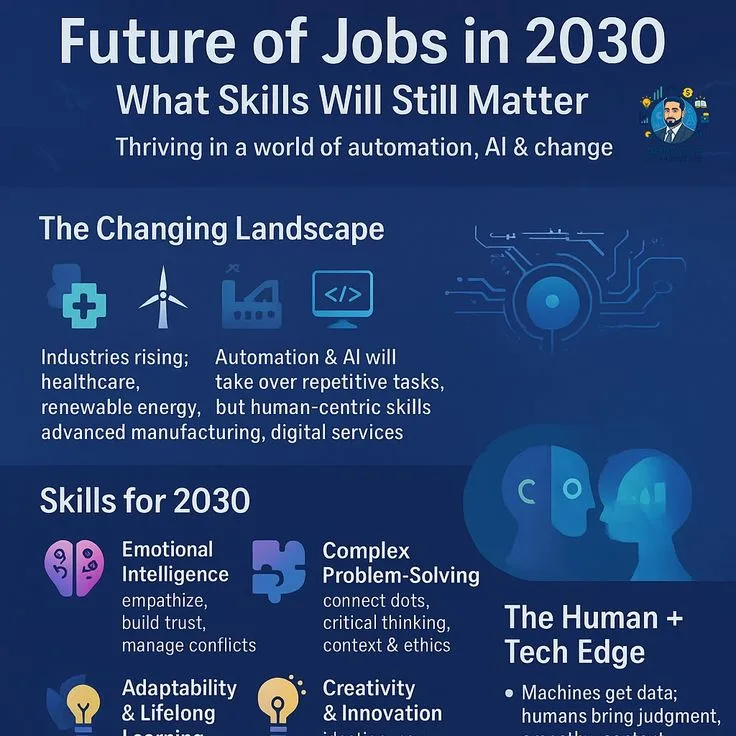
Predictions about the future of work have always outpaced the reality. For decades, futurists promised that automation would eliminate jobs at scale within a generation. Office work would disappear. Robots would handle manufacturing. Everyone would work from home or have abundant leisure.
Each of these predictions contained partial truths obscured by overstatement and misunderstood timelines.
The COVID-19 pandemic did what no technology wave had managed: it forced a near-instant transformation of knowledge work that made the theoretical practical.
And the aftermath (the hybrid negotiations, the return-to-office conflicts, the AI anxieties, the four-day week experiments) has produced more useful data about how work actually changes than the previous two decades of speculation.
This is a look at what is actually happening, with data.
The Remote and Hybrid Shift: What the Numbers Show
The pandemic compression of decades of remote work adoption into weeks was a genuine shock to organizational systems. The more interesting question is what stabilized on the other side.
The Data on Remote Work Adoption
According to WFH Research, a project tracking U.S. remote work patterns since 2021 (led by economists Nicholas Bloom of Stanford, Jose Maria Barrero of ITAM, and Steven Davis of the University of Chicago), the share of paid workdays done from home by American workers has stabilized at approximately 25-30%, compared to about 5% before the pandemic.
For workers in roles that can be done remotely (roughly 40-45% of the workforce), the average is approximately 2.5 days per week at home.
The pattern is remarkably resistant to employer pressure. Despite high-profile return-to-office mandates from major employers including Amazon, Goldman Sachs, JP Morgan, and Meta, surveys consistently show that workers are working from home more days than employers formally permit.
The gap between policy and practice averages roughly 0.5-0.8 days per week.
| Year | Average WFH Days (Remote-Capable Workers) |
|---|---|
| 2019 | ~0.5 days/week |
| April 2020 | ~4.0 days/week |
| 2021 | ~3.0 days/week |
| 2022 | ~2.7 days/week |
| 2023 | ~2.5 days/week |
| 2024 | ~2.4 days/week |
Source: WFH Research, ongoing survey data (Bloom, Barrero, Davis).
This is a fourfold increase from pre-pandemic levels that has proved durable. It is not returning to 2019 conditions.
Nicholas Bloom's research is the most rigorous available on remote and hybrid work economics.
His 2022 paper "How Working from Home Works Out" (Stanford Institute for Economic Policy Research) found that fully remote work reduces productivity by 10-20% for collaborative and creative tasks, while hybrid work (two to three days in office) produces productivity equivalent to or better than fully in-office.
The policy implication is that the optimal arrangement for most knowledge work organizations is structured hybrid, not the full-remote or full-office extremes that generate the most cultural friction.
The Geography of Remote Work
Remote work has had geographic consequences that will persist. Workers untethered from expensive urban cores have relocated to smaller cities, suburban areas, and different states.
According to Zillow research, cities with high concentrations of remote-capable workers saw the largest out-migration patterns, contributing to demand shifts in housing markets from San Francisco to Austin to Boise to Raleigh.
This geographic reshuffling has created a secondary effect: companies can now recruit from a dramatically wider talent pool. A software company in San Francisco is no longer competing only with other San Francisco employers for software talent.
This has compressed geographic salary premiums somewhat and changed competitive dynamics in talent markets.
Enrico Moretti of UC Berkeley, who documented the geographic concentration of innovation economies in The New Geography of Jobs (2012), has argued that remote work represents a significant countervailing force to the winner-take-all geography his research documented.
The long-term implications for urban economies and regional inequality remain contested, but the directional shift in where knowledge workers live is already visible in migration and housing data.
What Employers and Workers Actually Want
The persistent tension in work location is driven by a genuine gap in preferences. Research from McKinsey's American Opportunity Survey found that when workers who had options about remote work were offered fully in-office roles, 29% said they would likely look for other work.
The same survey found that workers reported higher productivity at home for individual-focus work but lower productivity for collaboration-intensive tasks.
What most workers and most employers actually describe wanting, when asked carefully, is structured hybrid: defined in-office time for collaboration, client meetings, onboarding, and culture, combined with defined remote time for focus work and deep work. The conflict is less about remote vs office than about who controls the schedule.
Tsedal Neeley of Harvard Business School, in Remote Work Revolution (2021), argues that organizations that manage distributed work effectively are not simply those that invest in better technology, but those that redesign their communication norms, decision-making processes, and trust-building practices for the reality of distributed teams.
The technology is table stakes; the cultural and management adaptation is the actual challenge.
"The future of work is not fully remote and not fully in-office. It is managed flexibility: organizations that figure out how to offer genuine flexibility within operational constraints will have structural advantages in talent markets."
AI Augmentation vs Job Displacement: What Is Actually Happening
The AI-and-work discussion consistently conflates two distinct questions: Can AI automate this task? and Will this job be eliminated? They are related but not the same.
Task Automation vs Job Elimination
A 2023 McKinsey Global Institute analysis found that current generative AI technologies could theoretically automate 60-70% of the time workers spend on specific activities across occupations. This sounds alarming until you unpack it. Jobs consist of bundles of tasks, not single tasks.
Automating 60-70% of the tasks in a job description does not eliminate the job: it reorganizes it around the remaining 30-40% and typically creates new tasks around managing, directing, and quality-checking the AI outputs.
Erik Brynjolfsson and Andrew McAfee of MIT made the fundamental intellectual contribution here with The Second Machine Age (2014): technological displacement and technological augmentation coexist and often are the same phenomenon from different angles.
When ATMs were introduced, bank teller employment fell, but not as steeply as predicted, because the lower cost of running a bank branch enabled more branches, which employed tellers in a different mix of tasks.
The same pattern has been documented in legal document review (lower cost of discovery expanded the volume of discovery, employing more lawyers), accounting (automation of calculation expanded financial analysis, employing more accountants), and graphic design (lower cost of production expanded the volume of designed content, employing more designers).
This does not mean displacement never happens. It means the relationship between automation and employment is more complex than a simple substitution model predicts.
Where Displacement Risk Is Real
Some job categories do face genuine displacement rather than merely transformation. Roles with highly concentrated, automatable task profiles and limited human-judgment requirements include:
- Routine data entry and processing: Forms processing, basic data categorization, format conversion
- Templated content creation: Standard legal documents, routine reports, form letters
- Tier-1 customer service: Resolving standardized, well-defined queries
- Basic translation: For high-resource language pairs with well-trained models
The common thread is low task diversity and high structure. Jobs that require constant adaptation, judgment under genuine uncertainty, physical dexterity in unstructured environments, or complex interpersonal relationships are substantially more resistant.
Daron Acemoglu of MIT, writing with Pascual Restrepo (2019, American Economic Review), documented that industrial robot adoption in U.S. manufacturing between 1990 and 2007 reduced employment and wages in affected local labor markets, with no offsetting job creation in the same time period.
Their analysis challenges the more optimistic view that automation consistently creates equivalent new employment. For low-skill manufacturing workers, displacement was real and the equivalent replacement jobs did not materialize locally or quickly.
The policy implication is that technological optimism about job creation does not resolve the distribution problem: even if aggregate employment is maintained, specific workers in specific places bear concentrated costs.
The Productivity Augmentation Story
The more immediate story is productivity augmentation for knowledge workers. Research from MIT Sloan published in 2023 found that customer service professionals using AI assistance resolved issues 14% faster and handled 34% more issues per hour.
Similar experiments with software engineers, lawyers drafting documents, and analysts preparing reports consistently show 20-40% productivity gains on specific tasks.
| Profession | Task | Productivity Gain |
|---|---|---|
| Customer service agents | Issue resolution | +34% volume handled |
| Software developers | Code completion | +55% task completion speed |
| Business analysts | Report drafting | ~25% time reduction |
| Legal associates | Contract review | ~30% faster |
| Writers | First draft creation | Highly variable, dependent on quality requirements |
Composite from multiple studies; specific figures vary by study design.
A key question that the productivity data does not yet answer is how these gains distribute. Lawrence Mishel and Josh Bivens of the Economic Policy Institute have documented that productivity gains in the U.S.
economy since the 1970s have decoupled from wage growth for most workers: productivity has grown substantially while median wages have grown modestly in real terms.
If AI productivity gains follow the same pattern (captured primarily in corporate profits rather than shared with workers), the aggregate economic benefit of AI augmentation may not translate into broad worker welfare improvements.
The Shortening Skills Half-Life
One of the most important but least discussed future-of-work dynamics is the skills half-life: the time it takes for half of the specific skills in a professional domain to become obsolete or significantly less valuable.
The World Economic Forum's Future of Jobs Report estimates that the average half-life of professional skills has fallen from approximately 10-15 years (circa 1980) to 4-5 years today in most technology-adjacent fields, with some sub-domains (specific programming frameworks, particular AI tools) having half-lives of 2-3 years or less.
This has profound implications:
Continuous learning is not optional: A software developer who mastered their craft in 2015 and stopped learning would find significant portions of their specific knowledge deprecated. Not the fundamentals (logic, data structures, system design), but the specific tools, languages, and practices.
Learning ability is a meta-skill: The ability to acquire new skills rapidly is becoming more valuable than the specific skills acquired at a point in time. Organizations that evaluate candidates primarily on current credential portfolios are systematically undervaluing adaptability.
Career identity shifts: Workers who define themselves by specific skills or tools face identity challenges as those skills depreciate. Workers who define themselves by the problems they solve or the outcomes they achieve are more resilient to technological change.
Angela Duckworth of the University of Pennsylvania, in Grit (2016), argues that long-term skill development requires sustained passion and perseverance: what she calls grit. The implication for a world of accelerating skills half-life is that grit directed at the wrong specific skill is not adaptive.
What the skills half-life era demands is grit directed at learning processes rather than fixed knowledge bodies: the perseverance to continuously acquire new capabilities, not just to apply a fixed set deeply.
For organizations, the implication is that learning infrastructure (time, resources, tools, and culture that support ongoing professional development) is a strategic asset rather than an HR benefit.
Amy Edmondson's research on learning in organizations (1999, Administrative Science Quarterly) found that psychological safety, the belief that it is safe to take risks, make mistakes, and speak up, is a prerequisite for the kind of learning that adapts to changing environments.
Organizations that punish mistakes suppress the learning that their survival requires.
The Four-Day Work Week: Beyond the Hype
The four-day work week moved from a fringe idea to a mainstream policy debate partly because of genuinely rigorous experimental evidence.
The UK 4 Day Week Global Trial (2022)
The most widely cited study involved 61 companies across the UK and approximately 2,900 workers participating in a structured six-month trial organized by 4 Day Week Global in partnership with researchers at Cambridge, Boston College, and Oxford.
Lead researchers included Juliet Schor of Boston College and Jack Kellam of Autonomy. Key findings:
- Revenue: Broadly maintained; average company revenue increased 1.4% during the trial period
- Company continuation: 92% of companies opted to continue the four-day week after the trial
- Employee wellbeing: Significant improvements in stress, burnout, fatigue, and overall life satisfaction
- Sick days: Fell by approximately 65%
- Turnover intention: Fell significantly; several companies reported improved retention
A follow-up survey in 2023 found that the majority of participating companies had permanently adopted the model.
Juliet Schor, a sociologist at Boston College and one of the most prolific researchers on work time, has argued in Overworked American (1991) and subsequent work that standard working hours in the U.S.
exceed optimal productivity levels and have been driven more by employer preferences and cultural norms than by economic necessity. The four-day week trials provide contemporary empirical support for a position she has held for three decades.
Iceland's National Trial (2015-2019)
A less publicized but larger-scale experiment occurred in Iceland, where approximately 2,500 public sector workers (roughly 1% of the working population) participated in trials of reduced-hours schedules between 2015 and 2019. The trials were organized by the Reykjavik city government and the national government.
Gudmundur Haraldsson and Jack Kellam (2021, Autonomy and ALDA) analyzed the results: productivity remained the same or improved in the majority of workplaces; workers reported significantly better work-life balance, lower stress, and improved health; and following the trials, the majority of Icelandic workers won the right to negotiate shorter hours through their unions.
The Iceland data is significant because it covers a broader range of occupations than the UK trial (which skewed toward knowledge work), including care workers, administrators, and social service workers, populations where the applicability of four-day week arrangements is less obvious.
Limitations and Nuances
The trials have real limitations. Participating companies were self-selected: organizations that signed up for a four-day week trial are predisposed toward flexibility.
Results may not generalize to industries with different demand patterns (healthcare, manufacturing, retail), to companies with different cultures, or to workforces less concentrated in knowledge work.
The "four-day week" also covers a range of arrangements. Some companies reduced total hours (32 hours over 4 days); others maintained 40 hours compressed into 4 longer days. The wellbeing benefits appear stronger for reduced hours; the productivity maintenance appears stronger for compressed schedules.
What the evidence does not support is the position that productivity requires five days. The more defensible claim is that output-per-hour rises when working hours fall, up to a point. This was documented as early as 1914 by Ford Motor Company, which found that reducing factory hours from 10-hour to 8-hour days increased weekly output.
The US Bureau of Labor Statistics documented in the 1920s that workers on 6-day weeks were less productive per hour than those on 5-day weeks. The four-day week trials extend this pattern to contemporary knowledge work.
| Dimension | Reduced Hours (32h/4 days) | Compressed Hours (40h/4 days) |
|---|---|---|
| Wellbeing improvement | Strong | Moderate |
| Productivity maintenance | Maintained for most | Generally maintained |
| Applicability to service/retail | Limited | More feasible |
| Long-term adoption | Higher | Moderate |
Gig Work and Platform Labor: The Real Numbers
The gig economy (work mediated by digital platforms without traditional employment relationships) has grown substantially but not in the direction the most breathless predictions suggested.
The Bureau of Labor Statistics found that approximately 6-7% of U.S. workers are primarily gig workers (platform-mediated independent contractors). If you include workers who do gig work as a secondary income source, the share rises to roughly 15-20%.
The number of people who depend primarily on gig work for their income, while real, is smaller than predictions of a gig-economy-dominated labor market suggested.
What has shifted is the use of gig work as supplemental income. A growing share of workers combine traditional employment with platform work (driving for rideshare services, renting on Airbnb, freelancing through Upwork) as a deliberate financial strategy rather than a career.
This blended model is particularly prevalent among younger workers and workers in lower-wage traditional employment.
Lawrence Katz (Harvard) and Alan Krueger (Princeton), in their 2016 NBER study of alternative work arrangements, found that 94% of net job growth in the U.S. between 2005 and 2015 was in alternative work arrangements (contracts, temp work, and independent contracting) rather than traditional employment.
This finding, even if you debate the causal interpretation, suggests the structural trend toward non-traditional work is more significant than headline gig economy statistics capture.
The policy questions around gig work (benefits portability, worker classification, minimum wage applicability) remain unresolved in most jurisdictions and will shape how this segment of the labor market develops.
The EU Platform Work Directive (2024), which creates a legal presumption of employment for platform workers meeting certain criteria, represents the most significant regulatory development and is likely to influence policy in other jurisdictions.
Generational Differences in Work Expectations
The workforce now spans four generations simultaneously, and they have meaningfully different expectations about work. These differences are real, though they are often overstated and misattributed to values when they partly reflect life stage.
What the Research Actually Shows
A 2023 Gallup State of the Global Workplace report and multiple surveys of generational workplace expectations consistently find:
Gen Z workers (born 1997-2012): The highest stated priority for workplace flexibility, mental health support, and purpose alignment. Also the highest rates of reported disengagement and the highest turnover rates.
Most likely to use social media to discuss workplace conditions and most likely to leave jobs that conflict with stated values.
Millennials (born 1981-1996): Now the largest generation in the workforce and increasingly in management. Strong stated priority for career development, flexibility, and meaningful work. Research finds that Millennial managers tend to prefer more frequent feedback cycles and flatter hierarchies.
Gen X (born 1965-1980): The most overlooked generation in workforce research. Strong individual productivity orientation, high adaptability (came of age through multiple recessions and technological transitions), and generally pragmatic about workplace expectations.
Baby Boomers (born 1946-1964): Generally higher in-office preference, longer organizational tenure, and stronger identification with occupational identity. Most likely to have defined benefit pensions and least likely to have defined contribution retirement plans as their primary savings vehicle.
| Dimension | Gen Z | Millennials | Gen X | Boomers |
|---|---|---|---|---|
| In-office preference | Low | Low-Medium | Medium | High |
| Feedback frequency | Very frequent | Frequent | Periodic | Annual |
| Job tenure (median) | Short | Short-Medium | Medium | Long |
| Purpose orientation | Very high | High | Moderate | Variable |
| Flexibility priority | Very high | High | Moderate | Low-Moderate |
David Stillman and Jonah Stillman, in Gen Z @ Work (2017), were among the first to document empirically the work preferences of the youngest generation.
Their finding that Gen Z, despite being digital natives, prefers more in-person feedback and mentoring than stereotypes suggest is a useful corrective to the assumption that younger workers simply want everything digital and remote.
The organizational challenge is managing these differences across mixed-generation teams without defaulting to the preferences of whoever has the most power.
Jennifer Deal of the Center for Creative Leadership has documented (2007, Retiring the Generation Wars) that most generational differences disappear when you control for life stage: people at similar life stages tend to have similar work-life balance priorities regardless of birth year.
The implication is that organizations should design for life-stage flexibility rather than generational identities, accommodating the varying priorities of workers with young children, those in peak career phase, and those approaching retirement.
The Future of Management
These converging trends are transforming what management means and what skills it requires.
The traditional management role (supervising presence, allocating tasks to co-located workers, relaying information up and down hierarchies) is less relevant in hybrid and distributed work environments. What is becoming more important:
Output orientation: Managing by deliverables and outcomes rather than visibility and hours. This requires clearer goal-setting, more explicit expectation communication, and trust in workers to manage their own time.
Gary Hamel of the London Business School has been arguing since The Future of Management (2007) that command-and-control management is economically inefficient in knowledge work environments where workers have more relevant information than their managers.
Hybrid work accelerates the obsolescence of presence-based management.
Asynchronous communication: Managing across time zones and schedules requires written communication quality, documentation practices, and decision-making processes that do not require everyone in the same room at the same time.
Matt Mullenweg, CEO of Automattic (parent company of WordPress.com), which has operated fully distributed since its founding, has documented what he calls the "five levels of distributed work," a maturity model that suggests most organizations are still at level 2 (recreating office dynamics online) when they could achieve level 4 (async by default, sync by choice).
Psychological safety at scale: In distributed teams, psychological safety, the belief that you can speak up, take risks, and make mistakes without punishment, does not maintain itself through proximity and informal interaction. It requires deliberate cultivation through structured feedback, explicit norms, and manager modeling.
Amy Edmondson's research (Harvard Business School) established psychological safety as the foundational team variable; her subsequent work on "teaming" examines how it is maintained in temporary and distributed configurations.
AI literacy: Managers who do not understand what AI tools can and cannot do for their teams will make poor decisions about task allocation, quality review, and skill development priorities.
The 2025 World Economic Forum Future of Jobs Report identified AI literacy as a top-five management competency, a shift that was not present in the 2023 edition.
Wellbeing and the Burnout Crisis
One major future-of-work development that deserves more attention than the productivity conversation receives is the documented rise in workplace burnout, which predates the pandemic and has accelerated since.
Christina Maslach of UC Berkeley, who developed the Maslach Burnout Inventory (the most widely validated clinical measurement of burnout), defines burnout as a psychological syndrome involving three dimensions: emotional exhaustion, depersonalization (cynicism and detachment), and reduced sense of personal accomplishment.
Her research (Maslach and Leiter, 1997) identifies six mismatches between person and work as burnout drivers: workload, control, reward, community, fairness, and values.
The 2023 Gallup State of the Global Workplace report found that 44% of workers globally reported experiencing significant stress "a lot of the previous day," the highest level recorded in Gallup's tracking. In the United States, the figure was 52% for workers under 35.
The report estimates that low engagement and burnout cost the global economy approximately $8.8 trillion in lost productivity annually.
Work-from-home's paradoxical effect on burnout is documented by multiple studies: remote workers report more flexibility and autonomy (burnout protective) but also longer working hours, blurred work-life boundaries, and reduced social connection (burnout risk).
The net effect varies significantly by individual, household context, and job design, which is why blanket remote or blanket in-office mandates fail to account for genuine heterogeneity in what helps different workers.
| Burnout Risk Factor | Remote Work Effect | In-Office Effect |
|---|---|---|
| Hours worked | Often increases | More defined |
| Work-life boundary | Often blurred | Clearer commute boundary |
| Social connection | Reduced | Higher |
| Autonomy | Higher | Lower |
| Commute stress | Eliminated | Present |
| Meeting load | Mixed | Often higher |
Organizations that take burnout seriously as a structural problem, not a personal failure, are examining job design, workload, meeting culture, and managerial practices rather than offering wellness apps as a response to systemic issues.
What These Trends Mean for Workers
For individual workers navigating these changes, several implications are clear:
Location flexibility is a compensation component. The ability to work remotely or on a hybrid schedule has measurable economic value.
Research by Nicholas Bloom (2022) estimates that workers value the ability to work from home two to three days per week at approximately 5-7% of their salary. This means that organizations offering genuine hybrid flexibility can pay somewhat less in salary while remaining equally competitive for talent, and workers who give up flexibility without corresponding compensation increases are effectively accepting a pay cut.
Skills investment is ongoing. In a world of 4-5 year skills half-lives, professional development is not an optional extra: it is maintenance. Workers who treat learning as a project rather than a perpetual commitment will find their market value declining in ways that are difficult to reverse.
AI proficiency is rapidly becoming baseline. Workers who can direct AI tools effectively (knowing when to use them, how to prompt them usefully, and how to quality-check their outputs) will increasingly out-produce those who cannot, in tasks where AI tools are applicable.
The 2025 WEF Future of Jobs Report found that employers who invest in AI literacy across their workforces see measurably higher retention, because workers feel more effective and more forward-invested in their roles.
Career tenure is shortening across the board. The median job tenure in the U.S. has been declining gradually for decades. The stigma around frequent job changes has effectively disappeared for knowledge workers.
Liz Ryan, founder of the Human Workplace, has argued that the "loyalty penalty," the tendency for workers who stay at one employer to receive smaller raises than job-switchers, makes strategic job-changing economically rational for most workers in most markets.
Building external reputation (skills, network, portfolio) alongside institutional reputation is important risk management in this environment.
Conclusion
The future of work is not a single trend: it is an interlocking set of structural shifts, each with its own trajectory and its own distribution of winners and losers. Remote and hybrid work is permanent at scale. AI augmentation is real and accelerating.
Skills half-lives are shortening. The four-day week has better evidence than its critics acknowledge and less universality than its advocates claim. Generational differences are real but context-dependent. Burnout is a system problem, not a personal one.
What distinguishes these trends from the century of predictions that preceded them is that they are measurable, already underway, and in most cases irreversible. The pandemic's forced experiment compressed years of gradual change into months and generated unprecedented data about what was possible.
The organizations and workers who adapt to these conditions, rather than waiting for a return to pre-pandemic norms, are likely to be the ones still thriving in a decade.
Understanding what is actually happening, rather than what forecasters predict will happen, is the more useful starting point for both organizational strategy and individual career planning.
The data is available, the trends are visible, and the decisions about how to respond to them belong to the people making them, not to the trends themselves.