
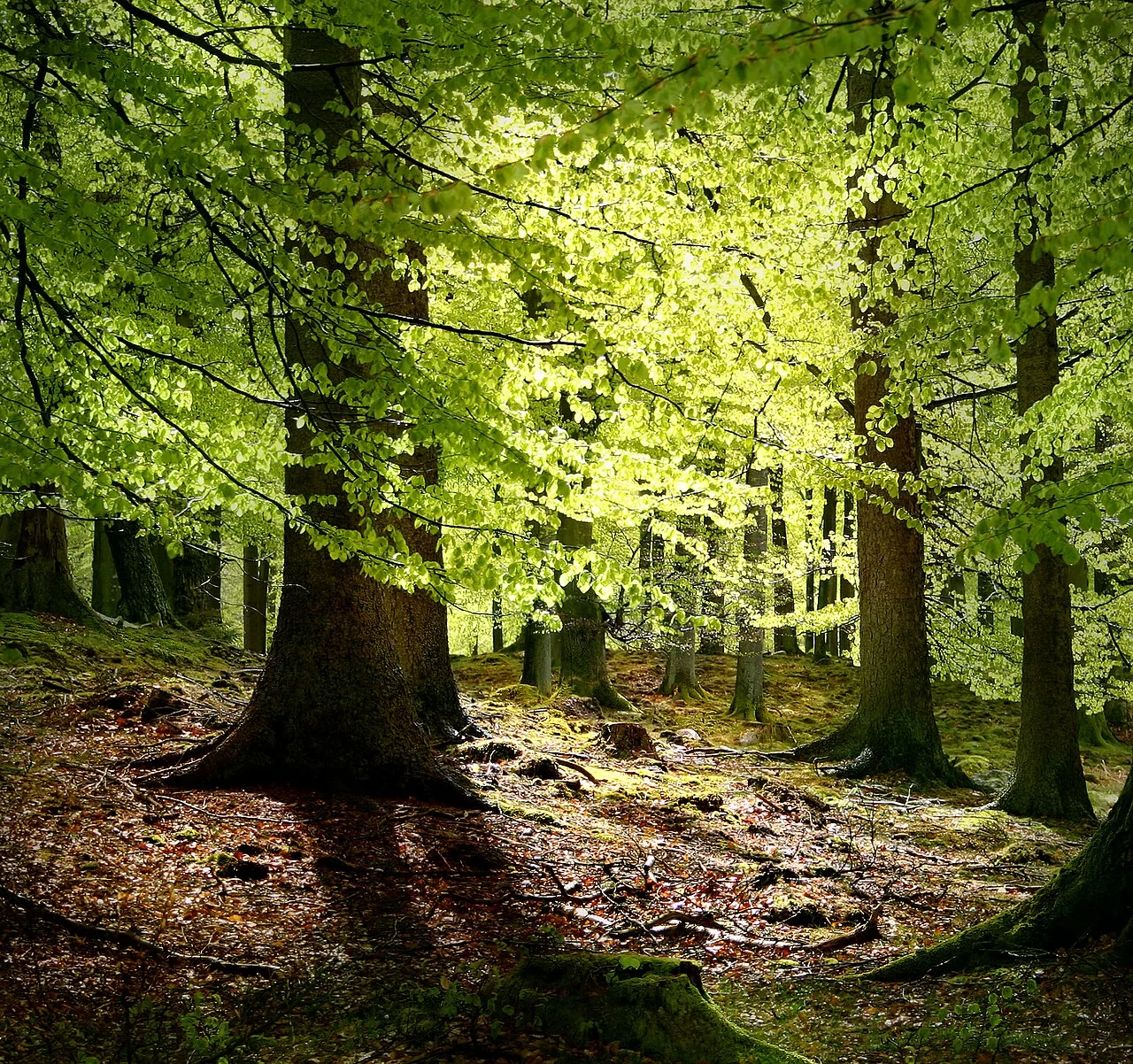
Ecology is the scientific study of the relationships between living organisms and their environments, including relationships with other organisms and with the physical and chemical conditions in which they live.
The word was coined by the German biologist Ernst Haeckel in 1866 from the Greek oikos (house or household) and logos (study): ecology is literally the study of nature's household, the system of exchanges and dependencies that constitute the living world.
In the century and a half since Haeckel named the discipline, ecology has grown from natural history observation into one of the most mathematically and theoretically rigorous sciences, with urgent practical applications to the environmental crises of the Anthropocene.
Organization of the Science: From Individual to Biosphere
Ecology is organized hierarchically across levels of biological organization, and each level exhibits properties that cannot be predicted from examining lower levels in isolation: the phenomenon known as emergence.
At the individual level, ecologists study how single organisms respond physiologically and behaviorally to environmental conditions: how a plant adjusts its photosynthetic rate to changing light and temperature, how a mammal regulates its body temperature, how an animal chooses among food sources.
Population ecology studies groups of individuals of the same species living in a defined area: their size, density, age structure, birth and death rates, and the factors that regulate them.
The dynamics of predator-prey relationships, in which population cycles of predators and prey are coupled so that rises and falls in prey populations drive lagged rises and falls in predator populations, were classically modeled by the Lotka-Volterra equations developed in the 1920s by Alfred Lotka and Vito Volterra independently.
These equations produce the characteristic coupled oscillations observed in field systems like the Canadian lynx and snowshoe hare cycle documented in Hudson's Bay Company fur trade records spanning over a century.
Community ecology studies the interactions among populations of different species living together in an area: competition, predation, mutualism, commensalism, and parasitism. How many species can coexist in a community? What determines which species are present and in what abundances? What are the consequences of losing or adding species?
Ecosystem ecology studies the flow of energy and the cycling of materials through communities and their physical environment, treating the ecosystem as a thermodynamic system.
The biome concept organizes ecosystems into broad categories based on dominant vegetation type and climate: tropical rainforest, temperate deciduous forest, grassland, tundra, desert, and others.
The biosphere is the totality of all living organisms on Earth and the environments they inhabit: the thin film of life on the surface of one small planet.
| Level | Unit of Study | Key Questions |
|---|---|---|
| Individual | Single organism | How does it respond to environment? |
| Population | Single species, defined area | What regulates population size? |
| Community | Multiple species, defined area | How do species interact? What determines diversity? |
| Ecosystem | Community + physical environment | How does energy flow? How do nutrients cycle? |
| Biome | Climate-defined vegetation zones | What determines global patterns? |
| Biosphere | All life on Earth | How does life interact with the planet? |
Food Webs, Trophic Levels, and Cascades
A food web is a representation of the feeding relationships among organisms in a community: who eats whom. The concept of trophic levels organizes organisms according to their position in these feeding relationships:
- Producers (primary producers): photosynthetic plants, algae, and cyanobacteria that convert solar energy into organic matter
- Primary consumers: herbivores that eat producers
- Secondary consumers: carnivores that eat herbivores
- Tertiary consumers: carnivores that eat secondary consumers
- Decomposers: bacteria, fungi, and invertebrates that break down dead organic matter and return nutrients to the system
Energy flows through trophic levels inefficiently: a commonly cited rule of thumb is that on the order of 10 percent of the energy at one trophic level passes to the next, with much of the rest lost as heat. Actual transfer efficiencies vary widely (roughly 2-20%) across ecosystems.
This helps explain why food chains are often limited to only a few links (frequently around four or five), since there is insufficient energy to support longer chains, and why large predators are rare compared to their prey.
A trophic cascade is the indirect effect that a change at one trophic level has on other levels throughout the food web. The concept gained popular currency through the story of wolves in Yellowstone National Park.
Aldo Leopold, who in his early career as a forest official had participated in the extermination of wolves from the American Southwest, later came to understand this while watching a wolf die that he had shot: removing wolves had released elk populations from predation pressure, leading to overgrazing that stripped riverbanks of vegetation, destabilized stream banks, and impoverished the entire ecosystem.
This insight, formulated in "A Sand County Almanac" (1949), was one of the founding texts of conservation ecology.
The reintroduction of wolves to Yellowstone from 1995 onward has been studied as a real-world experiment in trophic cascades.
Wolf predation reduced elk populations and, perhaps more importantly, altered elk behavior: elk avoided lingering in open areas near rivers where they were vulnerable, allowing some riverbank vegetation to recover, with knock-on effects that some studies link to changes in beaver activity and stream channels.
The strength and mechanism of the Yellowstone wolf cascade, including how much wolves changed the rivers, is debated among ecologists: a phenomenon sometimes called a landscape of fear (Laundre, Hernandez, and Ripple, 2001).
"A thing is right when it tends to preserve the integrity, stability, and beauty of the biotic community. It is wrong when it tends otherwise." (Aldo Leopold, A Sand County Almanac, 1949)
Keystone Species
The keystone species concept, one of the most influential ideas in ecology, was developed by American ecologist Robert Paine from his experimental work on rocky intertidal communities on the coast of Washington State beginning in 1963.
Paine observed that the purple sea star (Pisaster ochraceus) was a dominant predator, feeding primarily on mussels. In 1966, he removed all sea stars from one stretch of coastline while leaving an adjacent stretch undisturbed.
The result was dramatic. In the absence of sea stars, mussels expanded rapidly and monopolized the space, excluding barnacles, limpets, chitons, whelks, and other species. A community that had contained roughly 15 species collapsed to a near-monoculture.
The sea star, which constituted a relatively small proportion of the community's total biomass, was nevertheless the structural keystone holding community diversity together. Paine coined the term "keystone species" in 1969.
Subsequent research has identified keystone species across many ecosystems:
| Keystone Species | Ecosystem | Mechanism |
|---|---|---|
| Gray wolf | Temperate forest/grassland | Trophic cascade via elk behavior |
| Sea otter | Pacific kelp forest | Limits sea urchin grazing on kelp |
| Beaver | Temperate streams | Dam-building creates wetland habitat |
| African elephant | Savanna | Maintains grassland by removing trees |
| Fig trees | Tropical rainforest | Critical food source during fruit scarcity |
| Purple sea star | Rocky intertidal | Controls mussel monopoly |
The practical significance for conservation was immediate: protecting biodiversity requires not just cataloguing as many species as possible but identifying and prioritizing species whose loss would have disproportionate ecological consequences.
This ecological insight underpins the rewilding movement, which aims to restore large predators and other keystone species to ecosystems from which they have been eliminated.
Island Biogeography and Habitat Fragmentation
The theory of island biogeography, developed by ecologists Robert MacArthur and E.O.
Wilson in their landmark 1967 book, explained the species richness of islands in terms of a dynamic equilibrium between two rates: the immigration of new species from a mainland source pool and the local extinction of species already present on the island.
Immigration rate depends primarily on distance from the mainland: closer islands receive more colonists.
Extinction rate depends primarily on island area: smaller islands support smaller populations, more vulnerable to stochastic demographic fluctuations, environmental catastrophes, and inbreeding depression.
At equilibrium, the intersection of the immigration curve and the extinction curve determines species number.
The theory predicts a species-area relationship: S = cA^z, where S is species number, A is area, c is a constant, and z typically falls between 0.2 and 0.35. Roughly speaking, a tenfold reduction in area reduces species number by about half.
The implications for habitat fragmentation, the breaking up of continuous habitat into isolated patches by roads, agriculture, and development, were immediately apparent to conservation biologists.
A forest fragment surrounded by agricultural land is functionally an island: immigration is limited for forest interior specialists, and the small area means higher local extinction rates.
The theory predicts that fragmented habitats will lose species progressively over time in a process of "relaxation" to a lower equilibrium.
The concept of extinction debt, species committed to eventual extinction by habitat loss that have not yet gone extinct, is one of the most sobering in conservation biology.
Tilman and colleagues (1994) introduced the idea of "extinction debt," arguing that past habitat destruction can commit many species to eventual extinction even if no further habitat is lost. Estimates of how many species are involved are large but uncertain.
Ecological Succession
Ecological succession is the process of change in species composition and community structure over time following a disturbance or the creation of new habitat.
Primary succession begins on newly formed or exposed substrate with no prior biological community: bare rock revealed by a retreating glacier, volcanic lava flows, newly formed sand dunes.
Pioneer species, organisms capable of surviving in harsh, resource-poor conditions, modify the environment, typically by beginning soil formation, in ways that make it possible for later successional species to establish.
Over time, through a series of stages, each modifying conditions for the next, the community changes until it reaches a relatively stable configuration: the climax community.
Secondary succession occurs where a community has been disturbed or destroyed but soil and seed bank remain: an abandoned agricultural field, a forest after fire. Secondary succession is typically faster than primary succession because biological and physical legacies remain.
The conceptual framework of succession was shaped by a long-running debate between two early twentieth-century ecologists with diametrically opposed views:
Frederic Clements (1874-1945) developed a highly deterministic view of the plant community as a "super-organism": succession proceeded through predictable stages toward a single climax determined by regional climate, and the climax community had an organismal integrity greater than the sum of its parts.
Henry Gleason (1882-1975) argued for an individualistic or continuum concept: plant communities are contingent assemblages of species responding individually to environmental gradients, with no inherent tendency toward a single determinate climax.
Gleason's view, initially marginalized, ultimately prevailed and shaped the "New Ecology" that emerged in the 1970s and 1980s: communities are assemblages of independently responding species, disturbance is normal and ubiquitous, and deterministic succession to a stable climax is an idealization that rarely describes actual ecosystems.
The Nitrogen and Carbon Cycles
Biogeochemical cycles, the pathways through which elements essential for life circulate between living organisms and the physical environment, are central to ecosystem function. Human disruption of these cycles represents one of the most consequential ecological transformations of the Anthropocene.
The nitrogen cycle: Nitrogen (N2) constitutes about 78 percent of the atmosphere but is almost entirely chemically inert and unavailable to most organisms.
The cycle begins with nitrogen fixation: bacteria including Rhizobium (living symbiotically in legume root nodules), Azotobacter (free-living in soil), and cyanobacteria possess the enzyme nitrogenase, which converts N2 into ammonia that plants can absorb.
In 1908, German chemist Fritz Haber discovered a process for fixing nitrogen industrially at high temperature and pressure. Carl Bosch then scaled this to industrial production as the Haber-Bosch process, transforming global agriculture.
Without synthetic nitrogen fertilizers produced by this process, the current human population of approximately 8 billion people could not be fed.
But the consequences of effectively doubling the rate of nitrogen fixation entering the biosphere have been severe: nitrogen runoff causes eutrophication in rivers, lakes, and coastal seas; nitrous oxide produced during denitrification is a potent greenhouse gas; and the disruption of natural nitrogen cycles cascades through plant diversity and ecosystem structure.
The carbon cycle: Carbon moves continuously between the atmosphere (primarily as CO2), living organisms, soils, and the ocean. The burning of fossil fuels releases carbon that was sequestered from the atmosphere over hundreds of millions of years, effectively running the carbon cycle in reverse at an accelerated rate.
Atmospheric CO2 has risen from a pre-industrial baseline of approximately 280 parts per million to over 420 ppm as of 2023, a level not seen on Earth in at least 3 million years.
Planetary Boundaries and the Biodiversity Crisis
The planetary boundaries framework, introduced in a landmark paper by Johan Rockstrom and colleagues in Nature in 2009, proposed a set of nine Earth system processes that together define a "safe operating space for humanity": the range of conditions within which Earth has maintained the relatively stable climate and ecological state of the Holocene epoch, during which human civilization developed.
| Planetary Boundary | Status (2023) |
|---|---|
| Climate change | Transgressed |
| Biosphere integrity (biodiversity) | Transgressed |
| Land-system change | Transgressed |
| Biogeochemical flows (nitrogen, phosphorus) | Transgressed |
| Novel entities (chemical pollution) | Transgressed |
| Ocean acidification | Within boundary |
| Freshwater use | Transgressed |
| Stratospheric ozone | Within boundary |
| Atmospheric aerosol loading | Uncertain |
The biodiversity crisis, the acceleration of species extinction rates to levels that many estimates place at roughly 100 to 1,000 times the background rate typical of most of Earth's history (the exact multiple is uncertain and depends on how background rates are calculated), is among the most alarming aspects of the planetary boundaries transgression.
The "sixth mass extinction," as some ecologists have termed it, following the five mass extinctions in Earth's geological past (most recently the Cretaceous-Paleogene extinction 66 million years ago), is driven by:
- Habitat loss and fragmentation: the primary driver globally
- Direct exploitation: hunting, fishing, wildlife trade
- Invasive species: introduced species that outcompete or prey on natives
- Pollution: pesticides, plasticizers, heavy metals, light and noise pollution
- Climate change: increasingly significant and expected to dominate future losses
The rewilding movement, whose most prominent popular advocate is British writer George Monbiot, whose "Feral" (2013) made the case for large-scale ecological restoration including reintroduction of wolves, lynx, and beavers to degraded European landscapes, has argued that passive conservation is insufficient.
Active restoration of ecological processes and keystone species is necessary to reverse biodiversity loss and restore ecosystem function and resilience.
"The greatest threat to our planet is the belief that someone else will save it." (Robert Swan)
Conservation Biology as a Crisis Discipline
Conservation biology was founded as a "crisis discipline" by Michael Soule and others in the 1980s, explicitly combining scientific rigor with a normative commitment to preventing the loss of biodiversity: a departure from the value-neutral stance of most natural sciences that has generated both power and controversy.
The field draws on island biogeography, population genetics, behavioral ecology, and landscape ecology to develop practical conservation strategies. Its central toolkit includes:
Minimum viable population (MVP) analysis: Shaffer (1981) defined the MVP as the smallest population with a 95 percent probability of persisting for 100 years. MVP analysis has become foundational to species recovery planning, though its application requires detailed demographic data rarely available for declining species.
Protected area design: Island biogeographic principles inform the design of protected areas, where larger reserves are generally better; whether a single large reserve is better than several small reserves of equal total area (the "SLOSS" debate) is genuinely unresolved and depends on the species and landscape, with several small reserves sometimes protecting more total biodiversity; reserves connected by corridors maintain immigration and reduce extinction debt.
Genetic rescue: Inbreeding depression in small, isolated populations can be reversed by introducing individuals from other populations, increasing genetic diversity. The rescue of the Florida panther population in the 1990s through the introduction of eight female Texas pumas is a celebrated example of genetic rescue in practice.
The urgency of the biodiversity crisis has prompted calls for a 30x30 target, protecting 30 percent of land and ocean area by 2030, endorsed by more than 100 nations at the Convention on Biological Diversity in 2022.
Whether this political commitment will be matched by the ecological and financial resources necessary for effective protection remains an open question, but ecology has provided the scientific foundation for understanding what is at stake and what is required.