
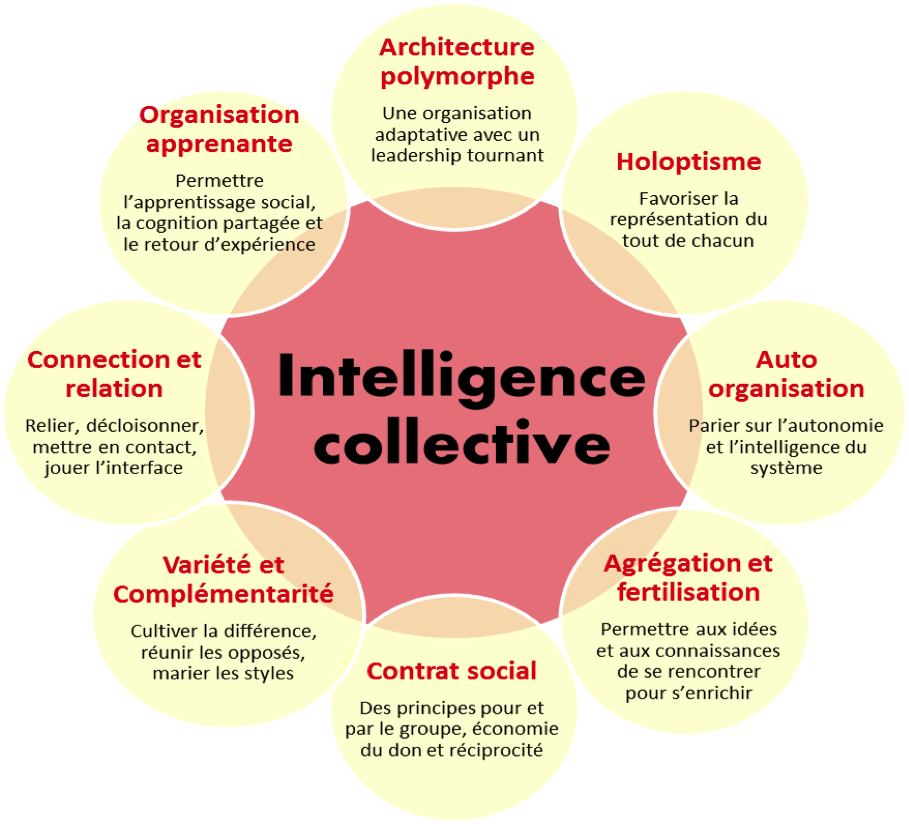
Groups can outperform most individuals when independent judgments are aggregated, even though many individual answers are wrong. Collective intelligence describes this potential of a crowd, while also raising questions about the conditions that preserve diversity and prevent shared errors from overwhelming the result.
In 1906, a statistician named Francis Galton attended a West of England Fat Stock and Poultry Exhibition, where fairgoers were invited to guess the weight of an ox.
Galton, a committed elitist who believed that intellectual and practical capacity was unevenly distributed and that the masses were largely incapable of sound judgment, expected the results to be a mess. He collected 800 tickets and crunched the numbers expecting to confirm his bias.
He found the opposite.
The median of all guesses (1,207 pounds) was within 0.8% of the actual weight of 1,198 pounds. Many individual guesses were wildly off. The aggregated result was more accurate than all but a handful of individual responses.
Galton, to his credit, reported the finding honestly in the journal Nature, titling his brief paper "Vox Populi": the voice of the people.
This episode, which James Surowiecki opens his influential 2004 book with, became the founding anecdote of the modern field of collective intelligence. It is a finding that continues to generate research, controversy, practical applications, and important qualifications.
What Collective Intelligence Actually Is
Collective intelligence refers to the ability of a group to perform cognitive tasks more accurately or effectively than its individual members working alone. The phenomenon occurs across multiple levels:
- Biological systems: Ant colonies solve optimization problems no individual ant could solve. The immune system makes identification decisions more accurate than any single immune cell. Slime mold networks find the shortest path through a maze.
- Human groups: Diverse teams outperform homogeneous ones on creative and analytical tasks. Prediction markets frequently outforecast individual experts, though their track record varies by market and question.
- Computational systems: Ensemble methods in machine learning aggregate predictions from multiple models to outperform any single model.
What these cases share is an aggregation mechanism that combines diverse, imperfect judgments in a way that cancels out individual errors. The key is that errors must be largely random and independent. When they are, they cancel.
When they are correlated, meaning everyone is wrong in the same direction for the same reason, aggregation amplifies error rather than canceling it.
This mathematical structure is the foundation of everything that follows. It explains both when collective intelligence works and when it fails.
The Four Conditions for Crowd Wisdom
Surowiecki's analysis of crowd wisdom identified four conditions that must be present for collective judgment to outperform individual judgment:
1. Diversity of Opinion
Crowd wisdom requires that individuals bring different information, perspectives, and analytical approaches to the problem.
A crowd of experts who all trained in the same tradition, read the same journals, and share the same assumptions is less diverse in the relevant sense than a crowd that includes non-experts with different knowledge and cognitive styles.
This seems counterintuitive: surely experts know more and should be weighted more? Research on forecasting has often found that diverse, well-calibrated crowds using structured techniques can match or outperform many expert forecasters in specific tournaments, though this is not a universal law across all domains.
Philip Tetlock's research on political forecasting, summarized in "Superforecasting" (2015), found that aggregated predictions from educated laypeople using structured thinking techniques outperformed intelligence analysts with access to classified information.
The mechanism is not that the laypeople are smarter, but that their errors are more diverse and therefore more canceling. Expert errors tend to be correlated, since experts share training, assumptions, and information sources in ways that make their errors systematic rather than random.
2. Independence
For aggregation to work, individual judgments must be formed independently before they are combined. If people see each other's guesses before making their own, they anchor to early responses. Social influence destroys the diversity that makes aggregation valuable.
This is why anonymous voting is more reliable than open deliberation, and why prediction markets ask people to place bets on outcomes rather than discuss their views. When people know how others are voting or betting, herding behavior sets in: individuals discount their own assessment in favor of the apparent consensus.
A 2011 study by Lorenz and colleagues demonstrated this effect directly. They asked subjects to estimate the density of Swiss cities from census data, first without and then with information about others' guesses.
When social influence was introduced, diversity collapsed by 32%, and the accuracy of the aggregated estimate declined proportionally. The crowd became less wise as information about the crowd's views spread.
3. Decentralization
Decentralization allows individuals to draw on local and specialized knowledge that no central coordinator could possess. A distributed network of people, each with expertise in their local domain, collectively holds more relevant information than any central authority.
This is the core insight behind the price mechanism in markets (Hayek's "knowledge problem"), prediction markets, and the collective intelligence of large open-source projects. No single actor needs to understand the whole; the aggregation mechanism does the synthesis.
4. Aggregation
Finally, there must be a mechanism to combine individual judgments into a collective one. This is not trivial. The wrong aggregation method can destroy the wisdom that the previous three conditions create.
Simple averaging works well for many estimation tasks. Prediction markets use price signals. Ensemble machine learning methods use weighted averaging of model outputs. The design of aggregation mechanisms is itself a research field with practical implications for poll design, forecasting systems, and decision support tools.
When Crowds Go Wrong
Understanding collective intelligence requires equal attention to when it fails. The same conditions that enable crowd wisdom, when violated, can produce collective delusion.
Social Cascades
Information cascades occur when people update their behavior based on the observed choices of others rather than their own private information. If you are deciding whether a restaurant is good, you might reasonably be influenced by how many people are eating there.
But if everyone is reasoning this same way, a restaurant might fill up for no better reason than that early diners chose it randomly, and the cascade locks in a choice that has no foundation in the quality of the food.
Social cascades have been documented in financial markets, product adoption, music charts, and political opinion. They can be triggered by small early signals and are difficult to reverse once established.
The cascade mechanism is why "going viral" is not a reliable indicator of quality: content can cascade for reasons entirely unrelated to its accuracy or value.
Herding and Correlation
Financial bubbles are collective intelligence failures of the most consequential kind. When investors can observe each other's positions and market prices, independent assessment breaks down.
People infer from rising prices that others know something they don't, which drives further price increases, which attract more buyers, until the correlation of errors is so high that the aggregated market price bears little relationship to fundamental value.
Herding is the mechanism. The conditions for crowd wisdom (diversity, independence, decentralization) are progressively destroyed as everyone follows the same signal.
The dot-com bubble, the 2008 housing crisis, and more recent asset price manias all follow this pattern: correlated beliefs, amplified by the very aggregation mechanism (price signals) that is supposed to incorporate information.
Groupthink
In small group deliberation rather than large-scale aggregation, the failure mode is different. Groupthink, the tendency of cohesive groups to converge prematurely on a consensus, suppress dissent, and neglect alternative perspectives, has been documented in corporate boards, military planning, and policy committees.
Irving Janis coined the term in 1972 analyzing foreign policy disasters including the Bay of Pigs invasion and the escalation of the Vietnam War. The conditions that promote groupthink include high group cohesion, insulation from outside opinion, a directive leader, and time pressure.
These conditions are common in exactly the high-stakes situations where good collective judgment matters most.
The antidote to groupthink involves structurally preserving the diversity and independence that groupthink destroys: assigning devil's advocate roles, conducting red teaming exercises (bringing in outside skeptics), running pre-mortem analyses (asking "what would cause this plan to fail?"), and creating formal channels for minority opinions before the group reaches consensus.
The C-Factor: Collective Intelligence in Teams
While most wisdom-of-crowds research concerns aggregating independent individual judgments, a separate research program examines the cognitive performance of small teams working collaboratively.
In a landmark 2010 study published in Science, Anita Woolley and colleagues at Carnegie Mellon ran 192 teams through a battery of cognitive tasks: solving visual puzzles, brainstorming, making collective judgments, and playing checkers against a computer program.
The key question was whether performance on one task predicted performance on others, analogous to how the g-factor in individual cognition (general intelligence) predicts performance across diverse cognitive tasks.
The answer was yes. A single factor, which they called c, for collective intelligence, explained a significant portion of variance in team performance across all task types.
| Predictor | Correlation with c-factor | Notes |
|---|---|---|
| Average IQ of members | Weak positive | Less predictive than expected |
| Social sensitivity | Strong positive | Largest single predictor |
| Equal participation | Strong positive | Turn-taking balance matters |
| Proportion of women | Moderate positive | Mediated largely by social sensitivity |
| Maximum individual IQ | Weak | High performer does not compensate for group dynamics |
| Group cohesion | Weak | High cohesion can inhibit dissent |
This factor was weakly correlated with the average IQ of team members, but much more strongly predicted by:
- Average social sensitivity: How well team members could read each other's emotional states (measured by the "reading the mind in the eyes" test)
- Equal participation in turn-taking: Teams where one person dominated the conversation performed worse than those where participation was more evenly distributed
- Proportion of women on the team: Teams with more women tended to have higher c-factor scores, which the researchers attributed largely to women's higher average social sensitivity
The implication is striking: what makes teams collectively intelligent is less their raw intellectual firepower and more their ability to communicate and coordinate effectively: to listen, to read social cues, and to ensure all relevant perspectives enter the discussion.
Later work (Woolley et al., 2015) found that the c-factor persisted in online teams communicating only in text, and that social sensitivity remained predictive even when team members could not see each other.
The effect was not about body language or physical presence; it was about the quality of attention paid to others' ideas and contributions.
This has direct implications for team composition and management. Adding the most individually talented person to a team may matter less than ensuring the team has the social dynamics that allow it to collectively think well.
Prediction Markets
One of the most rigorous practical applications of collective intelligence principles is the prediction market: a financial market where contracts pay out based on whether a specified event occurs.
Participants who believe an event is likely buy contracts; those who believe it is unlikely sell them. The market price represents the aggregated probability estimate of all participants.
Prediction markets work because they satisfy Surowiecki's four conditions better than most other aggregation mechanisms: they attract diverse participants, incentivize independent judgment (you lose money if you follow the crowd into a bad position), are decentralized, and provide a continuous aggregation mechanism through the price.
Prediction markets have consistently outperformed alternative forecasting methods:
- The Iowa Electronic Markets, which have traded on US presidential elections since 1988, have outperformed polling averages in most election cycles
- Internal prediction markets at companies including Hewlett-Packard, Google, and Intel have outperformed official internal forecasts on sales and project completion timelines
- Metaculus, PredictionBook, and similar forecasting platforms aggregate predictions from self-selected participants and generate probability estimates that track real-world outcomes with documented calibrated accuracy
"In the long run, markets are better predictors than experts with privileged access to information," said Robin Hanson, economist and prediction market researcher.
The limitations are also consistent with the theory: thin markets (few participants) are susceptible to manipulation and do not aggregate enough diverse information. Markets on rare or unprecedented events have calibration problems because there is limited historical base rate.
And market prices can themselves influence beliefs, creating feedback loops that undermine the independence condition.
Collective Intelligence in Non-Human Systems
The most sophisticated collective intelligence systems predate human civilization by hundreds of millions of years.
Ant colonies solve optimization problems that confound even sophisticated algorithms. Ant colony optimization, a family of computational algorithms inspired by the foraging behavior of ants, has been applied to network routing, scheduling, and other NP-hard optimization problems.
No individual ant has a map or a plan; the colony's behavior emerges from simple local rules and pheromone signals. Each ant follows local chemical gradients; the aggregate behavior of thousands of ants following these rules produces highly efficient, near-optimal foraging paths, though not a provably globally optimal solution.
The immune system makes probabilistic identifications of pathogens from imperfect signals, through a process analogous to ensemble voting among diverse immune cells.
The diversity of the immune response, with each T-cell and B-cell carrying a slightly different receptor, is precisely what gives the system its robustness against novel pathogens.
A pathogen that evades one immune cell's recognition is likely caught by another. This is diversity working to cancel errors.
Slime mold (Physarum polycephalum) has no nervous system, but has been shown to solve maze-like problems by expanding through all possible paths, concentrating resources on successful routes.
Most remarkably, a 2010 study in Science by Tero and colleagues showed that when food sources were placed at locations corresponding to major Japanese cities, the slime mold's network mirrored the Tokyo rail network with remarkable accuracy.
A single-celled organism, following simple physical rules, solved a transportation optimization problem that human engineers spent decades addressing.
These examples are not merely metaphorical illustrations. They point to the underlying mathematical logic of collective intelligence: diversity, independent local processing, and a simple aggregation rule consistently produce accurate collective behavior without requiring any individual actor to possess global information.
Why Individual Experts Often Lose to Crowds
The counterintuitive implication of collective intelligence research is that individual expertise is often less reliable than aggregated judgment, even when the aggregated judgments come from less expert individuals.
Tetlock's decades of research on expert political judgment, culminating in the "Superforecasting" project, found that the median expert political forecast is barely better than chance, and significantly worse than simple statistical base rates.
The aggregated forecasts from the superforecaster community, non-experts who follow a structured protocol of probabilistic thinking, actively seeking disconfirming information and updating their probability estimates, significantly outperform the median expert.
The mechanism is the same as in Galton's ox experiment: individual expert errors are often correlated, since experts in a field share training, assumptions, and mental models that produce systematic errors rather than random ones. Random errors cancel; systematic errors aggregate.
This does not mean expertise is worthless. Experts in technical domains with clear feedback loops (bridge engineering, medicine, chess) develop genuine calibrated skill that outperforms non-experts.
The problem is specifically in domains with slow, ambiguous feedback (political forecasting, macroeconomics, long-range planning) where the expert's confidence may substantially exceed their calibration.
Practical Implications for Organizations
Understanding collective intelligence has direct applications in how we design organizations, make decisions, and build information systems.
For organizational decision-making: Diverse teams with structured processes for ensuring equal voice outperform homogeneous teams with dominant leaders.
Techniques for structuring group deliberation, such as devil's advocacy, red teaming, pre-mortem analysis, and structured debate, help recover some of the benefits of independent judgment within a social setting.
For forecasting: Aggregating multiple independent forecasts, even simple averaging, consistently outperforms individual expert predictions. This applies to business forecasting, medical diagnosis, and policy analysis.
The implication is to invest in diversity and independence of inputs before investing in individual analytical sophistication.
For hiring and team composition: The c-factor research suggests that social sensitivity and equal participation matter more than individual intelligence when assembling high-performing teams. Team composition decisions should weigh interpersonal dynamics, not just individual credentials.
For platform design: Digital platforms that encourage social influence before aggregation (likes, trending, follower counts visible before voting) tend to amplify cascade failures. Platforms designed to elicit independent judgment before revealing social signals can better harness crowd wisdom.
For machine learning: Ensemble methods, which aggregate predictions from multiple models trained on different subsets of data, consistently outperform single-model approaches.
The principle is identical to human collective intelligence: diverse, imperfectly correlated estimates aggregate to a better answer than any single estimate alone. This is not coincidence: it is the same mathematical structure operating in a different substrate.
The Limits of the Metaphor
Enthusiasm for collective intelligence should be tempered by awareness of its conditions and limits. Not all crowds are wise. Not all aggregation mechanisms are well-designed.
Not all tasks benefit from aggregation: complex, interdependent problems requiring integration and synthesis may be better handled by small expert teams than by large diverse aggregations.
The key variables are independence, diversity, and the nature of the error structure. When individual errors are random and independent, aggregation works.
When errors are systematic and correlated, because everyone learned from the same sources, is subject to the same cognitive biases, or is influenced by the same social signals, aggregation amplifies the error rather than canceling it.
The lesson of collective intelligence is not that crowds are always right but that under the right conditions, the distributed knowledge of many imperfect individuals can exceed what any single individual, no matter how expert, can achieve alone.
The practical challenge is creating and maintaining those conditions, which requires deliberate design of aggregation mechanisms, active protection of diversity and independence, and awareness of the cascade failures that can undo all of this in a moment.