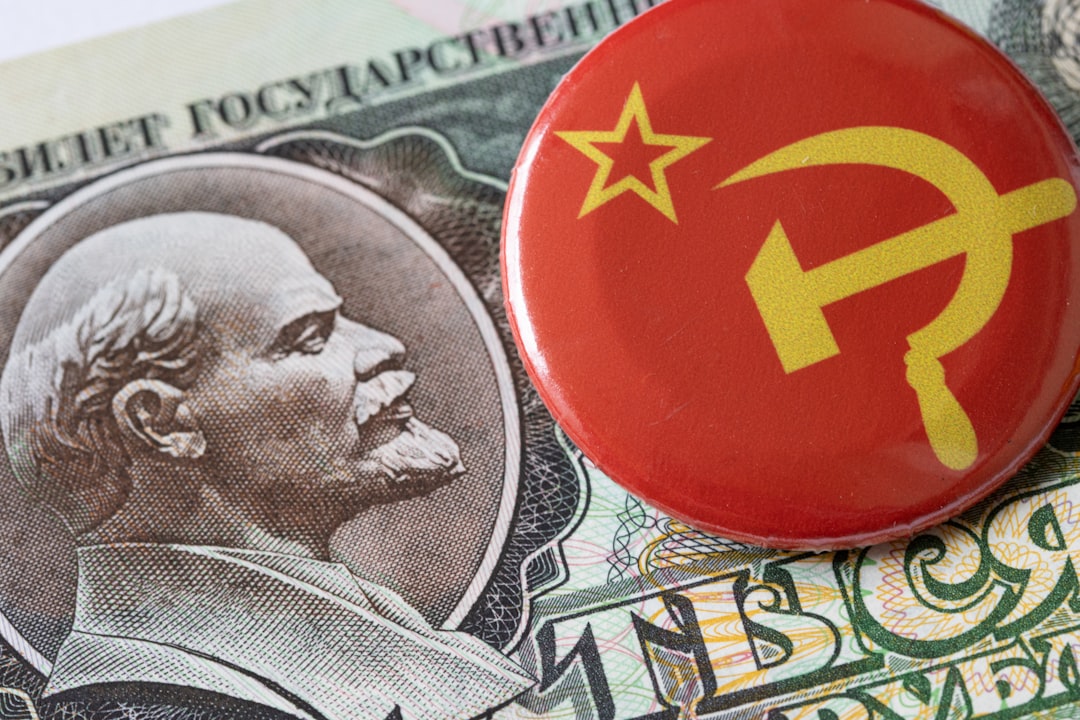
In the winter of 1847-1848, two young German intellectuals sat in Brussels and London writing a short political pamphlet for a newly formed workers' organization called the Communist League. Karl Marx was 29. Friedrich Engels was 27. The document they produced, The Communist Manifesto, opens with a sentence that remains one of the most famous in political literature: "A specter is haunting Europe -- the specter of communism." The pamphlet then sketched a theory of history as driven by class conflict, a critique of capitalism as a system of exploitation, and a vision of a communist society in which the free development of each would be the condition for the free development of all.
Within weeks of its publication, the revolutions of 1848 swept across Europe. The pamphlet played no direct role in those revolutions, which failed in any case. But the ideas it contained would eventually contribute to revolutions that succeeded: in Russia in 1917, China in 1949, Cuba in 1959, Vietnam in 1975. At the height of communist power, roughly one-third of humanity lived under governments that claimed to implement Marxist principles. By 1991, most of those governments had collapsed. The survivors -- China, Cuba, Vietnam, North Korea -- had modified their systems so substantially that their relationship to Marx's original vision is a matter of genuine theoretical debate.
Understanding communism means understanding both the powerful critique of capitalism that Marx developed and the complicated, often catastrophic history of the regimes that attempted to put his ideas into practice. These are not separable questions; whether the history indicts the theory, or whether the theory was betrayed by the history, is one of the central debates in modern political thought.
"The philosophers have only interpreted the world, in various ways; the point is to change it." -- Karl Marx, "Theses on Feuerbach" (1845)
Key Definitions
Historical materialism: Marx's theory that the fundamental driver of historical change is the development of the material forces of production and the conflicts those developments generate between social classes.
Surplus value: In Marx's economic theory, the value produced by workers in excess of what they receive as wages; the source of profit and the mechanism of exploitation.
Alienation: Marx's concept of the worker's estrangement from the products of their labor, from the process of production, from fellow workers, and from their own human potential under capitalism.
Dictatorship of the proletariat: The transitional political form in which the working class uses state power to expropriate capitalist property and suppress counterrevolution before the state itself withers away.
Vanguard party: Lenin's concept of a disciplined party of professional revolutionaries who bring revolutionary consciousness to the working class; the organizational model of Marxist-Leninist parties.
Gulag: The Soviet system of forced labor camps that held millions of prisoners, many on political charges, especially during the Stalin period.
Collectivization: The forced transfer of privately owned agricultural land and livestock to collective ownership, implemented in the Soviet Union in the late 1920s-early 1930s and in China in the late 1950s.
Major Communist States: Comparison
| Country | Revolution Year | Peak Population Under Rule | Economic Model | Collapse/Status |
|---|---|---|---|---|
| Soviet Union | 1917 | ~290 million | Central planning (Gosplan) | Dissolved 1991 |
| China | 1949 | ~1.4 billion | Mixed; market reforms since 1978 | Still governed by CPC |
| Cuba | 1959 | ~11 million | State-directed; limited market reforms | Ongoing |
| Vietnam | 1975 | ~97 million | Socialist-oriented market economy (Doi Moi, 1986) | Ongoing |
| Cambodia (Khmer Rouge) | 1975 | ~8 million | Agrarian collectivism; abolished currency | Regime ended 1979 |
The Marxist Theory
Historical Materialism and Class Struggle
Marx's theoretical framework begins with the claim that the material conditions of life, how societies produce food, shelter, and other necessities, are the foundation on which all social, political, and cultural structures are built. The famous metaphor from the Preface to A Contribution to the Critique of Political Economy (1859) describes the economic structure of society as the real foundation, on which rises a legal and political superstructure, and to which definite forms of social consciousness correspond.\n\nHistory, on this account, is driven by conflict between classes whose interests are defined by their relationship to the means of production. Ancient society was based on slave labor; feudalism on serf labor; capitalism on wage labor. Each transition from one mode of production to another involved revolutionary conflict between the old dominant class and the emerging class associated with more productive techniques: the bourgeoisie overthrew the feudal aristocracy through the bourgeois revolutions of the seventeenth and eighteenth centuries; the proletariat would overthrow the bourgeoisie in the coming communist revolution.\n\nThe Communist Manifesto provides the schematic version of this theory. The bourgeoisie has played a historically revolutionary role, destroying feudal relations and creating a world market; but in doing so it has created its own gravediggers, the industrial proletariat, concentrated by factory production, trained in collective organization, and driven by common exploitation toward revolutionary solidarity. "What the bourgeoisie therefore produces, above all, are its own gravediggers. Its fall and the victory of the proletariat are equally inevitable."
Capital and the Critique of Political Economy
Das Kapital, volume one published in 1867, is Marx's mature economic analysis of capitalism. It begins with the commodity, the basic unit of capitalist production, and develops through an analysis of exchange value, money, and capital to the theory of surplus value that is the core of the Marxist critique.\n\nFor Marx, the source of all value is human labor. The exchange value of a commodity reflects the socially necessary labor time required to produce it. Workers sell their labor power (their capacity to work) to capitalists as a commodity. The value of labor power is determined by the cost of reproducing it, that is, the food, clothing, shelter, and training needed to keep workers alive and working. But workers can produce more value in a day than it costs to maintain them. The difference between the value workers produce and the value of their labor power is surplus value, which the capitalist appropriates as profit.\n\nThis is not a matter of individual capitalists being dishonest or greedy. The extraction of surplus value is structural, built into the wage-labor relationship that defines capitalism. Individual capitalists who do not extract surplus value will not survive competition. The exploitation is impersonal, systematic, and generated by the logic of the system rather than the character of the participants.\n\nMarx also analyzed the long-run tendencies of capitalism: the falling rate of profit (as competition forces capitalists to substitute capital for labor, reducing the proportion of value-generating labor in production), the concentration and centralization of capital (as competition eliminates smaller firms), recurring crises of overproduction, and the immiseration of the proletariat. These tendencies would, he believed, create the conditions for capitalism's eventual breakdown and replacement.
Alienation
The concept of alienation, developed in Marx's early Economic and Philosophical Manuscripts (1844), describes a different dimension of capitalism's human cost. Under capitalism, workers are alienated from the products of their labor (which belong to the capitalist), from the process of production (which they do not control and which is organized for profit rather than human development), from their fellow workers (who are made competitors in the labor market), and from their species-being (their human nature as creative, self-determining beings who realize themselves through productive activity).\n\nAlienation is not a psychological state that therapy can fix but an objective condition generated by the social relations of production. Its overcome requires not individual transformation but collective revolutionary change. Communism, in Marx's vision, would be the "positive supersession of alienation," a restoration of humans to their full creative potential.
The Russian Revolution and the Making of the Soviet State
Lenin and Bolshevism
Vladimir Lenin's modifications to Marxist theory constituted a distinct doctrine, Marxism-Leninism, that became the theoretical foundation of the Soviet state and of communist parties worldwide. The most significant innovation was the vanguard party concept, developed in What Is to Be Done? (1902): revolutionary consciousness must be brought to the working class by a disciplined party of professional revolutionaries rather than waiting for it to develop spontaneously.\n\nThe Bolshevik Party that Lenin built on this model was organized on the principle of democratic centralism: open discussion before decisions, strict discipline after them. This organizational model would prove compatible with, and arguably facilitated, the concentration of power at the top of the party that characterized Soviet politics.\n\nThe Russian Revolution occurred in two stages in 1917. The February Revolution overthrew the Tsar and established a Provisional Government. The October Revolution, the Bolshevik seizure of power organized by Lenin and Leon Trotsky, overthrew the Provisional Government and established Soviet power. The Bolsheviks had promised peace, land, and bread to war-exhausted, land-hungry, hungry Russians, promises they could not fully keep.\n\nThe Russian Civil War of 1918-1921, in which the Bolshevik Red Army fought the White armies supported by foreign intervention, consolidated Soviet power but at the cost of hundreds of thousands of lives and a further devastation of the already-damaged economy. War Communism, the policy of requisitioning grain from peasants and nationalizing industry implemented during the civil war, caused famine and economic collapse. Lenin's New Economic Policy (NEP) of 1921, which allowed limited market activity, was presented as a tactical retreat necessary to restore production.
Stalin and the Terror
Lenin died in January 1924 without clearly designating a successor, and the subsequent power struggle was won by Joseph Stalin, then the General Secretary of the party apparatus. By 1928-1929, Stalin had defeated his rivals and launched what he called the "revolution from above": forced collectivization of agriculture and the First Five-Year Plan for rapid industrialization.\n\nForcible collectivization was catastrophic in many regions, nowhere more than Ukraine. The famine of 1932-1933, produced by a combination of policy failures, deliberate grain extraction, and the disruption of agricultural production, killed millions. The Gulag, the system of forced labor camps, expanded massively through the 1930s and reached its peak population of around 1.5-1.8 million after World War II.\n\nThe Great Terror of 1936-1938 consumed the party itself. The Moscow Trials, theatrical public proceedings in which prominent Old Bolsheviks confessed to impossible crimes before being executed, destroyed the revolutionary generation. The Red Army officer corps was devastated by purges that removed three of five marshals, 13 of 15 army commanders, and 50 of 57 corps commanders. The NKVD (secret police) executed approximately 750,000 people in 1937-1938 alone.\n\nThe debate about whether Stalinism was a logical extension of Leninism or a betrayal of it remains unresolved. Trotsky, writing in exile, argued for betrayal: Stalinist bureaucratism had usurped power from the working class while preserving socialized property, creating a degenerated workers' state. Critics from Hannah Arendt to Robert Conquest argued that the seeds of totalitarianism were present in Lenin's organizational model and his willingness to use terror against class enemies from the revolution's earliest days.
Communism Beyond the Soviet Union
Yugoslavia and the Self-Management Alternative
Josip Broz Tito's Yugoslavia represents the most significant communist alternative to the Soviet model. Yugoslavia had liberated itself from Nazi occupation primarily through its own partisan forces rather than through Soviet liberation, giving Tito an independent political base. When Stalin attempted to subordinate Yugoslavia to Soviet control, Tito broke with Moscow in 1948, becoming the first successful defiance of Soviet authority in the communist bloc.\n\nYugoslav communism developed a distinctive "self-management" model in which workers' councils managed enterprises, giving workers a voice in production decisions while the party maintained political control. Yugoslavia joined neither NATO nor the Warsaw Pact and became a founding member of the Non-Aligned Movement. The Yugoslav economy performed better than Soviet-bloc economies through the 1960s and 1970s, in part because of its greater openness to market mechanisms and Western trade.\n\nAfter Tito's death in 1980, the Yugoslav federation's ethnic and national tensions, suppressed under his authority, began to resurface and eventually produced the dissolution of Yugoslavia and the wars of the 1990s.
Mao's China and the Great Experiments
Mao Zedong's Chinese communism differed from the Soviet model in making the peasantry rather than the industrial proletariat the revolutionary class, a theoretical innovation required by China's socioeconomic reality. After the CCP's victory in the civil war in 1949, the party initially followed a Soviet development model, with Soviet technical assistance and Five-Year Plans.\n\nMao's Great Leap Forward (1958-1962) attempted to use mass mobilization to achieve rapid industrialization and agricultural collectivization simultaneously. The results were catastrophic: famine caused by policy failures, inflated reporting of production, and the diversion of agricultural labor to industrial tasks killed tens of millions. Estimates of the death toll range from 15 to 55 million.\n\nThe Cultural Revolution (1966-1976), launched by Mao to reassert his authority against perceived revisionists within the party, was a decade of deliberate social chaos. Red Guard factions attacked intellectuals, party officials, teachers, and cultural figures. Universities were closed for years. Millions were subjected to struggle sessions, forced labor, imprisonment, and execution. The Cultural Revolution is now officially acknowledged by the CCP as a catastrophe.\n\nAfter Mao's death in 1976, Deng Xiaoping initiated the "Reform and Opening Up" policy from 1978, introducing market mechanisms, opening China to foreign investment, and eventually transforming China into the world's second-largest economy. The CCP maintains one-party political control while presiding over what is functionally a mixed capitalist economy, a combination that defies easy classification in terms of classical communist theory.
Cuba and Revolutionary Socialism
The Cuban Revolution of 1959, which brought Fidel Castro and the 26th of July Movement to power, was not initially declared communist: Castro's stated program was nationalist, anti-imperialist, and moderately reformist. The radicalization of the revolution, the nationalization of US businesses, the Bay of Pigs invasion, and the missile crisis of 1962 pushed Cuba into the Soviet orbit.\n\nCuban communism has achieved notable social results: high literacy rates, a universal healthcare system that produces health indicators comparable to much richer countries, and relatively low inequality by Latin American standards. It has also maintained a system of political repression, restricted press freedom, and suppressed political opposition. The Cuban economy has suffered from both the US economic embargo and from the inefficiencies of central planning, most severely after the Soviet collapse deprived Cuba of its primary economic patron.
The Fall of Communism
The collapse of Soviet communism between 1989 and 1991 was one of the defining geopolitical events of the twentieth century. The immediate triggers in Eastern Europe were the withdrawal of Soviet willingness to use force to maintain communist governments, demonstrated by Gorbachev's "Sinatra Doctrine" (allowing Eastern European states to do it their way), and the demonstration effect of Poland's Solidarity movement and semi-free elections.\n\nThe fall of the Berlin Wall on November 9, 1989, became the iconic image of communism's collapse: not a military defeat but a bureaucratic failure, as an East German spokesman announced that border crossings would be open "immediately, without delay," triggering a spontaneous surge of East Germans to the checkpoints. Within weeks, communist governments had fallen across the Eastern bloc.\n\nThe Soviet Union's dissolution in December 1991 resulted from the intersection of economic stagnation, the assertion of national sovereignty by Soviet republics, Gorbachev's failed reforms, and the discrediting of the party by the August 1991 coup attempt. When the leaders of Russia, Ukraine, and Belarus signed the Belavezha Accords dissolving the USSR, a state that had seemed permanent and formidable simply ceased to exist.\n\nThe analytical consensus on the causes of communism's failure emphasizes the systemic economic deficiencies of central planning, the information problem identified by Friedrich Hayek (central planners cannot replicate the knowledge dispersed through price systems), the political repression required to maintain the system, and the rising costs of superpower military competition. The standard of living comparison with Western Europe, increasingly visible to Eastern European populations, was politically corrosive.
Academic Debates: Was the Soviet Union Ever Truly Communist?
The question of whether the Soviet Union and similar states were genuinely communist societies or corrupted deformations of the Marxist vision has occupied theorists across the political spectrum.\n\nOrthodox Marxists from Trotsky onward argued that Stalinist bureaucratism betrayed the democratic commitments of the original Bolshevik program and that genuine communism would require political revolution to restore workers' power. The class analysis was disputed: was the Soviet bureaucracy a new class, a caste, or simply a temporary degeneration?\n\nEric Hobsbawm, the British Marxist historian whose Age of Extremes (1994) remains the best single-volume history of the twentieth century, acknowledged both the real achievements of Soviet development and its enormous human costs. He was frank about the moral compromises involved in Communist Party membership during the Stalinist period but argued that the socialist tradition retained normative validity despite the Soviet experience.\n\nAnti-communist historians argued that the atrocities of Soviet communism were not accidents but logical consequences of the attempt to implement an ideology that required transforming human nature and eliminating those who resisted transformation. Martin Malia's The Soviet Tragedy (1994) argued that Bolshevism was an ideology-driven project in which the gap between the communist ideal and the recalcitrant reality of actual human societies required increasing violence to maintain.\n\nContemporary China's combination of one-party communist political control with market economics raises a different version of the question: is China communist in any meaningful theoretical sense, or has the ideology become purely an instrument of political legitimation for the CCP's continued monopoly on power? Xi Jinping's reassertion of ideological orthodoxy since 2013 suggests that the party finds the communist framework useful even as the economy it governs is profoundly unlike anything Marx envisioned.
Communism and Socialism: Distinguishing the Terms
The distinction between communism and socialism is both theoretically significant and historically confused. In Marx's own usage, socialism referred to the transitional stage between capitalism and full communism: the working class controls the state and uses it to socialize the means of production, but distribution still follows the principle of contribution rather than need. Communism was the higher, post-state stage of abundant, classless society.\n\nAfter 1917, the terms acquired a political valence. Communist parties affiliated with Moscow's Comintern distinguished themselves from Social Democrats, who accepted parliamentary democracy and sought to reform capitalism rather than overthrow it. Social democracy, as practiced by Scandinavian, German, and British Labour parties, achieved mixed-economy welfare states that dramatically improved living standards without abolishing capitalism.\n\nIn contemporary usage the distinction remains important. Democratic socialists advocate a mixed economy with strong public ownership and redistribution but accept pluralist democracy as the framework. Marxist-Leninists advocate the revolutionary overthrow of capitalism and a one-party state as necessary transitional instruments. The conflation of these very different positions under a single label "socialism" or "communism" generates considerable confusion in political discourse.
Cross-References
- /concepts/decision-making/what-is-political-philosophy
- /culture/global-cross-cultural/what-is-socialism
- /culture/global-cross-cultural/what-is-capitalism
- /culture/global-cross-cultural/what-is-authoritarianism
- /culture/global-cross-cultural/what-is-the-french-revolution
- /culture/global-cross-cultural/why-the-cold-war-shaped-the-modern-world
- /culture/global-cross-cultural/what-is-nationalism
- /culture/global-cross-cultural/what-is-democracy
References
- Marx, Karl, and Friedrich Engels. The Communist Manifesto. Edited by Gareth Stedman Jones. London: Penguin, 2002. (orig. 1848)
- Marx, Karl. Capital: A Critique of Political Economy. Vol. 1. Translated by Ben Fowkes. London: Penguin, 1976. (orig. 1867)
- Lenin, V.I. What Is to Be Done? Burning Questions of Our Movement. In Collected Works, vol. 5. Moscow: Progress Publishers, 1961. (orig. 1902)
- Hobsbawm, Eric. The Age of Extremes: A History of the World, 1914-1991. New York: Pantheon, 1994.
- Conquest, Robert. The Great Terror: A Reassessment. New York: Oxford University Press, 1990.
- Malia, Martin. The Soviet Tragedy: A History of Socialism in Russia, 1917-1991. New York: Free Press, 1994.
- Applebaum, Anne. Gulag: A History. New York: Doubleday, 2003.
- Arendt, Hannah. The Origins of Totalitarianism. New York: Harcourt, Brace, 1951.
- Short, Philip. Mao: A Life. New York: Henry Holt, 1999.
- Yang, Jisheng. Tombstone: The Great Chinese Famine, 1958-1962. Translated by Stacy Mosher and Jian Guo. New York: Farrar, Straus and Giroux, 2012.
- Judt, Tony. Postwar: A History of Europe Since 1945. New York: Penguin Press, 2005.
- Djilas, Milovan. The New Class: An Analysis of the Communist System. New York: Praeger, 1957.
Frequently Asked Questions
What did Marx and Engels mean by communism and how did they think it would come about?
Karl Marx and Friedrich Engels's Communist Manifesto, published in February 1848 on the eve of a wave of European revolutions, is one of the most widely read political documents in history. In its pages, Marx and Engels sketched a theory of history, a critique of capitalism, and a vision of communist society that would inspire revolutionary movements for the next century and a half.For Marx and Engels, communism was not a utopian ideal to be implemented by enlightened reformers but the necessary endpoint of historical development driven by material forces. Their theory of historical materialism holds that the driving force of history is the conflict between the forces of production, the technology and knowledge available to a society, and the relations of production, the social arrangements governing who owns property and who controls labor. As the forces of production develop, they come into conflict with existing property relations, producing social conflict and, eventually, revolutionary transformation.Capitalism, in Marx's analysis developed most fully in Das Kapital (volume one published 1867), is characterized by the extraction of surplus value from workers. Workers sell their labor power to capitalists for a wage; the value workers produce in excess of the cost of their own reproduction (their wages) is surplus value, which the capitalist appropriates as profit. This exploitation is systematic and structural, not a matter of individual capitalists' greed.Capitalism also produces alienation: workers are estranged from the products of their labor (which belong to the capitalist), from the process of production (which they do not control), from their fellow workers (who are made competitors), and from their own human nature as creative, self-determining beings. Communist society would overcome alienation by collectively controlling the means of production, enabling humans to develop their full range of capacities.Marx believed capitalism would generate its own gravediggers: the proletariat (industrial working class), by being concentrated in factories and cities, trained in collective action, and driven to organize by common exploitation, would develop revolutionary consciousness and eventually overthrow capitalism. The transition would involve a temporary 'dictatorship of the proletariat,' a workers' state using political power to expropriate capitalist property and suppress counterrevolution, before the state itself withered away into classless, stateless communist society.In communist society, Marx's vision was of radical human liberation: the famous passage in The German Ideology describes a society in which one could 'hunt in the morning, fish in the afternoon, rear cattle in the evening, criticise after dinner, just as I have a mind, without ever becoming hunter, fisherman, herdsman or critic.' The principle organizing distribution would shift from 'from each according to his ability, to each according to his contribution' under socialism to 'from each according to his ability, to each according to his needs' under full communism.
How did Lenin modify Marx's theory and what was Leninism?
Vladimir Lenin's modifications to Marxist theory were substantial enough to constitute a distinct doctrine, Marxism-Leninism, which became the theoretical foundation of the Soviet state and of most communist parties throughout the twentieth century. Lenin's innovations addressed what he saw as the theoretical and strategic problems that had prevented Marxist revolution despite the development of industrial capitalism.The most significant Leninist innovation was the concept of the vanguard party, developed in his 1902 pamphlet What Is to Be Done? Marx had believed that the working class would develop revolutionary consciousness through its collective experience of exploitation. Lenin was skeptical: in his analysis, workers left to their own devices would develop only 'trade union consciousness,' the desire for better wages and conditions within capitalism, not revolutionary political consciousness. True class consciousness had to be brought to the workers from outside, by a disciplined party of professional revolutionaries with access to Marxist theory. The vanguard party would organize and lead the working class toward revolution rather than waiting for spontaneous mass consciousness to develop.This organizational conception had profound implications. The Bolshevik party that Lenin built was organized on the principle of democratic centralism: open discussion within the party on questions of policy, but strict discipline in executing decisions once made. The organizational model concentrated authority and decision-making at the top in ways that would prove compatible with authoritarian rule.Lenin's theory of imperialism, developed in Imperialism: The Highest Stage of Capitalism (1916), addressed the puzzle that Marx's prediction of proletarian revolution had not materialized in the most advanced capitalist countries. Lenin argued that capitalism in its monopoly stage exported capital to less developed countries, extracting super-profits that could be used to bribe the upper stratum of workers in the metropolitan countries, creating a 'labor aristocracy' with a stake in the system. Revolution was therefore more likely in the weakest links of the imperialist chain, the less developed countries, than in the advanced capitalist heartlands. This theory justified the Bolshevik revolution in Russia, a relatively backward country, rather than waiting for revolution in Germany or Britain.After the October Revolution, Lenin developed the New Economic Policy (NEP) in 1921 as a tactical retreat from War Communism's attempt to abolish markets immediately. The NEP allowed limited private enterprise in agriculture and small industry while maintaining state control of the 'commanding heights' of the economy. Lenin died in 1924, before the NEP could develop fully, leaving the question of its long-term viability unresolved.
What was Stalinism and how did it differ from Lenin's vision?
Stalinism refers to the specific form of governance and ideology associated with Joseph Stalin's rule of the Soviet Union from roughly 1928 to his death in 1953, characterized by forced collectivization, rapid industrialization, mass terror, the cult of personality, and the ideological subordination of communist parties worldwide to Soviet interests.Stalin rose to power in the struggle for succession that followed Lenin's death in 1924, defeating rivals including Leon Trotsky, Grigory Zinoviev, and Nikolai Bukharin through political maneuvering. By 1928-1929 he had consolidated control and launched the 'revolution from above': the collectivization of agriculture and the First Five-Year Plan for rapid industrialization.Forcible collectivization drove millions of peasants into collective farms (kolkhozy), destroying the peasant way of life and the class of more prosperous peasants (kulaks) who were 'liquidated as a class' through deportation, imprisonment, and execution. The process was most catastrophic in Ukraine, where organized resistance and the extraction of grain from an already-devastated agricultural sector produced a famine in 1932-1933 that killed between 3.5 and 7 million people. Ukrainian scholars and the Ukrainian parliament have designated this famine the Holodomor (death by hunger) and classified it as genocide, a characterization that remains contested among historians.The Great Terror of 1936-1938 was a period of mass political repression in which hundreds of thousands of people were executed and millions more were sent to the labor camp system (the Gulag). The purges targeted party officials, military officers, intellectuals, ethnic minorities, and ordinary citizens caught in the self-expanding logic of a system that demanded confessions implicating others. Prominent Old Bolsheviks including Zinoviev, Kamenev, and Bukharin were put on trial in the Moscow Trials, confessing to impossible conspiracies and foreign espionage before being executed.Whether Stalinism represents a betrayal of Lenin's intentions or a logical extension of Leninist premises is a central debate in communist history. Trotsky, writing in exile, argued that Stalinism was a bureaucratic degeneration of the revolution, betraying the democratic and internationalist commitments of Bolshevism. Later critics, including Robert Conquest and Richard Pipes, argued that the seeds of Stalinist totalitarianism were present in Lenin's organizational model and his willingness to use terror against class enemies. Hannah Arendt's analysis in The Origins of Totalitarianism placed Stalinism alongside Nazism as a novel form of total domination rather than a corruption of a fundamentally different socialist project.
What was the Chinese Communist Revolution and how did Mao's communism differ from Soviet communism?
The Chinese Communist Revolution of 1949, which brought the Chinese Communist Party (CCP) under Mao Zedong to power after a civil war against the Nationalist Kuomintang government, represented the most significant expansion of communist power since the Russian Revolution. But Chinese communism differed from Soviet communism in important ways from the beginning, reflecting both different historical circumstances and Mao's theoretical innovations.Marx had imagined proletarian revolution emerging from the industrial working class. China in the 1920s and 1930s had a tiny urban proletariat relative to its hundreds of millions of peasants. Mao's theoretical contribution was to make the peasantry the driving force of communist revolution, organizing rural guerrilla warfare in 'base areas' rather than attempting urban insurrections on the Bolshevik model. The CCP's Long March of 1934-1935, a strategic retreat of nearly 6,000 miles pursued by Nationalist forces, became foundational to the party's revolutionary mythology despite its enormous casualties.After consolidating power in 1949, the CCP pursued Soviet-style industrialization through Five-Year Plans with Soviet technical assistance. But by the late 1950s, Sino-Soviet relations had deteriorated, partly over ideological disputes about the Khrushchev thaw, and Mao launched an independent Chinese development model.The Great Leap Forward of 1958-1962 was Mao's attempt to transform China rapidly from an agrarian to an industrialized communist society through mass mobilization. Agricultural communes were established across the countryside, private cooking was forbidden, and peasants were diverted from food production to backyard steel furnaces producing largely unusable metal. The combination of policy failures, inflated production statistics that concealed actual crop shortfalls, and the diversion of labor from agriculture produced a famine that killed between 15 and 55 million people, the largest famine in recorded history.The Cultural Revolution (1966-1976) was a decade of political and social upheaval orchestrated by Mao to reassert his authority and eliminate perceived class enemies and revisionist elements within the party. Red Guard factions attacked intellectuals, party officials, teachers, and anyone associated with 'bourgeois' culture. Millions were subjected to struggle sessions, imprisonment, forced labor, and execution. Universities and schools were closed; the professional and intellectual class was decimated. The Cultural Revolution is now officially condemned by the CCP as a 'catastrophe' caused by Mao's 'leftist errors.'
What caused the fall of communism in 1989-1991?
The collapse of communist regimes across Eastern Europe in 1989, culminating in the dissolution of the Soviet Union itself in 1991, was one of the most dramatic geopolitical events of the twentieth century. The explanations are complex and contested, but several factors stand out.The economic failure of Soviet-style communism was fundamental. Centrally planned economies had achieved rapid industrialization in the Stalinist period by mobilizing resources for specific sectors, primarily heavy industry and military production. But they proved unable to generate the innovation, flexibility, and consumer goods provision that market economies achieved. By the 1970s and 1980s, the Soviet economy was stagnating, unable to compete technologically with the West in fields ranging from computers to consumer electronics. Soviet citizens had access to a relatively narrow range of goods of mediocre quality while Western media, which penetrated the Iron Curtain through radio broadcasts and eventually through videos and cassettes, showed the material abundance of capitalist society.Mikhail Gorbachev's reforms, glasnost (openness) and perestroika (restructuring), launched in the mid-1980s to revitalize the Soviet system, instead opened fissures that the system could not contain. Glasnost permitted public criticism of party corruption and historical crimes, including the opening of archives on Stalin's terror. Perestroika's partial marketization measures undermined the old mechanisms without creating functional new ones. Gorbachev's announcement that the Soviet Union would not use force to maintain communist governments in Eastern Europe removed the ultimate guarantee that had sustained those regimes.In Poland, the Solidarity trade union movement, led by Lech Walesa and supported by the Catholic Church and Pope John Paul II, had been challenging communist rule since 1980. The regime's negotiations with Solidarity in 1989 produced semi-free elections in which Solidarity candidates won overwhelmingly, producing Poland's first non-communist government since the late 1940s. The example was contagious: Hungary, East Germany, Czechoslovakia, Bulgaria, and Romania all saw communist governments fall in quick succession during the autumn of 1989. The fall of the Berlin Wall on November 9, 1989, the symbol of Europe's division, came not through revolution but through a miscommunication at an East German press conference and the spontaneous surge of crowds to border crossings.The dissolution of the Soviet Union itself in December 1991, when the leaders of Russia, Ukraine, and Belarus declared the USSR dissolved and the leaders of eleven remaining republics signed the Alma-Ata Declaration, resulted from the combination of economic failure, the assertion of national sovereignty by Soviet republics, and the August 1991 coup attempt against Gorbachev by hardliners, which discredited both the coup plotters and Gorbachev himself.
How do historians and theorists debate whether the Soviet Union was truly communist?
The question of whether the Soviet Union and other states claiming Marxist-Leninist ideology were genuinely communist is not merely semantic: it determines whether the historical record of these states should be used to evaluate communism as a theory, and it has been a central debate in political theory, history, and social science for decades.One position, associated with many Western Communist Party members and fellow travelers throughout the Cold War and articulated more carefully by theorists like Paul Sweezy and Paul Baran, held that the Soviet Union was a genuine socialist state despite its problems, that it represented a real alternative to capitalism that had achieved impressive developmental results, and that its failures were products of specific historical circumstances, particularly the encirclement by hostile capitalist powers and the necessity of forced industrialization to prepare for war.A Trotskyist position, developed by Leon Trotsky and maintained by various Fourth International organizations, held that the Soviet Union was a 'degenerated workers' state': it retained the socialized means of production achieved by the revolution but had been taken over by a privileged bureaucratic caste that had usurped political power from the working class without constituting a new class in the Marxist sense. Political revolution, not social revolution, would be needed to restore workers' power.Another position, developed by Milovan Djilas in The New Class (1957) and elaborated by various analysts, held that the communist party bureaucracy had become a new exploiting class, collectively owning the means of production through their control of the state, making the Soviet system not socialist but a form of class society under a different ruling class.Eric Hobsbawm, the British Marxist historian, took a more nuanced position: the Soviet system had achieved real developmental gains, particularly in education, health, and industrialization, but had done so at enormous human cost and through methods that were incompatible with genuine socialist values. His autobiography Interesting Times (2002) is a frank reckoning with the moral compromises he made in his Communist Party membership.Anti-communist historians, including Robert Conquest, Richard Pipes, and Martin Malia, argued that the Soviet Union's atrocities were not accidents or deformations but logical consequences of the attempt to implement a totalitarian ideology. On this view, the question 'was the Soviet Union truly communist?' is less interesting than the observation that every serious attempt to implement communist ideology produced similar results.Contemporary survivors of communist states -- Cuba, Vietnam, China, North Korea -- complicate the picture further. All four have modified their economic systems substantially in the direction of market mechanisms while maintaining one-party political systems. China in particular has achieved spectacular economic growth through what it calls 'socialism with Chinese characteristics,' a hybrid system that is hard to classify according to classical Marxist categories.
What is the distinction between communism and socialism?
The distinction between communism and socialism is both theoretically significant and practically confused, having been defined differently by different political traditions and having shifted over time. Understanding the distinction requires attending to both theoretical definitions and historical usage.In Marx's own usage, socialism and communism referred to two stages of post-capitalist development. Socialism was the lower stage, immediately following the overthrow of capitalism: the working class controls the state and uses it to reorganize the economy, but the old bourgeois norms of distribution, 'to each according to his contribution,' still apply because material abundance has not yet been achieved and the habits of the old society persist. Communism was the higher stage, achievable once material abundance had been created and the state had withered away: 'from each according to his ability, to each according to his needs.' On this account, socialism is a transitional stage on the way to communism.After the Bolshevik Revolution, the terms acquired a political valence that was partly tactical. The Bolsheviks renamed the Russian Social Democratic Labour Party the Russian Communist Party in 1919, distinguishing themselves from the Social Democrats of Western Europe who had supported their respective governments in the First World War and subsequently rejected Soviet-style revolution. Communist parties affiliated with the Communist International (Comintern) adopted the Moscow line; Social Democratic parties developed social democratic or democratic socialist politics that accepted parliamentary democracy and sought gradual reform rather than revolution.This historical divergence produced two very different traditions. Social democracy, as practiced by Scandinavian, German, and British Labour parties, accepts capitalism as the economic base while seeking to regulate it, redistribute its benefits, and maintain a comprehensive welfare state. It is socialist in the sense of advocating social ownership and control of key economic sectors but not in the sense of seeking to abolish capitalism.Communism, as represented by Soviet-aligned parties, sought the revolutionary overthrow of capitalism, the establishment of a one-party state based on Marxist-Leninist principles, and eventually the achievement of classless communist society. The actual societies produced by communist revolutions were characterized by state ownership of the means of production, central planning, one-party rule, and suppression of political opposition.In contemporary usage, 'socialism' is used in a wide range of senses. In the United States, self-described democratic socialists like Bernie Sanders use the term to mean roughly what European social democrats mean: a mixed economy with strong public sector, universal healthcare, and union power. This usage would be considered Social Democracy by European standards and would be rejected as 'reformist' capitulation by traditional Marxist-Leninist definitions.

![Pensar rápido, pensar despacio [Think Fast, Think Slowly]](https://images-na.ssl-images-amazon.com/images/P/B085NZ4HVD.01._SL200_.jpg)