
Leadership theory has spent much of the past century trying to identify what separates great leaders from average ones. The dominant models have largely agreed on one thing: leaders lead from the front. They set direction, make decisions, command authority, and inspire followers toward a vision.
The leader is, in this framing, the active agent and followers are the recipients of that agency.
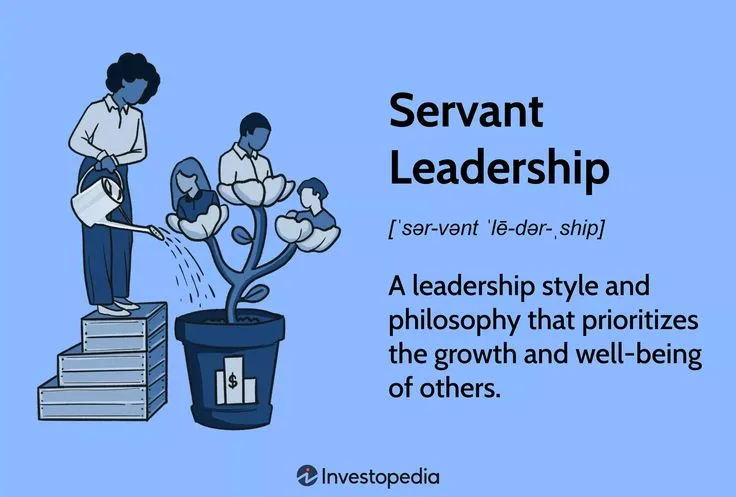
Servant leadership inverts this entirely. In the servant leadership model, the leader's primary role is to serve the people they lead. Followers' needs, growth, and wellbeing come first. Organizational performance is a consequence of attending to those needs - not the other way around.
This counterintuitive premise has attracted enormous interest, generated a substantial empirical literature, and provoked genuine criticism. Understanding servant leadership requires engaging with all three.
The Origins: Robert Greenleaf's 1970 Essay
The concept of servant leadership emerged from a single source: an essay published in 1970 by Robert K. Greenleaf, then 66 years old and recently retired after a 38-year career at AT&T, where he had led management research and development.
Greenleaf titled his essay "The Servant as Leader." He described a vision of leadership inspired, he wrote, by reading Hermann Hesse's novel The Journey to the East, in which a servant named Leo turns out to be the guiding spirit of a spiritual fellowship.[14]
The takeaway, for Greenleaf, was that the most important leaders might be those who make themselves servants first.[1]
His central proposition was:
"The servant-leader is servant first... It begins with the natural feeling that one wants to serve, to serve first. Then conscious choice brings one to aspire to lead.
That person is sharply different from one who is leader first, perhaps because of the need to assuage an unusual power drive or to acquire material possessions." - Robert K. Greenleaf, "The Servant as Leader" (1970)
Greenleaf established the Greenleaf Center for Servant Leadership, which has continued to develop and promote the concept. The essay was followed by The Institution as Servant (1972) and The Servant as Religious Leader (1982), extending the framework from individuals to institutions.[2]
Greenleaf's ideas emerged from a specific historical moment. The late 1960s saw widespread disillusionment with institutional authority - in government, business, and academia.
Greenleaf's reframing of leadership as fundamentally about service resonated in this climate as an antidote to hierarchical models perceived as extractive and dehumanising.
Understanding this context helps explain both why the concept gained traction and why its empirical operationalisation took decades: Greenleaf was writing philosophy, not proposing a measurement model.
The Ten Characteristics of Servant Leadership
Greenleaf's original writing was philosophical and somewhat vague. Larry Spears, who served as CEO of the Greenleaf Center from 1990 to 2007, distilled 10 key characteristics from Greenleaf's essays that have become the standard framework for defining and studying servant leadership:[3]
| Characteristic | Description |
|---|---|
| Listening | Active, receptive attention to others; commitment to hearing before speaking |
| Empathy | Understanding and accepting others' feelings and perspectives |
| Healing | Recognizing the human need to be made whole; helping others recover from setbacks |
| Awareness | Self-awareness and broader awareness of context, ethics, and power |
| Persuasion | Influence through reasoned argument rather than positional authority |
| Conceptualization | The ability to dream, think beyond immediate operational concerns, and set long-term direction |
| Foresight | Understanding the lessons of the past, the current situation, and the likely consequences of decisions |
| Stewardship | Managing the organization as a trust, for the benefit of all stakeholders |
| Commitment to people's growth | Believing that each person has intrinsic worth beyond their work role |
| Building community | Creating genuine human connection and belonging within the organization |
These characteristics are notably different from competencies emphasized in most other leadership frameworks. Execution, decisiveness, strategic vision, charisma - the traits associated with conventional "great man" leadership - are largely absent.
Servant leadership is defined by orientation and relationship quality, not by task performance.
The question this raises immediately for researchers is measurement: how do you operationalise characteristics like "healing" and "foresight" into quantifiable survey items that can be administered reliably across different organisations, cultures, and languages?
The development of valid measurement instruments was the primary challenge - and source of controversy - in the first two decades of empirical servant leadership research.
Measurement Instruments: The Road to Empirical Research
Several competing scales for measuring servant leadership have been developed, each operationalising the construct somewhat differently.
Liden et al. (2008) developed the most extensively validated instrument, a 28-item servant leadership scale covering seven dimensions: emotional healing, creating value for the community, conceptual skills, empowering, helping subordinates grow and succeed, putting subordinates first, and behaving ethically.[7]
This scale has been widely used in subsequent research and offers good psychometric properties.
Van Dierendonck and Nuijten (2011) developed a 30-item scale emphasizing eight dimensions: empowerment, accountability, standing back, humility, authenticity, courage, interpersonal acceptance, and stewardship.[8]
Their scale is notable for explicitly including humility as a central component, following research by Collins (2001) in Good to Great that identified paradoxical humility as a key characteristic of the most effective CEOs.[11]
Dennis and Bocarnea (2005) developed a scale with 23 items and five dimensions: trust, empowerment, vision, humility, and service.
The existence of multiple incompatible scales has been both a strength and a weakness of the field. The proliferation reflects genuine scholarly effort to capture the construct's complexity.
But it also means that findings from studies using different scales cannot be directly compared, and meta-analytic synthesis requires careful attention to what was actually measured.
The Empirical Research: What Does the Evidence Show?
Servant leadership research grew substantially from the 1990s onward as scholars developed instruments to measure it systematically. The field now has dozens of validated scales and hundreds of empirical studies across industries and cultures.
Meta-Analyses and Systematic Reviews
Van Dierendonck's 2011 review in the Journal of Management, examining research across 23 years, found consistent associations between servant leadership and positive organizational outcomes including employee wellbeing, organizational commitment, job satisfaction, and performance.[4]
The review also noted that servant leadership was distinct from other positive leadership styles - particularly transformational leadership - and provided incremental explanatory power beyond those alternatives.
Liden, Wayne, Liao, and Meuser (2014) conducted a multilevel study across 304 work groups in a restaurant chain.[5]
They found that servant leadership at the unit level predicted group-level helping behavior, group-level performance (measured objectively as sales and customer satisfaction), and individual-level organizational citizenship behavior.
Critically, effects on group performance held even after controlling for transformational leadership.
A 2019 meta-analysis by Eva, Robin, Sendjaya, van Dierendonck, and Liden synthesized findings from 128 independent samples covering over 105,000 participants across 30 countries.[6] Key findings:
- Servant leadership had significant positive effects on task performance (average r = .24), organizational citizenship behavior (r = .35), creativity (r = .31), and follower wellbeing (r = .37)
- Negative associations with counterproductive work behavior and turnover intention were also significant
- Effects were moderated by national culture: servant leadership showed stronger effects in cultures with high power distance (where the contrast with traditional authority-based leadership is more pronounced)
- The relationship between servant leadership and performance operated partially through trust, employee engagement, and psychological empowerment
The Trust Mechanism
Across multiple studies, trust emerges as the central mediating variable. Servant leaders build trust by demonstrating consistent concern for followers' interests, being transparent and honest in communication, sharing power rather than hoarding it, and holding themselves to high ethical standards.
Trust, once established, reduces monitoring costs, increases discretionary effort, and promotes risk-taking and innovation - behaviors that explain much of the performance benefit.
This is consistent with research on psychological safety (Amy Edmondson's work) and organizational justice: when employees trust that their leader genuinely has their interests at heart, they are more willing to voice concerns, admit mistakes, and invest discretionary effort.[15]
Servant Leadership and Employee Creativity
One of the more striking findings in recent research is the strength of servant leadership's effect on creativity and innovation. The Eva et al.
(2019) meta-analysis reported an average correlation of r = .31 between servant leadership and creativity - meaningfully stronger than many other leadership style-creativity relationships documented in the literature.
The mechanism is relatively well understood: servant leaders create the psychological conditions (safety, autonomy, sense of growth and development) that enable creative risk-taking. Liden et al.
(2014) found that servant leadership predicted creativity primarily through a mediating chain involving psychological empowerment - the sense that one has the competence, autonomy, impact, and meaningfulness to invest in creative work.
When employees feel both supported and genuinely empowered, they are more likely to generate and share novel ideas.
Servant Leadership and Ethical Behaviour
Research by Walumbwa and colleagues (2010) found that servant leadership significantly predicted follower organizational citizenship behavior and performance even after controlling for transformational leadership, leader-member exchange quality, and procedural justice.[9]
One distinctive channel was ethical climate: servant leaders who emphasised stewardship and community-building shaped a moral climate in their teams that reduced unethical behaviour and increased prosocial action.
This ethical dimension distinguishes servant leadership meaningfully from the broader transformational leadership literature. Transformational leaders can inspire followers toward either ethical or unethical goals - history offers examples of charismatic leaders who transformed organisations toward destructive ends.
Servant leadership, by contrast, is defined partly by an ethical orientation toward stakeholders and community, making it more resistant to capture by self-interested organizational agendas.
How Servant Leadership Compares to Transformational Leadership
The most important comparison in the literature is with transformational leadership, the most extensively studied positive leadership style of the past 40 years.
| Dimension | Servant Leadership | Transformational Leadership |
|---|---|---|
| Primary orientation | Toward followers' wellbeing and growth | Toward organizational vision and performance |
| Source of motivation | Followers' intrinsic growth needs | Inspiring vision and elevated goals |
| Leader's self-conception | Servant, steward | Vision-setter, change agent |
| Key behaviors | Listening, healing, empowerment | Inspiring, idealized influence, intellectual stimulation |
| Locus of benefit | Follower first, organization as outcome | Organization first, follower as means |
| Time horizon | Long-term relationship and development | Vision-driven transformation |
| Primary ethical mechanism | Stewardship orientation | Idealized influence |
In practice, the two styles overlap substantially and are positively correlated. A leader who sets an inspiring vision and also genuinely cares about followers' development will score highly on both scales.
The key conceptual distinction is whether the leader's primary concern is the follower's good or the organization's vision - and research suggests these different primary orientations produce different behavioral patterns even when surface behaviors look similar.
Which works better? Meta-analytic comparisons show roughly comparable effect sizes for both on typical outcomes like job satisfaction and commitment. Servant leadership shows somewhat stronger effects on follower wellbeing and psychological safety.
Transformational leadership shows somewhat stronger effects on innovation and creative performance. The honest answer is that both are positive styles and the empirical differences, while real, are not large.
Bass and Riggio (2006), in their comprehensive treatment of transformational leadership, acknowledged that servant leadership represents a meaningfully distinct philosophical orientation even where behavioral overlap is high.[10]
The most sophisticated research designs now examine servant and transformational leadership simultaneously as distinct predictors rather than assuming they measure the same underlying construct.
Criticisms of Servant Leadership
Servant leadership's intuitive appeal should not obscure its genuine weaknesses, both conceptual and empirical.
Conceptual Ambiguity
One of the most consistent criticisms is that the construct is poorly defined and operationalized. Different research groups have developed incompatible scales measuring different combinations of traits under the servant leadership label. Some scales emphasize humility and self-sacrifice.
Others emphasize empowerment. Others emphasize ethical behavior. When studies use incompatible measures, their results are difficult to synthesize.
This ambiguity is not merely a measurement problem - it reflects genuine conceptual unclarity in Greenleaf's original writing. Is servant leadership a style? A philosophy? A set of behaviors? A character trait? The literature has not settled on an answer.
The Passivity Risk
A recurring practical criticism is that leaders who prioritize follower comfort may be reluctant to make difficult decisions.
Holding underperformers accountable, implementing unpopular organizational changes, saying no to unreasonable requests, and maintaining performance standards all require exercising authority in ways that may feel inconsistent with the servant orientation.
Research by Liden and colleagues has explored whether servant leadership can be combined with strong performance accountability - and the evidence suggests it can.
But the combination requires conscious management of the tension: being genuinely concerned with followers' wellbeing does not require eliminating expectations or avoiding difficult conversations.
The best practitioners of servant leadership report that honest feedback, delivered with care and context, is itself an act of service.
Role Confusion
Some studies report that employees can experience ambiguity about whether a servant leader is a manager, a mentor, or a peer. Traditional authority cues - the visible exercise of formal power - help followers understand the organizational structure they operate within.
When those cues are muted, some employees report uncertainty about decision-making processes and authority boundaries.
Cultural Fit
Servant leadership assumes a cultural context in which followers expect and appreciate leader humility and empowerment. In high power distance cultures, where followers may expect directive authority from superiors, servant behaviors can be interpreted as weakness or lack of commitment.
The 2019 meta-analysis by Eva et al. found that effects were stronger in high power distance cultures - possibly because servant behaviors are more distinctive and therefore more noticed there - but implementation requires cultural adaptation.
Hofstede et al. (2010) documented systematic cross-national differences in power distance that remain relevant to leadership practice decades after their identification.[12]
Countries scoring high on power distance (many in Asia, Latin America, and Eastern Europe) show different baseline expectations of leader behaviour compared to low power distance cultures (Northern Europe, Australia, Canada).
Servant leadership practitioners operating in high power distance contexts need to adapt their communication of the servant orientation to avoid being perceived as lacking authority or commitment.
The "Natural" Leader Problem
Greenleaf's original distinction between "servant first" leaders and "leader first" leaders implies a character typology that is difficult to verify empirically and potentially misleading.
Many effective servant leaders develop the orientation through deliberate practice and feedback rather than arriving with a pre-existing selfless character.
Framing servant leadership as a personality type rather than a learnable set of behaviors may discourage leaders who do not see themselves as naturally self-effacing from developing the relevant skills.
The Measurement Inflation Problem
An important methodological limitation in much servant leadership research is the use of self-report surveys where followers rate their leader's servant behaviors and also report their own outcomes (job satisfaction, commitment, performance).
When both predictor and outcome are measured in the same survey by the same person, common method bias inflates the observed correlations. Studies that use objective performance measures or multi-source ratings provide more credible evidence; much of the field has not met this standard.
Servant Leadership in Practice: What It Actually Looks Like
The gap between the idealized description and day-to-day practice is important to understand.
Daily servant leadership behaviors identified in qualitative research include:
- Beginning one-on-ones by asking what obstacles the employee is facing, before discussing performance
- Actively advocating for team members' career advancement to senior leadership
- Taking visible responsibility for team failures rather than deflecting to individuals
- Removing bureaucratic barriers that prevent effective work
- Adjusting management approach to individual employees' development needs rather than applying uniform methods
- Publicly acknowledging and attributing credit for good work
These behaviors are not passive. They require active attention, deliberate effort, and sometimes significant personal and political cost. The leader who takes responsibility for a team failure is exercising judgment and absorbing personal risk.
The leader who removes a bureaucratic barrier may need to spend political capital arguing for change. Servant leadership is demanding in ways that its gentle-sounding name does not convey.
The Accountability Paradox
One of the most important - and often misunderstood - aspects of servant leadership is its relationship to performance accountability. A common misreading of the philosophy is that servant leaders should protect followers from consequences, smooth over underperformance, and prioritise emotional comfort above all else.
This misreading produces organisations where standards erode and high performers are demoralised by carrying the weight of colleagues who are not held accountable.
The corrective comes from Greenleaf's own writing: a servant leader who genuinely believes in each person's growth and potential should be more invested in honest performance feedback, not less. Allowing underperformance to continue unchallenged is a failure of genuine concern for the follower's development.
Research by Liden and colleagues found that the highest-rated servant leaders in their studies combined warmth and care with clear expectations - a finding consistent with Brene Brown's concept of "daring leadership" as requiring both vulnerability and accountability simultaneously.[16]
Organizations Associated with Servant Leadership
Several prominent organizations have publicly adopted servant leadership as a foundational philosophy:
Southwest Airlines built its culture explicitly on servant leadership principles - Herb Kelleher's approach was explicitly to serve employees first on the theory that employees who felt genuinely cared for would serve customers well.
The airline's consistent performance in employee satisfaction and customer service metrics over decades is often cited as evidence for the model.
Marriott International has embedded servant leadership in its management development programmes, tracing its culture to founder J.W.
Marriott Sr.'s principle that "if you take care of the associates, they will take care of the guests." Research on Marriott's employee engagement and customer satisfaction metrics consistently places the company near the top of hospitality industry benchmarks.
The Toro Company, Starbucks (under Howard Schultz), and several large healthcare systems have described their leadership development programs in servant leadership terms, though the degree to which day-to-day practices actually reflect the philosophy varies.
The US Army incorporates servant leadership concepts in leadership development, with Field Manual 6-22 explicitly naming "serve" as a foundational component of Army leadership alongside "lead" and "develop." The Army's adaptation is notable because it demonstrates that the servant orientation can coexist with hierarchical authority and high-stakes decision-making contexts that might seem antithetical to a "followers first" philosophy.
Developing Servant Leadership: Can It Be Learned?
If servant leadership is primarily a character orientation - "servant first" versus "leader first" - then training programs that attempt to develop it are of questionable value. But if servant leadership is primarily a set of learnable behaviours, then targeted development is viable and important.
The research evidence tilts toward the latter view. Intervention studies (Liden et al., 2008; Parris and Peachey, 2013) have found that structured development programs combining conceptual education, behavioural modelling, practice, and feedback do produce measurable changes in servant leadership behavior and follower outcomes.
The most effective programs share several characteristics:
Behavioural specificity: Teaching concrete, observable behaviours (how to conduct an obstacle-focused one-on-one; how to attribute credit publicly; how to respond to a team member's personal difficulty) rather than abstract principles.
360-degree feedback: Providing leaders with structured feedback from followers on specific servant leadership dimensions, creating the self-awareness that Greenleaf identified as foundational to the servant orientation.
Accountability structures: Tying servant leadership behaviors to formal performance evaluation, so that there is organisational consequence for leaders who espouse the philosophy but do not exhibit the behaviors.
Peer learning communities: Creating cohorts of leaders who are developing the servant orientation together, sharing experiences of difficulty and success in applying the practices.
Conclusion
Servant leadership rests on a genuinely counterintuitive insight: that leaders who make followers' growth and wellbeing their primary concern often produce better organizational outcomes than leaders who make organizational outcomes their primary concern.
The empirical literature, while methodologically imperfect, provides consistent support for this claim across industries, cultures, and outcome measures.[13]
The concept's weaknesses are real. Definitional ambiguity has slowed cumulative scientific progress. The tension between servant orientation and performance accountability is real and requires active management. Cultural fit matters.
But the core claim - that treating followers as ends in themselves rather than means to organizational goals, when done skillfully, generates the kind of trust, engagement, and discretionary effort that high performance requires - is well supported and practically important.
The question is not whether the research supports servant leadership. It does. The question is whether a leader is willing to genuinely subordinate their ego and status instincts to the harder discipline of putting others first. That is less a theoretical question than a personal one.
Sources & Further Reading
- Greenleaf, R.K. "The Servant as Leader." Greenleaf Center for Servant Leadership, 1970.
- Greenleaf, R.K. "The Institution as Servant." Greenleaf Center for Servant Leadership, 1972.
- Spears, L. Reflections on Leadership: How Robert K. Greenleaf's Theory of Servant-Leadership Influenced Today's Top Management Thinkers. Wiley, 1995.
- Van Dierendonck, D. "Servant Leadership: A Review and Synthesis." Journal of Management 37(4), 1228-1261, 2011.
- Liden, R.C., Wayne, S.J., Liao, C., & Meuser, J.D. "Servant Leadership and Serving Culture: Influence on Individual and Unit Performance." Academy of Management Journal 57(5), 1434-1452, 2014.
- Eva, N., Robin, M., Sendjaya, S., van Dierendonck, D., & Liden, R.C. "Servant Leadership: A Systematic Review and Call for Future Research." Leadership Quarterly 30(1), 111-132, 2019.
- Liden, R.C., Wayne, S.J., Zhao, H., & Henderson, D. "Servant Leadership: Development of a Multidimensional Measure and Multi-Level Assessment." Leadership Quarterly 19(2), 161-177, 2008.
- Van Dierendonck, D., & Nuijten, I. "The Servant Leadership Survey: Development and Validation of a Multidimensional Measure." Journal of Business and Psychology 26(3), 249-267, 2011.
- Walumbwa, F.O., Hartnell, C.A., & Oke, A. "Servant Leadership, Procedural Justice Climate, Service Climate, Employee Attitudes, and Organizational Citizenship Behavior." Journal of Applied Psychology 95(3), 517-529, 2010.
- Bass, B.M., & Riggio, R.E. Transformational Leadership. 2nd edition. Lawrence Erlbaum Associates, 2006.
- Collins, J. Good to Great: Why Some Companies Make the Leap... and Others Don't. HarperBusiness, 2001.
- Hofstede, G., Hofstede, G.J., & Minkov, M. Cultures and Organizations: Software of the Mind. 3rd edition. McGraw-Hill, 2010.
- Parris, D.L., & Peachey, J.W. "A Systematic Literature Review of Servant Leadership Theory in Organizational Contexts." Journal of Business Ethics 113(3), 377-393, 2013.
- Hesse, H. The Journey to the East. Picador, 1956. (English translation.)
- Edmondson, A. "Psychological Safety and Learning Behavior in Work Teams." Administrative Science Quarterly 44(2), 350-383, 1999.
- Brown, B. Dare to Lead: Brave Work, Tough Conversations, Whole Hearts. Random House, 2018.