
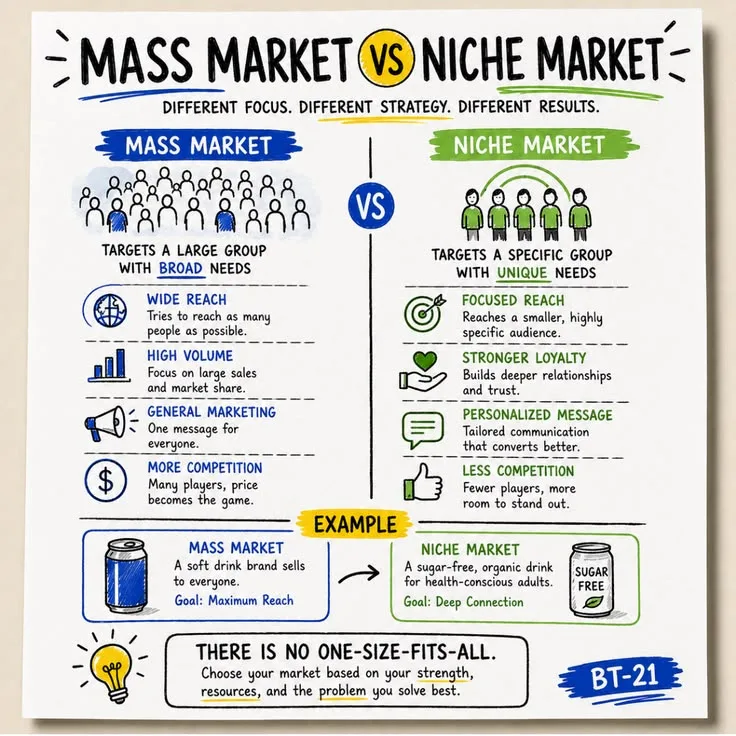
Niche: Tyler Tringas was working as a freelance web developer in 2012 when he noticed a recurring pattern in his client work. Small business owners who rented storage units, parking spaces, or equipment needed a way to accept recurring payments from their renters.
They were cobbling together solutions from QuickBooks invoicing, PayPal recurring payments, and spreadsheet tracking - a fragile combination that broke regularly and consumed hours of administrative time each month.
Tringas built Storemapper: a store locator tool for businesses with multiple locations, which he built after noticing multiple clients needed the same functionality.
The tool was not technically impressive. It was a relatively straightforward application of existing payment and database technology. But it was built specifically for one problem in one industry, using terminology that self-storage operators used, with workflows that matched how they actually ran their businesses.
By 2015, Storemapper had grown to a few hundred customers paying $29-99/month - enough to generate $50,000+ in annual recurring revenue with minimal ongoing development investment.[10]
Tringas eventually sold Storemapper to focus on teaching the "micro-SaaS" approach, which he had validated personally and observed working for dozens of other founders.[1]
The Storemapper story demonstrates the essential dynamic of niche SaaS: the market is small enough that no large software company has bothered to serve it well, the problem is specific enough that generic tools are clearly inferior, and the buyers are concentrated enough to reach through targeted distribution. These conditions together create windows where a small team with modest resources can build a profitable business that large companies cannot economically attack.[2]
"In almost every market, there is a version of the business that is right-sized. The best niche SaaS companies find the market that is big enough to sustain a great business and small enough to actually win." - Tyler Tringas, founder of Earnest Capital
Defining the Niche Sweet Spot
Not all niches are created equal. A niche that is too small cannot support a viable business; a niche that is too large attracts well-funded competitors.[6] Finding the sweet spot requires understanding the economics of the niche.
The addressable market calculation:
If a niche has N potential customers, average annual contract value is V, and the realistic market share a new entrant can achieve is S:
Revenue potential = N → V → S
For a micro-SaaS targeting $300,000/year in revenue with a $1,200/year average contract ($100/month) at 25% market penetration: N = $300,000 / ($1,200 → 0.25) = 1,000 potential customers minimum
This means a viable niche SaaS target market should have at least 1,000 potential customers - enough to build a meaningful business at 25% penetration - but ideally no more than 50,000 customers (which would attract enterprise software interest).
The sweet spot: 2,000-20,000 potential customers, paying $50-500/month, with a problem clear enough to describe in one sentence.
Vertical vs. horizontal niches:
Vertical niches are defined by industry: software for funeral homes, tools for tattoo studios, management platforms for yoga studios. The benefit: buyers share vocabulary, competitive alternatives, and distribution channels, making marketing and product development more efficient.
Horizontal niches are defined by role or function across industries: tools for freelance copywriters, software for operations managers at companies with 50-200 employees, platforms for procurement teams. The benefit: larger potential market; the challenge: harder to reach through targeted channels.
For early-stage niche SaaS, vertical niches typically produce faster time to first customer because the marketing channels are more concentrated (industry publications, conferences, associations) and word-of-mouth travels through a defined community.
Finding Profitable Niches
The most reliable niche discovery methods combine systematic search with genuine curiosity about underserved markets.[7]
Method 1: Follow your professional experience
Professional experience creates two advantages simultaneously: deep knowledge of the problems (you have experienced them firsthand) and access to potential customers (your professional network is the target market).
Former restaurant managers who build restaurant management software, ex-lawyers who build legal workflow tools, and former contractors who build field service software all start with market access and problem knowledge that outsiders cannot replicate.
Example: The founders of Procore (construction project management software, IPO 2021) had direct construction industry experience and built software to solve problems they had experienced personally.
This domain knowledge enabled them to build software that construction professionals trusted, with workflows that matched actual construction processes rather than generic project management assumptions.
Method 2: Observe what people pay for today with poor solutions
Every industry has software that is widely used despite being genuinely bad. Legacy vertical software (often 15-30 years old, with interfaces that reflect the technology of when they were built) is used grudgingly because no modern alternative exists.
Industries where the incumbent software is notoriously bad are fertile ground for modern replacements.
Example: Legal timekeeping and billing software (used by law firms to track billable hours) was dominated for decades by software that law firms universally found frustrating.
Clio (founded 2008) built a modern legal practice management platform and grew to roughly $229 million in ARR by 2023, largely by replacing genuinely bad legacy software.[4] The market was large, the pain was real, and the incumbents were not investing in modernization.
Method 3: Industry-specific forums and communities
Subreddits, industry Facebook groups, LinkedIn communities, and specialized forums are places where professionals describe their problems in their own words. Searching for phrases like "does anyone know a tool that does X" or "I hate the software I use for Y because..." reveals genuine pain points in specific markets.
Example: The Reddit community r/smallbusiness regularly contains threads from business owners describing tools they wish existed or tools they use because nothing better is available. Reading these threads systematically over several weeks reveals recurring pain points that represent genuine product opportunities.
Method 4: The "I was building custom stuff for multiple clients" pattern
Freelance developers, consultants, and agencies often build similar custom solutions for multiple clients in the same industry. When the same solution is built multiple times, that is a productization opportunity - the custom work becomes the foundation for a product.
Example: Many successful vertical SaaS companies (particularly in healthcare, legal, and financial services) were started by developers who had built custom solutions for multiple clients in the same industry.
The transition from "custom work for three dental practices" to "dental practice management software" is a common niche SaaS founding story.
The Niche SaaS Build Process
Once a niche and problem are identified, the build process for a niche SaaS MVP follows a specific sequence:
Step 1: Customer validation through interviews and shadowing
Before writing any code, conduct 15-20 interviews with people in the target niche.
The goal is not to validate that people experience the problem (you already believe that) but to understand: exactly how they experience it, what their current workaround is, how much the problem costs them (in time, errors, or missed opportunities), and what specifically they would need in a solution.
Shadowing - watching potential customers do the actual work the software would support - often reveals workflow realities that interviews miss. The way someone actually uses their current software frequently differs from how they describe using it.
Step 2: Define the "smallest full solution"
The smallest full solution is the minimum product that completely solves one specific problem for the target customer, rather than partially solving multiple problems. This is distinct from an MVP in the sense of minimum viable features - the full solution does one thing fully rather than many things partially.
Example: A scheduling tool for personal trainers should handle: client appointment booking, trainer availability management, automated reminders, and basic payment processing. This is a complete solution to the scheduling problem.
A tool that does scheduling but requires manual payment processing outside the system is not a smallest full solution - it leaves a critical workflow step unsupported and requires clients to use multiple tools.
Step 3: Build the boring parts last
Many niche SaaS founders spend months building the wrong things first: administration dashboards, settings pages, onboarding flows, and analytics before the core workflow is complete.
The core workflow - the specific set of actions the software performs that constitute its primary value - should be built first, even if it requires manual workarounds for everything else.
Example: A niche SaaS for managing pet boarding reservations should prioritize, in order: 1) Reservation creation and management, 2) Availability calendar, 3) Basic customer records, 4) Email confirmations. Payment processing, reports, automated reminders, and client portals can come later.
The business can operate manually for the secondary functions while the core workflow is proven.
Step 4: Charge from the beginning
Niche SaaS products should charge from the first customer. Not because the product is necessarily worth the price at launch, but because:
- Payment is the only unambiguous signal of sufficient value
- Early customers who pay are more engaged than early customers who do not
- Charging reveals price sensitivity early, when the product can still be adjusted
Starting with a discounted "founder's rate" (30-50% of eventual pricing) is acceptable; starting with a free trial that converts to paid is acceptable; starting with unlimited free access is not - it delays the most important validation test.[9]
Pricing Niche SaaS Correctly
Niche SaaS pricing is systematically too low. The most common niche SaaS pricing mistake is charging $20-30/month for software that saves customers several hours per month and charges clients or processes thousands of dollars in transactions.
Value-based pricing for niche SaaS:
Quantify the problem cost: If a dental practice manager spends 8 hours per month on appointment scheduling, at $25/hour opportunity cost, the problem costs $200/month. Software that reduces this to 2 hours could reasonably charge $100/month - half the cost of the current problem.
Price relative to alternatives: If the alternative is a $5,000/year legacy system plus $2,000/year in implementation and support, a modern tool at $2,400/year ($200/month) is genuinely cheaper even if it feels more expensive than what founders expect to charge.
Consider transaction volume and business revenue: Software used by businesses generating $500,000/year in revenue can be priced much higher than software used by individuals. A $200/month tool represents 0.05% of a $500,000/year business's revenue - an extremely low threshold for a tool that genuinely helps run the business.[8]
| Business Size | Typical Monthly Price | Annual Contract Value | Sales Motion |
|---|---|---|---|
| Solo professionals (1-5 people) | $30-100 | $360-1,200 | Self-serve |
| Small businesses (5-20 people) | $100-300 | $1,200-3,600 | Low-touch |
| Mid-size businesses (20-100 people) | $300-1,000 | $3,600-12,000 | Inside sales |
| Enterprise/organization level | $1,000-5,000 | $12,000-60,000 | Field sales |
Distribution Strategies for Niche SaaS
Distribution is often where niche SaaS startups struggle most. The mainstream distribution channels (Product Hunt, Hacker News, general tech press) do not reach dental practice managers, funeral home directors, or specialty contractor owners.
Effective niche SaaS distribution requires finding where the target audience actually spends time.
Industry-specific channels:
Trade associations and publications: Almost every industry has one or more trade associations that publish newsletters, run conferences, and maintain member directories.
A partnership with a trade association (advertising in their newsletter, speaking at their conference, getting listed in their resource directory) provides concentrated access to the target audience.
Industry-specific conferences: Attending conferences in the target industry as an exhibitor or speaker provides access to decision-makers who are actively engaged in their industry. Budget: $2,000-10,000 per conference, with careful tracking of leads and conversions to evaluate ROI.
Direct outreach to industry lists: Buying industry-specific lists (available through trade associations, data providers, or LinkedIn search) enables direct email or LinkedIn outreach. Effective outreach is personalized to the specific industry's problems and uses terminology familiar to practitioners.
Example: Practice management software company Kareo (now Tebra) built its early customer base almost entirely through direct outreach to independent medical practices, using lists from medical licensing databases and healthcare industry associations.
The focused channel access allowed rapid growth within a specific audience without relying on general technology marketing channels.
Defending the Niche: Building Moats Over Time
A niche SaaS product that is profitable will eventually attract competition. Building defensibility requires deliberate action.
Vertical depth as moat: A product that handles an ever-wider range of the industry's specific workflows becomes harder to replace as integration deepens.
A dental practice software that handles scheduling, billing, clinical notes, insurance claims, and patient communication is vastly harder to switch away from than one that handles only scheduling.
Network effects within the niche: Products where value increases with more users in the same industry (marketplaces, benchmarking tools, supplier networks) build network effects that advantage the market leader.
Integration with industry-specific infrastructure: Connecting to industry-standard data sources, industry-specific payment processors, regulatory reporting databases, or professional association systems creates integration depth that competitors must replicate before they can compete effectively.
Relationship and support: In niche markets where the community is small and tight-knit, reputation for exceptional support and genuine understanding of the industry's needs is a durable competitive advantage. Word-of-mouth travels fast in small industries.
See also: Micro-Startup Ideas for 2026, B2B MVP Strategies, and Validation-Driven Startup Ideas.
What Research Shows About Niche SaaS Success
Peter Thiel, in Zero to One (Crown Business, 2014), based on the Stanford course he taught that Blake Masters later compiled into the book, argues that dominating a small market before expanding is not merely a tactical preference but close to a structural requirement.
A company with a very high share of a small, well-defined market is in a fundamentally stronger competitive position than a company with a tiny share of a much larger one, even at identical revenue, because the former can set prices, build durable customer relationships, and reinvest from a position of strength.
Thiel illustrates the pattern with examples including PayPal, Amazon, and Facebook, each of which started by dominating a narrow, well-defined initial market (PayPal with eBay power sellers, Amazon with books, Facebook with Harvard) before expanding outward.
Christoph Zott at IESE Business School, whose research on business model innovation with longtime collaborator Raphael Amit spans more than a decade, has argued consistently across a body of conceptual and empirical work in journals including the Journal of Management and Strategic Organization.
His central claim is that business model design, how a company structures its value proposition, revenue mechanism, and activities around a specific customer segment, is itself a source of competitive advantage distinct from industry structure or firm resources.
Applied to niche SaaS, this body of work suggests that the business model innovation inherent in serving a specific vertical, using industry-specific terminology, workflows, and pricing structures, can create performance advantages beyond what feature differentiation alone would explain, though the specific size of that advantage in any given market is not something a single study can responsibly pin to one universal number.
The broader unit-economics case for niche SaaS is well supported by practitioner research and investor commentary, including public writing from operators like David Sacks at Craft Ventures on SaaS metrics generally.
Vertical software often benefits from lower customer acquisition costs, because industry-specific channels such as trade associations, industry publications, and professional conferences reach a target buyer more efficiently than general technology marketing.
It also tends to see higher retention, because replacing specialized software built around a specific workflow carries higher switching costs, data migration, and retraining burden than replacing a generic tool.
These structural advantages, lower CAC and higher retention working together, are the mechanism most commonly cited for why focused, vertical software businesses can generate strong unit economics relative to horizontal competitors, even though the specific percentage advantages sometimes quoted for any individual comparison should be treated as illustrative rather than as a single settled industry-wide figure.
Real-World Case Studies in Niche SaaS
Clio, the legal practice management software founded in 2008 by Jack Newton and Rian Gauvreau in Vancouver, Canada, demonstrates the niche SaaS expansion playbook executed at scale.
Clio launched targeting solo practitioners and small law firms, a segment underserved by the existing legal software market, which was dominated by expensive enterprise systems targeting large firms.
The initial product focused on core workflows including time tracking, billing, and matter management, the tasks solo practitioners reported consuming the most administrative time. Clio subsequently built an integration marketplace connecting to dozens of legal technology applications, transforming from a standalone tool into a platform layer for the legal technology ecosystem.
By 2023, Clio had reached roughly $229 million in annual recurring revenue, and by 2024 had raised a $900 million funding round (including $500M equity and $400M debt) at a $3 billion valuation, with cumulative funding across all rounds reaching well over a billion dollars, making it one of the most successful legal technology companies in history. The growth trajectory, from targeted niche entry to platform-level dominance, exemplifies the niche SaaS moat-building strategy of vertical depth.
Jobber, the field service management software for home services companies, demonstrates the niche SaaS model for offline service businesses.
Founded in 2011 by Sam Pillar and Forrest Zeisler in Edmonton, Alberta, Jobber targeted home services contractors, plumbers, electricians, HVAC technicians, and landscapers, who were managing jobs through spreadsheets, paper invoices, and phone-based scheduling.
Jobber's initial product handled the highest-friction workflows: job quoting, scheduling, and invoicing, built specifically around the terminology and workflows of home services contractors rather than generic project management language.
By 2021, Jobber's revenue had grown to roughly $60 million, around that time raising a $60 million Series C round, and the company later raised an additional $100 million Series D round in 2023 as it continued to scale, serving roughly 100,000 home services businesses.
Procore, the construction project management software that IPO'd in 2021 at a valuation near $11 billion, provides the model for niche SaaS at the largest scale.[3]
Founder Tooey Courtemanche, a construction professional himself, launched Procore in 2002 to solve the document management chaos he had experienced on construction projects: drawings, RFIs, submittals, and change orders proliferating across email, fax, and physical filing systems on every project.
Procore's niche positioning gave it advantages that generic project management tools lacked: construction-specific terminology and workflows, and integration with construction industry standards.
The company shifted to a flat-fee pricing model, unlimited users per construction company for a fixed annual fee, that aligned with construction companies' project-based revenue model, a pricing innovation tailored specifically to the industry's economics that became a significant growth driver. By its 2021 IPO, Procore served roughly ten thousand construction companies with annual revenue in the several-hundred-million-dollar range.
Kareo (which merged with PatientPop in 2021 to form Tebra), the independent medical practice management software, demonstrates niche SaaS growth through industry-specific channel dominance.
Founded in 2004 by Dan Rodrigues, Kareo targeted the specific segment of independent medical practices, primary care physicians, specialists, and small group practices, that were too small for enterprise healthcare software but too complex for generic small business tools.
Kareo grew substantially through direct outreach to independent practices identified through medical licensing databases and state medical association member lists, industry-specific distribution channels that general technology companies rarely use, reaching tens of thousands of healthcare provider customers and raising well over a hundred million dollars in funding across its history.[5]
The 2021 merger with PatientPop, which added patient engagement and digital marketing features, created a combined company subsequently valued at more than a billion dollars, demonstrating that niche SaaS companies can achieve acquisition-scale outcomes through vertical depth rather than horizontal expansion.
Sources & Further Reading
- Tringas, Tyler. "Micro-SaaS: Building Sustainable Bootstrapped Products." Earnest Capital. View source
- Walling, Rob. Start Small, Stay Small: A Developer's Guide to Launching a Startup. The Numa Group, 2010. View source
- Procore. "Procore Investor Relations." Procore. View source
- Clio. "Clio Legal Technology." Clio. View source
- Kareo (Tebra). "Tebra: Healthcare Technology." Tebra. View source
- MicroConf. "MicroConf: The Conference for Self-Funded Software Companies." MicroConf. View source
- Hiten Shah. "How to Find Profitable SaaS Niches." SaaS Weekly. View source
- Chasing Product. "Niche SaaS Pricing Strategies." Chasing Product Blog. View source
- Basecamp. "The Bootstrapper's Bible." Basecamp. View source
- Baremetrics. "MRR Benchmarks for SaaS." Baremetrics. View source