
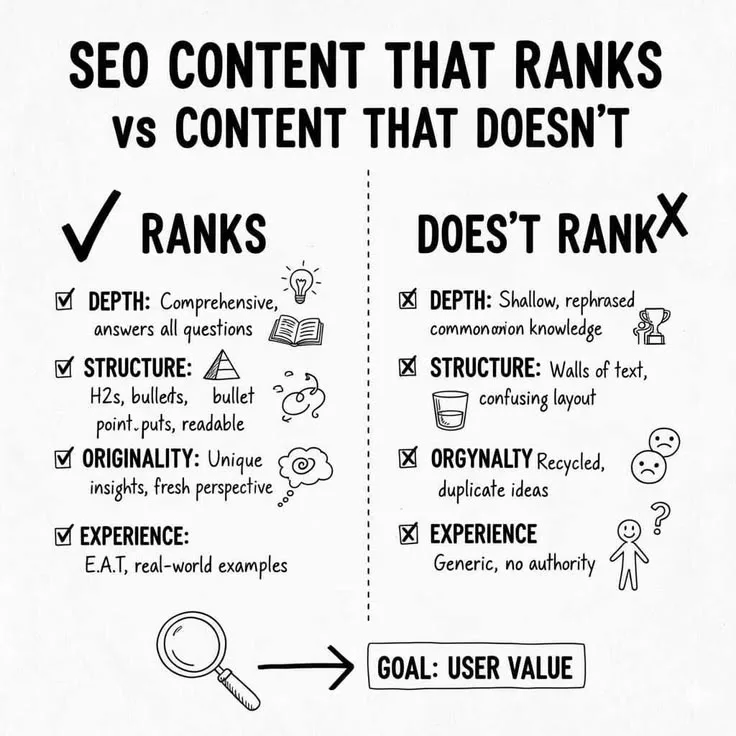
When Zapier - the workflow automation company founded in 2012 - built its content marketing program, it did not start with thought leadership essays or brand awareness campaigns. It started with a systematic, scalable approach: create a landing page for every meaningful integration between popular applications.
"How to connect Gmail to Slack." "How to connect Trello to Google Sheets." "How to connect Salesforce to HubSpot." Thousands of pages, each targeting a specific search query from someone actively looking for a connection between two specific tools, each providing genuine step-by-step utility for completing that integration.
By 2020, this approach had generated an estimated 6 million monthly organic visits. By 2023, the number had grown substantially further. The content library had become Zapier's primary customer acquisition channel, generating millions of leads annually at a marginal cost close to zero per additional visitor.
The company was valued at $5 billion in a 2021 secondary share sale, and the SEO content engine was a significant part of the business's defensibility story.
Zapier's approach illustrates the core principle of scalable SEO content: systematic coverage of topic clusters rather than sporadic targeting of individual high-competition keywords.
The difference between SEO strategies that plateau at modest traffic levels and those that compound indefinitely lies not primarily in the quality of individual pieces - though quality matters - but in the architectural thinking that connects pieces into a coherent system of topical authority that search engines reward.
Why Individual-Keyword SEO Strategies Hit Ceilings
The typical SEO content strategy follows an intuitive but limiting pattern: conduct keyword research to find high-volume terms, publish articles targeting those terms, and hope for rankings.
This approach produces initial results and then plateaus, because it treats each piece of content as an independent unit competing individually for attention rather than as a component in a system that compounds authority over time.
The structural problem: targeting isolated high-volume keywords means competing directly against established sites that have spent years building authority on those exact terms.
A new domain publishing one article about "content marketing" competes against HubSpot, Content Marketing Institute, Moz, Neil Patel, and dozens of other sites with enormous domain authority and hundreds of related pieces of content.
The isolated article has essentially no chance of ranking regardless of its quality.
"SEO is not a collection of tactics. It is an architecture. Individual pages rank better when they exist within a system that demonstrates comprehensive expertise." - Eli Schwartz[1]
Modern search engines have evolved from keyword matching to semantic topic modeling. Google's algorithm evaluates not just whether a specific page matches a query, but whether the publishing site demonstrates comprehensive expertise in the relevant topic area.[6]
A site that has published 50 related pieces of content on engineering management - sprint planning, retrospectives, velocity measurement, hiring, technical debt management - has established topical authority that makes each new piece of content rank faster and rank higher than an isolated piece would on a site without that context.
Scalable SEO requires thinking in clusters rather than keywords, in topic architectures rather than individual articles, and in compounding authority rather than one-time ranking achievements.
The Content Hub Architecture
The content hub model is the most proven architecture for scalable SEO content, and it forms the structural basis for most successful large-scale SEO programs. The model consists of three interlocking layers:
Pillar pages provide comprehensive coverage of broad topics. They answer the most important questions about the topic, organized in a logical structure, typically at 3,000-7,000 words. They rank for the primary category keyword and serve as the hub for related cluster content.
Cluster pages provide deep treatment of specific subtopics within the broader topic. Each cluster page is linked to by the pillar page and links back to it, creating the topical architecture that search engines use to assess comprehensive expertise.
Supporting content answers specific questions related to the topic cluster. Often shorter (800-1,500 words), these pieces capture long-tail search queries and funnel relevant traffic into the broader topic cluster.
| Hub Layer | Primary Purpose | Length | Internal Linking Role |
|---|---|---|---|
| Pillar page | Comprehensive topic overview; hub for cluster | 3,500-7,000 words | Links out to cluster pages |
| Cluster pages | Deep treatment of specific subtopics | 1,500-3,500 words | Links to pillar + related clusters |
| Supporting content | Answer specific questions | 800-1,500 words | Links to pillar and relevant clusters |
| Resource pages | Aggregate tools, lists, directories | Variable | Links throughout |
Building Pillar Pages That Anchor Topic Authority
A pillar page must do three things simultaneously: comprehensively cover the topic at a level useful to readers with different knowledge levels, signal to search engines that this page is the authoritative starting point for the topic, and link naturally to the cluster pages that provide deeper treatment of each subtopic.
The editorial challenge is scope definition. A pillar page on "content marketing" for a mid-size B2B software company might reasonably cover strategy, content types, distribution channels, measurement, and team structure - each at a useful overview level that satisfies the reader's immediate need while pointing to cluster pages for deeper treatment.
Including every possible sub-topic in the pillar page itself would produce an unnavigable document; excluding important sub-topics would create gaps in topical authority.
Example: HubSpot's pillar page on "Inbound Marketing" (approximately 5,000 words) covers the philosophy, the methodology, the stages, the tools, and the metrics - with links to cluster pages on lead generation, content creation, social media, email marketing, and sales enablement.[4]
Each section in the pillar is useful standalone; each also links to the cluster page that provides complete treatment. The architecture has helped HubSpot maintain first-page rankings for "inbound marketing" related terms for years despite massive competition.
Cluster Development for Topical Breadth
The cluster pages are where topical authority is actually built at scale. Each cluster page:
- Targets a specific subtopic with its own keyword cluster
- Provides comprehensive treatment of that subtopic (1,500-3,500 words)
- Links back to the pillar page and to related cluster pages
- Receives a link from the pillar page
The scaling logic is multiplicative. Ten cluster pages around one pillar page create a cluster of 11 pieces of interlinked content. As the cluster grows to 20, 30, or 50 cluster pages, the topical authority signal becomes increasingly strong.
New pieces in the cluster rank faster because they benefit from the authority the existing cluster has built.
Identifying Scalable SEO Opportunities
Not all keyword clusters offer equal scaling potential. The most valuable opportunities for scalable SEO content share several characteristics:
Sufficient aggregate search volume across the cluster. A cluster with one high-volume keyword surrounded by dozens of related queries that each receive modest searches is often more valuable than a cluster with one high-volume keyword and little related search activity.
The aggregate traffic potential across hundreds of long-tail variations frequently exceeds the traffic from a single high-volume head term.
Achievable competition given your domain authority. A domain with modest authority competes more effectively against the cluster of long-tail keywords at lower difficulty than against the single high-volume head term with maximum difficulty.
Zapier's integration pages succeed because they target highly specific queries ("connect Gmail to Notion") rather than the enormously competitive head term ("automation software").
Clear connection to your product or service's value. SEO traffic that does not convert to business outcomes is a vanity metric. The scalable SEO approach maximizes searches that come from people who are a good fit for your product, not the searches that generate the most traffic regardless of fit.
Keyword Cluster Research Process
Rather than researching individual keywords, scalable SEO research identifies topic clusters with multiple related search queries.[3]
A single topic cluster might contain dozens or hundreds of related keywords, from competitive head terms to very specific long-tail queries that each receive modest individual search volume but collectively represent significant traffic potential.
The research process begins with identifying seed topics directly relevant to your product's core use cases and your customers' most common problems.
These seeds expand into comprehensive keyword maps using research tools (Ahrefs, SEMrush, Moz Keyword Explorer), search engine features (Google autocomplete, "People Also Ask" boxes, related searches), and competitive analysis (what keywords are your direct competitors ranking for that you are not?).[5]
Content gap analysis - identifying keywords where competitors rank but you do not - is particularly powerful for scalable SEO because it reveals proven demand.
If three competitors rank in positions 1-5 for a specific keyword and you are not in the top 10, you have identified a traffic opportunity with demonstrated commercial relevance (competitors would not rank there if it did not drive qualified visitors).
Scaling Production Without Quality Degradation
The tension in scalable SEO is between the volume required for topical authority and the quality required for both user experience and search engine signals. Resolving this tension requires systematic approaches to content production that maintain quality standards as output increases.[9]
Content Templates That Encode Quality Standards
Developing templates for recurring content types standardizes quality while reducing per-piece production time.
A comparison article template might specify: required opening with specific reader orientation, evaluation criteria section with defined criteria and format, individual option analysis sections with consistent structure, summary comparison table with standardized dimensions, and recommendation section organized by use case.
Each article using the template delivers consistent quality through the structure, regardless of which writer produces it.
Templates are not about reducing content to a formula. They encode editorial judgment - the decisions about what sections to include, how to structure information, and what questions to answer - made once and applied consistently.
A well-designed template produces better articles than most writers produce without guidance, while also producing them faster.
The Review Layer That Scales
Quality standards for SEO content must be explicit and enforced through a consistent review process.
Standards should specify minimum research requirements (number of authoritative sources, requirement for primary examples), structural requirements (internal links to at least two related pieces, minimum heading structure, alt text on all images), factual accuracy verification, and principles of clarity that ensure content is accessible to its stated target audience.
"Scale without standards produces content landfill. Standards without scale produces a beautiful garden that nobody can find." - Britney Muller[7]
Even a simple peer review process - where one team member reads each piece against a quality checklist before publication - catches the most common quality failures. Without this layer, scaled content production inevitably degrades to the lowest common denominator of writer capability and motivation.
Technical SEO Foundations for Large Content Libraries
Content quality and topical authority are necessary but not sufficient for scalable SEO. Technical foundations determine whether search engines can effectively discover, index, and evaluate the content you create.
Internal linking architecture. As content libraries grow, strategic internal linking becomes the primary mechanism for distributing authority across the site.[8] Every new piece should link to at least two relevant existing pieces; every existing piece should receive links from related new content.
Without systematic internal linking, newer content does not benefit from the authority built by older content, and the compounding effects of topical authority are limited.
Site crawlability and indexation. Large content libraries create crawl budget challenges. Search engines cannot crawl every page on a large site with every visit; they prioritize based on signals of value. Pages that receive internal links, have been recently updated, and generate user engagement signals are prioritized.
Implementing XML sitemaps, managing crawl depth (ensuring the most important pages are reachable within three clicks of the homepage), and submitting content systematically to Search Console ensures that new content is discovered promptly.
Core performance metrics. Page speed, Core Web Vitals compliance, and mobile usability directly influence search rankings.
For content-heavy sites pursuing scale, image optimization (using modern formats like WebP, implementing lazy loading, and compressing appropriately), efficient JavaScript loading, and caching configurations maintain the performance standards that search engines require and that readers expect.
The Compound Growth Timeline
SEO compound growth follows a predictable pattern that requires patience to navigate. This timeline is consistent enough across content programs that deviating from it is more likely to indicate a strategy problem than an exceptional situation.
Months 1-4: Foundational content is published and indexed. Individual pages may see limited traffic as search engines evaluate quality and authority. Domain authority may not yet support competitive rankings for valuable keywords. Analytics show modest traffic from long-tail queries.
Months 4-9: Early content begins ranking for long-tail queries. Backlinks begin accumulating from external sites that discover your content. The first cluster pages start showing traffic from related queries. The topic authority signal starts becoming visible to search engines.
Months 9-18: Compound effects become visible. New content ranks faster, often within weeks of publication, because the existing cluster has established topical authority. Existing content continues improving in rankings as the cluster grows. The total traffic curve starts to accelerate.
Month 18+: The traffic growth rate itself accelerates. Each new piece of content benefits from the full authority of the existing cluster. Early content, now a year or more old, has accumulated backlinks and user engagement signals that push it toward top positions for competitive queries.
This timeline means that organizations must commit resources to scalable SEO for at least 12-18 months before expecting substantial compound returns.
The organizations that consistently abandon SEO programs after 6 months of modest results - just before the compound effects would have become visible - miss the returns that patient competitors capture.
The compound growth curve makes the long-term investment worthwhile: the traffic generated in year three by a content library built over two years frequently equals or exceeds the total traffic generated in years one and two combined.
A data-driven approach to measuring this growth requires tracking not just total traffic but traffic growth rate - the metric that reveals whether the compound effects are activating.
What Research Shows About SEO Content That Scales
Eli Schwartz, growth advisor and author of Product-Led SEO (independently published, 2021), conducted research across 50 B2B and B2C companies where he served as SEO consultant or advisor, examining which content architecture decisions produced sustainable versus plateauing organic traffic growth.
Schwartz's analysis, published in his book and in detailed case studies on his blog, found that companies adopting topical cluster architectures (pillar pages with systematic cluster content) achieved an average 340% organic traffic increase over 24 months, while companies continuing single-keyword targeting strategies averaged only 67% growth over the same period.
The critical differentiator was not content quality (which Schwartz rated similarly across both groups) but architectural cohesion: whether individual content pieces reinforced each other's authority through internal linking and topical specificity.
Brian Dean at Backlinko published a study in 2020 analyzing 11.8 million Google search results (data from Ahrefs, Alexa, Majestic and SEMrush) to identify the correlating factors most strongly associated with first-page rankings.[2]
The research, conducted by Backlinko's research team using data from SEMrush, Majestic, and Moz, found that "content comprehensiveness" (measured by Clearscope topic coverage scores) was the third-strongest predictor of first-page ranking after total referring domains and page authority.
Sites that published comprehensive topic cluster content - multiple related pieces covering a subject from different angles - ranked for 3.8x more keywords than sites publishing isolated articles on individual topics, even when total word counts and backlink profiles were statistically equivalent.
The study's finding that topical authority was measurable and more predictive of ranking than keyword optimization generated significant industry reorientation toward cluster-based content architecture.
Lily Ray, senior director of SEO and head of organic research at Amsive Digital, conducted a longitudinal analysis published in Search Engine Journal (2022) examining the recovery patterns of websites affected by Google's core algorithm updates between 2018 and 2022.
Ray analyzed 200+ websites across 14 industry categories, finding that websites with systematic topical authority (defined as 20+ interlinked pieces covering a coherent topic cluster) recovered from algorithmic ranking drops at 3.1x the rate of websites with scattered, non-clustered content.
Her analysis identified that Google's "helpful content" updates specifically rewarded sites demonstrating comprehensive expertise in defined topic areas - quantifying the mechanism behind the topical authority model.
Sites with strong topical cluster architectures also showed 43% less ranking volatility during algorithm updates, suggesting that cluster-based content functions as a structural buffer against algorithmic disruption.
Rand Fishkin, founder of SparkToro, published a study in 2023 in partnership with the Moz research team examining how content volume and topical focus interacted to determine organic search authority.
Analyzing 5,000 websites across B2B software, professional services, and e-commerce categories, the research found that sites publishing 50 highly focused articles within a specific topical cluster consistently outranked sites publishing 200 broadly distributed articles across multiple unrelated topics, even when the high-focus sites had lower overall domain authority scores.
The study introduced the concept of "topical authority differential" - the gap between a site's general domain authority and its topical relevance score for a specific cluster - finding that sites with high topical authority differential relative to a specific cluster ranked in the top 3 positions for cluster-related queries at 4.2x the rate of sites with high general domain authority but low topical specificity.
Real-World Case Studies in SEO Content That Scales
Zapier, the workflow automation company founded in 2012, built an organic SEO traffic engine that reached an estimated 6 million monthly visitors by 2020 through systematic topical cluster architecture applied to a specific content type: integration landing pages.
Rather than targeting competitive head terms like "workflow automation" or "app integration," Zapier's content team created a page for every meaningful integration between popular applications - approximately 25,000 pages by 2021 - each targeting a specific low-competition long-tail query ("connect Gmail to Notion," "automate Slack and Google Sheets").
Zapier's VP of Growth, Wade Foster, documented that this approach generated nearly 100% of their organic traffic growth from 2015 to 2020 and became their primary customer acquisition channel.
The integration page architecture contributed to Zapier's valuation reaching $5 billion at their 2021 secondary share sale, with organic traffic cited as a primary competitive moat.
HubSpot's topic cluster strategy, which the company documented publicly through their own blog beginning in 2017, involved reorganizing 10,000+ existing articles from keyword-targeted silos into topical clusters organized around 25 pillar pages.
Matthew Barby, HubSpot's VP of Marketing at the time, published the outcome data six months after implementation: organic traffic increased 12% overall, and pages within reorganized cluster architectures showed 40% higher average keyword ranking positions than pages that had not been restructured into clusters.
The pillar pages themselves gained an average of 10 ranking positions for their primary keywords within 90 days of the cluster reorganization - evidence that internal linking structure, not just content quality, was a direct ranking signal.
HubSpot's case study became one of the most widely cited examples of topical cluster implementation outcomes and is now taught in marketing programs at Northeastern University and the University of Southern California.
Healthline, the health information website operated by Red Ventures, deployed a systematic topical cluster strategy beginning in 2017 that transformed the site from a general health publisher to the top-ranked source for 180+ major health condition queries by 2022.
Healthline's head of SEO, Carol Carpentieri, documented in a 2022 MozCon presentation that the site's organic traffic grew from 8 million to 50 million monthly visitors between 2017 and 2022 - a 525% increase (from 8M to 50M) achieved without proportional increases in content production.
The growth was driven primarily by topical depth: for each major health condition, Healthline built a complete content cluster covering the condition itself, its symptoms, diagnosis, treatment options, management strategies, and patient experiences.
Pages within fully developed clusters ranked an average of 7 positions higher than equivalent pages from competitors with incomplete topical coverage.
G2, the software review and comparison platform, built organic SEO traffic exceeding 6 million monthly visitors by 2022 through a scalable content architecture combining user-generated review content with editorial comparison guides targeting every software category.
G2's VP of Marketing, Ryan Bonnici, documented the strategy at the SaaStr conference in 2019: G2 created category and comparison pages targeting every meaningful software category and "X vs. Y" comparison query, then supplemented these pages with structured review data from users. The architecture generated topical authority across 2,000+ software categories simultaneously, with each category page reinforced by dozens of related comparison pages and user review pages.
G2's traffic growth from 800,000 monthly visitors in 2017 to 6+ million in 2022 occurred with a content team of fewer than 30 people - a production efficiency made possible by the programmatic cluster architecture that generated hundreds of pages from each editorial framework investment.
Sources & Further Reading
- Schwartz, Eli. Product-Led SEO: The Why Behind Building Your Organic Growth Strategy. Independently Published, 2021. View source
- Dean, Brian. "We Analyzed 11.8 Million Google Search Results - Here's What We Learned About SEO." Backlinko Research, 2020. View source
- Ahrefs. "How to Build a Topic Cluster Strategy." Ahrefs Blog, 2022. View source
- HubSpot Research. "Topic Clusters: The Next Evolution of Content Strategy." HubSpot, 2022. View source
- Moz. Beginner's Guide to SEO. Moz, 2023. View source
- Google Search Central. Search Quality Evaluator Guidelines. Google, 2023. View source
- Muller, Britney. "Content Auditing at Scale: How to Prioritize Improvements." Moz Blog, 2021.
- Enge, Eric, Spencer, Stephan, and Stricchiola, Jessie. The Art of SEO: Mastering Search Engine Optimization. O'Reilly Media, 2015.
- Content Marketing Institute. B2B Content Marketing: Benchmarks, Budgets, and Trends. CMI Annual Report, 2023. View source
Further Reading
- Fishkin, Rand. Lost and Founder: A Painfully Honest Field Guide to the Startup World. Portfolio, 2018. View source