
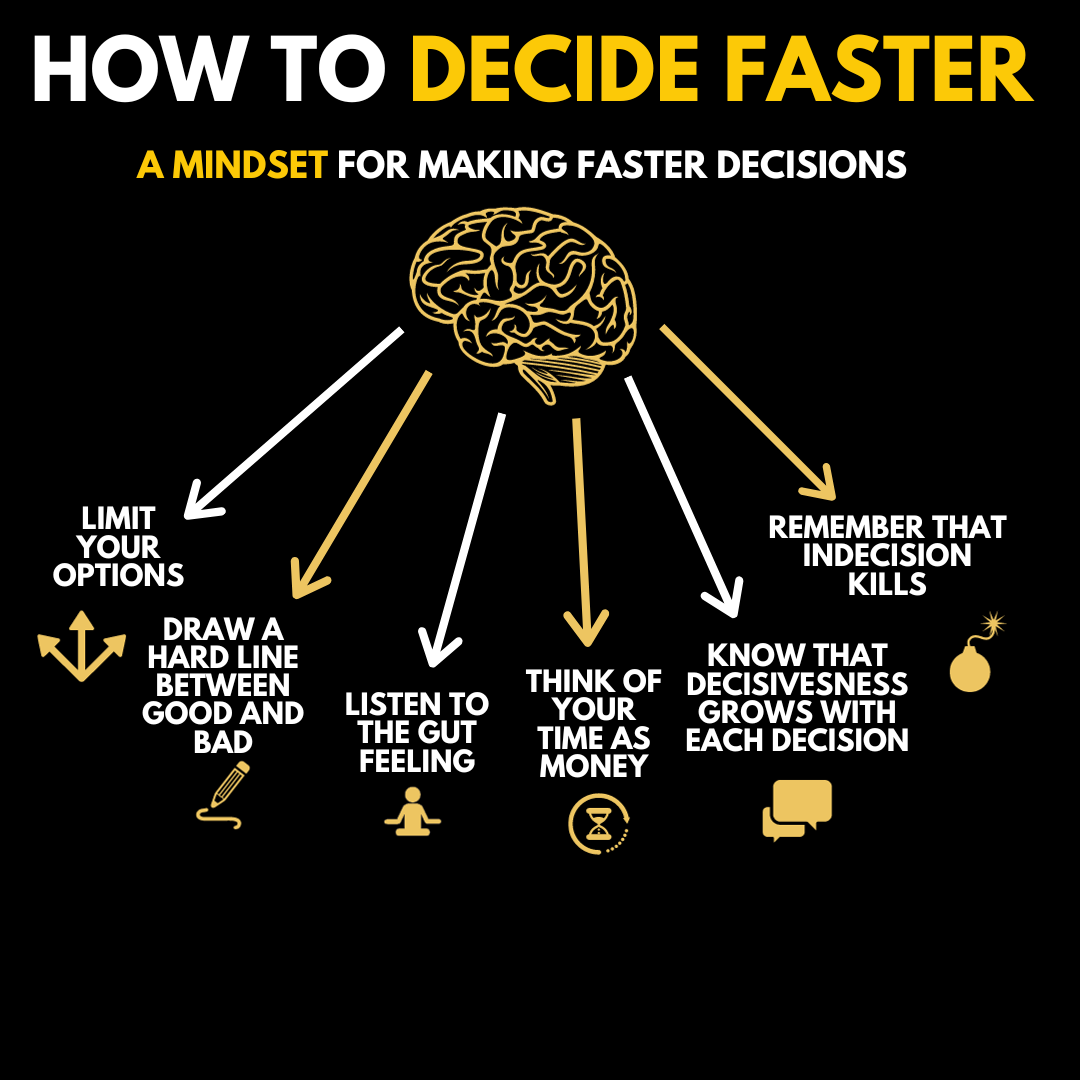
Speed: On January 15, 2009, US Airways Flight 1549 struck a flock of Canada geese shortly after takeoff from LaGuardia Airport in New York City. Both engines lost power.
Captain Chesley "Sully" Sullenberger had approximately 208 seconds-three minutes and twenty-eight seconds-from the moment of the bird strike to the moment the aircraft touched down on the Hudson River.
In those 208 seconds, he had to diagnose the situation (dual engine failure), evaluate options (return to LaGuardia, divert to Teterboro Airport in New Jersey, or ditch in the Hudson River), make a decision, and execute it.
Sullenberger chose the Hudson River. The decision saved all 155 people on board. But here is the part of the story that is less often told: the National Transportation Safety Board later ran simulations where pilots attempted to return to LaGuardia or divert to Teterboro after a dual engine failure at the same altitude and distance.
In the simulations where pilots immediately turned back-with zero deliberation time-some succeeded. But in simulations where pilots took even 35 seconds to assess the situation before turning back, as any real pilot would, every attempt to reach a runway failed. The aircraft did not have enough altitude or energy to reach any airport.
Sullenberger's decision was brilliant not because he chose the theoretically optimal option-we cannot know that with certainty-but because he correctly identified the decision as one where speed mattered more than optimality. He needed an option that was good enough and executable immediately, not the perfect option that required deliberation he could not afford.
A pilot who spent 60 seconds analyzing all three options in search of the optimal choice would have found himself with an aircraft too low and too slow for any option to work.
"The cumulative weight of all that experience, all those decisions, all that learning, was very much with us in those 208 seconds." - Chesley "Sully" Sullenberger
Now consider a different decision. In 2000, AOL announced its merger with Time Warner in what was then the largest corporate merger in history, valued at approximately $165 billion (creating a combined company worth about $350 billion). The deal was widely celebrated at the time.
AOL's executives moved aggressively and quickly, driven by the urgency of locking in their sky-high stock valuation before the dot-com bubble burst. Time Warner's board, despite reservations from some members, approved the deal rapidly.
Within two years, the merged company had lost over $200 billion in market value. By 2009, Time Warner spun off AOL entirely. The merger is now considered one of the worst business decisions in corporate history.
The speed with which it was executed-driven by the fear of missing a market window-meant that fundamental questions about cultural compatibility, strategic rationale, and integration planning were never adequately analyzed.
This was a decision where accuracy mattered far more than speed, but the decision-makers treated it as though speed were paramount.
What's the speed-accuracy tradeoff? Faster decisions have higher error rates; more accurate decisions take longer. In every decision, there exists a fundamental tension between the benefits of acting quickly and the benefits of deliberating carefully.
Moving faster means acting with less information, less analysis, and less verification which increases the probability of error. Moving slower means gathering more information, conducting more analysis, and checking more thoroughly which increases the probability of making the right choice but also increases the cost of delay.
This tradeoff is not merely a practical inconvenience. It is a fundamental constraint of decision-making that cannot be eliminated, only managed.
Understanding how to manage it-when to move fast, when to slow down, and how to calibrate your pace to the specific characteristics of each decision-is one of the most valuable skills any decision-maker can develop.
The Mechanics of the Speed-Accuracy Tradeoff
Why the Tradeoff Exists
The speed-accuracy tradeoff exists because information, analysis, and verification take time, and the quality of a decision generally improves as more time is spent on these activities-but with diminishing returns.
Consider a simplified model: You need to decide whether to launch a new product. At time zero, you have a rough intuition about whether the product will succeed-maybe 60 percent accurate. After one week of market research, your accuracy improves to 70 percent.
After one month of detailed analysis, customer interviews, and competitive assessment, your accuracy reaches 80 percent. After six months of comprehensive testing including a pilot launch, focus groups, and financial modeling, your accuracy reaches 85 percent.
Several things are apparent from this pattern:
The first increment of time produces the largest accuracy gain. Going from 60 percent to 70 percent accuracy (10 percentage point improvement) took one week. Going from 80 percent to 85 percent (5 percentage point improvement) took five additional months. The marginal value of additional time decreases as you invest more of it.
Perfect accuracy is usually impossible regardless of time invested. Even after six months, accuracy is only 85 percent. Many decisions involve genuine uncertainty that cannot be resolved through more analysis.
The product might fail for reasons that no amount of pre-launch research could have predicted: a competitor launches a better product, the economy enters recession, a key technology fails to work at scale, or customer preferences shift unexpectedly.
Time is not free. While you are deliberating, the market is moving, competitors are acting, costs are accumulating, and opportunities are opening and closing. The cost of delay is not zero-it includes missed opportunities, accumulated expenses, competitive disadvantage, and organizational paralysis.
A decision that is 80 percent accurate and executed today may produce better outcomes than a decision that is 85 percent accurate but executed six months from now.
The Information Value Curve
The relationship between time spent and decision quality typically follows a curve with three distinct phases:
Phase 1: Rapid improvement (low-hanging fruit). The first investment of time produces large accuracy gains because easy-to-obtain information (readily available data, obvious considerations, basic analysis) has not yet been incorporated. This phase is short-hours to days for most decisions.
Phase 2: Moderate improvement (diminishing returns). Additional time produces smaller accuracy gains because the remaining information is harder to obtain, more ambiguous, or less directly relevant. This phase can last days to weeks.
Phase 3: Minimal improvement (plateau). Further time investment produces negligible accuracy gains because the decision involves genuine uncertainty that additional analysis cannot resolve. At this point, more analysis feels productive but is not-it is analysis paralysis, the illusion of progress through continued deliberation.
The optimal decision point is typically somewhere in Phase 2: past the point where easy gains have been captured but before the point where additional time produces negligible improvement. Identifying this point in practice is one of the core challenges of decision-making.
When Should You Prioritize Speed?
When should you prioritize speed? Speed should be prioritized when decisions are reversible, when stakes are low relative to the cost of delay, when time-sensitive opportunities will be lost, or when the cost of delay exceeds the cost of error.
Reversible Decisions
The single most important factor in calibrating speed vs. accuracy is reversibility. A reversible decision-one that can be undone or modified if it proves wrong-has a fundamentally different risk profile than an irreversible decision.
When a decision is reversible, the cost of error is limited to the cost of reversing it (plus any interim damage). When a decision is irreversible, the cost of error is permanent.
Examples of highly reversible decisions:
- Choosing which software tool to use for a project (can switch later)
- Setting an initial price for a product (can adjust based on market response)
- Assigning a person to a task (can reassign if it is not working)
- Launching a marketing campaign (can modify or stop based on results)
- Choosing a restaurant for dinner (the worst outcome is a mediocre meal)
For reversible decisions, speed should almost always be prioritized because the downside of being wrong is small and recoverable, while the downside of being slow includes the opportunity cost of delayed action and the cognitive cost of prolonged deliberation about something that does not warrant extended thought.
Jeff Bezos formalized this insight in his 2015 letter to Amazon shareholders by distinguishing between "Type 1 and Type 2 decisions":
Type 1 decisions are irreversible, one-way doors. Once you walk through, you cannot come back. These decisions require careful, methodical, deliberate analysis. Examples: major acquisitions, entering new markets with large capital commitments, hiring senior executives, public commitments.
Type 2 decisions are reversible, two-way doors. If you walk through and do not like what you find, you can come back. These decisions should be made quickly by individuals or small groups. Examples: product features, pricing experiments, process changes, tool selection.
Bezos argued that one of the most common organizational dysfunctions is treating Type 2 decisions like Type 1 decisions-applying the slow, deliberate process appropriate for irreversible decisions to decisions that could easily be reversed.
This results in organizational slowness without a corresponding improvement in decision quality, because the decisions being deliberated over were low-risk to begin with.
"Most decisions should be made with somewhere around 70% of the information you wish you had. If you wait for 90%, in most cases, you're probably being slow." - Jeff Bezos
Time-Sensitive Opportunities
Some opportunities have expiration dates. A competitor's temporary weakness, a market window opened by regulatory change, a customer's immediate need, a technology breakthrough that creates first-mover advantage-these opportunities reward fast action and penalize deliberation.
Case study: Netflix vs. Blockbuster. In 2000, Netflix co-founder Reed Hastings offered to sell Netflix to Blockbuster for $50 million. Blockbuster's CEO John Antioco and his team considered the offer but ultimately declined.
Blockbuster then spent years deliberating about how to respond to the emerging threat of online DVD rental and later streaming.
Each year of deliberation reduced Blockbuster's strategic options. By the time Blockbuster launched its own online service, Netflix had an insurmountable lead in subscribers, content deals, and streaming technology. Blockbuster filed for bankruptcy in 2010. Netflix is now worth over $200 billion.
Blockbuster's failure was not a failure of analysis-the company's executives understood the threat. It was a failure of speed. The deliberate, cautious decision-making process that served Blockbuster well in the stable video rental market was catastrophically slow in the rapidly changing digital entertainment market.
Case study: Amazon Web Services. When Amazon launched AWS in 2006, the market for cloud computing infrastructure barely existed. Amazon moved fast-offering basic services (storage with S3, computing with EC2) before the offerings were polished or comprehensive.
Early AWS was rough, limited, and occasionally unreliable. But by moving fast, Amazon established the dominant position in cloud computing before competitors like Google, Microsoft, and IBM fully committed to the market.
By the time those competitors entered with arguably superior technology, Amazon had a massive head start in customer relationships, ecosystem development, and operational expertise. AWS now generates over $80 billion in annual revenue.
Low Stakes Relative to Delay Cost
Many everyday decisions are low-stakes by their nature: which email to respond to first, what to eat for lunch, which route to take to work, how to phrase a message. For these decisions, the cost of being wrong is trivially small, but the cost of deliberation-the time and mental energy spent deciding-is disproportionately large.
Research by Kathleen Vohs and colleagues demonstrated that decision fatigue is real: making many deliberate decisions depletes cognitive resources, leading to worse decisions later. By spending analytical capacity on low-stakes decisions, you reduce the capacity available for high-stakes decisions where analysis actually matters.
The practical implication: develop defaults, habits, and rules of thumb for low-stakes decisions so that you do not waste analytical capacity on choices that barely matter. Barack Obama famously wore only gray or blue suits to eliminate one daily decision.
Steve Jobs wore the same black turtleneck and jeans every day for the same reason. These are extreme examples, but the principle applies broadly: automate or habitualize low-stakes decisions to preserve analytical capacity for the decisions that matter.
"You need to focus your decision-making energy. You need to routinize yourself. You can't be going through the day distracted by trivia." - Barack Obama
When Should You Prioritize Accuracy?
When should you prioritize accuracy? Accuracy should be prioritized when decisions are irreversible, when stakes are high, when the cost of error is catastrophic, or when you have time to deliberate without significant opportunity cost.
Irreversible Decisions
Decisions that cannot be undone or that are extremely costly to reverse demand careful analysis. The asymmetry between the cost of taking a little more time and the cost of making a permanent mistake is enormous:
Examples of irreversible or difficult-to-reverse decisions:
- Firing an employee (damaging relationship, legal exposure, loss of institutional knowledge)
- Acquiring a company (integration commitments, financial obligations, cultural disruption)
- Signing a long-term contract (locked-in terms, penalties for early termination)
- Making a public statement (cannot be unsaid; reputational consequences may be permanent)
- Releasing a product with safety-critical defects (harm to users, liability, regulatory action)
- Surgery (physical alterations that cannot be undone)
For these decisions, the cost of additional deliberation (days, weeks, or even months of analysis) is almost always smaller than the cost of making the wrong choice.
An acquisition that destroys $10 billion in shareholder value because due diligence was rushed to close the deal quickly represents a catastrophic failure of speed-over-accuracy prioritization.
High-Stakes Decisions with Asymmetric Consequences
Some decisions have asymmetric consequences: the downside of being wrong is much larger than the upside of being right. When this asymmetry exists, accuracy should be heavily prioritized because the expected cost of error outweighs the expected benefit of speed.
Example: Pharmaceutical drug approval. The FDA takes years to approve new drugs not because bureaucrats enjoy paperwork but because the asymmetry of consequences demands caution. Approving a safe drug too slowly delays patient access-a real cost.
But approving an unsafe drug too quickly can cause widespread harm or death. The asymmetry (potential mass harm from a bad approval versus delayed access from slow approval) justifies the emphasis on accuracy.
Example: Bridge engineering. A civil engineer designing a bridge could move faster by reducing safety margins, simplifying analysis, and skipping redundant calculations. The bridge would probably be fine. But the asymmetry is extreme: if the bridge fails, people die.
The engineer prioritizes accuracy (large safety margins, thorough analysis, multiple verification steps) because the cost of structural failure is catastrophically higher than the cost of slower construction.
Example: Criminal sentencing. The legal principle "better that ten guilty persons escape than that one innocent suffer" (Blackstone's ratio) explicitly prioritizes accuracy over speed in the context of criminal justice, because the asymmetry of consequences (imprisoning an innocent person versus failing to imprison a guilty one) demands a high evidentiary bar.
"In questions of science, the authority of a thousand is not worth the humble reasoning of a single individual." - Galileo Galilei
When Information Is Available and Obtainable
If the information needed to make a better decision is readily available and can be obtained quickly, there is no reason not to obtain it. The speed-accuracy tradeoff becomes a real tradeoff only when obtaining additional information requires significant time, effort, or cost.
Example: Before hiring a contractor, checking their references takes an afternoon. The information is readily available, the cost of obtaining it is minimal, and the value (avoiding a bad contractor) is significant. Skipping reference checks to save a few hours is poor speed-accuracy calibration.
Example: Before merging two companies, conducting thorough due diligence takes months and costs millions. The information is expensive and time-consuming to obtain. The question of how much due diligence to conduct involves a genuine tradeoff between the cost of additional investigation and the risk of undiscovered problems.
What's the Cost of Being Too Slow?
What's the cost of being too slow? Excessive deliberation produces several categories of cost:
Missed Opportunities
Markets move. Competitors act. Customer needs evolve. Technology advances. An opportunity that exists today may not exist tomorrow.
A company that spends a year deliberating about entering a market may find, when it finally decides to enter, that a competitor has already established a dominant position, that customer preferences have shifted, or that the market window has closed entirely.
Case study: Kodak and digital photography. Kodak actually invented the first digital camera in 1975. Steven Sasson, the Kodak engineer who built it, demonstrated the technology to Kodak's executives, who recognized its potential but spent decades deliberating about how to respond.
Kodak's core business was film, and digital photography threatened to cannibalize it. Rather than moving quickly to establish a position in digital photography, Kodak moved cautiously, protecting its film business while incrementally exploring digital.
By the time Kodak fully committed to digital, Canon, Nikon, Sony, and eventually smartphone manufacturers had captured the market. Kodak filed for bankruptcy in 2012.
The cost of Kodak's deliberation was not just the failure to enter digital photography quickly-it was the loss of the option to enter at all. Each year of delay reduced Kodak's strategic options until none remained.
Analysis Paralysis
Extended deliberation can become self-reinforcing: the more you analyze, the more complexity you discover, the more analysis you feel is needed, and the cycle continues until the decision is either forced by external events or abandoned entirely.
Analysis paralysis is especially common for decisions where:
- Many options exist (the paradox of choice-more options make deciding harder)
- Options are similar in quality (when all options are roughly equal, choosing among them feels difficult even though the decision barely matters)
- Uncertainty is irreducible (more analysis cannot resolve the uncertainty, but the discomfort of uncertainty drives continued analysis)
- The decision-maker fears being wrong (perfectionism drives continued deliberation in search of a certainty that does not exist)
The antidote to analysis paralysis is recognizing that in many situations, making any reasonable decision and adjusting based on results produces better outcomes than extended deliberation in search of the perfect decision. This is particularly true for reversible decisions where the cost of course correction is low.
Opportunity Cost of Delayed Action
Every day spent deliberating about a decision is a day that could have been spent acting on that decision-and learning from the results.
This is the insight behind the Lean Startup methodology's emphasis on "build, measure, learn": rather than spending months planning the perfect product, build a minimum viable product quickly, measure customer response, and learn from the data.
The learning from real-world action is often more valuable than the analysis that would have preceded it.
Example: A team deliberating for three months about the perfect feature set for a new software product could instead build and ship a basic version in one month, gather two months of real user data, and have empirical evidence about what features actually matter.
The three months of deliberation produces hypotheses; the one month of building plus two months of data produces evidence.
Organizational Costs
Slow decision-making has organizational consequences beyond the specific decision:
Demotivation. When employees propose initiatives and then wait weeks or months for leadership approval, motivation erodes. The energy and enthusiasm that accompanied the proposal dissipate during the waiting period. By the time the decision is made (even if it is a yes), the proposers have lost their momentum.
Loss of credibility. Organizations known for slow decision-making struggle to attract talent, partners, and customers who value responsiveness. In competitive markets, reputation for speed is a strategic asset.
Accumulated decision debt. Deferred decisions do not disappear-they accumulate. An organization that defers ten decisions this month has twenty deferred decisions next month and thirty the month after. The accumulated weight of unresolved decisions creates organizational paralysis and strategic drift.
What's the Cost of Being Too Fast?
What's the cost of being too fast? Excessive speed produces its own category of costs:
Poor Decisions Requiring Reversal
A decision made too quickly may prove wrong, requiring reversal-and reversal is almost always more expensive than the original decision. Undoing a merger is far more expensive than the merger itself. Reversing a product launch requires recalls, customer communication, and reputation management.
Firing someone hired too quickly wastes the recruitment cost, the training investment, and the team disruption.
Case study: Quibi. The streaming service Quibi launched in April 2020 after raising $1.75 billion from investors. The company's leadership moved aggressively to launch, committing enormous resources to content production and marketing. Within six months, Quibi shut down.
The rapid launch ignored fundamental questions about whether consumers wanted the product (short-form premium content for mobile viewing). A slower approach-testing assumptions, piloting with limited content, validating demand before scaling-might have revealed the product-market fit problem before $1.75 billion was spent.
Rework Costs
Fast decisions often produce work that must be redone when the decision proves wrong or incomplete. In software development, this is called "technical debt"-quick implementation decisions that create long-term maintenance burdens.
In construction, it is literal rework-tearing out work that was done incorrectly because specifications were not adequately reviewed. In organizational design, it is restructuring-undoing a reorganization that did not achieve its objectives.
Rework is always more expensive than doing the work correctly the first time. The general estimate in software engineering is that fixing a defect in production costs 10 to 100 times more than fixing it during design.
The general estimate in construction is that rework accounts for 5 to 20 percent of total project cost. These costs are the direct consequence of decisions made too quickly for the level of accuracy required.
"Move fast and break things. Unless you are breaking stuff, you are not moving fast enough." - Mark Zuckerberg
Credibility Damage
Leaders who make impulsive decisions that are frequently reversed lose the trust and confidence of their teams. When the boss announces a new strategic direction every few weeks, each announcement is met with diminishing attention and commitment.
"Wait until next week-he'll change his mind" becomes the organization's coping mechanism for fast but inconsistent leadership.
Credibility, once damaged by a pattern of impulsive decisions, is difficult to rebuild. The leader's future decisions-even well-considered ones-are viewed with skepticism.
Preventable Errors with Cascading Consequences
Some errors, once made, trigger cascading consequences that amplify far beyond the original mistake. A rushed hiring decision that places an incompetent person in a critical role affects every project that person touches, every team member who must compensate for their deficiencies, and every customer who receives substandard work.
The original decision-a few days of interview time saved by skipping reference checks-cascades into months of organizational damage.
Can You Get Both Speed and Accuracy?
Can you get both speed and accuracy? Partially-through expertise, good mental models, checklists, decision frameworks, and recognizing decision types. But the fundamental tradeoff remains; you cannot eliminate it, only manage it more effectively.
Building Expertise
Expert decision-makers are faster and more accurate than novices because their expertise compresses the speed-accuracy tradeoff. An experienced doctor diagnoses common conditions faster and more accurately than a resident. An experienced programmer identifies bugs faster and more accurately than a junior developer.
Expertise does not eliminate the tradeoff-experts still face situations where they must choose between speed and accuracy-but it shifts the curve, allowing higher accuracy at any given speed.
"Intuition is nothing more and nothing less than recognition." - Herbert Simon
Using Decision Frameworks
Frameworks like Bezos's Type 1/Type 2 classification accelerate the meta-decision (how much time to spend deciding) so that more time is available for the actual decision. Rather than deliberating about how long to deliberate, quickly classify the decision and apply the appropriate process.
Pre-committing to Decision Criteria
Deciding in advance what criteria you will use and what thresholds will trigger action reduces deliberation time when the decision moment arrives.
"If our customer churn exceeds 5 percent for two consecutive months, we will launch a retention initiative" is a pre-committed decision that can be executed immediately when the trigger is met, without the delay of debating whether the churn level warrants action.
Establishing Organizational Decision Norms
Organizations can build speed-accuracy calibration into their culture through explicit norms:
- "Reversible decisions are made by the team closest to the information, within 48 hours."
- "Irreversible decisions require written analysis and review by [specific role], with no minimum timeline."
- "When in doubt about whether a decision is Type 1 or Type 2, treat it as Type 2."
These norms prevent the common organizational pathology of applying the same deliberation process to every decision regardless of its characteristics.
What's Bezos' Framework for This?
What's Bezos' framework for this? Jeff Bezos distinguishes between Type 1 (irreversible) decisions, which should be made slowly and carefully, and Type 2 (reversible) decisions, which should be made fast with approximately 70 percent of the information you wish you had.
The key insight is matching the decision-making method to the decision type.
Bezos adds a specific quantitative guideline: "Most decisions should probably be made with somewhere around 70 percent of the information you wish you had. If you wait for 90 percent, in most cases, you're probably being slow."
This 70 percent heuristic captures the diminishing-returns nature of the information value curve: the first 70 percent of information is relatively easy to obtain and produces large accuracy gains. The last 30 percent is expensive to obtain and produces marginal accuracy gains.
For Type 2 decisions, the cost of waiting for that last 30 percent-in time, opportunity, and organizational energy-usually exceeds the accuracy benefit.
Bezos also emphasizes the importance of disagree and commit: when a decision has been debated and a decision-maker has been designated, those who disagree should commit fully to executing the decision rather than continuing to argue.
This principle accelerates organizational action by preventing post-decision deliberation from consuming the time that should be spent on execution.
The framework's power is its simplicity and actionability. It does not require elaborate analysis to apply. It requires only two judgments: Is this decision reversible? And do I have roughly 70 percent of the information I need?
If reversible and you have 70 percent of the information, decide now. If irreversible, invest the time to get as close to full information as practical.
Practical Decision Speed Calibration
For Individual Decisions
Step 1: Classify the decision. Reversible or irreversible? High-stakes or low-stakes? Time-sensitive or time-available?
Step 2: Set a time budget. Based on the classification, allocate a specific amount of time to the decision. Trivial reversible decisions: seconds to minutes. Important reversible decisions: hours to a day. Important irreversible decisions: days to weeks. Transformative irreversible decisions: weeks to months.
Step 3: Gather information within the time budget. Focus on the highest-value information first (what would change your decision if you knew it?). Stop when the time budget expires or when additional information is not changing your assessment.
Step 4: Decide and act. Make the best decision available with the information you have. Accept that the decision may not be optimal. Commit to executing it fully.
Step 5: Monitor and adjust. After executing, observe results. If the decision was wrong and is reversible, reverse it quickly. If partially wrong, adjust. Use the outcome to calibrate your speed-accuracy balance for future similar decisions.
For Organizational Decision-Making
Create decision categories with explicit process expectations for each:
| Decision Category | Examples | Process | Timeline |
|---|---|---|---|
| Routine operational | Tool selection, meeting scheduling, minor process changes | Individual or team decides, no approval needed | Same day |
| Significant operational | Hiring, budget allocation within approved limits, feature prioritization | Manager decides with team input | 1-5 days |
| Strategic | Market entry, major product decisions, organizational restructuring | Leadership team analysis and discussion | 1-4 weeks |
| Transformative | Acquisitions, fundamental business model changes, major capital investments | Board-level analysis with external input | 1-6 months |
The goal is not to prescribe exact timelines but to prevent misclassification-the organizational tendency to apply strategic-level deliberation to routine decisions, which is the most common cause of organizational slowness.
The speed-accuracy tradeoff is not a problem to be solved but a reality to be navigated. Every decision involves a choice about how much time to invest, and that choice itself is a decision-one that can be made well or poorly.
The best decision-makers develop calibrated judgment about this meta-decision: they move fast when speed matters, slow down when accuracy matters, and recognize which situation they are in before committing to a pace.
This calibration-like all expertise-develops through practice, feedback, and honest reflection on both the decisions that benefited from speed and the decisions that suffered from haste.
The AOL-Time Warner Merger: Billions Lost to Speed Over Analysis
The January 2000 announcement of AOL's merger with Time Warner is one of the most studied cases of speed overriding accuracy in corporate decision-making. The deal itself was valued at approximately $165 billion, a roughly 70 percent premium on Time Warner's stock, creating a combined company with a total market value on the order of $350 billion at announcement.
AOL's stock was trading at valuations that its own executives privately acknowledged were unsustainable. The urgency behind the merger was AOL's need to convert its inflated stock into hard assets before the dot-com bubble deflated. That urgency translated directly into a compressed due diligence process, with Time Warner's board voting to approve the proposal within weeks of receiving it.
The cultural incompatibility between AOL's freewheeling internet culture and Time Warner's traditional media culture was never seriously analyzed. The financial projections underpinning the deal's rationale were based on broadband adoption curves that proved wildly optimistic.
The deal is widely cited in business literature as a paradigm case of merger haste: the tendency for transformative deals to be rushed precisely because their scale and audacity create excitement that suppresses critical analysis. When both boards are enthusiastic and investment bankers are generating large fees, the institutional momentum toward consummation becomes very difficult for individual voices of caution to resist.
By early 2003, the combined company had recorded a $99 billion write-down for fiscal year 2002, the largest in corporate history at that time. By December 2009, Time Warner had spun off AOL entirely, in a deal valuing it at a little over $3 billion, down from the roughly $165 billion AOL side of the original merger a decade earlier.
Former Time Warner CEO Gerald Levin gave a widely covered interview marking the deal's tenth anniversary in 2010, in which he publicly took responsibility for what he called "the worst deal of the century" and apologized for the losses the merger caused shareholders and employees, a rare and striking instance of a CEO publicly owning a decision of this scale.
Kathleen Eisenhardt's Research: Fast Decisions Are Better in Volatile Markets
The academic literature on speed vs. accuracy in strategic decision-making is anchored by Kathleen Eisenhardt's landmark 1989 study in the Academy of Management Journal, "Making Fast Strategic Decisions in High-Velocity Environments." Eisenhardt studied eight microcomputer firms during the highly competitive mid-1980s, comparing the strategic decision processes of the fastest and slowest decision-making organizations and correlating decision speed with financial performance.
The central finding challenged the intuitive assumption that slower decisions are more accurate: the fastest decision-makers also made better decisions than the slower ones, but only when they used specific practices. Fast but poor decisions came from executives who relied exclusively on intuition or acted without data.
Fast and good decisions came from executives who simultaneously tracked multiple alternatives rather than developing one option at a time, sought advice from a broad set of counselors rather than just the hierarchical chain, and accelerated final consensus by resolving disagreements through direct executive intervention rather than extended committee deliberation.
As Eisenhardt put it in her own published summary of the findings, fast decision-makers used more, not less, information than slow decision-makers, drawing on real-time data from multiple sources rather than relying solely on sequential reports moving up a hierarchy.
The slow organizations in her study did not gather more information; they gathered the same information over a longer period, often while consuming time in political negotiation rather than substantive analysis.
A related study, Eisenhardt and Bourgeois's 1988 paper "Politics of Strategic Decision Making in High-Velocity Environments," also published in the Academy of Management Journal, found that political behavior, coalition-building, information hoarding, interpersonal maneuvering, increased decision time without improving decision quality, and that this political behavior was significantly higher in centralized, hierarchical organizations.
The policy implication: speed and accuracy are not fundamentally in opposition. The practices that make organizations politically slow, sequential information gatekeeping, hierarchical approval chains, consensus-building through committee, do not produce better decisions; they produce slower ones.
Decision Fatigue Research: Why Speed-Accuracy Calibration Degrades Over Time
The speed-accuracy tradeoff is not static throughout a decision-making session. Research on decision fatigue suggests that the ability to calibrate pace appropriately, knowing when to slow down for accuracy, can degrade as cognitive resources are depleted, though some of the underlying research has itself been debated.
Shai Danziger's Israeli parole board study (2011): Researchers Shai Danziger, Jonathan Levav, and Liora Avnaim-Pesso analyzed 1,112 parole board decisions made over about 10 months by eight experienced Israeli judges, published in the Proceedings of the National Academy of Sciences.
The dataset revealed a striking pattern: favorable rulings, granting parole, were around 65 percent right after a break, declined toward nearly 0 percent by the end of a session, then reset to around 65 percent after the next break.
The original authors interpreted this as judges defaulting to the low-effort, safer choice, denying parole, as cognitive resources depleted over a session. The study is widely cited in behavioral economics as evidence that judicial decision quality can shift over the course of a session and that seemingly trivial factors, such as meal timing, correlate with high-stakes outcomes.
The finding has also drawn methodological criticism: a later reanalysis argued that case-ordering effects, such as unrepresented prisoners or more routine cases being systematically scheduled later in a session, could account for some of the pattern, rather than mental fatigue alone. The original authors have defended their interpretation, and the debate over the precise mechanism remains active in the literature, but the underlying data pattern itself is well documented.
The parole board finding has plausible implications for speed-accuracy calibration: important decisions that arise late in a long session, after many other decisions, may be more likely to receive cursory treatment regardless of their actual importance.
Kathleen Vohs and Roy Baumeister's decision depletion research: Vohs, at the University of Minnesota, and Baumeister, then at Florida State University, conducted a series of experiments suggesting that the act of making choices, regardless of the importance of the choices, can deplete self-regulatory resources that affect subsequent decision quality and self-control.
In some of their studies, participants who made a series of consumer choices subsequently performed worse on attention and persistence tasks than participants who had merely evaluated the same products without choosing.
The broader theoretical framework behind this research, often called ego depletion, has faced significant scrutiny in psychology: a large multi-lab replication effort published in 2016 found an effect close to zero, and the underlying theory remains a subject of active debate among researchers, even as Vohs and Baumeister have disputed aspects of that replication's design. The practical implication some researchers still draw, that decision-making quality may be partly a function of prior decision load, should be treated as a plausible but contested hypothesis rather than settled fact.
The Lean Startup Evidence: Fast Experimentation as an Accuracy Strategy
Eric Ries's Lean Startup methodology, introduced in his 2011 book and applied across thousands of product development contexts since, challenges the conventional framing of speed versus accuracy as opposites.
Ries argues that in domains of genuine uncertainty, new product development, new market entry, new business model exploration, fast iteration can produce more accurate information than slow analysis, because the environment is the only reliable source of ground truth.
The Build-Measure-Learn cycle in practice: Ries drew on his experience at IMVU, a social networking startup, and from studying companies including Toyota, Intuit, and Dropbox, to develop the Minimum Viable Product concept: build the smallest version of a product that allows you to test a specific hypothesis, measure customer response, and learn whether the hypothesis was correct.
The alternative, spending months or years building a more complete product before testing, produces higher analytical certainty about the product but lower accuracy about whether customers actually want it.
Steve Blank, a Stanford-affiliated entrepreneurship educator and one of the intellectual originators of the customer development methodology underlying Lean Startup, described the approach's core logic in a widely read 2013 Harvard Business Review article, "Why the Lean Start-Up Changes Everything": that a startup is fundamentally a search for a repeatable, scalable business model, not the execution of a known plan, and that searching quickly through direct customer contact beats searching slowly through internal analysis.
The difference this approach is meant to produce is in when assumptions about customer preferences get corrected: errors surfaced through early, low-cost testing are corrected before they are embedded in a full product, while the equivalent errors in a fully-built-first approach are typically discovered only after significant capital has already been committed to those assumptions.
Dropbox's pre-product validation: Drew Houston validated demand for Dropbox, a cloud file synchronization service, before writing production code, by posting a short demonstration video explaining the product concept to an early online audience.
Accounts of exactly when this happened vary in secondary sources, but the commonly documented outcome is that Dropbox's beta waitlist grew from roughly 5,000 to roughly 75,000 signups virtually overnight after the video spread, for a product that did not yet fully exist.
Houston then built the product knowing that validated demand existed. The alternative approach, spending many months building the product before testing demand, would have delayed the product's launch without necessarily improving the accuracy of the underlying market hypothesis.
In this case, a low-cost, fast test, posting a video, produced highly informative evidence about market demand far faster than an extended period of traditional market research would have.
The limits of the lean approach: Lean startup methods optimize for learning quickly in conditions of genuine uncertainty. They are not appropriate for all decisions.
Safety-critical systems, medical devices, aircraft components, infrastructure software, cannot be validated through MVP iteration on real users, because the cost of failure during testing is unacceptable.
Regulated industries where market entry requires full regulatory approval cannot compress the validation cycle through iterative deployment. And decisions where first-mover advantage is modest and competitor response is slow may benefit from slower, more thorough product development rather than rapid MVP iteration.
Ries has explicitly acknowledged these boundaries in subsequent writing, noting that the Lean methodology emerged from, and is best suited to, consumer software development in competitive markets, contexts where the cost of a failed MVP is low and the benefit of rapid market feedback is high.
- Russo, J.E. & Schoemaker, P.J.H. Winning Decisions: Getting It Right the First Time. Doubleday, 2002.