
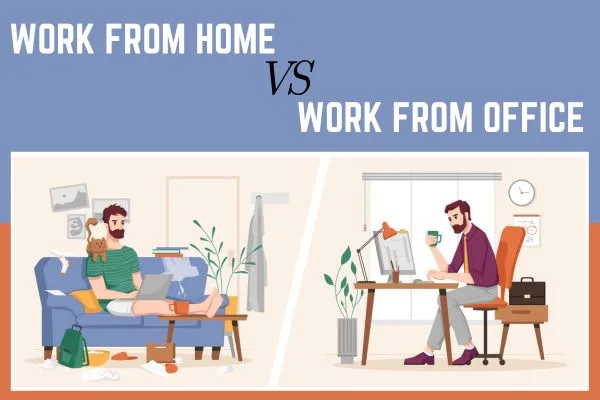
In March 2020, the world ran the largest unplanned experiment in the history of work. Within weeks, hundreds of millions of knowledge workers shifted from office-based work to remote work as governments implemented lockdowns in response to the COVID-19 pandemic.
Companies that had spent years debating whether remote work was viable were forced to implement it overnight.
The results surprised many managers. Productivity did not collapse. In a survey of 800 employers conducted by Mercer in 2020, 94 percent reported that productivity was the same or higher than before the pandemic.
A study by Bloom, Liang, Roberts, and Ying of Stanford University found that remote workers at a Chinese travel agency were 13 percent more productive than their office-based counterparts, with the improvement attributed to fewer breaks and sick days, a quieter working environment, and the elimination of commuting.
But the results also revealed problems. Microsoft's analysis of its own workforce data, published in Nature Human Behaviour in 2022, found that the shift to remote work made collaboration networks more siloed and static.
Workers communicated more within their immediate teams but less across organizational boundaries, reducing the weak ties that facilitate information flow and innovation.
A study by Gibbs, Mengel, and Siemroth published in 2023 found that while total hours worked increased for remote workers, the additional hours were primarily in meetings, with actual focused work time remaining flat or declining.
The pandemic did not prove that remote work is better or worse than office work. It demonstrated that both have significant advantages and significant limitations, and that the optimal arrangement depends on the work being done, the people doing it, and the organizational systems that support them.
"Remote work is not a privilege or a perk. It is a different way of working - one that requires deliberate systems, explicit communication, and intentional culture building." - Sid Sijbrandij
What Are the Advantages of Remote Work?
What are advantages of remote work? Remote work offers flexibility in where and often when work happens. It eliminates commuting, which for many workers is the single largest daily time cost that produces zero value.
It enables access to global talent, allowing organizations to hire the best person for a role regardless of geographic location.
It provides quiet environments for focused deep work, free from the interruptions of open-plan offices. It offers autonomy that many knowledge workers find motivating.
And it is often better for people with disabilities, chronic health conditions, or caregiving responsibilities who find traditional office attendance difficult or impossible.
Flexibility and autonomy. Remote work allows workers to structure their day around their energy levels, personal obligations, and individual working styles. A parent can work during school hours, attend a midday school event, and resume work in the evening.
A night owl can do their most demanding work at 10 PM when their cognitive performance peaks. An introvert can work without the social energy drain of an open-plan office.
This flexibility is not a trivial perk-research by Bloom and colleagues found that the value workers place on the option to work from home is equivalent to approximately 8 percent of their salary.
Elimination of commuting. The average American commute is approximately 27.6 minutes each way, or nearly an hour per day. For workers in major metropolitan areas, commutes of 60 to 90 minutes each way are common.
Remote work eliminates this time cost entirely, returning to workers between 5 and 15 hours per week that were previously spent in cars, buses, and trains. Beyond time savings, eliminating commutes reduces stress, transportation costs, and carbon emissions.
Access to global talent. A company headquartered in San Francisco that requires in-office work can hire only from the Bay Area labor market-one of the most expensive in the world.
A remote-first company can hire from anywhere, accessing talent that is less expensive, more diverse, and potentially more skilled than what is available in any single geographic market.
GitLab, a company that has been fully remote since its founding in 2014, has employees in more than 65 countries.
Deep work environments. Open-plan offices, which approximately 70 percent of American workers occupy, are among the worst environments for focused cognitive work. Research by Kim and de Dear found that the loss of sound privacy was the single biggest source of dissatisfaction in open-plan offices.
Remote workers, particularly those with dedicated home offices, can create environments optimized for concentration-quiet, free from visual distractions, and controlled for temperature and lighting.
What Are the Advantages of Office Work?
What are advantages of office work? Office work provides spontaneous collaboration through hallway conversations, shared meals, and impromptu whiteboard sessions. It makes relationship building and trust development easier, particularly for new employees and junior staff who benefit from proximity to experienced colleagues.
It creates clearer boundaries between work and personal life through physical separation. It provides mentorship opportunities through observation and informal learning.
And it gives workers access to specialized equipment, meeting rooms, and other resources that may not be available at home.
Spontaneous collaboration. The most frequently cited advantage of office work is the informal, unplanned interaction that physical proximity enables. The conversation in the kitchen that reveals a shared problem between two teams.
The hallway encounter where a colleague mentions a customer issue you had not heard about. The whiteboard session that starts as a quick question and evolves into a creative breakthrough.
Research on innovation supports the value of these interactions. Allen's research at MIT found that the probability of two people communicating on a regular basis decreases exponentially with distance, even within the same building what is now known as the Allen Curve.
People seated more than 30 meters apart communicate as infrequently as people in different buildings. Physical proximity creates communication opportunities that are difficult to replicate digitally.
"The probability of communication between any two people in the same organization falls off very rapidly with distance. People who sit together talk together." - Thomas J. Allen
However, the value of spontaneous interaction is often overstated. Most hallway conversations are social, not work-related. Most open-plan office interactions are interruptions, not collaborations. And the most important creative work typically requires deep, sustained focus which office environments often undermine.
The challenge is designing office environments that enable productive spontaneous interaction without destroying the focused work that the interaction is supposed to support.
Relationship building and trust. Trust develops more quickly and more deeply through in-person interaction than through digital communication.
Nonverbal cues-body language, facial expressions, tone of voice, physical presence-convey information about trustworthiness, engagement, and emotional state that video calls capture imperfectly and text-based communication does not capture at all.
For new employees, relationship building is especially important: understanding organizational culture, identifying mentors, building a professional network, and learning the unwritten rules of how the organization actually works.
Work-life boundaries. The physical separation between office and home creates a natural boundary between work and personal life. You leave work when you leave the office.
Remote work dissolves this boundary: the workplace is also the living space, and the transition between "at work" and "not at work" requires discipline that many workers find difficult to maintain.
A survey by Buffer in 2023 found that "not being able to unplug" was the second most common challenge reported by remote workers.
Which Is More Productive?
Which is more productive? It depends on the work type and the individual. Remote work is generally better for deep work-tasks requiring sustained concentration such as writing, programming, analysis, and design.
Office work is generally better for collaborative work-tasks requiring real-time interaction, brainstorming, negotiation, and collective problem-solving. Productivity varies significantly by person, role, home environment, and organizational culture.
The research is mixed and context-dependent:
Evidence favoring remote productivity: Bloom et al.'s 2015 study at Ctrip (a Chinese travel agency) found a 13 percent productivity increase for remote workers.
A 2024 Nature randomized trial by Bloom, Han, and Liang found that hybrid work (working from home two days per week) had no negative effect on productivity while significantly improving employee satisfaction and reducing turnover.
Evidence favoring office productivity: Microsoft's 2021 study found that remote work reduced cross-team collaboration.
Brucks and Levav's research published in Nature in 2022 found that video calls produced fewer creative ideas than in-person meetings, suggesting that remote work may impair certain types of collaborative creativity.
The nuanced reality: Productivity is not a single dimension. A software engineer might write more code from home (fewer interruptions, deeper focus) but miss design discussions that would have improved the code's architecture (fewer spontaneous interactions).
A marketing team might produce deliverables faster remotely (less meeting overhead) but produce less innovative campaigns (less creative cross-pollination). The productivity question cannot be answered in the abstract-it must be answered for specific types of work in specific organizational contexts.
| Dimension | Remote Work | Office Work |
|---|---|---|
| Deep focused work | Generally better (quiet, fewer interruptions) | Generally worse (open plans, interruptions) |
| Brainstorming/ideation | More difficult (constrained by video format) | Generally better (whiteboard, spontaneous) |
| Relationship building | Slower, requires deliberate effort | Faster, happens naturally through proximity |
| Work-life balance | Flexible but blurred boundaries | Structured but inflexible |
| Commute time | Zero | Significant daily time cost |
| Mentorship | Harder, must be intentional | Easier through observation and proximity |
| Talent access | Global labor market | Local labor market only |
| Cost | Lower for employer (less real estate) | Higher for employer (office space, utilities) |
| Inclusion | Better for some (disabilities, caregivers) | Can exclude those unable to commute |
| Culture building | Requires intentional design | Develops more organically |
What's Harder Remotely?
What's harder remotely? Building relationships, especially across teams and with new employees. Mentorship through observation and informal learning. Spontaneous collaboration that generates unexpected ideas. Separating work time from personal time.
Ensuring inclusion across locations when some employees are remote and others are co-located.
The mentorship challenge is especially significant. Junior employees in traditional offices learn enormous amounts through osmosis-overhearing how a senior colleague handles a difficult phone call, watching how a manager navigates a political situation, absorbing organizational culture through daily exposure.
This informal, observational learning is nearly invisible but enormously valuable. Remote work eliminates it almost entirely, requiring mentorship to become explicit and intentional rather than implicit and ambient.
"In a distributed team, nothing happens accidentally. Onboarding, culture, mentorship, relationships - all of it must be designed." - Doist Team
The loneliness problem. Social isolation is one of the most consistent complaints of remote workers.
Gallup's research on employee engagement identifies social connection as a fundamental driver of engagement, and remote workers consistently report lower social connection than office-based counterparts.
For extroverted individuals who derive energy from social interaction, remote work can be particularly draining.
What's Harder in the Office?
What's harder in office? Deep focused work in open-plan environments where interruptions are constant. Accommodating different schedules and working styles. Collaborating with team members in other time zones. Providing the flexibility that many modern workers expect.
And the real estate and facilities costs that office space entails for employers.
The open-plan office paradox. Open-plan offices were designed to promote collaboration, but research consistently shows they achieve the opposite.
A study by Bernstein and Turban published in the Philosophical Transactions of the Royal Society found that when organizations transitioned from private offices to open-plan layouts, face-to-face interaction decreased by approximately 70 percent while electronic communication increased.
Workers compensated for the loss of privacy by putting on headphones and sending messages instead of talking-creating a worse version of remote work within a physical office.
Is Hybrid the Best of Both Worlds?
Is hybrid the best of both? Hybrid arrangements-some days in the office, some days remote-can combine the benefits of both, but poorly implemented hybrid work risks being the worst of both.
Without intentional design, hybrid creates a two-tier culture where in-office employees have better visibility, more face time with leadership, and more influence than their remote counterparts. It creates coordination overhead as teams must constantly negotiate who is in the office on which days.
And it can result in employees commuting to the office only to spend the day on video calls with colleagues who are working from home.
When hybrid works well, it is because the organization has been intentional about what happens in the office versus at home. In-office days are reserved for collaboration, relationship building, and activities that benefit from physical proximity.
Remote days are reserved for focused individual work. The schedule is predictable enough that teams can coordinate shared in-office time.
When hybrid works poorly, it is because the arrangement is unstructured-"come in whenever you want"-which results in employees arriving to find empty offices and no in-person collaboration to justify the commute.
Or it is because managers treat in-office employees as more committed, more visible, or more promotable than remote employees, creating a proximity bias that disadvantages remote workers.
Dropbox coined the term "Virtual First" for its hybrid approach: the default mode of work is remote and asynchronous, with offices repurposed as "collaboration studios" for in-person meetings, team events, and social connection.
This approach treats remote as the norm rather than the exception, avoiding the two-tier problem by ensuring that organizational systems, communication practices, and cultural norms are designed for distributed work.
"The future of work isn't remote or office. It is intentional - deciding where work happens based on what the work actually requires." - Nicholas Bloom
Can Remote Work Create Equal Culture?
Can remote work create equal culture? It requires intentional design. Async-first communication means decisions and information are documented in writing rather than communicated verbally in meetings where only some employees are present.
Documentation practices ensure that organizational knowledge is accessible to everyone regardless of location or time zone.
Explicit norms replace the implicit norms that develop naturally in co-located environments. And the organization must not privilege co-located employees with better access to leadership, information, or career advancement.
GitLab, the world's largest all-remote company with over 2,000 employees across 65+ countries, has published an extensive handbook documenting its remote work practices. Key principles include:
- Handbook-first: Everything is documented. If information is not in the handbook, it does not exist as organizational policy.
- Asynchronous by default: Most communication happens through written messages, documents, and recorded videos rather than synchronous meetings. This accommodates time zone differences and gives everyone equal access to information.
- No hallway decisions: Decisions made informally must be documented and communicated to all relevant stakeholders. The spontaneous hallway conversation that is an advantage of office work becomes a disadvantage in hybrid environments when it excludes remote workers from decision-making.
- Results over hours: Performance is measured by output and results, not by hours worked or hours visible online.
Building a strong remote culture is not easier or harder than building a strong office culture-it is different. Office culture develops organically through shared physical space, daily interactions, and ambient social information.
Remote culture must be deliberately designed, explicitly communicated, and consistently maintained through written documentation, structured rituals, and intentional social connection.
What Works Best Depends on What?
What works best depends on what? The optimal work arrangement depends on work type, company size, existing culture, team distribution, role requirements, and individual preferences. There is no universal answer because the variables are too numerous and the interactions between them are too complex.
Work type matters most. Roles requiring long periods of focused individual work (software development, writing, data analysis, design) benefit more from remote flexibility.
Roles requiring frequent, spontaneous collaboration (early-stage product development, executive leadership, crisis management) benefit more from physical proximity. Most roles involve a mix of both, which is why hybrid arrangements are popular despite their complexity.
Company stage matters. Early-stage startups, where culture is being formed, product-market fit is being sought, and iteration speed is critical, may benefit from the high-bandwidth communication that co-location provides.
Mature companies with established processes, documented systems, and clear role definitions can more easily distribute work across locations.
Individual variation matters. Some people thrive working from home: they have dedicated workspace, they are self-motivated, they prefer autonomy, and they find in-person interaction draining.
Others languish: they lack workspace, they struggle with self-direction, they need social energy, and they find isolation demoralizing. Any work arrangement that ignores individual variation will fail a significant portion of the workforce.
The debate between remote work and office work often assumes that one arrangement must be universally better. This assumption is wrong.
The question is not "remote or office?" but "what arrangement, for which people, doing which work, in which organizational context, produces the best outcomes?" The answer will be different for every organization, every team, and every individual-and it will change over time as circumstances evolve, technologies develop, and norms shift.
Nicholas Bloom's Stanford Research: The Most Comprehensive Data on Remote Work Productivity
Nicholas Bloom, professor of economics at Stanford University, has conducted or collaborated on the largest body of rigorous empirical research on remote work outcomes, spanning from his landmark 2015 Ctrip study through the COVID-19 pandemic's natural experiment.
The Ctrip experiment (2010-2015): Bloom's foundational study, conducted with James Liang, John Roberts, and Zhichun Jenny Ying, randomly assigned 255 volunteers at Chinese travel company Ctrip to work from home four days per week for nine months.
The study found a 13 percent productivity increase for remote workers, attributable to a quieter working environment (fewer breaks and interruptions), fewer sick days (home-workers came to "work" when mildly ill rather than staying home entirely), and slightly longer working hours.
The study also documented costs: remote workers reported higher levels of loneliness and were less likely to receive promotions during the trial period. When given the choice at the study's conclusion, more than half of the remote workers asked to return to the office, citing social isolation and the career cost of reduced visibility.
The COVID-19 natural experiment findings: Bloom, working with Jose Maria Barrero and Steven Davis through the Survey of Working Arrangements and Attitudes (SWAA)-which tracked 40,000 US workers monthly from May 2020 through 2023-documented the largest dataset on remote work preferences and outcomes ever assembled.
Key findings as of their 2023 Journal of Economic Perspectives analysis:
- Workers value the option to work from home two to three days per week at approximately 8 percent of their salary-meaning they would accept an 8 percent pay cut to maintain a hybrid arrangement.
- Fully remote workers (five days per week at home) show productivity levels approximately 10 to 20 percent below equivalent in-office workers on jobs requiring collaboration, but roughly equivalent or slightly better on individual focused-work jobs.
- Hybrid workers (two to three days at home) show productivity indistinguishable from fully in-office workers across most job types, while reporting significantly higher job satisfaction and lower voluntary attrition.
- The productivity penalty for fully remote work is larger for workers earlier in their careers and workers in new roles, consistent with the article's argument about mentorship and informal learning.
Bloom's policy recommendation, based on this research: a structured hybrid model where teams coordinate their in-office days is likely to be close to a Pareto optimum-preserving productivity while capturing most of the flexibility value that workers have demonstrated they will pay significant wage discounts to obtain.
The Spontaneous Collaboration Question: What Office Proximity Actually Produces
The most frequently cited argument for mandatory office attendance is the value of spontaneous, serendipitous interaction-the hallway conversation, the chance encounter, the impromptu whiteboard session that generates unexpected insights.
The research on whether this benefit is real and how large it is produces more nuanced conclusions than the popular narrative suggests.
The Allen Curve empirical foundation: Thomas Allen's MIT research in the 1970s, tracking communication patterns among engineers in R&D organizations, established the exponential decay of communication frequency with physical distance.
Allen found that engineers seated more than 30 meters apart communicated as rarely as those in different buildings. The Allen Curve was widely cited during the post-COVID return-to-office debates as evidence that proximity drives collaboration.
However, researchers revisiting Allen's findings note important limitations in applying them to contemporary knowledge work.
A 2022 replication study by Ben Waber of MIT Media Lab and colleagues analyzed actual communication data (emails, messaging, meeting records) from three Fortune 500 companies before and after office consolidations that brought teams physically closer together.
The study found that the Allen Curve predicted communication frequency reasonably well for informal, opportunistic conversations.
It did not predict the content or value of those conversations. Teams in closer physical proximity communicated more, but the additional communication was disproportionately casual social interaction and did not increase the rate of cross-team project collaboration or measurable innovation outputs.
The creativity findings from Brucks and Levav (2022): Melanie Brucks and Jonathan Levav published a controlled experiment in Nature examining whether video-call collaboration produced fewer creative ideas than in-person collaboration.
They assigned 602 participants (301 pairs) in a lab experiment, plus a field experiment, to either in-person or video-call dyads and asked them to generate creative uses for a common object-a standard divergent thinking task. In-person dyads generated 15 to 20 percent more creative ideas.
However, the mechanism Brucks and Levav identified was not the commonly assumed "spontaneous spark of in-person chemistry": eye-tracking data showed that in-person collaborators scanned their physical environment more broadly (looking at objects around the room), while video-call participants focused their gaze narrowly on the screen.
Environmental scanning activated more associative pathways, producing more creative ideas.
The finding suggests that the creativity benefit of in-person work can be partially reproduced by designing video-call environments with more environmental variety-a practical intervention rather than a fundamental argument for in-person work for all creative tasks.
GitLab's longitudinal all-remote outcome data: GitLab, which has operated as a fully remote company since its founding and publishes unusually detailed data about its operations, released a 2023 report documenting that its all-remote workforce had maintained innovation output (measured by product release frequency and new feature adoption rates) comparable to industry peers who maintained significant in-office workforces.
Employee Net Promoter Scores-measuring how likely employees were to recommend GitLab as an employer-averaged 58 over the 2019-2023 period, compared to an industry average of 42 for software companies of comparable size.
The attrition rate averaged 8.5 percent annually, compared to a software industry average of 13 percent in the same period.
While GitLab's data is self-reported and subject to selection effects (remote-preferring workers select into GitLab's culture), it constitutes the longest-running case study of what fully distributed work at scale actually produces, and its outcomes challenge the assumption that spontaneous in-person interaction is irreplaceable for organizational performance.
- Edmondson, A.C. (2018). The Fearless Organization. Wiley. View source
Sources & Further Reading
Sijbrandij, S. (2020). "How GitLab Builds a Thriving Remote Culture." Harvard Business Review.
Newport, C. (2016). Deep Work: Rules for Focused Success in a Distracted World. Grand Central Publishing.
Doist. (2021). Async: The Art of Asynchronous Work. Twist Blog.
Bloom, N., Liang, J., Roberts, J. & Ying, Z.J. (2015). "Does Working from Home Work? Evidence from a Chinese Experiment." Quarterly Journal of Economics, 130(1), 165-218. DOI: 10.1093/qje/qju032
Yang, L., Holtz, D., Jaffe, S. et al. (2022). "The Effects of Remote Work on Collaboration Among Information Workers." Nature Human Behaviour, 6, 43-54. DOI: 10.1038/s41562-021-01196-4
Barrero, J.M., Bloom, N. & Davis, S.J. (2023). "The Evolution of Work from Home." Journal of Economic Perspectives, 37(4), 23-49. DOI: 10.1257/jep.37.4.23
Brucks, M.S. & Levav, J. (2022). "Virtual Communication Curbs Creative Idea Generation." Nature, 605, 108-112. DOI: 10.1038/s41586-022-04643-y
Allen, T.J. (1977). Managing the Flow of Technology. MIT Press. View source
Bernstein, E.S. & Turban, S. (2018). "The Impact of the 'Open' Workspace on Human Collaboration." Philosophical Transactions of the Royal Society B, 373(1753). DOI: 10.1098/rstb.2017.0239
Kim, J. & de Dear, R. (2013). "Workspace Satisfaction: The Privacy-Communication Trade-Off in Open-Plan Offices." Journal of Environmental Psychology, 36, 18-26. DOI: 10.1016/j.jenvp.2013.06.007
Buffer. (2023). State of Remote Work 2023. View source
Gibbs, M., Mengel, F. & Siemroth, C. (2023). "Work from Home and Productivity: Evidence from Personnel and Analytics Data." Journal of Political Economy Microeconomics, 1(1), 7-41. DOI: 10.1086/721803
Choudhury, P., Foroughi, C. & Larson, B. (2021). "Work-from-Anywhere: The Productivity Effects of Geographic Flexibility." Strategic Management Journal, 42(4), 655-683. DOI: 10.1002/smj.3251
GitLab. (2024). The Remote Playbook. View source
Gallup. (2023). State of the Global Workplace Report. View source