Impact: In 1440, Johannes Gutenberg developed the movable type printing press in Mainz, Germany. Within fifty years, an estimated twenty million volumes had been printed across Europe-more books than had been produced in the entire previous fourteen centuries of European manuscript culture combined.
The printing press did not merely make books cheaper. It transformed European society in ways that Gutenberg could not have imagined and would not have recognized.
The printing press enabled the Protestant Reformation by allowing Martin Luther's writings to spread faster than Church authorities could suppress them. It standardized languages by creating common written forms from chaotic regional dialects.
It enabled the Scientific Revolution by allowing researchers to share findings widely and build on each other's work. It democratized knowledge by making texts accessible to people outside the clergy and aristocracy.
It created the concept of intellectual property and authorship as we know it. It changed how people thought, by making sustained private reading possible on a scale that oral and manuscript cultures never achieved.[^11]
None of these transformations were Gutenberg's intention. He wanted to print Bibles more efficiently. But the technology he created reshaped communication, religion, politics, science, education, and human cognition in ways that unfolded over centuries.
The Gutenberg story is not exceptional. It is the pattern. Technology shapes society by changing what is possible, what is easy, what is visible, and what is valued-and these changes ripple through institutions, relationships, economies, and cultures in ways that are rarely predicted by the technology's creators.
Understanding how this shaping works is essential for navigating a world in which technological change is constant, accelerating, and profoundly consequential.
How Does Technology Shape Society?
Technology shapes society through several interconnected mechanisms, each of which operates simultaneously and reinforces the others.
Changing Communication
Every major communication technology has reshaped social organization. The alphabet enabled complex bureaucracy and law. The printing press enabled mass literacy and national languages.
The telegraph enabled instantaneous long-distance communication for the first time in human history, transforming business, journalism, diplomacy, and warfare.
The telephone made real-time voice communication across distances routine. Radio and television created mass media, shared cultural experiences, and new forms of political communication.
The internet enabled many-to-many communication at global scale, fundamentally changing how information flows, communities form, and power operates.
Each communication technology changes not just what we communicate but how we communicate, who we communicate with, and what kinds of communication are possible. Social media did not just add a new channel alongside existing ones.
It created entirely new forms of communication-public but personal, broadcast but conversational, permanent but ephemeral-that had no precedent in previous media.
The sociologist Marshall McLuhan captured this insight in his famous phrase "the medium is the message." McLuhan argued that the form of a communication technology shapes society more profoundly than the content it carries.
Television's impact on politics, for example, was not primarily about which candidates it covered or what stories it reported.
It was about the fact that television made visual appearance, emotional expression, and thirty-second narrative central to political communication-a structural change that reshaped political campaigning, leadership selection, and public discourse regardless of the specific content broadcast.[^1]
"The medium is the message. This is merely to say that the personal and social consequences of any medium - that is, of any extension of ourselves - result from the new scale that is introduced into our affairs."
Marshall McLuhan
Changing Work
Technology has repeatedly transformed the nature of work, the structure of the economy, and the relationship between workers and employers.
The Industrial Revolution (roughly 1760-1840) mechanized production, moving work from homes and small workshops to factories. This transformation did not merely change how goods were produced.
It changed where people lived (urbanization), how families were structured (separating the workplace from the home), how time was organized (clock time replacing seasonal and task-based time), how labor was managed (hierarchical factory organization), and how wealth was distributed (creating new classes of industrial capitalists and factory workers).
The automobile reshaped not just transportation but the physical organization of cities (suburban sprawl, highway systems, parking infrastructure), the structure of commerce (shopping malls, drive-throughs, supply chains), the culture of work (commuting, the separation of residential and commercial space), and the economy (oil dependency, automotive manufacturing as a major employment sector).
The personal computer and the internet have produced a comparable transformation.
They have enabled remote work, eliminated entire categories of clerical and administrative jobs, created new categories of knowledge work, transformed the geography of economic activity, and changed the fundamental nature of what it means to "go to work."
Changing Social Relationships
Technology mediates relationships in ways that change both the structure and the quality of social life.
Expanding networks. Communication technologies expand the size and geographic range of social networks. Before telecommunications, most people's social networks were limited to their physical community-the people they could visit in person.
Each successive communication technology expanded social reach, culminating in social media platforms where individuals may maintain connections with hundreds or thousands of people across the globe.
Changing intimacy. The nature of intimate relationships changes with communication technology. Letter writing enabled epistolary romances sustained across distance and time. The telephone enabled real-time emotional communication without physical presence.
Texting and messaging apps enable constant ambient awareness of partners' lives. Dating apps have transformed how people find romantic partners, shifting partner selection from community-based to algorithm-mediated processes.
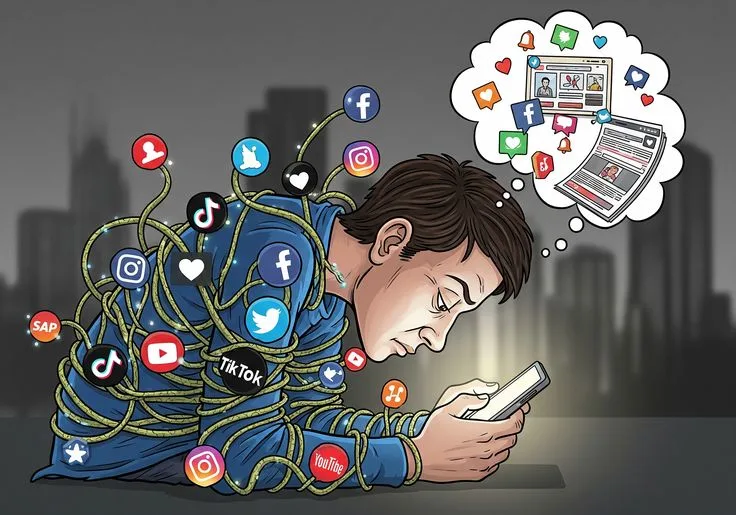
Altering presence. Mobile connectivity has created a state of "absent presence"-being physically in one place while being mentally and communicatively engaged elsewhere. The person at the dinner table who is scrolling through their phone is physically present but socially absent.
This phenomenon, which Sherry Turkle has called being "alone together," represents a fundamental change in the nature of co-presence.[^2]
"We are lonely but fearful of intimacy. Digital connections offer the illusion of companionship without the demands of friendship."
Sherry Turkle
Creating new communities. The internet has enabled the formation of communities organized around shared interests, identities, and experiences rather than geographic proximity. People with rare medical conditions can find support groups. People with niche interests can find communities.
Marginalized groups can organize across geographic barriers. These communities are real and meaningful, but they operate differently from geographic communities-with different norms, different forms of trust, and different dynamics of participation.
Changing Power Structures
Technology redistributes power by changing who controls information, who can communicate with whom, and who can organize collective action.
The printing press weakened the Catholic Church's information monopoly by making the Bible-and competing interpretations of it-widely available. Broadcast media concentrated communication power in the hands of a small number of media companies who controlled access to the airwaves.
The internet initially appeared to democratize communication, but has since produced new concentrations of platform power in companies that control the digital infrastructure of modern communication.
Political power is reshaped by each communication technology. Social media has enabled new forms of political mobilization (the Arab Spring, Black Lives Matter, climate activism) while also enabling new forms of political manipulation (misinformation campaigns, targeted propaganda, foreign interference in elections).
The same technology that enables citizen journalism and grassroots organizing also enables authoritarians to surveil, censor, and manipulate their populations with unprecedented precision.
Economic power shifts with technological change. The agricultural economy concentrated power in landowners. The industrial economy concentrated power in factory owners and financiers. The digital economy concentrates power in those who control platforms, data, and algorithms.
Each technological transition creates new winners and losers, new elites and new marginalized groups.
Is Technology Neutral?
One of the most persistent myths about technology is that it is neutral-a tool that can be used for good or ill, with the outcomes determined entirely by human choices about how to use it.
This view, sometimes called the "instrumental" theory of technology, holds that technology is like a hammer: it can build a house or break a skull, but the hammer itself is neither good nor bad.
The neutrality thesis is appealing because it simplifies moral responsibility (blame the user, not the tool) and avoids the uncomfortable implication that the technologies we depend on might be inherently structured in ways that produce harmful outcomes. But the neutrality thesis is wrong, or at least seriously incomplete.
Technologies embed values and assumptions in their design. The design of a technology determines what it makes easy, what it makes difficult, what it makes possible, and what it makes impossible. These design choices are not neutral; they reflect the values, assumptions, priorities, and blind spots of the technology's creators.
Consider social media platforms. Facebook's News Feed algorithm is designed to maximize engagement-time spent on the platform. This is not a neutral design choice.
It means that content that provokes strong emotional reactions (outrage, fear, tribal solidarity) is systematically amplified because emotional content generates more engagement.
The platform is not neutral about what content users see; it is structurally biased toward emotionally provocative content.
This structural bias has documented effects on political polarization, mental health, and information quality-effects that are not the result of individual user choices but of the technology's design.
"The internet in its current form is not a natural phenomenon. It is the result of specific technical and commercial decisions, made by specific people, in specific historical circumstances, for specific purposes."
Langdon Winner
Technologies create affordances that shape behavior. The concept of "affordances"-possibilities for action that a technology makes available-comes from the psychologist James J. Gibson and has been applied to technology by scholars including Donald Norman and Ian Hutchby.
A door handle affords pulling; a flat plate affords pushing. You do not need instructions; the design guides behavior.
Digital technologies create affordances that shape social behavior at scale. Twitter's 280-character limit affords brevity and punchy expression, not nuanced argument. Instagram's visual format affords image-based self-presentation, encouraging a particular kind of curated, appearance-focused communication.
Smartphone notifications afford interruption, creating a constant pull away from whatever you are doing toward whatever the phone wants to show you.
These affordances do not determine behavior-people can choose to use technologies in ways that resist their designed affordances-but they create strong behavioral tendencies at the population level. Designing a technology is designing a behavioral environment, and designing behavioral environments is not a neutral act.
| Perspective | Core Claim | Implication |
|---|---|---|
| Instrumental (technology is neutral) | Technology is a tool; outcomes depend entirely on use | Regulate users, not technology |
| Substantive (technology embeds values) | Technology's design shapes outcomes regardless of intent | Scrutinize and regulate design choices |
| Social construction | Society shapes technology as much as technology shapes society | Technology reflects and reinforces existing power structures |
| Actor-network theory | Technology and society co-create each other in networks | Neither technology nor society is primary; both are intertwined |
What Is Technological Determinism?
Technological determinism is the belief that technology is the primary driver of social change-that new technologies inevitably produce specific social outcomes regardless of the social, political, economic, and cultural contexts in which they are adopted.
In its strongest form, technological determinism holds that technology develops according to its own internal logic, that this development is inevitable, and that social outcomes follow automatically.
This view is captured in phrases like "you can't stop progress" and "the genie is out of the bottle"-suggesting that technological change follows a predetermined path that humans can neither alter nor resist.
Technological determinism is an oversimplification for several reasons:
The same technology produces different outcomes in different contexts. The internet has been used to strengthen democracy in some countries and to enable authoritarian surveillance and control in others. Social media has facilitated both democratic revolutions and the spread of authoritarian propaganda.
The automobile transformed American cities into car-dependent sprawl but had different effects in European cities where different planning policies and cultural preferences shaped automobile integration differently.
Technology does not develop in a vacuum. Technological development is shaped by social, economic, political, and cultural forces. Which technologies get funded, which get developed, which get adopted, and how they are regulated are all social decisions, not technological inevitabilities.
Nuclear power was technically feasible in many countries, but its adoption varied dramatically based on political decisions, public attitudes, and regulatory environments.
Human agency matters. People make choices about how to use technology, how to adapt to it, and how to resist it. The printing press did not automatically produce the Reformation; specific people (Luther, other reformers) used the printing press in specific ways for specific purposes.
Social media did not automatically produce political polarization; specific platform design choices, specific business models, specific regulatory decisions, and specific user behaviors combined to produce polarization in some contexts but not others.
The alternative to technological determinism is not to deny that technology matters-it clearly does-but to recognize that technology's effects are mediated by social context. Technology creates possibilities and constraints. It makes certain outcomes more likely and others less likely.
But it does not determine outcomes single-handedly. The relationship between technology and society is reciprocal: technology shapes society, and society shapes technology.
This reciprocal relationship is sometimes called social construction of technology (SCOT), a framework developed by scholars including Wiebe Bijker and Trevor Pinch.
SCOT emphasizes that the meaning, use, and impact of a technology are not inherent in the technology itself but are constructed through social processes of interpretation, adoption, adaptation, and regulation.[^6]
What Are Unintended Consequences of Technology?
Every significant technology produces consequences that its creators did not intend, did not anticipate, and often could not have predicted. These unintended consequences are not anomalies or failures of foresight. They are an inherent feature of introducing powerful new capabilities into complex social systems.
Social Media and Mental Health
Social media platforms were designed to connect people, facilitate communication, and build communities. These purposes have been achieved-billions of people use social media to maintain relationships, share information, and participate in communities.
But social media has also produced unintended consequences for mental health that have become a major public concern.
Research has documented associations between heavy social media use and increased rates of anxiety, depression, loneliness, and negative body image, particularly among adolescents.
The mechanisms are multiple: social comparison (seeing curated highlight reels of others' lives), cyberbullying (enabling harassment at scale), sleep disruption (screen time and notification-driven wakefulness), attention fragmentation (constant switching between apps), and dopamine-driven feedback loops (variable-ratio reinforcement from likes and notifications).
The relationship between social media and mental health is complex and contested-not all studies find negative effects, effects vary across populations and usage patterns, and causation is difficult to establish from correlational data.
But the concern has become serious enough to prompt regulatory action, platform design changes, and a broader cultural conversation about technology's effects on wellbeing.
Smartphones and Attention
Smartphones are arguably the most transformative consumer technology since the automobile. They provide instant access to information, communication, navigation, entertainment, commerce, and social connection. They have improved quality of life in countless ways.
They have also produced unintended consequences for human attention and cognitive function.
Research by Adrian Ward and colleagues found that the mere presence of a smartphone-even when turned off-reduces available cognitive capacity, because part of the brain's processing power is devoted to not attending to the phone.[^8] Gloria Mark's research has found that the average knowledge worker switches tasks every three minutes and that it takes approximately twenty-three minutes to return to full focus after an interruption.[^9]
The smartphone has not merely provided new capabilities; it has restructured the attentional environment of daily life. Constant connectivity means constant interruptibility. The device that enables you to work from anywhere also ensures that work can follow you everywhere.
Automation and Employment
Each wave of automation has eliminated some jobs while creating others. The Industrial Revolution eliminated hand-weaving jobs while creating factory jobs. Mechanized agriculture eliminated farm labor jobs while enabling the growth of urban economies.
Computerization eliminated many clerical and data-processing jobs while creating the information technology sector.
The current wave of automation-driven by artificial intelligence, machine learning, and robotics-is eliminating jobs in transportation, manufacturing, customer service, data entry, and routine analysis while creating jobs in AI development, data science, and human-AI collaboration.
The net effect on total employment is debated, but the distributional effects are clear: automation disproportionately affects lower-skilled workers and specific geographic regions, contributing to economic inequality even when aggregate employment remains stable.
The Environment
Technology's environmental consequences illustrate the pattern of unintended effects with particular clarity. The internal combustion engine provided transformative personal mobility and enabled modern logistics and supply chains.
It also produced climate change through carbon emissions, air pollution that kills millions annually, urban sprawl, and ecological destruction from road construction and oil extraction.
Refrigeration preserved food, improved nutrition, and enabled modern supply chains. It also depleted the ozone layer through chlorofluorocarbon (CFC) emissions-a consequence that took decades to discover and additional decades to address through the Montreal Protocol.
Plastics enabled lightweight, durable, inexpensive manufacturing and packaging. They also produced a global plastic pollution crisis, with microplastics now found in oceans, soil, drinking water, and human bloodstreams.
How Do We Adapt to New Technology?
The sociologist William F. Ogburn introduced the concept of cultural lag in 1922 to describe the observation that material culture (technology and physical infrastructure) changes faster than adaptive culture (norms, values, laws, and institutions).
When a new technology is introduced, society's behavioral patterns, social norms, legal frameworks, and institutional structures take time to adjust.[^7]
Cultural lag creates a period of tension and disruption during which the capabilities enabled by new technology outpace the social structures designed to manage them. This lag is visible in multiple domains:
Legal lag. Laws are written to regulate existing technologies and practices. When new technologies emerge, they often fall into legal gray areas where existing laws do not apply clearly.
The internet created legal challenges for copyright law (file sharing), privacy law (data collection), defamation law (anonymous speech), commerce law (cross-border transactions), and criminal law (cybercrime).
Many of these legal challenges remain partially unresolved decades after the technologies emerged.
Normative lag. Social norms about appropriate behavior take time to develop around new technologies. When is it acceptable to use a phone during a conversation? How should employers handle employees' social media activity?
What are the expectations around response time for emails and messages? These norms are still evolving, decades into the smartphone and social media era.
Institutional lag. Institutions-schools, governments, corporations, legal systems-are designed for specific technological environments. When the technological environment changes, institutions must adapt, but institutional change is slow, creating a lag between technological capability and institutional capacity.
Psychological lag. Human psychology and cognitive habits develop over a lifetime and are difficult to change. Skills and habits developed in one technological environment may be maladaptive in a new one.
Adults who developed reading habits in the era of books and newspapers may find it difficult to maintain deep focus in the era of smartphones and social media. Workers who developed career skills in the era of stable employment may struggle to adapt to the gig economy.
The concept of cultural lag does not mean that adaptation is impossible-societies do eventually develop norms, laws, and institutions appropriate to new technologies. But the lag period can last years or decades, and the disruption during that period can be significant.
Can Technology Solve Social Problems?
The belief that technology can solve social problems-sometimes called tech solutionism, a term popularized by Evgeny Morozov-is widespread in technology-oriented cultures, particularly in Silicon Valley.
The techno-solutionist mindset sees social problems as essentially technical problems that can be solved with the right app, algorithm, or platform.[^3]
Technology can genuinely help address some social problems. Vaccines have dramatically reduced infectious disease. Water purification technology has improved public health. Communication technology has connected isolated communities. GPS and mapping technology has improved emergency response.
Agricultural technology has increased food production. These are real contributions that technology has made to human welfare.
But the limits of technological solutions to social problems are equally real:
Social problems have social causes. Poverty is not caused by a lack of technology; it is caused by economic structures, power relations, historical injustices, and policy choices. Providing poor people with smartphones does not address the structural causes of poverty.
Educational inequality is not caused by a lack of learning apps; it is caused by funding disparities, segregation, teacher quality gaps, and socioeconomic factors that affect children's readiness to learn.
Technology often reproduces existing inequalities. Technologies developed within unequal societies often encode and amplify existing inequalities. Facial recognition systems that work less accurately for darker-skinned faces reproduce racial bias in policing and surveillance.
Search engine algorithms that associate certain names with criminal records reproduce racial discrimination in hiring. Automated hiring tools trained on historical data reproduce historical patterns of gender and racial discrimination.[^12]
Technology creates new problems. Every technology that solves one problem has the potential to create new ones. Antibiotics solved bacterial infections and created antibiotic-resistant bacteria.
Social media solved the problem of long-distance communication and created new problems of misinformation, polarization, and mental health impact. Cars solved the problem of personal mobility and created problems of pollution, sprawl, and traffic fatalities.
Technology without policy is often ineffective. Technical solutions often require complementary policy, institutional, and cultural changes to be effective. Electronic health records improve healthcare quality only when combined with clinical workflow changes, staff training, and interoperability standards.
Online education expands access only when combined with internet access, devices, technical literacy, and pedagogical approaches adapted to digital environments.
"Morozov's central argument is that the internet is neither a revolutionary force for liberation nor a perfect tool of oppression, but rather an amplifier of existing social and political forces."
Evgeny Morozov
How Can We Shape Technology's Impact?
If technology is not neutral and its effects are not predetermined, then society has both the opportunity and the responsibility to shape how technology is developed, deployed, and regulated. Several mechanisms for shaping technology's impact are available:
Design Choices
The most direct way to shape technology's impact is through design choices made during development.
Technology designers make thousands of decisions that affect how their products shape behavior: what features to include, what defaults to set, what data to collect, what algorithms to use, what feedback mechanisms to create, and what metrics to optimize for.
These design choices have enormous consequences. Facebook's decision to optimize its News Feed for engagement rather than information quality shaped the information environment of billions of people. Apple's decision to include Screen Time tools in iOS gave users visibility into their phone usage patterns.
Twitter's decision to limit posts to 140 (later 280) characters shaped the nature of public discourse on the platform.
Design choices can be intentionally oriented toward public benefit. The field of "value-sensitive design" developed by Batya Friedman and colleagues provides frameworks for incorporating human values-privacy, autonomy, fairness, trust-into the technology design process.[^10]
Regulation
When market incentives do not produce socially beneficial outcomes, regulation provides a mechanism for aligning technological development with public interest. Environmental regulations have reduced pollution from industrial technologies.
Safety regulations have reduced injuries from consumer products. Privacy regulations have (partially) constrained corporate data collection.
Effective technology regulation requires balancing tech optimism and skepticism about what markets can self-correct. This balance is difficult to achieve because regulation often lags behind technological change, regulators may lack technical expertise, and powerful technology companies may resist regulation.
Adoption Patterns and Cultural Norms
Ultimately, technology's impact is shaped by how people choose to use it. Cultural norms around technology use when to put phones away, how to manage screen time, when to prefer in-person over digital communication, how to evaluate information sources-are collectively negotiated and gradually established through social interaction.
These cultural norms are not fixed. They evolve as societies develop experience with new technologies.
The initial period of uncritical enthusiasm for a new technology (the "honeymoon phase") is often followed by a period of backlash and concern as negative consequences become visible, eventually settling into a more nuanced relationship in which the technology's benefits are preserved while its harms are partially mitigated through norms and practices.
Being Intentional
Perhaps the most important response to technology's shaping power is simply awareness-understanding that technology is not a neutral tool, that its design embodies choices and values, that its effects extend far beyond its intended purposes, and that we have both the ability and the responsibility to make conscious choices about how technology fits into our lives, our communities, and our institutions.
Being intentional about technology means asking questions that uncritical adoption does not: What is this technology designed to do, and what else does it actually do? Whose interests does it serve? What does it make easier, and what does it make harder?
What would I lose by not using it, and what do I lose by using it? These questions do not have simple answers, but asking them is the beginning of a more conscious and constructive relationship with the technologies that increasingly shape our world.
"Every technology is both a burden and a blessing; not either-or, but this-and-that."
Neil Postman
The story of technology and society is not a story of inevitable progress or inevitable decline. It is a story of choices-made by designers, regulators, communities, and individuals-that shape how powerful tools are built, deployed, and used.
Technology is a mirror that reflects the values, priorities, and blind spots of the societies that create it, and a hammer that reshapes those societies in ways both intended and unforeseen.
Understanding both the mirror and the hammer is the first step toward ensuring that the reshaping serves human flourishing rather than undermining it.
What Research Shows About Technology's Social Effects
The academic study of technology's effects on society has moved from theoretical frameworks to empirical measurement, producing findings that are both more nuanced and more alarming than popular accounts suggest.
Jean Twenge at San Diego State University analyzed data from the Monitoring the Future survey (an annual survey of approximately 50,000 American adolescents conducted since 1975) and the Youth Risk Behavior Surveillance System.
Her findings, published in Clinical Psychological Science in 2017 and expanded in the book iGen (2017), showed that depressive symptoms, loneliness, and suicidal ideation among American adolescents began rising sharply around 2012 - precisely when smartphone ownership crossed 50% in that age group.
Between 2010 and 2015, depression rates among adolescent girls rose 50% and suicidal ideation rose 66%. Twenge found that adolescents spending 5+ hours per day on smartphones were 66% more likely to have at least one risk factor for suicide compared to those spending one hour per day.
The correlational nature of the data has generated methodological debate, but a 2022 systematic review by Amy Orben and Andrew Przybylski at the University of Oxford, analyzing data from over 355,000 adolescents, confirmed negative associations between social media use and wellbeing, with effect sizes approximately equivalent to the effect of wearing glasses (meaningful but not catastrophic).
Erik Brynjolfsson at MIT Sloan School of Management and Andrew McAfee at MIT analyzed productivity and employment data from 1947 to 2015 in research published in their book The Second Machine Age (2014) and in multiple Harvard Business Review and Science papers.
Their central finding was that since approximately 2000, productivity and GDP have continued growing while median wages and total employment participation have diverged - a phenomenon they called the "great decoupling." Between 2000 and 2013, productivity grew 21% while median household income grew only 0.6%.
Brynjolfsson and McAfee attributed this divergence to the specific nature of digital automation: unlike previous industrial technologies that primarily displaced manual labor (creating new manual labor needs elsewhere), digital technologies displace cognitive and information-processing tasks that represent a large share of middle-skill employment, without automatically creating equivalent new employment in the same skill range.
Eli Pariser coined the term "filter bubble" in The Filter Bubble (2011), but the empirical study of the phenomenon has been carried out most rigorously by Levi Boxell, Matthew Gentzkow, and Jesse Shapiro at Stanford University.
Their 2017 study, published in Proceedings of the National Academy of Sciences, examined political polarization trends disaggregated by internet use.
If social media was driving political polarization, they reasoned, polarization should be growing fastest among the heaviest internet users.
In fact, they found that polarization grew fastest among Americans over 65 - the group with the lowest internet usage - while growing slowest among those 18-39, who use social media most.
The finding complicates simple narratives about social media causing polarization, suggesting that other factors (partisan media ecosystems, sorting into politically homogeneous communities) are larger drivers.
Gloria Mark at the University of California Irvine has studied workplace attention and digital distraction through a combination of observation studies and experience sampling (tracking workers via wrist sensors, computers, and interviews).
Her research, published in Human-Computer Interaction and presented at the ACM CHI conference between 2004 and 2020, found that the average knowledge worker in 2004 switched tasks every 2.5 minutes; by 2020, the same measurement showed task-switching every 47 seconds.
The time required to return to full attentional engagement after an interruption she measured at 23 minutes in her initial studies.
Mark's 2023 book Attention Span summarized 20 years of research showing that the average attention span devoted to any single screen fell from 2.5 minutes in 2004 to 47 seconds in 2020 - a 69% reduction - with the decline accelerating during the smartphone era.
She found that workers who turned off email notifications for one week showed measurably lower heart rate variability (a physiological stress indicator) and reported significantly higher focus levels than during connected weeks.
Real-World Case Studies in Technology Shaping Society
Several documented organizational and social interventions provide measurable evidence of how technology reshapes behavior, and how design choices determine whether reshaping is beneficial or harmful.
Mozilla Foundation's analysis of Facebook's content recommendation system, conducted in collaboration with independent researchers and published in 2021, tracked the behavior of 10,000 Facebook users across six countries who had agreed to share their data.
The study found that 65% of Facebook users who were radicalized (moved toward extremist content) were exposed to their first extreme content through the recommendation algorithm rather than through direct social connections.
The "amplification" effect was quantified: each recommendation of extreme content increased the probability of subsequent extreme content consumption by 22%.
Mozilla's researchers concluded that the recommendation system's optimization for engagement time was the primary driver, since emotionally arousing content (including extreme content) generates longer viewing sessions.
Duolingo provides a measurable case study in technology designed to align user behavior with genuine learning outcomes. A 2012 study by Roumen Vesselinov at the City University of New York evaluated Duolingo's effectiveness for Spanish learning.
The study found that 34 hours of Duolingo practice was equivalent to one semester of university Spanish, based on standardized proficiency testing.
A 2016 follow-up study by Cambridge Assessment found that Duolingo users showed 25% better retention at six-month follow-up compared to users of grammar-focused apps, attributing the difference to Duolingo's spaced repetition algorithm.
The app's design - short sessions, variable reward schedules, streak maintenance - demonstrates that behavioral design techniques commonly used to maximize engagement can also be applied to maximize genuine educational outcomes when the optimization target is aligned with user benefit.
Estonia's digital transformation provides perhaps the most comprehensive documented case of technology reshaping an entire society's administrative structure.
Beginning in the late 1990s with a deliberate government strategy to build a digital-first administrative infrastructure, Estonia digitized voting, tax filing, business registration, healthcare records, and legal processes.
By 2018, over 99% of government services were accessible online, tax filing took on average 3 minutes (compared to hours in most countries), and business registration could be completed in 18 minutes.
Research by Gunnar Puri and colleagues at Tallinn University of Technology, published in the journal Government Information Quarterly in 2019, estimated that Estonian digital administration saved the equivalent of 2% of GDP annually in reduced transaction costs - time citizens and businesses spent interacting with government.
The Estonian model is notable for designing technology infrastructure around privacy and user sovereignty from the outset, giving citizens full audit trails of who had accessed their data and the legal right to withhold specific data from specific agencies.
Nextdoor (the neighborhood social network) provides a cautionary case study in how technology platforms can amplify existing social biases. The platform was founded in 2011 to strengthen local community connections.
By 2016, the company's own data showed that posts about "suspicious activity" in neighborhoods were disproportionately targeting Black and Latino residents - racial profiling mediated through a supposedly neutral communication platform.
Nextdoor's response was to redesign the form for reporting suspicious activity to require users to provide specific behavioral descriptions rather than physical descriptions of people, and to add a prompt asking "Is the thing that seems suspicious actually suspicious, or just unfamiliar?" A 2018 study by researchers at the Urban Institute found that the redesign reduced racially-targeted "suspicious activity" posts by 75% across the platform while maintaining total post volume.
The case demonstrates both that technology platforms can encode and amplify social biases through their design, and that design intervention can measurably reduce those effects.
What Research Reveals About Technology's Measurable Social Effects
The theoretical frameworks in this article-technological determinism, cultural lag, affordances, unintended consequences-gain empirical weight when examined alongside quantitative research on how specific technologies have altered measurable social outcomes.
Several research programs stand out for their rigor and the specificity of their findings.
Jean Twenge's Generational Research on Smartphones and Adolescent Mental Health
Jean Twenge, a psychologist at San Diego State University, spent years analyzing survey data from millions of American adolescents and documented what she characterized as a sharp inflection point in several mental health indicators beginning around 2012-precisely the moment when smartphone ownership crossed 50% of the American teenage population.
Her analysis, published in major form in a 2017 Atlantic article ("Have Smartphones Destroyed a Generation?") and subsequent book iGen (2017), found that between 2010 and 2015 rates of teen depression, loneliness, anxiety, and sleep deprivation increased significantly.
Rates of in-person social activities-going to parties, dating, getting driver's licenses, spending time with friends-declined over the same period. Suicide rates among 10-to-14-year-olds more than doubled between 2007 and 2017.
Twenge's correlational research generated substantial academic debate. Amy Orben and Andrew Przybylski at Oxford University published a 2019 analysis in Nature Human Behaviour examining the same data sets using different methodological approaches and concluded that the relationship between social media use and adolescent well-being was statistically very small-smaller than the effects of wearing glasses or eating potatoes.
Their analysis found that for most adolescents, time spent on social media accounted for less than 0.5% of variance in well-being.
The methodological debate itself illustrates a point about technology's social effects: causal attribution is genuinely difficult when the technology is pervasive, when exposure varies gradually rather than through controlled experiments, and when multiple social changes are occurring simultaneously.
The disagreement between Twenge and Przybylski/Orben is not resolvable with existing data; it requires longitudinal studies following individuals over time, with better measures of both social media use and mental health outcomes.
What is more clearly established is a narrower claim: for girls who are already experiencing depression or anxiety, heavy social media use appears to amplify rather than cause distress, particularly through social comparison and cyberbullying mechanisms.
Candice Odgers at UC Irvine has argued that social media may be best understood as amplifying pre-existing vulnerabilities rather than creating new pathologies-a finding consistent with the "technology as amplifier of existing forces" framework.
Shoshana Zuboff and Surveillance Capitalism
Shoshana Zuboff, professor emerita at Harvard Business School, developed the concept of surveillance capitalism in her 2019 book of the same name to describe what she characterized as a new economic logic in which human behavioral data is extracted, analyzed, and sold to predict and modify human behavior at scale.
Zuboff's central claim is that Google, Facebook, and similar companies do not merely collect data about users-they develop predictive models of human behavior that are rented to advertisers who wish to influence purchasing decisions.
In this model, human experience becomes "raw material" and behavioral modification is the product.
She distinguishes this from industrial capitalism's extraction of natural resources: surveillance capitalism extracts behavioral surplus (data produced as a byproduct of digital activity) and converts it into behavioral futures markets.
The empirical grounding for Zuboff's framework includes documented cases of behavioral influence at scale.
Facebook's 2012 internal study (published in PNAS in 2014 by Adam Kramer, Jamie Guillory, and Jeffrey Hancock) manipulated the emotional content of users' news feeds without their knowledge or consent to test whether emotional states could be induced through feed curation.
The study found statistically significant effects: users shown more positive content produced more positive posts; users shown more negative content produced more negative posts.
Facebook did not disclose the study to affected users or seek their consent, triggering significant controversy about research ethics and platform power.
Zuboff's work provides a framework for understanding why social media platforms exhibit the incentive structures they do: engagement maximization produces behavioral data, which improves predictive models, which increases the value of advertising products, which drives platform revenue.
Within this logic, design choices that increase engagement even at the cost of user well-being are commercially rational.
This is the mechanism behind the observation that outrage content spreads further and faster than calm, accurate information-it is more engaging, not by accident but as a predictable consequence of the optimization target.
MIT Media Lab Research on Misinformation Spread
In 2018, Soroush Vosoughi, Deb Roy, and Sinan Aral at MIT published a study in Science examining the spread of true and false news on Twitter from 2006 to 2017. The study analyzed approximately 126,000 stories tweeted by approximately 3 million people.
Their findings were stark: false news spread faster, farther, deeper, and more broadly than true news across all categories, and the effect was driven by humans, not bots.
False political news was especially virulent, reaching 1,500 people approximately six times faster than accurate political news.
The researchers found that false news was more novel than true news and more likely to inspire replies expressing surprise and disgust-emotions that appear to drive sharing behavior. True news was more likely to inspire sadness, anticipation, and trust.
The mechanism identified by Vosoughi and colleagues directly engages the affordances discussed in this guide. Twitter's architecture rewards novelty and emotional activation: content that is surprising, outrage-inducing, or identity-confirming spreads through the network through likes, retweets, and quotes.
Accurate but unsurprising information does not generate the same engagement behaviors. The platform's affordances are not neutral with respect to information quality; they systematically advantage content with specific emotional properties that tend to correlate with misinformation.
This research has influenced both platform policy and regulatory discussion. Twitter subsequently changed its retweet mechanism to prompt users to read articles before retweeting them-a design intervention specifically targeting the rapid sharing of unread content.
A 2021 study published in Science found that this design change significantly increased article click-through rates before sharing, though whether it reduced misinformation spread at scale remains under investigation.
Technology and Economic Inequality: Research on Differential Impacts
The social effects of technology are not uniformly distributed. Research consistently documents that technological disruptions amplify existing inequalities along lines of income, geography, education, and race, while simultaneously creating opportunities that are more accessible to advantaged populations.
Automation and Labor Market Polarization
Economists Daron Acemoglu and Pascual Restrepo at MIT have conducted influential research on automation's effects on employment and wages.
Their 2018 paper "The Race Between Man and Machine" and subsequent work document what they call labor market polarization: automation disproportionately eliminates middle-skill, routine jobs (manufacturing, data entry, bookkeeping) while leaving both high-skill cognitive jobs and low-skill manual jobs relatively unaffected.
Their econometric analysis of industrial robot adoption between 1990 and 2007 found that each additional robot per 1,000 workers reduced employment by approximately 5.6 workers and wages across the employment distribution by approximately 0.5%.
The effects were concentrated in specific manufacturing communities-places like Michigan, Ohio, and North Carolina where factories were large employers.
These communities experienced measurable increases in unemployment, opioid use, and mortality following robot adoption, documented in overlapping research by economists Anne Case and Angus Deaton on what they termed "deaths of despair."
Acemoglu's concern, expressed in his 2022 book Power and Progress (co-authored with Simon Johnson), is that the direction of technological development is not inevitable but is shaped by choices made by companies, governments, and researchers.
Automation that replaces workers is one possible direction; automation that augments workers-making them more productive while keeping them employed-is another.
Which direction gets pursued depends partly on technical possibilities but substantially on financial incentives, tax policy, and the relative bargaining power of capital versus labor.
The Digital Divide: Access, Skills, and Outcomes
The concept of the "digital divide" was widely discussed in the 1990s as internet adoption accelerated and disparities in access became apparent.
By the early 2010s, as smartphone adoption and relatively low-cost internet access expanded, some researchers argued the access gap had been largely closed. More recent research suggests the relevant divide has shifted rather than disappeared.
Virginia Eubanks, in Automating Inequality (2018), documented how algorithmic decision-making systems deployed in social services systematically disadvantage low-income people.
Her case studies include a Pennsylvania child protective services algorithm that assigned risk scores to families, an Indiana Medicaid eligibility algorithm that denied coverage to people with disabilities, and an Allegheny County system for allocating homeless services.
In each case, the algorithmic systems were presented as objective improvements over discretionary human judgment but embedded assumptions that reflected the values and blind spots of their designers who were not representative of the communities being served.
Ruha Benjamin's 2019 book Race After Technology extended this analysis to demonstrate that seemingly neutral algorithmic systems in criminal justice (predictive policing, recidivism scoring), healthcare (diagnostic algorithms trained on non-representative data sets), and facial recognition (documented to perform significantly worse on darker-skinned faces) systematically produce racially disparate outcomes.
A 2018 study by Joy Buolamwini and Timnit Gebru published as "Gender Shades" found error rates for gender classification in commercial facial recognition systems as high as 34.7% for dark-skinned women compared to 0.8% for light-skinned men.
These findings confirm and extend this guide's point about technology reproducing existing inequalities.
The mechanism is not that designers intend discriminatory outcomes but that systems trained on historically biased data, evaluated on metrics that do not measure disparate impact, and deployed in contexts where affected communities have no input reproduce the patterns in the data they were trained on.
Sources & Further Reading
McLuhan, M. (1964). Understanding Media: The Extensions of Man. McGraw-Hill. View source
Turkle, S. (2011). Alone Together: Why We Expect More from Technology and Less from Each Other. Basic Books.
Morozov, E. (2013). To Save Everything, Click Here: The Folly of Technological Solutionism. PublicAffairs.
Winner, L. (1986). The Whale and the Reactor: A Search for Limits in an Age of High Technology. University of Chicago Press.
Postman, N. (1992). Technopoly: The Surrender of Culture to Technology. Knopf. View source
Bijker, W.E., Hughes, T.P. & Pinch, T. (Eds.) (1987). The Social Construction of Technological Systems. MIT Press. View source
Ogburn, W.F. (1922). Social Change with Respect to Culture and Original Nature. B.W. Huebsch. View source
Ward, A.F., Duke, K., Gneezy, A. & Bos, M.W. (2017). "Brain Drain: The Mere Presence of One's Own Smartphone Reduces Available Cognitive Capacity." Journal of the Association for Consumer Research, 2(2), 140-154. DOI: 10.1086/691462
Mark, G. (2023). Attention Span: A Groundbreaking Way to Restore Balance, Happiness and Productivity. Hanover Square Press. View source
Friedman, B. & Hendry, D.G. (2019). Value Sensitive Design: Shaping Technology with Moral Imagination. MIT Press. View source
Eisenstein, E.L. (1979). The Printing Press as an Agent of Change. Cambridge University Press. DOI: 10.1017/CBO9781107049963
Noble, S.U. (2018). Algorithms of Oppression: How Search Engines Reinforce Racism. NYU Press. View source
Zuboff, S. (2019). The Age of Surveillance Capitalism. PublicAffairs. View source
Carr, N. (2010). The Shallows: What the Internet Is Doing to Our Brains. W.W. Norton. View source