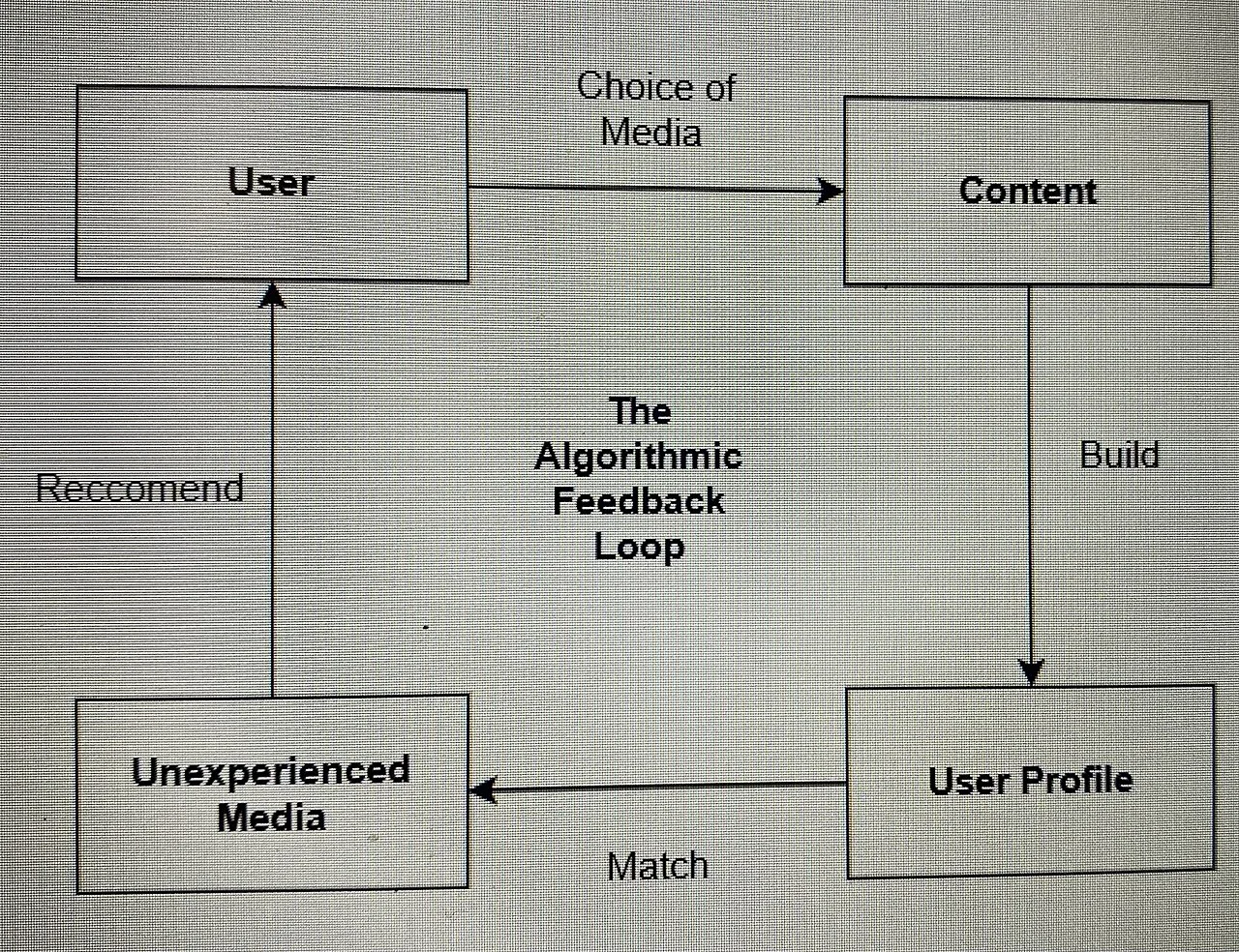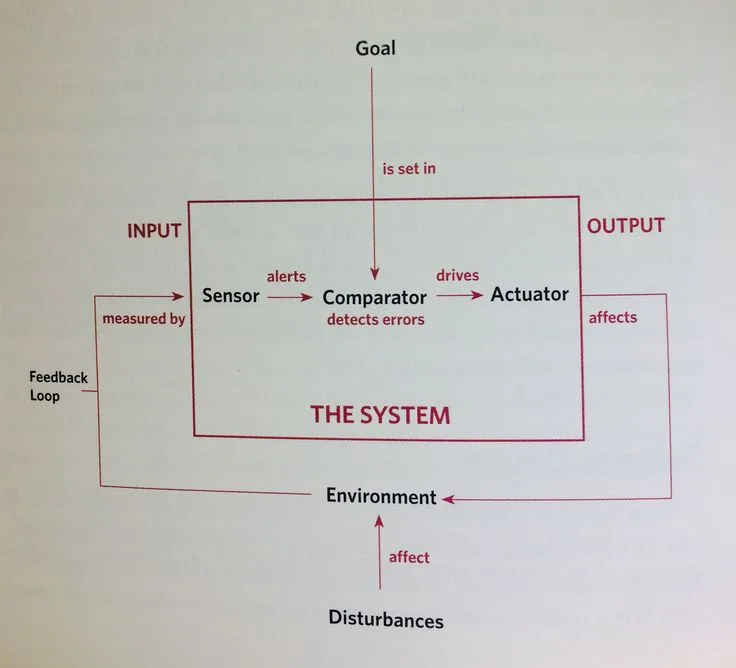
Delays: You turn the shower knob. Water stays cold. You turn it more. Still cold. You keep turning. Suddenly, scalding hot water. You overcorrect the other direction. Now freezing. You oscillate between extremes, unable to find comfortable temperature.
This is a delay problem.
The time between turning the knob (action) and temperature change (consequence) creates instability. You adjust based on current state, but by the time adjustment takes effect, conditions have changed. You're always reacting to outdated information.
Delays are everywhere in systems. Most consequential problems involve delays between action and effect.
Climate policy: Emissions today, climate impact in decades
Education reform: Policy changes today, workforce impact in 20 years
Infrastructure: Build transit today, development patterns shift over decades
Medication: Dose adjustment today, symptom change in days/weeks
Economic policy: Interest rate change today, inflation response in quarters/years
Delays hide cause-effect relationships, tempt overreaction, create oscillations, and make systems behave counterintuitively.
Understanding delays-how they shape system behavior and why ignoring them causes failures-is essential for effective intervention in any complex system.
"Today's problems come from yesterday's solutions."
Peter Senge, The Fifth Discipline[3]
What Are Delays?
A delay is the time gap between an action and its consequence in a system, ranging from seconds to generations depending on the process involved. Short delays, like a thermostat warming a room, keep cause and effect visible. Long delays, like climate emissions changing global temperature over decades, hide that connection and make systems behave counterintuitively.
The Time Gap
Delay: Time between action and consequence
Measured in: Seconds, minutes, hours, days, months, years, decades, generations
Examples across timescales:
| System | Action | Delay | Consequence |
|---|---|---|---|
| Thermostat | Heater turns on | 1-5 minutes | Room warms |
| Medication | Take dose | 30 min - 4 hours | Symptom relief |
| Exercise | Workout program | Weeks - months | Visible fitness |
| Education | Policy change | 5-20 years | Workforce impact |
| Infrastructure | Build highway | 10-30 years | Development patterns |
| Climate | Emit CO2 | 20-100 years | Temperature change |
| Species loss | Habitat destruction | 50-500 years | Ecosystem collapse |
Key insight:Long delays break our intuitive cause-effect understanding.
"People are not well-adapted to handle time delays between causes and effects. When feedback is delayed, we have difficulty learning from experience."
John Sterman, Business Dynamics
Short delays: We see connection (touch hot stove → immediate pain → learn instantly)
Long delays: Connection invisible (emit CO2 → decades later warming → attribution unclear)
Types of Delays
1. Physical Delays
Inherent to physical processes
Cannot be eliminated (governed by physics, chemistry, biology)
Examples:
Material transport:
- Oil tanker from Middle East to US: Weeks
- Can't speed up significantly
Chemical reactions:
- Concrete curing: Days to weeks
- Can accelerate slightly (heat) but fundamental limit
Biological processes:
- Human gestation: 9 months
- Tree growth: Decades
- Can't rush meaningfully
Diffusion:
- Heat spreading through metal: Minutes to hours
- Governed by thermal conductivity
2. Information Delays
Time to collect, process, and transmit information
Can be reduced (through technology, better systems)
But rarely eliminated (some collection/processing inherently takes time)
Examples:
Data collection:
- Economic statistics (GDP, unemployment): Weeks to months after events
- Disease surveillance: Days to weeks for outbreak detection
Processing:
- Election vote counting: Hours to days
- Scientific peer review: Months
Transmission:
- News spreading pre-internet: Days
- Post-internet: Minutes (but still not instant)
3. Decision Delays
Time to recognize need, decide, and implement
Organizational:
- Corporate decisions: Weeks to months (meetings, approvals, politics)
- Government policy: Months to years (legislation, regulation, budgets)
Cognitive:
- Recognizing problem: Can take long time (boiling frog syndrome)
- Overcoming denial: Varies wildly
Implementation:
- Hiring: Months to find, onboard, train
- Building: Years for major infrastructure
4. Response Delays
Time for system to respond to intervention
Examples:
Monetary policy:
- Fed changes interest rates → 6-18 months for inflation impact
- Multiple transmission mechanisms (lending, investment, spending)
Medication:
- Antidepressants: 4-6 weeks for effect
- Antibiotics: Days
- Chemotherapy: Weeks to months
Ecosystem recovery:
- Reforestation: Decades to restore
- Species reintroduction: Years to establish population
Why Delays Matter
1. Hide Cause-Effect Relationships
Short delays: Obvious connection
Long delays: Connection invisible
Consequences:
Attribution failure:
- Don't connect current problems to past actions
- Blame current policies for previous policies' effects
Example: Economic policy
2020: Massive stimulus (trillions)
2021-2022: Inflation rises
Debate: "Did stimulus cause inflation?" (Yes, partially, with delay)
But: Political incentives focus on immediate effects (votes today), discount delayed effects (inflation later)
Learning failure:
When feedback delayed, don't learn from experience
Example: Climate
1970s-1990s: High emissions, minimal warming yet (thermal inertia)
Conclusion: "No problem, keep emitting"
2000s-2020s: Warming accelerates (delayed response to past emissions)
By time effect clear, committed to decades more warming from past emissions
2. Tempt Overreaction
You adjust. Nothing happens. You adjust more. Still nothing. You adjust more.
Then: Effect arrives (from first adjustment). You're way past optimal. Overshoot.
Classic example: Shower temperature
Cold water → Turn hot → Still cold (delay) Turn hotter → Still cold → Turn very hot → Suddenly scalding → Overcorrect cold → Freezing → Oscillate
Policy example: Interest rates
Inflation rising → Fed raises rates → Inflation still rising (delay) Raise rates more → Still rising → Raise more → Suddenly: Recession (delayed effect kicks in, compounded by continued raising)
Historical pattern: Fed often overshoots because delays mask when they've done enough
3. Create Oscillations
Delayed feedback + overreaction = oscillation
Mechanism:
- Measure state
- Adjust to correct
- Wait for effect (delay)
- State hasn't changed yet (adjustment not visible)
- Adjust more (thinking initial insufficient)
- Eventually both adjustments kick in (overshoot)
- Correct other direction (repeat)
Result: Oscillating around target, never stabilizing
Example: Inventory management
Retailer:
- Sees low inventory → Orders more
- Delivery delayed (2 weeks)
- Still low, orders more
- Still low, orders more
- Suddenly: All orders arrive, massive overstock
- Stop ordering
- Inventory slowly depletes
- Reaches low again → Cycle repeats
This creates bullwhip effect (oscillations amplify up supply chain)[6]
4. Mask Intervention Effectiveness
Long delays prevent knowing if intervention worked
Problem:
Time 0: Implement policy
Time +1 year: No change yet (delay)
Conclusion: "Policy failed, abandon it"
Actual: Policy working, effect not visible yet
Result: Abandon working policies prematurely
Example: Education reform
Year 1: Change curriculum
Year 2-5: Students still in old curriculum
Year 6-10: First graduates with new curriculum enter workforce
Year 10-20: Meaningful economic impact
Political cycle: 2-4 years
Result: Policy often abandoned before effects measurable, declared "failure" when actually hadn't had time to work**[7]
Delays and Feedback Loops
Reinforcing Loops + Delays = Overshoot
Reinforcing loop: More → more (exponential growth)
Without delay: Instant feedback loops can enable control
With delay: Overshoot before recognizing need to stop
Example: Population growth
Reinforcing loop: More people → more births → more people
Delay: Births today don't reach reproductive age for 15-20 years
Result: When recognize overpopulation problem, committed to decades more growth (from young people who will reproduce)
Historical: Many countries overshoot carrying capacity before population stabilizes[8]
Example: Financial bubbles
Reinforcing loop: Rising prices → attract buyers → demand increases → prices rise more
Delay: Takes time for overvaluation to become obvious, for correction to occur
Result: Massive overshoot (bubble) before crash
Balancing Loops + Delays = Oscillation
Balancing loop: Negative feedback seeks goal
Without delay: Smooth approach to target
With delay: Oscillation around target
Example: Room temperature
Goal: 70F
No delay: Heater adjusts continuously, maintains 70F smoothly
With delay: Temperature drops → heat turns on → continues dropping (delay) → heat starts working → temperature rises → overshoots → cooling kicks in → undershoots → oscillates
Example: Predator-prey populations
Prey population increases → More food for predators → Predator population increases (delay) Prey population declines → Predators starve (delay) Predator population declines → Prey recovers (delay) Cycle repeats
Classic oscillating pattern (Lotka-Volterra equations)
Real-World Consequences
1. Policy Failures
Short political cycles + long policy delays = bad incentives
Pattern:
Politician:
- Implements popular policy (immediate votes)
- Costs appear later (after election)
- Benefits appear later (if works, credits successor)
Result: Incentive for policies with immediate benefits and delayed costs
Examples:
Deficit spending:
- Benefit: Now (stimulus, no tax increases)
- Cost: Later (debt service, inflation, fiscal constraint)
Environmental degradation:
- Benefit: Now (economic activity, jobs)
- Cost: Later (pollution, climate change, ecosystem damage)
Infrastructure neglect:
- Benefit: Now (lower taxes, spending on other priorities)
- Cost: Later (collapse, expensive emergency repairs)
2. Medical Overtreatment
Symptoms don't improve → increase dose → repeat → overdose
Mechanism:
Day 1: Start medication
Days 2-7: No improvement yet (delay for medication to work)
Day 8: Increase dose (thinking initial insufficient)
Day 10: Increase again
Day 14: Original dose finally working + increases = overdose/side effects
Prevention:Understand medication delay, wait before adjusting
But: Patient pressure ("I'm still sick!") + doctor time pressure → premature escalation common
3. Market Instability
Commodity cycles driven by production delays
Example: Agricultural commodities
Year 1: High corn prices → Farmers plant more corn
Year 2: Increased planting → Large harvest → Prices crash
Year 3: Low prices → Farmers plant less → Shortage → Prices spike
Year 4: High prices → Plant more → Repeat
Delay: Time from planting decision to harvest (1 year)**
Result: Chronic price oscillation, farmer instability**
4. Infrastructure Mismatch
Build for current needs + long construction delay = obsolete at completion
Example: Highway expansion
Year 0: Congestion problem, decide to widen highway
Years 1-5: Design, approval, funding, construction
Year 6: Completion
But: Traffic patterns changed, induced demand from expansion, development shifted
Result: Expansion insufficient or wrong location
Better: Anticipate growth, build for future needs (but hard to predict accurately)
Working With Delays
1. Anticipate Them
Don't ignore delays in planning
Questions:
- How long between action and effect?
- What will change during that delay?
- Are we building for current or future state?
Example: Education
Don't ask: "What skills does economy need now?"
Ask: "What skills will economy need in 10-20 years?" (when current students enter workforce)
2. Use Leading Indicators
Don't wait for lagging indicators when have leading alternatives
Examples:
| Lagging Indicator | Leading Indicator |
|---|---|
| GDP | Building permits, manufacturing orders |
| Unemployment | Job postings, initial claims |
| Disease outbreak | Search trends, pharmacy sales |
| Bridge collapse | Inspection ratings, crack growth |
| Obesity | Diet patterns, activity levels |
Leading indicators arrive earlier, enable earlier response
3. Resist Over-Correction
Wait for effect before adjusting again
Rule:Time-since-last-adjustment should exceed response delay
If medication takes 4 weeks to work: Wait 4 weeks before increasing dose
If policy impact takes 2 years: Wait 2 years before declaring failure
Requires:
- Patience (psychologically hard)
- Understanding of delay (know how long to wait)
- Monitoring (track that effect is coming)
4. Build in Slack
Buffers reduce need for rapid response
Examples:
Inventory buffers:
- Extra stock covers delay in resupply
- Reduces oscillation
Financial buffers:
- Savings cover income delay
- Emergency fund prevents crisis during job search
Capacity buffers:
- Excess hospital beds for surge
- Handles demand spike during response delay
Cost: Inefficiency (unused resources)
Benefit: Stability (handles delays without oscillation)
5. Shorten Delays Where Possible
Some delays reducible
Information delays:
- Real-time monitoring (vs. periodic reports)
- Faster data collection
- Automated processing
Decision delays:
- Pre-approved protocols (reduce approval time)
- Decentralized authority (reduce layers)
- Clear criteria (reduce deliberation)
Response delays:
- Pre-positioned resources (reduce mobilization time)
- Advance preparation (reduce implementation time)
But:Many delays are physical/biological and cannot be meaningfully shortened
Focus effort on reducible delays, accept and work with irreducible delays
6. Accept Uncertainty
Long delays = long prediction horizon = high uncertainty
Implications:
Can't optimize precisely:
- 20-year projection has huge uncertainty
- Build robustly, not optimally
Need flexibility:
- Conditions will change during delay
- Maintain ability to adjust
Expect surprises:
- Long delays guarantee unexpected developments
- Build in adaptation capacity
Common Delay Patterns
Pattern 1: Long Delay + Irreversibility = Commitment
Once action taken, committed to outcome (can't undo during delay)
Examples:
Climate: Emit CO2 → Decades of warming locked in
Development: Build highway → Decades of development patterns locked in
Education: Form workforce → Decades of skill patterns locked in
Implication: Early decisions enormously consequential (no quick fixes later)
Pattern 2: Delay > Decision Cycle = Misalignment
Effect appears after decision-maker gone
Political: Delay > election cycle = incentive for short-term benefit, long-term cost
Corporate: Delay > CEO tenure = incentive for short-term stock price, ignore long-term
Result: Systematic bias toward short-term thinking
Pattern 3: Compounding Delays = Multiplicative Effect
Multiple delays in sequence = very long total delay
Example: Research to impact
- Research funding decision: 1 year
- Research completion: 3-5 years
- Publication & replication: 2-3 years
- Translation to practice: 5-10 years
- Widespread adoption: 10-20 years
- Full impact: 20-50 years total
By the time research impacts society, original problem may have changed
Pattern 4: Variable Delays = Unpredictable Timing
Delay not constant, varies
Problem: Can't know when effect will appear
Example: Medication response
- Average: 4 weeks
- Range: 1-8 weeks
- Can't know for individual patient
Result: Uncertainty about whether no-effect means didn't-work-yet or won't-work
Delays and Learning
Why Long Delays Prevent Learning
Learning requires connecting action to outcome
Long delays break that connection
Mechanisms:
Memory decay:
- By time effect appears, forgot details of action
- Can't reconstruct what specifically caused effect
Attribution ambiguity:
- Many things happened during delay
- Which one caused observed effect?
- Multiple plausible explanations
Context change:
- Situation changed during delay
- Effect appropriate then, not now
- Lessons don't transfer
Generational gaps:
- Effect appears generation later
- Original decision-makers gone
- No personal accountability or learning
Example: Financial crises
Delay between risky lending and crisis: 5-10 years
By crisis: Original lenders promoted/retired, new people in charge
Result: Each generation learns expensively, lessons forgotten, cycle repeats (2008 wasn't first, won't be last)
Practical Implications
For Individuals
Recognize delays:
- Effort today, results in weeks/months/years
- Don't expect instant gratification
- Stay course through delay period
Investment example:
- Save now, compound growth takes decades
- Don't panic during delay, stay invested
For Organizations
Plan for delays:
- Implementation takes time
- Effects take longer
- Don't declare success/failure prematurely
Monitor leading indicators:
- Don't wait for lagging outcomes
- Track process metrics (actions taken)
- Directional indicators (moving right way?)
For Policymakers
Accept political cost:
- Best policies often have delayed benefits
- Require political courage (costs now, benefits later)
- Need long-term vision
Build in accountability:
- Track delayed outcomes
- Hold accountable even after office
- Reward long-term thinking
For System Designers
Minimize harmful delays:
- Faster information
- Quicker decision processes
- Reduce implementation time
Add stabilizing features:
- Buffers (absorb delay effects)
- Automatic controls (reduce oscillation)
- Leading indicators (earlier signals)
Conclusion: Time Matters
Delays are not minor implementation details.
They fundamentally shape system behavior.
Key insights:
- Delays hide cause-effect (long delays break intuitive understanding)
- Delays tempt overreaction (adjust before previous adjustment takes effect)[9]
- Delays create oscillations (overshoot target, correct, repeat)
- Delays mask effectiveness (abandon working policies prematurely)
- Delays misalign incentives (when delay exceeds decision cycle)
- Delays prevent learning (by time effect appears, context changed)
- Many delays irreducible (physical/biological limits, must work with them)
Working with delays requires:
Anticipation: Include delays in planning
Patience: Wait for effects before adjusting
Leading indicators: Don't rely solely on lagging outcomes
Buffers: Build slack to handle delay-induced instability
Humility: Accept uncertainty from long prediction horizons
The shower temperature problem seems trivial.
But the same mechanism causes:
- Economic instability (monetary policy delays)
- Policy failures (benefit/cost timing mismatch)
- Market cycles (production delays)
- Medical errors (treatment response delays)
- Climate inaction (emissions-warming delay)
Understanding delays doesn't eliminate them.
But it enables working with them rather than being surprised by them.
And in systems, that makes all the difference.
What Systems Researchers Found About Delays
The formal analysis of delays in feedback systems emerged from control engineering in the mid-twentieth century.[10]
Norbert Wiener, the MIT mathematician who founded cybernetics, demonstrated in Cybernetics: Or Control and Communication in the Animal and the Machine (1948) that feedback control systems with delays are inherently prone to oscillation.
Wiener's work on feedback control showed that delays in a control loop can push a system from stable regulation into sustained oscillation once the delay becomes large relative to the system's response time - a finding with direct implications for any human system where feedback is delayed relative to decision cycles.
Jay Forrester applied Wiener's insights to business and industrial systems in Industrial Dynamics (1961).[2]
Forrester's models showed that the delays inherent in industrial supply chains - production lead times, information transmission, decision processing - were the primary cause of the boom-and-bust cycles that plagued manufacturing industries.
The models demonstrated that even modest delays of a few weeks could generate substantial inventory oscillations, sometimes on the order of tens of percent of demand, even when underlying demand was perfectly stable. The exact magnitudes depend on the model's assumptions.
Managers, observing the oscillations, attributed them to demand variability and responded with policies that increased the oscillation - a classic case of delay-induced misattribution.
John Sterman at MIT's System Dynamics Group has spent four decades studying how humans misperceive delays.[1]
His landmark 1989 paper "Modeling Managerial Behavior: Misperceptions of Feedback in a Dynamic Decision Making Experiment" used the Beer Distribution Game - a supply chain simulation - to show that the great majority of players, regardless of education or experience, generate the bullwhip effect by failing to fully account for delays between ordering and delivery.[4]
Players consistently over-order during apparent shortages (not accounting for orders already in transit) and over-cut orders during surpluses (not accounting for delivery lag).
The experiment has been replicated hundreds of times across cultures and professional backgrounds with consistent results: people systematically underestimate the time their actions take to produce effects.[5]
Donella Meadows identified delays as one of the most important structural features of systems in Thinking in Systems (2008).
Meadows argued that the length of delays relative to the rate of change in a system is a critical determinant of system behavior: "A system just can't respond to short-term changes when it has long-term delays." She also noted the asymmetry that makes delays dangerous: when a system is moving in the wrong direction, the delay means you have already committed to a considerable distance of travel in the wrong direction before you can take corrective action.
Historical Case Studies in Delay-Driven Failures
The 2008 Financial Crisis and Monetary Policy: The Federal Reserve's interest rate decisions in 2003-2005 contributed to the housing bubble through delay dynamics. The Fed lowered rates to 1% in 2003 to counter post-dot-com recession and kept them low through 2004.
The effect of low rates on housing demand had a delay of 12-18 months: builders committed to projects based on current demand signals, lenders created mortgage products optimized for a low-rate environment, and buyers made purchase decisions based on then-current affordability.
By the time the rate increase cycle began in 2004-2006, the construction and lending commitments were already in place. The delayed consequence of the low-rate period - a massive increase in housing supply and leveraged mortgage debt - arrived after the rate cycle had already changed.
The oscillation between easy and tight money, common in central bank policy, is structurally the same as the shower temperature problem at civilizational scale.
Climate Change and Committed Warming: The relationship between greenhouse gas emissions and global average temperature involves delays of 20-40 years due to the thermal inertia of the oceans. Carbon dioxide emitted today commits the planet to warming that will manifest decades later.
This means that current observed warming reflects primarily emissions from the 1980s-2000s, not current emissions. The feedback is further complicated by a second delay: the melting of Arctic sea ice and permafrost releases stored methane, creating a reinforcing feedback that lags the initial warming by additional years to decades.
These delays produce the "commitment problem" that climate scientists describe: even if global emissions were reduced to zero tomorrow, the planet would continue warming for decades due to the delayed effect of past emissions.
The delay makes the system appear less dangerous than it is during the period when action is still feasible.
The US Opioid Crisis and Prescription Delays: The opioid crisis illustrates how delays create cascading policy failures. OxyContin was approved by the FDA in 1995 and aggressively marketed as a low-addiction-risk pain medication. Prescribing increased rapidly through the late 1990s and 2000s.
The addiction consequences of broad opioid prescribing had delays: physical dependence requires months of regular use; recognition of widespread addiction required clinical observation across many patients; attribution of addiction patterns to specific prescription practices required epidemiological analysis.
By the time the harm was recognized and prescribing was tightened (2010-2012), hundreds of thousands of people were already dependent. When prescription opioids became harder to obtain, the demand shifted to heroin and eventually illicit fentanyl - creating a second wave of deaths that dwarfed the prescription-driven first wave.
Each policy response addressed the visible current problem while delayed consequences from earlier decisions continued to propagate.
Apollo 13 and Response Delays: The Apollo 13 mission in 1970 illustrates delay management under crisis conditions.
When an oxygen tank exploded on April 13, 1970, Mission Control in Houston faced a series of decisions with delayed consequences: the crew was three days from Earth, any decision had to work with available resources, and the consequences of errors would manifest with delays that made real-time correction impossible.
NASA's response was to slow down decision-making despite severe time pressure - to model each proposed action's delayed consequences before implementing it.
Flight Director Gene Kranz's insistence on calculating power and oxygen budgets hours ahead before committing to actions prevented several interventions that would have solved the immediate problem while creating later resource shortages. The mission's success came from anticipating delays rather than reacting to immediate states.
Research Applications: Managing Delays in Practice
Agile Software Development and Delay Reduction: Traditional "waterfall" software development had long delays between decision and feedback: requirements were gathered, design was completed, code was written, testing was conducted, and deployment occurred months or years after the initial design decisions.
Defects discovered in testing reflected decisions made at the beginning of the development cycle.
The Agile movement, formalized in the Agile Manifesto (2001), is fundamentally a delay-reduction strategy: by working in short iterations (sprints of 1-2 weeks), requiring working software at each iteration, and involving customers continuously, Agile reduces the delay between decision and feedback from months to weeks.
The methodology does not eliminate complexity - it reduces the delays that cause complexity to produce surprise.
Epidemiological Surveillance and Leading Indicators: The COVID-19 pandemic demonstrated both the consequences of delay in disease surveillance and the value of leading indicators.
Wastewater surveillance - detecting SARS-CoV-2 RNA in sewage - provides a leading indicator of community infection levels 4-6 days before clinical cases are reported. This lead time is significant: it allows health systems to prepare for surges before hospitals are overwhelmed.
Similarly, emergency department visit patterns for influenza-like illness provide 1-2 week advance warning of respiratory disease surges.
These leading indicator systems directly address the delay problem Meadows identifies: by shortening the lag between the actual system state and the information available to decision-makers, they allow earlier intervention before overshoot occurs.
The Federal Reserve's Forward Guidance: Recognizing that monetary policy affects inflation and growth with 12-24 month delays, the Federal Reserve began using "forward guidance" - communicating its expected future policy path - as a policy tool in the early 2000s.
Forward guidance attempts to manage the delay problem by anchoring expectations: if businesses and consumers believe rates will remain low for two years, they act accordingly now, shortening the effective delay between policy intent and economic response.
The strategy has both successes (the Fed's post-2008 recovery management) and failures (the 2021-2022 period, when the Fed communicated expectations of low inflation that proved incorrect, then had to reverse rapidly).
Forward guidance is a deliberate attempt to manage delay by moving the information earlier in the causal chain - a direct application of the systems principle that shortening delays improves control.
How Industries Learned to Measure and Compensate for Delays
The most rigorous applied research on operational delay management comes from manufacturing and supply chain management, where delays have direct, measurable financial consequences.
Hau Lee, Padmanabhan, and Whang's landmark 1997 study in the Sloan Management Review quantified the bullwhip effect - the amplification of demand variability upstream through supply chains - across multiple industries.
Their analysis of Procter & Gamble's diaper supply chain found that retail demand for Pampers was nearly stable from week to week, yet P&G's orders to its raw material suppliers fluctuated wildly.
The cause: each tier in the supply chain added a demand buffer to account for uncertainty, and those buffers interacted with delivery delays to produce oscillations an order of magnitude larger than the original demand variation.
Lee's team found that the bullwhip effect was not caused by irrational behavior. Each supply chain participant was acting rationally given the information available.
The problem was structural: delays in order fulfillment meant that information about actual consumer demand was 8-12 weeks old by the time it influenced production decisions.
P&G's solution was to share point-of-sale data directly with suppliers in real time, collapsing the effective information delay from weeks to hours.
This intervention - reducing the information delay, not changing any behavioral rule - was associated with lower inventory costs and much less of the supply oscillation, with commonly cited estimates of cost reductions in the tens of percent.
The case became the foundational example for Collaborative Planning, Forecasting, and Replenishment (CPFR) frameworks now standard in the consumer goods industry.
John Sterman's experimental research at MIT's System Dynamics Group produced equally striking results in laboratory settings.
In the Beer Distribution Game, a four-tier supply chain simulation used in business schools worldwide since Forrester developed it in the 1960s, participants consistently produce the same pathological pattern: overordering during apparent shortages, then failing to cancel orders when shortages ease, producing inventory gluts that trigger underordering, then renewed shortages.
Sterman's 1989 study in Management Science analyzed 48 subjects playing the game playing the game and found that ordering behavior was systematically suboptimal in ways that directly corresponded to delay misperception.
Players ordered as if deliveries would arrive immediately when in fact a two-week delivery delay was explicitly stated in the rules.
In this research, players' misperception of the delivery delay was strongly related to the size of the inventory oscillations they produced, supporting the conclusion that delay misperception, rather than irrationality or greed, drives supply chain instability.
Delays in Medicine: Research on Dose Adjustment Errors
Medical research on delays provides some of the most consequential documented cases of delay misperception causing harm.
The problem is structural: most medications have pharmacokinetic profiles - absorption, distribution, metabolism, and elimination characteristics - that create delays of days to weeks between dose changes and observable clinical effect.
Prescribers and patients who do not account for these delays systematically over-adjust doses, producing toxicity or under-treatment.
The selective serotonin reuptake inhibitor (SSRI) class of antidepressants illustrates this concretely. SSRIs require 4-6 weeks of continuous use to produce measurable antidepressant effect, due to the time required for neuroplastic changes in serotonin receptor density.
A recognized pitfall in outpatient depression treatment is early dose escalation: increasing the dose before the several-week therapeutic delay of antidepressants has elapsed, on the mistaken assumption that a lack of early response means the drug is not working.
Early escalation does not accelerate response; it increases side effects and discontinuation rates while providing no therapeutic benefit. The delay between dose and effect is pharmacologically fixed, but prescribers consistently underestimated it under patient pressure for rapid improvement.
The consequences extend to antibiotic stewardship. David Livermore and colleagues at the UK Health Security Agency documented in a 2012 review how delay misperception drives antibiotic overprescription. Viral upper respiratory infections resolve spontaneously over 7-10 days.
Antibiotic treatment of these infections, which are viral and therefore unaffected by antibiotics, nonetheless appears to coincide with recovery - because the recovery would have occurred anyway over the same period.
The delay between infection onset and natural resolution is indistinguishable from the delay between antibiotic prescription and apparent recovery, creating the illusion that antibiotics caused the cure.
This delay-induced attribution error is a primary driver of unnecessary antibiotic prescribing, which epidemiologists at the European Centre for Disease Prevention and Control estimate contributes to approximately 33,000 deaths per year in Europe from antibiotic-resistant infections.
Sources
Sterman, J. D. (2000). Business Dynamics: Systems Thinking and Modeling for a Complex World. McGraw-Hill.
Forrester, J. W. (1961). Industrial Dynamics. MIT Press.
Senge, P. M. (1990). "The Fifth Discipline: The Art and Practice of the Learning Organization." Doubleday.
Sterman, J. D. (1989). "Modeling Managerial Behavior: Misperceptions of Feedback in a Dynamic Decision Making Experiment." Management Science, 35(3), 321-339.
Paich, M., & Sterman, J. D. (1993). "Boom, Bust, and Failures to Learn in Experimental Markets." Management Science, 39(12), 1439-1458.
Lee, H. L., Padmanabhan, V., & Whang, S. (1997). "The Bullwhip Effect in Supply Chains." Sloan Management Review, 38(3), 93-102.
Repenning, N. P., & Sterman, J. D. (2002). "Capability Traps and Self-Confirming Attribution Errors in the Dynamics of Process Improvement." Administrative Science Quarterly, 47(2), 265-295.
Moxnes, E. (2004). "Misperceptions of Basic Dynamics: The Case of Renewable Resource Management." System Dynamics Review, 20(2), 139-162.
Diehl, E., & Sterman, J. D. (1995). "Effects of Feedback Complexity on Dynamic Decision Making." Organizational Behavior and Human Decision Processes, 62(2), 198-215.
Richardson, G. P. (2011). "Reflections on the Foundations of System Dynamics." System Dynamics Review, 27(3), 219-243.
Further Reading
Meadows, D. H. (2008). "Thinking in Systems: A Primer." Chelsea Green Publishing.
Simon, H. A. (1996). The Sciences of the Artificial (3rd ed.). MIT Press.
Homer, J. B. (1985). "Worker Burnout: A Dynamic Model with Implications for Prevention and Control." System Dynamics Review, 1(1), 42-62.
Kahneman, D. (2011). "Thinking, Fast and Slow." Farrar, Straus and Giroux.
Rahmandad, H., & Sterman, J. D. (2008). "Heterogeneity and Network Structure in the Dynamics of Diffusion: Comparing Agent-Based and Differential Equation Models." Management Science, 54(5), 998-1014.