
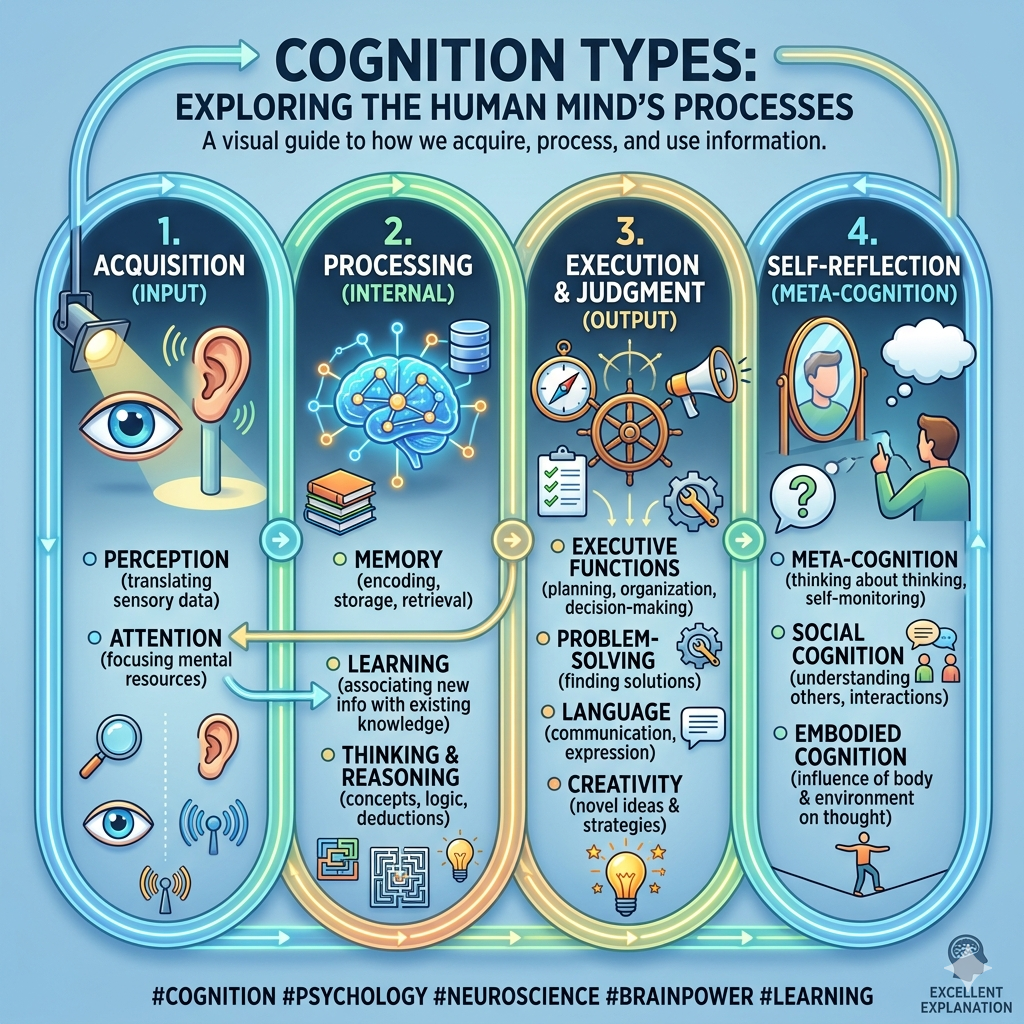
Psychology once treated the mind as a black box and focused only on observable behavior. The evolution of cognitive psychology marks the return of memory, perception, language, and reasoning as subjects that could be studied scientifically rather than ignored by researchers.
For roughly three decades in the middle of the twentieth century, the dominant school of psychology in the United States refused to study the mind.
Behaviorism, which held sway from the late 1920s through the 1950s, insisted that psychology should concern itself exclusively with observable behavior, treating the mind as a "black box" whose internal workings were either unknowable or irrelevant.
Thoughts, beliefs, memories, mental images, reasoning processes, and every other aspect of conscious experience were banished from respectable scientific inquiry.
The radical behaviorist B.F. Skinner declared in 1953 that "the objection to inner states is not that they do not exist, but that they are not relevant in a functional analysis."
The cognitive revolution that overthrew behaviorism in the late 1950s and 1960s was one of the most consequential intellectual transformations of the twentieth century.
It brought the mind back into psychology, established the study of mental processes as legitimate science, and spawned a cluster of related disciplines, including cognitive science, cognitive neuroscience, artificial intelligence, and computational linguistics, that continue to shape our understanding of human nature, education, technology design, and mental health.
The revolution also fundamentally changed how people think about thinking, replacing the image of the mind as a passive recipient of environmental stimuli with the image of the mind as an active information processor that constructs its experience of the world through complex computational operations.
This account traces the full arc of cognitive psychology's development: from the dominance of behaviorism that it overturned, through the key discoveries and intellectual developments that made the revolution possible, to the mature field's achievements and the challenges that continue to drive its evolution.
The Behaviorist Dominance: Why Psychology Abandoned the Mind
Understanding why cognitive psychology was revolutionary requires understanding what came before it. Behaviorism's dominance was not accidental or arbitrary; it emerged from genuine intellectual concerns about the scientific status of psychology and the reliability of introspective methods.
The Failure of Introspectionism
Early experimental psychology, founded by Wilhelm Wundt in Leipzig in 1879, relied heavily on introspection: trained observers would report on their conscious experience of stimuli (colors, sounds, tastes, weights) under controlled conditions.
The method seemed scientifically promising but proved unreliable in practice. Different laboratories using different introspective methods reached contradictory results.
Wundt's lab in Leipzig, Edward Titchener's lab at Cornell, and Oswald Kulpe's lab in Wurzburg could not agree on basic questions about the structure of conscious experience.
Were there "imageless thoughts"? How many basic sensory elements existed? What was the structure of attention?
The inability of introspectionism to produce replicable results made it vulnerable to the charge that it was not truly scientific.
If two trained observers in different laboratories, both examining the same stimulus under the same conditions, could not agree on what they experienced, then introspective reports were not reliable data in the way that physical measurements were reliable data.
Watson's Behaviorist Manifesto
John B. Watson published his behaviorist manifesto in 1913, arguing that psychology should abandon the study of consciousness entirely and redefine itself as "a purely objective experimental branch of natural science" whose "theoretical goal is the prediction and control of behavior." Watson argued that only publicly observable behavior constituted legitimate data for a scientific psychology.
Internal mental states were private, unverifiable, and therefore unscientific.
"Give me a dozen healthy infants, well-formed, and my own specified world to bring them up in and I'll guarantee to take any one at random and train him to become any type of specialist I might select." - John B. Watson
Watson's proposal was radical but it solved a real problem: it gave psychology a subject matter (observable behavior) that could be studied using the same methods that had proved so successful in the physical sciences.
Stimuli could be precisely controlled, responses could be precisely measured, and the relationships between stimuli and responses could be quantified without any reference to the unobservable interior of the organism.
Skinner and Radical Behaviorism
B.F. Skinner developed Watson's ideas into a comprehensive intellectual system that dominated American psychology from the 1930s through the 1950s.
Skinner's radical behaviorism went beyond Watson's methodological restriction (we should study behavior because mental states are hard to observe) to an ontological claim (mental states, as traditionally understood, do not exist as causes of behavior).
For Skinner, terms like "memory," "thought," "belief," and "intention" were not names for internal states that caused behavior; they were informal labels for behavioral patterns, which were themselves caused entirely by the organism's history of reinforcement.
Skinner's experimental program, centered on operant conditioning (the study of how behavior is shaped by its consequences), produced impressive results.
He demonstrated precise control over animal behavior through systematic manipulation of reinforcement schedules, showing that complex behavioral sequences could be shaped without any reference to mental states.
His book Verbal Behavior (1957) attempted to explain human language entirely in terms of reinforcement history, without reference to grammar, meaning, or mental representation.
Behaviorism's dominance was self-reinforcing. Graduate programs trained students in behaviorist methods. Journals published behaviorist research. Funding agencies supported behaviorist projects. Researchers who studied mental processes found it difficult to get published, hired, or funded.
The institutional momentum of behaviorism created a scientific culture in which studying the mind was not merely unfashionable but professionally dangerous.
The Seeds of Revolution: Converging Developments in the 1950s
The cognitive revolution did not emerge from a single discovery or a single discipline. It arose from the convergence of developments across multiple fields that collectively demonstrated both the inadequacy of behaviorism and the viability of studying mental processes scientifically.
Chomsky's Devastating Review
The single most dramatic event of the cognitive revolution was Noam Chomsky's 1959 review of Skinner's Verbal Behavior. Chomsky, a linguist at MIT, systematically demolished Skinner's attempt to explain language in behaviorist terms.
He argued that behaviorist concepts like "stimulus," "response," and "reinforcement" became so vague when applied to human language that they lost all explanatory power.
When Skinner said that a person who sees a painting and says "beautiful" is emitting a verbal response under the control of a visual stimulus, what exactly was the stimulus?
The painting as a whole? Its colors? Its composition? Its resemblance to other paintings? The concept of "stimulus control" could be stretched to accommodate virtually any utterance in response to any situation, which meant it explained nothing.
More fundamentally, Chomsky argued that the behaviorist framework could not account for the creativity of language: the ability of every normal speaker to produce and understand an infinite number of sentences that they have never heard before.
A child who has never heard the sentence "the purple elephant danced on the moon while singing opera" can immediately understand it and judge it as grammatical English.
This creative ability cannot be explained by reinforcement of specific responses to specific stimuli because the sentences are novel, never previously reinforced or even encountered.
"Language is not a habit structure. Ordinary linguistic behavior characteristically involves innovation, formation of new sentences and new patterns in accordance with rules of great abstractness and intricacy." - Noam Chomsky
Chomsky proposed instead that language depends on an innate generative grammar, a system of mental rules that generates the infinite set of grammatical sentences from a finite set of elements. This proposal required positing internal mental structures and processes, exactly what behaviorism had banished.
Chomsky's review did not merely criticize behaviorism; it demonstrated that a major domain of human behavior, language, required a mentalist explanation that behaviorism was structurally incapable of providing.
The Computer as Metaphor for the Mind
The development of electronic computers in the 1940s and 1950s provided a crucial metaphor that made the study of mental processes seem scientifically respectable again.
If a machine could accept inputs, process them according to internal rules, store information, retrieve it later, and produce outputs, then perhaps the human mind worked in a similar way.
The computer metaphor legitimized the study of internal mental representations and processes by providing a physical system that demonstrably performed similar operations.
Allen Newell and Herbert Simon demonstrated the power of this metaphor in 1956 with their Logic Theorist program, which could prove theorems in symbolic logic.
Newell and Simon argued that the Logic Theorist was not merely simulating thinking; it was actually thinking, in the sense that it was performing the same information-processing operations that a human mathematician performs when proving a theorem.
Their physical symbol system hypothesis proposed that a physical system that manipulates symbols according to rules has everything necessary for general intelligence, whether the system is made of silicon or neurons.
The computer metaphor transformed how psychologists conceptualized mental processes.
Instead of vague references to "consciousness" or "inner states," researchers could describe mental operations using precise computational language: encoding (converting sensory input into internal representations), storage (maintaining information in memory), retrieval (accessing stored information), transformation (modifying representations), and output (generating responses).
This computational vocabulary provided the conceptual tools that behaviorism had refused to develop.
Miller's Magical Number Seven
George Miller's 1956 paper "The Magical Number Seven, Plus or Minus Two" is often cited as a founding document of cognitive psychology.
Miller reviewed research on the limits of human information processing and concluded that short-term memory has a capacity of approximately seven items (later revised to about four by Nelson Cowan).
But Miller's most important contribution was not the specific number; it was the demonstration that human cognitive limitations could be precisely measured and that these limitations had a consistent structure across different tasks and domains.
"My problem is that I have been persecuted by an integer. For seven years this number has followed me around, has intruded in my most private data, and has assaulted me from the pages of our most public journals." - George A. Miller
Miller also introduced the concept of "chunking": the process by which individual items are grouped into larger units (chunks) that can be held in memory as single items. A telephone number like 8005551234 exceeds short-term memory capacity when stored as individual digits but fits comfortably when chunked as 800-555-1234.
Chunking demonstrated that the mind is not a passive receiver of information but an active organizer that structures input according to learned patterns, exactly the kind of internal mental process that behaviorism had declared off-limits.
The 1956 Symposium at MIT
Many historians of cognitive science point to a symposium held at MIT on September 10-12, 1956, as the moment when the cognitive revolution crystallized.
At this Symposium on Information Theory, three landmark presentations were given: Newell and Simon presented the Logic Theorist, Chomsky presented his theory of generative grammar, and Miller presented his work on information processing limits.
Each presentation, coming from a different discipline (computer science, linguistics, and psychology), converged on the same fundamental insight: human behavior cannot be understood without reference to internal mental representations and computational processes.
The Construction of Cognitive Psychology
With behaviorism's intellectual authority undermined and a new computational framework available, psychologists in the 1960s and 1970s rapidly built the new discipline of cognitive psychology, investigating the mental processes that behaviorism had forbidden.
Ulric Neisser and the Naming of the Field
Ulric Neisser's 1967 book Cognitive Psychology gave the new field its name and provided its first comprehensive textbook.
Neisser defined cognitive psychology as the study of "all processes by which the sensory input is transformed, reduced, elaborated, stored, recovered, and used." His book covered perception, attention, memory, language, and thought, organizing them as stages in the flow of information processing from sensory input to behavioral output.
Neisser's information-processing framework became the standard architecture for cognitive psychology. The mind was conceptualized as a series of processing stages: sensory registration, pattern recognition, attention, short-term memory, long-term memory, and response generation.
Each stage could be studied independently using experimental methods that measured reaction times, accuracy rates, and error patterns to infer the characteristics of underlying mental processes.
The Study of Memory
Memory research became the centerpiece of early cognitive psychology, partly because memory was the mental process that behaviorists had most conspicuously failed to explain (the concept of an internal stored representation is inherently mentalist) and partly because memory could be studied experimentally with precision.
Richard Atkinson and Richard Shiffrin proposed the multi-store model of memory in 1968, distinguishing between sensory memory (a brief, high-capacity buffer), short-term memory (a limited-capacity working store), and long-term memory (a virtually unlimited permanent store).
Information was hypothesized to flow from sensory memory through short-term memory to long-term memory through processes of attention and rehearsal. This model provided a framework for hundreds of subsequent experiments investigating the characteristics of each store and the processes that transferred information between them.
Fergus Craik and Robert Lockhart challenged the multi-store model in 1972 with their levels of processing framework, arguing that memory is better understood not in terms of separate stores but in terms of the depth at which information is processed.
Shallow processing (attending to surface features like the font of a word) produces weak memories; deep processing (attending to meaning, generating associations, making personal connections) produces strong memories.
This framework shifted attention from the structures of memory to the processes of encoding, a shift that proved enormously productive and that had direct implications for education and training.
Endel Tulving introduced the distinction between episodic memory (memory for personal experiences) and semantic memory (memory for general knowledge) in 1972, later adding procedural memory (memory for skills and habits).
These distinctions, supported by neuropsychological evidence from patients with different patterns of memory impairment, showed that "memory" is not a single system but a collection of systems with different neural substrates, different operating characteristics, and different functions.
The Study of Attention
Donald Broadbent's 1958 book Perception and Communication proposed one of the earliest cognitive models of attention, based on his research on how air traffic controllers and military personnel process multiple simultaneous messages.
Broadbent's filter model proposed that attention operates as a selective filter that allows only one channel of information to pass through to conscious processing while blocking others, based on physical characteristics of the input (location, loudness, pitch).
Broadbent's model was quickly challenged by research showing that some information from "unattended" channels does reach consciousness.
Anne Treisman proposed an attenuation model in which the filter does not completely block unattended information but reduces its strength, allowing particularly important or personally relevant information to break through.
The debate between early selection (filtering before semantic processing) and late selection (filtering after semantic processing) continued for decades and remains partially unresolved, but it generated an enormous body of experimental research that deepened understanding of how the brain allocates its limited processing resources.
Schema Theory and Constructive Cognition
The development of schema theory marked an important move beyond simple information-processing models toward a richer understanding of how prior knowledge shapes cognition.
Frederic Bartlett had introduced the concept of schemas (organized knowledge structures that guide perception, memory, and comprehension) as early as 1932, but his work was ignored during the behaviorist era and rediscovered during the cognitive revolution.
"Remembering is not the re-excitation of innumerable fixed, lifeless and fragmentary traces. It is an imaginative reconstruction, or construction, built out of the relation of our attitude towards a whole active mass of organised past reactions or experience." - Frederic Bartlett
Schema theory revealed that cognition is not a passive process of recording and reproducing information but an active, constructive process in which existing knowledge structures shape what is perceived, how it is interpreted, what is remembered, and how it is recalled.
Bartlett's famous studies of memory for unfamiliar stories showed that people systematically distorted remembered narratives to fit their existing cultural schemas, "normalizing" unfamiliar elements into familiar patterns.
This constructive view of cognition has profound implications for education (learning depends on prior knowledge), eyewitness testimony (memory is reconstructive, not reproductive), and cross-cultural communication (different schemas produce different interpretations of the same events).
Cognitive Psychology and Neuroscience: The Merger
Initially, cognitive psychology and neuroscience developed as separate disciplines. Cognitive psychologists studied mental processes using behavioral methods (reaction times, error rates, verbal reports) and were agnostic about neural implementation.
Neuroscientists studied the brain using physiological methods (electrode recordings, lesion studies, neurochemistry) and were often unconcerned with cognitive theory. The merger of these two traditions into cognitive neuroscience was one of the most productive intellectual developments of the late twentieth century.
The Brain Imaging Revolution
The development of positron emission tomography (PET) in the 1970s and functional magnetic resonance imaging (fMRI) in the early 1990s made it possible to observe the living human brain at work, providing a direct window into the neural activity associated with cognitive processes.
For the first time, researchers could see which brain regions were active during memory retrieval, attention deployment, language comprehension, problem solving, and decision-making.
Early cognitive neuroscience studies often confirmed what cognitive psychology had already inferred from behavioral data.
The distinction between short-term and long-term memory, for example, was supported by fMRI evidence showing different patterns of brain activation during immediate recall (primarily prefrontal cortex) versus delayed recall (primarily hippocampus and medial temporal lobe).
The distinction between episodic and semantic memory was supported by evidence that episodic retrieval activates prefrontal and hippocampal regions while semantic retrieval activates temporal and parietal cortical regions.
But brain imaging also revealed aspects of cognition that behavioral methods alone could not detect.
Default mode network activity, discovered by Marcus Raichle and colleagues in the early 2000s, showed that the brain is highly active even during rest and mind-wandering, engaged in self-referential thought, memory consolidation, and future planning.
This discovery challenged the information-processing model's implicit assumption that the mind is active only when processing external input and introduced the concept of spontaneous, internally generated cognitive activity as a fundamental aspect of brain function.
Neuropsychology and Double Dissociations
Neuropsychological studies of patients with brain damage provided some of the strongest evidence for the distinct cognitive systems proposed by cognitive theory.
The logic of double dissociation was particularly powerful: if brain damage at location A impairs function X but not function Y, and damage at location B impairs function Y but not function X, then functions X and Y must be served by separate neural systems.
The case of patient H.M. (Henry Molaison), who lost the ability to form new declarative memories after bilateral hippocampal removal but retained his previously formed memories, procedural learning abilities, and general intelligence, provided the most famous double dissociation in neuropsychology.
H.M.'s case demonstrated that declarative memory formation depends on the hippocampus, that other cognitive functions do not, and that memory is not a unitary system but a collection of systems with distinct neural substrates.
Broca's aphasia (damage to Broca's area impairs speech production but not comprehension) and Wernicke's aphasia (damage to Wernicke's area impairs comprehension but not fluent production) provided similar evidence for the modular organization of language processing.
Prosopagnosia (damage to the fusiform face area impairs face recognition but not object recognition) and visual agnosia (damage to other visual areas impairs object recognition but not face recognition) provided evidence for specialized visual processing modules.
How Cognitive Psychology Changed Views on Learning and Education
Cognitive psychology's understanding of how the mind processes, stores, and retrieves information has profoundly transformed educational theory and practice. The shift from behaviorist stimulus-response conditioning to cognitive information processing changed both what educators try to do and how they try to do it.
From Drill to Understanding
Behaviorist education emphasized drill and practice: repeated pairing of stimuli and responses, reinforced by reward and punishment.
Cognitive psychology replaced this with an emphasis on understanding: building mental models, connecting new information to existing knowledge, and developing metacognitive strategies for monitoring and directing one's own learning.
The distinction between rote learning (memorizing facts without understanding) and meaningful learning (connecting new information to existing knowledge structures) became a central principle of cognitive educational psychology.
David Ausubel argued that the most important factor influencing learning is what the learner already knows: new information is learned more effectively when it can be anchored to existing knowledge structures (schemas) through advance organizers (introductory materials that provide a framework for understanding new information).
Working Memory and Cognitive Load
Cognitive psychology's discovery of working memory limitations had direct implications for instructional design. John Sweller's cognitive load theory (1988) argued that instruction should be designed to minimize unnecessary demands on working memory, freeing cognitive resources for learning.
Instructional techniques like worked examples (showing students solved problems rather than requiring them to solve novel problems immediately), split-attention management (integrating related information sources rather than requiring learners to mentally integrate them), and redundancy elimination (removing information that duplicates what is available from other sources) all derive directly from cognitive load theory.
Metacognition
The study of metacognition, cognition about cognition, emerged as one of cognitive psychology's most practically important contributions to education.
Research by John Flavell, Ann Brown, and others showed that effective learners monitor their own understanding, recognize when they do not understand, deploy strategies to improve comprehension, and evaluate the success of their learning efforts.
These metacognitive skills, the ability to think about one's own thinking, distinguish expert learners from novices and can be explicitly taught.
"Learning how to learn is life's most important skill." - Tony Buzan
| Behaviorist Approach | Cognitive Approach |
|---|---|
| Focus on observable behavior | Focus on mental processes |
| Learning = stimulus-response association | Learning = building mental representations |
| Drill and practice | Understanding and connection to prior knowledge |
| Teacher transmits knowledge | Learner actively constructs knowledge |
| Motivation through external reinforcement | Motivation through curiosity, relevance, and understanding |
| Assessment = reproduction of correct responses | Assessment = demonstration of understanding and transfer |
Current Challenges and Future Directions
Cognitive psychology has evolved far beyond the simple information-processing models of its early years, but significant challenges remain.
The Embodiment Challenge
The computer metaphor that launched cognitive psychology has come under increasing criticism from proponents of embodied cognition, who argue that cognition is not an abstract computational process that happens to be implemented in a brain but is fundamentally shaped by the body and its interactions with the physical environment.
Research on gesture, spatial reasoning, tool use, and emotion suggests that cognitive processes are deeply influenced by bodily states and sensorimotor experience in ways that disembodied computational models cannot capture.
The Cultural Challenge
Much of cognitive psychology's foundational research was conducted on participants from Western, educated, industrialized, rich, and democratic (WEIRD) societies.
Research by Joseph Henrich and colleagues has shown that these populations are outliers on many cognitive and perceptual dimensions, raising questions about the universality of cognitive psychology's findings.
The extent to which basic cognitive processes (perception, attention, memory, reasoning) are universal versus culturally shaped remains an active area of investigation with profound implications for the field's generalizability.
"The sample of people that behavioral scientists (including psychologists, economists, and others who do behavioral research) have been drawing on for decades is not just WEIRD but among the WEIRDest people on the planet." - Joseph Henrich
The Integration with Neuroscience
The ongoing integration of cognitive psychology with neuroscience continues to produce new insights and new challenges. Advances in brain imaging, optogenetics, and computational neuroscience provide unprecedented windows into the neural mechanisms underlying cognitive processes.
But the relationship between neural mechanisms and cognitive processes is not straightforward: the same cognitive process can be implemented by different neural mechanisms in different individuals or contexts, and the same neural mechanism can support different cognitive processes in different contexts.
Bridging the gap between neural and cognitive levels of analysis remains one of the field's greatest challenges.
The evolution of cognitive psychology from a revolutionary challenge to behaviorism to an established discipline integrated with neuroscience, computer science, education, and clinical practice represents one of the great intellectual achievements of the past century.
The field has transformed our understanding of the mind, produced practical applications that have improved education, clinical treatment, and technology design, and opened questions about the nature of human cognition that will drive research for decades to come.
Landmark Studies That Defined the Field
Certain experiments and research programs produced findings so robust and surprising that they permanently altered how cognitive psychologists conceptualize the mind.
Elizabeth Loftus and the Misinformation Effect (1974-1978). Elizabeth Loftus, then at the University of Washington, conducted a series of experiments that became foundational texts in the study of memory's reconstructive nature.
In a 1974 study published in the Journal of Verbal Learning and Verbal Behavior, Loftus and John Palmer showed subjects films of automobile accidents and then asked questions using different verb choices: "About how fast were the cars going when they smashed/hit/bumped/contacted each other?" Subjects asked about "smashing" cars estimated speeds of 40.8 mph on average; those asked about cars "contacting" estimated 31.8 mph.
In a follow-up study a week later, subjects asked the "smashed" question were also significantly more likely to report (falsely) that they had seen broken glass at the scene.
Loftus interpreted these results as evidence that post-event information is integrated into the original memory trace, altering rather than supplementing it.
Her subsequent research, including studies of eyewitness misidentification and the creation of entirely false memories through suggestion, had major legal consequences: she testified as an expert witness in over 300 trials and her work directly influenced guidelines for police lineup procedures.
A 2010 meta-analysis by Benton and colleagues in the Psychological Bulletin, reviewing 30 years of misinformation research across 44 studies, confirmed that post-event misinformation reliably reduces accuracy and that the effect is stronger when the misinformation is delivered by an authoritative source.
Kahneman and Tversky's Cognitive Bias Research Program (1971-1979). Although Daniel Kahneman and Amos Tversky are primarily associated with behavioral economics, their foundational work was cognitive psychology research on how people make judgments under uncertainty.
Their 1971 paper "Belief in the Law of Small Numbers" in Psychological Bulletin demonstrated that even trained researchers have deeply flawed intuitions about statistical sampling - they overestimate the representativeness of small samples, leading to overconfident conclusions from insufficient data.
Their 1973 paper "Availability: A Heuristic for Judging Frequency and Probability" showed that people estimate the probability of events based on how easily examples come to mind, which leads to systematic errors when memorable events are not the most common ones (people overestimate the frequency of deaths from dramatic causes like plane crashes and underestimate deaths from mundane causes like heart disease).
These studies were not merely academic: they demonstrated that professional judgment - including medical diagnosis, weather forecasting, and legal decision-making - is subject to systematic, predictable errors.
A 1978 review by Paul Slovic, Baruch Fischhoff, and Sarah Lichtenstein in Annual Review of Psychology documented how these biases operated in applied domains, launching the field of naturalistic decision research.
Ulric Neisser's Ecological Validity Critique and the Everyday Memory Movement (1978). In a 1978 keynote address to the American Psychological Association, published subsequently in Cognition, Ulric Neisser - who had named the field in his 1967 textbook - delivered a sharp self-critique.
He argued that decades of laboratory memory research had produced findings of questionable relevance to real-world memory.
The typical laboratory memory experiment asked subjects to memorize lists of nonsense syllables or unrelated words in a controlled environment - conditions that shared few features with the memory demands of daily life.
Neisser challenged the field to study "memory as it occurs in the ordinary environment" and for "purposes that are important to the rememberer." This critique launched the everyday memory research movement, which generated studies of autobiographical memory (Marigold Linton's 1978 six-year diary study of her own memory), prospective memory (remembering to do things in the future), eyewitness testimony, and memory for emotionally significant events.
Ulric Neisser's subsequent empirical work on "flashbulb memories" - vivid memories for the circumstances in which one learned about shocking events - demonstrated that even highly confident memories are subject to substantial distortion, a finding that created productive tension with popular intuitions about memory accuracy.
Roger Shepard's Mental Rotation Studies (1971). Roger Shepard and Jacqueline Metzler at Stanford published "Mental Rotation of Three-Dimensional Objects" in Science in 1971, providing what is often cited as the first convincing experimental demonstration that people represent and manipulate spatial information in a format that preserves metrical properties of physical space.
Subjects were shown pairs of three-dimensional block figures, some identical (one being a rotation of the other) and some mirror images, and asked to determine whether the pair was identical or a mirror image.
Reaction time increased linearly with the angular difference between the figures, at a rate of approximately 60 degrees per second.
Shepard and Metzler interpreted this as evidence that subjects solved the problem by mentally rotating a representation of one figure to align with the other - a process that respects the continuous nature of physical rotation rather than treating it as a discrete computational step.
This finding contributed directly to the imagery debate between Shepard and Zenon Pylyshyn, who argued that apparent spatial properties of mental representations were epiphenomenal and could be explained by propositional representations.
The debate, which continued productively for two decades, forced cognitive psychology to develop more sophisticated accounts of mental representation that went beyond simple dichotomies between analog and propositional formats.
Cognitive Psychology in Clinical and Applied Contexts
The concepts developed in cognitive psychology laboratories have been translated into clinical interventions and practical applications with documented real-world impact.
Aaron Beck and the Development of Cognitive Therapy (1960s-1980s). Aaron Beck, a psychiatrist at the University of Pennsylvania, began developing cognitive therapy for depression in the 1960s after noticing that his psychoanalytic patients had streams of automatic thoughts - rapid, habitual thoughts that seemed to drive their emotional states - that psychoanalysis did not address.
Beck's cognitive model proposed that depression is maintained by systematic negative biases in information processing: depressed individuals attend selectively to negative information, interpret ambiguous events negatively, and make global negative attributions about themselves, the world, and the future (what Beck called the "cognitive triad").
Cognitive therapy aimed to identify and modify these maladaptive thought patterns through structured techniques including Socratic questioning, behavioral experiments, and homework assignments. Beck's 1979 book Cognitive Therapy of Depression presented the first manualized cognitive therapy protocol.
A landmark randomized controlled trial by Rush, Beck, Kovacs, and Hollon published in Cognitive Therapy and Research in 1977 compared cognitive therapy to imipramine (a tricyclic antidepressant) in 41 outpatients with depression.
After 12 weeks, 79% of cognitive therapy patients showed marked improvement or remission versus 23% of drug-treated patients, and cognitive therapy patients showed lower dropout rates.
While the small sample and short follow-up limited conclusions, the study established that a psychological treatment grounded in cognitive theory could produce outcomes comparable to or better than pharmacotherapy.
A subsequent meta-analysis by Dobson (1989) in the Journal of Consulting and Clinical Psychology, covering 28 studies, found that cognitive therapy outperformed wait-list controls, antidepressant medication, and behavior therapy.
The Cognitive Load Theory Applications in Aviation Training (1990s-2000s). John Sweller's cognitive load theory, proposed in 1988, received its most consequential applied test in military and commercial aviation training, where the cost of design errors is measured in lives.
The US Air Force Research Laboratory, working with researchers including David Merrill at Utah State University and Richard Clark at the University of Southern California, conducted a series of studies applying cognitive load principles to flight simulators and maintenance training.
A 1998 study by Kirwan and colleagues at Eurocontrol tested cognitive load theory predictions for air traffic controller training, comparing standard training that required controllers to manage all information simultaneously against worked-example instruction that allowed them to observe expert decisions before attempting problems independently.
Controllers trained with worked examples reached criterion performance in 40% fewer training hours.
The UK Civil Aviation Authority incorporated cognitive load principles into its training framework for complex aircraft system management, and a 2003 review by van Merrienboer and Sweller in Educational Psychology Review documented dozens of applications across technical training domains.
The most direct measure of outcome was error rates in simulated emergency scenarios: designs that minimized extraneous cognitive load consistently produced 25-40% fewer errors compared to designs that required learners to integrate information from multiple sources simultaneously.
Gary Klein's Naturalistic Decision-Making Research with Firefighters (1985-1993). Gary Klein, working as a cognitive psychologist for Klein Associates, was contracted by the US Army Research Institute in 1985 to study how expert decision-makers make high-stakes decisions under time pressure - precisely the conditions that laboratory cognitive psychology had rarely studied.
Klein and his team conducted ethnographic research with fireground commanders, observing and interviewing experienced fire chiefs about how they decided where to position crews and when to order evacuations.
The findings, published in Klein's 1998 book Sources of Power, fundamentally challenged the rational actor model of decision-making embedded in classical cognitive psychology.
Expert commanders did not generate options and compare them against each other; they recognized the situation as an instance of a familiar pattern, mentally simulated the first course of action that came to mind, and executed it if the simulation identified no showstopping problems.
This "recognition-primed decision" (RPD) model accounted for over 80% of the decisions Klein observed.
Klein subsequently extended the research to intensive care nurses, chess grandmasters, and military officers, consistently finding that expert decision-making relied on pattern recognition accumulated through thousands of hours of experience rather than on the kind of deliberate, sequential analysis that cognitive laboratory research had emphasized.
The RPD model influenced military doctrine (the US Marine Corps doctrine manual Warfighting incorporated Klein's concepts), emergency medical training, and the design of decision support systems that augment pattern recognition rather than substitute algorithmic analysis for it.
Sources & Further Reading
Neisser, U. (1967). Cognitive Psychology. Appleton-Century-Crofts. View source
Miller, G. A. (1956). The magical number seven, plus or minus two: Some limits on our capacity for processing information. Psychological Review, 63(2), 81-97. DOI: 10.1037/h0043158
Chomsky, N. (1959). A review of B.F. Skinner's Verbal Behavior. Language, 35(1), 26-58. DOI: 10.2307/411334
Broadbent, D. E. (1958). Perception and Communication. Pergamon Press. DOI: 10.1037/10037-000
Atkinson, R. C. & Shiffrin, R. M. (1968). Human memory: A proposed system and its control processes. In Psychology of Learning and Motivation, 2, 89-195. DOI: 10.1016/S0079-7421(08)60422-3
Tulving, E. (1972). Episodic and semantic memory. In E. Tulving & W. Donaldson (Eds.), Organization of Memory (pp. 381-403). Academic Press.
Craik, F. I. M. & Lockhart, R. S. (1972). Levels of processing: A framework for memory research. Journal of Verbal Learning and Verbal Behavior, 11(6), 671-684. DOI: 10.1016/S0022-5371(72)80001-X
Bartlett, F. C. (1932). Remembering: A Study in Experimental and Social Psychology. Cambridge University Press. DOI: 10.1017/CBO9780511759185
Sweller, J. (1988). Cognitive load during problem solving: Effects on learning. Cognitive Science, 12(2), 257-285. DOI: 10.1207/s15516709cog1202_4
Gardner, H. (1985). The Mind's New Science: A History of the Cognitive Revolution. Basic Books. View source
Newell, A. & Simon, H. A. (1972). Human Problem Solving. Prentice-Hall. DOI: 10.1016/0004-3702(73)90010-2
Raichle, M. E. (2015). The brain's default mode network. Annual Review of Neuroscience, 38, 433-447. DOI: 10.1146/annurev-neuro-071013-014030
Henrich, J., Heine, S. J., & Norenzayan, A. (2010). The weirdest people in the world? Behavioral and Brain Sciences, 33(2-3), 61-83. DOI: 10.1017/S0140525X0999152X
Barsalou, L. W. (2008). Grounded cognition. Annual Review of Psychology, 59, 617-645. DOI: 10.1146/annurev.psych.59.103006.093639
Watson, J. B. (1913). Psychology as the behaviorist views it. Psychological Review, 20(2), 158-177. DOI: 10.1037/h0074428
Tulving, E. & Thomson, D. M. (1973). Encoding specificity and retrieval processes in episodic memory. Psychological Review, 80(5), 352-373. DOI: 10.1037/h0020071
Ausubel, D. P. (1968). Educational Psychology: A Cognitive View. Holt, Rinehart and Winston.
Flavell, J. H. (1979). Metacognition and cognitive monitoring: A new area of cognitive-developmental inquiry. American Psychologist, 34(10), 906-911. DOI: 10.1037/0003-066X.34.10.906