
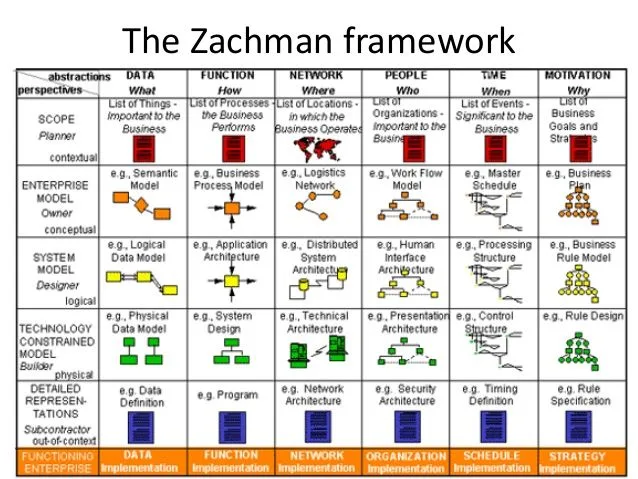
When frameworks fail, they often do so predictably: by being applied outside their domain, omitting essential variables, resisting disconfirming evidence, treating dynamic conditions as static, or mistaking a representation for reality. Their strength as attention filters becomes a weakness when it creates structured blindness and overconfidence. Useful analysis requires testing assumptions, monitoring anomalies, and recognizing which risks or relationships the framework cannot represent.
In the summer of 2008, Lehman Brothers employed thousands of financial analysts, risk managers, and quantitative specialists using some of the most sophisticated risk frameworks ever built. The firm relied heavily on Value at Risk (VaR) models, which summarize likely losses at a given confidence level and generally showed manageable risk. VaR by design says little about rare, extreme tail events, and it did not capture the scale of losses that ultimately occurred.
The models were mathematically rigorous, implemented on powerful computing infrastructure, and validated against decades of historical data.
On September 15, 2008, Lehman Brothers filed for bankruptcy. The largest bankruptcy in American history wiped out $613 billion in debt obligations. The models had not been wrong in any trivial sense; they had been systematically, predictably wrong in ways that a clear understanding of framework failure modes would have anticipated.
Frameworks are powerful thinking tools. They structure problems, guide analysis, and improve decision-making. They also fail - and they fail in patterns that are recognizable in advance if you know what to look for. The failure is not usually random or unpredictable.
It follows specific structural patterns that have been documented across fields and decades. Understanding those patterns is as important as understanding the frameworks themselves.
Why Frameworks Are Simultaneously Valuable and Dangerous
The value of a framework is that it directs attention to factors that matter and provides structure for combining that attention into conclusions. The danger of a framework is the same: it directs attention to factors that matter according to the framework, and it structures combination in the way the framework specifies.
When the framework's assumptions are accurate, this is an enormous benefit. When they are not, the framework amplifies error rather than correcting it.
The mechanism is what might be called structured blindness: frameworks make certain things visible and certain things invisible. They are, essentially, pre-specified attention filters.
A risk model that quantifies market risk makes market risk highly visible - and if it does not quantify liquidity risk or counterparty risk, it makes those risks invisible.
Analysts working within the framework will notice market risk and may not notice the risks the framework does not capture.
This is why framework failure is often more damaging than no-framework reasoning: someone operating without a framework may be uncertain about what they do not know; someone operating confidently within a framework may be certain about things the framework is wrong about.
Overconfidence is the characteristic failure mode of frameworks, because frameworks provide the experience of structured, rigorous reasoning without guaranteeing that the structure is appropriate to the situation.
"All models are wrong, but some are useful." - George Box, Robustness in Statistics (1979). The corollary: knowing which models are wrong in which ways is what makes them manageable.
Seven Patterns of Framework Failure
| Failure Pattern | Mechanism | Example | Warning Sign |
|---|---|---|---|
| Context mismatch | Framework applied outside its designed domain | Porter's Five Forces applied to platform businesses | Predictions are consistently off in the same direction |
| Rigidity bias | Framework resists updating when evidence contradicts it | H. pylori hypothesis rejected despite evidence | Evidence is dismissed or explained away by the framework |
| Oversimplification | Essential variables excluded from the model | Homo economicus ignoring behavioral biases | Large variance in predictions vs. actual outcomes |
| Static models in dynamic environments | Framework calibrated on stable conditions; applied to changing ones | BCG matrix applied to tech industries | Categories shift meaning faster than the framework updates |
| Map/territory confusion | Framework output treated as reality rather than a representation | VaR model treated as actual risk level | Model precision mistaken for accuracy |
| Goodhart degradation | Optimizing the metric corrupts the underlying measure | Teaching to the test | Metric improves while underlying goal degrades |
| Confirmation entrenchment | Framework selects for confirming evidence | Strategic planning that ignores disconfirming signals | Anomalies are routinely explained away, not investigated |
1. Context Mismatch
Every framework is designed for a particular domain, set of conditions, and type of problem. When applied outside its designed context, it produces wrong answers with the same surface confidence as correct ones.
Porter's Five Forces framework was designed to analyze competitive dynamics in established industries with relatively stable boundaries. Applied to technology platforms, where the boundaries between buyer, supplier, competitor, and complementor are often fluid and changing, it consistently misses the most important dynamics.
When Google launched its Android operating system (free to phone manufacturers), conventional Five Forces analysis would have scored it poorly from Google's perspective - it was giving away valuable technology to "suppliers." The framework could not represent the platform strategy that made Android's success comprehensible: locking in a mobile ecosystem that drove search usage, which drove advertising revenue.
*Example*: The Waterfall software development approach reflects sequential, plan-driven engineering and manufacturing practice, where requirements are relatively stable, specifiable in advance, and handed off between stages. It can work well when those conditions hold and tends to struggle when they do not.
When applied to software products (where user needs are poorly understood at the outset, requirements change constantly, and learning from working software is essential), Waterfall consistently produced expensive failures - massive projects delivered years late, over budget, to users who wanted something different from what had been specified.
Agile development frameworks emerged specifically because the context of software development violated Waterfall's fundamental assumptions. The framework was right for civil engineering; wrong for software. Context mismatch.
2. Rigidity Bias
Frameworks embed assumptions about which variables matter and how they relate. When applied in situations where those assumptions no longer hold, the framework resists updating to reflect new reality. This is rigidity bias: the framework's internal consistency makes it harder, not easier, to recognize when it has become wrong.
The medical community's framework for peptic ulcers through the 1980s specified that ulcers were caused by stress, spicy food, and excess acid. This framework was taught in medical schools, reinforced by treatment protocols, and embedded in clinical practice.
In 1984, Barry Marshall and Robin Warren proposed that most ulcers were caused by Helicobacter pylori bacteria. They were mocked. Marshall famously drank a solution of H. pylori, developed gastritis, and cured it with antibiotics to demonstrate the point.
It took more than a decade for the bacterial hypothesis to be accepted, and the delay was not primarily because of insufficient evidence - it was because the existing framework for ulcer causation was rigid enough to resist contradictory evidence.
The rigidity bias is structural: the more comprehensively a framework is instantiated in institutional practice (treatment protocols, professional training, reimbursement systems), the more resistant it is to revision even when evidence accumulates against it. The framework's social embedding creates friction against updating.
3. Oversimplification
All frameworks simplify - that is their purpose. But simplification can go too far, excluding factors that are essential to accurate prediction. The resulting models are wrong in ways that are not immediately obvious because they appear to function correctly for the cases they were calibrated on.
Economic models that treat individuals as rational utility maximizers (homo economicus) produced clear predictions and enabled mathematical tractability. They also systematically mispredicted actual human economic behavior in ways that became increasingly undeniable as behavioral economics research accumulated.
The simplified framework was useful enough in aggregate (large markets tend to aggregate away some individual irrationality) that its failure modes were not visible in its main domain - and disastrously wrong in applications that depended on individual behavior (credit default modeling, mortgage underwriting for populations with limited financial literacy).
The oversimplification failure is difficult to detect from inside the framework precisely because the simplification has been made: the framework does not represent the factors it omits, so there is no internal indication that they are absent.
Detection typically requires external comparison: what does this framework predict versus what actually happens?
4. Static Models in Dynamic Environments
Many frameworks were designed for environments that were approximately stable and are applied in environments that are rapidly changing. The mismatch between static framework and dynamic reality produces systematic prediction failure.
BCG's Growth-Share Matrix (Stars, Cash Cows, Dogs, Question Marks) was designed to help large conglomerates allocate capital across business units. It encoded assumptions about industry growth rates and competitive positions that were approximately stable over multi-year periods in the 1970s, when it was developed.
Applied in technology industries where market positions can reverse in 18 months, growth rates can shift dramatically with technological change, and the boundaries of competition are constantly redefined, the matrix's categories become actively misleading - businesses it classifies as "Dogs" may be at the inflection point of disruption, and "Stars" may be incumbents about to be disrupted.
*Example*: Nokia's competitive analysis in the mobile-phone market, as described in later post-mortems, tended to segment the market by price point and geography, an approach that had worked well for feature phones. This mindset was one factor among several (including software, ecosystem, and organizational issues) in Nokia's struggle with smartphones.
This framework classified the early iPhone as a premium-segment entrant with functional limitations, which was accurate in 2007.
It was not equipped to represent the possibility that the iPhone was the leading edge of a platform transformation that would redefine what "mobile phone" meant. The framework's static categorization prevented recognition of the dynamic it could not model.
5. The Map/Territory Confusion
The most fundamental and most dangerous framework failure is treating the framework as reality rather than as a representation of reality. Alfred Korzybski famously noted that "the map is not the territory"; this confusion is endemic in framework application.[3]
When the VaR risk models at financial institutions showed manageable risk, they were showing manageable risk as the model defined and measured it. They were not showing whether actual risk was manageable; they could not - they had access only to the measures they were built to produce.
The confusion between modeled risk and actual risk became catastrophic when the model's assumptions (normally distributed returns, historically stable correlations) failed during a systemic crisis where correlations spiked and tail events became routine.
The map/territory confusion is reinforced by the false precision that quantitative frameworks produce.
A model that outputs "23.7% probability of loss exceeding X" feels more authoritative than "maybe one-in-four chance." But the two are functionally equivalent in accuracy terms; the decimal precision reflects mathematical manipulation of inputs, not additional accuracy about reality.
Precision of measurement is not precision of truth.
6. Missing Second-Order Effects
Frameworks typically model first-order effects - the direct consequences of an action. They routinely fail to represent second-order effects - how those consequences change the system in ways that loop back to affect the original variables. Second-order effects are where most consequential long-term outcomes reside.
The cobra effect (a widely repeated but poorly documented story of a colonial-India bounty on dead cobras that led people to breed them) is the classic illustration of a framework failure at second-order effects. The first-order model: bounty on dead cobras reduces cobra population.
The second-order effect: bounty creates economic incentive to breed cobras; cancellation of bounty releases bred cobras; population exceeds original. The first-order model was accurate about the immediate effect of the bounty.
It could not represent the adaptive response of the system to the policy, because the system (the population being governed) was not in the model.
Most policy frameworks, economic frameworks, and business strategy frameworks have this limitation: they model how actors currently behave, not how they will behave in response to the policy or strategy.
Game-theoretic reasoning captures some second-order effects (if you can model the strategic response of rational actors), but most frameworks in use are not game-theoretic, and real actors are not purely rational.
7. Treating Frameworks as Rules
The transition from "framework as heuristic" to "framework as rule" is perhaps the most common source of framework-induced failure. Frameworks are tools for structured thinking; they are not decision procedures that generate answers without judgment.
*Example*: The retail-era maxim "the customer is always right" is sometimes loosely associated with Agile's emphasis on customer collaboration and feedback, though it is not actually an Agile principle. As a heuristic it was useful correcting the tendency of developers to build what they thought customers needed without validating it.
Applied as a rule, it produces development teams that implement every customer request regardless of whether it serves the customer's actual goals, creates technical debt, or conflicts with other features.
The heuristic (listen to customers, validate with customers, respond to customer feedback) becomes harmful when converted to a rule (implement what customers explicitly request).
The frameworks that fail most reliably are those that have been converted from heuristics into procedures - that have been institutionalized as checklists, approval processes, or decision rules that execute without judgment.
The institutionalization typically occurs because judgment is variable and unreliable, and systematization produces consistency. But it also removes the adaptive capacity that the framework's original designers assumed would be present.
The Gaussian Copula and Systemic Risk Quantification
The framework failure that preceded the 2008 financial crisis is often attributed loosely to "bad models" or "excessive complexity." The specific mechanism is more instructive.
The mathematical structure at the center of the collapse was the Gaussian copula function, which credit derivatives traders used to estimate the probability that multiple mortgages would default simultaneously.
The copula, developed by statistician David Li in a 2000 paper titled "On Default Correlation," provided a formula for expressing correlations between defaults using historical data on corporate bond spreads. It was mathematically elegant, could be implemented quickly, and produced numerical outputs that felt authoritative.
By the mid-2000s, the Gaussian copula had become a widely used tool for pricing collateralized debt obligations (CDOs). It was one important contributor to mispriced risk, alongside incentives, leverage, and lax underwriting, rather than the single cause of the crisis - the securities that bundled mortgages together and distributed risk across tranches.
The framework failure was a specific form of context mismatch: the copula had been calibrated on historical corporate bond default correlations, which reflected a period of relatively stable credit conditions. It was applied to residential mortgage defaults in a housing market that had never experienced a nationwide decline.
The correlations embedded in the formula did not represent what would happen when housing prices fell across the country simultaneously.
Li himself had warned in his paper that the model "can't handle the correlation dynamics" in stressed conditions. The warning was not built into the framework as applied.
When housing prices began falling in 2006 and 2007, default correlations spiked far beyond the historical range the model had been trained on. Securities that the copula had priced as essentially safe - AAA-rated tranches that required correlated defaults across geographically diverse mortgage pools - failed simultaneously.
The losses propagated through financial institutions that had used the same framework and therefore held similarly mispriced positions. A framework failure became systemic because the framework was universal.
The specific mechanism matters: the copula did not fail because it was misapplied by incompetent practitioners. It failed because it was calibrated on historical data that did not capture the tail correlations that materialized during stress.
The framework was a valid representation of one domain (normal credit conditions) applied without adjustment to another domain (stressed conditions with correlated collateral). Map-territory confusion, operating at industrial scale.
Nokia's Category Error and the Limits of Market Share Frameworks
Nokia's collapse from global mobile phone leader to near-irrelevance between 2007 and 2013 is well documented.
Less examined is the specific framework failure that produced it, because the failure was not strategic misidentification of the iPhone as a competitor - Nokia executives recognized the iPhone as a threat immediately - but a categorical framework error that prevented effective response.
Nokia's competitive analysis framework classified phones by price tier and geographic market. This framework had been extraordinarily effective for feature phones, where competition consisted of manufacturing efficiency, supply chain management, and distribution breadth.
Nokia applied this framework to the smartphone transition, classifying the iPhone as a premium-tier product with functionality limitations (no MMS at launch, restricted to AT&T, no third-party apps initially).
The category was correct. The framework was wrong. The iPhone was not simply a premium phone; it was a computing platform.
The relevant competitive framework was not "phone market share by price tier" but "mobile computing ecosystem share." In the phone framework, Nokia's 40% market share, its manufacturing scale, and its carrier relationships were decisive advantages.
In the computing platform framework, those advantages were irrelevant or negative: carrier relationships created constraints on the user experience that platform strategy required overriding, manufacturing scale in handsets did not translate to software ecosystem development, and market share in the old category meant nothing about position in the new category.
Ben Thompson's analysis of the period documents that Nokia's internal engineering teams recognized the threat and had developed touchscreen prototypes and smartphone-capable software years before the iPhone.
The frameworks governing resource allocation - which were tied to market share metrics in the existing category - systematically diverted resources toward incrementally better feature phones and away from the platform development that the new competitive landscape required.
The framework was not wrong about the old game. It could not represent the new one, and so it prevented Nokia from seeing that the game had changed until the transition was nearly complete.
How to Use Frameworks Without Being Used by Them
The safeguard against framework failure is not abandoning frameworks - the lack of structure is worse than imperfect structure. The safeguard is maintaining epistemic humility about the framework's assumptions and boundaries.
Know the assumptions: Every framework embeds assumptions. Make those assumptions explicit and check them against the current situation before applying the framework. If the assumptions do not hold, the framework's output should be discounted or supplemented.
Know the domain: Understand what contexts the framework was designed for and what evidence supports its validity in those contexts. Applying a framework confidently outside its validated domain is not sophisticated analysis; it is sophisticated-seeming error.
Watch for what the framework ignores: The most dangerous aspects of any situation are those that your framework does not model. Explicitly ask: what is outside this framework that could be important? What would need to be true for this framework to give seriously wrong answers?
Treat framework output as hypothesis, not conclusion: Framework analysis generates hypotheses about what is true, not conclusions. The hypothesis should be tested against other evidence, alternative frameworks, and empirical reality before being acted on at high stakes.
Notice when the map is being treated as the territory: When the conversation shifts from "the model suggests" to "the numbers show," the map/territory confusion is underway. Models suggest; reality shows. The distinction matters.
The most effective practitioners of any analytical framework are those who understand it deeply enough to know when not to use it. First principles thinking's most important application is often identifying when an existing framework's constraints are not constraints of reality but conventions that can be questioned.
The two capabilities - using frameworks fluently and knowing when to discard them - are not opposed. They are the same capability at different scales.
Sources & Further Reading
- Kahneman, D. Thinking, Fast and Slow. Farrar, Straus and Giroux, 2011. View source
- Taleb, N.N. The Black Swan: The Impact of the Highly Improbable. Random House, 2007. View source
- Korzybski, A. Science and Sanity: An Introduction to Non-Aristotelian Systems. International Non-Aristotelian Library, 1933.
- Christensen, C. The Innovator's Dilemma. Harvard Business Review Press, 1997. View source
- Scott, J.C. Seeing Like a State: How Certain Schemes to Improve the Human Condition Have Failed. Yale University Press, 1998. View source
- Tetlock, P. Expert Political Judgment: How Good Is It? How Can We Know? Princeton University Press, 2005. View source
- Meadows, D. Thinking in Systems: A Primer. Chelsea Green, 2008. View source
- Gladwell, M. The Tipping Point: How Little Things Can Make a Big Difference. Little, Brown, 2000. View source
- Thaler, R. & Sunstein, C. Nudge: Improving Decisions About Health, Wealth, and Happiness. Yale University Press, 2008.
- Perrow, C. Normal Accidents: Living with High-Risk Technologies. Basic Books, 1984.