
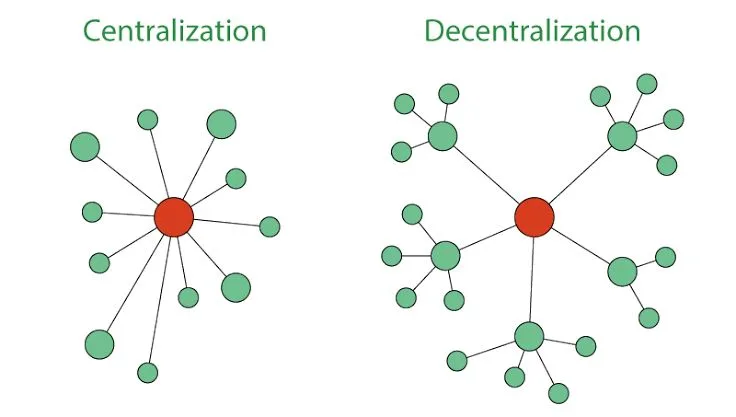
You already live inside networks. The people who told you about your last job opportunity, the friend-of-a-friend who introduced you to your partner, the colleague who forwarded you that article that changed your thinking about your career-these are not accidents.
They are predictable consequences of network structure, the invisible architecture of human connection that determines what information reaches you, what opportunities find you, and how much influence you actually wield.
Most people think about relationships as a collection of individual connections: I know Sarah, I know David, I know my neighbor. Network theory reveals that relationships are not just a list of contacts-they form a system with emergent properties that cannot be understood by examining any single connection in isolation.
The pattern of who knows whom matters far more than the sheer number of people you know. A person with 200 connections arranged in a particular structure can be dramatically more influential, better informed, and more professionally successful than someone with 500 connections arranged differently.
"The networks of strong ties will be insufficient, and the network as a whole will appear poorly integrated." - Mark Granovetter, "The Strength of Weak Ties," 1973
This is not abstract mathematics. Network theory provides some of the most practically useful frameworks ever developed for understanding human social behavior. Mark Granovetter's research on weak ties explains why acquaintances are more useful than close friends for finding jobs.
Ronald Burt's work on structural holes shows why people who bridge disconnected groups get promoted faster.
Stanley Milgram's small world experiments revealed that any two people on Earth are connected by roughly six intermediaries-a finding with profound implications for information diffusion, epidemic spread, and organizational design.
Yet network theory remains surprisingly underused in everyday thinking. People invest enormous energy cultivating close friendships while neglecting the weak ties that actually drive career advancement. Organizations redesign their formal hierarchies while ignoring the informal networks where real work happens.
Entrepreneurs build products without understanding the network effects that determine whether platforms succeed or fail.
This article translates the major findings of network science into practical understanding.
We will move from the mathematical foundations-nodes, edges, degree distributions-through the landmark studies that shaped the field, into the specific structural properties that determine network behavior, and finally into concrete strategies for applying network thinking to your professional life, your organization, and your understanding of the digital platforms that increasingly shape modern society.
Network Theory Fundamentals: The Language of Connection
Before applying network theory to real relationships, you need to understand the basic vocabulary that makes precise thinking about networks possible. These concepts are not merely academic-each one maps directly to observable features of real social systems.
Nodes and Edges
A network (or graph, in mathematical terminology) consists of two elements: nodes (also called vertices) and edges (also called links or ties). In a social network, nodes represent people and edges represent relationships between them.
This simple abstraction is powerful because it strips away the specific content of relationships and focuses on their structure.
Whether two people are connected by friendship, professional collaboration, romantic partnership, or information exchange, the structural fact of their connection can be analyzed using the same mathematical tools.
Key distinctions:
- Directed vs. undirected edges: Some relationships are mutual (friendship on Facebook), while others are one-directional (following someone on Twitter who does not follow you back). Directed networks capture asymmetric relationships; undirected networks assume reciprocity.
- Weighted vs. unweighted edges: Not all connections are equal. A weighted network assigns strength to each edge-how often two people communicate, how much they trust each other, or how much money flows between them.
- Multiplexity: Real relationships often involve multiple types of connection simultaneously. Your colleague might also be your neighbor and your tennis partner. Multiplex ties tend to be stronger and more resilient than single-dimension connections.
Degree: How Connected Is a Node?
A node's degree is the number of edges connected to it-in social terms, the number of people someone is directly connected to. In directed networks, we distinguish between in-degree (connections coming in, like followers) and out-degree (connections going out, like people you follow).
Degree is the simplest measure of a node's importance, but it is often misleading. A person with 1,000 LinkedIn connections is not necessarily more influential than someone with 150, because degree tells you nothing about who those connections are or how they are structured.
Clustering Coefficient: How Cliquish Is a Network?
The clustering coefficient measures the tendency of nodes to form tightly knit groups. Technically, it is the fraction of a node's neighbors who are also connected to each other. If all your friends know each other, your local clustering coefficient is 1.0. If none of your friends know each other, it is 0.
High clustering is characteristic of social networks. People tend to introduce their friends to each other, creating triangles of mutual connection. These clusters correspond to recognizable social groups: your college friends, your work colleagues, your family, your sports team.
The tendency toward clustering has important consequences for information flow-information circulates rapidly within clusters but moves slowly between them.
Path Length: How Far Apart Are Two Nodes?
The path length between two nodes is the minimum number of edges you must traverse to get from one to the other. The average path length of a network tells you how many intermediaries separate typical pairs of nodes.
In social networks, short average path lengths mean information can reach anyone quickly through a chain of personal contacts. Long path lengths mean communities are relatively isolated from each other.
The discovery that most real social networks have surprisingly short average path lengths-the famous small world property-was one of the most important findings in network science.
Density: How Interconnected Is the Whole Network?
Network density is the ratio of actual edges to possible edges. A completely connected network where everyone knows everyone has density 1.0. Most real social networks are sparse-density is very low because each person knows only a tiny fraction of all other people in the network.
Density affects how quickly information spreads, how resilient the network is to disruption, and how much social pressure nodes experience from their connections.
A Brief History: From Bridges to Small Worlds
Network theory's development spans nearly three centuries, from a mathematical puzzle about bridges to modern computational analysis of billion-node social networks.
Euler and the Bridges of Konigsberg (1736)
The story begins in the Prussian city of Konigsberg (now Kaliningrad, Russia), where seven bridges connected four landmasses across the Pregel River. Citizens wondered: Is it possible to walk through the city crossing each bridge exactly once?
Leonhard Euler proved it was impossible by abstracting the problem into what we now call a graph-landmasses became nodes, bridges became edges. His proof, published in 1736, is generally considered the origin of both graph theory and topology.
The key insight was that the physical layout of the bridges was irrelevant; only the pattern of connections mattered.
This principle-that structure matters more than content-remains the foundational insight of network theory.
"In order for science to progress, it is necessary that old results be superseded by better ones, and the original insights be transformed into something deeper." - Leonhard Euler (paraphrased in Graph Theory by Reinhard Diestel)
Sociometry and the Birth of Social Network Analysis (1930s-1960s)
Jacob Moreno, a Romanian-American psychiatrist, pioneered the systematic study of social networks in the 1930s. He developed sociograms-visual diagrams of who in a group liked, disliked, or was indifferent to whom.
His work at the New York State Training School for Girls revealed that social structure profoundly influenced behavior, emotions, and institutional dynamics.
Moreno's sociometric approach was refined by mathematicians and social scientists over the following decades, but it remained a niche field until a single dramatic experiment captured public imagination.
Milgram's Small World Experiment (1967)
Stanley Milgram asked a simple question: How many intermediaries does it take to connect any two randomly chosen Americans? He gave letters to people in Omaha, Nebraska, and Wichita, Kansas, addressed to a target person in Boston, with instructions to forward the letter to someone they knew personally who might be closer to the target.
The median number of intermediaries in the chains that reached their destination was six-giving rise to the phrase "six degrees of separation." While Milgram's methodology had significant limitations (many chains never completed, and the sample was not representative), the core finding has been repeatedly confirmed with larger datasets.
In 2011, a study of the entire Facebook network found an average distance of 4.74 between any two users.
"The small world problem asks: Starting with any two people in the world, what is the probability that they will know each other? And, more profoundly, what does it mean for society that personal contacts are so densely interwoven?"
- Stanley Milgram, Psychology Today, 1967
The small world finding has practical implications far beyond social curiosity. It means information can theoretically reach anyone on Earth through a remarkably short chain of personal contacts-if people are motivated to pass it along.
Granovetter's Strength of Weak Ties (1973)
Mark Granovetter's 1973 paper "The Strength of Weak Ties" is arguably the single most influential study in social network analysis. It became one of the most cited papers in all of social science, and its central finding remains one of the most practically useful insights network theory has produced.
We will examine this work in depth in the next section.
Watts and Strogatz: The Small World Model (1998)
Physicists Duncan Watts and Steven Strogatz provided the mathematical explanation for small world networks. They showed that you need only add a small number of random long-range connections to a regular lattice (where nodes connect only to their neighbors) to dramatically reduce average path length while maintaining high clustering.
This small world model explained a puzzle: social networks have high clustering (your friends tend to know each other) and short path lengths (anyone can reach anyone in a few steps). These two properties seem contradictory-high clustering suggests local, insular communities, while short path lengths suggest global connectivity.
Watts and Strogatz showed that a few "shortcut" connections bridging distant clusters are sufficient to create the small world effect.
Barabasi and the Scale-Free Revolution (1999)
Albert-Laszlo Barabasi and Reka Albert discovered that many real networks-the World Wide Web, citation networks, metabolic networks, and social networks-share a striking structural property: their degree distributions follow a power law. Most nodes have very few connections, but a small number of hubs have enormously many connections.
This scale-free property arises from preferential attachment-new nodes joining a network preferentially connect to nodes that are already well-connected. The rich get richer, the popular get more popular, the well-connected attract even more connections.
"Networks are everywhere. The brain is a network of nerve cells connected by axons, and cells themselves are networks of molecules connected by biochemical reactions." - Albert-Laszlo Barabasi, Linked, 2003
The scale-free model revolutionized network science by showing that many different types of networks share common structural properties, and that these properties have profound implications for network resilience, information spread, and vulnerability to targeted attack.
The Strength of Weak Ties: Why Acquaintances Matter More Than Friends
Granovetter's landmark 1973 paper begins with a deceptively simple observation: the people who help you most in life are often not your closest friends.
The Core Finding
Granovetter studied how professional, technical, and managerial workers in a Boston suburb found their jobs. He asked them whether the contact who led them to their current position was a close friend, a casual acquaintance, or someone in between.
The results were striking:
- 16.7% found their job through a strong tie (close friend, someone seen regularly)
- 55.6% found their job through a weak tie (acquaintance, someone seen occasionally)
- 27.8% found their job through a tie somewhere in between
More than half of successful job leads came through people the job-seeker saw only occasionally-in some cases, less than once a year.
Why Weak Ties Are Powerful
The explanation lies in network structure, not relationship quality. Your strong ties-close friends, family, frequent contacts-tend to know the same people you know, move in the same circles, and have access to the same information. They are embedded in the same clusters.
Your weak ties, by contrast, connect you to different clusters. An acquaintance from a conference, a former colleague who moved to another industry, a neighbor you chat with occasionally-these people move in social worlds different from yours.
When they pass you information, it is likely to be genuinely new to you, not a recirculation of what you have already heard.
Strong ties provide:
- Emotional support and trust
- Reliable help in times of crisis
- Deep shared context and understanding
- Willingness to make significant sacrifices
Weak ties provide:
- Access to novel information
- Bridges to different social clusters
- Diverse perspectives and opportunities
- Non-redundant contacts
"Whatever is to be diffused can reach a larger number of people, and traverse greater social distance, when passed through weak ties rather than strong."
- Mark Granovetter, "The Strength of Weak Ties," 1973
The Forbidden Triad
Granovetter's argument rests on a structural principle he called the forbidden triad. If person A has strong ties to both B and C, then B and C are very likely to also know each other (at least weakly). Strong ties breed clustering.
This means strong-tie-only networks are densely interconnected clusters with few bridges to the outside.
Weak ties, however, do not carry this clustering pressure. If A has weak ties to both B and C, there is no particular reason for B and C to know each other. This means weak ties can stretch across cluster boundaries, serving as bridges between otherwise disconnected groups.
Practical Implications
This insight directly answers the question of what the most valuable network theory insight for practice is. The strength of weak ties is arguably that insight: your acquaintances are more likely than your close friends to connect you with new opportunities, novel information, and different perspectives.
This does not mean close friendships are unimportant-they serve essential emotional and support functions. But for information gathering, opportunity discovery, and career advancement, weak ties are structurally superior.
Actionable strategies:
- Maintain your weak ties deliberately. Send occasional messages to acquaintances. Attend events where you will see people outside your core circle. Do not let weak ties decay to zero contact.
- Diversify your network across clusters. If all your contacts are in the same industry, city, or social group, you are missing the information advantages that come from bridging different worlds.
- When seeking information, ask broadly. Your instinct may be to ask your closest friends first, but your best information source for new opportunities is often someone you see only occasionally.
- Value the unexpected introduction. When an acquaintance mentions someone you should meet in a different field, follow up. These cross-cluster connections are precisely the weak ties that create disproportionate value.
Structural Holes: The Power of Bridging Gaps
If Granovetter identified why certain connections are valuable, Ronald Burt identified where the value lies in network structure. His structural holes theory, developed in the 1990s, is one of the most practically applicable frameworks in network science.
What Are Structural Holes?
A structural hole is a gap between two groups that are internally well-connected but have no connections to each other. Imagine two departments in a company that never interact, two industry sectors that never share insights, or two friend groups that do not overlap.
The person who bridges a structural hole who has connections on both sides of the gap-occupies an extraordinarily advantageous position. They enjoy:
- Information benefits: They see information from both sides before anyone else does. They can spot opportunities that are visible only from the bridging position.
- Control benefits: They can control (or at least influence) the flow of information and resources between the two groups. They become the conduit through which the groups interact.
- Innovation benefits: By combining ideas from disconnected domains, bridges are disproportionately likely to generate creative solutions and novel insights.
Identifying Structural Holes
To identify and leverage structural holes-a key practical question-start by examining where your different social worlds do not overlap:
- Map your clusters. List the distinct groups you belong to: work colleagues, industry contacts, college friends, hobby groups, neighborhood connections, professional associations, online communities.
- Check for bridges. For each pair of clusters, ask: Do people in group A know anyone in group B? If the answer is no, you have identified a structural hole that you potentially bridge.
- Assess the value of bridging. Not all structural holes are equally valuable. The most valuable bridges connect groups that have complementary information, resources, or needs. A bridge between two groups that have nothing useful to share has limited practical value.
- Strengthen your bridging position. Actively maintain connections on both sides of valuable structural holes. Introduce people across groups when the introduction would be mutually beneficial.
Burt's Research Evidence
Burt studied managers at a large electronics company and found that those who bridged structural holes were:
- Promoted earlier than peers with equivalent qualifications
- Evaluated more positively by superiors
- Paid more than peers at the same rank
- More likely to generate good ideas (as rated by independent evaluators)
The effect was substantial and consistent across different types of organizations and roles. Bridging structural holes was a better predictor of career success than education, experience, or even job performance as traditionally measured.
The Tension Between Closure and Bridging
Network researchers have identified a fundamental tension between two types of social capital:
Network closure (associated with sociologist James Coleman) emphasizes the value of dense, tightly-knit networks where everyone knows everyone. Closed networks foster trust, shared norms, reliable cooperation, and effective sanctioning of free-riders. If someone cheats you in a dense network, everyone hears about it quickly.
Structural holes (Burt's contribution) emphasize the value of sparse, bridging networks that span disconnected groups. Bridging networks provide access to diverse information, novel opportunities, and entrepreneurial advantages.
The practical resolution is that you need both. A few dense clusters of strong ties provide the trust and support foundation for your social life, while weak ties bridging structural holes provide the information and opportunity advantages that drive career advancement and creative thinking.
| Network Property | Dense/Closed Network | Sparse/Bridging Network |
|---|---|---|
| Primary benefit | Trust, support, cooperation | Information, opportunities, innovation |
| Tie strength | Strong ties dominate | Weak ties dominate |
| Information flow | Redundant (same info circulates) | Novel (different info from each cluster) |
| Social control | High (norms enforced effectively) | Low (freedom but less accountability) |
| Innovation potential | Lower (groupthink risk) | Higher (diverse idea combinations) |
| Emotional support | High | Lower |
| Best for | Implementing, executing, supporting | Exploring, discovering, creating |
Types of Network Centrality: Measuring Influence
When we ask what network centrality means practically, we are asking: what does it mean to be "central" in a social network, and why does it matter? There are four major types of centrality, each capturing a different dimension of importance.
Degree Centrality
Definition: The number of direct connections a node has.
What it measures: Visibility and activity. High degree centrality means you know many people directly.
Practical meaning: A person with high degree centrality is widely known and has many channels for sending and receiving information. They are likely to hear about things quickly because they have many sources.
However, degree centrality does not distinguish between connecting to highly influential people versus connecting to isolated individuals.
Limitation: Knowing 500 people who all know each other gives you far less strategic advantage than knowing 50 people who belong to 10 different disconnected groups. Degree centrality cannot capture this difference.
Betweenness Centrality
Definition: The extent to which a node lies on the shortest paths between other pairs of nodes.
What it measures: Brokerage and control. High betweenness centrality means many pairs of people in the network must pass through you to reach each other most efficiently.
Practical meaning: This is arguably the most practically important centrality measure. People with high betweenness centrality are brokers-they control information flow between different parts of the network. They are the ones who bridge structural holes.
Removing a high-betweenness node fragments the network, disconnecting groups that were previously linked.
In organizations, people with high betweenness centrality are often the individuals everyone says "you need to talk to" regardless of their formal position. They may not be the highest-ranking person, but they sit at the crossroads of information flow.
Closeness Centrality
Definition: The average shortest path distance from a node to all other nodes.
What it measures: Efficiency of information access. High closeness centrality means you can reach anyone in the network through relatively few intermediaries.
Practical meaning: A person with high closeness centrality does not depend on any particular intermediary to reach others. They can gather information from across the network quickly and are less vulnerable to any single connection being broken.
In practical terms, high closeness centrality means you can spread information broadly with minimal delay.
Eigenvector Centrality
Definition: A node's importance based on the importance of its connections. You are more central if you are connected to other highly central nodes.
What it measures: Influence and prestige. High eigenvector centrality means you are well-connected to other well-connected people.
Practical meaning: This is the "quality over quantity" centrality measure. It captures the intuition that knowing five highly influential people is more valuable than knowing fifty marginal ones.
Google's original PageRank algorithm is essentially eigenvector centrality applied to web pages: a page is important if important pages link to it.
Centrality in Practice
Understanding these different types of centrality is practically valuable because they correspond to different strategic positions in a network:
- Want to be widely known? Maximize degree centrality-make many connections.
- Want to broker deals and control information flow? Maximize betweenness centrality-bridge disconnected groups.
- Want fast access to information anywhere in the network? Maximize closeness centrality-ensure short paths to diverse parts of the network.
- Want prestige and influence? Maximize eigenvector centrality-connect to other influential people.
Most people would benefit most from increasing their betweenness centrality, because bridging structural holes provides the most novel information and career advantage per unit of networking effort.
Small World Networks: Six Degrees and Beyond
The Small World Property
A network exhibits the small world property when it has both high clustering (your connections tend to be connected to each other) and short average path length (any two nodes can be connected through a small number of intermediaries).
This combination seemed paradoxical before Watts and Strogatz explained it in 1998. How can a network be simultaneously cliquish (high clustering) and globally connected (short paths)?
The Watts-Strogatz Model
The answer lies in the disproportionate impact of a few long-range connections. Start with a regular network where each node is connected only to its immediate neighbors-like people in a village who know only the people on their street.
This network has very high clustering but very long average path lengths (to reach someone on the other side of the village, you must traverse the entire chain).
Now rewire a small percentage of connections randomly-say, 1-5% of all edges are redirected to connect to random distant nodes. These few long-range connections create shortcuts across the network, dramatically reducing average path length while barely affecting local clustering.
The real-world equivalents of these rewired connections are people who bridge distant communities: the person who moved from one country to another, the professional who switched industries, the individual whose hobby connects them to a completely different social circle than their work colleagues.
Practical Implications of Small Worlds
The small world property has several practical consequences:
Information spreads faster than expected. Because path lengths are short, rumors, ideas, trends, and diseases can propagate through a population much more rapidly than local clustering would suggest.
Navigability matters. Milgram's experiment showed not just that short paths exist but that people can find them using only local information (knowing their personal contacts).
This navigability depends on people having some knowledge of the social landscape-knowing that "my friend in finance probably knows someone in banking."
A few connectors have outsized impact. The long-range connections that create the small world effect are concentrated in a relatively small number of individuals who bridge distant communities. These connectors have disproportionate influence on information flow.
Network interventions can be efficient. Because short paths exist, targeted interventions-seeding information with a few well-connected individuals, or vaccinating hub nodes in an epidemic-can have network-wide effects with modest effort.
Scale-Free Networks: Hubs, Power Laws, and Preferential Attachment
The Discovery of Scale-Free Structure
When Barabasi and Albert mapped the structure of the World Wide Web in 1999, they found something unexpected. The distribution of links per page did not follow a bell curve (with most pages having roughly the same number of links).
Instead, it followed a power law: a very large number of pages had very few links, and a very small number of pages (Google, Yahoo, Amazon) had enormous numbers of links.
This scale-free distribution appears across many types of networks:
- Social networks: Most people have a moderate number of acquaintances; a few ("super-connectors") know thousands
- Citation networks: Most papers receive few citations; a few landmark papers receive thousands
- Air travel networks: Most airports have few routes; a few hub airports have hundreds
- Metabolic networks: Most metabolites participate in few reactions; a few (like ATP) participate in many
Preferential Attachment: The Rich Get Richer
Scale-free structure arises from preferential attachment-the tendency for new nodes to preferentially connect to nodes that are already well-connected. When a new person joins a social media platform, they are more likely to follow accounts that already have millions of followers.
When a new researcher enters a field, they are more likely to cite the most-cited papers. When a new airline route is added, it is more likely to connect to an existing hub airport.
This "rich get richer" dynamic (also called the Matthew effect, after the Biblical verse "For to everyone who has will more be given") creates a self-reinforcing cycle that concentrates connections in a small number of hubs over time.
Implications of Scale-Free Structure
Resilience to random failure, vulnerability to targeted attack: Scale-free networks are remarkably robust when random nodes fail because most nodes have few connections, removing them barely affects the network. But they are extremely vulnerable to the targeted removal of hubs.
Take out a few hub airports and the air travel network fragments. Remove a few key internet routers and large portions of the web become unreachable.
This asymmetry has practical implications for network resilience. If you are designing a network (organizational, technological, or social), you must decide: do you want robustness against random failures (which scale-free provides) or robustness against targeted attacks (which requires a more distributed structure)?
Super-spreaders in epidemics: In scale-free contact networks, hubs can infect far more people than average nodes. Targeting hubs for vaccination or quarantine can be dramatically more effective than random vaccination.
Inequality is structural, not just individual: The power-law distribution of connections means that inequality in social networks is not simply the result of some people being more sociable than others. It is a structural property that emerges from the dynamics of network growth.
Even if all nodes start equal, preferential attachment produces extreme inequality over time.
Dunbar's Number: Cognitive Limits on Social Connection
The 150 Limit
British anthropologist Robin Dunbar proposed in the 1990s that human beings have a cognitive limit on the number of stable social relationships they can maintain.
Based on the correlation between primate brain size and social group size, Dunbar estimated this limit at approximately 150 individuals-a figure now known as Dunbar's number.
"The figure of 150 seems to represent the maximum number of individuals with whom we can have a genuinely social relationship, the kind of relationship that goes with knowing who they are and how they relate to us." - Robin Dunbar, Grooming, Gossip, and the Evolution of Language, 1996
This is not a hard limit but rather a zone (typically estimated between 100 and 250) beyond which maintaining genuine social relationships requires unsustainable cognitive effort.
"Maintaining" means knowing who each person is, understanding their relationship to you and to others in your network, and tracking the ongoing status of each relationship.
Dunbar's Layers
Dunbar proposed that social networks are organized in concentric circles of decreasing intimacy:
- ~5 people: Intimate support group (closest friends and family)
- ~15 people: Sympathy group (people whose death would be devastating)
- ~50 people: Close friends (people you might invite to a large dinner party)
- ~150 people: Active social network (people you maintain genuine relationships with)
- ~500 people: Acquaintances (people you recognize and can place socially)
- ~1,500 people: People whose faces you recognize
Each layer is roughly three times the size of the previous one, and the emotional intensity of relationships decreases as you move outward.
Practical Implications
Dunbar's number means that you cannot maintain unlimited social connections, regardless of how many people you add on social media. Having 3,000 Facebook friends does not mean you have 3,000 relationships-it means you have approximately 150 genuine relationships and 2,850 people whose names you might recognize.
This has several practical consequences:
- Adding new connections may require dropping old ones. Your cognitive bandwidth for relationships is limited. Prioritizing some connections necessarily means others will fade.
- Organizational design should respect the 150 limit. Companies, military units, and communities that grow beyond 150 members tend to require more formal rules and hierarchies because informal social regulation breaks down.
- Quality of network management matters. Given the constraint, which 150 relationships you maintain is a strategic decision with significant consequences for your access to information, support, and opportunities.
Network Effects: When More Users Create More Value
Direct and Indirect Network Effects
Network effects occur when a product or service becomes more valuable as more people use it. Understanding this phenomenon answers the question of the practical value of network effects-they explain some of the most powerful dynamics in modern economics and technology.
Direct network effects: The product itself becomes more valuable with more users. The classic example is the telephone: a phone is useless if you are the only person who has one, somewhat useful with ten other users, and essential with millions. Each new user increases the value for every existing user.
Indirect network effects (also called cross-side network effects): More users of one type attract more users of a complementary type. More users of a game console attract more game developers, which attracts more users. More riders on Uber attract more drivers, which reduces wait times, which attracts more riders.
Critical Mass and Tipping Points
Network effects create a characteristic growth pattern:
- Below critical mass: The network has too few users to be valuable. Growth is slow, and users may abandon the platform because it is not yet useful.
- At critical mass: Enough users have joined that the network becomes self-sustaining. Each new user attracts additional users through the increasing value they experience.
- Beyond critical mass: Growth becomes explosive as network effects compound. The network enters a virtuous cycle where growth feeds further growth.
The practical challenge is surviving the period before critical mass. Many potentially valuable networks fail not because of poor design but because they could not attract enough initial users to trigger self-sustaining growth.
Winner-Take-All Dynamics
Strong network effects tend to produce winner-take-all (or winner-take-most) markets. Once one network achieves significantly more users than its competitors, the value gap compounds: more users means more value, which attracts even more users, which further increases the gap.
This explains why many network-effect markets are dominated by a single player: one dominant social network, one dominant auction platform, one dominant ride-sharing service per city.
Competing against an established network-effect business is extremely difficult because you must simultaneously offer enough value to attract users away from the incumbent and overcome the switching costs of leaving an established network.
| Network Effect Concept | Definition | Real-World Example |
|---|---|---|
| Direct network effect | Product value increases with same-side users | Telephone, messaging apps, social networks |
| Indirect network effect | More users of one type attract complementary users | App stores, ride-sharing, credit cards |
| Critical mass | Minimum users needed for self-sustaining growth | Enough riders/drivers for reliable Uber service |
| Tipping point | Moment when growth becomes self-reinforcing | WhatsApp adoption in a new country |
| Winner-take-all | One network captures most of the market | Google in search, Facebook in social |
| Switching costs | Barriers to leaving an established network | Losing connections, content, reputation |
| Multi-homing | Users participating in multiple networks simultaneously | Listing on both Airbnb and VRBO |
| Disintermediation | Users bypassing the platform after initial connection | Finding contractor on Thumbtack, hiring directly next time |
Platform Economics: Two-Sided Markets
Network effects are central to understanding platform economics-the business models that underlie much of the modern digital economy.
Two-Sided Markets
A two-sided market (or multi-sided platform) connects two distinct groups of users who provide value to each other. Credit cards connect merchants and consumers. App stores connect developers and users. Job boards connect employers and job seekers.
The fundamental challenge of two-sided markets is the chicken-and-egg problem: users will not join without enough service providers, and service providers will not join without enough users. Solving this requires strategies such as:
- Subsidizing one side: Many platforms offer free access to the side that is harder to attract. Social media platforms are free for users and charge advertisers. Game consoles are sold at or below cost to attract players, with profits coming from game licensing.
- Single-player mode: Providing value to one side even before the other side joins. A restaurant reservation app might offer useful features (menu browsing, review reading) before enough restaurants have signed up for online reservations.
- Seeding supply: Manually recruiting the supply side before launching. Uber recruited drivers with guaranteed minimum payments before having enough riders to sustain them.
Lock-In and Switching Costs
Networks create switching costs that lock users in. These are not just monetary costs but also:
- Relationship switching costs: Your connections are on this network. Moving to a new network means losing access to them (or convincing them all to move too).
- Content switching costs: Your photos, posts, messages, and history are on this platform. Migration is often difficult or impossible.
- Learning switching costs: You have learned how to use this platform. A new one requires investing time to learn a different interface.
- Reputation switching costs: Your reviews, ratings, and track record are on this platform. Starting over elsewhere means losing your established reputation.
Understanding these dynamics helps you make better decisions about which platforms to invest your time in and when it might be worth paying the switching costs to move.
Organizational Networks: The Hidden Structure Behind the Org Chart
Formal vs. Informal Networks
Every organization has two network structures: the formal hierarchy depicted on the org chart and the informal network of actual communication, influence, and collaboration.
These two structures often diverge dramatically. The formal hierarchy says that information flows up through managers to directors to vice presidents.
The informal network reveals that a mid-level engineer communicates directly with the CEO's chief of staff, that two departments coordinate through a personal friendship between their junior members, and that the most influential person in the organization is an administrative assistant who has been there for twenty years and knows everyone.
Applying network thinking to organizational dynamics means looking beyond the org chart to understand how work actually gets done. Organizational network analysis (ONA) maps the real patterns of communication, advice-seeking, trust, and collaboration to reveal:
- Information bottlenecks: Points where all information must flow through a single person, creating delays and single points of failure
- Isolated groups: Teams or departments that are poorly connected to the rest of the organization, missing important information and feeling disconnected
- Key connectors: Individuals who bridge otherwise disconnected groups, whose departure would fragment the information network
- Shadow influencers: People whose informal influence far exceeds their formal authority
Network Structure and Innovation
Research consistently shows that innovation depends more on informal network structure than on formal organizational design. Specifically:
- Diverse external connections bring in novel ideas and approaches from outside the organization
- Cross-functional bridging within the organization allows ideas from one domain to be applied to problems in another
- Moderate density in project teams allows enough idea exchange without the groupthink that comes from excessive cohesion
- Peripheral participation in multiple communities gives individuals exposure to different knowledge bases
Organizations that want to foster innovation should focus on building and maintaining the informal bridges between groups, not just redesigning the formal hierarchy.
Practical Organizational Network Analysis
If you want to understand the actual network in your organization:
- Track who communicates with whom. Email metadata (not content), meeting co-attendance, Slack channel membership, and cross-department project participation all reveal network structure.
- Ask about advice networks. "Who do you go to for advice on technical problems?" reveals the real expertise network, which often differs dramatically from the formal hierarchy.
- Identify energy networks. "Who do you go to when you need to be energized and motivated?" reveals the positive-energy connectors whose departure would most damage morale.
- Map trust networks. "Who do you trust enough to share a half-formed idea with?" reveals the trust infrastructure that supports creative risk-taking.
Building a More Valuable Professional Network
Understanding network theory transforms professional networking from random socializing into strategic relationship building. The question of how to build a more valuable professional network has a clear answer grounded in network science.
Strategy Over Volume
The common approach to networking-collecting as many business cards or LinkedIn connections as possible-reflects a naive degree-centrality strategy. Network theory shows this is suboptimal. The structure of your network matters far more than its size.
A strategically structured network of 150 contacts can provide more information, more opportunities, and more influence than a randomly assembled network of 1,500. The key is to maximize the diversity of your connections across different clusters while maintaining enough ties within each cluster to be a credible member.
The Connector Strategy
The most effective networking strategy is to become a connector-someone who actively introduces people from different parts of their network to each other. This strategy works because:
- It builds goodwill. People appreciate introductions that lead to valuable connections, and they associate that value with you.
- It strengthens your bridging position. By actively connecting people across structural holes, you reinforce your position at the intersection of different groups.
- It generates reciprocity. People you have helped with introductions are more likely to think of you when they encounter opportunities that might be relevant to your interests.
- It makes your network self-reinforcing. As people in different clusters start to recognize you as a connector, they bring you into conversations and opportunities specifically because of your bridging role.
Maintaining Weak Ties
Weak ties decay without maintenance. The acquaintance you met at a conference three years ago will not forward you a job opportunity if they have forgotten you exist. Maintaining weak ties does not require deep relationship investment-it requires periodic, low-effort contact:
- Share an article relevant to their interests once or twice a year
- Congratulate them on professional milestones visible on LinkedIn
- Attend industry events where you will naturally encounter them
- Introduce them to someone they might benefit from knowing
- Respond promptly when they reach out to you
The goal is not to convert weak ties into strong ties (which would defeat the purpose by pulling them into your existing clusters) but to keep them active enough that they think of you when relevant information or opportunities arise.
Network Diversity Dimensions
A valuable professional network is diverse across multiple dimensions:
- Industry: Connections in different sectors provide non-redundant information about market trends, job opportunities, and business models
- Function: Knowing people in marketing, engineering, finance, operations, and sales gives you a more complete picture of how organizations work
- Seniority: Connections at different career stages provide different types of value-junior contacts often have the most current technical knowledge, while senior contacts have strategic perspective and decision-making authority
- Geography: Contacts in different cities, countries, or regions provide access to different markets, cultures, and opportunities
- Background: People from different educational, cultural, and professional backgrounds bring different frameworks and assumptions to problems
Social Capital: Bonding, Bridging, and Trust
Two Forms of Social Capital
Political scientist Robert Putnam distinguished between two forms of social capital that map directly to network theory concepts:
Bonding social capital comes from dense, inward-looking networks of similar people. It corresponds to Coleman's network closure and is built through strong ties within homogeneous groups. Bonding capital provides emotional support, group identity, shared norms, and reliable cooperation within the group.
Bridging social capital comes from sparse, outward-looking networks that cross social boundaries. It corresponds to Burt's structural holes and is built through weak ties between diverse groups. Bridging capital provides access to external resources, diverse information, and broader identity frameworks.
Healthy individuals and communities need both. Bonding capital without bridging capital produces insular groups that are cut off from outside information and opportunities-think of a tight-knit community that never interacts with outsiders.
Bridging capital without bonding capital produces a wide but shallow network that lacks the trust and mutual support needed for collective action-think of someone with thousands of acquaintances but no one they can call at 3 AM.
Trust Networks
Trust is the currency of network value. An introduction from a trusted contact is worth infinitely more than a cold outreach. A recommendation through a trust network carries weight that no amount of advertising can replicate.
Trust in networks operates through two mechanisms:
- Direct trust: Built through repeated positive interactions between two people. Slow to develop, fragile to violation, but deep and reliable.
- Transitive trust: If I trust Alice and Alice trusts Bob, I extend some (diminished) trust to Bob. This is why introductions from mutual connections are so much more effective than cold contacts-the introducer's reputation is on the line, which signals reliability.
Trust networks explain why referral hiring is so prevalent despite its potential biases. When a trusted employee recommends a candidate, that recommendation carries information value (the recommender has first-hand knowledge of the candidate) and reputational collateral (the recommender's standing is partially at stake).
Online Networks: Social Media Dynamics, Filter Bubbles, and Echo Chambers
How Social Media Reshapes Network Structure
Digital social networks differ from offline networks in several structurally significant ways:
- Dramatically lower connection costs: Adding a friend on Facebook or following someone on Twitter takes seconds. This enables much larger networks than offline relationship maintenance could support, but the cognitive limits (Dunbar's number) still apply to the depth of those relationships.
- Visible network structure: On social media, you can see who your friends are connected to, making network structure observable in ways it was not before. This visibility changes behavior-people manage their connections partly based on how those connections appear to others.
- Algorithmic curation: Social media platforms do not show you everything your connections share. Algorithms select content predicted to maximize engagement, which systematically biases what you see toward content that provokes strong emotional reactions.
- Asymmetric ties are common: Platforms like Twitter, Instagram, and TikTok allow following without reciprocity, creating directed networks where degree centrality is highly skewed toward a small number of influential accounts.
Filter Bubbles and Echo Chambers
The combination of homophily (the tendency to connect with similar people), algorithmic curation, and preferential attachment creates two related phenomena:
Filter bubbles (a term coined by Eli Pariser) refer to the personalized information environments created by algorithms. Because algorithms show you content similar to what you have previously engaged with, you may see an increasingly narrow slice of available information over time.
Echo chambers refer to social environments where you encounter primarily people who share your views. These form through network structure-if all your connections belong to the same ideological cluster, dissenting views never reach you.
"The filter bubble isn't just a harmless cocoon - it's warping our understanding of reality." - Eli Pariser, The Filter Bubble, 2011
The distinction matters: filter bubbles are algorithmically created (and could theoretically be algorithmically addressed), while echo chambers are structurally created through the homogeneous composition of your network.
Research suggests that echo chambers (network-driven) may be a larger factor than filter bubbles (algorithm-driven) in creating polarized information environments, though the two interact.
Misinformation and Network Virality
Network structure determines how fast and how far misinformation spreads. Research shows that false information tends to spread faster than true information on social media, not because algorithms promote it but because it is more novel and emotionally arousing, prompting more sharing.
Scale-free network structure amplifies this: if a false claim reaches a hub account with millions of followers, it can go viral in hours. The same structure that makes social networks efficient at spreading useful information also makes them efficient at spreading harmful information.
Understanding this does not mean withdrawing from online networks but rather applying network literacy: being aware that your information environment is shaped by network structure and algorithmic curation, actively seeking diverse sources, and being cautious about information that reaches you through viral chains rather than trusted contacts.
Practical Network Mapping: How to Understand Your Own Network
The Exercise
One of the most valuable practical exercises in network theory is mapping your own social network. This is not just an academic exercise-it reveals structural properties of your network that affect your access to information, opportunities, and support.
Step 1: List your contacts by cluster
Begin by identifying the distinct social groups or communities you belong to. For each cluster, list the people you interact with at least occasionally:
- Work colleagues (current)
- Work colleagues (former)
- Industry/professional contacts
- College/university friends
- Childhood friends
- Family and extended family
- Hobby/interest groups
- Neighborhood/community
- Online communities
- Religious/civic organizations
Step 2: Identify cross-cluster connections
For each person in your network, note whether they belong to only one of your clusters or span multiple clusters. People who span multiple clusters are your cross-cluster connectors-they are structurally important because they bridge different parts of your network.
Step 3: Look for structural holes
Examine pairs of clusters. Between which clusters do you have no connections other than yourself? These are structural holes that you personally bridge. They represent your greatest information and opportunity advantages.
Step 4: Assess tie strength
For each connection, roughly categorize the tie strength:
- Strong: Frequent contact, deep relationship, mutual emotional investment
- Medium: Regular but less frequent contact, professional or social relationship
- Weak: Occasional contact, acquaintance-level relationship
Step 5: Evaluate network health
A healthy network has:
- Multiple distinct clusters (diversity)
- Some cross-cluster connections (bridging)
- A mix of strong and weak ties (balance)
- Ties to people who are themselves well-connected (eigenvector centrality)
- Active maintenance of weak ties (not just a contact list of people you never communicate with)
Common Network Pathologies
The echo chamber network: All your contacts are in one or two tightly interconnected clusters. You have high bonding capital but very low bridging capital. Information that reaches you is redundant, and you are blind to opportunities in other domains.
Fix: Deliberately seek connections outside your existing clusters. Attend events in different industries, join communities unrelated to your primary professional identity, and maintain those connections actively.
The hub-and-spoke network: You are connected to many people, but they are not connected to each other. You are a hub, but your network has no clustering. This means you cannot rely on social norms or community pressure to enforce cooperation, and you bear the full cognitive burden of maintaining every relationship individually.
Fix: Introduce your contacts to each other where mutual benefit exists. Allow clusters to form naturally.
The abandoned weak ties network: You once had a diverse, well-structured network but have let your weak ties decay. Your current active network consists only of your close friends and immediate colleagues.
Fix: Reactivate dormant ties through low-effort outreach. Research shows that dormant ties-people you were once connected to but have not contacted recently-retain much of their network value when reactivated, because they still belong to different clusters than you do.
Network Resilience: How Networks Survive Disruption
Redundancy and Robustness
A network's resilience is its ability to maintain its function when nodes or edges are removed. Resilience depends on two key structural properties:
- Redundancy: The existence of multiple paths between any two nodes. If one path is disrupted, information (or resources, or communication) can flow through alternative paths. Dense networks have high redundancy; sparse networks are more vulnerable.
- Degree distribution: As discussed in the section on scale-free networks, the distribution of connections across nodes determines whether the network is more vulnerable to random failures or targeted attacks.
Random vs. Targeted Attack
This distinction has practical implications for both understanding and designing networks:
Random failures (a router crashes, an employee quits, a road is closed for construction) are the norm in most systems. Scale-free networks handle these well because random removal most likely hits low-degree nodes, which are individually unimportant.
Targeted attacks (an adversary deliberately attacks the most connected nodes, a competitor recruits your most central employees, a disease targets the most socially active individuals) exploit the hub-dependency of scale-free networks. Removing just a few hubs can fragment the entire network.
Practical application for organizations: Identify the people whose departure would most fragment your organization's informal communication network. These are your structural vulnerabilities. Mitigate the risk by building redundant connections-ensure that no single person is the only bridge between important groups.
Cascading Failures
In interconnected networks, the failure of one node can trigger a cascade of subsequent failures. If a key supplier goes bankrupt, their customers may fail, which may cause their customers' customers to fail, and so on. If a major bank collapses, counterparty exposures can propagate losses throughout the financial system.
Understanding cascading failures requires understanding the interdependencies between nodes, not just their connections. Two nodes might be connected but not dependent on each other (friends who would survive fine if the friendship ended) or they might be critically dependent (a company whose sole supplier goes out of business).
Building resilient networks whether organizational, supply chain, or personal-requires:
- Avoiding single points of failure: No critical function should depend on a single node
- Building redundant paths: Multiple ways for information and resources to flow between any two parts of the network
- Maintaining diverse connections: Connections to different types of nodes reduce the risk that a single type of disruption affects your entire network
- Monitoring network health: Regularly assessing whether key connections are still active and whether new vulnerabilities have emerged
Applying Network Thinking: Exercises and Real-World Practice
Exercise 1: Your Information Diet Audit
Map where your information comes from by listing the 10 most important pieces of professional information you received in the last six months (job leads, industry insights, new ideas, useful contacts). For each, trace the source:
- Who told you or shared it?
- What cluster do they belong to?
- Is the tie strong or weak?
- How many of these information sources are in the same cluster?
If most of your valuable information comes from one cluster, you have an information diversity problem. If most comes through weak ties, Granovetter's theory is operating in your life exactly as predicted.
Exercise 2: Organizational Influence Mapping
In your workplace, identify three people who you believe have influence disproportionate to their formal position. For each, analyze:
- How many different groups do they connect? (betweenness centrality)
- How many people come to them for advice? (in-degree)
- Are they connected to other influential people? (eigenvector centrality)
- What would happen to information flow if they left? (structural vulnerability)
This exercise reveals the informal network structure of your organization and helps you understand where influence actually resides.
Exercise 3: Strategic Network Gap Analysis
List your five most important professional goals for the next two years. For each goal, ask:
- What type of person could most help me achieve this goal?
- Do I currently know anyone of that type?
- If not, who in my current network is most likely to know someone of that type?
- What structural hole do I need to bridge to access this type of connection?
This exercise translates network theory into a concrete networking action plan. Instead of "I should network more," you arrive at "I need to ask my former colleague Maria to introduce me to someone in the healthcare technology sector, because that is the structural hole between my current network and the connections I need."
Exercise 4: Network Value Contribution Assessment
Consider what you contribute to your network, not just what you extract. For each of your main clusters, assess:
- What information do you bring to this group that they would not otherwise have?
- Do you introduce people across clusters?
- Are you a bridge for anyone else's structural holes?
- What would change for others in your network if you disappeared?
The people who are most valued in networks are those who create value for others by sharing information, making introductions, and bridging structural holes. Your network position is ultimately sustained by what you contribute, not just by what you extract.
Real-World Application: Career Transitions
Network theory predicts specific patterns in career transitions:
- Most job opportunities come through weak ties, not close friends (Granovetter's finding). This means that when you are job-hunting, you should reach out broadly to acquaintances, not just ask your inner circle.
- The most valuable connections for career transitions bridge structural holes between your current field and your target field. If you want to move from finance to technology, your most valuable contacts are people who understand both worlds.
- Dormant ties are underused assets. People you were once close to but have not contacted in years retain network value because they have continued to develop their own networks in different directions from yours. Research by Daniel Levin and colleagues found that advice from dormant ties was rated as more novel and useful than advice from current contacts.
- Network structure predicts promotion speed. Burt's research shows that managers who bridge structural holes are promoted faster, controlling for other factors. If you want to advance in an organization, focus on building bridges between disconnected groups, not just deepening relationships within your existing team.
The Ethics and Limitations of Network Thinking
When Network Thinking Goes Wrong
Network theory is a tool, and like all tools, it can be misused or misapplied:
- Instrumentalizing relationships: Viewing every human connection purely in terms of its network value is both ethically problematic and practically counterproductive. People can tell when they are being valued only for their connections, and they withdraw. Genuine generosity and interest in others is not just ethically superior-it is strategically superior, because it builds the trust that makes network connections actually functional.
- Neglecting strong ties: The emphasis on weak ties and structural holes should not lead you to underinvest in close relationships. Strong ties provide emotional support, resilience during crises, and the deep trust necessary for significant collaboration. A network strategy that maximizes weak ties at the expense of strong ties leaves you structurally advantaged but personally isolated.
- Ignoring power dynamics: Network theory describes structure but does not inherently account for power asymmetries. A connection between a CEO and an intern is structurally equivalent in a network diagram but vastly different in practice. Applying network theory without considering power requires supplementing structural analysis with awareness of social context.
- Confirmation bias in network analysis: When you map your network, you may unconsciously overweight connections that confirm your self-image and underweight connections that challenge it. Network analysis should be as honest as possible about the actual pattern of your connections, not the pattern you wish existed.
Structural Inequality in Networks
Network theory reveals that inequality is partly structural. People born into well-connected families have access to high-eigenvector-centrality contacts from birth. People who attend elite universities are embedded in dense, well-connected networks that provide lifelong advantages.
People from marginalized groups often face structural holes that are not of their choosing-gaps between their communities and the centers of economic and political power.
Understanding this structural dimension of inequality does not solve the problem, but it reframes it.
It suggests that interventions should focus not only on individual skills and opportunities but also on network structure-creating bridges between disconnected communities, reducing the clustering that creates echo chambers, and building the cross-cutting ties that enable social mobility.
Network Theory in the Age of Artificial Intelligence
The intersection of network theory and artificial intelligence is reshaping how we understand social systems. AI systems trained on social network data can predict tie formation, identify communities, and detect influence patterns with unprecedented accuracy.
Recommendation algorithms on social platforms actively reshape network structure by suggesting connections, amplifying certain content, and creating new patterns of interaction.
This creates a feedback loop: network structure shapes the data that trains AI systems, which shape the algorithms that modify network structure, which produces new data.
Understanding this loop requires combining network theory (which describes structure) with algorithmic literacy (which describes how computational systems process and act on that structure).
For individuals, the practical implication is that your online network is not just shaped by your choices but also by algorithmic decisions you may not be aware of.
The connections you see suggested, the content that appears in your feed, and the groups you are invited to join are all influenced by algorithms optimizing for platform engagement, not for your network health.
Maintaining agency in this environment requires:
- Deliberately seeking diverse connections rather than relying on algorithmic suggestions (which tend to reinforce existing patterns)
- Being aware of information curation and actively seeking information sources outside your algorithmically determined bubble
- Understanding that platforms have their own incentives that may not align with your network health
Foundational Researchers in Network Science
Network theory as an empirical discipline was built by researchers whose work spanned sociology, mathematics, physics, and computer science over the second half of the twentieth century.
Mark Granovetter (born 1943) at Stanford University conducted the research that established weak ties as a central concept in social network analysis. As a graduate student at Harvard in the late 1960s, Granovetter interviewed professional and technical workers in the Boston suburb of Newton about how they had found their current jobs.
The finding was counterintuitive: most people found their jobs not through close friends, but through acquaintances - people they saw occasionally rather than regularly.
Granovetter's theoretical explanation was that close friends typically inhabit the same social circles and therefore have access to the same information. Acquaintances, by contrast, bridge different social clusters and carry information that your close friends are unlikely to have.
His 1973 paper "The Strength of Weak Ties" in the American Journal of Sociology provided the formal network-theoretic argument for this finding and has been cited tens of thousands of times, with counts varying widely by database, making it one of the most cited papers in the social sciences.
Granovetter's subsequent research examined how network structure shapes labor markets, ethnic business communities, and the emergence of industrial districts, establishing the broader "embeddedness" program of economic sociology.
Ronald Burt (born 1949) at the University of Chicago developed the structural holes concept through a combination of theoretical argument and empirical research on career advancement, firm performance, and knowledge transfer.
Burt analyzed detailed survey data on managers at several large corporations, mapping who talked to whom, who sought advice from whom, and who managers trusted with sensitive information.
His finding, published in Structural Holes: The Social Structure of Competition (1992), was that managers whose contacts spanned structural holes - gaps between otherwise disconnected groups - were promoted faster, earned more, received better performance reviews, and generated ideas that were more likely to be adopted as organizational innovations.
Burt's 2004 paper "Structural Holes and Good Ideas" in the American Journal of Sociology extended this with data from a large electronics company: managers who bridged structural holes generated ideas rated by senior management as more creative and valuable, even when controlling for their position, tenure, and other individual characteristics.
Burt attributed this to the "vision advantage" of bridging positions: information from different worlds recombines in unexpected ways in the mind of the bridge person, generating novel combinations.
Albert-Laszlo Barabasi (born 1967) at Northeastern University and the Central European University transformed network science from a sociological specialty into a quantitative interdisciplinary field.
Working with Reka Albert in the late 1990s, Barabasi mapped the link structure of the World Wide Web and found that it followed a power law distribution - a small number of pages had millions of links while most had very few.
This scale-free structure, they showed, emerged from preferential attachment: new links disproportionately target already well-connected pages.
The 1999 Science paper "Emergence of Scaling in Random Networks" sparked an explosion of network science research, as researchers found scale-free, small-world, and clustering properties in biological networks, social networks, transportation systems, and ecological food webs.
Barabasi's popular books Linked (2002) and Network Science (2016, available free online) brought quantitative network analysis to general and educational audiences and established the conceptual vocabulary - hubs, scale-free distributions, preferential attachment, robustness - now standard in the field.
Robin Dunbar (born 1947), now at the University of Oxford but working at University College London and the University of Liverpool during much of the research that led to Dunbar's Number, developed the neocortex hypothesis through comparative study of primates in the 1980s and early 1990s. Dunbar found a strong statistical relationship between neocortex volume (relative to total brain size) and social group size across primate species.
Applying the regression equation to human neocortex volume, he predicted a natural group size of approximately 150 - which he then found empirically in data on hunter-gatherer societies, historical army units, Christmas card networks, and online communities.
The 1992 paper "Neocortex Size as a Constraint on Group Size in Primates" in the Journal of Human Evolution and his 1996 book Grooming, Gossip, and the Evolution of Language presented the full theoretical and empirical case.
Dunbar subsequently collaborated with colleagues at the Oxford Internet Institute to analyze mobile phone call data and social media networks, finding that the layered structure he had proposed - intimate circle of roughly 5, sympathy group of roughly 15, active network of roughly 50, acquaintance network of roughly 150 - appeared consistently across digital communication patterns even when users had hundreds or thousands of online connections.
Empirical Studies with Documented Real-World Impact
Several specific network research programs have produced findings with measurable consequences for organizational design, epidemiology, and career outcomes.
Granovetter's Job Search Findings and Their Replication (1974-2023). Granovetter's original 1973 finding that weak ties carry more job market information than strong ties has been replicated and extended across fifty years of research.
A 2022 study by Sinan Aral at MIT and colleagues, published in Science, analyzed a massive natural experiment using data from LinkedIn's "People You May Know" algorithm: in 2020, LinkedIn modified its algorithm to increase the proportion of weak-tie connection suggestions shown to users.
Aral's team tracked the job application and hiring outcomes for 20 million users across 10 countries over 5 years. Users who connected with more weak ties were significantly more likely to change jobs, and the correlation was strongest for moderately weak ties (people with some shared connections but not in the same tight cluster).
The study's key finding was more nuanced than a simple linear effect: job mobility was highest for moderately weak ties, connections with some shared context but not part of the same tight cluster, with the benefit actually declining for the very weakest ties, an inverted-U relationship rather than a straight line. The effect, while modest at the level of any single connection, aggregated across millions of users to represent a substantial number of career changes attributable to network structure.
The study's scale and natural experiment design gave it unusual credibility for causal inference, confirming in digital-age conditions what Granovetter had found in 1970s Boston.
Christakis and Fowler's Social Network Contagion Studies (2007-2013). Nicholas Christakis at Harvard Medical School and James Fowler at UC San Diego conducted a series of studies using longitudinal survey data from the Framingham Heart Study - a multigenerational health survey that had been tracking a Massachusetts town since 1948, with detailed information about participants' social connections.
By mapping the actual social network of Framingham residents, Christakis and Fowler found that health behaviors spread through social ties in ways consistent with network contagion models.
Their 2007 paper in the New England Journal of Medicine found that obesity spread through social networks up to three degrees of separation: having an obese friend increased your own obesity probability by 57%, having an obese friend-of-a-friend increased it by about 20%, and having an obese friend-of-a-friend-of-a-friend increased it by about 10%.
Subsequent papers found similar network contagion patterns for smoking cessation, happiness, and depression.
The research was controversial - critics argued that network clustering of behaviors could reflect shared environments rather than social contagion - but the breadth of findings across multiple behaviors and the three-degrees-of-separation pattern consistent across different outcomes generated substantial evidence for genuine social influence effects.
The research directly influenced public health campaign design: instead of targeting all individuals equally, network-informed interventions identify and seed behavior change in high-centrality individuals to maximize diffusion through the social network.
Burt's Research on Structural Holes and Managerial Performance (2004). Ronald Burt's 2004 American Journal of Sociology study examined 673 managers in the supply chain of a large U.S. electronics company.
Burt measured each manager's network position using sociometric survey data (who do you discuss work with, who do you go to for advice?), calculated their structural hole score (the extent to which their contacts were themselves unconnected), and related this to performance evaluations and compensation.
Managers high in structural holes were significantly more likely to have their ideas adopted by senior leadership, received measurably higher compensation relative to peers at the same formal job level, an effect Burt's paper reports as a strong negative correlation between salary and a manager's network-constraint score rather than as a single flat percentage, and generated ideas that received higher creativity ratings from evaluators who were blind to the managers' network positions.
Burt also found that the performance advantage of bridging positions was most pronounced for lower-status employees and those earlier in their careers - suggesting that strategic network positioning can partially compensate for disadvantages in formal organizational hierarchy.
This research has influenced management consulting practice: McKinsey, Deloitte, and other firms now offer organizational network analysis services that map structural holes and identify employees whose informal network positions generate disproportionate value, informing talent management and succession planning.
Network-Based Disease Surveillance (2010-2020). A series of research collaborations between network scientists and public health researchers demonstrated that network-aware surveillance strategies could detect epidemic outbreaks significantly earlier than conventional monitoring.
A 2010 study by Christakis and Fowler at Harvard published in PLoS ONE found that a "friendship network" monitoring strategy - asking randomly selected individuals to name a friend, then monitoring the friends rather than the original sample - detected the H1N1 influenza outbreak on the Harvard campus 13.9 days before conventional monitoring because the friends were on average more central in the social network and therefore encountered new infections earlier.
During the COVID-19 pandemic, contact tracing programs in South Korea, Taiwan, and Singapore explicitly incorporated network theory by prioritizing tracing from high-centrality individuals and mapping transmission clusters to identify superspreader events.
South Korea's contact tracing response, which combined network-aware contact investigation with rapid testing, was credited by the WHO with containing the country's initial COVID-19 outbreak without a nationwide lockdown - demonstrating measurable epidemiological impact from network-informed public health strategy.
Subsequent modeling research at institutions including the Northeastern MOBS (Modeling of Biological and Socio-technical Systems) Lab used mobility and contact network data to forecast COVID-19 spread across metropolitan areas with substantially better accuracy than models that assumed homogeneous population mixing.
Sources & Further Reading
Granovetter, M. S. (1973). "The Strength of Weak Ties." American Journal of Sociology, 78(6), 1360-1380. View source
Burt, R. S. (2004). "Structural Holes and Good Ideas." American Journal of Sociology, 110(2), 349-399. View source
Watts, D. J., & Strogatz, S. H. (1998). "Collective dynamics of 'small-world' networks." Nature, 393(6684), 440-442. View source
Barabasi, A.-L., & Albert, R. (1999). "Emergence of Scaling in Random Networks." Science, 286(5439), 509-512. View source
Milgram, S. (1967). "The Small World Problem." Psychology Today, 2(1), 60-67.
Dunbar, R. I. M. (1992). "Neocortex size as a constraint on group size in primates." Journal of Human Evolution, 22(6), 469-493. View source
Putnam, R. D. (2000). Bowling Alone: The Collapse and Revival of American Community. Simon & Schuster. View source
Barabasi, A.-L. (2003). Linked: How Everything Is Connected to Everything Else and What It Means for Business, Science, and Everyday Life. Plume Books. View source
Christakis, N. A., & Fowler, J. H. (2009). Connected: The Surprising Power of Our Social Networks and How They Shape Our Lives. Little, Brown. View source
Levin, D. Z., Walter, J., & Murnighan, J. K. (2011). "Dormant Ties: The Value of Reconnecting." Organization Science, 22(4), 923-939. View source
Pariser, E. (2011). The Filter Bubble: How the New Personalized Web Is Changing What We Read and How We Think. Penguin Books. View source
Easley, D., & Kleinberg, J. (2010). Networks, Crowds, and Markets: Reasoning About a Highly Connected World. Cambridge University Press. View source
Newman, M. E. J. (2010). Networks: An Introduction. Oxford University Press. View source
Ugander, J., Karrer, B., Backstrom, L., & Marlow, C. (2011). "The Anatomy of the Facebook Social Graph." arXiv preprint arXiv:1111.4503. View source
Coleman, J. S. (1988). "Social Capital in the Creation of Human Capital." American Journal of Sociology, 94(Supplement), S95-S120.
Dunbar, R. I. M. (1996). Grooming, Gossip, and the Evolution of Language. Harvard University Press.
Burt, R. S. (1992). Structural Holes: The Social Structure of Competition. Harvard University Press.
Watts, D. J. (2003). Six Degrees: The Science of a Connected Age. W. W. Norton & Company.
Scott, J. (2017). Social Network Analysis (4th ed.). SAGE Publications.
Moreno, J. L. (1934). Who Shall Survive? A New Approach to the Problem of Human Interrelations. Nervous and Mental Disease Publishing.