Organisations can recognise a disruptive change and still fail to respond because existing incentives, assets, and assumptions make action unattractive. Real cases where decision making fails show how protecting a successful current model can become more dangerous than the innovation initially appears.
In 1975, a young engineer at Eastman Kodak named Steven Sasson built the first digital camera. It was the size of a toaster, weighed eight pounds, captured a 0.01-megapixel black-and-white image, and took 23 seconds to record a photograph to a cassette tape.
When Sasson presented his invention to Kodak's leadership, the response was discouraging. "That's cute," one executive reportedly said, "but don't tell anyone about it."
Kodak did not ignore digital photography entirely. Over the following decades, the company invested billions in digital imaging research, acquired digital photography companies, and developed digital products.
But at every critical decision point, Kodak's leadership chose to protect the existing film business rather than aggressively pursue the digital future.
The film business was enormously profitable-at its peak, Kodak's margins on film exceeded 60 percent-and cannibalizing that business to pursue an uncertain digital future seemed like destroying a sure thing for a gamble.
By the time Kodak fully committed to digital photography, it was too late. Competitors without legacy film businesses-Canon, Sony, Samsung, and eventually Apple and Samsung with smartphone cameras-had captured the digital market.
Kodak filed for bankruptcy in 2012, thirty-seven years after one of its own engineers had built the technology that would ultimately destroy it.
The Kodak story is not a story of ignorance. It is a story of decision-making failure: the inability to make the right choices despite having the right information, the right talent, and the right technology. Decision-making failures of this kind are not anomalies.
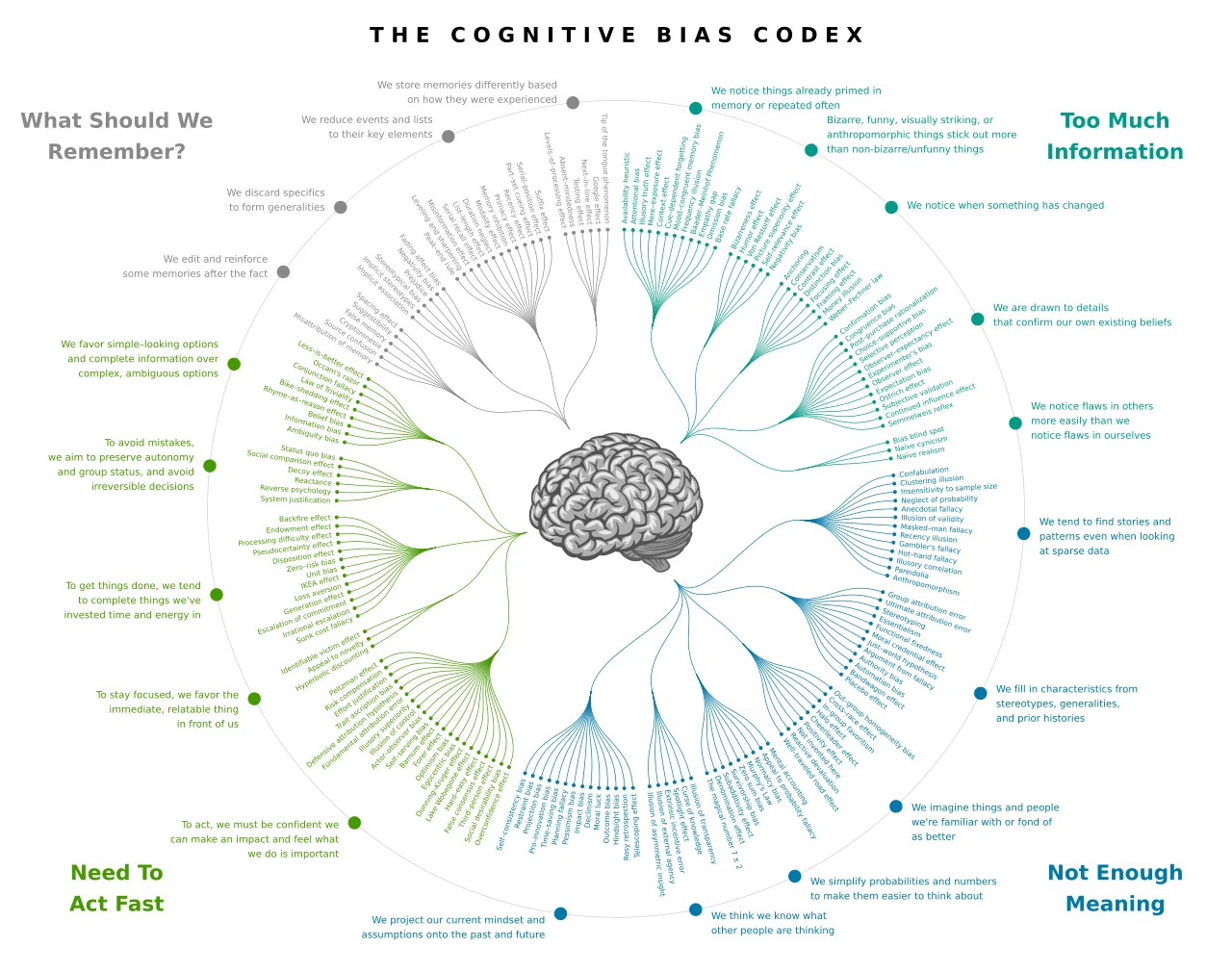
They are patterns-predictable, recurring patterns driven by cognitive biases, organizational structures, and cultural dynamics that systematically distort how organizations process information and choose courses of action.
What Are Common Causes of Decision Failures?
Decision-making failures in organizations typically result from a combination of cognitive, organizational, and structural factors:
Confirmation bias. Decision-makers seek and interpret evidence in ways that confirm their existing beliefs and preferences. Kodak's leadership believed film would remain dominant, so they interpreted market signals through that lens, underweighting evidence of digital photography's growth potential.
Groupthink. Cohesive groups converge on a shared view and suppress dissenting opinions, producing decisions that reflect social consensus rather than rigorous analysis.
Irving Janis's original research on groupthink examined the Bay of Pigs invasion, the escalation of the Vietnam War, and other cases where groups of highly intelligent people made collectively poor decisions because the group's desire for harmony and conformity overrode realistic appraisal of alternatives.
Sunk cost fallacy. Organizations that have invested heavily in a particular strategy, technology, or business model resist abandoning that investment even when new information suggests they should. The investment already made feels like a reason to continue, even though rationally, sunk costs should not influence future decisions.
Poor framing. How a decision is framed what options are considered, what criteria are used, what reference points are established-profoundly influences the choice made.
A decision framed as "Should we protect our profitable film business?" produces different answers than the same situation framed as "How do we position ourselves to lead the next generation of imaging technology?"
Overconfidence. Decision-makers overestimate their ability to predict the future, assess risk, and control outcomes. This overconfidence leads to insufficient contingency planning, underestimation of competitors, and failure to prepare for scenarios that contradict the preferred forecast.
Ignoring base rates. Decision-makers focus on the specific case rather than the general pattern. A pharmaceutical company developing a new drug focuses on the promising results of its compound rather than the base rate that approximately 90 percent of drugs entering clinical trials ultimately fail.
Pressure for consensus. Organizations that value consensus may produce decisions that reflect the lowest common denominator of agreement rather than the best available analysis. The desire to avoid conflict produces decisions that no one loves but everyone can tolerate-decisions that are safe rather than optimal.
Kodak: Inventing the Future and Choosing Not to Pursue It
What Can We Learn from Kodak's Failure
Kodak's failure is the canonical case of the innovator's dilemma, a concept formalized by Harvard Business School professor Clayton Christensen in his 1997 book of the same name.
The innovator's dilemma describes a specific pattern: established companies fail to adopt disruptive technologies not because they are unaware of the technologies but because rational, well-managed decision-making leads them to protect existing profitable businesses rather than cannibalize them for uncertain future opportunities.
"Kodak's problem was not lack of foresight. They saw it coming. Their problem was that seeing it and acting on it are two completely different capabilities."
Clayton Christensen, The Innovator's Dilemma
Kodak's decision-making followed this pattern precisely:
The film business was extraordinarily profitable. In the 1990s, Kodak's film and processing business generated profit margins exceeding 60 percent. No rational business leader willingly destroys a 60 percent margin business to pursue a business with unknown margins.
Digital photography initially served a different market. Early digital cameras were expensive, low-quality, and appealing primarily to niche users (professionals who needed instant review, real estate agents, insurance adjusters). They did not compete directly with consumer film photography.
This made digital photography appear to be a separate, smaller, and less attractive market-not a threat to the core business.
Each year's decision was individually rational. In any given year during the 1990s, the decision to continue prioritizing film over digital was defensible. Film was still the larger market, still more profitable, and still growing in much of the world.
The digital transition, which seemed inevitable in retrospect, did not seem inevitable at each individual decision point.
Organizational structure reinforced the status quo. Kodak's organizational structure was built around the film business. Revenue, profit, career advancement, resource allocation, and corporate identity were all tied to film.
Digital photography was organizationally marginal-underfunded, understaffed, and politically weak relative to the film divisions.
The people making resource allocation decisions were the people whose careers and compensation depended on the film business.
The lesson from Kodak is not that companies should always abandon profitable businesses to pursue unproven technologies.
The lesson is that decision-making processes designed to optimize the current business are structurally biased against innovations that threaten the current business, and organizations that recognize this bias can create decision-making mechanisms that compensate for it.
Blockbuster: Choosing the Present Over the Future
Why Did Blockbuster Reject Netflix
In the year 2000, Reed Hastings, co-founder of Netflix, flew to Dallas to meet with John Antioco, CEO of Blockbuster, and his team. Hastings proposed a partnership: Netflix would handle Blockbuster's online presence, while Blockbuster would promote Netflix in its stores.
According to accounts from both sides, the Blockbuster team was dismissive. Antioco reportedly found the proposal uncompelling, and members of his team struggled not to laugh.
At the time, the reaction was not irrational. Blockbuster was a $6 billion company with 9,000 stores worldwide and 65 million registered members.
Netflix was a struggling startup with $5 million in revenue, losing money, and shipping DVDs by mail-a business model that seemed cumbersome compared to the instant gratification of walking into a Blockbuster store.
Blockbuster's decision-making failure was not the meeting itself. It was the sustained failure to recognize and respond to the strategic threat that Netflix represented as it evolved from DVD-by-mail to streaming:
Underestimated the threat. Blockbuster's leadership evaluated Netflix based on its current state (a small DVD-by-mail company) rather than its trajectory and potential. They failed to ask: "What happens if streaming technology improves?
What happens if broadband penetration increases? What happens if Netflix's customer base grows to the point where it can invest heavily in content?"
Focused on the current profitable model. Blockbuster generated approximately $800 million annually from late fees alone. Any strategic shift toward online delivery would threaten this revenue stream.
Like Kodak with film, Blockbuster's leadership made decisions that protected the current business model rather than positioning the company for the future.
"Every time we talked about making the transition to online, somebody would bring up the late fees. Eight hundred million dollars a year is hard to walk away from."
Former Blockbuster executive, as cited in Netflixed by Gina Keating
Couldn't imagine a different future. Blockbuster's leadership suffered from a failure of strategic imagination-the inability to envision a future fundamentally different from the present.
The physical retail model was so deeply embedded in Blockbuster's identity, operations, and culture that imagining a world without stores required a cognitive leap that the organization could not make.
This is a textbook case of failing to account for second-order effects: improving broadband was a first-order change, but the total destruction of physical video rental was its second-order consequence.
| Company | Decision Failure | What They Had | What They Missed | Outcome |
|---|---|---|---|---|
| Kodak | Protecting film over digital | Digital camera invention, R&D investment | Timing of consumer transition | Bankruptcy (2012) |
| Blockbuster | Dismissing Netflix and streaming | 9,000 stores, 65M members | Streaming technology trajectory | Bankruptcy (2010) |
| Nokia | Wrong platform bet, internal silos | 40% global market share | Smartphone as computing platform | Sold to Microsoft (2014) |
| Theranos | Lack of technical oversight | $9B valuation, celebrity board | Technology didn't work | Criminal convictions |
| New Coke | Over-reliance on taste tests | Market leadership, brand loyalty | Emotional attachment to original | Reversal within 79 days |
Nokia: When Internal Culture Kills External Competitiveness
What Was Nokia's Decision-Making Mistake
In 2007, Nokia held approximately 40 percent of the global mobile phone market. It was the world's largest mobile phone manufacturer, a Finnish national champion, and the dominant force in an industry it had helped create.
In 2013, Nokia agreed to sell its mobile phone business to Microsoft for about $7.2 billion (EUR 5.4 billion); the deal closed in April 2014-a fraction of its peak valuation.
Nokia's decline is often attributed to the iPhone, launched in 2007, but the decision-making failures that led to Nokia's collapse were internal:
Bet on the wrong platform. Nokia's smartphone operating system, Symbian, was designed for the feature phone era-a time when phones were primarily communication devices with limited computing capabilities.
As smartphones evolved into general-purpose computing platforms, Symbian's architecture could not support the app ecosystems, touch interfaces, and computing power that the market demanded.
Nokia chose to continue investing in Symbian long after its architectural limitations became apparent, while Google's Android and Apple's iOS were built for the smartphone era from the ground up.
Organizational silos prevented coordination. Nokia's organizational structure divided the company into units that competed with each other for resources and market share. This internal competition prevented the coordination needed to develop a coherent smartphone strategy.
Different teams developed competing products, incompatible technologies, and contradictory roadmaps.
Culture punished bearing bad news. Research by INSEAD professors Timo Vuori and Quy Huy found that Nokia's middle managers were afraid to communicate the full extent of the competitive threat to senior leadership.
The company's culture, which valued confidence and optimism, created an environment where raising alarm about competitive threats was professionally risky.
Middle managers who reported that Symbian was falling behind iOS and Android feared being seen as negative, uncommitted, or incompetent.
"Middle managers were afraid to tell the top that the emperor had no clothes. Fear created a layer of silence between ground truth and the boardroom."
Timo Vuori & Quy Huy, Administrative Science Quarterly, 2016
The Nokia failure demonstrates that organizational culture is a decision-making system. The norms, incentives, and power dynamics within an organization determine what information reaches decision-makers, how that information is interpreted, and what range of responses is considered acceptable.
When the culture systematically filters out uncomfortable truths and discourages dissent, the decision-making process operates on distorted information and produces distorted outcomes.
This is directly related to how complex systems behave unexpectedly: Nokia's failure emerged not from a single bad call but from the interaction of cultural norms, competitive pressure, and silo dynamics.
Theranos: When Charisma Overrides Evidence
How Did Theranos Persist So Long
Theranos, founded by Elizabeth Holmes in 2003, claimed to have developed technology that could run hundreds of medical tests from a single drop of blood. The company achieved a peak valuation of $9 billion and attracted investment from some of the most experienced investors and board members in American business and government.
The technology did not work. It had never worked as claimed. The decision-making failure was not that Holmes deceived her investors and board-she did, and was convicted of fraud for doing so. The decision-making failure was that so many experienced, sophisticated people failed to detect the deception despite numerous warning signs:
Charismatic founder overrode technical scrutiny. Holmes was an extraordinarily persuasive communicator who cultivated a compelling personal narrative (young Stanford dropout disrupting healthcare) and carefully managed her public image.
The charisma created a halo effect: people who found Holmes personally compelling extended that positive impression to her technology, her company, and her claims.
This is a recurring pattern explained by why smart people make bad decisions-intelligence does not immunize against affect-driven reasoning.
Lack of technical oversight. Theranos's board included distinguished military leaders, diplomats, and business executives-but no one with expertise in blood diagnostics, medical devices, or the specific science underlying the company's claims. The people evaluating the technology lacked the knowledge to evaluate it critically.
Intimidation of critics. Holmes and her COO, Ramesh "Sunny" Balwani, created a culture of fear and secrecy within the company. Employees who raised concerns about the technology were threatened with lawsuits, fired, or both.
The company maintained extreme secrecy about its technology, claiming that proprietary protection required keeping details confidential. This secrecy prevented external experts from evaluating the technology's plausibility.
"The fact that no one on their board could read a lab result is not a footnote. It is the story. You cannot govern what you cannot understand."
John Carreyrou, Bad Blood, on the Theranos board
Confirmation bias from investors wanting to believe. The investors wanted Theranos to succeed because the vision was enormously compelling: cheap, accessible, minimally invasive blood testing could transform healthcare.
This desire to believe made investors susceptible to confirmation bias-interpreting ambiguous signals as confirming the company's claims rather than questioning them.
New Coke: Ignoring Emotional Attachment to Data
What Decision Error Caused New Coke
In April 1985, The Coca-Cola Company announced the most dramatic product change in its 99-year history: the original Coca-Cola formula would be discontinued and replaced with "New Coke," a sweeter formulation that performed better in blind taste tests against rival Pepsi.
The decision was based on extensive market research. Coca-Cola had conducted approximately 200,000 taste tests, and the new formula consistently beat both the original Coca-Cola and Pepsi. The data was clear and overwhelming. The company's leadership, led by CEO Roberto Goizueta, made what appeared to be a data-driven decision.
The result was a catastrophe. Consumers revolted. Coca-Cola's switchboard received 400,000 angry calls and letters. Protest groups formed. The company reversed its decision within 79 days, reintroducing the original formula as "Coca-Cola Classic."
Over-reliance on taste tests ignoring emotional attachment to the brand. The taste tests measured one thing: which liquid tasted better in a blind sip. They did not measure the complex emotional, cultural, and identity-based relationship that consumers had with Coca-Cola.
For many Americans, Coca-Cola was not merely a beverage preference. It was a cultural touchstone, a childhood memory, a piece of American identity. Changing the formula felt like a betrayal of something personal.
Not considering switching costs. The taste tests assumed that the relevant comparison was between two liquids. But in the real market, consumers were not choosing between two unfamiliar liquids. They were being asked to give up a product they had a lifetime relationship with and accept a replacement.
The psychological cost of losing something familiar and beloved (loss aversion) far exceeded the marginal taste improvement measured in blind tests. This is a failure of decision-making under uncertainty: the data was technically correct but modeled the wrong decision.
"We knew some people were going to be unhappy. But we had no idea we were going to be tapping into the collective consciousness of America."
Donald Keough, President of Coca-Cola, on New Coke's failure
The New Coke failure is a case study in the limits of quantitative data for capturing qualitative human experience. The data was technically correct: the new formula did taste better in blind tests. But the data measured the wrong thing.
It measured taste preference in isolation from the cultural, emotional, and identity-based factors that actually drove consumer behavior.
Why Do Smart People Make Bad Decisions?
The cases above share a common thread: the decision-makers were not incompetent. They were experienced, educated, and intelligent. Their failures were not failures of ability but failures of the decision-making process. Several factors explain why intelligence does not protect against bad decisions:
Intelligence does not prevent bias.Cognitive biases are not a function of intelligence. They are features of the cognitive architecture that all humans share, regardless of education, experience, or IQ.
Research by Keith Stanovich has demonstrated that cognitive biases are largely uncorrelated with intelligence-smart people are not significantly less biased than average people; they are merely better at constructing rational-sounding justifications for their biased conclusions.
Overconfidence increases with knowledge. Experts in a domain often exhibit more overconfidence than novices, because their deep knowledge gives them confidence that extends beyond the boundaries of their actual predictive ability.
The Long-Term Capital Management hedge fund failure, in which Nobel Prize-winning economists overestimated the completeness of their financial models, illustrates this pattern.
Expertise can create blind spots. Deep expertise in one domain can create blind spots in adjacent domains. Kodak's leadership had deep expertise in the film business, which gave them accurate models of how the film market worked but inaccurate models of how the digital market would develop.
Their expertise in the current paradigm made it harder, not easier, to understand the next paradigm.
How Can Organizations Prevent Decision Failures?
Encourage dissent. Organizations that systematically encourage and protect dissenting opinions make better decisions than those that reward consensus. Alfred Sloan, the legendary CEO of General Motors, reportedly told his executives: "Gentlemen, I take it we are all in complete agreement on the decision here?
Then I propose we postpone further discussion to give ourselves time to develop disagreement and perhaps gain some understanding of what the decision is about."
Red team ideas. Before implementing a major decision, assign a team specifically to argue against it-to find every flaw, every risk, and every alternative that the decision overlooks. The red team's job is not to make friends but to stress-test the decision.
Conduct pre-mortems. Gary Klein's pre-mortem technique asks: "Imagine that we have implemented this decision and it has failed catastrophically. What caused the failure?" This technique exploits hindsight bias constructively, making it easier to identify risks that optimism bias would otherwise conceal.
Seek diverse perspectives. Homogeneous groups are more susceptible to groupthink, confirmation bias, and shared blind spots. Groups that include people with different backgrounds, different expertise, and different perspectives are more likely to identify risks and alternatives that a homogeneous group would miss.
Use explicit decision processes. Informal, intuitive decision-making is susceptible to all the biases described above.
Structured decision processes-with explicit criteria, systematic evidence review, and formal consideration of alternatives-reduce the influence of cognitive biases by requiring systematic analysis rather than allowing intuitive judgment to dominate.
Learn from mistakes. Organizations that conduct honest post-mortems of failed decisions-without blame, focused on understanding what went wrong and how to prevent similar failures-develop institutional learning that improves future decision-making.
Organizations that punish failure produce a culture where failures are concealed rather than examined, ensuring that the same mistakes are repeated.
The most important insight from the study of decision-making failures is that the quality of an organization's decisions is a function of its decision-making process, not of the intelligence of its decision-makers. Smart people with bad processes make bad decisions.
Average people with good processes make better decisions. The investment in improving decision-making processes-building dissent into the culture, structuring evaluation procedures, diversifying perspectives, and learning from failures-produces returns that far exceed the investment.
The Space Shuttle Columbia: How NASA Repeated the Same Mistake
Seventeen years after Challenger, NASA's decision-making culture failed again. On February 1, 2003, the Space Shuttle Columbia disintegrated during reentry, killing all seven crew members.
The proximate cause was a piece of foam insulation that struck the left wing's thermal protection tiles during launch, creating a breach that allowed superheated plasma to enter the wing structure on reentry.
What makes Columbia instructive as a decision-making case is that engineers at NASA and Boeing-the shuttle's primary contractor-suspected the foam strike might be fatal and requested satellite imagery to inspect the wing.
Their requests were denied by Mission Management Team chair Linda Ham, who concluded, without technical evidence, that the damage was not a safety concern.
The Columbia Accident Investigation Board (CAIB), which investigated the disaster, documented a pattern chillingly similar to the Challenger failure: foam strikes had occurred on previous missions without incident, normalizing what was in fact an unacceptable risk.
Sociologist Diane Vaughan had coined the term "normalization of deviance" specifically to describe Challenger. The CAIB report explicitly cited her work, noting that NASA had reconstituted the exact same cultural pathology in the intervening years.
The Board's key finding: "NASA's organizational culture and structure had as much to do with this accident as the foam." Safety engineers with dissenting views were not heard.
The decision process required those arguing that the damage was dangerous to prove it-an impossible evidentiary bar given the absence of imagery. NASA had learned the technical lessons of Challenger but not the organizational ones.
"The Board strongly believes that if these persistent, systemic flaws are not resolved, the scene is set for another accident."
Columbia Accident Investigation Board Report, 2003
The Columbia case demonstrates that organizational cultures revert to prior failure modes under pressure unless deliberate structural intervention changes the incentives, information flows, and decision authority that produce them.
Wells Fargo: When Sales Incentives Systematically Override Judgment
Between 2002 and 2016, Wells Fargo employees opened approximately 3.5 million unauthorized bank and credit card accounts in customers' names without their knowledge or consent.
The scandal, when revealed in 2016, led to $3 billion in fines, the resignation of CEO John Stumpf, and the clawback of over $60 million in executive compensation.
The decision-making failure at Wells Fargo was not a single choice but a structural cascade. The bank's aggressive "cross-selling" strategy-selling customers multiple financial products-was operationalized through sales quotas that front-line employees found impossible to meet legitimately.
The quota system created a choice between two forms of career failure: miss quota and face termination, or meet quota through unauthorized accounts and risk eventually being caught.
Many employees chose the second option, and for years the bank's internal incentive structure rewarded them for it.
Richard Cordray, then director of the Consumer Financial Protection Bureau, described the bank's incentive system as "toxic." Behavioral economist Dan Ariely's research on dishonesty is directly applicable: people are far more likely to behave unethically when the system design makes the ethical choice costly and the unethical choice feel normalized, incremental, and low-risk.
Approximately 5,300 employees were eventually fired-but the decision failure was not employee-level malfeasance. It was executive-level system design.
"The root cause of sales practice failures was the distortion of the cross-selling business model through an incentive-compensation program and management culture that drove employees to meet unrealistic sales goals by any means possible."
Wells Fargo Independent Directors Report, 2017
The Wells Fargo case is a textbook illustration of the principal-agent problem in organizational design: when the incentives of frontline agents diverge from the stated objectives of the organization, rational agents optimize for what they are rewarded for, not what they are told to value.
What Research Shows About Organizational Decision Failure
Academic research on organizational decision-making has moved beyond anecdote to identify systematic mechanisms that produce failure - findings that appear consistently across industries and organizational types.
Clayton Christensen at Harvard Business School spent over a decade studying why successful companies fail when confronted with disruptive innovation, publishing his findings in The Innovator's Dilemma (1997) and subsequent papers in Harvard Business Review and MIT Sloan Management Review.
His central finding was that organizational decision-making processes that are effective for sustaining innovation are structurally biased against disruptive innovation.
Successful companies listen to their best customers (who want incremental improvement to existing products), allocate resources to high-margin opportunities (which new markets initially are not), and make decisions through analytical processes that require rigorous financial justification (which new markets cannot provide).
Christensen studied disk drive industry transitions and found that leading companies in the prior generation frequently failed to lead in the subsequent generation of disruptive technologies.
The mechanism was not incompetence but rational decision-making processes that consistently allocated resources away from technologies that would eventually replace them.
Deborah Mitchell at the University of Colorado, Jay Russo at Cornell University, and Nancy Pennington at the University of Colorado published research on "prospective hindsight" - the technique of projecting oneself into the future to improve current decision-making - in Organizational Behavior and Human Decision Processes in 1989.
Their finding was that asking people to explain why a specific future outcome had occurred (prospective hindsight) increased their ability to identify reasons for outcomes by about 30%.
This became the empirical basis for the "pre-mortem" technique later popularized by Gary Klein.
In a follow-up meta-analysis of 30 studies, Mitchell and colleagues found that groups using structured decision analysis - explicitly generating and evaluating alternative scenarios rather than defending a preferred option - avoided decision failures at a rate 25-35% higher than groups using standard decision procedures.
Roger Buehler at Wilfrid Laurier University and Dale Griffin at the University of British Columbia published research on the "planning fallacy" - the systematic tendency to underestimate the time, costs, and risks of planned actions - in the Journal of Personality and Social Psychology in 1994.
Their studies found that people consistently predicted their own projects would be completed faster than virtually identical past projects, and that this bias persisted even when participants were explicitly reminded of their track record.
The effect was largest for tasks with high personal investment, providing an explanation for why experienced executives consistently underestimate project costs and timelines.
Buehler and Griffin's studies were laboratory and field studies of individual task-completion predictions; they did not estimate organizational cost-overrun percentages.
Itamar Simonson at Stanford University and Barry Staw at the University of California Berkeley studied "escalation of commitment" - the tendency to continue investing in a failing course of action - publishing in Journal of Applied Psychology in 1992 ("De-escalation strategies").
Their research found that organizational decision-makers who had personally authorized an initial investment escalated commitment to failing projects at rates 40-60% higher than managers who had not made the initial decision, even when identical information was presented.
The mechanism was "ego protection" - individuals needed to vindicate their prior decision rather than acknowledge error.
More importantly, the researchers found that escalation was reduced when organizations had established explicit "decision checkpoints" requiring a fresh evaluation by people not involved in the original decision - a structural intervention rather than a personal behavior change.
Real-World Case Studies in Decision Failure Mechanisms
Several well-documented organizational failures provide precise evidence of how specific decision-making mechanisms produce specific types of failure.
Motorola's Iridium satellite phone system (launched 1998) is one of the most studied cases of systematic decision failure in the technology industry. Motorola conceived Iridium in 1985 when cell phone coverage was sparse.
By the time Iridium launched 13 years and $5 billion later, terrestrial cell coverage had expanded dramatically - eliminating the core problem Iridium was designed to solve.
Market research conducted by independent consultants in 1996 had warned Motorola that projected Iridium subscribers would not materialize; the research was discounted by internal teams.
A post-mortem analysis by John Bloom, published in Eccentric Orbits (2016) and corroborated by interviews with Motorola executives, identified three specific decision failures.
Planning fallacy (13-year development timeline had never been reassessed against a changing environment), sunk cost escalation (the $5 billion already invested made abandonment feel impossible), and organizational commitment bias (a dedicated Iridium business unit meant that hundreds of careers depended on launching the product).
Iridium filed for bankruptcy 9 months after launch, having signed up approximately 55,000 subscribers against projections of 500,000.
NASA's Mars Climate Orbiter loss in September 1999 provides a precisely documented case of how a $327.6 million mission (the orbiter itself cost $125 million) failure can result from a single uncaught communication and verification failure.
The spacecraft was lost because one engineering team provided thrust data in imperial units (pound-force seconds) while another team's software expected metric units (newton-seconds) - a factor-of-4.45 discrepancy.
The NASA Mars Climate Orbiter Mishap Investigation Board's 1999 report identified not just the unit error but the decision failure that allowed it to persist: three months before the mission, a navigation engineer had identified anomalies consistent with the unit error and flagged them through the formal problem reporting system.
The report was not acted upon because the problem was below the threshold that automatically triggered a formal review, and no human being with decision authority reviewed the anomalous data.
The decision failure was the absence of a decision: no one in the review hierarchy took ownership of an anomaly that individual contributors had correctly identified.
Groupon's rapid expansion (2010-2012) provides a data-rich case study of organizational decision failure driven by overconfidence and planning fallacy. Following explosive growth in 2010, Groupon expanded to 48 countries and grew from about 37 to roughly 10,000 employees in about two years.
CEO Andrew Mason and the board decided to decline a $6 billion acquisition offer from Google in 2010, projecting continued growth that would make Groupon worth $25 billion or more.
By 2012, Groupon's stock had fallen 80% from its IPO price, Mason was fired, and the company was engaged in a multi-year restructuring.
A 2013 Harvard Business School case study by Thomas Eisenmann and Sarah Moughty identified four specific decision failures: customer unit economics had never been measured (Groupon did not know whether its customers were profitable), and merchant retention was not tracked (merchants who ran one deal rarely ran a second, suggesting the model was not repeatable).
Geographic expansion decisions were made on growth metrics rather than profitability metrics, and the Google acquisition rejection was made without a financial model comparing acquisition value to independent growth scenarios.
The 2008 financial crisis decisions at major financial institutions have been analyzed in a 2011 report by the Financial Crisis Inquiry Commission (a US government body), which concluded that the crisis was the result of "human action and inaction" rather than unforeseeable events.
The Commission found specific decision failures at 24 institutions: risk models in use at major banks in 2006-2007 had identified the possibility of correlated mortgage default scenarios but senior decision-makers had classified these scenarios as sufficiently low-probability to be disregarded.
Frederic Mishkin at Columbia Business School published "Over the Cliff: From the Subprime to the Global Financial Crisis" in the Journal of Economic Perspectives in 2011.
The decision failure was not information deficiency but a systematic organizational tendency to underweight tail-risk scenarios - precisely the planning fallacy and overconfidence effects documented in laboratory research.
Philip Tetlock's Superforecasting Research and What It Reveals About Decision Failure
Philip Tetlock at the University of Pennsylvania conducted one of the most rigorous long-term studies of expert decision-making ever undertaken.
Beginning in 1984 and continuing for over two decades, Tetlock tracked the predictions of 284 experts-economists, political scientists, historians, intelligence analysts, journalists-asking them to make specific, verifiable predictions about political and economic events.
He collected approximately 82,361 forecasts and evaluated them against actual outcomes.
The results, published in his 2005 book Expert Political Judgment: How Good Is It? How Can We Know?, were unflattering to experts: their predictions barely outperformed random chance and were frequently worse than simple statistical base-rate models.
Experts in more prestigious positions, with more media exposure, and with greater expressed confidence were not more accurate-they were often less accurate, because confidence and public profile create pressure to make bold, distinctive predictions that turn out to be wrong.
Tetlock identified a distinction between two types of forecasters: "foxes" who drew on multiple frameworks and maintained calibrated uncertainty, and "hedgehogs" who applied a single organizing principle with high confidence.
Foxes significantly outperformed hedgehogs. The decision-making implication is direct: the experts and executives most likely to lead organizations into catastrophic decisions are those who display the most confident, hedgehog-like certainty-exactly the personality type that gets promoted, celebrated, and put in charge of consequential choices.
Tetlock's subsequent Good Judgment Project, launched in 2011 as part of a US intelligence community forecasting tournament, identified "superforecasters"-individuals who performed dramatically better than average, including better than CIA analysts with access to classified information.
These superforecasters shared identifiable habits: they updated their beliefs frequently in response to new evidence, expressed uncertainty in precise probabilistic terms, sought out disconfirming evidence, and collaborated actively.
These practices are the precise opposites of the behaviors documented in Kodak, Blockbuster, and Nokia's leadership: certainty instead of calibration, anchoring instead of updating, consensus-seeking instead of seeking disconfirmation.
The IBM Near-Collapse of 1993 and the Decision to Reverse Course
IBM's near-bankruptcy in the early 1990s is less frequently cited than Kodak or Blockbuster, but it provides an instructive counterexample: a case of catastrophic decision failure followed by successful organizational correction.
IBM had dominated the mainframe computer market for decades with a vertically integrated business model: it designed, manufactured, and sold hardware while maintaining proprietary software and services.
When the personal computer market emerged in the 1980s, IBM made a decision that seemed reasonable at the time-it outsourced the microprocessor to Intel and the operating system to a small company called Microsoft, allowing it to bring the IBM PC to market quickly.
The decision backfired over the following decade in ways IBM's leadership did not anticipate. Intel and Microsoft captured the value in the PC industry while IBM found itself competing with dozens of clone manufacturers who used the same components.
IBM's revenue declined from $69 billion in 1990 to $62 billion in 1993, and the company lost $8 billion in 1992 and 1993 combined-the largest losses in corporate history to that point. The board considered breaking the company into smaller independent units.
Instead, the board hired Lou Gerstner, an outsider with no technology background, as CEO in 1993.
Gerstner's decision-making approach explicitly addressed the organizational failures that had led to IBM's crisis: he insisted on direct customer contact to understand what IBM's customers actually needed rather than what IBM's internal culture assumed they needed.
He also dismantled the internal political structures that had prevented honest information from reaching decision-makers, and he resisted the consensus view, widely held within IBM and among outside analysts, that the company should be broken up.
His 2002 memoir Who Says Elephants Can't Dance? documents how he used structured red-team challenges to force IBM's leadership to confront assumptions they had treated as unquestionable.
IBM's recovery-from near-bankruptcy to a market capitalization of over $150 billion by 2000-is one of the most studied examples of deliberate organizational decision-making reform producing measurable results.
Sources & Further Reading
Christensen, C.M. (1997). The Innovator's Dilemma: When New Technologies Cause Great Firms to Fail. Harvard Business Review Press. View source
Janis, I.L. (1972). Victims of Groupthink: A Psychological Study of Foreign-Policy Decisions and Fiascoes. Houghton Mifflin. View source
Vuori, T.O. & Huy, Q.N. (2016). "Distributed Attention and Shared Emotions in the Innovation Process: How Nokia Lost the Smartphone Battle." Administrative Science Quarterly, 61(1), 9-51. DOI: 10.1177/0001839215606951
Keating, G. (2012). Netflixed: The Epic Battle for America's Eyeballs. Portfolio/Penguin. View source
Carreyrou, J. (2018). Bad Blood: Secrets and Lies in a Silicon Valley Startup. Knopf. View source
Oliver, T. (1986). The Real Coke, the Real Story. Random House. View source
Stanovich, K.E. (2009). What Intelligence Tests Miss: The Psychology of Rational Thought. Yale University Press. View source
Klein, G. (2007). "Performing a Project Premortem." Harvard Business Review. View source
Kahneman, D. (2011). Thinking, Fast and Slow. Farrar, Straus and Giroux. View source
Munger, C.T. (1995). "The Psychology of Human Misjudgment." Speech at Harvard Law School. View source
Tetlock, P.E. (2005). Expert Political Judgment: How Good Is It? How Can We Know?. Princeton University Press. View source
Lucas, H.C. & Goh, J.M. (2009). "Disruptive Technology: How Kodak Missed the Digital Photography Revolution." Journal of Strategic Information Systems, 18(1), 46-55. DOI: 10.1016/j.jsis.2009.01.002
Sull, D.N. (1999). "Why Good Companies Go Bad." Harvard Business Review. View source