
Consequentialism: You face an agonizing decision. You can take action A, which feels wrong: perhaps it involves deception, harm to an innocent person, or breaking a promise. But action A will save five lives. Alternatively, action B follows all the rules and respects everyone's rights, but results in five deaths. What do you choose?
Consequentialism provides a clear answer: choose action A. The outcomes matter, five lives saved versus five lives lost. If the consequences of action A are better than action B, then A is the morally right choice regardless of whether it involves deception, harm, or rule-breaking. The ends, in consequentialist thinking, justify the means.
"Actions are right in proportion as they tend to promote happiness, wrong as they tend to produce the reverse of happiness." - John Stuart Mill
This outcome-focused approach to ethics stands as one of the major moral frameworks in moral philosophy, competing with deontological ethics (which emphasizes duties and rules regardless of consequences) and virtue ethics (which emphasizes character).
Consequentialism judges the morality of actions solely by their results. An action producing better outcomes is morally superior to one producing worse outcomes, regardless of the action's intrinsic nature, the agent's intentions, or whether it violates rights or rules.
The appeal of consequentialism is intuitive. When making practical decisions, we naturally consider outcomes. Which medical treatment produces better health outcomes? Which policy reduces poverty more effectively? Which parenting choice results in better child development?
Focusing on results seems pragmatic and rational, surely what matters is making the world better, not abstract adherence to rules or principles.
Yet consequentialism leads to conclusions many people find deeply troubling. It can require harming innocents to produce better overall outcomes. It demands extreme sacrifice from individuals if that maximizes collective welfare.
It provides no inherent protection for rights, justice, or human dignity when violating these produces better consequences.
These disturbing implications---the kind that surface in genuine moral dilemmas---explain why consequentialism, despite its intuitive appeal, remains philosophically controversial.
Understanding consequentialism requires examining both its powerful attractions and its troubling implications, exploring different varieties of consequentialist thought, and considering how, or whether, consequentialist thinking should guide moral decision-making in ethics, policy, and life.
The Core Concept: Outcomes as the Only Moral Measure
Consequentialism's fundamental claim is straightforward: the rightness or wrongness of actions depends entirely on their consequences. Nothing else matters morally: not intentions, character, rule-following, rights, or the intrinsic nature of the act itself. Only outcomes determine moral value.
The rejection of intrinsic wrongness represents consequentialism's radical move. Most ethical intuitions treat certain actions as intrinsically wrong: murder, torture, lying, promise-breaking. Consequentialism denies this. No action is inherently, absolutely wrong. Any action becomes right if its consequences are good enough.
This seems counterintuitive initially. Surely murder is simply wrong, regardless of consequences? Consequentialism responds: what makes murder wrong is that it typically produces terrible consequences (loss of life, suffering for loved ones, social instability).
In the rare case where murder produces better consequences than alternatives, perhaps killing one person prevents a catastrophe killing thousands, it becomes the morally right choice.
This logical consistency represents both consequentialism's strength and its difficulty. It provides clear decision procedure (compare outcomes, choose better one) but yields conclusions conflicting with deep moral intuitions (sometimes you should murder innocent people).
"The creed which accepts as the foundation of morals utility, or the greatest happiness principle, holds that actions are right in proportion as they tend to promote happiness, wrong as they tend to produce the reverse." - John Stuart Mill
The aggregation of welfare follows naturally. If outcomes alone matter, and moral evaluation requires comparing outcomes, we need a measure of outcome quality. The most common consequentialist measure is aggregate welfare or well-being: sum total of how well-off all affected individuals are.
The morally best outcome maximizes aggregate welfare.
This aggregation creates potentially disturbing math. If action A creates 100 units of harm to one person but 150 units of benefit to others, net welfare is +50. Action B avoids the harm but also forgoes the benefit, net welfare 0.
Consequentialism judges A morally superior because aggregate welfare is higher, despite the concentrated harm to one innocent person.
Critics argue this treats individuals as mere containers of welfare to be redistributed rather than persons with rights, dignity, and inviolability.
Consequentialists respond that focusing on overall welfare is precisely what morality requires---making the world better for people collectively, not protecting individuals regardless of cost to others.
This tension lies at the heart of every ethical tradeoff that organizations and governments face.
The demandingness of consequentialist morality emerges from its relentless focus on best possible outcomes. If moral obligation is to produce the best consequences, you're morally obligated to constantly maximize welfare.
Spending money on entertainment when that money could save lives through charity produces worse consequences than donating. Consequentialism seems to demand you donate.
This makes consequentialist morality extraordinarily demanding. You may be obligated to sacrifice most of your time, money, and comfort to help others because the welfare gains to them outweigh welfare losses to you.
Many find this implausibly demanding, surely morality permits some personal projects and pursuit of self-interest even when helping others would produce better aggregate outcomes.
Some consequentialists embrace this demandingness: morality is demanding, and we should be more altruistic. Others modify consequentialism to allow reasonable personal prerogatives. But the basic problem remains: focus on best outcomes seems to require extreme sacrifice whenever that maximizes welfare.
Impartiality requirements flow from consequentialism's structure. If aggregate welfare alone matters, everyone's welfare counts equally. Your happiness doesn't count more than a stranger's happiness just because it's yours.
This radical impartiality means giving equal weight to distant strangers and loved ones: the welfare of a random person on the other side of the planet matters exactly as much as your child's welfare.
Again, this conflicts with deep intuitions. Most people believe you have special obligations to family, friends, and community that justify prioritizing their welfare over strangers.
Consequentialism struggles to accommodate this: if morality means maximizing aggregate welfare and everyone counts equally, partiality toward loved ones is unjustified whenever it reduces aggregate welfare.
Utilitarianism: The Classical Form
Utilitarianism represents consequentialism's most influential and developed version, associated particularly with philosophers Jeremy Bentham and John Stuart Mill. Utilitarianism holds that the right action maximizes utility, typically understood as happiness or pleasure and the absence of suffering.
Jeremy Bentham's formulation in the late 1700s established classical utilitarianism. Bentham argued that pleasure and pain govern human behavior and should govern morality.
The principle of utility, "the greatest happiness for the greatest number," provides clear moral guidance: calculate which action produces the most total pleasure and least total pain across all affected individuals, then do that.
Bentham attempted to make this calculable through his "felicific calculus": measuring pleasure by intensity, duration, certainty, propinquity, fecundity, purity, and extent.
While this calculation proves impractical in reality, it illustrates utilitarianism's aspiration to make ethics scientific and measurable rather than based on intuition or tradition.
Bentham's famous dictum, "each to count for one and none for more than one," captures utilitarianism's radical egalitarianism. A king's happiness counts no more than a peasant's. Your happiness doesn't count extra because it's yours.
Everyone's welfare receives equal consideration in the utilitarian calculus.
John Stuart Mill's refinement attempted to address objections to Bentham's simple pleasure-maximization. Critics charged that Bentham's utilitarianism made humans no different from pigs, since pigs experience pleasure, a pig's contentment counts equally to human happiness.
If simple pleasure is all that matters, better to be a satisfied pig than a dissatisfied human.
Mill responded by distinguishing higher and lower pleasures. Intellectual, moral, and aesthetic pleasures are qualitatively superior to mere physical pleasures.
"It is better to be a human dissatisfied than a pig satisfied; better to be Socrates dissatisfied than a fool satisfied." This preserves intuition that distinctively human excellences matter more than animal pleasures.
However, this creates theoretical problems. If we're measuring different qualities of pleasure, not just quantities, how do we compare them? Bentham's utilitarian calculation, while difficult practically, was theoretically clear: sum up total pleasure units.
Mill's quality distinctions make comparison much harder. How many units of pushpin (a simple game) equal one unit of poetry appreciation?
Preference utilitarianism represents a contemporary variation. Instead of maximizing pleasure or happiness, maximize satisfaction of preferences. The right action is whatever best satisfies the preferences of all affected individuals, weighted equally.
This addresses some measurement problems: we can observe what people prefer through their choices rather than trying to measure subjective happiness. It also respects individual autonomy: rather than imposing some conception of what makes people happy, we defer to their own preferences about what they value.
However, preference utilitarianism faces new problems. Should we satisfy all preferences, including malicious or perverse ones? If someone prefers others to suffer, does their preference count equally? Should we satisfy preferences based on false beliefs? These questions reveal that not all preference satisfaction seems morally valuable.
Well-being consequentialism focuses on overall welfare or wellbeing rather than specifically pleasure or preference satisfaction. What matters is making people's lives go well, however we understand wellbeing. This allows pluralistic accounts, perhaps wellbeing includes happiness, achievement, relationships, knowledge, and other goods.
The challenge is defining and measuring wellbeing. Different philosophical accounts of wellbeing, hedonism (pleasure), desire-satisfaction, objective list theories, yield different utilitarian prescriptions. Without consensus on what constitutes wellbeing, utilitarian calculation becomes unclear.
The Trolley Problem and Thought Experiments
Consequentialism's implications become vivid through thought experiments that isolate outcome-focused reasoning from other moral considerations. These scenarios test whether people's moral intuitions align with consequentialist conclusions.
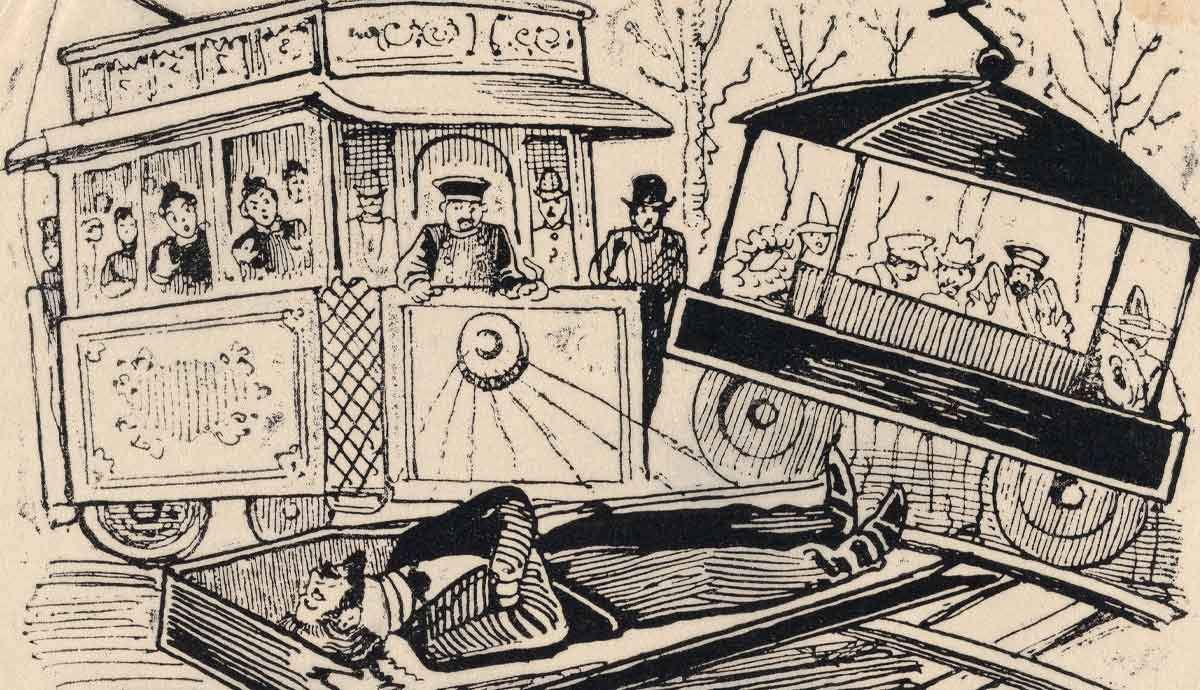
The classic trolley problem, introduced by philosopher Philippa Foot, presents this scenario: A runaway trolley will kill five people on the tracks. You stand next to a lever that can divert the trolley to a side track, where it will kill one person. Should you pull the lever?
Consequentialist answer is clear: pull the lever. Five deaths versus one death: pulling the lever produces better consequences (net savings of four lives). Most people share this intuition, suggesting consequentialist thinking aligns with common moral judgment in this case.
The footbridge variation changes one detail: Instead of pulling a lever, you stand on a footbridge above the tracks. A large man stands next to you. Pushing him off the bridge will stop the trolley, saving five people but killing the large man. Should you push?
The consequences are identical to the lever case: one dies, five saved. Yet most people refuse to push the large man, even while agreeing to pull the lever.
This inconsistency reveals that something besides consequences matters to moral intuition, perhaps using someone as a means, or causing harm through direct action versus mere redirection of threat.
Consequentialists argue this inconsistency is irrational. If outcomes alone matter morally, the footbridge and lever cases are morally equivalent. Refusing to push while accepting pulling the lever reflects confused thinking that should be abandoned.
Critics argue it reveals that consequentialism is incomplete: moral evaluation requires more than outcome comparison.
The transplant case pushes consequentialism further: A surgeon has five dying patients, each needing a different organ transplant. A healthy person walks in for a checkup. Should the surgeon kill the healthy person and distribute organs to the five patients?
Consequentialism seems to endorse this: one death, five lives saved, better outcome. Yet virtually everyone judges this obviously wrong. The surgeon should not kill the innocent patient, regardless of consequences. This intuition conflicts sharply with straightforward consequentialist reasoning.
Consequentialists respond in several ways. Some bite the bullet: yes, in this precise scenario, the surgeon should kill the patient. Our reluctance reflects squeamishness or rule-following that isn't morally justified.
Others argue the consequences wouldn't actually be better when you consider wider effects: erosion of trust in medicine, social fear of doctors, long-term harm to medical system. Still others modify consequentialism to rule-based versions that avoid these implications.
The experience machine thought experiment by Robert Nozick questions whether pleasure or happiness alone determines value.
Suppose you could enter a machine that simulates perfect experiences: you'd feel like you're living a wonderful life, experiencing great achievements, loving relationships, and profound happiness, but actually you're in a tank with electrodes. Would you enter permanently?
If utilitarian value equals happiness or pleasure, entering the machine seems obviously right, you maximize your pleasure. But most people refuse, suggesting something besides happiness matters, perhaps actually achieving things, really relating to others, living in reality rather than simulation.
This implies consequentialism focusing solely on happiness may miss other important values.
Problems and Objections to Consequentialism
Despite its intuitive appeal and logical clarity, consequentialism faces substantial philosophical objections that have led many philosophers to reject pure consequentialist ethics.
The calculation problem challenges whether consequentialism provides practical guidance. To determine the right action, you must predict all consequences of all possible actions, compare overall welfare outcomes, then choose the best. In reality, predicting consequences is extraordinarily difficult.
Actions have rippling effects through complex social systems---what practitioners of second-order thinking call cascading effects. Unintended consequences frequently surprise us. How can you reliably calculate which action produces best outcomes when you can't predict outcomes accurately?
Consequentialists respond that we do our best with available information, using probability and expected value calculations.
But critics note this makes consequentialist evaluation highly uncertain and subjective: different people's probability estimates and valuations will yield different conclusions about the same action, undermining consequentialism's promised objectivity.
The measurement problem asks how we compare and aggregate different types of consequences. How do you compare one person's pain against another's pleasure? How do you weigh happiness against autonomy, or life against suffering, or human welfare against environmental health?
Consequentialism requires commensurability: all values measured on common scale, but many values seem incommensurable.
Utilitarians attempt to reduce everything to happiness or preference satisfaction, but this reduction seems implausible. Is dignity just instrumental to happiness? Is justice just valuable insofar as it makes people happier?
Many argue these goods have value independent of welfare consequences, which consequentialism can't accommodate.
The rights violation problem represents consequentialism's most serious challenge. By making outcomes the only moral consideration, consequentialism provides no inherent protection for rights or justice. If harming innocents maximizes welfare, consequentialism requires harming innocents.
If enslaving a minority produces greater total welfare than freedom, consequentialism endorses slavery.
Consequentialists argue that in real world, rights violations typically produce worse consequences when all effects are considered: social instability, erosion of trust, suffering of victims, precedent effects. But this makes rights merely instrumentally valuable.
If rights violations truly did maximize welfare, consequentialism would endorse them. Many find this unacceptable: rights should constrain our pursuit of good consequences, not just be strategic tools for achieving them.
The demandingness problem makes consequentialism seem impossibly stringent. If you're morally obligated to maximize welfare, you should donate nearly all your income to effective charities, work constantly to help others, sacrifice personal projects and relationships whenever doing so helps strangers more.
Few people can live like this, suggesting consequentialist demands exceed plausible moral requirements.
Some consequentialists accept extreme demands: morality is demanding, and we're generally insufficiently altruistic. But this faces the objection that ought implies can: moral requirements must be ones humans can reasonably meet.
Others try to modify consequentialism to allow personal prerogatives while maintaining consequentialist structure.
The integrity objection, raised by philosopher Bernard Williams, argues consequentialism ignores the moral importance of an agent's own projects, commitments, and integrity.
If I'm deeply committed to pacifism but consequentialist calculation says I should kill to prevent greater killing, consequentialism demands I violate my most fundamental commitments.
"Utilitarianism makes integrity as a value more or less unintelligible." - Bernard Williams
Williams argues this "makes me into a mere channel through which consequences flow" rather than an agent with my own values and integrity.
Consequentialism can't make sense of why my own commitments and values should matter in my moral deliberations except insofar as honoring them maximizes overall welfare, but this seems to miss something morally important about personal integrity.
The separateness of persons objection, articulated by John Rawls, argues that consequentialism fails to respect that people are separate individuals, not just vessels of utility to be redistributed.
"Each person possesses an inviolability founded on justice that even the welfare of society as a whole cannot override." - John Rawls
Harming one person to benefit others treats the harmed person merely as a means to collective welfare maximization, failing to respect their separateness and inviolability.
This connects to broader criticism that consequentialism is too aggregative: summing welfare across persons while ignoring distribution.
An outcome where one person suffers terribly but others benefit moderately may have higher total welfare than outcome where welfare distributes more fairly but totals lower. Consequentialism prefers the first, but many judge the fair distribution morally superior.
Varieties of Consequentialism: Attempts at Refinement
Recognizing these problems, philosophers have developed modified consequentialist theories attempting to preserve outcome focus while avoiding most troubling implications.
Rule consequentialism evaluates rules rather than individual acts. Instead of asking "which action produces best consequences?", ask "which rules, if generally followed, would produce best consequences?" Follow those rules even when breaking them in particular cases would produce better outcomes.
This addresses many objections. Rules against lying, harming innocents, and breaking promises would be justified because generally following these rules produces better consequences than allowing case-by-case exceptions.
The surgeon shouldn't kill the patient for organs because rule against killing innocents, if generally followed, produces better outcomes than allowing utilitarian calculations to override it in individual cases.
However, rule consequentialism faces challenges. If the justified rules are absolute, rule consequentialism becomes difficult to distinguish from deontology, it's rule-based ethics justified by consequentialist reasoning about why we have those rules.
If rules allow exceptions when consequences clearly favor breaking them, rule consequentialism collapses back into act consequentialism, inheriting all its problems.
Two-level consequentialism, developed by R.M. Hare, distinguishes everyday moral reasoning from critical moral reasoning. At the everyday level, we follow rules, respect rights, and honor obligations because this generally produces good consequences and we're not good at calculating consequences case-by-case.
At the critical level, when reflecting philosophically, we recognize that underlying justification for these rules is consequentialist.
This allows living life according to rules and common morality while maintaining that the ultimate justification is consequentialist. It addresses demandingness: everyday morality permits normal life rather than constant welfare maximization, while preserving consequentialist theoretical foundations.
Critics argue this is unstable. If you know the real justification is consequentialist and rules are just heuristics, won't you abandon rules whenever you think consequences favor it? The two-level structure may not psychologically stable, knowing the truth undermines following the everyday level.
Scalar consequentialism denies the binary right/wrong distinction. Instead, actions are better or worse depending on how much they promote good consequences. No sharp line divides obligatory from supererogatory, there's just a scale of better and worse actions.
This addresses demandingness by removing absolute obligations. You should do more good, but there's no point where you've done "enough" and further altruism becomes supererogatory. This fits some moral phenomenology: helping others is always good, and helping more is better, without sharp boundaries.
However, scalar consequentialism may abandon too much. Sometimes we need clear yes/no moral answers: Is this action permissible or not? Scalar consequentialism struggles to provide these clear verdicts when practical contexts demand them.
Negative utilitarianism argues that reducing suffering matters more than increasing happiness. The right action minimizes suffering rather than maximizing total welfare. This yields different prescriptions from classical utilitarianism when suffering reduction conflicts with welfare maximization.
The most extreme version leads to concerning conclusion: to minimize suffering, we should painlessly kill all sentient beings since dead beings don't suffer. This is clearly absurd.
More moderate versions weight suffering reduction more heavily than happiness promotion without absolute priority, but this introduces difficult judgment calls about the proper weighting.
Satisficing consequentialism argues morality requires producing good enough consequences, not necessarily best possible consequences. Once you've achieved sufficiently good outcomes, you've fulfilled moral obligations, there's no requirement to constantly maximize.
This reduces demandingness substantially. You can pursue personal projects and normal life once you've done enough good. However, it faces the question: how much is enough? Where's the sufficiency threshold?
Different answers yield different moral requirements, and the principle for determining sufficiency isn't obvious within consequentialism's structure.
Consequentialism in Practice: Applications and Limitations
Despite theoretical controversies, consequentialist thinking pervades practical ethics in policy, medicine, business, and daily decisions. Understanding how consequentialism functions practically, and where it succeeds or fails, illuminates both its power and limitations.
Cost-benefit analysis in policy represents explicit consequentialist reasoning. Government agencies analyze policy proposals by calculating costs and benefits, often monetizing everything to enable comparison.
If a regulation costs $1 billion but produces $3 billion in health benefits, cost-benefit analysis says implement it, the consequences are better.
This approach has genuine value: it forces systematic thinking about trade-offs, prevents emotional decision-making, and helps ensure scarce resources go where they do most good. Many beneficial regulations passed because cost-benefit analysis demonstrated their value against opposing political pressure.
However, cost-benefit analysis faces severe limitations. Monetizing human life for comparison creates disturbing calculations: how much is a life worth? Different agencies use different values, revealing arbitrariness.
Non-market values like dignity, autonomy, or fairness resist monetization but matter morally. The analysis advantages things easily quantified over equally important but harder-to-measure considerations.
Medical triage and resource allocation employs consequentialist reasoning when medical resources are scarce. Emergency room triage treats patients likely to benefit most from immediate care first, not strictly first-come-first-served.
In pandemics, allocation protocols may prioritize healthcare workers and younger patients who have more life-years remaining.
This consequentialist approach makes sense given scarcity: we should help those we can help most. Yet it creates troubling inequalities. Deprioritizing elderly or severely ill patients because they'll benefit less feels like abandoning the most vulnerable.
Rights-based approaches might demand equal treatment or lottery rather than consequentialist optimization.
The COVID-19 pandemic forced these tensions into public consciousness. Ventilator allocation protocols based on maximizing life-years saved meant some patients were deprioritized. Many found this reasonable; others argued it violates equal human dignity and worth.
Neither pure consequentialism nor pure deontology provided fully satisfying solutions, both considerations seemed important.
Effective altruism movement represents applied consequentialism, arguing people should use evidence and reason to determine how to do the most good with their charitable giving and career choices.
Instead of donating to emotionally appealing local causes, calculate which charities save the most lives per dollar and donate there. Instead of following passion in career choice, pick careers allowing greatest positive impact.
This produces striking conclusions. Effective altruists argue that donating to prevent malaria in developing countries saves far more lives per dollar than most Western charities.
They advocate "earning to give": taking high-paying careers and donating large portions to effective charities rather than lower-paying direct service work.
The movement has accomplished real good: directing millions toward highly effective charities and inspiring people to take impact seriously.
However, critics argue it exemplifies consequentialism's limitations: reduction of all value to measurable impact, neglect of non-quantifiable goods like beauty or tradition, potential for self-righteous judgment of those making different choices, and emotional disconnect from local community and relationships.
Business ethics increasingly incorporates stakeholder theory with consequentialist elements: businesses should consider impacts on all stakeholders (employees, customers, communities, environment), not just shareholders. This represents shift toward consequentialist evaluation of business decisions by their effects on all affected parties.
Yet pure consequentialism struggles in business contexts. If lying to customers marginally increases profits and those increased profits enable more hiring and charitable giving, consequentialism might endorse the deception. Most people judge this wrong regardless of net consequences.
Rights, trust, and fairness matter independently, suggesting consequentialism is insufficient for business ethics.
Personal decision-making often uses consequentialist reasoning unconsciously. Choosing careers, where to live, what to study: we consider likely outcomes and pick options producing better results. For practical decisions where outcomes vary and no rights or dignity are at stake, consequentialist reasoning works well.
The limitations appear when personal choices affect others' rights or when calculation is overwhelmed by complexity. Parenting decisions affect children's entire lives through unpredictable causal chains: trying to calculate best consequences produces paralysis.
Friendship and love involve commitments independent of continual consequentialist evaluation: treating friends well only when consequences favor it betrays friendship's nature.
The practical lesson seems to be consequentialism provides powerful analytical tool but insufficient complete ethics. For certain decisions---policy with measurable outcomes, resource allocation, large-scale choices affecting many people---consequentialist analysis offers valuable guidance.
For others---respecting rights, maintaining relationships, honoring commitments---consequentialist reasoning must be supplemented or constrained by other moral considerations.
The recurring pattern of good intentions producing bad outcomes underscores why pure outcome-based reasoning, however well-intentioned, needs guardrails.
Consequentialism Versus Deontological Ethics
Understanding consequentialism requires contrasting it with its primary rival: deontological ethics, which judges actions by conformity to rules and duties rather than outcomes.
| Dimension | Consequentialism | Deontological Ethics |
|---|---|---|
| Moral Evaluation | Outcomes and consequences | Rules, duties, and rights |
| Right Action | Produces best consequences | Conforms to moral duties |
| Intrinsic Wrongs | No action inherently wrong | Some actions inherently wrong |
| Ends and Means | Ends can justify means | Some means never justified |
| Lying | Permissible if consequences good enough | Wrong regardless of consequences |
| Harming Innocents | Permissible if net consequences positive | Wrong except perhaps in self-defense |
| Moral Absolutes | No absolute prohibitions | Absolute or near-absolute prohibitions |
| Personal Prerogatives | Minimal, must maximize welfare | Stronger, duties have limits |
| Calculation | Complex consequentialist calculation | Apply moral rules and principles |
| Key Thinkers | Bentham, Mill, Singer | Kant, Ross, Rawls (partly) |
Kantian deontology, developed by Immanuel Kant, exemplifies rule-based ethics opposing consequentialism. Kant's categorical imperative provides decision procedure: act only according to principles you could will to be universal laws. This focuses on the action's maxim (the principle behind it) rather than its consequences.
For Kant, lying is wrong not because it typically produces bad consequences but because the maxim "lie when convenient" cannot be universalized: if everyone lied when convenient, language and trust would collapse, making lying self-defeating. The wrongness is intrinsic to the act given its maxim, not dependent on consequences.
Kant also emphasized treating persons as ends in themselves, never merely as means. Consequentialism, by maximizing aggregate welfare, may treat some individuals merely as means to collective good. Killing one to save five treats the one person as mere means. Kantian ethics prohibits this regardless of consequences.
W.D. Ross's intuitionism developed deontological ethics through multiple prima facie duties: fidelity (keeping promises), reparation (making amends), gratitude, justice, beneficence, self-improvement, and non-maleficence (avoiding harm). These duties provide moral guidance independent of consequentialist calculation.
When duties conflict, promise-keeping conflicts with helping someone in distress, we use judgment to determine which duty takes priority in this situation. But consequences don't determine priority; our intuitive sense of relative duty weight does.
This preserves deontological focus on duties while allowing flexibility that absolute rules lack.
Rights-based ethics emphasizes moral rights that constrain pursuit of good consequences. People have rights to life, liberty, bodily integrity, and property that cannot be violated merely to produce better overall outcomes.
These rights provide side-constraints on consequentialist maximization: certain actions are impermissible even if they would maximize welfare.
This approach allows some consequentialist thinking within rights constraints. Among actions respecting everyone's rights, choose one with best consequences. But rights violations are prohibited regardless of consequences, preventing troubling implications like killing innocents to save more people.
The fundamental dispute between consequentialism and deontology concerns whether morality is ultimately forward-looking (focused on producing good outcomes) or backward-looking (focused on honoring duties and prohibitions).
Consequentialism is radically forward-looking: past promises, rules, and rights matter only instrumentally to producing future good. Deontology argues backward-looking considerations matter intrinsically: we have duties independent of consequences.
Neither framework alone seems fully satisfying. Pure consequentialism produces troubling implications around rights violations and excessive demands. Pure deontology can require following rules even when consequences would be disastrous. Many contemporary philosophers seek integration, though how to integrate remains controversial.
Contemporary Debates and New Developments
Consequentialist ethics continues evolving through contemporary philosophical work addressing classical objections and applying consequentialist reasoning to new challenges.
Global poverty and effective altruism has renewed consequentialist ethics' practical relevance.
Philosopher Peter Singer's arguments about obligations to global poor are straightforwardly consequentialist: if you can prevent something bad (child dying of poverty-related illness) without sacrificing anything of comparable moral worth (giving up luxuries), you should do it.
Since global poverty relief is highly effective, we're morally obligated to give substantially to effective charities.
This argument has inspired thousands through the effective altruism movement to donate significant portions of income and choose high-impact careers. It demonstrates consequentialism's potential to motivate real ethical improvement in people's lives---a concrete example of what moral progress looks like in practice.
Critics argue Singer's argument proves too much, it implies you should give until you've reduced yourself to minimal subsistence level, since any further giving still prevents more harm than it causes you.
This demandingness makes the ethic psychologically unsustainable and may be self-defeating (people give nothing rather than unsustainable amounts).
Animal welfare and ethics represents area where consequentialism has driven moral progress. Bentham's famous statement, "The question is not 'Can they reason?' nor 'Can they talk?' but 'Can they suffer?'," establishes consequentialist approach to animals.
If suffering matters morally and animals suffer, their suffering counts in moral calculation.
"The question is not, Can they reason? nor, Can they talk? but, Can they suffer?" - Jeremy Bentham
Singer's Animal Liberation developed consequentialist animal ethics: animals' capacity to suffer gives them moral status.
Causing animal suffering for trivial human benefit (meat consumption for taste pleasure, cosmetic testing) fails consequentialist justification: the animal suffering outweighs human benefit. This has influenced animal welfare improvements, vegetarianism/veganism, and philosophical animal ethics.
Deontologists argue animals might have rights independent of consequentialist calculation. But consequentialism has driven much practical progress on animal welfare by focusing on suffering reduction rather than metaphysical questions about animal rights or status.
Existential risks and longtermism applies consequentialist reasoning to risks threatening human extinction: nuclear war, climate catastrophe, artificial intelligence risks, engineered pandemics.
If these risks could end humanity, preventing them would save not just current lives but all future potential human lives: trillions of people over potentially millions of years.
From consequentialist perspective, reducing extinction risk becomes overwhelmingly important moral priority. The expected value of preventing small probability extinction is enormous because the consequences---the first-order and second-order effects cascading across millennia---are so vast.
This drives arguments that substantial resources should redirect toward existential risk reduction.
Critics question whether this distant-future focus neglects present suffering, whether we can meaningfully predict far-future consequences, and whether aggregation across trillions of possible future people is sensible. The debate illustrates consequentialism's continued relevance for contemporary challenges.
AI ethics and algorithmic decision-making raises new consequentialist questions. Automated systems increasingly make decisions affecting human welfare: loan approvals, hiring, criminal justice, medical treatment. Consequentialist approach suggests optimizing these algorithms to maximize overall welfare across all affected individuals.
However, this creates challenges. Algorithms might maximize aggregate welfare while discriminating against minorities if that produces marginally better overall outcomes. Pure consequentialist optimization could sacrifice individual fairness for collective benefit.
Contemporary work explores how to build consequentialist evaluation into AI systems while respecting other moral considerations like fairness and individual rights.
Climate ethics involves fundamentally consequentialist reasoning: climate change matters because of its harmful consequences to current and future people. Cost-benefit analyses of climate policy are explicitly consequentialist: weighing costs of mitigation against benefits of avoided damage.
Yet climate ethics also raises issues consequentialism struggles with: how do we weigh present costs against uncertain future benefits? How do we aggregate welfare across generations? How much discount rate should we apply to future welfare?
Different answers produce wildly different policy recommendations while all claiming consequentialist justification.
Rights-based approaches offer alternative framing: future people have rights not to have their environment destroyed, regardless of cost-benefit calculation. This shifts the ethical question from welfare optimization to rights protection.
Population ethics and the repugnant conclusion poses deep challenge to consequentialism. If aggregate welfare matters, should we maximize total welfare (sum across all people) or average welfare (mean welfare per person)?
Total utilitarianism implies we should maximize population until total welfare is highest, even if that means vastly larger population with much lower average quality of life. This produces the "repugnant conclusion": a huge population barely worth living has higher total welfare than smaller population living excellently.
Average utilitarianism avoids this but faces different problems: it suggests we shouldn't add new people to the world unless their welfare exceeds current average, which seems wrongly restrictive. These population ethics puzzles remain unresolved in consequentialism.
What Philosophers and Researchers Found
The philosophical development of consequentialism has involved not just abstract theorizing but engagement with empirical psychology, policy analysis, and moral history.
Peter Singer's Applied Consequentialism. Princeton philosopher Peter Singer has done more than any other living philosopher to translate consequentialist theory into practical moral conclusions.
His 1972 essay "Famine, Affluence, and Morality" in Philosophy & Public Affairs argued that if it is in our power to prevent something bad from happening without sacrificing anything of comparable moral importance, we ought to do it.
Since affluent individuals can prevent deaths in developing countries by donating money to effective charities, Singer argued they are morally obligated to do so.
His subsequent book Animal Liberation (1975) extended consequentialist reasoning to animals, arguing that the capacity to suffer, not species membership, is the morally relevant criterion for moral consideration.
Singer's work has had measurable real-world impact. The effective altruism movement he helped inspire has directed billions of dollars toward interventions estimated to save tens of thousands of lives annually.
Organizations like GiveWell, founded in 2006 by Holden Karnofsky and Elie Hassenfeld, apply rigorous cost-effectiveness analysis to evaluate charities-a direct institutional embodiment of consequentialist reasoning about how to maximize welfare with limited resources.
Derek Parfit's Formal Consequentialism. Oxford philosopher Derek Parfit devoted Reasons and Persons (1984) to systematic examination of consequentialism's logical structure, producing findings that continue to shape the field.
His "repugnant conclusion"-that total consequentialism logically implies that a vast population of people whose lives are barely worth living is better than a smaller population of flourishing individuals-exposed a deep tension in aggregative thinking that no subsequent consequentialist theory has fully resolved.
Parfit's work also developed the concept of "agent-relative" versus "agent-neutral" reasons, clarifying how consequentialism's impartial standpoint differs from common-sense morality's partiality toward friends, family, and commitments.
R.M. Hare's Two-Level Theory. Oxford philosopher R.M. Hare developed what he called "two-level utilitarianism" in Moral Thinking (1981).
Hare distinguished between intuitive-level thinking (using moral rules and dispositions in everyday life) and critical-level thinking (applying pure consequentialist reasoning when carefully reflecting on moral decisions).
Hare argued that following rule-based intuitions in ordinary life typically produces better consequences than trying to calculate outcomes case by case, because humans are poor at such calculations and prone to rationalization.
This framework attempts to preserve the practical advantages of rule-following while maintaining consequentialism as the underlying theoretical justification.
Joshua Greene's Neuroscientific Vindication. Psychologist and philosopher Joshua Greene at Harvard University provided empirical support for consequentialism through fMRI studies of moral judgment.
Greene's research showed that utilitarian (outcome-focused) judgments in trolley problem scenarios were associated with deliberative cognitive processing in the prefrontal cortex, while deontological (rule-based) judgments were associated with emotional responses in the amygdala and ventromedial prefrontal cortex.
Greene argued in Moral Tribes (2013) that this architecture reveals consequentialist reasoning as humanity's best tool for resolving moral conflicts between groups, because it operates on a neutral currency (welfare) that all groups can in principle accept, unlike parochial deontological intuitions that often reflect local cultural programming.
Real-World Applications and Case Studies
Consequentialist reasoning has been applied explicitly in policy, medicine, and institutional ethics with results that illuminate both its power and its limitations.
COVID-19 Ventilator Allocation. When the COVID-19 pandemic created shortages of mechanical ventilators in early 2020, hospitals and health systems faced explicit allocation decisions: who gets the machine when there are not enough for all who need them?
Most allocation protocols developed in New York, the United Kingdom, and elsewhere used explicitly consequentialist criteria.
The New York State ventilator allocation guidelines prioritized patients with higher likelihood of survival and life-years remaining, using the Sequential Organ Failure Assessment (SOFA) score. This utilitarian approach maximized expected life-years saved from a fixed number of machines.
Critics argued the approach violated deontological principles of equal human dignity-elderly patients and those with pre-existing conditions were systematically deprioritized regardless of their equal worth as persons.
Disability rights advocates raised particular concerns about SOFA score criteria that disadvantaged people with stable disabilities who were not at elevated mortality risk from COVID itself but scored poorly on SOFA criteria developed for acute illness.
The New York guidelines were subsequently revised in response to these critiques. The case illustrates both the appeal and the limits of pure consequentialist allocation: it is principled and transparent, but its aggregative logic produces distribution patterns that strike many as violating individual dignity.
The Ford Pinto Case Study. The Ford Pinto fuel tank scandal of the 1970s became a canonical business ethics case study in the limits of corporate cost-benefit analysis.
Internal Ford documents revealed that the company had conducted an explicit cost-benefit calculation comparing the cost of recalling and fixing a dangerous fuel tank design against the expected costs of lawsuits from deaths and injuries.
The calculation valued a human life at $200,000 (a figure derived from government safety cost-benefit standards), and concluded that the recall costs exceeded the expected liability costs.
The public and regulatory response was outrage at the explicit monetization of human lives in a corporate decision. Ford faced massive verdicts in subsequent lawsuits, and the case contributed to the development of punitive damages doctrine for corporate recklessness.
The episode illustrates a genuine problem with applied consequentialism: even when the calculation is done transparently and honestly, treating human lives as line items in a cost-benefit analysis violates intuitions about human dignity that resist consequentialist reduction.
Effective Altruism and Earning to Give. The effective altruism movement, developed by philosophers including Peter Singer, Toby Ord, and Will MacAskill at Oxford's Future of Humanity Institute, represents the most systematic attempt to implement consequentialist reasoning in individual moral decision-making.
The movement argues that charitable giving should be directed by evidence of impact (how many lives saved per dollar) rather than emotional appeal, and that career choices should maximize positive impact rather than personal fulfillment.
The empirical results have been striking: effective altruists who donated 10% of income to GiveWell-recommended charities between 2011 and 2021 contributed to interventions estimated to have prevented hundreds of thousands of deaths from malaria, vitamin A deficiency, and other preventable causes.
Will MacAskill's book Doing Good Better (2015) documented case studies showing that a single high-income individual donating 10% to effective charities over a career could save hundreds of lives-an outcome that few other individual moral choices can approach.
But the movement has also generated substantive criticism. Philosopher Amia Srinivasan at Oxford argued in a widely discussed 2015 essay "Stop the Robot Apocalypse" that effective altruism's focus on measurable, monetizable outcomes systematically neglects values that resist quantification: local community bonds, the intrinsic value of particular relationships, the importance of political and structural change that cannot be easily attributed to individual donors.
These critiques mirror classical objections to utilitarianism-that it reduces all values to a single currency, losing something important in the translation.
The Research Evidence: Trolley Problems and Empirical Moral Psychology
The trolley problem has served as the primary experimental tool for testing consequentialist intuitions against deontological ones in empirical research.
Greene's fMRI Studies. Joshua Greene's landmark 2001 paper in Science, "An fMRI Investigation of Emotional Engagement in Moral Judgment," used brain imaging to show that personal moral dilemmas (involving direct physical harm) activated emotional brain regions more strongly than impersonal ones (involving switches and mechanisms).
The research demonstrated that people's resistance to utilitarian judgments in personal dilemmas is driven by emotional responses, not principled reasoning about moral distinctions.
Participants who endorsed utilitarian verdicts in personal dilemmas showed longer response times and greater activation in deliberative prefrontal regions, suggesting they were effortfully overriding emotional reactions.
Cross-Cultural Trolley Research. The MIT Moral Machine project, led by Iyad Rahwan and colleagues, collected data from nearly 40 million moral judgments across 233 countries on trolley-problem variants involving autonomous vehicle decisions.
Published in Nature in 2018, the study found universal preferences (save more over fewer, prefer humans over animals) alongside substantial cultural variation.
Western Enlightenment cultures showed stronger preferences for saving younger people and higher-status individuals; East Asian cultures showed stronger preferences for sparing pedestrians who followed rules (crossing at designated crossings) over those who violated rules; collectivist cultures showed stronger in-group preferences.
These findings support the view that a consequentialist "universal calculator" model of moral judgment does not capture actual human moral psychology, even when people are trying to reason about outcomes.
Availability Heuristics and Outcome Evaluation. Daniel Kahneman and Amos Tversky's decades of research on cognitive biases documented systematic errors in how humans evaluate outcomes-the raw material of consequentialist calculation.
People are loss-averse (losses feel twice as large as equivalent gains), scope-insensitive (they respond similarly to saving 2,000 versus 200,000 birds), and heavily influenced by availability (vivid, recent outcomes are overweighted relative to statistical ones).
These biases mean that even when people try to reason consequentially, their outcome evaluations are systematically distorted in ways that produce predictable errors.
This research, summarized in Kahneman's Thinking, Fast and Slow (2011), constitutes a significant empirical challenge to the practical viability of case-by-case consequentialist reasoning.
Landmark Studies on Consequentialist Reasoning in Practice
Consequentialism has attracted sustained empirical investigation from philosophers, psychologists, and policy researchers who have tested its predictions against actual human moral behavior and real-world policy outcomes.
Peter Singer and the Effective Altruism Movement's Measurable Impact. Princeton philosopher Peter Singer's 1972 paper "Famine, Affluence, and Morality" in Philosophy and Public Affairs made the consequentialist argument that geographic and social distance are morally irrelevant: if we can prevent something bad without sacrificing anything of comparable moral importance, we ought to do it.
This argument produced measurable institutional results.
The effective altruism movement Singer helped inspire had, by 2023, directed over $46 billion toward cause areas selected by expected impact calculations, according to data compiled by Giving What We Can.
Organizations such as GiveWell, founded in 2006 by Holden Karnofsky and Elie Hassenfeld, developed systematic cost-effectiveness analyses showing that top-rated charities could save a statistical life for roughly $3,000-$5,000 in donations - approximately 100 times more effective than typical charitable giving.
Against Malaria Foundation, consistently among GiveWell's top-rated charities, distributed over 200 million malaria nets between 2005 and 2023, with independent evaluations by researchers including Pascaline Dupas at Stanford estimating 40-60% reductions in child mortality in high-coverage areas.
Joshua Greene's Neuroscience of Consequentialist Judgment. Joshua Greene at Harvard University conducted a landmark series of fMRI studies, beginning with his 2001 paper in Science co-authored with Brian Sommerville, Leigh Nystrom, John Darley, and Jonathan Cohen.
The studies presented participants with trolley-problem variants inside a brain scanner, finding that consequentialist (utilitarian) judgments in personal moral dilemmas - situations requiring direct physical action causing harm - were associated with longer deliberation times and greater activation in the dorsolateral prefrontal cortex, a region linked to controlled deliberative reasoning.
Emotional responses generated deontological intuitions; deliberative reasoning generated consequentialist verdicts.
Greene's 2013 book Moral Tribes synthesized this evidence to argue that consequentialism functions as a "meta-morality" capable of adjudicating between competing group values in ways that parochial moral intuitions cannot.
Derek Parfit's Formal Analysis and the Repugnant Conclusion. Oxford philosopher Derek Parfit's Reasons and Persons (1984) submitted consequentialism to systematic logical analysis, discovering what he called the "repugnant conclusion": total utilitarianism implies that a world containing billions of people whose lives are barely worth living is better than a smaller world of flourishing individuals, provided the total sum of welfare exceeds the comparator.
Parfit devoted much of his subsequent career to attempting to resolve this problem, developing his "person-affecting" view and working with economist Torbjorn Tannsjo and others on population ethics.
The repugnant conclusion remains unresolved in consequentialist theory and is widely regarded as the most serious internal challenge to aggregative approaches to welfare.
Cass Sunstein and Richard Thaler's Behavioral Economics Challenge. Economists and legal scholars Cass Sunstein (Harvard Law) and Richard Thaler (University of Chicago, 2017 Nobel laureate) documented in Nudge (2008) systematic ways in which human beings fail to reason consequentially even when they intend to.
Their review of research across multiple domains showed that loss aversion, present bias, and scope insensitivity cause people to make choices that fail even by their own welfare standards.
Loss aversion studies showed that the pain of losing $100 is psychologically roughly twice as intense as the pleasure of gaining $100, causing people to make risk-averse choices inconsistent with maximizing expected welfare.
Scope insensitivity research by Kahneman and colleagues found that people donate similar amounts to save 2,000, 20,000, or 200,000 birds - a pattern incompatible with consequentialist welfare calculation.
These findings imply that pure case-by-case consequentialist reasoning is psychologically unrealistic as a practical ethics.
Real-World Case Studies: Consequentialism in Policy and Institutional Ethics
The explicit application of consequentialist frameworks to institutional decisions has produced case studies that illuminate both the power and the limits of outcome-focused ethics.
The Ford Pinto Cost-Benefit Analysis (1972). Ford Motor Company's internal cost-benefit calculation regarding the Pinto's dangerous fuel tank design has become one of the most analyzed cases in business ethics.
Ford engineers identified a design flaw that made the fuel tank prone to rupturing in rear-end collisions at speeds above 25 mph.
An internal Ford document showed that the company calculated the cost of fixing the design at approximately $137 million (11 dollars per vehicle across 12.5 million cars and 1.5 million trucks), compared with expected liability costs of $49.5 million, calculated by multiplying the projected 180 deaths and 180 serious injuries by the government's then-current value of a statistical life ($200,725) and injury ($67,000).
Ford chose not to implement the safety fix. When the calculations became public during the 1977 trial of Grimshaw v. Ford Motor Company, the jury awarded $125 million in punitive damages (later reduced to $3.5 million on appeal).
The case illustrates a recurring problem in applied consequentialism: even technically correct cost-benefit analysis can produce conclusions that violate basic intuitions about human dignity, with severe institutional consequences when those violations become public.
UK National Institute for Health and Care Excellence (NICE) and Quality-Adjusted Life Years. The UK National Institute for Health and Care Excellence, established in 1999, applies explicit consequentialist methodology to healthcare rationing decisions.
NICE evaluates treatments using quality-adjusted life years (QALYs) - a metric combining duration and quality of health outcomes - and typically approves treatments that cost less than 20,000-30,000 pounds per QALY gained.
This threshold was derived from research by economists Alan Williams and Andrew Briggs examining the marginal cost of health gains across the NHS. By 2020, NICE had evaluated over 900 drugs and medical technologies, declining to recommend approximately 40% for NHS funding due to cost-effectiveness thresholds.
A 2017 analysis by CHE Research Paper 145 estimated that the NICE threshold implied NHS spending saved approximately one statistical life per 30,000 pounds spent - meaning that approving treatments above this threshold would consume resources that could save more lives elsewhere.
The NICE framework represents one of the most sophisticated institutional implementations of consequentialist reasoning, balancing aggregate welfare maximization against equity concerns raised by critics including Norman Daniels at Harvard, who argued that the approach inadequately weights the interests of severely ill patients with limited QALY potential.
GiveDirectly's Randomized Cash Transfer Evaluation (2011-present). GiveDirectly, founded in 2011 by economists Paul Niehaus, Michael Faye, Jeremy Shapiro, and Rohit Wagh, applies consequentialist impact measurement to direct cash transfers in Kenya and Uganda.
Unlike traditional development aid programs that prescribe how recipients should spend assistance, GiveDirectly's approach trusts recipients to allocate resources toward their own welfare maximization.
Randomized controlled trials evaluating GiveDirectly transfers, including a 2016 study published in Science by Johannes Haushofer and Jeremy Shapiro, found that $1,000 unconditional cash transfers to extremely poor Kenyan households produced lasting increases in asset holdings ($270 increase sustained at follow-up), food security improvements, and psychological wellbeing gains, with no evidence of increased spending on alcohol or tobacco.
A 2022 long-run evaluation published in the American Economic Review by Haushofer, Shapiro, and colleagues found that effects on assets and earnings persisted three years after transfer with positive spillovers to non-recipient neighbors, challenging critics who argued cash transfers produce only temporary improvements.
The GiveDirectly case demonstrates consequentialism's application in development economics: using rigorous outcome measurement to compare the welfare impacts of different aid strategies and direct resources toward the highest-impact uses.
Animal Liberation and the Consequentialist Case for Veganism. Peter Singer's 1975 book Animal Liberation extended consequentialist reasoning to the suffering of non-human animals, arguing that the capacity to suffer, not species membership, is the morally relevant criterion for moral consideration.
Singer estimated that approximately 74 billion land animals were killed for food annually by the early 2020s, with the vast majority raised in factory farming conditions involving chronic pain and deprivation.
A 2022 paper by Lewis Bollard at Open Philanthropy reviewed evidence that farm animal welfare improvements had affected more sentient lives per dollar than almost any other cause area in effective altruism.
The consequentialist case for veganism, grounded in aggregate welfare calculation, has influenced policy debates in ways traceable to Singer's original argument: the EU's 2009 Treaty of Lisbon formally recognized animal sentience, the EU Farm to Fork strategy (2020) set targets to reduce antibiotics use and improve animal welfare standards, and several US states have passed legislation restricting intensive confinement of farm animals, driven partly by welfare movement advocacy rooted in consequentialist reasoning.
Sources & Further Reading
Sinnott-Armstrong, Walter. "Consequentialism," Stanford Encyclopedia of Philosophy, View source
Driver, Julia. "The History of Utilitarianism," Stanford Encyclopedia of Philosophy, View source
Mill, John Stuart. Utilitarianism (1863), View source
Williams, Bernard and J.J.C. Smart. Utilitarianism: For and Against (Cambridge University Press, 1973).
Rawls, John. A Theory of Justice (Harvard University Press, 1971).
Nozick, Robert. Anarchy, State, and Utopia (Basic Books, 1974).
Singer, Peter. The Life You Can Save: Acting Now to End World Poverty (Random House, 2009).
Parfit, Derek. Reasons and Persons (Oxford University Press, 1984).
Foot, Philippa. "The Problem of Abortion and the Doctrine of Double Effect," Oxford Review, no. 5 (1967): 5-15.
"Trolley Problem," Wikipedia, View source