
Audience: A new creator launches their YouTube channel and sees 47 views after three months of weekly uploads.
Frustrated, they consider a service promising "10,000 real subscribers for $199." A competitor who started simultaneously has 3,200 genuine subscribers but admits it took 18 months of consistent posting, community engagement, and slow, unglamorous growth.
Both creators want the same thing-an audience-but face a fundamental strategic choice: build slowly through organic value creation, or buy quickly through paid acquisition.
This decision shapes not just growth velocity but engagement quality, monetization potential, creative sustainability, and the very nature of the creator-audience relationship.
Kevin Kelly's core argument: a creator does not need millions of fans to sustain a career, only around a thousand true fans, people who will buy anything the creator produces. - Kevin Kelly, "1,000 True Fans" (2008)
Audience building means growing followers organically through content value, consistent delivery, genuine community engagement, and word-of-mouth referrals. This is the foundation of the creator economy as it has evolved over the past decade.
Growth emerges naturally when people choose to follow because they receive value.[10] It's slow, unpredictable, and requires patience, but produces deeply engaged communities with high trust and lifetime value.
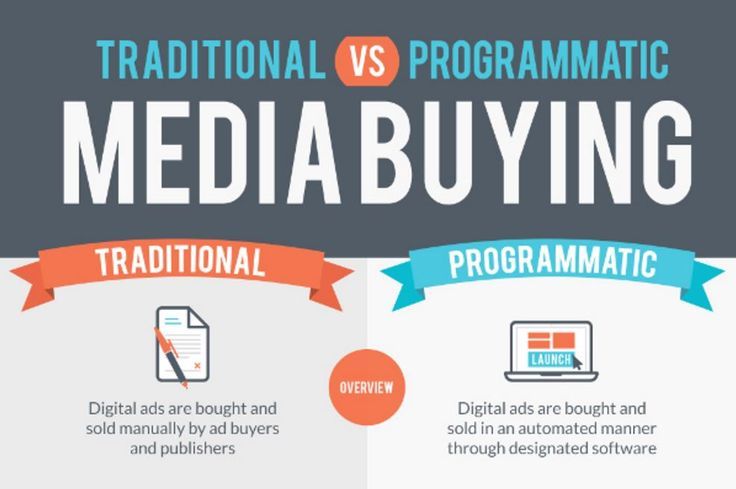
Audience buying means using paid methods to acquire attention or followers-from legitimate advertising that reaches target audiences to outright purchasing fake followers, bots, or engagement.
Growth can be immediate and controlled through budget allocation, but varies wildly in quality from potentially valuable (targeted ads) to completely worthless (fake bots) to actively harmful (damaged credibility).
The distinction matters because audience size and audience quality diverge dramatically.[7] Ten thousand fake followers provide zero engagement, zero monetization potential, zero influence-while one thousand genuinely engaged fans can support a full-time creator career.
The methods produce fundamentally different outcomes with different economics, different timelines, and different long-term trajectories.
Understanding this choice requires examining what actually constitutes an "audience," how organic and paid growth mechanisms work, when each approach makes sense, why shortcuts backfire, and how sophisticated creators combine both strategically to build sustainable influence.
What Audience Actually Means
Defining Real Audience
Not all followers are created equal. The term "audience" can describe wildly different relationships with completely different value.
| Audience Type | Relationship Depth | Engagement Rate | Monetization Potential | How It's Built |
|---|---|---|---|---|
| Fake/Bot Followers | Zero (non-human) | 0% (no real interaction) | $0 (can't convert bots) | Purchased from fraud services |
| Passive Followers | Minimal (clicked follow once, forgot) | <0.5% (rarely see content) | Very low (don't notice offers) | Viral one-hit, follow-for-follow, giveaways |
| Casual Audience | Light (sometimes watch/read) | 1-3% (occasionally engage) | Low (need large numbers) | Algorithmic distribution, broad content |
| Engaged Community | Meaningful (regular consumption) | 5-15% (frequent interaction) | Moderate-High (notice offerings) | Consistent value delivery, niche focus |
| True Fans | Deep (actively anticipate content) | 20-50%+ (high participation) | Very high (enthusiastic purchasers) | Exceptional value, personal connection, community |
Kevin Kelly's "1,000 True Fans" thesis (2008): A creator needs only 1,000 true fans-people who will purchase anything you produce-to make a sustainable living.[1] At $100/year per fan, that's $100,000 annual revenue. The math works: 1,000 deeply engaged fans beats 100,000 passive followers.
Illustrative pattern (actual results vary widely by niche, pricing, and audience quality):
- Patreon revenue for creators with 1,000+ paying subscribers varies enormously depending on pledge tiers, though most published data suggests average per-creator Patreon income is considerably more modest than headline success stories suggest
- Newsletter revenue similarly ranges from a few hundred dollars a year to well into six figures depending on subscriber engagement and price point, with paid conversion being the key variable rather than raw subscriber count
- YouTubers with smaller, highly engaged subscriber bases can out-earn channels with far larger but less engaged followings, though no single, universally cited benchmark figure exists for this comparison
The engagement multiplier: A subscriber who watches 80% of your videos is worth 50-100x more than one who watches 2%, because:
- Watch time drives algorithmic promotion (more views for future content)
- High engagement signals quality to new viewers (social proof)
- Engaged viewers actually hear your sponsorship pitches, product offerings, calls-to-action
- They become advocates who recommend you to others (organic growth)
This means strategies that inflate follower count but damage engagement are economically irrational-yet creators pursue them constantly because vanity metrics feel good and engagement quality is harder to perceive.
The Platform Mediation Problem
You don't actually "own" your audience on most platforms-you rent algorithmic access to them. The way platform incentives are structured means the platform always sits between you and the people who follow you.[5]
Traditional media ownership model:
- Newspaper: You have physical addresses, mail directly to subscribers
- Radio/TV: You broadcast on owned frequency, guaranteed delivery
- Email list: You have addresses, can contact directly
Platform audience model:
- YouTube: You have subscribers, but YouTube decides whether they see your videos (10-30% typical reach)
- Instagram: You have followers, but Instagram feed algorithm shows posts to 5-15%
- TikTok: Followers barely matter-algorithm distributes based on engagement, not subscription
- Twitter/X: Followers see only portion of posts depending on algorithmic prioritization
Example: Instagram feed algorithm change (2016):
- Before: Chronological feed-followers saw your posts if they opened app
- After: Algorithmic feed-Instagram shows posts selectively based on predicted engagement
- Impact: Organic reach dropped from 30-50% of followers to 5-15%
- Creator response: Many shifted focus to Stories (initially chronological) and began buying ads to reach own followers
This platform mediation makes owned audiences (email lists, membership communities, direct relationships) far more valuable than rented audiences (platform followers), since you don't need permission or payment to reach people who gave you direct contact info.
Organic Audience Building: How It Works
The Value-First Compound Growth Model
Organic growth follows a predictable pattern that feels frustratingly slow initially but can accelerate dramatically over time through compounding effects.
"The most powerful force in the universe is compound interest." - Albert Einstein (attributed)
This principle applies to audiences just as it applies to finance. Each piece of content, each genuine interaction, each new subscriber adds a small increment that compounds over months and years.
Phase 1: Creation without audience (Months 0-6)
- You create content, almost nobody sees it
- Views: 10-100 per piece
- Growth: 0-5 subscribers per week
- Feels like: Shouting into void, questioning entire endeavor
- What's actually happening: Learning craft, finding voice, building catalog
Phase 2: Early traction (Months 6-18)
- Some content starts resonating, algorithm occasionally promotes
- Views: 100-1,000 per piece (with occasional breakout)
- Growth: 10-50 subscribers per week
- Feels like: Inconsistent and unpredictable
- What's actually happening: Audience accumulation creates base for word-of-mouth, algorithm begins recognizing your niche
Phase 3: Compound acceleration (Months 18-36)
- Larger audience creates more shares, comments, algorithmic promotion
- Views: 1,000-10,000 per piece consistently
- Growth: 100-500 subscribers per week
- Feels like: Finally working, building momentum
- What's actually happening: Network effects kick in-each new subscriber potentially brings others[2]
Phase 4: Established presence (36+ months)
- Large enough audience that every upload reaches substantial viewership automatically
- Views: 10,000+ per piece reliably
- Growth: Varies but from larger base
- Feels like: Sustainable creator career
- What's actually happening: Past work continues driving discovery, reputation compounds
The compounding mechanisms:
- Catalog growth: More content = more entry points for new audience discovery
- Algorithmic trust: Platforms promote creators with proven engagement history
- Social proof: Larger audiences signal credibility, encouraging others to follow
- Word-of-mouth: Satisfied audience members recommend to friends/colleagues
- Cross-pollination: Other creators collaborate when you have audience to offer
- Search visibility: More content ranks for more keywords/topics over time
Real example: Ali Abdaal's growth trajectory
Ali Abdaal (productivity/med student YouTuber): he started his channel in 2017 and reported reaching roughly 1,000 subscribers after his first six months. By the end of 2018, after graduating medical school and posting consistently, the channel had grown to roughly 100,000 subscribers. It crossed 1 million subscribers around 2020, and has continued growing substantially since.
Notice the pattern: Early months produced minimal absolute growth but built foundation. Later years added subscribers far faster on similarly consistent effort because network effects kicked in. Subscribers from the early years continued watching, sharing, recommending long afterward, passive growth from past work.
His organic strategy:
- Consistent weekly uploads (never miss)
- Focus on value (practical productivity advice, not clickbait)
- Authentic personality (genuine enthusiasm, not performed character)
- Community engagement (responds to comments, takes feedback seriously)
- Long-term thinking (didn't quit during slow early years)
The Relationship Investment Model
Organic building isn't just about content volume-it's about relationship depth.[6]
| Relationship Investment | What It Requires | What It Produces | Timeline |
|---|---|---|---|
| Content consistency | Regular posting schedule, don't disappear | Trust, habit formation, anticipated return | 3-6 months to establish pattern |
| Response to community | Read/reply to comments, acknowledge feedback | Feeling of genuine two-way relationship | Ongoing effort, cumulative effect |
| Deliver on promises | Content matches description, no misleading hooks | Credibility, trust to click future content | Built slowly, destroyed instantly |
| Evolve with feedback | Adapt content based on what resonates | Community feels heard, content improves | 6-12 months to iterate effectively |
| Vulnerability/authenticity | Share failures, genuine thoughts vs. performed persona | Parasocial depth, loyalty beyond content quality | Develops naturally over time |
| Community spaces | Discord, subreddit, forum where audience connects | Self-sustaining community, network effects | 12-24 months to reach critical mass |
Example: Sam Harris podcast organic growth
Sam Harris launched his podcast, originally titled Waking Up with Sam Harris (later renamed Making Sense around 2020 to avoid confusion with his separate Waking Up meditation app), in September 2013 with zero podcast experience but existing audience from books and public writing. His organic strategy:
What he did:
- Long-form conversations (1-3 hours)-respected audience intelligence
- No ads initially-prioritized listener experience over monetization
- Subscriber-supported model-asked audience to pay voluntarily for ad-free access and bonus content
- Consistent quality-every episode thoughtfully produced
- Controversial but honest-didn't pander or avoid difficult topics
Results:
- Grew to a large, dedicated listenership over the following decade
- A meaningful base of paying subscribers, though exact subscriber counts and revenue are not publicly disclosed
- A podcast widely described as having unusually high listener engagement and completion rates relative to typical podcasts, though no specific verified percentage is publicly available
- Audience defended him during controversies, trusted his intentions
- Built career independence-not reliant on platform algorithms or advertising
The slow organic build created genuine relationship where listeners felt they knew him, trusted his thinking process, and valued the content enough to voluntarily pay even when free podcast options abounded.
"Trust is built in drops and lost in buckets." - Kevin Plank
Paid Audience Growth: The Spectrum
Not all "buying" is equivalent. The paid acquisition spectrum ranges from legitimate to fraudulent.
The Legitimate Side: Paid Advertising
Legitimate paid growth means using advertising platforms to reach target audiences who might genuinely value your content-you're paying for visibility, not fake engagement.
| Platform | Typical Cost | Targeting Precision | Best Use Case | Typical ROI |
|---|---|---|---|---|
| Facebook/Instagram Ads | $0.50-2.00 per click | Very high (interest, behavior, demographics) | Reaching specific niches quickly | $3-10 cost per follower who stays |
| YouTube Ads | $0.10-0.30 per view | High (interests, search history, demographics) | Growing channel with proven content | $2-5 cost per subscriber |
| Twitter/X Ads | $0.50-2.00 per engagement | Moderate (interests, keywords) | Thought leadership, B2B | $5-15 per follower |
| TikTok Ads | $1.00-3.00 per click | Moderate (age, interests, behaviors) | Reaching young demographics | Highly variable, emerging |
| Google Ads | $1.00-3.00 per click | Very high (search intent) | Driving traffic to specific content | Depends on content conversion |
When paid advertising makes strategic sense:
- Proven content-market fit: You've validated that content resonates organically, now amplify it
- Clear monetization model: You know customer lifetime value exceeds acquisition cost
- Accelerating growth: Organic works but too slow for business needs
- Entering established markets: Breaking through noise in crowded niches
- Product/service launching: Need quick audience for time-sensitive offer
Example: Pat Flynn's Smart Passive Income paid growth
Pat Flynn built successful blog organically but used paid advertising strategically:[9]
Context: Already had a successful blog and podcast with substantial existing traffic and proven content. Strategy: Facebook ads targeting entrepreneurs interested in specific topics (podcasting, passive income, blogging), building on Smart Passive Income's own published marketing-funnel content.
Approach: using paid ads to grow an email list from an already-validated audience, rather than to build initial attention from nothing. Outcome: Flynn has publicly described paid list-building as a way to accelerate an already-working funnel, though specific spend and per-subscriber cost figures are not publicly disclosed.
The key difference from fraudulent buying: These were real people who chose to follow after seeing legitimate ad for content they valued. Pat paid for visibility, not fake engagement. Those subscribers engaged at similar rates to organic subscribers because they were genuine.
The Gray Zone: Growth Hacking and Gamification
Some growth tactics exploit platform mechanics or human psychology without being outright fraudulent-but questionable ethically. The growth hacking mindset imported from startup culture encourages treating audience acquisition as a technical optimization problem, which can lead creators into ethically murky territory.[3]
| Tactic | How It Works | Effectiveness | Ethical Concerns | Platform Response |
|---|---|---|---|---|
| Follow-for-Follow | Follow accounts hoping they follow back, unfollow later | Low quality followers, high numbers | Deceptive relationship framing | Often against ToS, leads to shadowbans |
| Engagement Pods | Groups artificially like/comment on each other's content | Temporarily boosts algorithm visibility | Gaming metrics, fake engagement signals | Platforms actively detect and penalize |
| Giveaways for Follows | "Follow + tag 3 friends to enter" contests | Rapid follower surge, terrible engagement after | Followers want prize, not content | Followers unfollow quickly after |
| Clickbait Thumbnails/Titles | Misleading hooks promising what content doesn't deliver | High initial clicks, poor retention | Violates trust, damages long-term credibility | Algorithm penalizes low retention |
| Viral Trend Exploitation | Jumping on trends without authentic connection | Temporary visibility, no lasting growth | Seen as inauthentic, alienates core audience | Fleeting, doesn't compound |
Why gray-zone tactics backfire:
Case study: Giveaway growth experiment
Creator runs iPhone giveaway: "Follow + tag 3 friends to enter"
Results:
- Gained 15,000 followers in 3 days
- Engagement rate dropped from 8% to 0.4% (20x decrease)
- Next regular post: 5% reach (algorithm flags low engagement)
- 12,000 unfollowed within 2 weeks post-giveaway
- Net result: 3,000 low-quality followers, damaged account metrics
The temporary follower spike actively harmed the creator because:
- New followers didn't care about content (wanted iPhone)
- Low engagement signaled poor quality to algorithm
- Algorithm reduced distribution to all followers (including original engaged audience)
- Took 3-6 months of consistent posting to recover algorithmic trust
Lesson: Followers acquired through misaligned incentives actively damage your account.
The Fraudulent Side: Fake Followers and Engagement
The worst end of the spectrum: outright purchasing fake followers, likes, views from bot farms.[4]
How fake follower services work:
- Networks of bot accounts or hacked accounts
- Follow target account en masse
- May provide fake likes/comments using generic phrases
- Cost: $5-20 per 1,000 followers, $2-10 per 1,000 views
Services advertise:
- "10,000 real Instagram followers-$99"
- "Boost credibility fast"
- "Look popular immediately"
What you actually get:
- Bot accounts with no profile pictures, nonsense usernames
- Or hacked accounts from users who don't know they follow you
- Zero engagement (can't buy views/purchases from bots)
- Obvious fakeness to anyone examining your account
Why fake followers backfire catastrophically:
- Zero engagement: Bots don't watch videos, read posts, buy products
- Engagement rate collapse: 100K fake followers + 50 real likes = 0.05% engagement (signals worthless content)
- Damaged credibility: Brands checking your account see fake followers, won't sponsor
- Platform penalties: Violates terms of service, risks account suspension
- Skewed analytics: Can't understand what content works because metrics are poisoned
- Wasted opportunities: Real followers may not engage because your content appears unpopular (low likes relative to followers)
Example: Influencer exposure scandal (2019)
Influencer with 2.6M Instagram followers approached brand for $25,000 sponsored post. Brand used analytics tool to check engagement:
- Real engagement rate: 0.3% (78% of followers were fake)
- Actual engaged followers: ~15,000 (not 2.6M)
- Brand offered: $800 (based on real reach)
- Influencer reputation: Destroyed when screenshots went viral
The fake followers didn't boost their career-they created appearance of influence without substance, which collapsed immediately under scrutiny. In a world governed by attention economics, the ability to genuinely hold attention is the scarce resource-not the ability to display large numbers.
"You can buy attention, but you cannot buy trust. And without trust, attention is worthless." - Seth Godin
The Economics: What Actually Makes Sense
Cost-Benefit Analysis
Let's examine actual economics of different growth strategies with real numbers:
Scenario: Growing to 10,000 engaged followers
| Strategy | Monetary Cost | Time Investment | Quality (Engagement Rate) | Monetization Potential | Sustainability |
|---|---|---|---|---|---|
| 100% Organic | $0-500 (equipment) | 18-36 months, 10-20 hrs/week | High (5-15%) | $2,000-5,000/month potential | Very high-compounds |
| Organic + Paid Ads | $5,000-15,000 total | 12-24 months, 10-15 hrs/week | Moderate-High (3-10%) | $1,500-4,000/month potential | High-sustainable |
| Aggressive Paid | $20,000-50,000 total | 6-12 months, 5-10 hrs/week | Moderate (2-5%) | $500-2,000/month potential | Moderate-needs continued spend |
| Gray Zone Tactics | $1,000-5,000 | 12-18 months, 15-25 hrs/week | Low (1-3%) | $200-800/month | Low-fragile, platform-dependent |
| Fake Followers | $200 (10K fake) | 1 day | Near-zero (<0.5%) | $0 (no one buys, sponsors detect) | Zero-value destroyed |
The 10,000-hour reality: Building genuinely engaged audience of 10,000+ typically requires 1,000-3,000 hours of work (content creation, community management, iteration, learning) regardless of paid spend.[8] Money can buy visibility and accelerate discovery, but cannot buy the engagement that comes from consistently valuable content.
Creator Monetization Math
Why does engagement matter more than follower count for revenue?
Revenue model comparison (10,000 subscribers):
| Metric | 10K High-Engagement Audience | 10K Low-Engagement Audience |
|---|---|---|
| Engagement rate | 10% average | 1% average |
| YouTube ad revenue | $500-2,000/month (high watch time) | $50-200/month (low watch time) |
| Sponsored post value | $500-2,000 per post | $100-300 per post |
| Email list (if collected) | 3,000-5,000 subscribers | 300-500 subscribers |
| Course/product conversion | 1-3% = 100-300 buyers | 0.1-0.3% = 10-30 buyers |
| Patreon/membership | 2-5% = 200-500 patrons | 0.2-0.5% = 20-50 patrons |
| Total monthly potential | $2,000-8,000+ | $200-800 |
The high-engagement audience generates 10-20x more revenue from the same follower count because they actually pay attention, trust recommendations, and convert to customers.
Real example: Two creators, same subscriber count, different revenue
Creator A (organic build, 50K subscribers):
- Average video views: 20K-30K (40-60% reach)
- Engagement: 8% (likes, comments, shares)
- Email list: 12,000 subscribers
- Course launch: $50,000 in first week (240 buyers at $199)
- Annual revenue: $180,000
Creator B (paid growth + gray tactics, 50K subscribers):
- Average video views: 2K-5K (4-10% reach)
- Engagement: 1.2%
- Email list: 1,500 subscribers
- Course launch: $4,500 in first week (23 buyers at $199)
- Annual revenue: $35,000
Creator B has same "50K subscribers" metric to show brands but makes 1/5th the revenue because audience relationship is shallow. The vanity metric misrepresented actual influence. Learning to distinguish signal from noise in audience metrics is essential for any creator serious about sustainable revenue.
"Don't find customers for your products, find products for your customers." - Seth Godin
Strategic Hybrid: Combining Organic and Paid
Sophisticated creators don't choose "organic vs. paid"-they strategically combine both, using paid to accelerate organic mechanisms.
The Amplification Model
Core principle: Build organically to prove content-market fit, then use paid to amplify what already works.
Phase 1: Organic validation (6-12 months)
- Create consistently, find what resonates
- Build small engaged audience (500-2,000)
- Test different content types, identify top performers
- Develop unique voice/angle
- Goal: Prove people will engage without payment
Phase 2: Paid amplification (12-24 months)
- Take best-performing organic content
- Run targeted ads to similar audiences
- Budget: 10-20% of revenue or $500-2,000/month
- Track cost-per-acquisition vs. lifetime value
- Goal: Accelerate discovery of proven content
Phase 3: Compound acceleration (24+ months)
- Larger organic audience creates more shares, algorithmic promotion
- Paid spend maintains discovery velocity
- Organic and paid reinforce each other
- Goal: Sustainable growth with compounding returns
Example: Sahil Bloom (finance/business writer)
Background: Began posting Twitter threads around mid-2020, starting from a few hundred followers, and launched his newsletter in January 2021.
His growth from there was rapid and almost entirely organic: the newsletter reportedly reached around 20,000 subscribers by mid-2021 and roughly 55,000 by the end of that year, while his Twitter following grew from roughly 75,000 to over 400,000 across 2021 alone. He has continued growing substantially since, reaching a following in the hundreds of thousands and a newsletter audience in six figures, alongside meaningful revenue from sponsorships, courses, and speaking.
Bloom has publicly and consistently described his growth as driven by consistent, high-value content rather than paid advertising; no public source indicates he used paid Twitter ads as part of his strategy.
His trajectory illustrates a different lesson than paid amplification: that organic growth, sustained consistently over a relatively short period, can compound into a very large audience without paid acceleration, when the content itself resonates strongly and spreads through genuine sharing.
The Retargeting Funnel
Another strategic paid approach: Use paid primarily for conversion, not initial attention.
Model:
- Organic content attracts initial attention
- Pixel/tracking identifies visitors but not yet subscribers
- Retargeting ads follow up with deeper offers
- Conversion turns casual attention into committed relationship
Example: Course creator strategy
Step 1: Create free valuable YouTube videos (organic)Step 2: Video mentions free email course, viewer visits landing page but doesn't sign upStep 3: Retargeting ad follows them on Facebook: "Still interested in [topic]?
Here's what you missed"Step 4: Returns, signs up for email courseStep 5: Email sequence eventually offers paid courseStep 6: 3-5% convert to $199-499 course
The retargeting ads cost $20-50 per email subscriber (expensive!) but those subscribers convert at 3-10x the rate of cold email subscribers because they've seen multiple touchpoints and signals genuine interest.
Cost breakdown:
- Retargeting ad spend: $50 per email subscriber
- Email-to-customer conversion: 5%
- Cost per customer: $1,000
- Course price: $299
- Immediate ROI: Negative
- However: Average customer lifetime value $800-1,500 (multiple courses, upsells, referrals)
- Long-term ROI: Positive
This only works if organic content is strong enough to generate initial interest and retargeting captures people who were genuinely interested but needed extra nudge.
Sources & Further Reading
Kelly, K. (2008). "1,000 True Fans." The Technium. The original articulation of the small engaged audience strategy that reshaped creator economics.
Aral, S., & Walker, D. (2012). "Identifying Influential and Susceptible Members of Social Networks." Science, 337(6092), 337-341.
Li, J. (2020). The Influencer Industry: The Quest for Authenticity on Social Media. Princeton University Press.
Confessore, N., Dance, G., Harris, R., & Hansen, M. (2018). "The Follower Factory." New York Times investigative series. Landmark journalism exposing the fake follower industry at scale.
Gillespie, T. (2018). Custodians of the Internet: Platforms, Content Moderation, and the Hidden Decisions That Shape Social Media. Yale University Press.
Baym, N. K. (2018). Playing to the Crowd: Musicians, Audiences, and the Intimate Work of Connection. NYU Press.
Sharp, B. (2010). How Brands Grow: What Marketers Don't Know. Oxford University Press. Evidence-based analysis of reach vs. engagement tradeoffs in audience acquisition.
Duffy, B. E. (2017). (Not) Getting Paid to Do What You Love: Gender, Social Media, and Aspirational Work. Yale University Press.
Flynn, P. (2018). Superfans: The Easy Way to Stand Out, Grow Your Tribe, and Build a Successful Business. Independently published.
Godin, S. (2008). Tribes: We Need You to Lead Us. Portfolio. Foundational work on building communities around shared interests rather than purchased attention.
What Research Shows About Organic vs. Paid Audience Quality
The distinction between organic and bought audiences has been studied rigorously enough to produce quantitative findings that go beyond creator anecdotes.
Researchers Eytan Bakshy, Itamar Rosenn, Cameron Marlow, and Lada Adamic published a landmark study in the Proceedings of the 21st International Conference on World Wide Web (2012), based on a Facebook field experiment involving over 250 million people, examining how information spreads through strong versus weak social ties.
Their key finding was that while any single strong tie is more influential than any single weak tie, the much greater number of weak ties in a typical network means weak ties collectively account for more information diffusion overall.
The study did not examine paid acquisition or algorithmic promotion specifically, so it does not directly support a precise engagement-rate comparison between paid and organic followers.
Its broader finding, that the strength and authenticity of a connection shapes how information travels through it, is consistent with the general pattern that organically formed audience relationships tend to engage more deeply than passively acquired ones.
Jonah Berger, professor of marketing at the Wharton School of the University of Pennsylvania, synthesized research on what makes content spread organically in his 2013 book Contagious: Why Things Catch On.
Berger's STEPPS framework (Social Currency, Triggers, Emotion, Public, Practical Value, Stories) identified the conditions under which organic audience growth compounds: content that makes sharers look good, connects to existing mental triggers, generates high-arousal emotion (awe, amusement, or anger rather than contentment or sadness), is publicly visible, and tells a story tends to spread through genuine recommendation chains.
Berger's research is significant because it identifies the underlying mechanism that makes organic audiences more valuable: they are composed of people who selected the creator based on social proof from people they trust, which predicts higher engagement and trust transfer to recommendations.
The New York Times investigative series "The Follower Factory" (2018), reported by Nicholas Confessore, Gabriel Dance, Richard Harris, and Mark Hansen, documented the fake follower industry with unprecedented specificity.
The reporters identified Devumi, a company that sold followers, some drawn from a stock of several million automated accounts, and found its customers included actors, athletes, musicians, and news media figures. Reporting on the investigation described Devumi as having supplied more than 200 million fabricated followers across its client base.
The business consequence was measurable: brands using Devumi customers in influencer campaigns received delivery to accounts that could not engage, like, or purchase, representing a direct economic loss.
The Times' broader reporting established that accounts built substantially on purchased followers show sharply lower engagement relative to their follower counts than accounts with equivalent organic followings, though the investigation did not publish a single precise economy-wide deficit percentage.
Platform Detection Systems and the Arms Race Against Fake Engagement
The technical sophistication of platforms' fake engagement detection systems has increased substantially since the early days of bot-follower selling, creating what security researchers describe as an ongoing arms race with practical consequences for creators who experiment with paid shortcuts.
Instagram published a 2019 post describing its systems for reducing inauthentic activity, including fake likes, follows, and comments generated by automated behavior or third-party apps, using machine learning to identify non-human behavioral patterns.
Legitimate human accounts show characteristic irregularities in their activity patterns - they scroll at varying speeds, pause on some content and skip others, take breaks that correspond to sleep cycles and work schedules.
Bot accounts show statistical signatures: too-regular activity patterns, engagement that clusters suspiciously around specific posting times, or following behavior that exceeds humanly possible rates.
Meta, Instagram's parent company, has reported removing billions of fake accounts across its platforms in a given year as part of this ongoing effort, and accounts that lose large numbers of purchased followers to enforcement action commonly see their engagement metrics decline afterward, reflecting the damage already done to their audience quality.
Twitter's Trust and Safety team published research in 2020 documenting their "Coordinated Inauthentic Behavior" detection methodology, which they subsequently shared with academic researchers.
The methodology identified not just individual fake accounts but networks of accounts behaving in coordinated ways - all following the same account simultaneously, all engaging with the same content within narrow time windows, or all using similar language patterns.
The researchers found that sophisticated bot networks had evolved to mimic human irregularity, introducing random delays and varied behavior to evade detection, but that statistical analysis at sufficient scale still identified them: the irregularity introduced was random rather than human, and human irregularity has structure that random variation does not replicate.
University of Southern California researcher Emilio Ferrara, who has published extensively on social bot detection, found in a widely cited body of research (including a 2016 study on bot activity during the 2016 US presidential election discussion) that automated accounts made up a meaningful share of the accounts and tweets involved, commonly cited in the range of roughly 9% to 15% of Twitter accounts overall.
Bot involvement in politically contested topics is often estimated as disproportionately high relative to their share of the overall user base, though a specific 2017 follow-up study with a precise 20-25% figure could not be located.
For creators building in politically adjacent niches, this suggests that engagement metrics on controversial content may be systematically inflated by non-human activity - making it harder to distinguish genuine viral performance from bot amplification.
Ferrara's work reinforces the practical case for measuring engagement quality (comment sentiment, click-through behavior, actual purchases) rather than raw engagement numbers, since the latter are more susceptible to non-human inflation.