
Introduction
Decision traps represent systematic vulnerabilities in human judgment that persist across expertise levels, cultural boundaries, and cognitive sophistication. These predictable patterns of error emerge not from lack of intelligence or information, but from fundamental constraints in how the human brain processes uncertainty, weighs evidence, and navigates complexity. Understanding these traps requires recognizing that they are features, not bugs, of our cognitive architecture—evolved heuristics that served ancestral environments but frequently misfire in contexts requiring analytical rigor.
"The first principle is that you must not fool yourself — and you are the easiest person to fool." — Richard Feynman
The study of decision traps synthesizes insights from behavioral economics, cognitive psychology, organizational behavior, and decision science. Research demonstrates that awareness alone provides insufficient protection; even experts who study these phenomena fall victim to them under conditions of time pressure, emotional arousal, or cognitive load. Effective mitigation demands deliberate intervention through process design, external accountability structures, and systematic debiasing techniques.
Theoretical Framework
The Heuristics and Biases Program
The systematic study of decision traps emerged primarily from the heuristics and biases research program initiated by Daniel Kahneman and Amos Tversky in the early 1970s. Their work demonstrated that humans rely on a limited repertoire of heuristic principles to simplify complex probabilistic judgments. While these shortcuts often yield reasonable approximations, they systematically produce predictable biases under identifiable conditions.
"A reliable way to make people believe in falsehoods is frequent repetition, because familiarity is not easily distinguished from truth." — Daniel Kahneman
The dual-process theory of cognition provides the dominant explanatory framework. System 1 operates automatically, rapidly, and effortlessly, relying on pattern recognition and associative memory. System 2 engages in deliberate, effortful, rule-based reasoning. Most decision traps emerge when System 1 generates intuitive judgments that System 2 fails to adequately scrutinize or override. The intervention strategies that prove most effective typically force engagement of System 2 processing through structured protocols.
Ecological Rationality Perspective
An alternative theoretical lens, advanced by Gerd Gigerenzer and colleagues, emphasizes ecological rationality—the fit between cognitive strategies and environmental structures. From this perspective, so-called "biases" may represent adaptive responses in environments where they evolved. The critical distinction lies between environments characterized by risk (known probability distributions) versus uncertainty (unknown or unknowable distributions). Many decision traps emerge specifically when environmental complexity exceeds the conditions under which heuristics perform well.
Major Decision Traps
Confirmation Bias
Confirmation bias represents the tendency to search for, interpret, favor, and recall information in ways that confirm preexisting beliefs or hypotheses. This manifests across multiple stages of information processing: selective exposure (choosing which information to examine), selective perception (how information is interpreted), and selective recall (which information is remembered).
The mechanisms underlying confirmation bias include:
- Motivated reasoning: Directional goals influence information processing, with desired conclusions driving evidence evaluation rather than constraining it
- Positive test strategy: Natural tendency to seek examples that confirm rather than disconfirm hypotheses
- Biased assimilation: Contradictory evidence is scrutinized more critically than supportive evidence, leading to polarization rather than convergence
Empirical research demonstrates confirmation bias across domains including medical diagnosis, scientific research, legal proceedings, and business strategy. A landmark study by Lord, Ross, and Lepper (1979) showed that presenting mixed evidence on capital punishment to proponents and opponents strengthened both groups' initial positions—each side found the supportive evidence more convincing and the contradictory evidence more flawed.
Mitigation strategies:
| Strategy | Mechanism | Effectiveness |
|---|---|---|
| Consider-the-opposite | Explicitly generate alternative hypotheses | Moderate; requires discipline |
| Disconfirmation search | Actively seek contradictory evidence | High; creates balanced evaluation |
| Devil's advocate | Assign role to argue against consensus | Moderate; can become ritualistic |
| Premortem analysis | Imagine failure and work backwards | High; reveals hidden assumptions |
The most robust debiasing technique involves creating accountability structures where decision-makers must explicitly defend their reasoning to informed skeptics. Research by Tetlock (1983) demonstrates that mere anticipation of justification significantly improves judgment quality, particularly when evaluators' views are unknown.
Sunk Cost Fallacy
The sunk cost fallacy occurs when past investments (time, money, effort) influence current decisions despite being economically irrelevant. Rational choice theory dictates that only future costs and benefits should determine optimal action, yet psychological research consistently demonstrates that sunk costs exert powerful influence on continuation decisions.
Arkes and Blumer (1985) documented this pattern across multiple experiments, including field studies of theater subscription decisions and Ohio University basketball game attendance. Participants who paid full price attended more games than those receiving discounts, even though the payment was identical at the decision point. The pattern persisted even when participants explicitly acknowledged the logical irrelevance of sunk costs.
Multiple psychological mechanisms contribute:
- Loss aversion: Stopping an initiated course of action crystallizes losses that continuation leaves hypothetically recoverable
- Self-justification: Abandoning investments implies that initial decisions were errors, threatening self-concept
- Social signaling: Quitting signals weakness or poor judgment to observers
- Project completion bias: Progress creates momentum and narrative coherence that abandonment disrupts
The escalation of commitment to failing courses of action represents a particularly damaging manifestation. Staw and Ross (1987) identified conditions that amplify escalation: high personal responsibility for initial decision, public commitment, proximity of decision points, and negative feedback interpreted as temporary setbacks.
Structural interventions:
- Separation of roles: Different individuals evaluate continuation than initiated projects
- Decision rules: Establish predetermined exit criteria before emotional investment accumulates
- Portfolio perspective: Frame decisions as resource allocation across opportunities rather than continuation judgments
- Regular reset points: Scheduled comprehensive reviews that treat continuation as active choice
Organizations that successfully avoid sunk cost traps institutionalize processes that make the decision to continue as deliberate and scrutinized as the decision to stop. Gary Klein's premortem technique proves particularly effective—teams imagine a project has failed catastrophically and generate explanations, which surfaces concerns that sunk cost psychology suppresses.
Anchoring Bias
"You can't connect the dots looking forward; you can only connect them looking backwards." — Steve Jobs
Anchoring describes the disproportionate influence of initial reference points (anchors) on subsequent numeric estimates and judgments. Even random, clearly irrelevant numbers systematically bias quantitative judgments when presented beforehand. Tversky and Kahneman (1974) demonstrated this through experiments where spinning a wheel of fortune influenced estimates of African UN membership percentages—participants adjusted insufficiently from arbitrary starting points.
The robustness of anchoring effects across contexts is remarkable. Research documents anchoring in:
- Real estate valuations (listing prices influence professional appraisers)
- Legal judgments (sentencing recommendations affect judicial decisions)
- Salary negotiations (initial offers establish bargaining ranges)
- Medical diagnosis (initial hypotheses resist revision despite contradictory evidence)
Epley and Gilovich (2006) distinguish between sensory anchors (externally provided reference points) and generated anchors (self-produced starting points), with different underlying mechanisms. Sensory anchors primarily operate through insufficient adjustment—people anchor and adjust but stop too soon. Generated anchors reflect hypothesis-consistent testing—people selectively recruit evidence supporting initially generated values.
Critical factors moderating anchoring strength include:
- Expertise: Domain knowledge provides alternative anchors and adjustment strategies, but does not eliminate the effect
- Motivation: Incentives reduce but do not eliminate anchoring
- Anchor plausibility: Extreme anchors generate reactance and correction attempts
- Time pressure: Increased cognitive load strengthens anchoring by limiting adjustment processing
Counter-measures focus on generating multiple independent estimates, conducting analyses before exposure to potential anchors, and explicitly considering why anchors might be too high or too low. Organizations can implement blind evaluation procedures where critical assessments occur before anchor exposure.
Availability Heuristic
The availability heuristic substitutes the easier question "What examples come readily to mind?" for the harder question "How frequent or probable is this?" Events that are more memorable, recent, emotionally vivid, or publicized become overweighted in probability judgments. This creates systematic distortions between perceived and actual frequencies.
Tversky and Kahneman (1973) documented how ease of recall influences frequency estimates. Participants judged words beginning with 'r' as more common than words with 'r' in the third position, despite the opposite being true—initial letters serve as better retrieval cues, making those words more mentally available.
Practical consequences include:
- Risk perception distortions: Rare but dramatic events (terrorism, plane crashes) are overestimated while common but undramatic risks (heart disease, diabetes) are underestimated
- Planning fallacy: Past difficulties are less salient than success narratives, causing chronic underestimation of project timelines
- Availability cascade: Media coverage increases salience, which drives more coverage, creating spirals of concern disconnected from actual risk magnitude
The availability heuristic interacts problematically with modern information environments. Social media algorithms optimize for engagement, systematically exposing users to emotionally arousing, atypical content. This creates collective availability biases where perceived social realities diverge substantially from statistical distributions.
Mitigation approaches:
- Use base rate information and statistical frequencies rather than case-based reasoning
- Implement structured decision protocols that require explicit probability estimation
- Consult diverse information sources to counteract selective exposure
- Build organizational memory systems that preserve lessons from non-dramatic failures
Research by Kahneman and Lovallo (1993) on the "inside view" versus "outside view" distinction proves particularly valuable. The inside view focuses on case-specific details, making unique complications salient. The outside view considers statistical distributions of similar cases, providing more accurate predictions by avoiding availability-driven optimism.
Groupthink
Groupthink, a term coined by Irving Janis (1972), describes a mode of thinking where group members' desire for harmony and conformity overrides realistic appraisal of alternatives. Highly cohesive groups facing stressful decisions become vulnerable to collective decision traps that individual members might avoid.
Janis identified eight symptoms clustered into three categories:
Overestimation of group capabilities:
- Illusion of invulnerability creating excessive optimism
- Unquestioned belief in group's inherent morality
Closed-mindedness:
- Collective rationalization dismissing warnings
- Stereotyped views of out-group members
Pressure toward uniformity:
- Self-censorship of deviations from consensus
- Shared illusion of unanimity
- Direct pressure on dissenters
- Emergence of self-appointed "mindguards" who protect the group from contrary information
Historical case studies analyzed by Janis include the Bay of Pigs invasion, Pearl Harbor unpreparedness, and Vietnam War escalation. Each demonstrated how talented individuals collectively produced judgments inferior to what individual members would have generated independently.
Structural antidotes:
| Intervention | Mechanism | Implementation |
|---|---|---|
| Leader impartiality | Prevents premature consensus | Leaders withhold preferences initially |
| Devil's advocate | Institutionalizes dissent | Rotating assignment, genuine empowerment |
| Multiple independent groups | Prevents single-group pathology | Parallel evaluation of alternatives |
| Outside experts | Introduces external perspective | Regular consultants without loyalty |
| Second-chance meetings | Allows preference revision | Scheduled reconsideration before commitment |
Contemporary research emphasizes that effective dissent requires psychological safety—environments where challenging consensus carries no social penalties. Edmondson (1999) demonstrates that learning from failures correlates strongly with team psychological safety, as members must feel secure surfacing errors and alternatives.
Status Quo Bias
Status quo bias manifests as disproportionate preference for current states of affairs over alternatives, even when those alternatives offer objective advantages. Samuelson and Zeckhauser (1988) documented this through experiments where randomly assigned "current holdings" influenced subsequent choices—participants exhibited strong preferences for retaining whatever they initially possessed.
Multiple psychological mechanisms converge to create status quo bias:
- Loss aversion: Changes frame potential outcomes as losses (giving up current state) versus gains (acquiring new state), with losses weighing approximately twice as heavily
- Endowment effect: Ownership increases subjective value beyond what one would pay to acquire the same item
- Regret aversion: Active decisions that turn out poorly generate more regret than passive failures to act
- Cognitive effort: Evaluating alternatives demands mental resources that maintaining the status quo avoids
Organizations exhibit particularly strong status quo bias through path dependence—historical choices constrain current options even when original justifications no longer apply. Arthur (1989) analyzed how QWERTY keyboard layout persisted despite alternative designs offering superior performance, demonstrating how small initial advantages can lock in through network effects and switching costs.
The status quo bias creates strategic inertia. Research on organizational adaptation shows that incumbents routinely fail to respond to disruptive innovations, not because they lack information or resources, but because defending current business models appears less risky than cannibalization strategies. Christensen (1997) documented this pattern across industries.
Strategies for overcoming:
- Forced choice architecture: Eliminate default options, requiring active selection among alternatives
- Zero-based evaluation: Periodically treat current practices as proposals competing with alternatives
- Rotating personnel: New members lack psychological investment in established practices
- Experimentation culture: Small-scale trials reduce psychological barriers to change
- Prospective hindsight: Imagine future state as default and current situation as risky change
Research by Gino and Pisano (2011) on learning from rare events demonstrates that organizations struggle more with strategic inertia than with capability deficits. The challenge lies not in developing alternatives but in overcoming attachment to current approaches.
Interactions and Compound Effects
Decision traps rarely operate in isolation. Complex judgments typically create conditions where multiple biases interact, often amplifying distortions. Confirmation bias combined with availability produces echo chambers where readily recalled confirming instances reinforce preexisting beliefs. Anchoring interacts with status quo bias when current values serve as anchors for evaluating alternatives.
The optimism bias (systematic underestimation of negative outcomes) combines problematically with planning fallacy (underestimation of task duration) and sunk cost fallacy (escalation of commitment) to create persistent patterns of project failure. Flyvbjerg (2006) documented that large infrastructure projects average 45% over budget and 7 years behind schedule, with systematic underestimation of both costs and timelines preceding breakdown of abandonment triggers.
Understanding these interaction effects proves crucial for intervention design. Addressing single biases in isolation often proves ineffective because other cognitive distortions maintain judgment errors. Comprehensive debiasing requires systematic process redesign that addresses multiple vulnerabilities simultaneously.
Systematic Debiasing Strategies
"The measure of intelligence is the ability to change." — Albert Einstein
Process-Level Interventions
The most effective debiasing strategies embed corrective mechanisms into decision procedures rather than relying on individual vigilance. Key principles include:
Disaggregation: Breaking complex judgments into components reduces the scope for intuitive distortions. Forecasting techniques like Fermi estimation improve accuracy by forcing explicit consideration of independent factors rather than holistic assessment.
Consideration of alternatives: Requiring explicit generation and evaluation of alternatives counteracts anchoring and confirmation bias. The WRAP framework developed by Heath and Heath (2013)—Widen options, Reality-test assumptions, Attain distance, Prepare to be wrong—provides practical structure.
Prospective hindsight: The premortem technique developed by Klein (2007) asks teams to imagine a project has failed and generate explanations. This surfaces concerns that optimism bias and groupthink otherwise suppress, consistently improving project success rates.
External perspectives: Consulting individuals without personal investment in decisions counteracts self-justification and sunk cost effects. Effective organizations build skepticism into governance structures through independent review boards, external audits, and rotation of responsibilities.
Individual Cognitive Strategies
While process-level interventions prove most reliable, certain individual practices demonstrate effectiveness:
Explicit documentation: Writing down reasoning, predictions, and confidence levels creates accountability and enables learning from feedback. Research on calibration training shows that tracking prediction accuracy over time improves subsequent judgments.
Statistical thinking: Translating judgments into probabilities and base rates counteracts availability and representativeness heuristics. Superforecasting research by Tetlock and Gardner (2015) identifies probabilistic thinking as distinguishing top performers.
Consider-the-opposite: Actively generating reasons why initial judgments might be wrong reduces confirmation bias. This proves more effective than generic instructions to "be objective."
Implementation intentions: Specifying in advance "If situation X occurs, then I will take action Y" creates automatic triggers that bypass motivated reasoning during emotionally charged moments.
Organizational Implications
Organizations face decision traps at multiple levels—individual judgments, team dynamics, and institutional structures. Effective governance requires recognizing that aggregating biased individual judgments typically produces biased collective decisions. Voting, averaging, and consensus-building do not automatically eliminate systematic errors.
Cultural factors significantly influence decision trap vulnerability. Organizations emphasizing hierarchy and deference to authority prove particularly susceptible to groupthink and status quo bias. Those prioritizing action and decisiveness often exhibit insufficient consideration of alternatives and premature closure.
High-reliability organizations in aviation, nuclear power, and healthcare develop cultures of psychological safety where challenging authority and surfacing concerns carries no penalties. Research by Weick and Sutcliffe (2007) on high-reliability organizations identifies five principles: preoccupation with failure, reluctance to simplify, sensitivity to operations, commitment to resilience, and deference to expertise rather than authority.
Decision hygiene, a concept developed by Kahneman, Sibony, and Sunstein (2021), provides systematic frameworks for organizational debiasing. Key practices include:
- Sequential evaluation (independent assessment before discussion)
- Structured analogies (systematic comparison to reference cases)
- Relative rather than absolute judgments (ranking alternatives forces discrimination)
- Adversarial collaboration (institutionalized disagreement)
Decision Traps in High-Stakes Domains: Aviation, Medicine, and Finance
Crew Resource Management and the Aviation Model
Aviation's systematic approach to decision trap mitigation emerged from a painful empirical foundation. A NASA-commissioned study of commercial aviation accidents in 1979 found that 70 percent of accidents involved not mechanical failure but human error -- specifically, failures of communication, leadership, and decision-making in the cockpit. The most common pattern was a captain making a fallacious judgment and no crew member successfully challenging it. Korean Air Flight 801, which crashed into Guam's Nimitz Hill in 1997 killing 228 people, exemplified this dynamic: the flight data recorder showed that the first officer and flight engineer both had information suggesting the captain's approach was dangerously low, but did not assert this clearly enough to override the captain's authority.
The aviation industry's response was Crew Resource Management (CRM) training, implemented systematically across commercial airlines from the 1980s onward. CRM explicitly addresses the status quo bias and groupthink dynamics that prevent junior crew members from challenging senior ones. The program teaches specific communication protocols -- "I am concerned about..." rather than indirect hints -- and creates explicit permission to assert disagreement regardless of rank. The results, documented by Robert Helmreich at the University of Texas, are striking: aviation's fatal accident rate fell by approximately 65 percent between 1980 and 2000, a period during which CRM training became widespread. Attributing all of this improvement to CRM overstates the case -- equipment, training, and regulatory improvements all contributed -- but the accident pattern analysis consistently identifies CRM-style communication failures in the remaining accidents, suggesting the program addresses real vulnerabilities.
Medical Diagnosis and Anchoring in Clinical Practice
The medical literature on diagnostic error has developed into a substantial field, in part because the consequences of anchoring and confirmation bias in clinical settings are directly measurable in patient mortality. Mark Graber at the State University of New York at Stony Brook analyzed 583 diagnostic errors reported in malpractice files and found that premature closure -- the tendency to stop considering alternative diagnoses once an initial hypothesis is formed -- was the most common cognitive error, appearing in 36 percent of cases. Premature closure is confirmation bias and anchoring operating together: the initial diagnosis anchors subsequent interpretation of symptoms, and subsequent information is processed selectively to confirm rather than challenge it.
The classic case study is the emergency department presentation of a patient with chest pain. The emergency medicine literature documents that when a patient presents with chest pain and the initial assessment suggests anxiety or musculoskeletal pain (less threatening diagnoses), physicians are systematically less likely to order cardiac workup than when the identical clinical picture presents without an initial alternative explanation. The initial anchor -- even a tentative one -- shapes information-gathering in ways that can be lethal when the anchor is wrong. A 2013 study by Eta Berner and Mark Graber in the American Journal of Medicine estimated that diagnostic errors affect approximately 12 million Americans annually and contribute to 40,000 to 80,000 deaths per year. The scale suggests that anchoring and premature closure are not rare edge cases; they are routine features of clinical decision-making without systematic countermeasures.
Limitations and Boundaries
While decision trap research provides valuable insights, important limitations require acknowledgment. Most laboratory studies employ simplified scenarios lacking the complexity, time pressure, and emotional intensity of consequential real-world decisions. External validity remains contested—effect sizes observed in experiments often exceed those in naturalistic settings.
The bias blind spot—people readily perceive biases in others but not themselves—limits self-correction. Pronin, Lin, and Ross (2002) demonstrated that awareness of bias susceptibility does not predict actual resistance to those biases. This suggests that individual education provides weaker protection than externally imposed procedural safeguards.
Additionally, some apparent "biases" may represent reasonable responses to environmental structure. The ecological rationality perspective emphasizes examining decision quality in context rather than measuring deviation from formal logical or statistical norms. Fast-and-frugal heuristics often outperform complex analyses when environments are noisy, samples are small, or computational resources are limited.
Conclusion
"In God we trust; all others must bring data." — W. Edwards Deming
Decision traps represent systematic vulnerabilities inherent to human cognition rather than correctable deficits in intelligence or knowledge. Their persistence across expertise levels and awareness states necessitates process-level interventions rather than reliance on individual vigilance. The most effective debiasing strategies embed corrective mechanisms into decision procedures, create external accountability structures, and foster organizational cultures where dissent and error acknowledgment carry no penalties.
Contemporary decision environments—characterized by complexity, uncertainty, and information overload—create conditions where these cognitive vulnerabilities prove particularly consequential. The proliferation of data does not automatically improve judgment; absent systematic debiasing practices, increased information often amplifies confirmation bias as individuals selectively process evidence supporting preexisting views.
Understanding decision traps provides necessary but insufficient protection. Effective mitigation requires translating awareness into systematic practices: documentation of reasoning, explicit consideration of alternatives, consultation of external perspectives, and institutionalized skepticism. Organizations that successfully navigate complex decisions do not eliminate cognitive biases but rather design processes that prevent those biases from dominating judgment.
Corporate Decision Traps in Practice: The Kodak and Nokia Case Studies
The most instructive examples of decision traps operating at organizational scale come from companies that possessed all the information needed to make correct decisions yet failed to do so because of cognitive vulnerabilities that no amount of intelligence or resources can automatically override.
Kodak invented the digital camera in 1975. Engineer Steve Sasson built the first functional prototype in Kodak's own labs and presented it to management. The device was suppressed, not because executives failed to understand the technology, but because of a textbook combination of status quo bias and sunk cost thinking. Kodak's identity, infrastructure, and profit model were built around film. Film margins were extraordinary -- up to 70 percent on some products. The photographic film business had made Kodak one of the most valuable companies in the world. Executives who had spent careers building that business were not cognitively positioned to advocate for cannibalizing it. Confirmation bias ensured that evidence supporting the staying-the-course narrative (film remains popular, digital quality is poor) was weighted heavily, while disconfirming evidence (digital adoption curves, consumer electronics trends) was scrutinized and dismissed.
The result was not ignorance. Kodak's internal documents, revealed during its 2012 bankruptcy proceedings, showed executives tracking digital photography adoption with precision throughout the 1980s and 1990s. They knew what was happening. Status quo bias and the sunk cost of their film infrastructure prevented action. Kodak filed for bankruptcy in 2012, the year digital camera shipments peaked globally at 121 million units -- a market Kodak had discovered but could not bring itself to lead.
Nokia's trajectory illustrates a different trap: groupthink operating through hierarchy. By 2007, Nokia was the world's largest mobile phone manufacturer, with a market share exceeding 40 percent. Internal engineers at Nokia had developed touchscreen smartphone prototypes that closely resembled what Apple shipped as the iPhone in January 2007. The story of why Nokia did not launch first was investigated by researchers Quy Huy (INSEAD) and Timo Vuori (Aalto University) through 76 interviews with Nokia executives and engineers conducted between 2007 and 2013. Their findings, published in Strategic Management Journal in 2016, documented a culture of fear that had developed at Nokia's executive level. Middle managers who surfaced bad news or challenges to the prevailing strategy were sidelined. Executives who expressed concern about competitive threats were seen as lacking confidence. The result was a systematic suppression of information that would have enabled accurate assessment of Apple's competitive threat. Nokia's board received a filtered, optimistic picture of the company's competitive position. The groupthink was not the result of a tight-knit, cohesive group making decisions in isolation -- it was the result of hierarchical pressure that prevented accurate information from reaching decision-makers at all.
The Nokia case is particularly instructive because it demonstrates that groupthink does not require a small group. It can operate through organizational culture across thousands of people, as long as the culture systematically rewards conformity and penalizes dissent.
The Anchoring Trap in Salary Negotiation and M&A Pricing
Anchoring bias produces some of its most economically significant effects in high-stakes negotiations, where the first number named can determine final outcomes by hundreds of thousands of dollars or, in corporate acquisitions, by hundreds of millions.
Research by Adam Galinsky and Thomas Mussweiler, published in the Journal of Personality and Social Psychology in 2001, demonstrated that in salary negotiations, candidates who named a salary first achieved consistently higher final outcomes than those who waited for employers to name a number first. The first number anchored the negotiation range. Candidates who anchored high and then justified the number with market data achieved substantially better outcomes than those who anchored high without justification, suggesting that anchoring interacts with the availability of confirming evidence.
In merger and acquisition pricing, the anchoring effect operates through the mechanism of initial valuations. A study by Malmendier and Tate (2008), published in the Journal of Finance, found that acquisitions initiated by overconfident CEOs -- those who had held in-the-money stock options past rational exercise periods -- paid acquisition premiums averaging 63 percent above pre-announcement market price, compared to 37 percent for acquisitions by less overconfident executives. The overconfident CEOs were anchoring on their internal valuation of the target, which was itself anchored to optimistic projections that in-group advisors were reluctant to challenge. The result was systematic overpayment that destroyed acquirer shareholder value. Meta-analysis of acquisition research by Datta, Pinches, and Narayanan (1992), covering 41 studies and hundreds of transactions, found that acquirer shareholders lose value in roughly 65 percent of large acquisitions, a pattern consistent with systematic anchoring to inflated internal valuations that negotiation processes fail to correct.
The practical implication is directly applicable. In any high-stakes negotiation -- salary, vendor pricing, real estate, corporate deals -- awareness of anchoring should produce specific behavioral changes: generate independent estimates before exposure to counterpart offers, actively consider reasons the anchor might be wrong before adjusting, and recognize that the adjustment from any anchor will be insufficient without deliberate effort to override it.
References and Further Reading
Tversky, A., & Kahneman, D. (1974). "Judgment under Uncertainty: Heuristics and Biases." Science, 185(4157), 1124-1131. https://doi.org/10.1126/science.185.4157.1124 — The foundational paper establishing the heuristics and biases research program; introduces anchoring, availability, and representativeness.
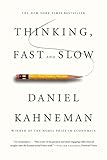
Kahneman, D. (2011). Thinking, Fast and Slow. New York: Farrar, Straus and Giroux. — Comprehensive synthesis of dual-process theory and decades of judgment research, accessible to general readers.
Thaler, R. H., & Sunstein, C. R. (2008). Nudge: Improving Decisions About Health, Wealth, and Happiness. New Haven: Yale University Press. — Applies behavioral economics insights to policy and choice architecture; introduces the concept of libertarian paternalism.
Arkes, H. R., & Blumer, C. (1985). "The Psychology of Sunk Cost." Organizational Behavior and Human Decision Processes, 35(1), 124-140. https://doi.org/10.1016/0749-5978(85)90049-4 — Definitive experimental documentation of sunk cost effects across field and laboratory settings.
Lord, C. G., Ross, L., & Lepper, M. R. (1979). "Biased Assimilation and Attitude Polarization: The Effects of Prior Theories on Subsequently Considered Evidence." Journal of Personality and Social Psychology, 37(11), 2098-2109. https://doi.org/10.1037/0022-3514.37.11.2098 — Landmark study demonstrating confirmation bias and polarization from identical mixed evidence.
Staw, B. M., & Ross, J. (1987). "Behavior in Escalation Situations: Antecedents, Prototypes, and Solutions." Research in Organizational Behavior, 9, 39-78. — Identifies conditions that amplify escalation of commitment to failing courses of action.
Epley, N., & Gilovich, T. (2006). "The Anchoring-and-Adjustment Heuristic: Why the Adjustments Are Insufficient." Psychological Science, 17(4), 311-318. https://doi.org/10.1111/j.1467-9280.2006.01704.x — Distinguishes sensory anchors from generated anchors and explains mechanisms of insufficient adjustment.
Janis, I. L. (1972). Victims of Groupthink. Boston: Houghton Mifflin. — Classic case-study analysis of groupthink in major U.S. foreign policy failures; defines the eight diagnostic symptoms.
Tetlock, P. E., & Gardner, D. (2015). Superforecasting: The Art and Science of Prediction. New York: Crown. — Evidence-based analysis of what separates expert forecasters from average performers; probabilistic thinking as a core skill.
Kahneman, D., Sibony, O., & Sunstein, C. R. (2021). Noise: A Flaw in Human Judgment. New York: Little, Brown Spark. — Extends the heuristics and biases framework to organizational noise; provides the decision hygiene framework for institutional debiasing.
Frequently Asked Questions
What are the most common decision traps?
Confirmation bias, sunk cost fallacy, anchoring, availability bias, groupthink, and status quo bias.
Why do smart people fall into decision traps?
These traps are built into how the brain processes information. Intelligence doesn't automatically prevent them.
How does confirmation bias affect decisions?
You seek information that supports what you already believe, ignoring contradictory evidence and creating false certainty.
What is the sunk cost fallacy?
Continuing an action because you've already invested time, money, or effort, even when stopping is the better choice.
How can you avoid these traps?
Use checklists, seek disconfirming evidence, get diverse input, use pre-mortems, and document your reasoning.
Are decision traps the same as cognitive biases?
Closely related. Cognitive biases are systematic thinking errors; decision traps are situations where those biases cause bad choices.
Can awareness alone prevent decision traps?
Rarely. Awareness helps, but you need systems, processes, and external checks to consistently avoid them.
Which trap is most damaging?
Context-dependent, but sunk cost and confirmation bias consistently lead to costly, persistent errors across domains.


![Pensar rápido, pensar despacio [Think Fast, Think Slowly]](https://images-na.ssl-images-amazon.com/images/P/B085NZ4HVD.01._SL200_.jpg)