
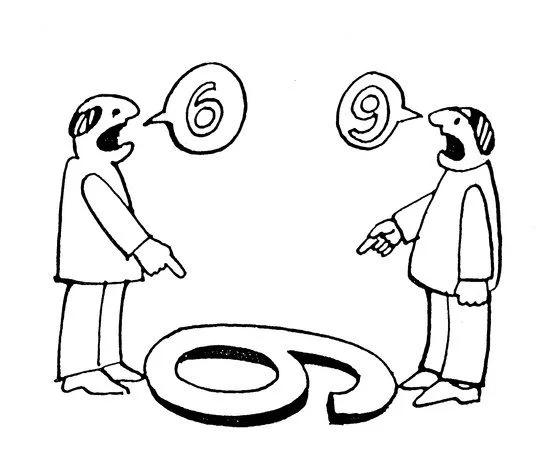
A pause, interruption, gesture, or rate of speech can signal engagement in one culture and disinterest or rudeness in another. Cultural differences in speech shape how people interpret those cues, making ordinary conversation vulnerable to mistaken assumptions about agreement, confidence, and respect.
A Finnish businessman and an Italian colleague sit across from each other in a meeting room in Brussels. The Italian speaks rapidly, gesticulates with both hands, occasionally interrupts, and fills every pause with more words.
The Finn speaks slowly, pauses frequently to think before responding, keeps his hands still, and waits until the Italian has completely finished before beginning his own turn.
After the meeting, the Italian tells a colleague that the Finn seemed disengaged, possibly bored, and probably disagreed with everything but refused to say so. The Finn tells a colleague that the Italian was rude, scattered, and never let him get a word in.
Both assessments are wrong. Both are entirely predictable. Both arise from the same source: cultural differences in speech patterns-the systematic ways in which cultures differ in directness, formality, interruption norms, silence tolerance, volume, emotional expression, politeness strategies, and turn-taking patterns.
These differences are not superficial quirks of personality or individual rudeness. They are deeply embedded cultural systems that shape how people communicate, how they interpret others' communication, and how they evaluate the intelligence, trustworthiness, and character of people who speak differently.
Misunderstanding these differences causes friction in international business, diplomatic relations, cross-cultural friendships, and any context where people from different cultural backgrounds attempt to communicate.
"The most important thing in communication is hearing what isn't said." - Peter Drucker
The Fundamental Dimensions of Cross-Cultural Speech
Speech varies across cultures along several measurable dimensions. Understanding these dimensions provides a framework for recognizing and navigating cultural communication differences.
Directness vs. Indirectness
Perhaps the most impactful dimension of cross-cultural speech difference is the continuum between direct and indirect communication. This maps closely onto what researchers call high-context vs. low-context cultures.
Direct communication cultures (Netherlands, Germany, Israel, Scandinavia, much of the United States) value explicit, unambiguous expression:
- Meaning is in the words themselves
- "Yes" means yes and "no" means no
- Disagreement is stated openly and is not considered rude
- Good communication means being clear and leaving no room for misinterpretation
- Directness is associated with honesty, efficiency, and respect for the listener's intelligence
Indirect communication cultures (Japan, Korea, Thailand, much of the Middle East, many African cultures) value implicit, contextual expression:
- Meaning is in the context, tone, and what is not said as much as in the words
- "Yes" may mean "I hear you," "I'll consider it," or "I respectfully disagree but won't say so"
- Disagreement is expressed through hesitation, hedging, silence, or redirection
- Good communication means preserving social harmony and allowing the listener to read between the lines
- Indirectness is associated with sophistication, respect, and social awareness
Neither style is inherently superior. Direct communication excels when clarity and speed are paramount. Indirect communication excels when preserving relationships and social harmony is paramount.
Problems arise when speakers of one style interpret the other through their own cultural lens - a pattern at the heart of cultural miscommunication.
What happens when styles clash:
A German manager asks a Thai team member: "Can you finish this report by Friday?" The Thai team member says "I will try my best" while looking slightly uncomfortable. The German interprets this as a commitment to finish by Friday.
The Thai team member has communicated, through indirectness, that Friday is unrealistic but that a direct "no" to a superior would be socially inappropriate.
When the report is not ready on Friday, the German is frustrated by the "broken promise." The Thai team member is confused because he clearly communicated (by his cultural standards) that the deadline was problematic.
Volume and Vocal Dynamics
Cultures differ significantly in what is considered a normal speaking volume and how vocal dynamics convey meaning:
- Loud speech cultures (Mediterranean countries, much of Latin America, parts of the Middle East, some African cultures): Higher volume indicates engagement, enthusiasm, and sincerity. Speaking quietly may be interpreted as disinterest, weakness, or aloofness.
- Quiet speech cultures (Japan, Finland, many Southeast Asian cultures, parts of Northern Europe): Lower volume indicates respect, thoughtfulness, and self-control. Speaking loudly may be interpreted as aggression, lack of sophistication, or emotional instability.
The mismatch creates predictable misreadings. Italians may perceive Japanese colleagues as cold and unengaged. Japanese colleagues may perceive Italians as aggressive and undisciplined. Both are reading the other's volume through their own cultural norms.
Turn-Taking and Overlap
How cultures manage the transition between speakers in conversation is one of the most immediately noticeable-and most easily misinterpreted-speech differences.
High-involvement style (Deborah Tannen's term): Fast-paced, with frequent overlapping speech, backchannels (uh-huh, yeah, right), and cooperative interruption. Common in many Mediterranean, Latin American, Jewish American, and African American speech communities.
In this style, overlapping speech is a sign of engagement and interest, not rudeness. Waiting silently while someone speaks may actually be interpreted as disinterest.
High-considerateness style: Slower-paced, with longer pauses between turns, minimal overlap, and careful waiting for the other person to finish completely before speaking. Common in many East Asian, Nordic, and Native American speech communities.
In this style, interrupting is disrespectful, and pauses between speakers are normal and comfortable-time for reflection, not awkward silence.
| Dimension | High-Involvement Cultures | High-Considerateness Cultures |
|---|---|---|
| Pace | Fast, energetic | Measured, deliberate |
| Overlap | Frequent, cooperative | Minimal, avoided |
| Pauses | Short or absent | Longer, comfortable |
| Backchannels | Frequent verbal feedback | Less verbal, more visual |
| Interpreted as | Engaged, enthusiastic | Thoughtful, respectful |
| Misread as | Rude, aggressive, chaotic | Disengaged, cold, withholding |
Silence: The Most Misunderstood Speech Act
Silence is not the absence of communication. It is a communicative act whose meaning varies dramatically across cultures - a vivid example of how language shapes thought.
"Silence is a source of great strength." - Lao Tzu
Cultures comfortable with silence (Finland, Japan, many indigenous cultures):
- Silence indicates thoughtfulness and respect
- Pausing before answering shows you are taking the question seriously
- Silence between friends is companionable, not awkward
- Filling silence with unnecessary words is seen as shallow or nervous
Cultures uncomfortable with silence (United States, much of Western Europe, Latin America):
- Silence creates discomfort and social anxiety
- Pauses longer than a few seconds prompt someone to fill them
- Silence may be interpreted as disagreement, disapproval, or confusion
- Good conversationalists keep the conversation flowing
The Finnish concept of being quiet together as a form of social bonding is largely unintelligible to Americans, for whom silence in social settings is a problem to be solved. Conversely, the American habit of filling every conversational gap with small talk strikes many Finns as exhausting and superficial.
Formality: The Architecture of Respect
Languages and cultures differ fundamentally in how formality is built into speech.
Grammatical Formality
Many languages encode formality directly into their grammar in ways that English does not:
- French: The distinction between tu (informal "you") and vous (formal "you") requires speakers to constantly negotiate social distance. Using the wrong form is a significant social error.
- Japanese: Multiple levels of formality and honorific systems (keigo) require speakers to choose verb forms, pronouns, and vocabulary based on the relative status of the speaker, the listener, and the person being discussed. Mastering appropriate formality is a lifelong process even for native speakers.
- Korean: Six or seven speech levels, each with distinct verb endings, that must be matched to the social relationship between speakers.
- German: The du/Sie distinction, which governs professional and social interactions and whose negotiation (the Duzen/Siezen decision) carries significant social meaning.
English's lack of a formal/informal "you" distinction does not mean English lacks formality-it means formality is conveyed through vocabulary, syntax, and pragmatic choices rather than through obligatory grammatical markers.
"Could you possibly help me with this?" and "Help me with this" convey very different levels of formality in English, but the formality is optional rather than grammatically required.
When Formality Is Expected
Cultures differ in which contexts demand formal speech:
- High-formality cultures (Japan, Korea, much of Western Europe): Formality is the default in professional settings, with unfamiliar people, and with people of higher status. Informality must be explicitly negotiated and earned.
- Low-formality cultures (Australia, much of the United States, Israel): Informality is the default; formality feels stiff and creates distance. First names, casual language, and direct address are standard even in professional contexts.
- Context-dependent formality (many cultures): Formality depends on setting rather than relationship-the same two people might be formal in a boardroom and informal at dinner.
The Formality Trap in Cross-Cultural Communication
When formality expectations mismatch:
- A Japanese businessperson perceives an American's first-name informality as disrespectful or unprofessional
- An Australian perceives a German's insistence on titles and formal address as cold and pretentious
- A Korean employee is confused by a Scandinavian manager who insists on being called by first name, because using a first name with a superior feels wrong regardless of permission
These mismatches are particularly damaging because they operate below conscious awareness. People rarely think "this person has different formality norms"; they think "this person is rude" or "this person is uptight."
Politeness Strategies: How Cultures Manage Social Face
Linguist Penelope Brown and anthropologist Stephen Levinson developed a framework for understanding cross-cultural politeness that remains influential. They identified two types of "face" that all humans seek to maintain:
- Positive face: The desire to be liked, appreciated, and approved of
- Negative face: The desire to be free from imposition, to have autonomy respected
Different cultures prioritize these face needs differently, producing different politeness strategies:
Positive Politeness Cultures
Cultures that emphasize positive face (much of Latin America, Mediterranean cultures, African cultures) express politeness through:
- Warmth, friendliness, and personal attention
- Compliments and expressions of appreciation
- Including the other person in the group ("We should...")
- Finding common ground and shared interests
- Physical warmth (closer distance, touching, embracing)
Negative Politeness Cultures
Cultures that emphasize negative face (Japan, much of Northern Europe, Britain) express politeness through:
- Respect for the other person's time and autonomy
- Minimizing imposition ("I was wondering if perhaps you might...")
- Formal language and indirect requests
- Apologizing for any intrusion
- Physical distance and minimal physical contact
Why Politeness Misunderstandings Are So Damaging
Politeness violations are interpreted not as cultural differences but as character defects:
- Positive politeness speakers who encounter negative politeness may think the other person is cold, unfriendly, and doesn't like them
- Negative politeness speakers who encounter positive politeness may think the other person is invasive, presumptuous, and doesn't respect boundaries
Because politeness is experienced as a moral quality (polite people are "good" people), cross-cultural politeness mismatches feel like encounters with rude or intrusive people rather than encounters with different cultural systems. Such moments of misinterpretation can do lasting damage to relationships.
"Politeness is the art of choosing among your thoughts." - Madame de Stael
Emotional Expression in Speech
Cultures vary significantly in how much emotion is expected and acceptable in speech:
High emotional expression (Mediterranean, Latin American, many Middle Eastern cultures):
- Vocal emotion demonstrates sincerity and engagement
- Passion in speaking is valued and expected
- Lack of emotional expression suggests dishonesty or indifference
- Arguments can be heated without damaging relationships
Restrained emotional expression (East Asian, Nordic, British cultures):
- Emotional restraint demonstrates maturity and self-control
- Excessive emotion is uncomfortable and potentially manipulative
- Calm delivery suggests confidence and trustworthiness
- Emotional outbursts damage professional credibility
A Brazilian executive who speaks passionately about a project is demonstrating commitment. A Finnish executive who speaks about the same project in measured, factual tones is equally committed-but the Brazilian may perceive the Finn as uninvested, and the Finn may perceive the Brazilian as unprofessional.
What Causes Cross-Cultural Speech Misunderstandings?
Cross-cultural speech misunderstandings arise from a constellation of factors that compound each other:
1. The Assumption of Universality
The most fundamental cause is the assumption that your own speech norms are universal-that the way you communicate is the natural, normal, correct way, and that deviations from it represent failures of the other person. This assumption is almost always unconscious.
Research into linguistic relativity shows just how deeply language structures shape our perception of reality itself.
2. Attribution Errors
When someone communicates differently than expected, the default interpretation is dispositional rather than cultural.
Instead of thinking "this person's culture has different norms," we think "this person is rude/cold/aggressive/passive/dishonest." We attribute the behavior to the person's character rather than to their cultural training.
Understanding why miscommunication happens is the first step toward preventing it.
3. The Metacommunication Blindspot
People are aware of the content of communication (what is being said) but often unaware of the metacommunication (how it is being said). Cultural speech differences operate primarily at the metacommunicative level-in pacing, volume, pause length, directness, and formality which is below most people's conscious awareness.
This makes cross-cultural speech differences particularly insidious because they influence perception without being noticed.
4. Emotional Contamination
When speech norms are violated, the emotional response (discomfort, irritation, anxiety) colors the interpretation of the content.
If someone's speaking style makes you uncomfortable (because it is too loud, too quiet, too direct, too indirect, too fast, too slow), you are more likely to evaluate their ideas negatively, regardless of the ideas' merit.
5. Compounding Over Time
Individual misunderstandings may be minor, but they compound over time. Each misinterpreted pause, each violated turn-taking expectation, each unintended formality error adds a small increment of negative feeling that accumulates into genuine distrust and dislike.
The people involved often cannot identify what went wrong-they just know they don't trust or like the other person.
Can You Adapt Your Speaking Style?
The research is clear: speaking style adaptation is possible and learnable, though it requires conscious effort and practice.
"Real communication happens when people feel safe enough to say what they really think." - Erin Meyer
Code-Switching
Bilingual and bicultural individuals routinely code-switch-adjusting their communication style to match different cultural contexts.
A Japanese-American professional may speak with American directness in English-language business meetings and with Japanese indirectness in Japanese-language contexts. This switching is not inauthentic; it is a sophisticated social skill that demonstrates cultural competence.
Code-switching is not limited to bilinguals. Anyone can develop the ability to adjust their speech patterns across cultural contexts:
- Awareness: Recognize that your communication style is culturally specific, not universal
- Knowledge: Learn the speech norms of the cultures you interact with
- Observation: Pay attention to how people from other cultures communicate and what signals they use
- Experimentation: Try adjusting your pace, volume, directness, and formality in cross-cultural interactions
- Feedback: Ask trusted cross-cultural colleagues whether your communication style is effective
Practical Adaptation Strategies
- With indirect communicators: Listen for what is not said, pay attention to hesitation and hedging, avoid putting people on the spot with direct questions that require public disagreement
- With direct communicators: Say what you mean clearly, do not rely on others to read between the lines, do not interpret directness as rudeness
- With high-involvement speakers: Accept overlap as engagement, participate actively with backchannels, do not wait for long pauses that may never come
- With high-considerateness speakers: Allow pauses without filling them, wait your turn, do not interpret silence as disengagement
- With formal speakers: Match their level of formality, use titles until invited not to, err on the side of more formal rather than less
- With informal speakers: Relax your formality, use first names, adopt a conversational rather than presentational tone
How Do Gender and Culture Intersect in Speech?
The relationship between gender and speech is more complex than popular stereotypes suggest. Research shows that cultural norms often override gender patterns in speech behavior, and that there is typically more variation within cultures than between genders within any single culture.
The Standard Narrative (and Its Limitations)
Popular accounts of gender differences in speech often claim:
- Women are more indirect; men are more direct
- Women use more hedging language; men are more assertive
- Women are more collaborative; men are more competitive
- Women interrupt less; men interrupt more
While there is some empirical support for these tendencies in some cultural contexts, the magnitude of gender differences in speech is generally much smaller than cultural differences.
A Japanese man and an Israeli woman will differ more in directness than an American man and an American woman, because the cultural variable dwarfs the gender variable.
Cultural Variation in Gender Speech Norms
Different cultures have different expectations for gendered speech:
- In Japanese, gender differences in speech are explicitly encoded in the language-women's speech (onna kotoba) uses different sentence-final particles, pronouns, and vocabulary than men's speech
- In many Western cultures, gender speech differences are becoming less pronounced as gender norms evolve
- In some cultures, expectations about gendered speech are rigid and strongly enforced; in others, they are flexible and contested
The Interaction Effect
Gender and culture do not operate independently. They interact in complex ways:
- A direct, assertive speaking style may be evaluated positively in a man from a direct culture but negatively in a woman from the same culture (gender bias within cultural norms)
- A soft-spoken, indirect style may be valued in both men and women in an indirect culture but may be perceived as weakness in a man from a direct culture (cultural norms shaping gender expectations)
The most productive approach is to treat both gender and culture as variables that influence speech without determining it, and to evaluate individuals based on the effectiveness of their communication rather than its conformity to gendered or cultural stereotypes.
Practical Applications: Navigating Cultural Speech Differences
In International Business
- Before meetings: Research the speech norms of participants' cultures; brief team members on what to expect
- During meetings: Actively create space for different communication styles (e.g., providing time for written input alongside verbal discussion)
- After meetings: Confirm key decisions and action items in writing, as verbal agreements may be interpreted differently across cultures
- In negotiations: Recognize that silence, indirectness, and formality may all carry meanings that differ from your cultural default
In Education
- Recognize that students from different cultural backgrounds may have different participation styles that reflect cultural training rather than engagement level
- Students who do not speak up in class may be following cultural norms that value listening and reflection over verbal participation
- Create multiple channels for participation (written responses, small group discussion, one-on-one conferences) to accommodate different speech norms
In Healthcare
- Patients from indirect cultures may not express symptoms, concerns, or disagreement directly
- Asking "Do you have any questions?" may not elicit questions from cultures where questioning authority is inappropriate
- Use open-ended, invitational language and allow ample time for responses
In Daily Life
- When interacting with someone whose speech style differs from yours, assume cultural difference before assuming personal rudeness
- If communication feels frustrating, ask yourself: "What cultural norms might explain this person's communication style?"
- When in doubt, ask directly but gently how the other person prefers to communicate
Cultural differences in speech are not obstacles to be overcome but variations to be understood. Every speaking style has developed as an effective communication framework within its cultural context.
The challenge of cross-cultural communication is not to determine which style is correct but to develop the awareness and flexibility to communicate effectively across styles-meeting others where they are rather than expecting them to meet you where you are.
Research Evidence: Measuring the Real Costs of Speech Style Mismatch
Communication researchers have moved beyond describing speech style differences to quantifying their practical consequences in workplace and professional settings.
Linguist Deborah Tannen at Georgetown University, whose research on conversational style has been the most cited empirical work on cross-cultural speech patterns in American contexts, documented the high-involvement/high-considerateness distinction through detailed analysis of recorded conversations in her 1984 book Conversational Style and her subsequent 1990 book You Just Don't Understand.
Tannen's research method - close transcription and analysis of natural conversations - revealed that speakers in the same conversation were often operating with completely different interpretations of what was occurring.
High-involvement speakers participating in conversations with high-considerateness speakers consistently interpreted the latter's longer pauses as indicating they had finished speaking, prompting interruption that the high-considerateness speakers experienced as being cut off.
High-considerateness speakers interpreted the high-involvement speakers' rapid turn-taking and overlapping speech as indicating that all speaking slots were occupied, causing them to remain silent and be interpreted as disengaged.
Tannen documented that these recursive misreadings compound: each incident generates attributions that make the next incident more likely to be misread in the same direction.
A 2017 study by organizational communication researchers Jonathan Greer and Lisa Lenz at the Rotterdam School of Management examined speech style diversity in 87 international project teams.
Using acoustic analysis of recorded team meetings combined with outcome measures, Greer and Lenz found that speech rate variance within a team (the spread between the fastest and slowest speakers) was a stronger predictor of meeting productivity than language proficiency variance.
Teams where members' speech rates differed by more than 30% showed 24% lower idea generation rates, as measured by the number of distinct proposals recorded in meeting notes, compared to teams with more uniform speech rates.
The mechanism, confirmed through post-meeting interviews, was a familiar one: fast speakers had completed their thought development and were ready to proceed before slow speakers had finished articulating their positions; slow speakers felt persistently interrupted before they could contribute fully-formed ideas.
The study's practical recommendation - designating a meeting facilitator specifically tasked with adjusting the conversational pace to accommodate the full speech rate range in the room - produced measurable improvement in idea diversity when implemented in a follow-up intervention study.
Psychologist Laura Gawith at the University of Melbourne published a 2019 meta-analysis in the Journal of Cross-Cultural Psychology examining 42 studies on silence tolerance across cultures conducted between 1985 and 2018.
Gawith found that cultures differ by a factor of 3 to 4 in their average acceptable pause duration before a silence becomes "uncomfortable" - the point at which someone feels compelled to fill it.
Finnish speakers tolerated pauses averaging 8-9 seconds before experiencing discomfort; American speakers experienced discomfort after 2-3 seconds; Japanese speakers fell between the two at 4-6 seconds.
Critically, Gawith found that discomfort with silence was not merely subjective: it produced measurable physiological stress responses (elevated cortisol, increased heart rate) that impaired subsequent cognitive performance on the tasks the conversation was about.
The practical implication is that placing speakers with very different silence tolerances in high-stakes negotiations or problem-solving discussions systematically disadvantages the lower-tolerance party, who experiences the discussion as stressful before any substantive difficulty arises.
Intercultural trainer and researcher Erin Meyer, drawing on fieldwork with over 10,000 executives from 50 countries reported in her 2014 book The Culture Map, documented what she terms the "scale of directness" through systematic surveys of how executives rated feedback practices.
Meyer found that Dutch and Israeli executives rated direct negative feedback as "professional" at rates of 85-90%; Japanese and Korean executives rated the same direct negative feedback as "unprofessional" at rates of 75-80%.
More significantly, Meyer documented that the same information delivered in indirect versus direct form produced dramatically different retention and action rates: executives from indirect cultures who received direct negative feedback reported remembering the emotional experience but having difficulty accessing the specific content, while executives from direct cultures who received indirect negative feedback reported remembering the words but failing to register that a problem had been identified.
Both forms of delivery failure had the same practical result - the performance problem was not addressed - but through entirely different mechanisms.
Historical and Cross-Linguistic Studies of Speech Style Variation
The differences in speech style across cultures are not static - they have historical causes and are changing over time in response to globalization, urbanization, and digital communication.
Linguistic anthropologist John Gumperz at the University of California, Berkeley, conducted foundational fieldwork in the 1970s and 1980s that established the empirical basis for understanding cultural speech style variation as systematic rather than individual.
Gumperz's most influential study, documented in his 1982 book Discourse Strategies, examined communication failures between South Asian and British workers in British workplaces.
Using recordings of actual interactions in job interviews, service encounters, and workplace meetings, Gumperz identified specific prosodic and interactional features - the placement of emphasis, the use of rising intonation to signal continuing thought, the pacing of information within a turn - that differed between South Asian English and British English speech styles in ways that produced reliable misattributions of attitude and competence.
South Asian speakers' intonation patterns, interpreted within South Asian English norms as indicating deference and engagement, were interpreted within British English norms as indicating indifference or evasiveness.
Gumperz estimated that South Asian job applicants were being evaluated as less suitable candidates at rates significantly above what their qualifications would predict, specifically because interviewers were reading their prosodic features through the wrong cultural code.
Historical linguist Penelope Gardner-Chloros at the University of London has documented systematic changes in British speech style directness since the 1970s, based on analysis of recorded conversations and media archives.
Gardner-Chloros found that British professional communication has become measurably more direct over five decades - the elaborate indirectness documented by Kate Fox as characteristic British communication style in the 1970s-1990s has softened in professional contexts, driven partly by the influence of American corporate culture through multinational employment and American media consumption.
Gardner-Chloros' research suggests that speech styles are more malleable over historical time than cross-sectional studies imply, and that sustained exposure to different cultural communication models can gradually shift a culture's default patterns.
Korean sociolinguist Kyung-Hee Shin at Korea University documented an analogous shift in South Korean speech styles in a 2018 study in the Journal of Sociolinguistics.
Shin found that Korean corporate professionals under age 35, particularly those who had studied abroad or worked for multinational companies, showed significantly more direct speech patterns in professional contexts than the indirectness norms documented in studies of Korean business communication conducted in the 1980s and 1990s.
Shin's analysis attributed this to a combination of structural factors: the Korean government's post-1997 economic crisis push for corporate reform that explicitly targeted hierarchical communication as a productivity barrier, the growth of Korean technology companies (Samsung, LG, Kakao) that adopted Western-influenced flat communication norms, and the widespread adoption of digital communication platforms with low-context affordances.
Shin found that the directness increase was most pronounced in task-focused communication and least pronounced in relationship-maintenance communication, suggesting a selective adoption of direct norms in professional domains while preserving indirect norms in social ones.
Anthropologist Shirley Brice Heath at Stanford, in her landmark 1983 ethnography Ways with Words, documented how speech styles are transmitted across generations within communities and how children's early language socialization shapes their cognitive and communicative development in ways that persist throughout their lives.
Heath's nine-year study in the Piedmont Carolinas compared the language socialization practices of two working-class communities (one white, one Black) with middle-class professional communities and found dramatic differences in how children were taught to answer questions, narrate events, interpret texts, and participate in adult conversations.
These speech socialization differences, Heath argued, explained much of the educational achievement gap between communities - not because any community's speech practices were deficient, but because school speech norms matched some communities' home practices and not others'.
Heath's work is the most rigorous empirical demonstration that speech style differences have origins in early childhood socialization rather than individual choice or adult acculturation, which helps explain why speech style adaptation feels so effortful and is so easily abandoned under stress.
Sources & Further Reading
Tannen, D. (1984). Conversational Style: Analyzing Talk Among Friends. Ablex Publishing. View source
Brown, P. & Levinson, S.C. (1987). Politeness: Some Universals in Language Usage. Cambridge University Press. View source
Scollon, R., Scollon, S.W., & Jones, R.H. (2012). Intercultural Communication: A Discourse Approach. 3rd ed. Wiley-Blackwell. View source
Hall, E.T. (1959). The Silent Language. Doubleday. View source
Meyer, E. (2014). The Culture Map: Breaking Through the Invisible Boundaries of Global Business. PublicAffairs. View source
Wierzbicka, A. (2003). Cross-Cultural Pragmatics: The Semantics of Human Interaction. 2nd ed. Mouton de Gruyter. View source
Ting-Toomey, S. (1999). Communicating Across Cultures. Guilford Press.
Clyne, M. (1994). Inter-Cultural Communication at Work: Cultural Values in Discourse. Cambridge University Press. DOI: 10.1017/CBO9780511620881
Lebra, T.S. (1987). "The Cultural Significance of Silence in Japanese Communication." Multilingua, 6(4), 343-357. DOI: 10.1515/mult.1987.6.4.343
Spencer-Oatey, H. (2008). Culturally Speaking: Culture, Communication and Politeness Theory. 2nd ed. Continuum. View source